
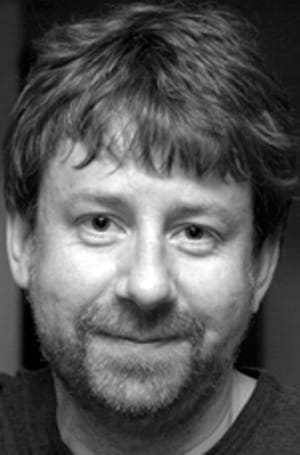
David A. Neufeld is a Professor in the William H. Miller III Department of Physics & Astronomy at Johns Hopkins University (JHU), part of the Krieger School of Arts & Sciences. He holds a PhD from Harvard University and specializes in theoretical astrophysics, molecular astrophysics, and interstellar medium (ISM) studies. His research utilizes advanced observatories like the Herschel Space Observatory and SOFIA (Stratospheric Observatory for Infrared Astronomy), focusing on molecular line emission, cosmic ray ionization rates, and hydride molecules in diffuse clouds. Key projects include leading the HyGAL SOFIA Legacy Program to study hydrides in the Galactic ISM and participating in Herschel’s HEXOS, PRISMAS, and WISH Guaranteed Time programs. Neufeld has developed experimental methods to constrain sexaquark dark matter and contributed to the discovery of the helium hydride ion (HeH+) in planetary nebulae. He is also involved in GUSTO, a terahertz spectroscopic mission mapping [CII] and [NII] emissions. His research integrates observational astronomy with theoretical models, exploring topics like protostellar outflows, water ice chemistry, and shock dynamics. He has published extensively on infrared/submillimeter spectroscopy, molecular ion abundances, and the role of cosmic rays in interstellar chemistry. Neufeld’s work bridges laboratory experiments (e.g., dissociative recombination studies) with astrophysical observations, advancing understanding of the ISM and star formation processes.
جستجوی استاد راهنمای دانشگاهی
برای مسیر پژوهشیتان، استاد راهنما، استاد دانشگاه و پژوهشگر مناسب را پیدا کنید و با آنها ارتباط بگیرید.
نمایش ۱-۴ از ۴ استاد راهنما
اطلاعات پروفایلها از صفحات عمومی دانشگاهها گرفته شده و ممکن است بهروز نباشد.
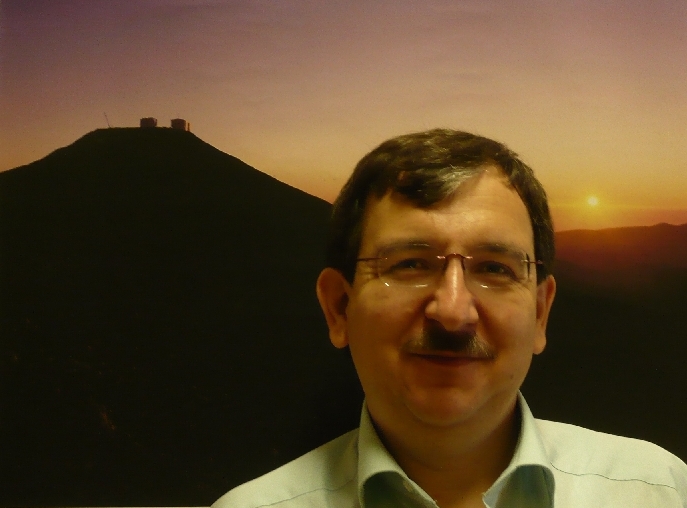
Prof. Dr. Dominik J. Bomans is a Professor at the Astronomical Institute of Ruhr University Bochum in Germany, located at GAFO 03 / 973, Universitätsstr. 150, 44801 Bochum. His research interests are broad and deep, spanning: Formation and evolution of dwarf galaxies Low surface brightness galaxies Diffuse warm and hot interstellar medium Galactic outflows, winds, and the circumgalactic medium Starburst galaxies at intermediate and high redshift Magnetic fields in galaxies, their circumgalactic medium, and the intergalactic medium Interstellar absorption lines of the warm and hot interstellar, circumgalactic, and intergalactic medium Interaction of massive stars with the interstellar medium Massive stellar transients His work bridges the gap between observational astronomy and theoretical astrophysics, with a focus on understanding the lifecycle of galaxies, the physics of their gaseous environments, and the role of magnetic fields and stellar feedback in galactic evolution. No students, awards, or publications are listed on his current webpage. He can be contacted via email at bomans@astro.ruhr-uni-bochum.de .
Dennis Zaritsky is a Professor in the Department of Astronomy at the University of Arizona and serves as Deputy Director and Astronomer at Steward Observatory. He was promoted to Regents Professor in 2025, the highest academic rank at the university, and has been a faculty member at UA since 2002. His research focuses on extragalactic astronomy and cosmology, with particular emphasis on galaxy formation and evolution. Zaritsky earned his Ph.D. in Astronomy from the University of Arizona in 1991 and his B.S. in Physics with Honors from Caltech in 1986. His academic positions include Professor at Steward Observatory (2002-present), Associate Professor at Steward Observatory (1999-2002), and Assistant/Associate Professor at UC Santa Cruz's UCO/Lick Observatory (1994-1999). He was a Hubble Fellow at Carnegie Observatories from 1991-1994. His research program includes leading a large survey of nearly a third of the sky for ultra-diffuse galaxies (UDGs), utilizing Sloan Digital Sky Survey data to study diffuse Halpha emission in galaxy halos, and collaborating on the Aspera satellite mission to explore the warm-hot phase of circumgalactic gas. He also works with Harvard's Charlie Conroy on compiling the largest sample of Milky Way halo stars to study our galaxy's accretion history. Recent publication trends show increasing focus on ultra-diffuse galaxies, Magellanic Cloud structures, and stellar halo kinematics. 2024 AAS Beatrice M. Tinsley Prize 2023 Fellow, American Association for the Advancement of Science 2017 Galileo Circle Fellowship (U. Arizona) 2006 John Simon Guggenheim Memorial Foundation Fellowship 1999 AAS Newton Lacy Pierce Prize 1998 Alfred P. Sloan Research Fellowship 1998 NSF CAREER Program Award 1997 David and Lucile Packard Fellowship for Science and Engineering 1993 E.F. Fullam Award (Dudley Obs., New York) for Astron. & Astrophysics 1991 Hubble Fellowship Professor Zaritsky has mentored numerous students and postdocs, including Huanian Zhang, and has secured significant research funding for his projects. His work on ultra-diffuse galaxies has established him as a leader in this field, with the SMUDGes and LIGHTS surveys representing major observational programs. At Steward Observatory, he contributes through leadership as Deputy Director (2012-2022, 2023-present) and active participation in observational programs using telescopes at Kitt Peak and other facilities. His research bridges theoretical astrophysics with cutting-edge observational techniques to address fundamental questions about galaxy formation and evolution.

Carlos J. Vargasمشاهده پروفایل
استادیار
Dr. Carlos J. Vargas is an Assistant Professor and Assistant Astronomer at Steward Observatory, University of Arizona. He leads the Aspera SmallSat Mission, funded under NASA's Astrophysics Pioneers Program, which aims to map warm-hot gas emission in galaxy halos using a far-ultraviolet spectrograph. Research Focus: Dr. Vargas investigates the interplay between star formation and diffuse gas in spiral galaxy halos, emphasizing gas/cosmic ray cycling mechanisms between galactic disks and halos. His work spans observational campaigns at optical wavelengths and instrumentation development for UV astrophysics. Commitment: He actively promotes advancements in ultraviolet space astrophysics through both small satellite missions and large-scale platforms.
- Astrophysics
- Astronomy
- Galaxy Formation
- +۴ مورد دیگر