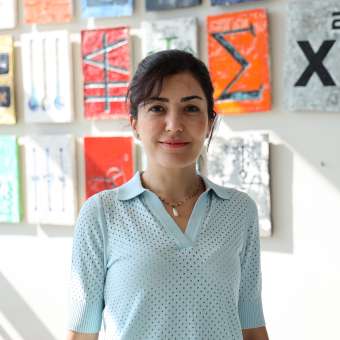
Noah Rubin is an Assistant Professor in the Department of Electrical and Computer Engineering at the University of California San Diego, joining in 2024. His research focuses on applied optics and photonics, particularly in diffractive optics, nanophotonics, and polarization optics. He investigates novel methods to control light polarization for applications in environmental and astrophysical remote sensing, imaging, and instrumentation. Rubin's work bridges fundamental optics and practical systems design, with potential for real-world impact in fields like astronomy and aerospace. Rubin holds a Ph.D. in Applied Physics from Harvard University (2020) and a BA in Physics from the University of Pennsylvania (2015). His postdoctoral research at Harvard explored metasurface-based devices for polarized light control, leading to an early-stage consumer product and NASA-related instrumentation advancements. He was named in Electro Optics Magazine’s 'Photonics 100' list in 2024, and his team received a NASA Instrument Incubator Program award in collaboration with the University of Arizona and Jet Propulsion Laboratory. Rubin’s research group at UCSD explores polarization-sensitive diffractive optics, compact polarization cameras, and metasurface-enabled technologies for NASA-relevant sensing applications. Notable achievements include cover features in Physics Today and fellowship awards for team members like Karl, a Ph.D. student supported by NASA’s FINESST program. His lab emphasizes interdisciplinary innovation, combining theoretical optics with experimental prototyping and industry partnerships.
Cagri A. Savran is a Professor of Mechanical Engineering at Purdue University, with courtesy appointments in Biomedical Engineering and Electrical and Computer Engineering. He holds a B.S. from Purdue University (1998), an M.S. and Ph.D. from MIT (2000 and 2004, respectively). His research focuses on MEMS, nanotechnology, and biosensors, particularly in protein detection, aptamers, and biomedical applications. His work spans fluid mechanics, systems control, and micro/nano fabrication. Education: B.S., Purdue University, 1998 M.S., MIT, 2000 Ph.D., MIT, 2004 Research Interests: Dr. Savran pioneers innovations in bioMEMS and nanoscale biosensing technologies. His lab develops platforms like immunomagnetic diffractometry and microfluidic systems for real-time pathogen detection and clinical diagnostics. Key areas include aptamer-based assays, magnetic nanoparticle integration, and single-molecule studies of DNA packaging motors. Awards: Motorola PhD Fellowship (2001-2004) NSF U.S.-Japan Young Researchers Exchange (2007) #1 News in Analytical Chemistry (2007) #1 News in JACS Weekly (2007) Labs & Teams: The Savran Lab (savranlab.org) integrates engineering and biology to create next-generation biomedical devices. Research emphasizes translating nanotechnology into practical diagnostic tools for healthcare and environmental monitoring.
Dr. Shin-Tson Wu is a UCF Trustee Chair Professor in Optics & Photonics at CREOL, The College of Optics and Photonics. His research focuses on augmented and virtual reality systems, including microdisplays (mini-LEDs, micro-LEDs, OLEDs), optical systems (lightguides, diffractive optics), and materials (liquid crystals, quantum dots, perovskites). He earned his Ph.D. in Physics from the University of Southern California and BS from National Taiwan University. Awards include the SID Lawrence Tannas Award (2025), Optica/IS&T Edwin H. Land Medal (2022), and SPIE Maria Goeppert-Mayer Award (2022). He has authored over 690 journal papers, 330 conference papers, and 100 patents, with an h-index of 114. His work spans academic leadership roles, including founding editor of the IEEE/OSA Journal of Display Technology. Current graduate students include Luke Benoit, Po-Sheng Chiu, Yuqiang Ding, and Shruti Jayaprakash Saiji. Notable alumni include Qian Yang, Zhiyong Yang, and En-Lin Hsiang. His research group explores cutting-edge AR/VR technologies, emphasizing optical efficiency and material innovation.
Markus Schmidt is a Professor of Fiber Optics at Friedrich Schiller University Jena and serves as Head of the Research Department of Fiber Photonics at the Leibniz Institute for Photonic Technologies (IPHT), where he leads the Hybrid Fibers work group. He previously held a team leadership position at the Max Planck Institute for the Science of Light (2006–2012) and conducted research at Imperial College London (2011). His research integrates fiber optics and photonics for applications in biophotonics, optofluidics, plasmonics, and nonlinear optics. Key innovations include 3D nanoprinted holograms for remote focus control, liquid-core fibers for stable supercontinuum generation, and fiber-integrated platforms for nanorheology and quantum spectroscopy. His work bridges materials science and applied photonics , enabling advancements in telecommunications, environmental monitoring, and bioanalytics. Scientific awards and student mentorship details are not explicitly mentioned in the provided texts. His email is markus.schmidt@leibniz-ipht.de .
F. Levent Degertekin is a Regents' Entrepreneur and the George W. Woodruff Chair in Mechanical Systems and Professor at the George W. Woodruff School of Mechanical Engineering at Georgia Institute of Technology. His office is located in Love Building, room 311B, and his contact email is levent.degertekin@me.gatech.edu. Dr. Degertekin's academic journey includes a Ph.D. in Electrical Engineering from Stanford University (1997), an M.S. in Electrical Engineering from Bilkent University, Turkey (1991), and a B.S. in Electrical Engineering from Middle East Technical University, Turkey (1989). Dr. Degertekin's research focuses on micromachined ultrasonic devices and systems for medical applications, particularly in intravascular ultrasound imaging, therapeutic ultrasound, and acousto-optical sensors for MRI. His work spans from fundamental research on novel transduction methods to complete catheter-based imaging systems close to commercialization. He has made significant contributions to capacitive micromachined ultrasonic transducers (CMUTs), developing diffraction grating based optomechanical sensing methods now commercialized by Silicon Audio, novel atomic force microscopy imaging probes, and micromachined ultrasonic ejector structures for cell transfection commercialized by OpenCell Technologies. His research integrates acoustics, optics, and their combinations for various medical applications, utilizing conventional microfabrication (MEMS) and integrated circuit technologies. The Degertekin lab exposes students to applied physics, electrical, mechanical and biomedical engineering, biology, and biomimetic systems, providing them with thorough theoretical and experimental education in acoustics and optics while learning interdisciplinary research. Dr. Degertekin's work has received significant media attention, including coverage in IEEE Spectrum, Wired Magazine, The New York Times, and Fox Business News, highlighting innovations such as handheld ultrasound probes, MRI safety sensors, and minimally invasive cardiac imaging technologies. IEEE Fellow for 'Contributions to micromachined ultrasonic and optomechanical transducers and systems,' 2022 IEEE UFFC Society Inaugural Carl Hellmuth Hertz Ultrasonic Achievement Award, 2014 George W. Woodruff School Outstanding Achievement in Commercialization and Entrepreneurship Award, 2024 National Science Foundation CAREER Award, 2004-2009 Whitaker Foundation Biomedical Engineering Research Grant Award, 2001 66 US and 6 International Patents Dr. Degertekin has mentored numerous students who have gone on to make significant contributions in the field. Several of his students have received IEEE Ultrasonics Symposium Best Student Paper Awards, including Jeff McLean (2003), Sheng-Yu Peng (2006), Rasim O. Guldiken (2005 and 2007), and Toby Xu (2014). His research has been supported by various grants including the NSF CAREER Award and Whitaker Foundation grant. His work has led to multiple commercial ventures including Silicon Audio and OpenCell Technologies. The Degertekin Group at Georgia Tech focuses on transducers and systems for medical imaging and sensing, with current projects including capacitive parametric transducers, acousto-optic sensors for MRI, novel transducer methods for focused ultrasound in the brain, microsystems for intravascular and intracardiac ultrasound imaging, and CMUT-on-CMOS systems for IVUS imaging.
Aldo Mozzanica is a Researcher at the Paul Scherrer Institute (PSI) in Switzerland, affiliated with the Laboratory for X-ray Nanoscience and Technologies. He holds a degree in Physics from Insubria University and a Ph.D. from the University of Milan, where his doctoral work focused on scintillating fiber vertex detectors for CERN's Antiproton Decelerator facility. At PSI, he leads detector development projects for synchrotron and free-electron laser applications. His research centers on advancing X-ray detector technology, including: Developing next-generation integrating pixel/strip detectors (JUNGFRAU, GOTTHARD) Improving frame rates, noise performance, and radiation hardness Exploring novel detector concepts for XFEL/synchrotron applications Enabling new experimental capabilities in structural biology and materials science Mozzanica's 135+ publications focus on X-ray detector innovation, with recent work emphasizing: Hybrid pixel detector optimization for 4th-generation light sources On-chip digitization and charge transport modeling High-speed data acquisition systems Applications in crystallography, spectroscopy, and phase-contrast imaging As principal developer of the JUNGFRAU detector, he oversees: ASIC design, testing, and characterization Readout electronics and firmware development Module production and supply chain management Commissioning at SwissFEL endstations
Benedikt Günther is a research scientist at the Technical University of Munich (TUM) working within the Chair of Biomedical Physics led by Prof. Dr. Franz Pfeiffer. His research focuses on the Munich Compact Light Source (MuCLS), a laboratory-scale inverse Compton X-ray source that provides synchrotron-like radiation for biomedical applications. Günther plays a key role in developing, optimizing, and characterizing this innovative technology, contributing to both its fundamental physics and practical medical applications. His primary research interests center around X-ray physics and imaging techniques, particularly laser enhancement cavities for inverse Compton X-ray sources, X-ray microscopy, dynamic phase-contrast imaging, and X-ray spectroscopy. Günther's work bridges fundamental physics with practical medical applications, developing instrumentation that brings synchrotron-quality imaging to conventional laboratory settings. His research has significant implications for improving medical diagnostics while making advanced imaging techniques more accessible. Analysis of Günther's publication record reveals a consistent focus on advancing compact X-ray source technology and its applications. His work demonstrates expertise in both theoretical modeling and experimental implementation, with publications spanning instrument development, imaging techniques, and specific medical applications. The research shows progression from fundamental source characterization to increasingly sophisticated biomedical applications, particularly in breast imaging, dental diagnostics, and materials science. 2019 Best Poster Award at the combined meeting of the 68th Denver X-ray Conference (DXC) & 25th International Congress on X-ray Optics and Microanalysis (ICXOM) for 'Full-Field Structured Illumination Super-Resolution X-ray Transmission Microscopy' Günther regularly presents his work at major international conferences including the International Particle Accelerator Conference, High-Brightness Sources and Light-driven Interactions Congress, and specialized X-ray imaging meetings. His research is conducted within the Munich Compact Light Source facility, a collaborative project involving physicists, engineers, and medical researchers working to develop laboratory-scale synchrotron technology for widespread biomedical use.
Muharrem Bayraktar is an Assistant Professor at the MESA+ Institute for Nanotechnology at the University of Twente, specializing in XUV Optics. His research focuses on extreme ultraviolet (EUV) optics, plasma spectroscopy, and adaptive optical systems. He leads projects involving EUV source metrology, piezoelectric thin film actuators, and laser-driven plasma diagnostics. Research Interests: Bayraktar’s work centers on developing advanced EUV light sources for nanolithography applications. He investigates plasma physics in tin-based EUV emitters, optimizing thin film materials for adaptive optics, and improving spectral characterization techniques. His group explores piezoelectric thin films for precision wafer tables and multilayer mirror systems to enhance EUV beam control. Awards: 3rd Place in Simon Stevin Fellow Contest (2016) Best poster award (2018) Best poster award (2019) Advising & Activities: Supervises research on EUV source development and piezoelectric actuators. Engages in international collaborations on plasma diagnostics and adaptive optics. Active in presenting at conferences on topics like ‘EUV Source Metrology’ and ‘Nanolithography Systems’. Labs/Teams: Leads the XUV Optics team within MESA+, collaborating with industry partners on EUV lithography systems and advanced optical components.
David Cory is a Professor and Canada Excellence Research Chair Laureate in Quantum Information Processing at the University of Waterloo's Department of Chemistry. He is affiliated with the Institute for Quantum Computing and the Waterloo Institute for Nanotechnology. His research focuses on quantum information science, neutron interferometry, structured light applications, and spin systems. Cory's work bridges quantum physics, materials science, and biomedical imaging, with contributions to quantum control, entanglement, and advanced neutron beam technologies. He has pioneered methods for generating structured neutrons and developing quantum measurement devices, including phase grating neutron interferometers. Scientifically, Cory has advanced quantum simulations of mesoscopic systems, explored thermal state structures in quantum models, and applied structured light for biomedical diagnostics. His recent articles highlight innovations in neutron Airy beam generation, robust micro-macro entanglement, and psychophysical studies of light perception. Awards include the Canada Excellence Research Chair, recognizing his leadership in quantum technologies. Awards: Canada Excellence Research Chair Laureate in Quantum Information Processing Labs/Teams: Institute for Quantum Computing, Waterloo Institute for Nanotechnology
Prof. Dr. Ruming Zhang is a Tenure-Track Professor at TU Berlin's Faculty II - Mathematics and Natural Sciences, leading the Analysis and Applications group since May 2023. He specializes in numerical methods for partial differential equations and inverse problems, with a focus on wave scattering and periodic structures. His research bridges theoretical analysis and computational techniques, addressing challenges in areas like photonic crystals and non-destructive testing. Education & Career: PhD in Mathematics (Chinese Academy of Sciences, 2014) Postdoctoral Researcher at Michigan Technological University Marie-Curie Fellow (University of Bremen, 2015-2018) Junior Group Leader at KIT (Karlsruhe Institute of Technology, 2018-2023) Research Interests: Analysis and numerical methods for PDEs, inverse scattering problems, waveguide analysis, periodic structures, and their applications in nanotechnology and engineering. His work emphasizes high-order numerical schemes and theoretical frameworks for ill-posed problems. Key Contributions: Development of nonuniform mesh methods for periodic surface scattering, high-order numerical techniques for bi-periodic structures, and monotonicity-based shape reconstruction in waveguides. His methods address challenges in computational wave physics and mathematical modeling. Awards: Richard-von-Mises Prize (GAMM, 2023) Marie-Curie Fellowship (EU FP7-PEOPLE, 2015-2017) Teaching & Mentorship: Offers courses on inverse problems, scattering theory, boundary element methods, and applied analysis. Advises students on thesis topics in mathematical theory for photonic crystals and wave propagation. Actively promotes interdisciplinary collaboration between mathematicians and engineers. Grants & Projects: DFG Grant (2019-2024): Higher-order methods for acoustic scattering in periodic structures Marie-Curie COFUND Fellowship (Bremen TRAC, 2015-2017) Labs/Teams: Leads the Analysis and Applications research group at TU Berlin, focusing on interdisciplinary projects combining mathematical theory with computational tools for real-world applications.
Matthew R. Edwards is an Assistant Professor of Mechanical Engineering at Stanford University, affiliated with the School of Engineering. His research focuses on high-power lasers and plasma physics, developing optical diagnostics for fluids and plasmas, and exploring light-matter interactions. He holds a PhD and prior degrees from Princeton University in Mechanical and Aerospace Engineering, followed by a Lawrence Fellowship at Lawrence Livermore National Laboratory. Education : PhD in Mechanical and Aerospace Engineering, Princeton University (2019) MA in Mechanical and Aerospace Engineering, Princeton University (2015) BSE in Mechanical and Aerospace Engineering, Princeton University (2012) Research Interests : Edwards' work bridges mechanical engineering and plasma physics, emphasizing ultrafast laser-plasma interactions, plasma-based optical components, and applications in energy science. His lab, the SAPPHIRE Laser Laboratory, explores femtosecond laser technologies for creating novel optical elements (e.g., plasma gratings, holographic lenses) and advancing laser-driven particle acceleration, fusion research, and diagnostic tools. Key areas include: Design of plasma-based optical components for high-power laser control Simulation of laser-matter interactions at relativistic intensities Development of compact light and particle sources Research Trends : His recent articles (2024–2025) highlight advancements in plasma gratings, relativistic birefringence, and laser wakefield acceleration. Notable contributions include ionization-based compression of ultrafast laser pulses and polarization control in underdense plasmas. Awards/Grants : No awards explicitly listed, but his Lawrence Fellowship indicates prior recognition. His work aligns with grants in plasma physics and laser technology. Labs/Teams : He leads the SAPPHIRE Laser Laboratory , collaborating with the PULSE Institute and National Ignition Facility (NIF) on plasma optics and high-energy laser applications.
Joel Villatoro is an Ikerbasque Research Professor at the Faculty of Engineering, University of the Basque Country (UPV/EHU), specializing in applied photonics and optical fiber sensor technology. He holds M.Sc. and Ph.D. degrees in Optics from the National Institute for Astrophysics, Optics, and Electronics (Mexico, 1995 and 1999). His research focuses on interferometric sensors, biomedical applications, and advanced optical fiber technologies, with notable contributions to multicore and photonic-crystal fiber sensors. He has held positions at institutions such as ICFO (Spain), Aston Institute (UK), and Case Western Reserve University (USA). Education: M.Sc. in Optics, National Institute for Astrophysics, Optics, and Electronics, Mexico (1995) Ph.D. in Optics, National Institute for Astrophysics, Optics, and Electronics, Mexico (1999) Research Interests: Interferometric sensors, real-world environmental monitoring, micro/nano-biosensors, and fiber-optic sensor integration into industrial systems. His work emphasizes practical applications in aerospace, healthcare, and environmental sectors. Key Contributions: Over 130 publications, 6 patents, and 2,500+ citations. His research bridges fundamental photonics with industrial applications, including sensor fabrication, multiparameter sensing, and additive manufacturing of embedded sensors. Labs/Teams: Leads the Applied Photonics Group at UPV/EHU, focusing on prototyping and real-world sensor deployment.
Dr. Sueda Saylan is an Assistant Professor at the Faculty of Engineering, Özyeğin University, since 2024. Her academic journey includes a Ph.D. in Interdisciplinary Engineering (2016) from Masdar Institute (now Khalifa University), postdoctoral research at Khalifa University (2016-2022), and an MSCA Postdoctoral Fellowship at Bilkent University (2022-2024). She has also held visiting researcher positions at MIT (2014) and the University of Tokyo (2016). Education Doctorate: Interdisciplinary Engineering, Masdar Institute of Science and Technology (2016) Master's: Microelectronic Manufacturing Engineering, Rochester Institute of Technology (2004) Bachelor's: Mechanical Engineering, Middle East Technical University (2002) Dr. Saylan's research focuses on memristive devices , photovoltaics , and light-matter interactions at micro/nanoscale . Her work bridges materials science and electronic engineering, with recent publications on memristor-based sensors, spectral filtering in silicon, and machine learning integration for biomedical diagnostics. Key trends from her 15 most recent articles (2013-2025) include: Advancing memristor technology for radiation sensing and vacuum monitoring Optimizing photovoltaic efficiency through light management and antireflection coatings Developing compact, low-power diagnostic devices for pathogen detection Exploring nanoscale electrode materials and switching mechanisms Applying Fourier transforms and interferometry in optical systems Scientific Awards Marie Skłodowska-Curie Actions (MSCA) Postdoctoral Fellowship (2022-2024) Dr. Saylan has received research support from prestigious programs and has contributed to interdisciplinary projects involving semiconductor physics, optical engineering, and biomedical diagnostics. Her collaborations span institutions like Khalifa University, MIT, and the University of Tokyo.
Prof. Dr. Franz Pfeiffer is a full professor at the Chair of Biomedical Physics within the Department of Physics at the Technical University of Munich (TUM) . He has served as director of the Munich School of BioEngineering since 2016. His research focuses on translating advanced X-ray physics concepts to biomedical imaging and clinical applications, particularly for early cancer and osteoporosis diagnostics. Research Interests: X-ray phase-contrast and dark-field imaging, synchrotron instrumentation, CT reconstruction algorithms, and medical imaging technology. Awards: Alfred Breit Prize (2017) ERC Advanced Grant (2016) Leibniz Prize (2011) National Latsis Prize (2010) ERC Starting Grant (2009) His work bridges fundamental X-ray physics with clinical translation, involving collaborations with radiologists, engineers, and medical researchers. Recent publications emphasize AI integration in CT, dark-field chest radiography, and spectral imaging applications.
Elias N. Glytsis is a Professor at the National Technical University of Athens (NTUA), affiliated with the Department of Electromagnetic Applications, Electro-Optics and Electronic Materials. He previously held a Professorship at the Georgia Institute of Technology (USA) from 1988 to 2003. His research focuses on electromagnetic theory, diffractive devices, optical interconnects, quantum heteromaterials, and numerical methods for electromagnetic problems. Glytsis has published over 115 journal articles, 95 conference papers, and holds 17 U.S. patents with an h-index of 31 (as of 2017). Education: Diploma in Electrical Engineering (NTUA, 1982), M.S. and Ph.D. (Georgia Tech, 1984–1987). Professional memberships include IEEE (Senior Member), Optical Society of America (Fellow), and EURATOM-Hellenic Republic. Research highlights include work on holographic gratings, optical fiber gratings, and plasma-edge RF scattering. He has developed optimization methods for photonic devices and contributed to stochastic modeling via polynomial chaos expansions. Glytsis teaches courses on electromagnetic fields, optical science, and integrated optics at both undergraduate and postgraduate levels. Key technical contributions span microwave interconnects, quantum device modeling, and fusion plasma physics. His methodologies address challenges in material variability, waveguide design, and electromagnetic compatibility.