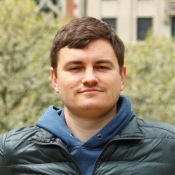
Elaine Shi is a Professor with a joint appointment in the Department of Computer Science (CSD) and the Department of Electrical and Computer Engineering (ECE) at Carnegie Mellon University (CMU). She is also an Adjunct Professor of Computer Science at the University of Maryland. Her research focuses on cryptography, security, mechanism design, algorithms, blockchains, and programming languages. Shi co-founded Oblivious Labs, Inc., and her work on Oblivious RAM and differentially private algorithms has been adopted by major companies like Signal, Meta, and Google. Affiliations: CMU’s Crypto Group CMU’s Cylab Crypto Seminar Series (co-founder) Research Interests: Cryptography and Security: Focused on oblivious computation, private information retrieval, and secure protocols. Blockchain Technology: Including consensus mechanisms, transaction fee design, and decentralized systems. Privacy-Preserving Algorithms: Such as differential privacy and secure multi-party computation. Algorithm Design: With applications to parallel computing and efficient data structures. Awards: Packard Fellow Sloan Fellow ACM Fellow IACR Fellow Advising & Grants: Current advisees include PhD students like Benjamin Chan, Yanyi Liu, Mingxun Zhou, and Nikhil Vanjani. Past students have taken academic roles at institutions like UVA, University of Michigan, and Duke University. Grants supported research in secure computation, blockchain mechanisms, and privacy-preserving technologies. Labs & Teams: Co-founder of Oblivious Labs, Inc. Leading CMU’s Crypto Group and Cylab Crypto Seminar Series.
Benedikt Bünz is an Assistant Professor of Computer Science at New York University's Courant Institute of Mathematical Sciences. He is also a co-founder and chief scientist of Espresso Systems, where he applies his research expertise to real-world blockchain solutions. His academic work bridges theoretical cryptography with practical blockchain implementations, focusing on enhancing privacy, security, and usability of decentralized systems. Dr. Bünz's research centers around applied cryptography, consensus mechanisms, and game theory as they relate to cryptocurrencies. His work spans zero-knowledge proofs, verifiable delay functions, secure multi-party computation, and privacy-preserving protocols. He has made significant contributions to Bulletproofs, a zero-knowledge proof system deployed on blockchains like Monero, and pioneered research in verifiable delay functions which are now part of Ethereum 2.0's design. His recent work focuses on recursive proof systems, accumulation schemes, and efficient verification techniques for blockchain scalability. His publication record shows a consistent progression from foundational cryptographic primitives to practical blockchain implementations. Recent work demonstrates increasing sophistication in recursive proof systems (ProtoStar, HyperPlonk), novel accumulation techniques (ARC, DewTwo), and foundational work on randomness generation (VDFs). His research consistently bridges theoretical cryptography with real-world blockchain applications, resulting in protocols that are both theoretically sound and practically implementable across multiple blockchain platforms. Dr. Bünz actively contributes to the academic community through teaching and mentorship. He teaches courses on cryptography of blockchains and computer security at NYU, providing students with hands-on experience in blockchain security and cryptographic protocols. His industry engagement through Espresso Systems demonstrates his commitment to translating academic research into practical solutions for the blockchain ecosystem.
Stephen Meisenbacher is a Research Associate at the Technical University of Munich (TUM) , affiliated with the School of Computation, Information and Technology and the Department of Computer Science, I19 . He has been part of the Software Engineering for Business Information Systems (SEBIS) chair since March 2022. His research focuses on Privacy-Preserving Natural Language Processing (NLP) , Differential Privacy , and Privacy-Enhancing Technologies (PETs) , with a particular interest in their integration into software development and business applications. His work also explores Hybrid, Expert-Driven Classification Systems and Usable Privacy solutions. Stephen’s recent publications address trends in AI Privacy Risks , Text Rewriting with DP , Legal AI Use Cases , and Data Protection Compliance . He has contributed to GDPR-related research and PETs adoption in small enterprises. His teaching includes Natural Language Processing seminars and Software Engineering lecture courses for Master’s and Bachelor’s students at TUM. He also organizes Entrepreneurship for Small Software-Oriented Enterprises seminars. Stephen holds a Master’s in Informatics from TUM (DAAD Graduate Scholarship) and a Bachelor’s in Computer Science from the University of Notre Dame, with additional studies in German Language and Literature. Contact: stephen.meisenbacher@tum.de | LinkedIn
Flavio P. Calmon is the Thomas D. Cabot Associate Professor of Electrical Engineering at Harvard University's John A. Paulson School of Engineering and Applied Sciences (SEAS). He holds a Ph.D. in Electrical Engineering and Computer Science from MIT, an M.Sc. from the Universidade Estadual de Campinas (Brazil), and a B.Sc. from the Universidade de Brasília (Brazil). His research focuses on the intersection of information theory, machine learning, and statistics, with applications to privacy, fairness, and trustworthy AI systems. He has received prestigious awards, including the NSF CAREER Award (2018) and the James L. Massey Award (2024). Research interests include developing theoretical foundations for fair and private machine learning, understanding algorithmic bias, and designing systems with provable guarantees. His work spans information-theoretic tools for responsible AI, distributed privacy mechanisms, and understanding the limits of fairness interventions. He has advised numerous students, including Hao Wang, Hsiang Hsu, and Lucas Monteiro Paes, many of whom now hold prominent roles in academia and industry. Calmon's research is supported by grants from NSF, Amazon, Google, and IBM. He has organized workshops on AI in Brazil and leads initiatives to broaden participation in STEM from underrepresented groups. His lab collaborates with institutions globally and emphasizes both foundational theory and practical applications of machine learning.
Amrita Roy Chowdhury is an Assistant Professor in the Department of Computer Science at the University of Michigan, Ann Arbor. Her research focuses on developing systems that enable safe, decentralized data analytics while ensuring provable privacy guarantees through the synergy of differential privacy and cryptography. Key research areas: Data Privacy, Cryptography, Secure Data Analytics, and Privacy-Preserving Machine Learning. Recent work explores prompt sanitization for LLMs (NDSS 2026), robust graph analysis (ASIACCS 2025), and metric differential privacy (CCS 2024). She has received awards including Best Paper at Private ML@ICLR'24 and Best Poster at ITA'23. Current Ph.D. advisees include Mushtari Sadia, Yiyi Sun, and Samanway Sadhu. Her work spans conferences like IEEE S&P, CCS, USENIX Security, and ICML.
Ananth Grama is the Samuel D. Conte Distinguished Professor of Computer Science and Associate Director of the Center for Science of Information at Purdue University. He holds a faculty position in the Department of Computer Science, College of Science. His research focuses on parallel computing, distributed systems, machine learning, and their applications in complex systems such as materials modeling and clinical analytics. He teaches advanced courses like CS525 (Parallel Computing) and CS314 (Numerical Methods). Research interests span parallel algorithms, fault-tolerant learning, quantum machine learning, and data-driven healthcare analytics. Recent work addresses fundamental limits of generative models, online learning under noisy conditions, and clinical outcome predictions. His projects include DOE-funded research on critical element recovery and NIH grants for hearing assessment technologies. Notable contributions include over 50 peer-reviewed publications since 2022, with recent papers appearing at ICLR, NeurIPS, and ICML. Current postdocs include Changlong Wu (collaborating with Wojciech Szpankowski) and Luopin Wang (with Nadia Atallah). He advises seven graduate students and oversees multidisciplinary research teams.
Quanquan Liu is an Assistant Professor of Computer Science at Yale University. His research focuses on algorithms for large data, dynamic and distributed graph algorithms, parallel computing, differential privacy, and Byzantine-resilient systems. He holds a PhD in Computer Science from MIT's Theory Group and has held postdoctoral positions at Northwestern University and MIT. Education: PhD in Computer Science, MIT (Advisors: Erik Demaine and Julian Shun) MEng in Computer Science, MIT B.S. in Computer Science and Math, MIT (Advisor: David Karger) Research Interests: Theory and practice of algorithms for large-scale data, dynamic/distributed graph algorithms, parallel and high-performance computing, differential privacy, and Byzantine-resilient algorithms. Recent Highlights: His work includes practical differentially private graph algorithms, efficient parallel algorithms for graph problems, and fair course allocation mechanisms. Notably, he received the Best Paper Award at SPAA 2022 for parallel dynamic graph algorithms. Service: PC member for PPoPP, ESA, SPAA, and ALENEX Coach for USA Computing Olympiad (USACO) and Northwestern's ICPC team Current Group: Advising PhD students Felix Zhou and Pranay Mundra, and Master's student Jinghua Sun.
Brandon Reagen is an Assistant Professor in the Department of Electrical and Computer Engineering at New York University's Tandon School of Engineering, with affiliations in Computer Science, the Center for Advanced Technology in Telecommunications (CATT), and the NYU Center for Cybersecurity (CCS). He holds a PhD in Computer Science from Harvard (2018) and undergraduate degrees in Computer Systems Engineering and Applied Mathematics from the University of Massachusetts, Amherst (2012). His research focuses on computer architecture, hardware acceleration for deep learning and privacy-preserving computation, and VLSI design. He pioneered efficient deep learning accelerator designs through unsafe optimizations and contributed to benchmarking frameworks like Aladdin and MachSuite. His work spans privacy-preserving machine learning, secure computing systems, and hardware-software co-design for cryptographic protocols. Key achievements include the NSF CAREER Award (2024) and Siebel Scholar recognition (2018). His research centers on advancing secure computing through innovations like zero-knowledge proof accelerators (e.g., zkSpeed), fully homomorphic encryption frameworks (Orion), and entropy-guided privacy techniques for large language models. He leads interdisciplinary efforts at CATT and CCS to bridge hardware design and cybersecurity challenges. Reagen's contributions include over 50 publications in top-tier conferences (e.g., ISCA, ASPLOS, MLSys) and industry collaborations at Facebook AI. His work emphasizes practical solutions for encrypted computation efficiency, privacy-preserving inference, and scalable secure systems.
Mauro Conti is a Full Professor at the University of Padua, Italy, where he serves as Editor-in-chief of IEEE TIFS, UniPD Academic Advisor for Entrepreneurship Development, Study Program Coordinator of the MSc degree in Cybersecurity, Head of the SPRITZ Security and Privacy Research Group, and Director of the UniPD node of CINI Cybersecurity National Lab. He also maintains affiliations with TU Delft (NL) and the University of Washington (USA). Additionally, he is the CEO and co-founder of CHISITO and co-founder of DYALOGHI. His research focuses on security and privacy for wireless resource-constrained mobile devices (WSNs, RFIDs, and smartphones), computer system security, computer forensics, access control, and distributed and networked systems. Professor Conti has published extensively in top security venues including ACM CCS, IEEE S&P, NDSS, and USENIX Security, with recent work covering topics such as battery authentication, federated learning privacy, private set intersections, USB peripheral fingerprinting, and ATM PIN inference. He has received numerous prestigious awards including IEEE Fellow, Young Academy of Europe Fellow, EU Marie Curie Fellow, and DAAD Fellow. Professor Conti has advised over 100 students at various levels including PhD, MSc, and BSc, many of whom have gone on to successful careers in academia and industry. His research has been supported by multiple European Commission projects, university grants, and industry collaborations with companies like Cisco and Intel.
Gautam Kamath is an Assistant Professor at the University of Waterloo's Cheriton School of Computer Science, a Faculty Member at the Vector Institute, and a Canada CIFAR AI Chair. He leads The Salon, a research group focused on statistics, algorithms, machine learning, and optimization. His work bridges theoretical foundations with practical applications in data privacy and robustness, contributing to both academic research and real-world deployments that impact millions of users. Dr. Kamath earned his PhD and SM degrees in Electrical Engineering and Computer Science at MIT, where he was advised by Costis Daskalakis. Prior to MIT, he graduated from Cornell University in May 2012 with a degree in Computer Science and Electrical and Computer Engineering, where he worked with Bobby Kleinberg. His academic journey reflects a strong foundation in both theoretical computer science and practical applications. His research focuses on developing solutions for trustworthy and reliable machine learning and statistics, with particular emphasis on data privacy and robustness. He addresses fundamental problems in these areas, revitalizing statistical toolkits for the modern data era where privacy preservation is paramount. His work spans theoretical foundations of differential privacy to practical applications that have been deployed at scale, including contributions to systems that protect the sensitive information of hundreds of millions of individuals. Analysis of his recent publications reveals a strong trend toward addressing the interplay between privacy, robustness, and machine learning performance. His work increasingly examines practical deployment challenges while maintaining theoretical rigor, with growing emphasis on diffusion models, generative AI, and the legal implications of AI systems. There's a clear trajectory from foundational privacy theory toward addressing real-world implementation challenges across diverse application domains. Canada CIFAR AI Chair Ontario Early Researcher Award 2024 Caspar Bowden Award for Outstanding Research in Privacy Enhancing Technologies STOC Best Student Presentation Award ICML 2024 Best Paper Award Microsoft Research Fellow at the Simons Institute for the Theory of Computing Dr. Kamath actively mentors students, with notable successes including Valentio Iverson winning the Germain-Erdős Undergraduate Award and Chris Trevisan receiving the CRA Outstanding Undergraduate Researcher Award. His service to the research community is extensive, serving as Editor-in-Chief of TMLR, on the Executive Committee of the Learning Theory Alliance, and on steering committees for major conferences including ICML, COLT, and ALT. He has organized numerous workshops focused on privacy-preserving machine learning and differential privacy. Through The Salon research group, Dr. Kamath fosters a collaborative environment where postdoctoral fellows, graduate students, and undergraduates work together on cutting-edge problems at the intersection of statistics, algorithms, machine learning, and optimization. The group maintains strong connections with industry partners and participates in major research initiatives, including the Vector Institute's privacy and security research efforts. Looking forward, Dr. Kamath will be moving to the Computer Science department at NYU's Courant Institute of Mathematical Sciences in September 2026, where he plans to expand his research program.
Kiwan Maeng is an Assistant Professor in Computer Science and Engineering, focusing on the intersection of machine learning systems, privacy-preserving techniques, and low-latency computing architectures. His research emphasizes algorithm-system co-design for scalable and secure AI implementations. Research Trends : His recent work explores retrieval-augmented generation systems, low-latency diffusion models, privacy-preserving federated learning, and energy-harvesting intermittent computing frameworks. Publications highlight collaborations across machine learning, cryptography, and hardware-software co-design. Key Projects : He leads a 3-year NSF SaTC grant (2024-2027) addressing privacy-preserving data embedding for untrusted ML services, and contributes to serverless video analytics frameworks (SVDE) and VR streaming optimization (PIRATE). Technical Contributions : His scholarship spans 17 conference contributions and 3 journal articles since 2007, with notable work on memory encryption for edge devices, secure MPC-based inference, and sustainable AI systems. Current research focuses on balancing privacy guarantees with model utility while optimizing for environmental efficiency.
Roxana Geambasu is an Associate Professor at Columbia University's Department of Computer Science, with affiliations to the Software Systems Lab and the Cybersecurity Committee . She specializes in systems security, differential privacy, and resource management for modern computing environments. PhD: University of Washington (2011) Undergraduate: Polytechnic University of Bucharest, Romania Her research focuses on integrating differential privacy as a first-class computing resource in infrastructure systems, with key contributions in: Privacy Budget Management (PrivateKube, DPack, Turbo) Web & Mobile Privacy (Cookie Monster, Big Bird) Security Abstractions (POSIX, Vanish, XRay) Article trends show a strong emphasis on differential privacy (8/15), resource scheduling (5/15), and privacy-preserving advertising (3/15). Key subfields include budget optimization, browser APIs, and ML pipeline privacy. Scientific awards include: Alfred P. Sloan Fellowship NSF CAREER Award Google Ph.D. Fellowship in Cloud Computing Best Paper Awards at SOSP, EuroSys She advises M.S. and undergraduate students, teaching courses in Distributed Systems and Privacy Curriculum . Her lab develops tools like PixelDP and Sunlight for operationalizing privacy in real-world systems.
Marc Juarez Miro is a Lecturer in Cyber Security and Privacy at the School of Informatics, University of Edinburgh. He is a member of the Security, Privacy, and Trust (SecPrivTru) research group, and affiliated with the Security and Privacy Research Institute and the Laboratory for Foundations of Computer Science. His research lies at the intersection of cybersecurity, privacy, and machine learning. Key areas include ML-based traffic analysis , security and privacy of machine learning models , and fairness in private learning systems . He investigates both theoretical and practical aspects of privacy-preserving technologies, including watermarking in generative AI and defenses in anonymity networks like Tor. Recent publications in venues such as USENIX Security, PETS, and SaTML highlight his work on vulnerabilities in watermarking schemes, fairness in differentially private ML, and traffic analysis mitigation. These works reflect a strong trend toward auditing and improving the trustworthiness of AI and privacy systems. Google Research Scholar Award in Security (2024) PETS Student Paper Award He actively supervises PhD and Master’s students, including Kai Yao and Lisa Lavrentieva, and has secured competitive seed funding such as the GAIL grant for research on undetectable watermarks in generative AI. His advising focuses on privacy, security, and ethical AI. Marc leads and co-organizes research initiatives such as a workshop on watermarking for generative AI and contributes to open-source tools like wfpadtools and dispa-plugin, indicating strong engagement with both theoretical and applied aspects of privacy engineering.
Aaron Roth is the Henry Salvatori Professor of Computer and Cognitive Science at the University of Pennsylvania, affiliated with the Department of Computer and Information Science in the School of Engineering and Applied Science. He holds a secondary appointment in the Department of Statistics and Data Science at the Wharton School and is associated with several research centers including PRiML, the Warren Center for Network and Data Sciences, and the AMCS program. He received his PhD from Carnegie Mellon University under Avrim Blum and was a postdoc at Microsoft Research New England. His research focuses on algorithms and machine learning, particularly in private data analysis, fairness in machine learning, game theory, mechanism design, and learning theory. His work bridges theoretical computer science with societal concerns, advocating for ethically aware algorithm design. He co-authored the book The Ethical Algorithm with Michael Kearns, which explores how to embed social values like privacy and fairness into algorithmic systems. His recent publications show a strong trend toward uncertainty quantification, multicalibration, conformal prediction, and fairness in reinforcement learning and high-dimensional settings. He frequently publishes in top-tier venues such as STOC, FOCS, ICML, NeurIPS, and COLT, often with a focus on rigorous theoretical foundations with practical implications. Hans Sigrist Prize Presidential Early Career Award for Scientists and Engineers (PECASE) Alfred P. Sloan Research Fellowship NSF CAREER award Google Faculty Research Award Amazon Research Award Yahoo Academic Career Enhancement award Roth has advised numerous PhD students and postdocs, many of whom now hold academic or industry research positions. He is also an Amazon Scholar at AWS and has served in advisory roles for companies like Apple, Facebook, Leapyear, and Spectrum Labs. He has been active in organizing workshops and tutorials on differential privacy, fairness, and adaptive data analysis, and has given keynotes at major conferences and institutions worldwide. He leads research groups and collaborates widely across Penn, focusing on responsible AI, privacy, and algorithmic fairness. His lab produces foundational work on calibration, unlearning, privacy-preserving learning, and equitable decision-making systems.
Nikita Zhivotovskiy is an Assistant Professor in the Department of Statistics at the University of California Berkeley within the College of Letters and Science. His research spans the intersection of mathematical statistics, probability theory, and statistical learning theory with particular focus on high-dimensional data analysis and non-parametric inference. His research interests include mathematical statistics, applied probability, statistical learning theory, high-dimensional data analysis, non-parametric inference, and artificial intelligence/machine learning. Zhivotovskiy's work addresses fundamental questions in statistical learning theory, including risk bounds, algorithmic stability, and convergence rates, with applications spanning multiple domains including robust statistics and private learning. His recent publications (2021-2025) demonstrate significant contributions to theoretical machine learning, particularly in statistical learning theory, risk bounds, high-dimensional statistics, and algorithmic stability. These works appear in top venues including NeurIPS, COLT, and FOCS, reflecting the theoretical depth and importance of his contributions to the field. Among his notable achievements is a Best Paper Award at the Conference on Learning Theory (COLT) in 2020 for his work on 'Proper Learning, Helly Number, and an Optimal SVM Bound.' Zhivotovskiy has also contributed to the theoretical foundations of PAC learning, risk minimization, and statistical aggregation. Prior to his current position, Zhivotovskiy was a postdoctoral researcher at ETH Zürich (2021-2022) and Google Research (2019-2020). He completed his PhD at Moscow Institute of Physics and Technology in 2018 under the supervision of Vladimir Spokoiny and Konstantin Vorontsov.