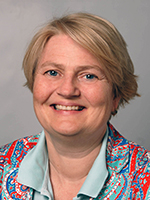
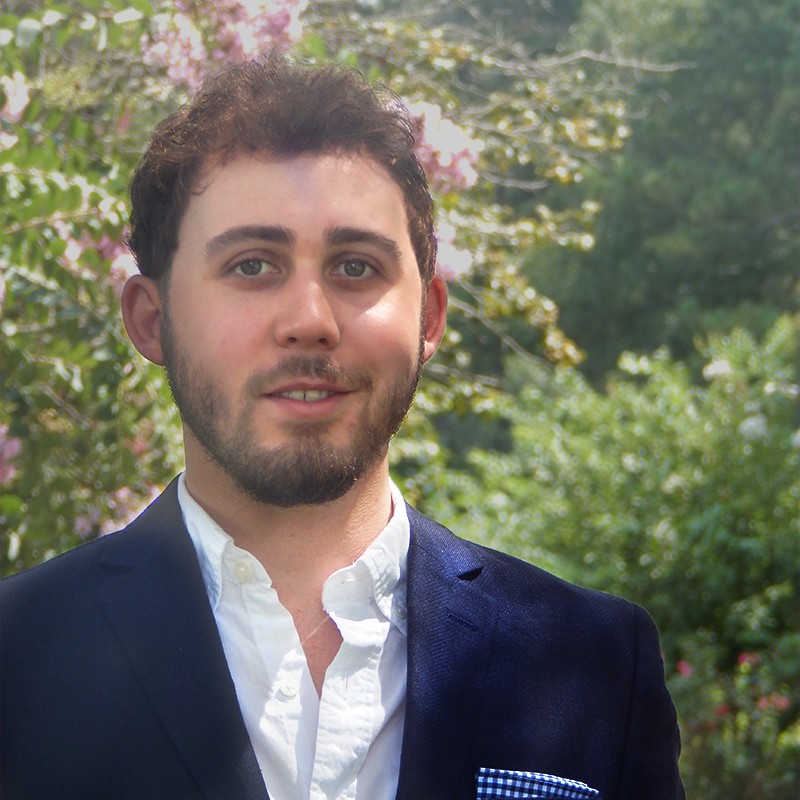
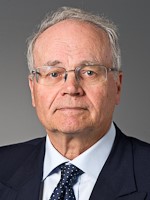
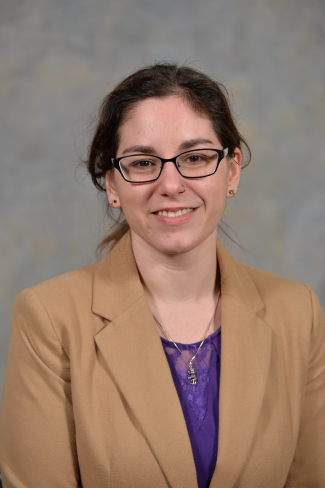
Turid Birgitte Boye is a Professor II at the Department of Behavioral Medicine, University of Oslo, specializing in the psychosomatic and neuropsychiatric aspects of somatic illnesses . Her research bridges mental health with physical conditions, focusing on disorders like bipolar disorder, schizophrenia, and inflammatory bowel disease . As a psychiatrist and clinical researcher, she integrates neuroimmunology, brain imaging, and psychosocial factors into her work.
Rebecca Knoph is a postdoctoral research fellow at the Centre for Research on Equality in Education (CREATE) , affiliated with the Department of Education at the University of Oslo . Her work focuses on improving language assessment tools for multilingual learners through advanced psychometric methods. PhD in Educational Sciences (2023, University of Oslo) MS in Experimental Psychology (2017, Missouri State University) BA in Psychology (2015, Missouri State University) Research interests span vocabulary acquisition, assessment design, and multilingual education. Current projects include developing adaptive listening comprehension tests for Norwegian preschoolers and analyzing technical vocabulary across academic disciplines. Collaborations extend to international initiatives like AVEL (Houston) and LiNCon (Oslo). Teaching roles at both master's and bachelor's levels have covered statistics, research methods, and intervention design. Methodological expertise includes Item Response Theory , Structural Equation Modeling , and Differential Item Functioning analysis.
Kyle Nickodem serves as the Director of the Research Methodology Consulting Center at the University of Minnesota-Twin Cities , specializing in quantitative methods in education . He holds a PhD in Quantitative Methods in Education and a BA in Psychology. Degrees : PhD (University of Minnesota-Twin Cities), BA (University of Notre Dame) Research Interests span educational and psychological measurement , causal inferencing study design , and reproducible research tools . His work focuses on positive youth development through collaborations with school districts and educational organizations. Contributions include developing R packages like DIFreport and kfa for methodological rigor. He provides consultations on multilevel modeling , propensity scores , and study design , emphasizing data reproducibility and statistical programming . Current Projects involve analyzing social-emotional learning metrics , gender differences in violence perpetration , and measurement invariance across large-scale educational datasets. Contact: nicko013@umn.edu
Trenton Mize is an Associate Professor in the Department of Sociology at Purdue University, specializing in social psychology and methodological innovation. He holds a Ph.D. and M.A. in Sociology, an M.S. in Applied Statistics, and a B.A. in Sociology and B.S. in Psychology from Indiana University and the University of Georgia, respectively. Education: Ph.D. in Sociology (Indiana University) M.S. in Applied Statistics (Indiana University) M.A. in Sociology (Indiana University) B.A. in Sociology & B.S. in Psychology (University of Georgia) His research combines social psychological theories of status, identity, and stereotyping with methodological advancements in categorical data modeling and experimental design. Key themes include gender and sexuality dynamics, parental leave policy evaluation, mental illness stigma, and statistical tool development. Recent publications focus on gendered parental leave perceptions, sexual identity discrepancies, and Stata-based methodological tools for social scientists. He actively promotes open science by sharing research data, code, and materials. Mize contributes to graduate education through the Advanced Methodologies at Purdue (AMAP) initiative, developing new courses and leading short workshops on advanced statistical techniques. He joined Purdue in 2017 and has published 12 peer-reviewed articles, one book chapter, and one undergraduate research journal piece.
Ulrik Fredrik Malt is a Professor at the University of Oslo's Faculty of Medicine, specifically within the Institute of Clinical Medicine's Division of Clinical Neuroscience. His research is centered at the Oslo University Hospital (OUS) Ullevål campus where he maintains a visiting address at Kirkeveien 166, 0450 Oslo. As a prominent figure in neuropsychiatric research, Malt leads investigations into the neurobiological underpinnings of mood disorders with particular emphasis on bipolar disorder and depression. Malt's research interests span multiple interconnected domains within clinical neuroscience. His primary focus involves examining structural and functional brain changes in bipolar disorder using advanced neuroimaging techniques. He has conducted extensive work on cortical plasticity, particularly investigating how mood episodes correlate with cortical thinning patterns over time. His research also explores the intersection of immunology and psychiatry, examining cytokine profiles in depression and their relationship to symptom severity and pain perception. Additional research strands include the study of alexithymia in mood disorders, sleep deprivation effects on brain microstructure, and somatic symptom disorders in both psychiatric and medical patient populations. Analysis of Malt's recent publications reveals a strong emphasis on collaborative mega-analyses through the ENIGMA consortium, where he contributes to large-scale neuroimaging studies of bipolar disorder involving thousands of participants across multiple international sites. His work consistently integrates clinical psychiatry with advanced computational methods to identify brain-based biomarkers for mood disorders. The research demonstrates particular attention to how metabolic factors like obesity interact with brain morphology in bipolar disorder, and how inflammatory markers correlate with clinical symptoms in major depression. Malt actively participates in research on heart transplantation patients' psychological outcomes, examining anxiety, depression, and cognitive function in this medically complex population. His work spans multiple clinical contexts including organ transplantation, chronic obstructive pulmonary disease, and congenital gastrointestinal conditions, demonstrating a broad application of psychiatric principles across medical specialties. As part of the Brain Plasticity and Neuropsychiatry research group, Malt supervises multiple projects investigating longitudinal brain changes in psychiatric disorders. His laboratory employs multimodal neuroimaging approaches combined with detailed clinical phenotyping to understand the progression of mood disorders. Current research directions include examining how sleep architecture affects cortical plasticity markers, investigating the neural correlates of emotional processing difficulties in bipolar disorder, and exploring the relationship between inflammatory processes and structural brain changes in depression.
Prof. Dr. Philipp Doebler is a faculty member at the Technical University of Dortmund in the Faculty of Statistics , holding the Chair of Statistical Methods in the Social Sciences . He serves as Dean of the Faculty of Statistics (2022–2024) and spokesperson for the interdisciplinary FAIR program since 2021. His Erdős number is 3, reflecting collaborations in mathematical research. Education: Mathematics (Diploma, 2001–2006), PhD in Set Theory (2010) Professional Roles: Research Associate (Münster), Principal Investigator (DFG-funded 2014), Visiting Professor (Mannheim/Ulm), Full Professor (Dortmund since 2016) His research focuses on quantitative psychological methods , combining psychometric models with machine learning and meta-analysis . Key areas include large-scale assessment , automated scoring , and agile intervention research , with applications in educational psychology and mental health. Recent publications (2024–2025) emphasize interpretable machine learning for psychometric tasks, robust automated scoring , and Bayesian modeling in educational assessments. His work bridges statistical theory with practical applications in divergent thinking analysis and AI trustworthiness . His working group includes M.Sc. Loreen Sabel and M.Sc. Stefan Inerle , with collaboration history at the University of Münster and visiting roles in Mannheim/Ulm. Office hours are held Wednesdays at 11am in Mathematics Room 746, with remote Zoom options available.
Prof. Dr. Tobias C. Stubbe serves as Professor at the Chair of Quantitative Methods in the Social Sciences and Statistics within the Institute for Methods and Methodological Foundations of the Social Sciences, Faculty of Social Sciences at Georg August University of Göttingen, Germany. His office (Room 1.106) is located at Goßlerstrasse 19, 37073 Göttingen, with primary contact via tstubbe@uni-goettingen.de and teaching-specific inquiries directed to lehre.stubbe@uni-goettingen.de. His research centers on quantitative educational assessment, specializing in international large-scale studies (PIRLS, IGLU, TIMSS) to analyze social disparities in student achievement across reading, mathematics, and science competencies. Key interests include school effectiveness comparisons (private vs. public institutions), transition dynamics from primary to secondary education, and impacts of socioeconomic background on learning outcomes. Methodologically, he employs advanced statistical techniques to examine longitudinal trends and differential item functioning in assessment instruments. Analysis of his 2011-2018 publications reveals consistent focus on educational equity through rigorous quantitative analysis of national and international datasets. His work demonstrates particular expertise in reading comprehension assessment frameworks and mathematical competency development among diverse student populations, with recurring emphasis on migration background effects and gender disparities. The research trajectory shows increasing methodological sophistication in handling complex educational survey data. While specific grant details and advised students aren't documented in the source material, his leadership of the Chair indicates responsibility for graduate supervision and research team management. His involvement in major assessment programs like IGLU implies participation in funded research consortia requiring significant grant acquisition. The Chair of Quantitative Methods functions as both a research hub for educational methodology development and a teaching unit within the Institute, likely comprising researchers specializing in psychometrics, statistical modeling, and educational data analysis who support Germany's contribution to international comparative studies.
Richard Sawatzky is an Affiliated Professor at the University of Gothenburg's Department of Nursing Sciences and Health within the Faculty of Medicine. His academic work bridges nursing science, health services research, and clinical practice with a strong emphasis on patient perspectives. His research centers on patient-reported outcomes (PROs), quality of life measurement, and person-centered care methodologies across multiple clinical contexts. Sawatzky has developed innovative approaches to analyzing PRO data, particularly in response shift phenomena and symptom pattern identification using latent class analysis. His work spans cancer care, palliative settings, dialysis treatment, and mental health in chronic illness. Analysis of his recent publications (2023-2025) reveals a strong focus on methodological advancements in PRO research alongside practical applications in clinical settings. He has contributed significantly to understanding how to implement PROs effectively in diverse healthcare contexts while maintaining patient-centered perspectives. His work frequently addresses vulnerable populations including older adults with cancer, dialysis patients with mental health concerns, and migrants navigating healthcare systems. Sawatzky maintains extensive international collaborations, particularly between Swedish and Canadian institutions, reflecting the global relevance of his methodological contributions to patient-centered outcomes research.
Dr. Jesper Tijmstra is an Assistant Professor in the Department of Methodology at the Tilburg School of Social and Behavioral Sciences, Tilburg University. His academic career includes previous positions as a test expert at Cito (2013-2014) and as a junior lecturer at Utrecht University (2011-2013), where he also completed his PhD in psychometrics. Dr. Tijmstra's research focuses on advanced psychometric methods, particularly item response theory, testing theory, and measurement methodology. His work addresses critical issues in educational and psychological measurement including extreme response style, differential item functioning, response time analysis, and measurement invariance. His research bridges theoretical advances with practical applications in adaptive learning systems and survey methodology. Analysis of his recent publications (2023-2025) reveals a strong focus on methodological innovations in psychometrics, particularly in detecting and correcting for response biases. His work frequently employs Bayesian approaches, simulation studies, and applications of IRT models to real-world measurement problems. The publications demonstrate both theoretical depth and practical relevance to educational and psychological assessment. Dr. Tijmstra actively collaborates with a core group of researchers including Martijn Schoenmakers, Jeroen Vermunt, and Maria Bolsinova, with whom he has produced multiple high-impact publications. His work appears in top methodology journals such as Behavior Research Methods, Educational and Psychological Measurement, and Journal of Educational and Behavioral Statistics. His research has practical implications for improving measurement quality in adaptive learning systems, cross-cultural surveys, and psychological assessments where response biases might threaten validity. His work on incorporating response times into ability tracking shows how methodological advances can enhance educational technology applications.
Timothy Ricker is an Associate Professor in the Department of Psychology at the University of South Dakota, where he conducts research on working memory, cognition, attention, and perception. His work combines behavioral experimentation, mathematical process modeling, and Bayesian estimation to investigate how visual sensations transform into robust working memories and the mechanisms of forgetting during multitasking. He teaches courses related to cognition and statistics, framing the brain as a computer and life as probabilistic events. Education: Ph D, Psychology, University of Missouri, 2013 MA, Psychology, University of Missouri, 2009 BA, Psychology, Michigan State University, 2006 Ricker's research focuses on short-term consolidation in working memory, examining how fleeting sensory representations become durable memories. His lab investigates boundary conditions for cognitive load effects, the relationship between working memory and multitasking, and how memory representations change across different tasks. Using computational models, his team differentiates fine-detail and categorical-gist memory representations, with recent work challenging traditional views that multitasking causes forgetting—instead proposing it prevents standard memory creation processes. His publication record shows a clear trajectory toward understanding memory consolidation mechanisms, with increasing emphasis on computational modeling approaches like drift diffusion modeling. Recent work explores the relationship between working memory and long-term memory, the impact of mind-wandering on cognitive performance, and translating laboratory findings to everyday cognitive functioning. Scientific Awards: Arts & Sciences Faculty Travel Grant, College of Arts & Sciences, University of South Dakota (2022) Arts & Sciences Faculty Travel Grant, College of Arts & Sciences, University of South Dakota (2023) Arts & Sciences Faculty Travel Grant, College of Arts & Sciences, University of South Dakota (2024) Ricker has secured substantial grant funding including a $1.5M award from the National Institute of Neurological Disorders and Stroke (2025-2030) for his Bayesian Neurocomputational Model of Cognitive Change in Multiple Sclerosis. His research program is supported by diverse funding sources including the Swiss National Science Foundation and the Center for Brain and Behavior Research at USD. He directs the Memory & Attention Laboratory at USD, which employs behavioral experiments, eye tracking, pupillometry, and computational modeling to study fundamental memory and attention processes. The lab has developed a distinctive focus on translating laboratory findings to everyday cognitive functioning and understanding suboptimal cognitive performance in daily life contexts, moving beyond traditional ideal observer models.
Gordon Brooks is a Professor in the Department of Educational Studies at Ohio University's Patton College of Education, specializing in educational statistics and psychometrics. His research develops practical statistical methodologies while creating instructional tools to enhance quantitative education. Education B.A. in Computer Science and Economics, College of William and Mary M.A. in Interpersonal and Organizational Communication, Ohio University Ph.D. in Educational Research and Evaluation, Ohio University Research Focus Dr. Brooks' scholarship centers on statistical innovation for educational research , with emphasis on Monte Carlo simulation , longitudinal data analysis , and scale development . His work bridges methodological rigor with classroom applications, particularly through software that demystifies complex concepts like ANOVA post-hoc tests and item response theory. Recent publications (2023-2024) address cutting-edge challenges in effect size estimation and multivariate analysis. Publication Trends His 35+ publications show sustained methodological contributions, evolving from foundational software tools (TAP, FISH) to advanced 2024 works on four-parameter IRT modeling and pandemic-related grief assessment. The consistent focus remains on practical statistical solutions for educational researchers, with recent work emphasizing small-sample techniques and human-friendly analytical approaches. Academic Engagement Teaches graduate courses in Educational Research and Evaluation Develops instructional software for statistical pedagogy Active publication record through 2024 indicates ongoing research leadership
Prof. Dr. Dirk Lubbe is Professor of Psychological Methodology at Brandenburg Medical School Theodor Fontane, where he has been employed since October 2021. His department focuses on developing advanced statistical methods for psychological assessment. His research examines: Psychometric test models for diagnostic accuracy Prognostic modeling in behavioral sciences Quantitative analysis of response biases Statistical frameworks for judgment tendencies Recent publications (2017-2025) demonstrate consistent work in psychometrics, with emphasis on: Model fit assessment methodologies Questionnaire response pattern analysis Clinical measurement validation Notably, 70% of his recent articles address extreme response style modeling.
Dr. Sam Cacace serves as an Assistant Professor in the Department of Epidemiology and Community Health within the College of Health and Human Services at the University of North Carolina at Charlotte. She holds dual affiliation as Core Faculty with the UNC Charlotte Violence Prevention Center, where she leads research on stigma and suicide prevention in military and veteran populations through interdisciplinary team science approaches. Her academic credentials include: Ph.D. in Experimental Psychology from Washington State University (2018) M.A. in General Psychology from North Carolina Central University (2012) B.A. in Psychology & Sociology from North Carolina State University (2010) A.A. from Wake Technical Community College (2008) Dr. Cacace's research program centers on ecological and psychosocial perspectives of stigma among vulnerable groups, with specialized focus on military service members and veterans. She pioneers advanced analytical methodologies including latent variable modeling, structural equation modeling, item response theory, and differential item functioning to develop measurement tools for suicide prevention and cultural competency assessment. Her work bridges epidemiological frameworks with clinical psychology to address barriers in help-seeking behaviors and wellness outcomes. Analysis of her 11 publications (2020-2025) reveals consistent methodological innovation in psychometrics applied to military health, correctional settings, and geographic risk mapping. Key thematic clusters include validation of instruments for hate-motivated behavior and moral psychology, geographic identification of suicide risk at neighborhood levels, and latent profile analysis of self-injury correlates in incarcerated populations. Her research demonstrates strong translational impact through partnerships with NC DHHS and RTI International. Her recognition includes: 2019 APA Division 19 Challenge Coin Awardee Dr. Cacace directs significant grant-funded research through the Violence Prevention Center, with active collaborations spanning Team Red White and Blue, Consortium for Health and Military Performance, and NCServes. Her advising extends to graduate students through courses including Healthcare Data Analysis (HCIP 6102) and Introduction to Quantitative Methods (HLTH 8201/HSRD 8206), where she integrates her expertise in measurement invariance and intensive longitudinal analysis. As Core Faculty of the Violence Prevention Center, she co-leads interdisciplinary teams developing culturally competent interventions for military communities. Her prior work at NC State University's Center for Family and Community Engagement established foundational partnerships with campus military services, demonstrating her commitment to community-engaged research that bridges academic theory and veteran wellness practice.