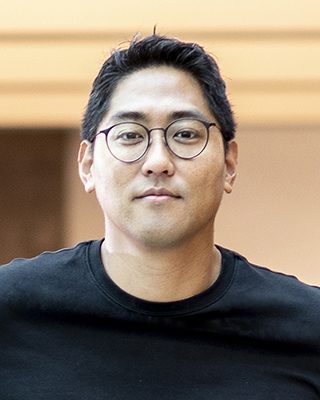
Prof. Ingmar Posner is a leading figure in applied artificial intelligence at the University of Oxford, where he serves as Principal Investigator for the Applied Artificial Intelligence Lab (A2I) and founding Director of the Oxford Robotics Institute. His work focuses on enabling robots to operate effectively in complex real-world environments through experience-driven learning. Key research areas: robot learning, scene interpretation, data-efficient learning, and transfer learning Applications in manipulation, autonomous driving, logistics, and space exploration His team has produced groundbreaking work in world models, sim-to-real transfer, and constraint-based manipulation systems (e.g., COMBO-Grasp). Notable contributions include the TWIST distillation framework and foundational research in tactile data generation (TactGen). He has received multiple best paper awards at top robotics venues. Publications reveal evolving research themes: 2025 work emphasizes language-conditioned learning (Lumos) and multi-agent decision-making, while 2024 focused on diffusion models for locomotion and differentiable simulators. Earlier work spans from urban scene analysis to physically plausible scene synthesis (RELATE).
Justin Johnson is an Assistant Professor at the University of Michigan's College of Engineering, Department of Electrical Engineering and Computer Science, and a Research Scientist at Facebook AI Research (FAIR). His work bridges computer vision, machine learning, and deep learning, focusing on visual reasoning, vision-language tasks, image generation, and 3D reasoning using neural networks. PhD, Stanford University (advised by Fei-Fei Li) His research interests span visual reasoning , vision and language , 3D vision , and image generation , with a focus on innovative applications of deep neural networks. Recent publications highlight work on 3D consistency, self-supervised learning, and multimodal integration of vision and text. Notable contributions include PyTorch3D for 3D data processing, and foundational work in visual question answering , neural style transfer , and scene graph-based image generation . Publications span top conferences like ICCV, CVPR, and NeurIPS. He teaches courses including EECS 498/598: Deep Learning for Computer Vision and EECS 442: Computer Vision at University of Michigan, with prior involvement in Stanford's CS 231N in co-teaching roles. Software projects include open-source frameworks like fast-neural-style for real-time artistic style transfer, and PyTorch3D for efficient 3D deep learning. These tools demonstrate his commitment to practical implementations and community-driven research.
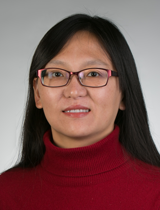
Sewoong Oh is a Professor at the Paul G. Allen School of Computer Science & Engineering at the University of Washington, where he has been faculty since 2019. His research focuses on the foundations of machine learning with particular emphasis on differential privacy, secure and robust machine learning, and federated learning. Prior to joining UW, he was at the Department of Industrial and Enterprise Systems Engineering at the University of Illinois at Urbana-Champaign from 2012-2019. He is affiliated with multiple NSF AI Institutes including ACTION (Agent-based Cyber Threat Intelligence and Operation), AI-EDGE (Future Edge Networks and Distributed Intelligence), and IFML (Foundations of Machine Learning). Oh received his PhD in Electrical Engineering from Stanford University in 2011 under Andrea Montanari, followed by postdoctoral work at MIT's Laboratory for Information and Decision Systems under Devavrat Shah. His educational background spans top institutions in theoretical computer science and electrical engineering. His research spans the critical intersection of machine learning security, privacy, and robustness. Oh's work addresses fundamental challenges in making AI systems reliable and trustworthy, with particular focus on defending against backdoor attacks, developing privacy-preserving algorithms, and creating efficient tokenization methods for language models. His recent SuperBPE work demonstrates how moving beyond traditional subword tokenization can significantly improve language model efficiency and performance. His research consistently bridges theoretical foundations with practical implementations, as evidenced by numerous open-source repositories containing production-ready code. Oh's publications reveal a consistent trajectory toward addressing security and privacy concerns in increasingly complex machine learning systems, with recent work focusing on language model tokenization, data-centric AI, and federated learning frameworks. His research shows strong interdisciplinary connections between theoretical computer science, statistics, and practical machine learning systems. ACM SIGMETRICS best paper award (2015) NSF CAREER award (2016) ACM SIGMETRICS rising star award (2017) GOOGLE Faculty Research Awards (2017, 2020) 2024 ICML Best Paper Award (for work by advisee Jon Hayase) Professor Oh maintains an active research group with numerous PhD students, postdocs, and undergraduate researchers. His students have secured prestigious positions at leading tech companies including Amazon, Google, and Snap, as well as academic appointments at institutions like University of Wisconsin-Madison and Shanghai Jiao Tong University. He has received substantial research funding through his participation in multiple NSF AI Institutes and industry research awards from Google. His lab maintains several active GitHub repositories implementing cutting-edge research in backdoor defense, robust statistics, and privacy-preserving machine learning.
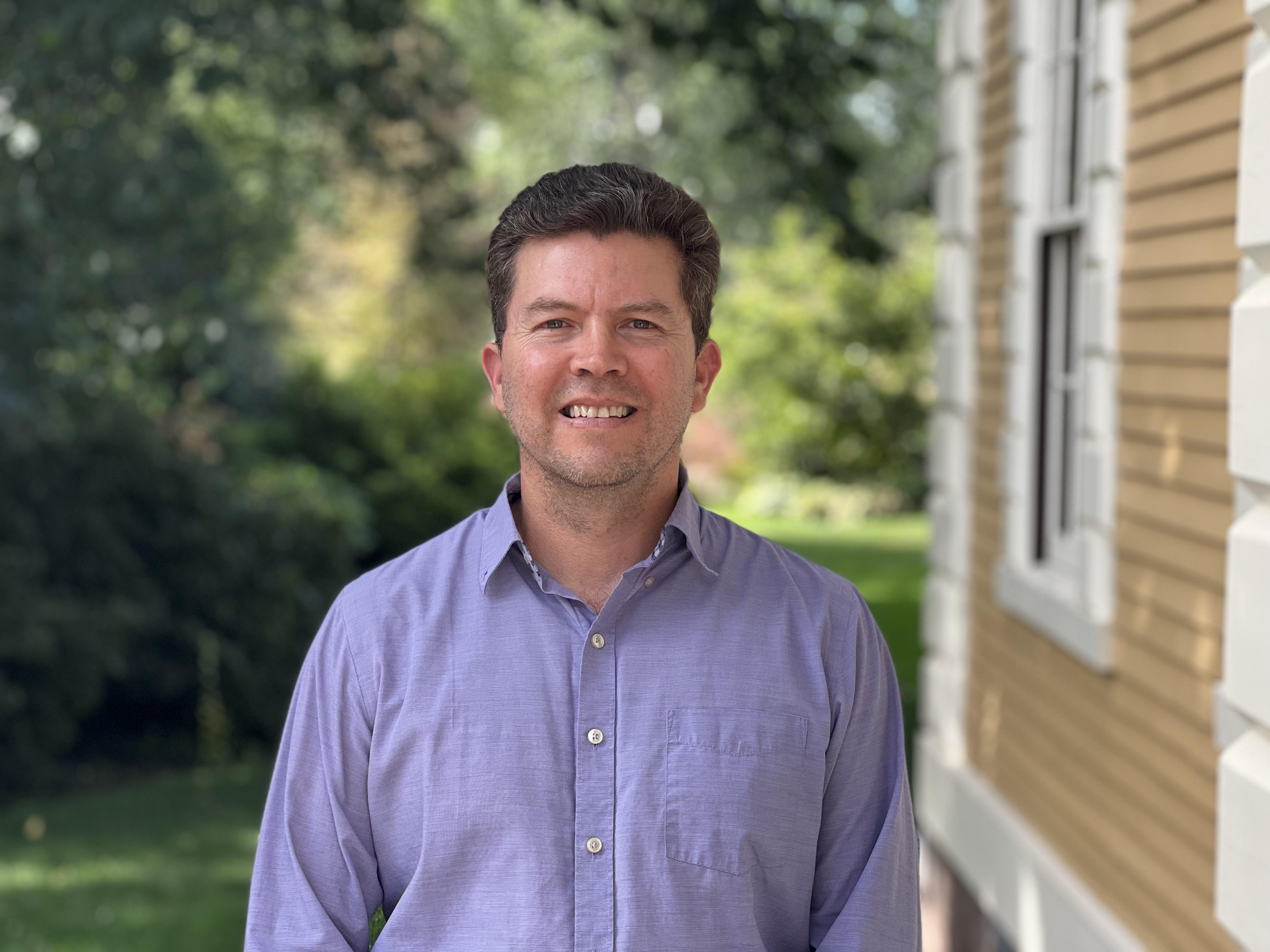
Kenji Kawaguchi is the Presidential Young Professor in the Department of Computer Science at the National University of Singapore (NUS), where he leads the Deep Learning Lab and is a faculty affiliate at the NUS Institute of Data Science. His research bridges theoretical and applied machine learning, focusing on deep learning, large language models, and physics-informed neural networks. His educational background includes a Ph.D. and S.M. in Computer Science and Electrical Engineering from the Massachusetts Institute of Technology (MIT), advised by Leslie Pack Kaelbling, and a postdoctoral fellowship at Harvard University’s Center of Mathematical Sciences and Applications. Dr. Kawaguchi’s research interests center on the theoretical foundations of deep learning, optimization, generalization, and applications in areas such as molecular modeling, AI safety, and efficient training of large models. He has made significant contributions to understanding in-context learning, diffusion models, and neural operators for partial differential equations. His recent publications (2023–2025) reflect a strong trend toward improving the efficiency, robustness, and interpretability of large-scale models, particularly in language and scientific domains. Key themes include LLM alignment and safety, diffusion model optimization, and physics-informed learning for high-dimensional problems. Presidential Young Professor He has served as Area Chair and PC Member for top-tier conferences including NeurIPS, ICML, ICLR, AAAI, and UAI, and as reviewer for journals such as JMLR and Annals of Statistics. He has delivered invited talks at Harvard, MIT, Stanford, CMU, Brown, and Google Research, reflecting his international recognition. He actively mentors students and welcomes PhD candidates and postdocs to join his research group.
Xin Guo is Professor and Department Chair of Industrial Engineering and Operations Research (IEOR) at UC Berkeley's College of Engineering, holding the Coleman Fung Chair in Financial Modeling. Her research bridges mathematical finance, stochastic control, and machine learning with applications in risk analytics and quantitative trading. Education: Ph.D. in Mathematics, Rutgers University (1999) Research Interests: Professor Guo's work centers on mathematical finance , stochastic games , and reinforcement learning . She develops theoretical frameworks for α-potential games and mean-field systems while applying signature methods and GANs to financial data. Her research addresses critical problems in portfolio optimization, fraud detection (e.g., Medicare analytics), and market forecasting, emphasizing the intersection of stochastic control with machine learning for real-world decision-making under uncertainty. Publication Trends: Recent work (2023-2025) shows increasing focus on multi-agent reinforcement learning through mean-field game theory, with applications spanning finance (corporate bonds, trading), healthcare (fraud detection), and transportation (rate forecasting). Key innovations include BSDE approaches for stochastic games, signature-based time series analysis, and theoretical guarantees for GAN training dynamics. Scientific Awards: Holds the prestigious Coleman Fung Chair in Financial Modeling, reflecting significant contributions to quantitative finance research. Advising and Grants: As IEOR Department Chair, Professor Guo mentors graduate students in stochastic modeling and financial engineering. Her research is supported by the Coleman Fung Endowment Fund, with collaborations spanning finance, healthcare, and transportation sectors through industry partnerships. Labs and Teams: Leads the Risk Analytics & Data Analysis Research (RADAResearch) Lab ( https://risklab.ieor.berkeley.edu/ ), which develops cutting-edge methodologies for risk assessment, data-driven decision-making, and game-theoretic solutions to complex systems. The lab fosters interdisciplinary work connecting mathematical theory with practical applications in FinTech and beyond.
Andrew Stuart is the Bren Professor of Computing and Mathematical Sciences at the California Institute of Technology (Caltech), joining in 2016. He previously held faculty positions at the University of Warwick (1999–2016), Stanford University (1992–1999), and Bath University (1989–1992). He earned his PhD from the University of Oxford's Computing Laboratory in 1986. Professor Stuart's research focuses on applied and computational mathematics , particularly Bayesian inverse problems , data assimilation for dynamical systems , and stochastic modeling . His work bridges mathematical theory, algorithm development, and applications in geophysics, materials science, and biological systems. His recent publications emphasize operator learning , machine learning for PDEs , and uncertainty quantification . Key areas include ensemble Kalman methods , Gaussian processes , and neural operators for solving and learning from complex systems. Scientific awards include the Vannevar Bush Faculty Fellowship and election to the Royal Society of Great Britain . He advises graduate students in applied mathematics, computational science, and geophysics, including Edoardo Calvello , Hojjat Kaveh , and Florian Wolf .
Professor Ihab Ilyas is a leading figure in data management and machine learning at the Cheriton School of Computer Science , University of Waterloo , where he holds the Thomson Reuters Research Chair in Data Quality . He is currently on leave from the university, serving as a Distinguished Engineer, Proactive Intelligence at Apple Inc . His research focuses on data cleaning , large-scale data integration , knowledge graphs , and machine learning applications in data quality . He has pioneered systems like HoloClean and Saga , with commercial impacts through co-founded startups Inductiv (acquired by Apple) and Tamr . PhD in Computer Science from Purdue University Co-founder of Inductiv (acquired by Apple) Co-founder of Tamr Research Interests include: Probabilistic and uncertain data management Machine learning for data quality and enrichment Big data systems and information extraction Knowledge graph construction and optimization Scientific Awards and Recognitions include: Fellow of the Royal Society of Canada (2024) C.C. Gotlieb Computer Award (2024) IEEE Fellow (2021) ACM Fellow (2020) Cheriton Faculty Fellowship (2013-2016) Ontario Early Researcher Award
Johnny Guzmán is a Professor of Applied Mathematics at Brown University, specializing in numerical analysis of partial differential equations and scientific computing. He holds a Ph.D. in Applied Mathematics from Cornell University (2005) and a B.S. in Mathematics from California State University, Long Beach (1999). His research focuses on numerical methods for PDEs, including discontinuous Galerkin methods, mixed finite element methods, and fluid-structure interaction problems. Key contributions include work on hybridizable and mixed finite element methods, discontinuous Galerkin discretizations, and stability analysis of numerical schemes. He has been funded by multiple NSF grants, including a Postdoctoral Fellowship (2005–2008) and awards totaling over $1M in research support. Notable recognitions include the Comfort and Urry Family Fund Prize (2013). Guzmán collaborates with institutions globally and serves on editorial boards for journals like Journal of Numerical Mathematics and Calcolo . His teaching spans computational linear algebra, numerical methods for differential equations, and finite element analysis.
Hang Lu is a Professor and holds the Cecil J. "Pete" Silas Chair of Chemical & Biomolecular Engineering at the Georgia Institute of Technology. Dr. Lu also holds a Love Family Professorship and leads the Lµ Fluidics Group, which focuses on engineering microfluidic systems and machine learning tools to address complex questions in neuroscience, developmental biology, and cell biology that are difficult to address with conventional techniques. Dr. Lu's research lies at the intersection of engineering and biology, with primary interests including: Microfluidic systems for high-throughput screens and image-based genetics and genomics Systems biology: large-scale experimentation and data mining Microtechnologies for optical stimulation and optical recording Big data, machine vision, and automation Developmental neurobiology, behavioral neurobiology, and systems neuroscience Cancer biology, immunology, embryonic development, and stem cells Her laboratory engineers microfluidic devices and BioMEMS to study neuroscience, genetics, cancer biology, and biotechnology. These miniaturized Lab-on-a-chip tools operate at scales comparable to biological systems, leveraging unique micro and nano-scale phenomena to gather large-scale quantitative data about complex biological systems. Current projects include Microfluidics for Life Sciences, Optical Neuron Recordings and Manipulations, Machine Learning Tools for Neuroscience, Measuring and Modeling Behavior, and High-throughput, High-content Cell-based Assays. Analysis of Dr. Lu's recent publications (2024-2025) reveals a strong trend toward integrating microfluidics with advanced computational methods: Development of deep learning frameworks for biological image analysis Advanced neuron tracking and functional imaging techniques Non-invasive characterization of 3D organoid cultures Sophisticated neuromechanical modeling of locomotion Microfluidic temperature control systems for in vivo studies Label-free imaging pipelines for neural development Dr. Lu's significant professional honors include: Cecil J. "Pete" Silas Chair of Chemical & Biomolecular Engineering Love Family Professorship The Lµ Fluidics Group actively mentors students and postdocs, currently accepting new postdoctoral researchers. The lab receives substantial funding for interdisciplinary projects at the engineering-biology interface, with research implications spanning fundamental biological understanding to therapeutic development. The group operates within Georgia Tech's School of Chemical & Biomolecular Engineering, with specialized facilities for microfluidic device fabrication, biological experimentation, and advanced imaging, maintaining strong collaborative ties across engineering, neuroscience, and biological disciplines.
Minseok Ryu is an Assistant Professor at the School of Computing and Augmented Intelligence, Arizona State University (ASU). He holds a Ph.D. in Industrial & Operations Engineering from the University of Michigan (2020). Prior to ASU, he was a postdoctoral appointee at Argonne National Laboratory’s Mathematics and Computer Science Division. His research focuses on optimization methodologies for decentralized and stochastic decision-making distributed algorithms for machine learning and operations research applications in healthcare systems and energy grids Teaching responsibilities include courses on applied deterministic operations research (IEE 574), optimization (IEE 622), and research practicums (IEE 792). His work emphasizes computational challenges in decision-making under uncertainty, with recent projects addressing nurse staffing optimization, federated learning frameworks (e.g., APPFL/APPFLX), and resilient power grid systems. He has no recorded academic awards but actively contributes to open-source software and cross-disciplinary research collaborations. Research interests bridge theory and practice, targeting social goods through optimization techniques like distributionally robust optimization, federated learning, and heuristic algorithms for energy and healthcare systems.
Andreas Bode is a Research Fellow at the University of Wuppertal, where he is part of the group led by Sascha Orlik in the Department of Mathematics. His research focuses on D-modules on rigid analytic spaces, integrating geometric representation theory and nonarchimedean geometry. His research interests span several areas of algebraic geometry and number theory, including the study of p-adic differential operators, nonarchimedean geometry, and representation theory. He explores the interplay between D-modules and rigid analytic spaces, contributing to the understanding of holonomicity, Auslander regularity, and the application of almost mathematics in p-adic contexts. His work bridges geometric and analytic approaches to problems in nonarchimedean settings. Bode's recent publications include advancements in the theory of Auslander regularity for p-adic structures, contributions to the holonomicity of D-cap-modules on rigid analytic spaces, and explorations into locally analytic representations of p-adic groups. His work often intersects with homological algebra and functional analysis, reflecting a deep engagement with both theoretical and methodological challenges in nonarchimedean geometry. He has not been mentioned as having received any scientific awards in the provided texts. Bode's current role as a postdoctoral researcher does not involve formal academic advising of students. No grants are specifically mentioned in the provided information. He is affiliated with the Algebra and Number Theory group at the University of Wuppertal, collaborating with colleagues such as Sascha Orlik and contributing to the broader research community in nonarchimedean geometry.
Hadi Meidani is a Clinical Associate Professor at the Carle Illinois College of Medicine , specifically within the Department of Biomedical and Translational Sciences at the University of Illinois at Urbana-Champaign . He teaches courses in Civil and Environmental Engineering, including topics like Systems Engineering & Economics , Machine Learning in CEE , and Uncertainty Quantification . Ph.D., Civil Engineering, University of Southern California (2012) M.S., Electrical Engineering, University of Southern California (2012) M.S., Structural Engineering, Sharif University of Technology (2005) B.S., Civil Engineering, K.N. Toosi University of Technology (2002) Dr. Meidani's research focuses on uncertainty quantification , scientific machine learning , and optimization under uncertainty for engineering systems. His work spans stochastic multiscale analysis , physics-informed machine learning , and model reduction techniques. His recent publications emphasize machine learning for infrastructure systems , graph neural networks , physics-informed models , and traffic assignment . Key trends include deep learning , multi-fidelity modeling , and neural operator transformers applied to metamaterial design , seismic reliability , and autonomous freight delivery .
Professor Anders C. Hansen is a mathematician at the University of Cambridge and University of Oslo, leading the Applied Functional and Harmonic Analysis group. His work bridges functional analysis, artificial intelligence, and computational mathematics, focusing on the Solvability Complexity Index (SCI) hierarchy and stability issues in deep learning. He has held prestigious fellowships, including a Royal Society University Research Fellowship and Peterhouse Bye-Fellowship. Educated at the University of Cambridge, UC Berkeley, and the Norwegian University of Science and Technology Developed groundbreaking theories in compressed sensing and deep learning, revealing algorithmic instability paradoxes Organized workshops on computational mathematics and AI interpretability His research explores the SCI hierarchy , exposing computational barriers in AI, quantum mechanics, and inverse problems. Key projects include Smale’s 18th problem and analyzing neural network stability. His work has transformed understanding of compressed sensing, particularly in medical imaging. Recent scientific awards include the Whitehead Prize (2019), IMA Prize (2018), and Leverhulme Prize (2017). Collaborations span institutions like Caltech, MIT, and the University of Vienna. As an educator, he teaches NST Part IA Mathematical Methods , Part II Numerical Analysis , and a Part III course on Compressed Sensing . His group has mentored 17 PhD and postdoctoral researchers since 2012.
Marlon Dumas is a Professor of Information Systems at the University of Tartu's Faculty of Science and Technology, with a 20-year academic career spanning Estonia and Australia. He holds a PhD in Computer Science from the University of Grenoble 1, France, and has served as Head of Chair and Programme Director in Software Engineering programs. Specializes in Business Process Management (BPM) and Process Mining Current research focuses on prescriptive process monitoring, simulation modeling, and data privacy Recipient of 25+ scientific awards, including multiple Test of Time Awards and the Estonian National Research Award in Technical Sciences Editorial leadership: Area Editor for Information Systems (Elsevier) and ERC Starting Grant Panel Chair His work bridges theoretical advancements in BPM with practical applications in financial services and anti-money laundering. He has developed tools like SIMOD, Kronos, and Kairos for process optimization and analysis. His research integrates AI/ML techniques (reinforcement learning, causal inference) with traditional process modeling. Key trends in his recent publications include: Prescriptive monitoring systems combining causal inference and machine learning Privacy-preserving process mining techniques (differential privacy, anonymization) Resource availability modeling and multi-objective process optimization LLM applications for process analysis and intervention policies Scientific honors include: 2024 BPM Best Paper & Prototype Awards 2023 ICPM Best Prototype Award 2019 ERC Advanced Grantee 2017 Estonian National Research Award in Technical Sciences 2019 MODELS Test of Time Award 2017 BPM Best Prototype Award He has mentored PhD candidates as thesis examiner and contributed to 30+ conference program committees, including General Co-Chair roles at ESEC-FSE 2019 and CAiSE 2018. His work has been supported by European Research Council grants and Estonian Science Foundation projects.
Dr. Fei Teng is an Associate Professor in the Department of Electrical and Electronic Engineering at Imperial College London and Director of Education at the Energy Futures Lab, a pan-university hub for interdisciplinary energy research. He holds visiting positions at MINES ParisTech, PolyU Hong Kong, and KTH Sweden. His research focuses on software-defined power networks, stability-constrained optimization, cyber-resilient decision-making, and privacy-preserving data exchange in low-inertia grids. Dr. Teng has authored over 100 publications in top-tier journals and conferences, with funding from EPSRC, Innovate UK, the Royal Society, and industry partners like Hitachi and National Grid ESO. His work addresses critical challenges in grid stability, cybersecurity, and renewable energy integration. He has received prestigious awards, including the IEEE Early Career Award and Royal Society Kan Tong Po Fellowship. Research interests include high-penetration power electronics, uncertainty modeling in power systems, and data privacy in smart grids. His interdisciplinary approach integrates machine learning, quantum computing, and cyber-physical systems to enhance grid resilience and efficiency. Key contributions include frameworks for stability-constrained optimization, cyber-resilient control, and synthetic inertia from electric vehicles. He advocates for software-defined grids to revolutionize decision-making frameworks for NetZero systems.