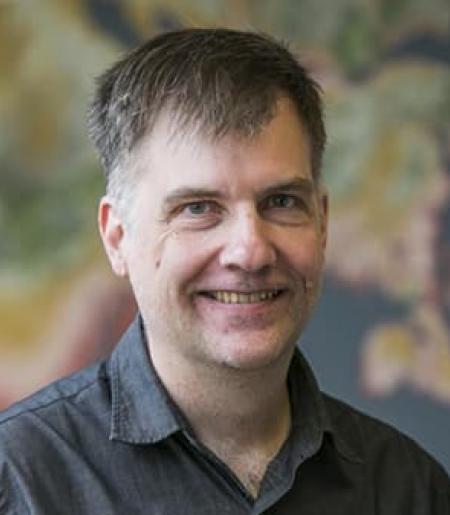
Robin T. Garrod is a Professor in the Department of Astronomy and Department of Chemistry at the University of Virginia. His research focuses on computational astrochemistry, particularly chemical kinetics in interstellar, cometary, and protostellar environments. Developed the MAGICKAL code for grain-surface and ice-mantle chemistry Lead studies on comet Hale-Bopp's chemical evolution (Willis et al. 2024) Co-investigator in JWST and ALMA-based astrochemical investigations Garrod's work emphasizes solid-phase processes over astronomical timescales, combining chemical modeling with observational data from facilities like ALMA and JWST. His research explores complex organic molecule (COM) formation in comets, hot cores, and molecular clouds, revealing connections between interstellar and solar system chemistry. Recent publications examine COM inheritance in comets, ice chemistry in prestellar cores, and JWST-driven ice mapping. The Garrod group collaborates with astronomical observers to interpret molecular abundances and emission spectra, particularly in chemically-rich environments like Orion KL and Sgr B2.
David Hysell is a Professor in the Department of Earth & Atmospheric Sciences at Cornell University. His research focuses on ionospheric physics, plasma turbulence, and equatorial aeronomy. He leads projects utilizing HF radar networks, satellite data (e.g., ICON), and advanced modeling techniques to study ionospheric instabilities and space weather phenomena. Key tools include the Jicamarca Radio Observatory and collaborative initiatives like the SPARTA Center for space weather forecasting. His work integrates fluid/plasma simulations, automatic differentiation for parameter estimation, and hybrid kinetic models to understand Farley-Buneman instabilities, equatorial spread F, and sporadic E-layer dynamics. Recent efforts emphasize ionospheric forecasting using multi-instrument data fusion and machine learning approaches. Hysell actively participates in international observatory upgrades and geospace radar development to enhance global ionospheric monitoring capabilities. Scientific contributions include advancing ionospheric specification methods using HF beacon networks, investigating solar minimum conditions at equatorial altitudes, and studying plasma wave interactions in high-latitude regions. His research bridges theoretical plasma physics with applied space weather monitoring, addressing both fundamental science and operational needs.
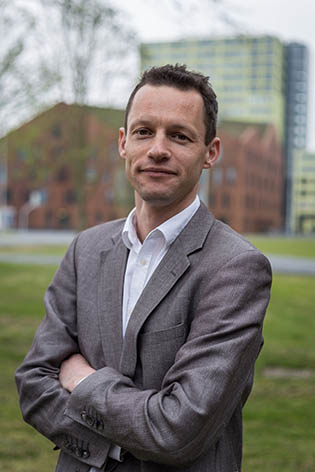
Daan Crommelin holds a part-time professorship in Numerical Analysis and Dynamical Systems at the KdV Institute for Mathematics, University of Amsterdam, and is a senior researcher at CWI Amsterdam's Scientific Computing group. He serves on CWI's management team and previously led its Scientific Computing group (2013–2021). His research focuses on stochastic modeling of multiscale systems, uncertainty quantification, and rare event analysis, with applications in climate science, renewable energy, and fluid dynamics. Crommelin combines methods from scientific computing, applied probability, and dynamical systems to address challenges in atmosphere-ocean-climate modeling. He has contributed to projects like the EU-funded VECMA initiative for exascale computing and collaborated on superparameterization techniques for climate models. His work also extends to epidemic modeling and computational chemistry. Crommelin earned his PhD in 2003 from Utrecht University, with a thesis co-supervised by KNMI, and holds an MSc in theoretical physics and an MA in philosophy from the University of Amsterdam.
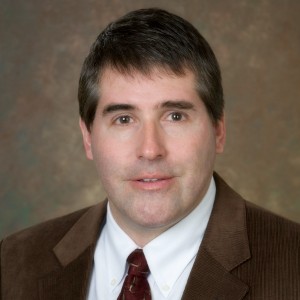
Deni S. Galileo is a Professor in the Department of Biological Sciences at the University of Delaware. His research focuses on cell migration mechanisms in the developing brain and malignant gliomas, utilizing chick embryo models and retroviral gene transfer technologies. His work explores how integrins, extracellular matrix molecules, and adhesion proteins like L1CAM regulate normal and abnormal cell migration. Key projects include developing novel models for studying glioma invasiveness and breast cancer brain metastases, and investigating the role of QSOX1 and PMCA4 in tumor progression. Education: B.A., New College of Florida Ph.D., University of Florida College of Medicine and Whitney Laboratory Postdoctoral Research, Washington University School of Medicine (St. Louis) Research interests span developmental neurobiology, tumor biology, and gene therapy. Current projects include: Control of glioma invasiveness via L1CAM Integrins' roles in neuronal migration and survival Ex vivo analysis of glioblastoma behavior using chick embryos His lab has pioneered the use of replication-competent retroviral vectors and in ovo electroporation for widespread protein misexpression in developing brains. Collaborations with Dr. John Koh (Chemistry and Biochemistry) explore axon outgrowth on gene-patterned cell monolayers. Lab Resources: Office 232 Wolf Hall, Lab 248 Wolf Hall Teaching: Courses include Cell Biology (BISC 305), Developmental Neurobiology (BISC 439/639), and Special Topics in Modern Biological Microscopy (BISC 400). Notable contributions include establishing chick embryo models for studying glioma and breast cancer metastasis to the brain, and discovering roles for integrin α6β1 and α8β1 in cell migration and survival.
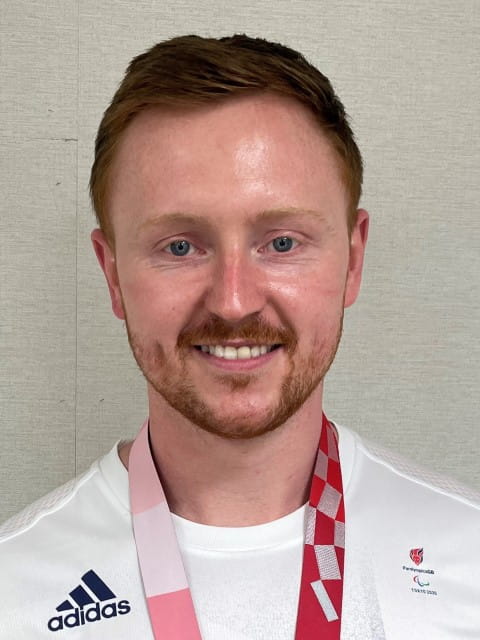
Thomas O'Brien is a Lecturer in the School of Sport, Exercise and Health Sciences at Loughborough University, specializing in applied disability and para sport science. He holds a BSc in Sport and Exercise Science (Aberystwyth University, 2016), an MSc in Exercise Physiology (Loughborough University), and a PhD in thermoregulatory challenges in para populations (completed part-time at the Peter Harrison Centre for Disability Sport, PHC). His roles have included Research Assistant (2017), Performance Scientist for GB Wheelchair Rugby (2021–2024), and Research Associate at PHC (2022–present). He has been a key member of multidisciplinary teams supporting Paralympic athletes, focusing on performance optimization and physiological testing. His research interests center on para-sport biomechanics, thermoregulation in disabled athletes, and wheelchair rugby performance enhancement. He has collaborated with national governing bodies to advance knowledge exchange in wheelchair rugby and contributed to strategies for the Tokyo 2020 and Paris 2024 Paralympics. His work integrates sports science, strength and conditioning, and clinical physiology to improve athlete preparation and performance. Teaching roles include module leadership for the MSc Musculoskeletal Sport Science and Health’s “Para Sport: Rehabilitation to Performance” course and delivery of lectures on applied para-sport across undergraduate and postgraduate programs. His research spans topics like wheelchair propulsion biomechanics, cooling strategies for SCI athletes, and tendon adaptations in elite wheelchair athletes.
David B. Mallott, MD serves as an Adjunct Associate Professor in the Department of Psychiatry at the University of Maryland, Baltimore School of Medicine, maintaining a primary academic appointment in Psychiatry with secondary administrative responsibilities. Based in Health Sciences Facility 1, Room 134, he is contactable via dmallott@meded.umaryland.edu and directs institutional communications through primary (410-706-6613) and secondary (410-706-0922) telephone lines alongside dedicated fax services (410-706-7607). His research program exhibits exceptional interdisciplinary range across Psychiatry , Medical Education , Bioethics , and Medical Simulation . Key investigations include emotion-reading mechanisms (2013), psychiatric-metabolic disease intersections (2009), and cognitive simulation frameworks for clinical training (2007, 2005). His scholarship consistently bridges clinical practice with educational innovation, particularly in professionalism development (2006) and affective domain assessment in medical admissions (2006). Publication analysis reveals sustained scholarly productivity from 1984-2013 with thematic evolution from foundational schizophrenia research (1988) and chronobiology (1984) toward contemporary medical education technologies and bioethics integration. His work demonstrates consistent methodological diversity spanning historical clinicopathological conferences (1998), pharmacological studies (1990), and cognitive modeling approaches. Administrative engagement is evidenced through his secondary appointment in Administration, though specific leadership roles remain unspecified. While advising activities and grant funding details are unreported in available sources, his institutional presence spans clinical psychiatry, educational innovation, and academic administration within the School of Medicine ecosystem.
Thomas Breunung is a Researcher and Principal Investigator of the Dynamics, Structures, and Data (DSD) Lab at the University of Wisconsin-Madison's Department of Mechanical Engineering. His work integrates applied mathematics, physics, and data science to study nonlinear structural dynamics, vibrations, and stochastic systems, with applications in aerospace engineering, biological systems, and oceanography. He holds a PhD from ETH Zurich (2021), an MS and BS from Technische Universität Darmstadt (2016, 2013). His research focuses on analytical, computational, and experimental methods to understand complex dynamic systems, including vibration attenuation, rogue wave prediction, and nonlinear oscillator identification. Notable awards include the 2023 ASME Outstanding Reviewer Award and the 2020 USNC/TAM Fellowship. Current courses taught include E M A 545 (Mechanical Vibrations) and M E 440 (Intermediate Vibrations). The DSD Lab emphasizes interdisciplinary collaboration, combining theoretical rigor with practical engineering solutions. Breunung's recent work explores data-driven forecasting of extreme events, stochastic noise utilization in vibration control, and robust system identification techniques. Ongoing projects include improving predictions of freak waves using field measurements and developing computationally efficient models for nonlinear mechanical systems.
Gurpreet Dhaliwal, MD, is a Professor of Medicine at the University of California, San Francisco (UCSF) and site director of the internal medicine clerkship at the San Francisco VA Medical Center. He specializes in clinical reasoning, diagnostic excellence, and medical education, focusing on how clinicians think and make decisions. His work integrates clinical expertise with technology to improve diagnostic processes. Dr. Dhaliwal completed his medical training at Northwestern University Medical School (MD, 1998) and residency and chief residency in internal medicine at UCSF. His research interests span clinical reasoning education, diagnostic errors, and the role of artificial intelligence in healthcare. He has received numerous awards, including the Robert J. Glaser Distinguished Teacher Award and multiple Excellence in Teaching Awards from UCSF. His publications address topics like diagnostic reasoning, medical education innovation, and leveraging AI for clinical decision support. He is a prolific author in top journals such as JAMA, NEJM, and BMJ Quality & Safety. Dr. Dhaliwal’s educational contributions include developing curricula for clinical reasoning and feedback systems for hospitalists. He has also been a commencement speaker and mentor, emphasizing leadership and continuous learning in medicine.
Prof. Vanessa Styles is a Professor and Head of the School of Mathematical and Physical Sciences at the University of Sussex. Her research focuses on mathematical and computational analysis of nonlinear partial differential equations, with applications in physical sciences, including materials science, fluid dynamics, and biological modeling. She specializes in numerical methods for evolving surfaces, phase field models, and free boundary problems. Her work often involves interdisciplinary collaborations, addressing challenges in lithium batteries, tumor growth, and cell migration. Prof. Styles has led major grants, including ModCompShock (EU) and Leverhulme-funded projects on cell migration mechanics. She teaches calculus courses and actively contributes to academic leadership. Her research interests span computational fluid dynamics, numerical analysis of PDEs, and mathematical biology. Recent work emphasizes tumor growth modeling via phase field approaches, crystal growth in batteries, and cell migration force estimation. She has published extensively in journals like Interfaces and Free Boundaries and Journal of Computational Physics , with a focus on rigorous error analysis and algorithm development. Grants include funding for modeling grain boundary motion (EPSRC), 3D cell migration (Leverhulme), and shock interface modeling (EU). Her research bridges theoretical analysis and practical applications, with contributions to both fundamental mathematics and engineering/medical fields.
Nils Henrik Risebro is a Professor in the Department of Mathematics at the University of Oslo, specializing in Partial Differential Equations and Computational Mathematics. His research focuses on conservation laws, numerical methods for hyperbolic systems, traffic flow models, and stochastic processes. He has contributed extensively to the analysis of nonlinear PDEs, with a particular emphasis on well-posedness, numerical schemes, and applications in fluid dynamics and vehicular traffic. Recent work includes studies on continuum limits of non-local Follow-the-Leader models, non-local traffic flow models, and multilevel Monte Carlo methods for random conservation laws. He collaborates frequently with researchers like Helge Holden, Kenneth Karlsen, and Ulrik Fjordholm. His publications span high-impact journals such as SIAM Journal on Numerical Analysis , ESAIM: Mathematical Modelling and Numerical Analysis , and Zeitschrift für Angewandte Mathematik und Physik . Risebro’s articles often bridge theoretical analysis and computational methods, addressing challenges in fluid dynamics, porous media flow, and stochastic PDEs. His work demonstrates a strong focus on rigorous mathematical frameworks with practical engineering applications.
Basca Jadamba is a Professor in the School of Mathematics and Statistics at the Rochester Institute of Technology (RIT), part of the College of Science. She serves as Associate Head of the Applied and Computational Mathematics program. Her research focuses on inverse problems, stochastic optimization, partial differential equations, numerical analysis, finite element methods, and mathematical modeling. She has advised undergraduate and graduate students in research and teaches courses at both levels. Jadamba holds a BS from the National University of Mongolia, an MS from the University of Kaiserslautern (Germany), and a Ph.D. from the University of Erlangen-Nuremberg (Germany). Her academic journey includes joining RIT’s School of Mathematics and Statistics in 2008. She is actively involved in academic leadership, including serving as the faculty advisor for RIT’s Student Chapter of the Association for Women in Mathematics. Her research contributions span theoretical and numerical methods for inverse problems, with applications in elasticity imaging and parameter identification in stochastic systems. She has co-authored books and peer-reviewed articles on topics such as uncertainty quantification in variational inequalities, optimization formulations for inverse problems, and numerical methods for partial differential equations. Jadamba’s work emphasizes bridging mathematical theory with practical applications, particularly in engineering and environmental science. Her recent publications highlight advancements in stochastic approximation methods, convex optimization frameworks, and the role of Inf-Sup conditions in inverse problems. She has explored applications ranging from tumor localization in elasticity imaging to congestion network analysis with random data. Her teaching portfolio includes courses like Multivariable Calculus, Mathematical Modeling, and Applied Inverse Problems, reflecting her expertise in both foundational and advanced mathematical topics.
Alexandra Chronopoulou is a Clinical Associate Professor in the Department of Statistics at the University of Illinois. She is affiliated with the Coordinated Science Lab and the Center for Social & Behavioral Science, contributing to interdisciplinary research in both mathematical theory and healthcare applications. Her roles emphasize bridging statistical methodologies with practical challenges in diverse fields. Her research interests span stochastic processes, including fractional Brownian motion and volatility modeling, alongside healthcare systems analysis and medical diagnostics. She applies statistical techniques to study burnout among healthcare professionals, particularly in pandemic testing environments, and explores biomechanical factors in gastrointestinal disorders. Her work also intersects with finance, focusing on risk management and option pricing through advanced stochastic frameworks. In recent years, her articles highlight trends in volatility estimation, fractional processes simulation, and healthcare ergonomics. Earlier contributions include methodological advances in sequential Monte Carlo, community detection algorithms, and multiscale diffusions. No scientific awards were explicitly mentioned in the provided texts. Though no advising or grant information was listed, her research collaborations extend to international partnerships. She contributes to labs and centers that foster interdisciplinary innovation, including work at the Coordinated Science Lab and the Center for Social & Behavioral Science.
Junzhong Xu is an Associate Professor of Radiology and Radiological Sciences, Biomedical Engineering, and Physics and Astronomy at Vanderbilt University. His research focuses on developing advanced quantitative MRI methods for applications in neurodegenerative diseases and cancer, including MRI cell size imaging and tumor treatment response assessment. He holds affiliations with the Vanderbilt University Institute of Imaging Science (VUIIS) and has expertise in microstructural diffusion MRI and GPU-accelerated imaging tools. Xu’s work spans interdisciplinary collaborations in biomedical engineering and physics. Education: B.S., University of Science and Technology of China M.S., University of Science and Technology of China Ph.D., Vanderbilt University Research Interests: Development of MRI cell size imaging for cancer and neurodegenerative diseases Quantitative assessment of tumor microstructure and treatment response Applications of microstructural diffusion MRI in multiple sclerosis and oncology Key Contributions: Advancement of MRI cytometry for non-invasive disease assessment GPU-accelerated tools for diffusion MRI simulation (MATI) Imaging biomarkers for early detection of neurodegenerative pathology Labs/Teams: Active member of the Vanderbilt University Institute of Imaging Science (VUIIS), collaborating on interdisciplinary imaging projects.
Professor Siegfried Müller is a full professor at the Institute for Geometry and Practical Mathematics within the Faculty of Mathematics, Computer Science and Natural Sciences at RWTH Aachen University. His research focuses on developing advanced numerical methods for solving complex fluid dynamics problems, with particular expertise in conservation laws, adaptive multiscale techniques, and multiphase flow modeling. He maintains an active research program with numerous publications in leading computational mathematics journals and collaborates extensively with researchers across multiple institutions. Professor Müller's research interests span a wide range of computational mathematics topics including Conservation Laws, Finite Volume Schemes, Discontinuous Galerkin Methods, Adaptive Multiscale Techniques, and specialized applications in Fluid Dynamics. His work demonstrates particular strength in developing numerical methods for two-phase flow systems, transpiration cooling applications, and surface lubrication phenomena. His research bridges theoretical mathematical analysis with practical engineering applications, particularly in aerospace and mechanical engineering contexts. His recent publications reveal a strong focus on advancing numerical techniques for hyperbolic conservation laws, with increasing emphasis on stochastic methods, multilevel approaches, and coupled system modeling. His work spans both theoretical developments in numerical analysis and practical applications in fluid dynamics, with particular attention to multiphase flow systems and cooling technologies. The publications show a clear progression toward more complex, high-dimensional problems and increasingly sophisticated numerical techniques to address computational challenges. Professor Müller has led and participated in numerous research projects funded by German research organizations including DFG Priority Programmes, BMBF projects, and DFG Research Training Groups. His projects have focused on hyperbolic balance laws, adaptive numerical methods, transpiration cooling, and textured surface lubrication. He has organized multiple workshops on multiresolution methods and active drag reduction, demonstrating leadership in his research community. Professor Müller's research group at RWTH Aachen collaborates closely with engineering departments and industry partners to apply advanced numerical methods to practical engineering challenges. His team has developed specialized computational tools for simulating complex fluid phenomena, particularly in aerospace applications where cooling technologies and fluid-structure interactions are critical. The group maintains strong connections with international research communities in computational mathematics and fluid dynamics.
Giulia Di Nunno is a Professor in the Department of Mathematics at the University of Oslo, specializing in stochastic analysis and its applications to finance and risk management. She also holds an adjunct professorship at the Norwegian School of Economics (NHH). Her research focuses on stochastic calculus, control theory, financial modeling, and energy finance, with a particular interest in dynamic risk measures. She has led major projects like the STORM initiative on time-space risk models and is involved in interdisciplinary research on sustainability and energy markets. Di Nunno has served as President of the Scientific Council of CIMPA and is an associate editor for several prestigious journals, including Finance and Stochastics and Stochastics . Her work bridges theoretical advancements with practical applications in finance and energy sectors. Education: PhD in Mathematical Statistics (University of Pavia, 2003), Degree in Mathematics (University of Milan, 1998). Research Groups: Risk and Stochastics, STORE (completed). Key Projects: SURE-AI (AI-driven risk modeling), Unruly Sustainability (interdisciplinary research), STORM (ToppForsk project). Editorial Roles: Associate Editor for Finance and Stochastics , DEAF , FMF , and others. Her publications emphasize stochastic processes, volatility modeling, and risk measurement, with recent contributions on time-changed dynamics and applications to energy finance. She actively contributes to the international academic community through research networks like AMaMeF and ModSimFIE.