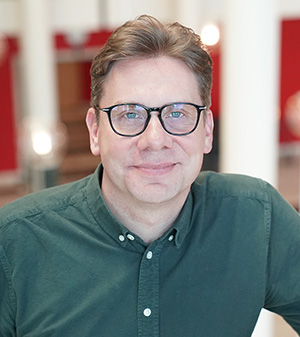
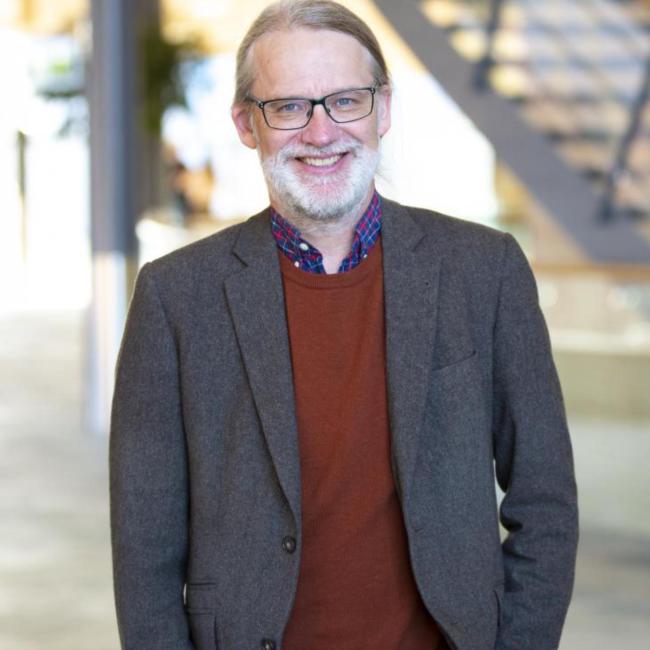
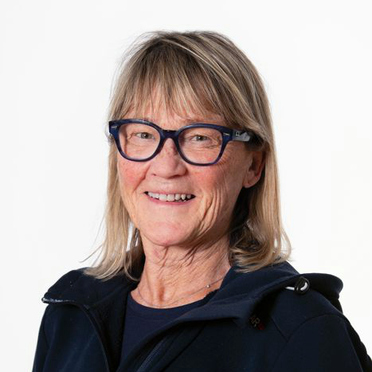
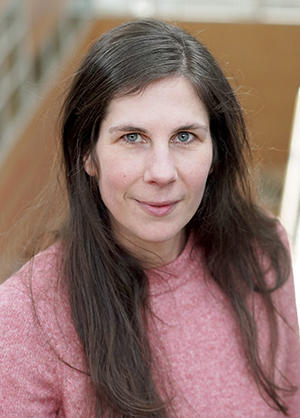
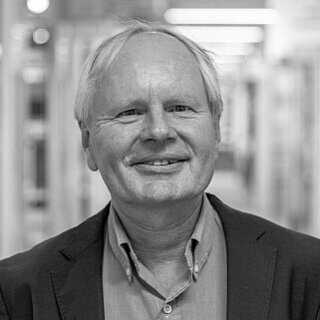
Dr. Franz-Karl Skala is a Senior Lecturer at the Vienna University of Economics and Business (WU) in the Business Education department, with over 15 years of academic and professional experience in higher education. He has held teaching and research positions at institutions including the University of Graz, University of Applied Sciences Burgenland, and Fachhochschule Wiener Neustadt. Current Senior Lecturer at WU (since 2012) Teaching focus on programming didactics and e-learning Specializes in business informatics didactics and vocational training Research interests center on curriculum development for hybrid education models, digital transformation in business training, and vocational education reform. His recent FLUENT project (2022-2025) develops flexible universal education models for AI-era learning. He has secured multiple Erasmus+ grants for international education initiatives in Central Asia. Scientific awards include four Vienna University of Economics and Business Innovative Teaching Awards (2020, 2019, 2017, 2010), University of Graz teaching excellence recognition (2020), AK Science Prize (2013), and Leopold-Kunschak Science Prize (2013). Developed modular curriculum frameworks Created e-learning platforms for entrepreneurs Conducted comparative studies on vocational vs academic degrees
Md Saifuddin Khalid is an Associate Professor in the Department of Applied Mathematics and Computer Science at the Technical University of Denmark (DTU). His research focuses on digital training technologies, learning analytics, and human-computer interaction in educational contexts. He leads and collaborates on projects exploring AI applications in education, adaptive learning systems, and the impact of digital tools on teaching and learning outcomes. His work contributes to UN Sustainable Development Goals related to quality education and industry innovation. Khalid actively supervises PhD students and has published extensively on topics such as generative AI for literature reviews, user satisfaction in AI chatbots, and usability of digital training technologies in industries like pharmaceuticals. Key Projects: MIXAP-EU: Developing mixed reality tools for teachers in Europe. HEGenAI: Integrating generative AI into higher education assessments. Methods for evaluating digital training technologies in pharmaceutical production. Editorial Roles: Peer reviews for journals like International Journal of Human-Computer Interaction and Computers & Education . Khalid’s research emphasizes practical applications of technology in education and industry, with a focus on improving user experiences and outcomes through systematic evaluations and design frameworks.
Jonas Bakken is a Professor of Norwegian Didactics at the Department of Teacher Education and School Research, University of Oslo. His work bridges rhetoric, children's literature, and sustainable development education through innovative didactic approaches. As academic director of the Associate Professorship Program, he shapes teacher education and curriculum design. Research Interests: Norwegian language arts, rhetoric integration in education, ecocriticism, multicultural narratives, and bilingual pedagogy. Projects: Evaluation of bilingual education (ETOS), Linking Instruction and Student Experiences (LISE), Scandinavian Narratives of Guilt and Privilege (Scanguilt), Minority Literary Voices in Scandinavia. Publications span textbook analysis, rhetorical strategies in Sámi literature, CLIL education equity, and oral creativity pedagogy. His recent works focus on task culture conflicts and curriculum renewal in Norwegian language arts.
Johan Samuelsson is a Professor of History at Karlstad University, affiliated with the Faculty of Arts and Social Sciences and the Department of Political, Historical, Religious and Cultural Studies. He holds a PhD in History from Uppsala University (2005) and has conducted extensive research on educational history, progressive pedagogy, and 20th-century Swedish institutional development. His research focuses on the history of education systems, particularly examining progressive education reforms, funding mechanisms, and policy transitions from the 19th century to contemporary times. Key themes include the interplay between national identity, historical narratives, and educational curricula, with a special emphasis on Sweden’s educational policies during the Cold War era. Recent work includes co-authored studies on the evolution of educational governance in Sweden (2025), Cold War preparedness education (2024), and the material and ideological foundations of progressive teaching practices (2021). His analyses often bridge historical scholarship with contemporary debates about educational equity and societal transformation. Samuelsson has contributed to edited volumes on comparative pedagogical theory, historical didactics, and the role of teachers as agents of educational reform. His interdisciplinary approach integrates archival research, policy analysis, and qualitative studies of educational actors.
Eva Glasmachers is a Lecturer and Managing Director of the Faculty of Mathematics at Ruhr University Bochum. She holds a PhD in Differential Geometry (2010) and has been actively involved in academic leadership since 2008. Her roles include student advising, curriculum development, and managing faculty operations. Her research focuses on university-level mathematics education, emphasizing interactive teaching methods, digital learning tools (e.g., STACK), and student motivation strategies. She leads projects like VORsprung for digital study preparation and trains tutorial group instructors. She is a founding member of HDM@RUB (Center for Higher Mathematics Education) and serves on the Ruhr University Senate and the Excellence Network for Teaching. Notable publications include works on gamification in education, adaptive learning systems, and dropout prevention strategies. She collaborates extensively with educational technology centers and contributes to national didactics conferences.
Marietta Metzker is a researcher at the Institute of Agricultural and Forestry Economics within the University of Natural Resources and Life Sciences, Vienna (BOKU) . She specializes in Forest Economics , Agrobiodiversity Management , and Test Farm Network Analysis , with a focus on sustainable development and economic efficiency in agricultural and forestry sectors. University: University of Natural Resources and Life Sciences, Vienna (BOKU) School: Department for Economics and Social Sciences Department: Institute of Agricultural and Forestry Economics Email: marietta.metzker@boku.ac.at Research Interests center on developing economic frameworks for sustainable forestry, agrobiodiversity valuation, and data-driven agricultural management. Her work bridges ecological conservation with financial viability through test farm networks and efficiency metrics. Publication Trends show a consistent focus on Forest Economics (2018-2025), analyzing revenue models, efficiency indicators, and regional comparative studies across Austria and the DACH region. Key subfields include Timber Revenue Analysis , Forest Management Efficiency , and Agricultural-Biodiversity Integration . Projects include the EU-funded FARMER CLUSTERS FOR REALISING AGROBIODIVERSITY MANAGEMENT ACROSS EUROPE (2020-2025), where she contributes to sustainable agricultural practices.
Karol Niewiadomski, M.A., is an Assistant Professor at the Department of Language Acquisition and Teaching within the Faculty of Humanities at John Paul II Catholic University of Lublin. He serves as a teaching assistant and has been actively involved in organizing international academic conferences, including the 'Rivalry in Language and Literature' event in Lublin. Doctoral candidate in Linguistics (since 2023) Teaching Assistant at Department of Language Acquisition and Didactics (since 2023) Italian language teacher at Tarraro Italian Language Center (since 2022) Postgraduate qualifications in Chemistry for Teachers (2024) Master's degree in Romance Philology (2023) Bachelor's degree in Romance Philology (2020) His research focuses on phonetic challenges in French pronunciation learning, teacher-student motivational dynamics, and contrastive methods in functional grammar teaching. Current work explores regional pronunciation acquisition in Polish emigrants learning Italian, combining acoustic and sociolinguistic analysis. Recent scholarly contributions include presentations at the 27th Doctoral School of the Visegrad Countries and the Conference of the Polish Society of Modern Languages, alongside a peer-reviewed publication in Foreign Languages in School on motivational factors in French phonetics education.
Chantal Dompmartin is a Lecturer in Linguistics and Language Teaching at the University of Toulouse Jean Jaurès (UT2J), where she works in the Department of French as a Foreign Language Studies (Defle). She is a permanent member of the CLLE-ERSS laboratory (Cognition, Languages, Language, Ergonomics) and an associate member of the LIDILEM Laboratory. Her academic career spans over two decades, with publications dating from 2003 to the present, demonstrating sustained scholarly activity. In 2023, she successfully completed her HDR (Habilitation à diriger des recherches), a significant academic qualification in the French system that enables her to supervise doctoral candidates. Dr. Dompmartin's research focuses on sociolinguistics, language awareness, and teaching French as a Foreign and Second Language, with particular emphasis on multilingual language practices, representations, and writing workshops in FLE contexts. Her work explores how creative writing can serve as a tool for linguistic and cultural appropriation, especially for students navigating new linguistic environments. She investigates how translinguistic bridges, stylistic progression, and experiential writing can support learners in developing security between their 'here' and 'elsewhere' linguistically and culturally. Her research often addresses the experiences of multilingual students, including those who are exiled or displaced, examining how writing workshops can facilitate their linguistic and cultural adaptation. An analysis of her recent publications reveals a consistent trajectory focused on plurilingualism and creative pedagogical approaches. Her work increasingly emphasizes sensitive and experiential approaches to language teaching, with writing workshops serving as central methodology. She explores how multilingual resources can be mobilized in educational settings to support language learning and cultural adaptation, particularly for students in displacement situations. Her research demonstrates a movement from theoretical considerations of multilingual practices toward practical applications in classroom settings, with growing attention to teacher training and implementation of plurilingual approaches in diverse educational contexts. Dr. Dompmartin actively collaborates with researchers across institutions, including notable collaborations with Nathalie Thamin, Charlotte Lamy de La Chapelle, and members of the CLLE and LIDILEM laboratories. Her work bridges theoretical sociolinguistics with practical language teaching applications, contributing significantly to the field of plurilingual education. She participates in national and international conferences, presenting her research on sensitive approaches in plurilingualism teaching and multilingual writing workshops, demonstrating her active engagement with the scholarly community.
Anna Serra Salvi serves as a Lecturer in the Department of Specific Didactics at the University of Girona, specializing in Didactics of Social Sciences. She teaches primary and secondary teacher education programs and conducts research through the GRECA group (Research Group in Scientific and Environmental Education) within the Institute of Educational Research. Her academic qualifications include: Doctorate in Education from University of Girona (2019) Bachelor's in Philosophy and Letters (Geography and History) from University of Girona (1998) Teaching Diploma in Primary Education (Social Sciences specialty) from University of Girona (1993) Dr. Serra Salvi's research centers on sustainability education through social dimensions, particularly gender perspectives and vulnerable groups, alongside heritage/citizenship education and landscape didactics. Her work emphasizes integrating Sustainable Development Goals into teacher training while promoting proactive citizenship through gender-sensitive geographical approaches. She examines how urban environments function as learning spaces and investigates emotional dimensions of heritage education in Catalan contexts. Analysis of her 15 most recent publications reveals consistent focus on socially transformative educational practices. Her work demonstrates strong methodological preference for qualitative case studies and intergenerational analyses, particularly examining Girona's urban spaces. Key thematic clusters include pandemic-era adaptations of sustainability education (2020-2023), gender-responsive urban geography pedagogy (2021-2022), and heritage education frameworks for early childhood (2019-2020), all reflecting commitment to contextually grounded, socially just educational praxis. As faculty, she advises undergraduate and master's students in teacher education programs while contributing to GRECA's research on scientific and environmental education. Her professional trajectory spans university teaching (2015-present), secondary education (2011-2024), and primary education (1993-2011) within Catalonia's education system, providing rich practical foundations for her academic work. She actively participates in GRECA's collaborative projects examining science and environmental education innovations, with particular focus on community-based learning approaches in Girona's urban landscape. Her current research continues exploring intersections between educational practice, urban geography, and social justice frameworks.
Kerstin Stenberg serves as an Assistant Professor at the Swedish School of Sport and Health Sciences (GIH), affiliated with the Department of Movement, Culture and Society within the Section of Sport Management. Her work focuses on the intersection of outdoor education, gender studies, and teaching methodology within physical education contexts. Dr. Stenberg's research primarily centers on outdoor life (Friluftsliv) and gender perspectives within physical education. Her competence profile highlights expertise in didactics, outdoor life, gender studies, sports didactics, sports history, physical education, leadership, and practical research. Her teaching interests include outdoor life, outdoor history, didactics, leadership, and group processes, indicating a strong commitment to experiential and reflective teaching approaches in outdoor education settings. Analysis of her publications reveals consistent focus on reflective teaching practices in outdoor education contexts. Both her 2012 publications titled 'The reflective outdoor teacher' (in conference and journal formats) demonstrate her dedication to exploring how reflection enhances outdoor teaching practices. Her 2011 work 'Reflection as a method' further establishes her methodological approach to education research. These publications collectively indicate a scholarly trajectory focused on improving outdoor education through reflective practice and teacher development. Dr. Stenberg actively collaborates with outdoor organizations, suggesting strong community engagement beyond the academic setting. Her work bridges theoretical understanding with practical application in outdoor education settings, contributing to both academic knowledge and practical implementation in the field.
Professor Bernhard Schmidt-Hertha is a leading academic at Ludwig Maximilian University of Munich, holding the Chair in Adult Education within the Faculty of Psychology and Education. His extensive expertise spans lifelong learning, digitalization in education, and continuing education research, with a particular focus on older adults and intergenerational learning. Research Focus: Continuing education research University studies and educational transitions Education in the second half of life Informal learning processes Digitalization in educational systems His current research projects include investigating dropout in adult literacy programs (DrAG), integrating AI into vocational training (KIB³), and developing digital skills for refugees and immigrants (DigIT). These initiatives highlight his commitment to addressing contemporary educational challenges through innovative research and practical applications. Publications and Contributions: Professor Schmidt-Hertha has authored numerous influential monographs and scholarly articles. His recent work explores digital pedagogies, adult learning in digital contexts, and the socio-ecological perspectives of educational transitions. His publications appear in top-tier journals, reflecting his significant impact on the field. Consultation and Contact: He holds regular consultation hours on Tuesdays from 10:00-11:00 a.m. by appointment via email: b.schmidt@edu.lmu.de .
Mark Bo Jensen is an Assistant Professor (Tenure track) at the Department of Engineering Technology and Didactics, Energy Technology and Computer Science at the Technical University of Denmark (DTU). His work bridges engineering and cognitive sciences through the emerging field of Perception Engineering. His research focuses on Extended Reality (XR) and Virtual Reality (VR) technologies to model and understand human perception and cognition. With over 10 years of expertise in real-time computer graphics, he develops immersive systems for applications in data visualization, medical testing, and geometric morphometrics. His recent publications highlight a strong trend in leveraging VR for precise human interaction tasks, such as anatomical landmark annotation and visual field testing, as well as advancing rendering techniques using diffusion models and mesh optimization. This reflects a multidisciplinary approach combining computer science, perception, and real-world applications. He has contributed to multiple research projects, including AL-EYE: The Visual Aid and Virtual Reality-Based Visualization of Geometric Data, where he served both as a PhD student and a project participant. These projects emphasize VR-based tools for data understanding and visualization. Assistant Professor (Tenure track), DTU PhD in Virtual Reality-Based Visualization of Geometric Data, completed June 2023 Project participant in AL-EYE: The Visual Aid (2025) While no formal advisees are listed, his role as a faculty member suggests future student supervision. He has collaborated extensively with researchers such as Jeppe R. Frisvad, Jakob Andreas Bærentzen, and Vedrana A. Dahl.
Ulrikke Rindal is an Associate Professor at the Institute for Teacher Education and School Research, Faculty of Educational Sciences, University of Oslo. Her work focuses on English didactics, particularly oral communication, language identity, and perceptions of language learning in the Norwegian context. She conducts qualitative research using interviews and video observation to understand how English is used and perceived among students in and outside schools. PhD in English Didactics, University of Oslo (2013) Master in Applied Linguistics, University of York (2006) Bachelor in English Literature, University of Oslo (2004) Her research interests include sociolinguistics, language attitudes, English teaching practices, and sociolinguistic variation in Norway. She explores how media, identity, and classroom dynamics influence language use and learning. Her instructional roles include courses on English phonetics, language attitudes, and didactic research methods. The 15 most recent publications reflect a consistent focus on English in Norway, classroom language use, pronunciation, and teacher education. These works appear in journals such as The Modern Language Journal , TESOL Quarterly , and Journal of Sociolinguistics , as well as in edited volumes on English didactics and teacher education. They emphasize qualitative analysis, identity construction, and pedagogical implications. Ulrikke Rindal has supervised multiple PhD and Master’s students, contributing significantly to the next generation of educational researchers. She is involved in key research projects such as Linking Instruction and Student Experiences (LISE) and STAGE (STArtAlder and extramural ENGLISH), which examine language learning in and beyond school settings. Research Group: Studies of Instruction across Subjects and Competences (SISCO) Projects: LISE, STAGE
Steffen Sammler, an Adjunct Professor at the Institute for History Studies , Technische Universität Braunschweig , specializes in history didactics and educational media . As a key figure at the Leibniz Institute for Educational Media | Georg Eckert Institute , he leads projects like EFREC (European Forum for Reconciliation and Cooperation in History Education) and AboDP (Abolition of the Death Penalty in Textbooks), focusing on reconciling contested histories through collaborative textbook design. Academic Journey : PhD in modern history (1995), habilitation (2010, 2020), studies at Universität Leipzig , Université de Rouen , and European University Institute . Research Themes : His work bridges textbook analysis , transnational history education , and media evolution . Recent publications examine European reconciliation , post-war curriculum design , and educational media in authoritarian contexts . Projects : Active in externally funded initiatives since 2010, including EFREC (2020-2023) and current Economic Crises in History Teaching (2023-2024).
Dr. Judith Riegert is a Research Associate at the Humboldt University of Berlin, Faculty of Humanities, Social Sciences, and Education, working at the Institute of Rehabilitation Sciences in the Department of Education for People with Intellectual Disabilities. She has been in this position since October 2016, with previous experience as Research Associate and Program Coordinator at the same institution. Her academic journey includes serving as Deputy Professor at Leibniz University Hannover (2016-2018) and as a Visiting Professor at Humboldt University (2019). 1997-2002: Studies at Justus Liebig University of Giessen and Heidelberg University of Education 2003-2004: Traineeship at Seminar for Didactics and Teacher Training Heidelberg 2004-2006: Special education teacher at Carl Orff Special School 2012: Completed doctorate (Dr. phil.) at Humboldt University Dr. Riegert's research focuses on educational theory questions in intellectual disability contexts, trans- and intermediality in inclusive literature teaching, pedagogical professionalization for inclusive subject teaching, and participation of adults with severe disabilities. Her work bridges theoretical frameworks with practical classroom applications, examining how to create meaningful learning experiences across subject areas while maintaining academic rigor. She investigates the tension between educational standards and individualized instruction, particularly in German, history, and mathematics education. Her recent publications demonstrate a strong focus on participation frameworks for people with severe disabilities, inclusive teaching methodologies across subject areas, and the development of pedagogical approaches that bridge educational theory and classroom practice. Her work consistently addresses the challenge of maintaining subject integrity while adapting instruction to diverse learning needs. November 5, 2014: Prize for Good Teaching 2014 from Humboldt University's Faculty of Humanities, Social Sciences and Education February 16, 2016: Honorary certificate from Polytechnische Gesellschaft Foundation for the 'Animals in Numbers' project Dr. Riegert provides academic advising for special education and primary school teaching students (surnames He to Z), supervises bachelor's and master's theses, and offers consultation hours both in person and via Zoom. Her advising focuses on supporting students in the M.Ed. program, particularly addressing application concerns and transcript issues. As a member of the German Society for Educational Science (DGfE), she contributes to research teams examining inclusive education methodologies and implementation of inclusive practices across educational settings.