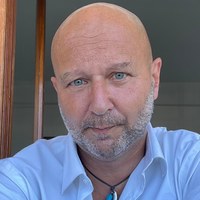
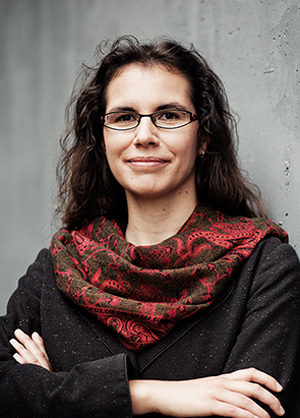
Moisés Moreno Fernández is a Lecturer at the Department of Romance Studies, Faculty of Philosophy, University of Novi Sad. He holds a Master's degree in Teaching Spanish as a Foreign Language (2011) from Universidad Nebrija, Madrid, and a Diploma in Pedagogical Skills (2007) from the University of Oviedo. Current lecturer in Spanish (2013-present) Examiner for DELE Diplomas (2011-2019) Coordinator of Business Spanish courses (2011-2012) Research Focus : Audiovisual materials in language teaching, lexical acquisition, historical and cognitive grammars, languages in contact, error analysis, and Latin American literature. His work emphasizes cultural content in Spanish language education and methodological innovation. Selected Publications examine photographic representation in Latin American literature, existentialist influences in 20th-century fiction, cultural stereotypes in Serbian Spanish education, and didactic sequences in language manuals.
Professor Håkan Larsson holds the position of Professor and Head of the Department of Movement, Culture, and Society at the Swedish School of Sport and Health Sciences (GIH). He specializes in Educational Science with a focus on gender, sexuality, and sport didactics. His academic leadership includes directing research initiatives such as the PIF group (Pedagogical Sport Research) and the FIHD Graduate School, which trains teachers in physical education and health. Larsson supervises eight doctoral students and teaches in GIH’s master’s and doctoral programs, notably leading mandatory courses in sports science. Research Interests: Pedagogical processes in club and school sports Gender, sexuality, and embodiment in physical education Heteronormativity and LGBTQ+ inclusion in sports Collaborations: Norwegian School of Sport Sciences (part-time leave) Swedish National Agency for Education (Skolverket) Riksidrottsförbundet (Swedish Sports Confederation) His research spans projects like 'Heteronormativitet inom idrotten' (2012–2013) and the KUL project (2011–2013), funded by the Swedish Research Council. Larsson also chairs evaluation committees for academic programs and collaborates with interdisciplinary groups like Research in Education & Movement Culture. Publications emphasize critical pedagogy, transgender embodiment in education, and innovative teaching methods. His work bridges theory and practice, addressing contemporary challenges in physical education and sport equity.
Svante Lindberg is a Senior Lecturer and Associate Professor in the Department of Languages at Åbo Akademi University’s Faculty of Humanities, Psychology and Theology. He holds a Doctor of Philosophy and Licentiate of Philosophy from Stockholm University, a Master of Philosophy from Uppsala University, and a Diplôme d'études approfondies from Université de Nice. His academic work spans multiple institutions, including substitute roles at Stockholm University and guest lectures at the University of Groningen. Doctor of Philosophy, Stockholm University Licentiate of Philosophy, Stockholm University Master of Philosophy (Linguistics), Uppsala University Bachelor of Philosophy, Stockholm University Diplôme d'études approfondies, Université de Nice His research focuses on contemporary French-language literature, particularly from Quebec, migration literature, world literature, and the works of Michel del Castillo. He also investigates 18th-century French cosmopolitan networks and literary didactics. His doctoral thesis analyzed narrative identity in Quebecois novels, and he edited a significant anthology on migrant literature in Quebec and Scandinavia. He publishes regularly in French, Swedish, and English, contributing to journals and academic volumes on literary theory, translingualism, and cultural identity. The trend in his recent publications shows a strong engagement with narrative identity, translingualism, and the cultural representation of the 'South' in literature. His work bridges French, Scandinavian, and global literary contexts, with a methodological focus on comparative and transcultural analysis. He frequently explores themes of migration, trauma, and religious identity across historical and contemporary texts. His scientific awards include: Guldkanten (2018) Harry Elvings legat (2018, twice) Åbo Akademi Jubileumsfond 1968 (2012) Åbo Akademis mobilitetsstipendium (2010) Lindberg supervises bachelor's, master's, and doctoral theses and has served as an examiner and academic advisor. He is actively involved in academic service, including organizing conferences, peer reviewing, and participating in recruitment committees. He has contributed to the cultural impact of his research through studies on French imagery in Scandinavian literature and has engaged in international academic collaboration, particularly with institutions in the Netherlands and Norway. His work aligns with UN Sustainable Development Goals related to education and cultural understanding. He is a member of academic networks and has hosted visiting scholars, participated in numerous conferences, and contributed to editorial boards. His recent activities include presentations on Michel del Castillo and participation in the NIC Conference 2023 on intercultural communication.
Anja Kraus is a Professor in Arts and Culture Education at Stockholm University, Department of Teaching and Learning. She has held academic positions at the University of Education Ludwigsburg (2003-2013), Linnaeus University Växjö (2013-2019), and joined Stockholm University in 2018. Her academic journey began with studies in Philosophy and Educational Sciences at Free University Berlin and Arts Education at the University of the Arts Berlin, Germany. Her research focuses on Pedagogical Anthropology, with special emphasis on tacit knowledge, corporeality, aesthetic education, and multimodal learning. She has developed systematic approaches to understanding tacit knowing in educational contexts, particularly examining how corporeality, aesthetic learning, and inclusivity function in schools. Her work bridges phenomenological, ethnographical, and body-phenomenological approaches with practical educational applications. She has made significant contributions to understanding how materiality, performativity, and imaginaries shape educational practices. Her recent publications reveal strong trends in embodiment studies, with particular attention to kinesthetic learning, spatial pedagogy, and the relationship between aesthetics and sustainability. Her work increasingly explores educational practices within the Anthropocene context, examining how arts education can address environmental concerns through embodied approaches. The recurring theme across her publications is the exploration of how tacit knowledge manifests in educational settings and how this understanding can transform teaching practices. As head convenor of the international scientific network 'Tacit Dimensions of Pedagogy,' she has organized numerous workshops and conferences addressing pedagogical terminologies across languages. Her collaborative projects span Scandinavia, Europe, Asia, and North and South America, demonstrating her commitment to transcultural approaches in educational research. Her teaching spans multiple languages (German, English, Swedish, Spanish) and covers diverse areas including Classroom Education, Cultural and Media Education, Sciences of Bildung, Elementary Education, and Vocational Training. Her pedagogical approach emphasizes practice-oriented competence, inclusive school development, and aesthetic learning environments with a comparative perspective.
Laura Quick is an Associate Professor of Hebrew Bible at the University of Oxford and a Tutorial Fellow of Theology and Religion at Worcester College. Her academic work bridges biblical studies with comparative ancient Near Eastern literary culture, focusing on the intersection of language, gender, and ritual in the Hebrew Bible. Research Focus: Beauty and aesthetics in the Hebrew Bible and ancient Near East; body symbolism in biblical and Dead Sea Scroll texts; philological gender analysis; ritual and liturgical studies Academic Roles: Editorial Board, Hebrew Studies; Steering Committee, Philology in Hebrew Studies (SBL); External Member, Sheffield Institute for Interdisciplinary Biblical Studies Recent publications examine topics ranging from cosmetic practices in Esther and Ruth to the mythological background of Isaiah 14. Her scholarship frequently engages with Deuteronomy, Dead Sea Scrolls, and Septuagint studies, employing comparative methods to analyze textual strategies and cultural exchange. She teaches Hebrew poetry, ritual, and liturgy, contributing to both undergraduate and postgraduate theological education at Oxford.
Dr. Monika Neuffer is a Senior Scientist at the Institute for Chemistry Education, University of Vienna. She holds a BSc and MSc in Chemistry from the University of Vienna and earned her Dr. rer. nat. (natural sciences doctorate) in 2021. Her research focuses on molecularly imprinted polymers, chemical sensors, and nanotechnology applications in environmental monitoring and material science. Education: Bachelor's in Chemistry (2011–2015) Master's in Chemistry (2015–2018) PhD in Natural Sciences (2018–2021) Research Interests: Monika specializes in developing polymer-based sensors for detecting nanoparticles and environmental contaminants. Her work emphasizes systematic approaches to molecular imprinting, surface characterization, and real-time monitoring systems. She leads the chemistry didactics research laboratory, integrating educational innovation with cutting-edge analytical techniques. Professional Background: Senior Scientist, Institute for Chemistry Education (2025–present) QC Specialist at DSM-Firmenich (2021–2025) Research Associate/Doctoral Student at Institute of Physical Chemistry (2018–2021) Lecturer/Tutor in Analytical Chemistry and Practical Courses (2015–2021) Labs & Teams: Head of the chemistry didactics research laboratory, focusing on curriculum development and hands-on experimental methods for teaching chemistry. Collaborates on projects like the Children's University curriculum.
Stefan Gelfgren is Associate Professor of Sociology of Religion and Senior Lecturer in Didactics of Religion at Umeå University's Department of Historical, Philosophical and Religious Studies. He holds a PhD in History of Ideas (Umeå University), MPhil in History of Christianity (Birmingham University), and BA in Construction Engineering. His research examines: Social/technical/religious transformations throughout history Digital media's impact on Christian institutions Digital humanities methodologies Surveillance in everyday life Religious geography and mapping Recent publications (2020-2025) focus on digital religion, surveillance ethics, Swedish revivalism, and geospatial humanities. Key trends include institutional adaptation to digitalization and historical continuities in religious media. Awards include the 2022 Erik Allardt Fellowship at Helsinki Collegium for Advanced Studies. He leads multiple research initiatives: Wallenberg-funded DINO project on digital privacy/social benefit (Co-investigator) Nordic Places of Worship Map (Project Leader) iAccept: Soft Surveillance (Principal Investigator 2017-2021) As former Director of Humlab (2015-2020), he developed digital humanities infrastructure. He chairs the Swedish Association for Sociology of Religion and serves on Umeå University's Faculty Board.
Sophie Othman is a Lecturer at the University of Franche-Comté, affiliated with the Centre de Linguistique Appliquée (CLA) and the DEFLET department. She is actively engaged in research and teaching in language didactics, digital education, and innovative pedagogical practices. Her work spans multiple roles in research coordination, program leadership, and international academic collaboration. Research Interests: Her primary research areas include digital technology in language teaching and learning, design of online and distance learning environments, digital engineering in education, pedagogical innovation, comodal and hybrid training models, MOOCs, e-portfolios, and teacher training in ICT. She explores how digital tools transform language education, especially in multilingual and multicultural contexts. The recent scholarly output shows a consistent focus on post-pandemic educational transformation, AI integration in learning systems, and the design of flexible pedagogical scenarios. Her publications appear in journals such as ALSIC and in international conference proceedings, reflecting a strong engagement with digital pedagogy and language education innovation. Leadership and Service: Vice-President, Scientific and Pedagogical Commission, CLA – University of Franche-Comté (2021–present) Co-Responsible, TIPED Research Program, ELLIADD (2017–present) Scientific Coordinator, Innov'FLE Thematic Thursdays (2022–present) Former Coordinator, Master 2 FLE 'Political and Digital Environments' and FLE Track at CTU Besançon (2018–2020) Scientific Committee Member for international conferences (e.g., ADCUEFE, CEDIL, UBEST, EIAH) Expert reviewer for language didactics journals and collective works International trainer for the French Ministry and OIF in over 15 countries Projects and Grants: #ApproprIA: AI Appropriation in Education (2025–...) UNPEAA: Digital Use by Allophone Adults (2024–...) Innov'FLE: Innovation in FLE Teaching (2022–...) HUMANE: Digital Humanities for Education (2019–2022) ANR-IDEFI Innovalangues (2013–2016) Advising and Grants: While no formal students are listed, she has supervised research teams and mentored junior researchers through collaborative projects and editorial roles. She has secured national and international funding, notably through the ANR-IDEFI program, and contributes to large-scale educational initiatives supported by governmental and Francophone institutions. Labs and Teams: She is affiliated with the ELLIADD research laboratory (University of Franche-Comté) and was previously associated with LIDILEM (Université Grenoble Alpes). She leads and participates in interdisciplinary research groups focused on digital language education, teacher training, and innovation in didactics.
Enrico Maria Ariemma is an Associate Professor at the Department of Humanities (DIPSUM) of the University of Salerno. He specializes in Latin literature with particular focus on Latin epic poetry , Flavian literature , and classical reception studies , working extensively on authors like Silius Italicus, Seneca, and Catullus. His research often explores military narratives , intertextuality , and ethical concepts in antiquity . His academic work features in publications such as Brill's Companion to Silius Italicus , and Lexis , with recent contributions on topics like "Tra vino e fuoco" (2023) analyzing mythological topos in Silius' Punica , and "Contare i baci" (2022) examining Catullus' intersection with mathematical thinking. He has also contributed to conference proceedings on epic-historical synthesis and war representation in Senecan tragedy . Ariemma participates in international academic networks, including co-organizing the 2019 "Ritorno al futuro" conference on Silius Italicus. He maintains an active research agenda with publications in Humanitas , Thaumazein , and Pan , while his teaching focuses on Latin language and literature and Latin didactics . His office is located at the University of Salerno’s Fisciano Campus, Building B, Room 027.
Dr. Alexandra Schotte is a Lecturer in Pedagogy at the Faculty of Humanities and Social Sciences , University of Augsburg . Her research focuses on inclusive education , historical educational research , and Herbartian pedagogy , with a particular emphasis on disability education, educational media, and the Jewish Enlightenment (Haskala). She has held temporary professorial roles at the University of Duisburg-Essen and Friedrich Schiller University Jena. B.A. and M.A. in Educational Science and Sociology (1994–2000), Friedrich Schiller University Jena Ph.D. (Dr. phil.) in Educational Science (2008), Friedrich Schiller University Jena Her scholarly work explores intersections of educational theory , social pedagogy , and curriculum development , often contextualized through historical case studies and Herbartian philosophy. She co-edits academic series like Herbartstudien and contributes to international dialogues on postcolonial educational approaches. Scientific awards include: 2010 Award for 'Basic Pedagogical Research' (Friedrich Schiller University Jena) 2016 Habilitation Scholarship from the University of Augsburg's 'Equal Opportunities for Women in Research and Teaching' program She actively participates in academic societies, including the International Herbart Society and the German Society for Educational Science (DGfE), and contributes to educational media research through editorial and conference roles.
Prof. Dr. Andrea Dreyer is a full-time Professor of Art and its Didactics at the Bauhaus University Weimar , where she has served since 2013. She is Vice Dean for Strategic Development within the Faculty of Art and Design and actively participates in academic governance, including roles in graduation committees, teacher training advisory boards, and curriculum commissions. Her research focuses on teacher professionalization, architectural pedagogy, and digital art education, emphasizing interdisciplinary approaches and qualitative social research methodologies. First and Second State Examination for Teaching at Grammar Schools in Art Education and Social Studies (1994–2000, 2004–2006) Andrea Dreyer’s publications span topics such as Bauhaus-inspired pedagogy, urban-rural spatial education, and digital integration in art teaching. She has led initiatives like DigiProSMK and Denkraum.Bauhaus , and her work often bridges art, architecture, and societal transformation. She has served as Dean of Studies and Vice-Rector for Studies and Teaching at Bauhaus University, advocating for phase-transcendent teacher networks and reflective professional practices. Her recent articles address participatory architectural psychology, interdisciplinary curriculum design, and digitalization in art education. Despite extensive committee involvement and editorial contributions, no specific scientific awards are highlighted in the provided texts. She mentors students and collaborators within the kunst:pädagogik | netz:werk platform and maintains active partnerships with institutions like the Thuringian Ministry of Education and Friedrich-Schiller University Jena.
Prof. Dr. Claudia Schlaak is Professor of Language Teaching and Learning Research: Didactics of French and Spanish at the University of Kassel, where she serves as Head of the Department of Foreign Language Teaching and Learning Research. She has held this position since September 2020, following an acting professorship at the same institution from October 2018 to December 2019. Her academic work bridges theoretical research and practical application in foreign language education, with particular focus on inclusive teaching methodologies and multilingual contexts. Dr. Schlaak's research centers on foreign language teaching and learning, with special emphasis on didactics of French and Spanish, inclusive education approaches, multilingualism in educational contexts, and the integration of digital technologies in language acquisition. Her work examines how diverse language backgrounds influence learning processes, with particular attention to bilingual learners (especially German-Turkish bilinguals) acquiring Romance languages. She investigates pronunciation acquisition, text complexity, intercultural competence development, and the implementation of inclusive teaching strategies that recognize learner diversity as a resource rather than a challenge. Analysis of her recent publications reveals a strong trend toward digital learning environments, with increasing focus on virtual reality applications, 360-degree learning environments, and digital tools for pronunciation training. Her research consistently addresses multilingual contexts and inclusive approaches, with growing attention to potential-oriented teaching methodologies that shift focus from deficits to learner strengths. The interdisciplinary nature of her work connects linguistics, educational psychology, and technology-enhanced learning. Dr. Schlaak serves as co-editor of the journal Romance Language and its Didactics (since January 2019) and the series French Didactics in Dialogue (since April 2020). She has contributed significantly to academic discourse through numerous edited volumes, special journal issues, and collaborative research projects that bridge theoretical insights with practical classroom applications. Her work demonstrates strong commitment to teacher education, with multiple publications addressing pre-service and in-service teacher training, particularly regarding inclusive practices, intercultural competence development, and the integration of digital tools in language teaching. She has developed practical teaching materials, including method cards for foreign language instruction and inclusive teaching resources for Spanish language classrooms.
Dr. Susanne Ehrich (born 1977) is a Research Fellow and academic coordinator at the Institute of History , University of Regensburg , since 2012. As academic coordinator of the Forum Mittelalter since 2007, she specializes in interdisciplinary medieval research with focus on apocalyptic commentaries , German religious poetry , and text-image analysis . She co-edits the Forum Mittelalter-Studien series. Education: German Studies, Catholic Theology, Romance Studies (Regensburg & Pisa, 2002); First State Examination for secondary school teaching; German as a Foreign Language Certificate Research Interests center on medieval eschatological frameworks, vernacular biblical poetry, and the interplay between textual and visual media in apocalyptic traditions. Her work examines how religious texts were adapted across Teutonic Order communities and urban contexts. Publications focus on Middle High German apocalypse manuscripts, urban cultural analysis, and interdisciplinary methodologies. Key trends include text-image relationships , didactic elements in religious poetry , and eschatological historiography . Scientific Awards: Doctoral grant from the Cusanuswerk (Bishop's Study Fund, 2003–2007) Editorial Roles: Co-editor of Forum Mittelalter-Studien series since 2009; collaborative projects with Prof. Dr. Jörg Oberste and other medievalists.
Luisa Wellert is a Research Associate at the Innovative Educational Technologies Department within the Tübingen Center for Digital Education (TüCeDE) at the University of Tübingen since September 2023. She is also a PhD student at TüCeDE since October 2022. Education: Master of Arts in Intermedia and General Educational Science (2020-2022) from University of Cologne Bachelor of Arts in Media Studies and Educational Science (2016-2019) from University of Tübingen Research Focus: Her work centers on media pedagogy , media didactics , and adaptive learning systems , with particular emphasis on AI integration in educational contexts. Recent projects examine automated qualitative coding of AI tutoring dialogues using large language models and effectiveness of self-developed adaptive systems in schools. Publications: Recent work analyzes assessment methodologies in adaptive learning systems, compares performance-based and cognitive load-based evaluation approaches, and explores implementation challenges of DIY adaptive technologies. She actively contributes to open-source AI tutoring initiatives through the OSATI project. Presentations: Luisa presents her research at major conferences including EARLI, LEAD Research Meeting, and GEBF Conference, focusing on practical implementations of AI-based educational tools and their cognitive impacts. Professional Activity: Prior to her current role, she served as Project Manager for Educational Research at TüCeDE (2022-2023) and worked as a Research Assistant at mmb Institut GmbH (2021-2022) and mecodia GmbH (2018-2020). She also has experience in media education and empirical media research.
Margaret E. Schotte is an Associate Professor in the Department of History at York University. She holds appointments as a YCAR Faculty Fellow and IHPST Associate Member in the Graduate Faculty. Her academic roles include serving on the Faculty of Graduate Studies and co-organizing the Joint York-University of Toronto Seminar in French History (2021–present). Schotte earned a PhD and MA from Princeton University, an MA from the University of Toronto, and a BA from Harvard University. Research Focus: Early modern history, history of science/technology, maritime history, colonial trade networks, and digital humanities. Key Project: Principal Investigator for the SSHRC Insight Grant-funded project "Sailing for the French: Labour, Trade, and Mobility in the Indian Ocean World" (2022–2027), leveraging ArcGIS and digital humanities. Publications: Award-winning book Sailing School: Navigating Science and Skill, 1550-1800 (2019), analyzing nautical knowledge development among early modern sailors. Her research explores how mariners acquired scientific expertise through manuscripts, classrooms, and shipboard practices, emphasizing the interplay between practical skills and societal impacts. She also investigates colonial trade networks and reinterprets 18th-century merchant records using digital tools. Schotte serves on advisory boards for the International Journal of Maritime History , ERC Rutter Project, Prize Papers Project, and Navy Records Society (UK). Teaching and leadership include roles at the Canadian Nautical Research Society as Councillor and editorial board member (2018–2025). Her work bridges historical scholarship with modern digital methods, focusing on maritime labor, globalization, and knowledge dissemination.