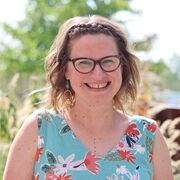
Laurel MacKenzie is an Associate Professor in the Department of Linguistics at New York University (NYU), affiliated with the Faculty of Arts and Science. She specializes in variationist sociolinguistics, dialectology, and language change, with a focus on English and French varieties. Her work integrates quantitative analysis of speech data to explore intra-speaker variation and language evolution. She co-directs the NYU Sociolinguistics Lab and leads the NSF-funded NYC Individual Differences Corpus project, alongside the Our Dialects initiative, an online atlas of British English dialects. Education: PhD in Linguistics, University of Pennsylvania (2012) BA in Linguistics and French, University of California, Berkeley (2006) Research Interests: Morphological and syntactic variation Regional dialects of English and French Linguistic pedagogy and public engagement Recent Projects: Recent work includes publications on participle leveling in English, sociolinguistic replication studies, and grammatical variation analysis. She has also collaborated on dialect mapping tools and consulted for media projects on language change and accents. Awards: No awards explicitly listed in provided texts. Labs/Teams: NYU Sociolinguistics Lab (Co-Director) Our Dialects Project (Academic Lead)
Bernard Comrie is a Research Professor Emeritus in Linguistics at the University of California, Santa Barbara (UCSB), affiliated with the College of Letters and Science. He previously served as Director of the Department of Linguistics at the Max Planck Institute for Evolutionary Anthropology in Leipzig (1998–2015) and held a Distinguished Professorship at UCSB (2002–2021). His career includes teaching positions at the University of Cambridge, University of Southern California, and leadership roles in major research institutions. Comrie’s research focuses on Language universals and typology Historical linguistics Languages of the Caucasus, New Guinea, and Great Andamanese He emphasizes fieldwork-driven cross-linguistic analysis of topics like tense/aspect, transitivity, numeral systems, and prehistoric migration studies through collaborations with archaeologists and geneticists. His recent publications explore morphosyntactic variation (e.g., verb indexing in Asian languages, reflexivity in Tsez), language contact (Kanashi prehistory), and numeral system typology. Articles often bridge theoretical linguistics with empirical data from understudied languages. Notable contributions include the World Atlas of Language Structures and foundational work on Nakh-Daghestanian and Andamanese languages. He advocates for interdisciplinary approaches to reconstructing prehistoric human movements via linguistic evidence.
Jiwon Yun is an Associate Professor in the Department of Linguistics at Stony Brook University. She holds a Ph.D. in Linguistics from Cornell University (2013) and a B.S.E. in Computer Science & Engineering from Seoul National University (cum laude with honors). Her research focuses on speech prosody, syntax-semantics interfaces, and computational modeling of sentence processing, with special attention to East Asian languages like Korean, Mandarin, and Japanese. Dr. Yun teaches undergraduate and graduate courses in computational linguistics, semantics, pragmatics, and experimental phonetics. Her work bridges theoretical linguistics and experimental methods, examining how prosody interacts with syntactic and semantic structures. Recent publications investigate prosodic disambiguation of syntactic ambiguities, computational models of relative clause processing, and intonation patterns in Korean and Mandarin. She has developed tools for automated speech corpus analysis and maintains a Hangul-Yale Romanization Converter for linguistic research. Her research has been published in journals like Humanities and Social Sciences Communications , Linguistic Inquiry , and Journal of East Asian Linguistics . Teaching responsibilities include courses such as LIN 335 (Computational Linguistics) and LIN 627 (Computational Semantics).
Zainab Hermes is an Associate Instructional Professor in the Department of Near Eastern Studies at the University of Chicago, where she has taught since 2018. She holds a PhD in Linguistics from the University of Illinois at Urbana-Champaign (2018), earned through experimental research combining phonetics and neuroscience methodologies. Education PhD in Linguistics, University of Illinois at Urbana-Champaign (2018) Research Interests Her work focuses on experimental linguistics, particularly the articulation of Arabic dialects (Cairene, Lebanese, Jordanian, Saudi). Key projects involve: MRI studies of vocal tract configurations for back consonants MEG investigations of neurological representations during Arabic diglossic code-switching Self-paced reading studies on L2 acquisition of Arabic grammatical gender Publications & Methodologies Her research employs advanced imaging techniques (rt-MRI, EMA) and neurolinguistic methods (MEG) to analyze speech production and processing. Her teaching includes courses on Arabic linguistics, dialectology, and academic reading. Academic Contributions She collaborates on interdisciplinary studies bridging phonetics, neuroscience, and language acquisition frameworks.
Andrew Ollett is an Associate Professor and Director of Graduate Studies in the Department of South Asian Languages and Civilizations at the University of Chicago , where he has taught since 2019. His research focuses on the literary and intellectual traditions of South and Southeast Asia, particularly through works in Sanskrit, Prakrit, Apabhramsha, and Kannada from the first millennium CE. Co-founder and editor of NESAR (New Explorations in South Asia Research) Director of NEH-funded edition/translation of the Kavirājamārga (earliest Kannada literary manual) Expert in Prakrit and Kannada literary traditions His work explores the 'question of language'—examining how language choice shaped cultural production and change in premodern India. Current projects include a monograph on context-sensitivity in Indian language theories and a study of manuscript technology's impact on early South Asian knowledge communities. He has authored The Mirror of Ornaments (Naples: Unior Press, 2025) and Language of the Snakes (UC Press, 2017), and co-authored Lilavai (Harvard, 2021). Recent publications include interdisciplinary studies on: Sanskrit-Prakrit campū genre reevaluation Pragmatics in Mīmāṁsā interpretive concepts Manuscript literacy's influence on literary forms Historical linguistics of Middle Indic syllable reduction Philosophy of language in Śālikanātha and Kumārila Bhaṭṭa Awarded the NEH 'Scholarly Editions and Translations' grant , he teaches classical South Asian literature courses covering Sanskrit, Prakrit, and Tamil traditions. He maintains digital resources including a Prakrit Digital Texts Project and Mīmāṁsādigdarśinī digital text repository, and actively contributes to open-access scholarship.
Hakan Özkan is a Privatdozent and Research Associate at the Institute of Arabic and Islamic Studies, Department of Middle Eastern Studies, University of Münster, where he has been working since 2007 in various capacities. He was awarded his Venia Legendi (Habilitation) in November 2019 for Arabic and Islamic Studies with his thesis 'History of Eastern Zajal – Dialectal Arabic Verse Poetry from the East of the Arab World.' His academic background includes a Franco-German doctorate completed in 2006 from Université de Provence and University of Cologne, supervised by Claude Audebert and Monika Gronke, with external reviewers including Wolfhart P. Heinrichs from Harvard University. His educational background includes: 2019: Venia Legendi for Arabic and Islamic Studies, University of Münster 2002-2006: Franco-German Doctorate in Arabic Studies and Narratology (Université de Provence and University of Cologne) 1995-2000: Master of Arts in Islamic Studies, Oriental Languages and Literatures (University of Cologne) 2000-2001: Course program in Modern Standard Arabic and Syrian-Lebanese dialect at Institut Français d'Etudes Arabes de Damas Özkan's research focuses on premodern Arabic dialect poetry, particularly zajal and muwashshaḥ forms, narratology, prosimeter literature, socio-literary history, and diachronic dialectology. His interdisciplinary approach bridges linguistic analysis with literary criticism, examining how dialectal forms evolved within Arabic literary traditions across different historical periods and geographical regions. He has conducted extensive field research in Arab countries including Syria, Egypt, Lebanon, Tunisia, and Morocco, with particular emphasis on the historical development of poetic forms from the Mamluk through Ottoman periods. His publication history demonstrates consistent scholarly contributions to Arabic literary studies, with his 2020 monograph 'History of Eastern Zajal' representing a landmark study in the field. His recent work has expanded to include analyses of religious poetry praising the Prophet Muhammad in zajal form, wine poetry in Arabic literary traditions, and the integration of dialects into Arabic language teaching methodologies. His scholarly output spans monographs, critical editions, encyclopedia entries, journal articles, and book chapters across multiple languages including German, English, French, and Turkish. Among his academic recognitions: 2018: Second place on shortlist for W2 Professorship for Arabic Language and Translation Science, University of Leipzig 2008: Offered Junior Professorship at American University in Cairo (declined) 2007: Second place on shortlist for maître de conférence position at University of Nancy 2007: Official Qualification from National University Council (CNU) for positions as maître de conférence at French universities Özkan has served on numerous academic committees, including appointment committees for professorships in Sinology and Arabic and Islamic Studies at the University of Münster. He has been a juror for the Sheikh Hamad Award for Translation and International Understanding in Doha and has served on the steering committee for the 'Translation for Dialogue' program of the Anna Lindh Foundation. His editorial work includes reviewing for Mamluk Studies Review, Die Welt des Islams, and Middle Eastern Literatures since 2012. His scholarly activities extend to linguistic fieldwork on Pontic Greek dialects in Turkey and organizing significant academic conferences including 'The Race Course of Literature – An-Nawāǧī and His Contemporaries' in 2018 at the University of Münster. His multilingual capabilities (Arabic, Turkish, German, French, English, Persian, Ottoman Turkish, and knowledge of Modern Greek) enable his comparative work across multiple linguistic and cultural traditions in the Mediterranean region.
Brendan T. O'Connor is an Associate Professor at the College of Information and Computer Sciences, University of Massachusetts Amherst, where he directs the SLANG Lab and serves as Associate Director of the Computational Social Science Institute. His research bridges statistical machine learning and natural language processing with social science applications, particularly using text data from news and social media to understand societal patterns. His work focuses on developing text analysis methods to answer social science questions in domains like political science and sociolinguistics. Current collaborative projects include combating misinformation, analyzing bias in news coverage, and developing tools for clinical discourse assessment using large language models. O'Connor's publications demonstrate a consistent focus on computational social science, with recent work exploring multilingual analysis, legal discourse patterns, and sociolinguistic variation. His methodological contributions span coreference resolution, event extraction, and argument mining. At UMass, he contributes to multiple research centers including the Computational Social Science Institute, UMass NLP group, and Centers for Data Science and Intelligent Information Retrieval. He teaches graduate seminars in natural language processing and maintains active collaborations across disciplines.
Professor Emma Moore is a leading sociolinguist at the School of English, University of Sheffield . Specializing in the social dimensions of language, her work integrates methodologies from anthropology and sociology to investigate how linguistic variation constructs identity and social affiliations. Research focus: Sociolinguistic style, dialect contact, youth language, identity negotiation, and community-based fieldwork Key projects: Adolescence and grammar (1999-), Isles of Scilly dialect (2008-), language and inequality (2014-), language perception software (2016-) Educational background : PhD in Sociolinguistics, University of Manchester Stanford University (USA) during PhD research Research trends across her 2021-2025 publications reveal interdisciplinary exploration of: Socio-syntactic variation Clinical linguistics (2025 MDS-UPDRS studies) Digital discourse post-pandemic Indexicality and cognitive representations Dialect contact in insular communities Educational policy implications Scientific recognition : British Academy Mid-Career Fellow (2019-2020) Elected Fellow, Royal Anthropological Institute (2014) AHRC/BA funded research projects (1999-2015) Research group leadership : Mentored 9 PhD students (2004-2024) and supervised 3 undergraduate SURE projects, including analyses of: Gender in rap performance Language style and workplace inequality Oral history digitization Professional contributions : Editorial Board: Language in Society (2015-), Gender and Language (2011-2017) External Examiner: Lancaster University MA in English Language (2013-2017) Collaborative software development for dialect perception testing
Elsayed Issa is an Assistant Professor in the School of Languages and Cultures at Purdue University. Specializing in Computational Linguistics and Arabic, his interdisciplinary research bridges Natural Language Processing (NLP) with Second Language Acquisition (SLA), focusing on conversational AI and speech technology for under-resourced languages. Ph.D. in Linguistics from the University of Arizona (2023) Research integrates NLP, conversational AI, and SLA methodologies Develops tools for computer-assisted pronunciation training (CAPT) Focuses on Arabic dialectology and large language models (LLMs) His work employs Transformer architectures and end-to-end machine learning to enhance language learning systems. Recent projects include ArabiBot development and dialect identification models. He specializes in speech-to-text systems , prosody modeling , and emotional speech analysis for Arabic language learning applications.
Zhiqiang Yu serves as an Associate Professor in the Department of Modern Languages and Comparative Literature at Baruch College's Weissman School of Arts and Sciences, City University of New York. With over two decades of teaching experience, he has established himself as a dedicated educator specializing in Chinese language, cinema, and civilization courses. Education: Ph.D. in Chinese, University of Washington M.A. in Asian Civilization, University of Iowa B.A. in Chinese Literature, Fudan University (Shanghai) Professor Yu's research focuses on innovative approaches to Chinese language pedagogy, with particular interest in applying economic principles and artificial intelligence to language teaching. His work bridges traditional linguistic scholarship with modern educational technology, examining how efficiency, resource allocation, and technological advancements can enhance language learning outcomes. His research spans Chinese linguistics, dialectology, cinema studies, and cultural elements in language teaching. His publication record reveals a consistent trajectory toward optimizing language instruction through systematic analysis. Recent work increasingly focuses on AI applications in language education and the economic framework of pedagogical efficiency. His scholarship demonstrates a progression from traditional linguistic analysis toward innovative teaching methodologies that incorporate modern technological and theoretical frameworks. Scientific Awards: Award of Excellent Academic Research Reviewer from Journal of International Chinese Education (2016) Graduate Teaching Fellowship from University of Washington (1993) Graduate Teaching Fellowship from University of Iowa (1989) Graduate Research Fellowship from University of Iowa (1988) Student Excellency Award from Fudan University (1984) Professor Yu has served extensively on departmental committees including as Department Assessment Coordinator and Secretary of the Asian and Asian-American Studies Committee. He has organized numerous academic events featuring prominent Chinese cultural figures and has contributed to developing Chinese language curriculum resources including online placement tests. His professional service extends to editorial work for CUNY publications and Chinese language training for the New York Police Academy. He maintains active involvement with multiple professional organizations including the American Name Society, American Oriental Society, American Society of Geolinguistics, Association for Asian Studies, and Chinese Language Teachers Association, frequently presenting at international conferences on Chinese language pedagogy.
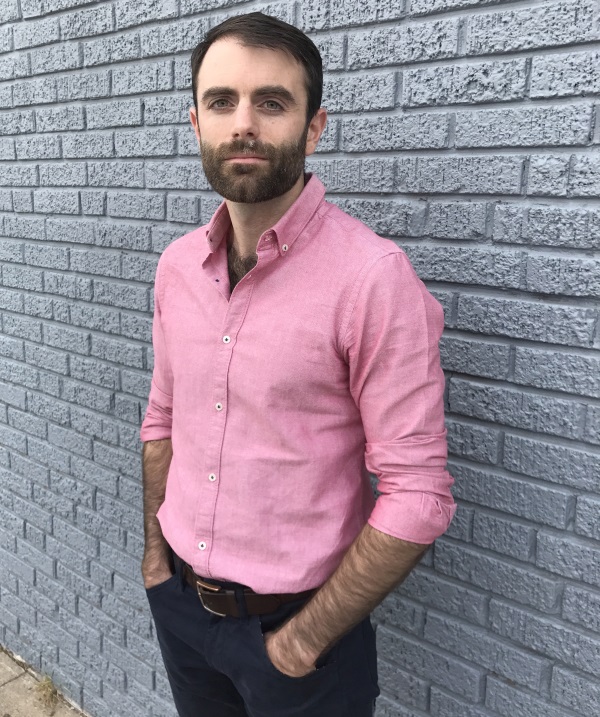
Brendan Regan is an Associate Professor of Spanish & Linguistics at Texas Tech University, directing the Sociolinguistics & Bilingualism Research Lab. He coordinates Hispanic Linguistics programs at both undergraduate and graduate levels. His research focuses on sociolinguistics, sociophonetics, and language variation, employing mixed-methods approaches including experimental design, corpus analysis, and discourse analysis. Education: Ph.D., The University of Texas at Austin (2017) M.A., Temple University B.A., University of Richmond Research Interests: His work addresses sociolinguistic variation, bilingualism, SLA, dialect contact, and language attitudes. Recent studies explore phonetic variation in Andalusian Spanish, language ideologies in heritage speakers, and place-name variation in Texas. Lab & Collaborations: The lab focuses on language variation in West Texas, offering research opportunities for students. Collaborative projects include corpus-based analyses of Spanish dialects and experimental studies on listener perception.
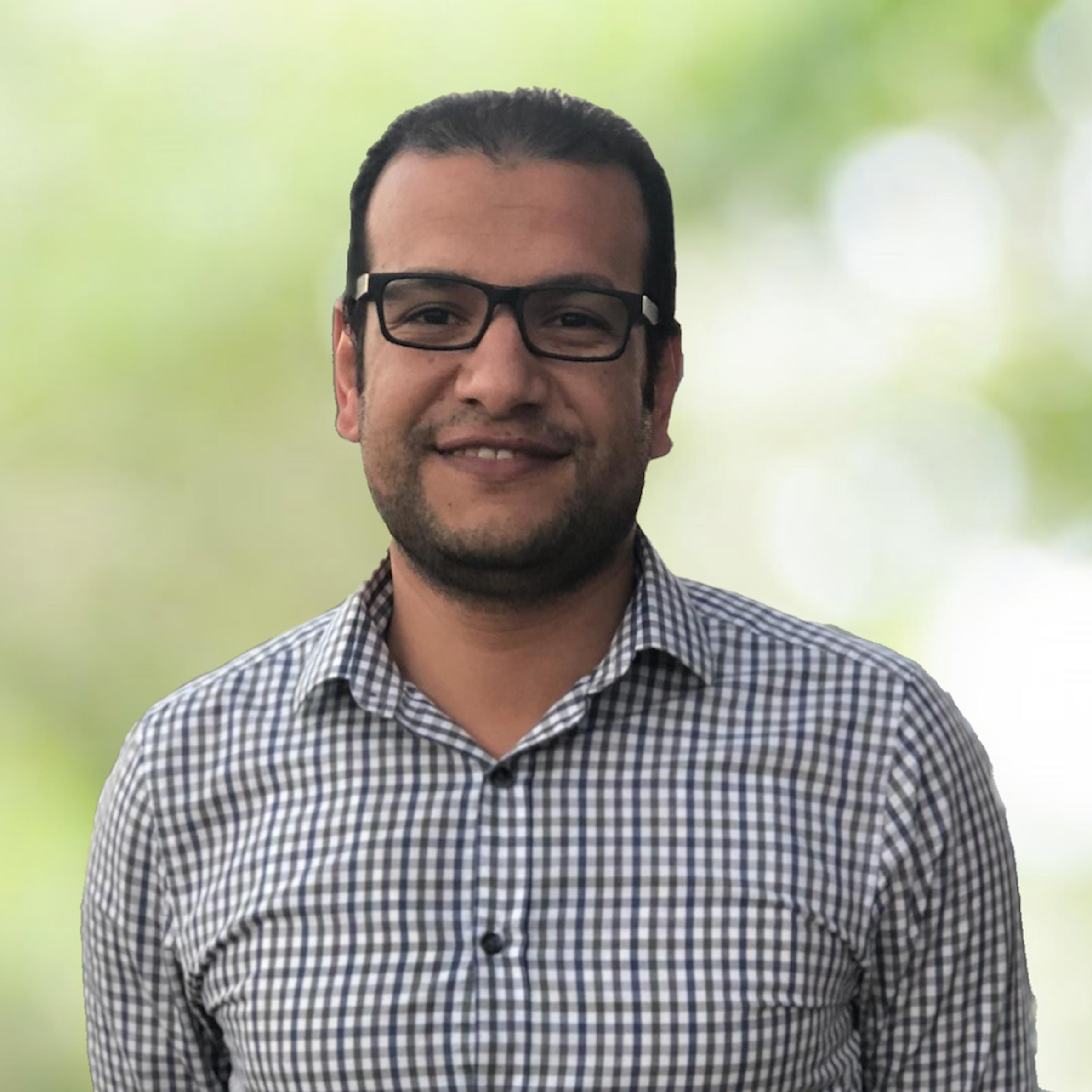
Ahmed Ferhadi is a Clinical Professor of Middle Eastern & Islamic Studies at New York University (NYU), specializing in linguistics with a focus on Second Language Acquisition, Sociolinguistics, and Language Testing. He holds a PhD in Linguistics from the University of Michigan (1990), an MA in Teaching Arabic as a Foreign Language (TAFL) from the same institution, and an M.S. in Applied Linguistics from the University of Edinburgh. His teaching career spans institutions like Princeton University, Columbia University, and Kurdish universities such as Salahuddin and Suleimaniyya Universities. He pioneered video-based language performance evaluation methods during his tenure at Middlebury College in 1991, which became a standard practice. Ferhadi has also served in high-level advisory roles, including President of the Association of American Teachers of Arabic (AATA) since 2017 and Distinguished Global Scholar of Kurdish Studies at American University (2010). Research interests include Kurdish language standardization, advanced Arabic pedagogy, and the sociopolitical dimensions of language. His projects include a Kurdish standardization initiative and curriculum development for advanced Arabic learners. Ferhadi has received numerous accolades, including the Golden Teaching Award (NYU 2000) and Top Language Award (U.S. Department of State 2006). His publications span linguistic theory, pedagogical techniques, and cultural studies, with recent works addressing Arabic dialect dynamics and Kurdish language policy. Ferhadi’s work bridges academic rigor with practical applications, emphasizing technology’s role in modern language education.
Barbara Plank is a full professor and chair for AI and Computational Linguistics at Ludwig Maximilian University of Munich (LMU), where she heads the Munich AI and NLP (MaiNLP) lab and co-directs the Center for Information and Language Processing (CIS). She additionally serves as a visiting full professor at the IT University of Copenhagen, maintaining active dual institutional affiliations in computational linguistics and NLP research. Her research focuses on human-centric natural language processing challenges, particularly learning under sample selection bias (domain adaptation, transfer learning) and annotation bias, learning with limited data through continual/semi-supervised/weakly-supervised methods, multimodal learning at language-vision-speech interfaces, and fortuitous supervision for variety-space aware language understanding. She pioneers methodologies addressing human label variation as a critical factor in model robustness rather than mere noise. Recent publications (2024-2025) reveal dominant trends in modeling human label variation across NLP tasks, especially natural language inference and entity recognition, alongside dialectal language processing and LLM evaluation frameworks. Her work systematically investigates how human disagreement in annotations can be leveraged to build more robust, adaptable systems rather than treated as errors. Scientific recognition includes: ERC Consolidator Grant for the DIALECT project advancing natural language understanding for non-standard languages and dialects ACL 2024 Area Chair Award for the paper 'VariErr NLI: Separating Annotation Error from Human Label Variation' Leading the MaiNLP lab at CIS (LMU), she directs research integrated with MCML (Munich Center for Machine Learning), Munich Intelligent Robotics, ELLIS Unit Munich, UniDive, and COST action. Current projects include ERC-funded DIALECT and KLIMA-MEMES, focusing on human-facing NLP solutions for real-world language diversity challenges. She actively shapes the field through ACL leadership as VP-Elect and numerous keynotes emphasizing human-centric approaches. The MaiNLP lab at Akademiestr. 7, 80799 Munich, drives innovation in computational linguistics through interdisciplinary collaboration, maintaining strong ties with European research networks while developing practical applications for language variation and robust NLP systems. The lab's work directly informs her teaching in LMU's Computational Linguistics programs, bridging research and education in cutting-edge NLP methodologies.
Milad Abedi is a PhD candidate in Linguistics at the University of Zurich and Institut national des langues et civilisations orientales (INALCO), Paris, focusing on the cultural history of Sino-Iranian lexical contacts. He has taught Zoroastrian Middle Persian and Middle Iranian languages at the University of Zurich while conducting research on topics including language contact mechanisms and historical Persian grammar. PhD in Linguistics (2020–Present), University of Zurich & INALCO, Paris MA in Ancient Languages and Cultures of Iran (2015–2019), Allameh Tabataba'i University (Highest Distinction) BSc in Cellular-Molecular Biology (2010–2015), Islamic Azad University His research spans ancient Iranian language contact (Elamite-Iranian, Sino-Iranian, Arabic-Iranian), historical grammar of Persian, and Classical Persian literature. He has published on topics such as kinship term evolution, cuneiform epigraphy, and metonymic phrases in Achaemenid Elamite. Recent publications highlight his focus on lexical diffusion across Eurasia, with key works on donkey terminology in cross-cultural contexts and the origins of felt words in Iranian languages. His collaborative research with Wolfgang Behr and Samira Müller demonstrates interdisciplinary approaches combining linguistics and archaeology. 2021 Travel grant, University of Zurich 2016 Travel grant, Allameh Tabataba'i University 2016 Top student award, Allameh Tabataba'i University As a Lecturer at the University of Zurich, he has taught courses on Zoroastrian Middle Persian and historical linguistics. His digital humanities expertise includes ELAN software, GIS, and SQL for language documentation.
Erik W. Willis is an Associate Professor in the Department of Spanish and Portuguese at Indiana University Bloomington, where he also serves as Director of Graduate Studies and Director of the Hispanic Linguistics Program. His work focuses on Spanish phonetics, phonology, and dialectal variation, particularly in Caribbean and Mexican Spanish varieties. He employs acoustic analysis and laboratory methods to study rhotic contrasts, intonational patterns, and sociolinguistic phenomena. Ph.D., University of Illinois at Urbana-Champaign (2003) M.A., Brigham Young University (1997) B.A., Brigham Young University (1994) His research spans multiple subfields including: Acoustic characterization of Spanish rhotics Intonational system analysis using Sp_ToBI Second language phonology acquisition Web-based language assessment tools Vowel system variations in Spanish dialects Contextual phonetic realizations in Caribbean Spanish Recent publications demonstrate systematic variation in coda liquids, tap-trill contrasts, and intonational patterns across Dominican, Puerto Rican, and Mexican Spanish. His work combines empirical acoustic analysis with sociolinguistic frameworks to document both phonetic realizations and their pragmatic functions in spoken language.