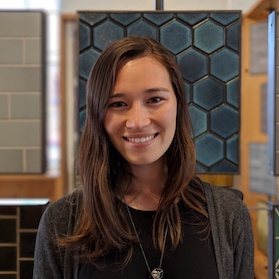
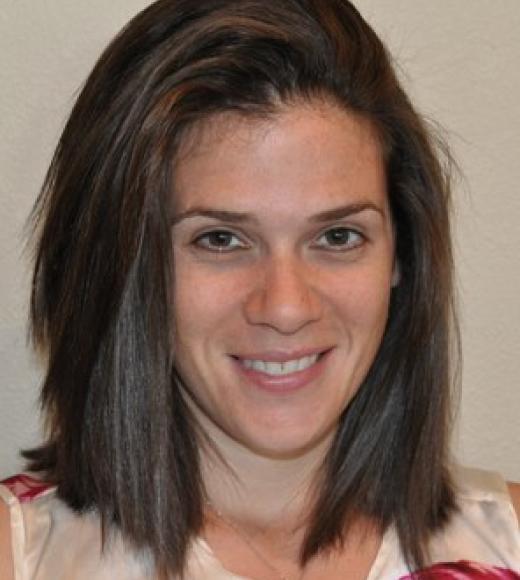
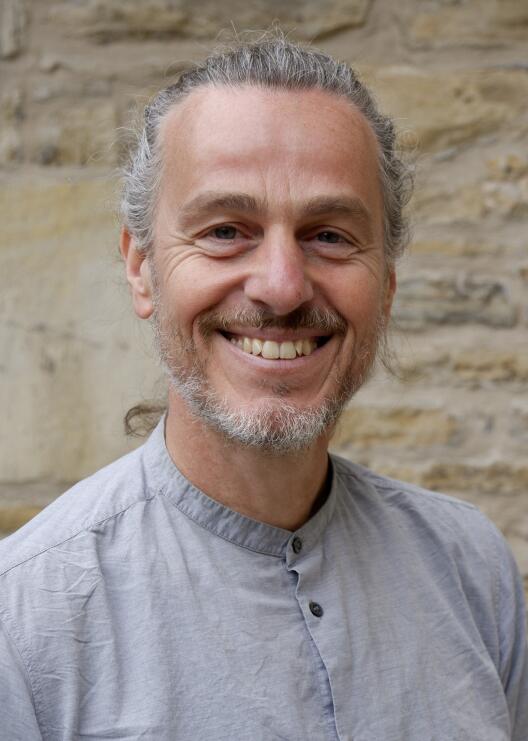
Allison Koenecke is an Assistant Professor of Information Science at Cornell Tech and a field faculty member in Computer Science at Cornell University. Previously, she was a postdoctoral researcher at Microsoft Research New England and completed her PhD at Stanford University’s Institute for Computational & Mathematical Engineering. Her research focuses on algorithmic fairness, computational social science, and causal inference in public health, addressing disparities in automated systems like speech recognition and policy decision-making. Education : PhD, Stanford Institute for Computational & Mathematical Engineering MA/MS, Stanford University BA/BS, Massachusetts Institute of Technology Research Interests : Dr. Koenecke’s work bridges economics and computer science, emphasizing equity in AI systems. Key areas include: Algorithmic bias in speech recognition (e.g., racial disparities in voice assistants) Fairness in policy tools like environmental justice data systems Causal analysis in public health interventions Ethical implications of large language models in education Media & Impact : Her research has been featured in outlets like New York Times , Science , and Scientific American . Notable studies include exposing racial gaps in speech-to-text systems and advocating for inclusive dataset development. She also explores societal impacts of AI in education and governance. Awards : Sloan Research Fellow in Computer Science Forbes 30 Under 30 in Science NSF Awards Cornell CIS Teaching Excellence Award (2024) Teaching & Outreach : She teaches courses like Designing Fair Algorithms and Data Science for Global Development , emphasizing interdisciplinary collaboration. Her PhD Professionalization course addresses hidden curricula in academia. She advises on AI ethics for nonprofits, tech companies, and government agencies.
Ksana Blank is a Senior Lecturer at Princeton University’s Department of Slavic Languages and Literatures. She coordinates the Russian Language Program and directs the Princeton-in-Petersburg Program, fostering academic exchange and interdisciplinary research. With a PhD in Russian Literature (Columbia University, 1997) and a BA in French Philology (St. Petersburg State University, 1979), her academic career spans over two decades at Princeton, preceded by teaching roles at Hunter College and Middlebury College Russian Summer School. Education: PhD, Russian Literature, Columbia University (1997) BA, French Philology, St. Petersburg State University (1979) Her research centers on Russian literature, emphasizing stylistic analysis and interdisciplinary connections with music, visual arts, folklore, and religious philosophy. Notable works include studies on Dostoevsky’s dialectics, Gogol’s The Nose , and the interplay between Russian modernism and Western art movements. She has authored multiple books and articles, many translated into Russian, and has published in academic journals across Russia, Europe, and China. Recent publications explore Dostoevsky’s paradoxes, Gogol’s linguistic innovation, and the intersection of Russian literature with music (Shostakovich), art (Malevich), and philosophy. Her 2023 book Парадоксы классики expands traditional interpretations of classic works through interdisciplinary lenses, while her 2021 The Nose guide deciphers Gogol’s wordplay and its narrative function. Earlier works address Tolstoy’s spiritual crisis and Bakhtinian dialogism in Russian literary theory. While no scientific awards are listed, her contributions to pedagogy include advanced Russian language courses and graduate-level Tolstoy studies. She currently works on Leo Tolstoy’s The Prisoner of the Caucasus and teaches courses on Russian literature, spirituality, and translation.
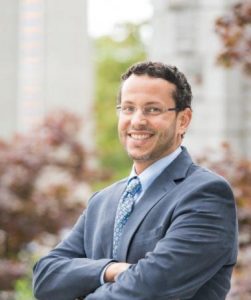
Dr. Muhammad Abdul-Mageed is an Associate Professor in the School of Information at The University of British Columbia, with joint appointments in Linguistics and an associate membership in Computer Science. He holds the Canada Research Chair in Natural Language Processing and Machine Learning. His research focuses on deep learning, socio-pragmatics, and speech/language technologies, particularly for Arabic and African languages. He leads the UBC Deep Learning & NLP Group and co-directs SSHRC-funded grants like I Trust AI and Ensuring Full Literacy. He is a founding member of the Center for Artificial Intelligence Decision making and Action and a member of the Institute for Computing, Information, and Cognitive Systems. His work spans automatic speech recognition, machine translation, computational socio-pragmatics, and low-resource language technologies. Notable projects include developing Arabic speech recognition systems, multidialectal Arabic benchmarks, and tools for African language processing. He has authored over 100 peer-reviewed papers and leads initiatives like the NADI Arabic Dialect Identification shared task and the NileChat project for culturally-aware LLMs. His research aims to create equitable, socially-aware AI systems for health, social media, and information management.
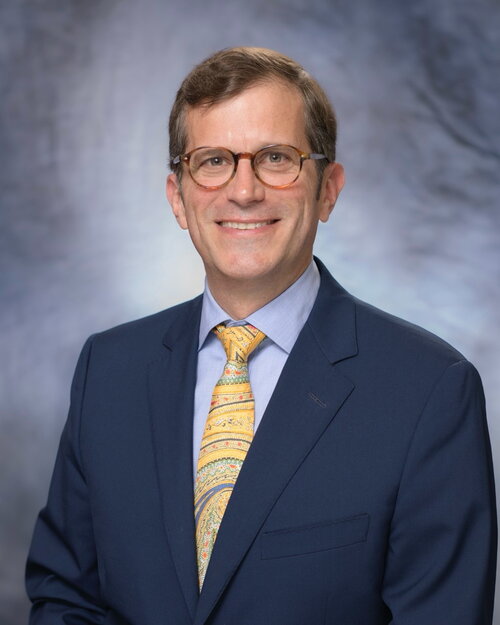
Dr Aaron D. Hornkohl is an Associate Professor in Hebrew and Bye-Fellow at Girton College, University of Cambridge. He serves as Director of Studies in Asian and Middle Eastern Studies at Girton and Homerton Colleges. His academic background includes a BA from Biola University, MA from The Hebrew University of Jerusalem, and PhD (2012) on the linguistic analysis of the Book of Jeremiah. His research focuses on ancient Hebrew philology, linguistic periodization, and exegesis, with a particular interest in the diachronic development of Hebrew and textual criticism of biblical manuscripts. Teaching responsibilities include courses on ancient and modern Hebrew literature, language history, and Middle Eastern culture. He co-organizes initiatives like the Sutton Trust Summer School and leads AHRC-funded research on critical editions of Hebrew texts, including the Kaufmann MS of the Mishna. Recent publications explore Tiberian reading traditions, Masoretic vocalization, and linguistic features in Qumran manuscripts. Research projects include Grammar of Biblical Hebrew Books (2024) and Studies in the Masoretic Tradition (2022). His work bridges linguistic analysis with historical context, addressing questions of language evolution and textual authenticity in Hebrew biblical and rabbinic corpora.
Kyle Bellucci Johanson serves as a Visiting Critic in Cornell University's College of Architecture, Art, and Planning, Department of Art. Holding an MFA from California Institute of the Arts and a BA in Art and Reconciliation Studies from Bethel University, he merges artistic practice with critical theory through performance architecture and collaborative media. Whitney Independent Study Program (2022–23) Founding fellow at land's edge free school (Los Angeles) Teaching experience at SAIC, UIC, CUNY, and Cooper Union His research investigates: Power structures through spatial interventions Critical theory applications in art practice Post-capitalist imaginaries Hauntology and historical materialism Transdisciplinary approaches to social critique Project trends reveal: Reinterpretation of Soviet design principles Investigation of worker identity in post-industrial contexts Temporal and spatial dislocation in artistic practice Monument critique through performative methods Quantum theory-inspired architectural concepts Reimagining of common spaces as political sites Scientific awards include: Creative Research Grant (2025) Whitney ISP participation (2022–23) Automata Studio Residency (2022) Artists Run Chicago Grant (2021) BOLT Residency (2020–21) Through projects like KLUB WRKR —a nomadic workers' club reimagined for the gig economy—and table (2018–2022), a Chicago-based experimental space for artistic practice, he interrogates institutional frameworks while fostering community through discursive meals and collaborative exhibitions.
Kirk Sanders is an Associate Professor split between the Departments of Classics and Philosophy at the University of Illinois. He holds a PhD in Philosophy from the Joint Classics-Philosophy Program at the University of Texas at Austin. His research focuses on Hellenistic philosophy and Xenophon's Socratic writings, with notable contributions including co-editing Epicurus and the Epicurean Tradition (2011) and ongoing projects on Xenophon's texts. His work bridges classical philology, philosophical analysis, and historical context. Education: PhD in Philosophy (UT Austin) Research interests include Hellenistic philosophical traditions, Socratic literature, and ancient Greek language structures. His recent publications explore Roman Epicureanism and textual analysis of classical works like Xenophon's Apology . Publications include contributions to Mnemosyne , Illinois Classical Studies , and edited volumes. Sanders also serves as an editor for peer-reviewed journals and maintains affiliations with the Center for Hellenic Studies. His current projects involve translating and commenting on Xenophon's Socratic writings, combining philological rigor with philosophical interpretation.
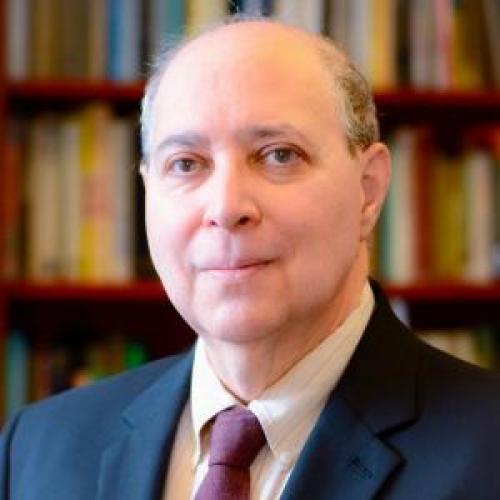
David Yarowsky is a Professor in the Department of Computer Science at Johns Hopkins University. He leads the Low-Resource Languages Lab and is a member of the Center for Language and Speech Processing. Harvard University - Bachelor of Arts in Computer Science (1987) University of Pennsylvania - Master of Science in Engineering (1993) and PhD in Computer and Information Science (1996) Research Interests : Natural Language Processing, particularly focusing on word sense disambiguation, minimally supervised induction algorithms, multilingual NLP, and machine translation for low-resource languages. His work bridges theoretical linguistics with practical applications in information retrieval, spoken language systems, and very large text databases. Article Trends : His publications emphasize cross-lingual transfer learning, universal morphology, and low-resource language technologies. Key themes include morphological analysis, computational etymology, and adversarial speech recognition. Scientific Awards : ACL Fellow (2013-present) Professional Service : Served as Treasurer and Executive Committee Member of the Association for Computational Linguistics, Secretary-Treasurer of SIGDAT, and chair/co-chair of major conferences including EMNLP 2013, IJCNLP 2011, and ACL 2014. Labs & Teams : Director of the Low-Resource Languages Lab at JHU and active member of the Center for Language and Speech Processing.
Georgia Zellou is an Associate Professor in the Department of Linguistics at the University of California, Davis, where she co-directs the Phonetics Lab and conducts award-winning research at the intersection of phonetics, speech perception, and human-AI interaction. Her work investigates how phonetic detail is cognitively represented through variations in speech production, with significant contributions to understanding speech alignment with voice assistants, face-masked speech intelligibility, and cross-linguistic perception of synthetic voices. Her academic credentials include a Ph.D. in Linguistics from the University of Colorado at Boulder (2012), an M.A. in Linguistics from Stony Brook University (2007), and a B.A. in Linguistics & Anthropology from the University of Florida (2005, Cum Laude, Phi Beta Kappa). Ph.D., Linguistics, University of Colorado at Boulder (2012) M.A., Linguistics, Stony Brook University (2007) B.A., Linguistics & Anthropology, University of Florida (2005) Professor Zellou's research program centers on laboratory phonology approaches to real-world communication challenges, examining how acoustic-phonetic details influence speech perception across contexts. Her studies span speech alignment with voice-AI systems (e.g., Amazon Alexa), sociophonetic variation in bilingual speech, and the cognitive mechanisms underlying perceptual compensation for coarticulation. She employs experimental methods including eye-tracking, acoustic analysis, and perceptual testing to uncover how phonetic variation functions pragmatically in human communication and human-machine interaction. Analysis of her 15 most recent publications (2023-2025) reveals three dominant research trajectories: (1) human-AI voice interaction dynamics, including prosodic alignment and social evaluation of TTS voices; (2) intelligibility optimization in challenging contexts (face masks, clear speech for diverse listeners); and (3) cross-linguistic phonetic variation in vowelless words and consonant clusters. These works consistently bridge theoretical phonology with applied speech technology, demonstrating how fine-grained phonetic detail influences communication effectiveness in both human-human and human-machine contexts. Her scientific recognition includes: Fulbright Scholar (2022) for research in France Chancellor’s Award for Excellence in Undergraduate Mentoring (2019) Fellow of the Linguistic Society of America (2020) Amazon Faculty Research Award (2019) for Alexa-related speech studies Dean’s Fellow designation at UC Davis (2020-2023) Professor Zellou maintains an active mentoring practice recognized with the Chancellor’s Award, supervising undergraduate researchers in the Phonetics Lab while teaching core linguistics courses from introductory to advanced graduate levels. Her research program is supported by competitive grants including NSF funding, Amazon Research Awards, and UC Davis internal grants (Hellman Foundation, ISS Junior Faculty Grant), reflecting the translational value of her work for speech technology development. She has co-directed major initiatives including the 2019 LSA Linguistic Institute. The Phonetics Lab she co-leads serves as a hub for experimental phonetics research, focusing on speech production-perception relationships through projects investigating vocal accommodation to voice assistants, nasal coarticulation dynamics, and cross-linguistic prosody. Current collaborations with industry partners aim to implement human speech adaptation principles into voice assistant design to enhance naturalness and engagement.
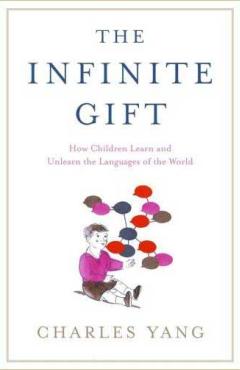
Charles Yang is a Professor of Linguistics and Computer Science at the University of Pennsylvania , where he also directs the Cognitive Science Program. His research integrates computational models with studies of language acquisition, processing, and evolution. Education: Ph.D. in Computer Science, MIT, 2000 Yang's work spans language acquisition , computational linguistics, and the evolution of cognition. He has authored The Price of Linguistic Productivity (2016), which received the Leonard Bloomfield Award from the LSA. Recent publications focus on large language models as cognitive models, the Chinese aspectual system , and statistical approaches to linguistic patterns. His 15 most recent articles (2025-2021) demonstrate a trajectory from computational models of language change to machine translation and multiword expression analysis . Yang has received significant funding from the National Science Foundation and the Guggenheim Foundation . He co-directs the Integrated Language Science and Technology group with John Trueswell and mentors students in linguistics, computer science, and psychology.
Sharon Levy is an Assistant Professor in the Department of Computer Science at Rutgers University, USA. Her research focuses on Natural Language Processing (NLP) with an emphasis on Responsible AI, addressing fairness, safety, and trustworthiness in language systems. She holds a Ph.D. from the University of California, Santa Barbara (2023), and conducted postdoctoral work at Johns Hopkins University (2023-2024). Education: PhD in Computer Science (UCSB, 2023), MS (UCSB, 2018), BS (UCSB, 2017). Professional experience includes roles at AWS, Facebook AI, Pinterest, and Akamai Technologies. Research Interests: Fairness in non-English contexts, safety of LLM outputs, misinformation detection, and computational social science applications. Her work frequently intersects with public health, gender studies, and political science. Teaching: Instructs Rutgers' Natural Language Processing course (Spring 2025) and co-taught JHU's Trustworthy NLP course. Active guest lecturer at institutions including Stanford and UT Austin. Mentorship: Supervises 14+ students across PhD, MS, and undergraduate levels, with notable advisees winning CRA awards. Labs/Teams: Currently leads research within Rutgers' CS department, previously collaborated with Johns Hopkins' CLSP.
Professor Eric Atwell is a Professor of Artificial Intelligence for Language at the University of Leeds' School of Computer Science, part of the Faculty of Engineering and Physical Sciences. He holds additional roles as a LITE Fellow at the Leeds Institute for Teaching Excellence (40% part-time), Turing Fellow at the Alan Turing Institute, and member of the Leeds Institute for Data Analytics (LIDA) and Language at Leeds (LATL). His research focuses on AI applications in corpus linguistics, text analytics, and computational analysis of religious and medical texts, with a strong emphasis on Arabic and Islamic studies. He leads the AI4L research group and has supervised over 60 research students and fellows, many of whom have pursued careers in academia, tech, and AI-driven fields. Education: PhD in Corpus Linguistics and Language Learning (University of Leeds, 2008), BA (First Class) in Computing and Linguistics (Lancaster University, 1981) Grants: Includes EPSRC-funded projects like Natural Language Processing with Arabic and Islamic Studies (£337K, 2013-2015) and EDUBOTS chatbots for education (£94K, 2019-2022) Teaching: Leads modules in Data Mining, Text Analytics, and AI across multiple programs, including online Masters and PhDs. Known for innovative teaching approaches and student support, receiving positive feedback for engagement and course design. Research Interests: AI applied to corpus linguistics, Quranic text analysis, Arabic NLP, chatbots for education, and decolonizing curricula. Notable projects include Quranic semantic search tools, Hadith corpus analysis, and AI-driven fact-checking systems. Publications: Over 277 publications, with recent work focusing on Quranic QA systems, Arabic dialect identification, and generative AI applications in education. His research is widely cited, earning recognition from ResearchGate for high readership. Awards: Recognized for his most-read research items on ResearchGate (June 2021). Gallup StrengthsFinder highlights his top traits as Learner, Achiever, Ideation, Intellection, and Maximizer. Labs/Teams: Leads the AI4L research group and collaborates with international institutions including SUSTECH Sudan, King Saud University, and SWJT University (China). Active in research networks like LIDA and LATL.
Ana Celia Zentella is a distinguished Professor in the Department of Ethnic Studies at the University of California, San Diego, renowned for pioneering "anthro-political linguistics" that examines language through sociopolitical and justice-oriented frameworks. Her work centers on U.S. Latin@ language communities, challenging linguistic discrimination and advocating for language rights. Education: Ph.D. in Educational Linguistics, University of Pennsylvania M.A. in Romance Languages and Literatures, Pennsylvania State University B.A. in Spanish, Hunter College (Bronx) Zentella's research critically analyzes U.S. Latin@ varieties of Spanish and English, Spanglish, and language socialization in families, with particular focus on Puerto Rican communities. She exposes how English-only laws and anti-bilingual education policies facilitate linguistic profiling that marginalizes communities. Her scholarship consistently bridges academic rigor and community advocacy, emphasizing "el habla del pueblo" (the people's speech) as resistance against top-down language classifications. Her publications reveal enduring themes: language as a site of political struggle (2018-2023), border linguistics examining Tijuana-San Diego dynamics (2013-2016), and historical analyses of Nuyorican language (2004). She challenges harmful frameworks like the U.S. Census Bureau's "linguistically isolated" category while documenting language revitalization efforts in multilingual urban centers. Scientific Awards: British Association of Applied Linguistics Book Prize (1997) Association of Latina and Latino Anthropologists Book Award (1997) Manhattan's "Doctor Ana Celia Zentella Day" declaration (1997) LASA Public Intellectual of the Year (2014) Society for Linguistic Anthropology Public Outreach Award (2016) American Academy of Arts and Sciences induction (2023) Choice Outstanding Academic Title (2018) Zentella actively mentors through community-engaged scholarship, co-authoring Multilingual San Diego (2008) and Multilingual Philadelphia (2010) with undergraduates. Her public outreach includes challenging linguistic erasure and advising policymakers on language-inclusive practices, demonstrating consistent commitment to translating academic work into tangible community impact.
Alexander Tulin is an Associate Professor in the Department of English at Howard University, within the College of Arts & Sciences. He has been a faculty member at Howard since 1990, originally in the Department of Classics, which he chaired from 2017 to 2021 before its closure led to his transition to the English Department. Institution: Howard University School: College of Arts & Sciences Department: Department of English Academic Rank: Associate Professor Email: atulin@Howard.edu Education: PhD in Classics, Columbia University, 1990 Dr. Tulin's research and teaching span classical antiquity and modern literature. His primary scholarly interests include Ancient Greek Philosophy, Plato, Ancient Law, and Rhetoric, with a current focus on the interstices between Antiquity and Modernity. In the English Department, his teaching centers on Modernism, modern art from 1870–1950, and the 20th-century novel in Europe and America. His publications reflect a deep engagement with classical philosophy and textual analysis. The most recent works show a sustained interest in Platonic dialogues, Socratic method, philosophical rhetoric, and the interpretation of ancient legal and literary texts. He has also contributed numerous scholarly reviews, demonstrating active participation in the academic discourse of classical studies. Scientific Awards: No specific awards or honors are mentioned in the provided text. Advising and Grants: There is no information available regarding students advised, research grants, or funding received. Labs and Research Teams: No information is provided about laboratories, research groups, or collaborative teams associated with Dr. Tulin.
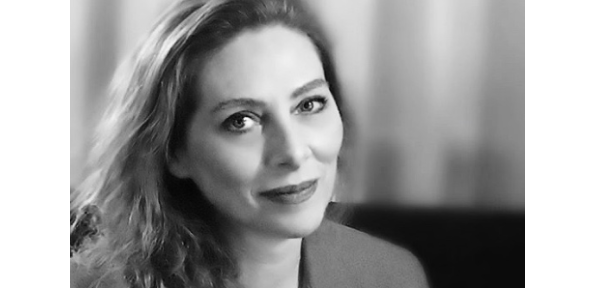
Professor Helena Sanson is a Full Professor of Italian, History of Linguistics, and Women's Studies at the University of Cambridge , where she is also a Fellow of Clare College and serves as Postgraduate Teaching and Examining Officer for the Italian Section. She joined Cambridge in 2005 after teaching at University College London (1998-2003) following her British Academy Postdoctoral Fellowship. PhD from University of Reading (2002) Her interdisciplinary research focuses on the intersection of Italian linguistic history , literary culture , and gender studies from the Renaissance to post-Unification period. Particular emphasis includes women's contributions to linguistic thought , conduct literature analysis , and female roles in translation networks . Her work examines how women navigated language standardization, educational access, and literary production across social strata. Recent projects include Leverhulme-funded research on women's linguistic experiences in 18th-19th century Italy and co-edited volumes on transnational travelers' accounts and early modern female education . She founded the Women and Gender in Italy (1500-1900) book series and the journal Women Language Literature in Italy . Scientific awards include: British Academy Postdoctoral Fellowship Leverhulme Research Fellowship Philip Leverhulme Prize CRASSH Early Career Fellowship Isaac Newton Trust grant Senior Visiting Fellowship at University of Bologna She supervises graduate research in topics spanning women's writing , linguistic thought , translation history , and cultural marginalization in 16th-20th century Italy. Her work bridges philology, literary criticism, and social history through rigorous textual analysis.
Hakan Özkan is a Privatdozent and Research Associate at the Institute of Arabic and Islamic Studies, Department of Middle Eastern Studies, University of Münster, where he has been working since 2007 in various capacities. He was awarded his Venia Legendi (Habilitation) in November 2019 for Arabic and Islamic Studies with his thesis 'History of Eastern Zajal – Dialectal Arabic Verse Poetry from the East of the Arab World.' His academic background includes a Franco-German doctorate completed in 2006 from Université de Provence and University of Cologne, supervised by Claude Audebert and Monika Gronke, with external reviewers including Wolfhart P. Heinrichs from Harvard University. His educational background includes: 2019: Venia Legendi for Arabic and Islamic Studies, University of Münster 2002-2006: Franco-German Doctorate in Arabic Studies and Narratology (Université de Provence and University of Cologne) 1995-2000: Master of Arts in Islamic Studies, Oriental Languages and Literatures (University of Cologne) 2000-2001: Course program in Modern Standard Arabic and Syrian-Lebanese dialect at Institut Français d'Etudes Arabes de Damas Özkan's research focuses on premodern Arabic dialect poetry, particularly zajal and muwashshaḥ forms, narratology, prosimeter literature, socio-literary history, and diachronic dialectology. His interdisciplinary approach bridges linguistic analysis with literary criticism, examining how dialectal forms evolved within Arabic literary traditions across different historical periods and geographical regions. He has conducted extensive field research in Arab countries including Syria, Egypt, Lebanon, Tunisia, and Morocco, with particular emphasis on the historical development of poetic forms from the Mamluk through Ottoman periods. His publication history demonstrates consistent scholarly contributions to Arabic literary studies, with his 2020 monograph 'History of Eastern Zajal' representing a landmark study in the field. His recent work has expanded to include analyses of religious poetry praising the Prophet Muhammad in zajal form, wine poetry in Arabic literary traditions, and the integration of dialects into Arabic language teaching methodologies. His scholarly output spans monographs, critical editions, encyclopedia entries, journal articles, and book chapters across multiple languages including German, English, French, and Turkish. Among his academic recognitions: 2018: Second place on shortlist for W2 Professorship for Arabic Language and Translation Science, University of Leipzig 2008: Offered Junior Professorship at American University in Cairo (declined) 2007: Second place on shortlist for maître de conférence position at University of Nancy 2007: Official Qualification from National University Council (CNU) for positions as maître de conférence at French universities Özkan has served on numerous academic committees, including appointment committees for professorships in Sinology and Arabic and Islamic Studies at the University of Münster. He has been a juror for the Sheikh Hamad Award for Translation and International Understanding in Doha and has served on the steering committee for the 'Translation for Dialogue' program of the Anna Lindh Foundation. His editorial work includes reviewing for Mamluk Studies Review, Die Welt des Islams, and Middle Eastern Literatures since 2012. His scholarly activities extend to linguistic fieldwork on Pontic Greek dialects in Turkey and organizing significant academic conferences including 'The Race Course of Literature – An-Nawāǧī and His Contemporaries' in 2018 at the University of Münster. His multilingual capabilities (Arabic, Turkish, German, French, English, Persian, Ottoman Turkish, and knowledge of Modern Greek) enable his comparative work across multiple linguistic and cultural traditions in the Mediterranean region.