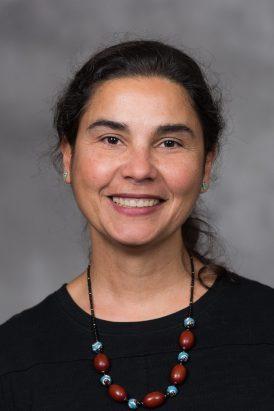
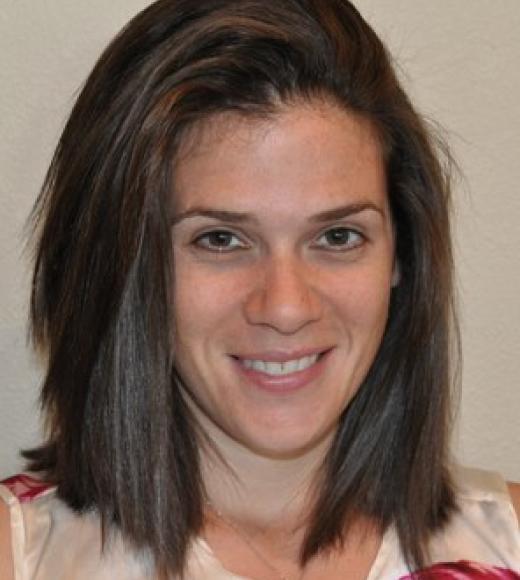
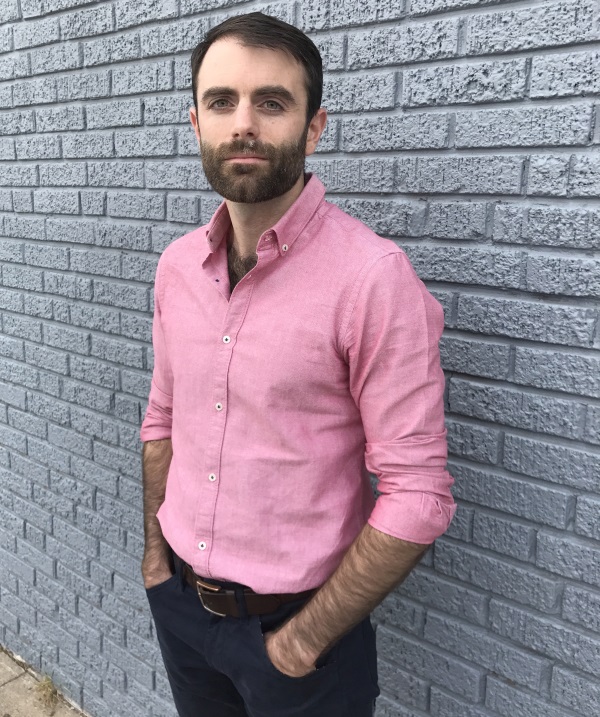
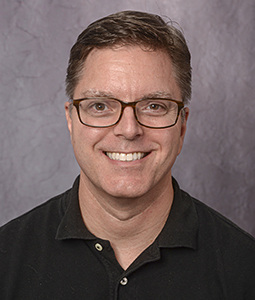
Marlyse Baptista is the President's Distinguished Professor of Linguistics at the University of Pennsylvania, Department of Linguistics. She is affiliated with the School of Arts & Sciences and MindCore initiative. Her research focuses on language contact, creolization processes, bilingualism, and experimental methods in creole studies. Baptista leads the Language Contact and Cognition Lab, previously known as the Cognition, Convergence and Language Emergence (CCLE) group at the University of Michigan. Education includes a PhD in Linguistics (Harvard, 1997), MA degrees from Harvard and the Université de Bordeaux III, and extensive training in multilingual education. Her work bridges generative syntax with experimental approaches, including artificial language learning to study language convergence. Key themes include the cognitive underpinnings of creole formation, bidirectional influences in Cape Verdean Creole, and the role of congruence in language acquisition. Research highlights include studies on Cape Verdean Creole's grammatical properties, genetic-linguistic admixture correlations, and pedagogical resources for creole language education. Recent projects explore experimental validation of creole genesis theories through multilingual acquisition studies. Scientific Awards: President's Distinguished Professorship (University of Pennsylvania) Labs/Teams: Language Contact and Cognition Lab, MindCore Grants/Projects: MULTI Project (creole language educational resources), NSF-funded studies on creole genesis mechanisms Baptista's work emphasizes interdisciplinary approaches, integrating syntax theory, psycholinguistics, and sociolinguistics to address foundational questions in contact linguistics and creolistics.
Bernard Comrie is a Research Professor Emeritus in Linguistics at the University of California, Santa Barbara (UCSB), affiliated with the College of Letters and Science. He previously served as Director of the Department of Linguistics at the Max Planck Institute for Evolutionary Anthropology in Leipzig (1998–2015) and held a Distinguished Professorship at UCSB (2002–2021). His career includes teaching positions at the University of Cambridge, University of Southern California, and leadership roles in major research institutions. Comrie’s research focuses on Language universals and typology Historical linguistics Languages of the Caucasus, New Guinea, and Great Andamanese He emphasizes fieldwork-driven cross-linguistic analysis of topics like tense/aspect, transitivity, numeral systems, and prehistoric migration studies through collaborations with archaeologists and geneticists. His recent publications explore morphosyntactic variation (e.g., verb indexing in Asian languages, reflexivity in Tsez), language contact (Kanashi prehistory), and numeral system typology. Articles often bridge theoretical linguistics with empirical data from understudied languages. Notable contributions include the World Atlas of Language Structures and foundational work on Nakh-Daghestanian and Andamanese languages. He advocates for interdisciplinary approaches to reconstructing prehistoric human movements via linguistic evidence.
Emma Trentman is an Associate Professor of Arabic at the University of New Mexico (UNM) and Director of the Language Learning Center. Her research focuses on Applied Linguistics, particularly on language learning during study abroad programs, virtual exchange, and the impact of language ideologies on multilingual approaches. Research Interests: Multilingualism, Language Ideologies, Study Abroad Programs, Intercultural Communication, Arabic Language Education, and Curriculum Development. Key Publications: Co-editor of Language Learning in Study Abroad: The Multilingual Turn (2021), with works featured in The Modern Language Journal , Foreign Language Annals , and Critical Multilingualism Studies . Teaching: Offers Arabic language courses and the Languages Capstone class, integrating critical perspectives into language pedagogy. Editorial Work: Co-editor for Critical Multilingualism Studies Journal , advocating for plurilingual practices in education. Publications: Explores topics such as translanguaging, sociolinguistic competence, and decolonizing language learning frameworks across diverse contexts (Egypt, Tanzania, China). Advocacy: Engages in critical discussions on equity, identity, and sociocultural dimensions in language education.
Salikoko S. Mufwene is the Edward Carson Waller Distinguished Service Professor of Linguistics at the University of Chicago. He holds additional appointments on the Committees on Evolutionary Biology, Conceptual and Historical Studies of Science, and African Studies. His research integrates ecological perspectives into evolutionary linguistics, focusing on language contact, creole genesis, language endangerment, and the impact of colonization and globalization on linguistic diversity. Education: PhD in Linguistics, University of Chicago (1979) Key Themes: Language evolution, creole languages, population structure, decolonial linguistics, language policy Mufwene’s work emphasizes the role of population dynamics in language change, drawing parallels with biological evolution. His recent articles examine topics such as the cultural-artifact nature of language, the ecological drivers of creole hybridization, and the decolonization of linguistic paradigms. He has also contributed extensively to debates on language endangerment and multilingualism in super-diverse societies. Scientific Awards: Fellow, Linguistic Society of America (2018) Fellow, American Philosophical Society (2022) Fellow, American Academy of Arts and Sciences (2023) Collège de France lectures (2003, 2023-24) Summer Institute of the Linguistic Society of America (1999, 2005, 2015, 2017)
Gareth Roberts is an Associate Professor in the Department of Linguistics at the University of Pennsylvania, where he serves as Graduate Chair. He is also a faculty member of the Psychology Graduate Group, founder and director of the Cultural Evolution of Language Lab, and co-director of the Social and Cultural Evolution Working Group at Penn. Roberts earned his PhD in Linguistics from the University of Edinburgh in 2010, following an MSc in Evolution of Language and Cognition (2006) and a BA in German and Russian (2003) from the University of Nottingham. His academic journey includes postdoctoral positions at Yeshiva University and the University of Stirling before joining Penn as an Assistant Professor in 2014, where he was promoted to Associate Professor in 2022. His research focuses on the role of social and communicative pressures in shaping language emergence and evolution. Roberts investigates fundamental questions about linguistic variant spread, phonological system structuring, and how communication shapes linguistic structure. His work bridges linguistics, cognitive science, and cultural evolution through innovative experimental approaches using artificial languages and laboratory simulations. Analysis of Roberts' recent publications reveals a consistent focus on experimental semiotics, with particular attention to social biases in language evolution, phonological organization, indexicality emergence, and the dynamics of linguistic variation. His work often combines computational modeling with human experiments to isolate specific mechanisms driving language change. Linguistic Society of America Cognitive Science Society Philological Society Cultural Evolution Society Roberts has successfully secured substantial research funding including an NSF PAC Grant ($102,648), Penn URF Research Grants ($12,155), MindCORE initiative grant ($600,000), and multiple smaller grants totaling over $20,000. His lab currently includes researchers investigating diverse topics from case and gender marking emergence to AI agent effects on group dynamics, linguistic and genetic data in British history, and phonological space organization. The Cultural Evolution of Language Lab, which Roberts founded and directs, conducts cutting-edge research using experimental semiotics methodologies. Current projects examine how social factors influence language change, the emergence of linguistic structure through communication, and the interaction between iconicity and combinatoriality in communication systems.
Georgia Zellou is an Associate Professor in the Department of Linguistics at the University of California, Davis, where she co-directs the Phonetics Lab and conducts award-winning research at the intersection of phonetics, speech perception, and human-AI interaction. Her work investigates how phonetic detail is cognitively represented through variations in speech production, with significant contributions to understanding speech alignment with voice assistants, face-masked speech intelligibility, and cross-linguistic perception of synthetic voices. Her academic credentials include a Ph.D. in Linguistics from the University of Colorado at Boulder (2012), an M.A. in Linguistics from Stony Brook University (2007), and a B.A. in Linguistics & Anthropology from the University of Florida (2005, Cum Laude, Phi Beta Kappa). Ph.D., Linguistics, University of Colorado at Boulder (2012) M.A., Linguistics, Stony Brook University (2007) B.A., Linguistics & Anthropology, University of Florida (2005) Professor Zellou's research program centers on laboratory phonology approaches to real-world communication challenges, examining how acoustic-phonetic details influence speech perception across contexts. Her studies span speech alignment with voice-AI systems (e.g., Amazon Alexa), sociophonetic variation in bilingual speech, and the cognitive mechanisms underlying perceptual compensation for coarticulation. She employs experimental methods including eye-tracking, acoustic analysis, and perceptual testing to uncover how phonetic variation functions pragmatically in human communication and human-machine interaction. Analysis of her 15 most recent publications (2023-2025) reveals three dominant research trajectories: (1) human-AI voice interaction dynamics, including prosodic alignment and social evaluation of TTS voices; (2) intelligibility optimization in challenging contexts (face masks, clear speech for diverse listeners); and (3) cross-linguistic phonetic variation in vowelless words and consonant clusters. These works consistently bridge theoretical phonology with applied speech technology, demonstrating how fine-grained phonetic detail influences communication effectiveness in both human-human and human-machine contexts. Her scientific recognition includes: Fulbright Scholar (2022) for research in France Chancellor’s Award for Excellence in Undergraduate Mentoring (2019) Fellow of the Linguistic Society of America (2020) Amazon Faculty Research Award (2019) for Alexa-related speech studies Dean’s Fellow designation at UC Davis (2020-2023) Professor Zellou maintains an active mentoring practice recognized with the Chancellor’s Award, supervising undergraduate researchers in the Phonetics Lab while teaching core linguistics courses from introductory to advanced graduate levels. Her research program is supported by competitive grants including NSF funding, Amazon Research Awards, and UC Davis internal grants (Hellman Foundation, ISS Junior Faculty Grant), reflecting the translational value of her work for speech technology development. She has co-directed major initiatives including the 2019 LSA Linguistic Institute. The Phonetics Lab she co-leads serves as a hub for experimental phonetics research, focusing on speech production-perception relationships through projects investigating vocal accommodation to voice assistants, nasal coarticulation dynamics, and cross-linguistic prosody. Current collaborations with industry partners aim to implement human speech adaptation principles into voice assistant design to enhance naturalness and engagement.
Ana Celia Zentella is a distinguished Professor in the Department of Ethnic Studies at the University of California, San Diego, renowned for pioneering "anthro-political linguistics" that examines language through sociopolitical and justice-oriented frameworks. Her work centers on U.S. Latin@ language communities, challenging linguistic discrimination and advocating for language rights. Education: Ph.D. in Educational Linguistics, University of Pennsylvania M.A. in Romance Languages and Literatures, Pennsylvania State University B.A. in Spanish, Hunter College (Bronx) Zentella's research critically analyzes U.S. Latin@ varieties of Spanish and English, Spanglish, and language socialization in families, with particular focus on Puerto Rican communities. She exposes how English-only laws and anti-bilingual education policies facilitate linguistic profiling that marginalizes communities. Her scholarship consistently bridges academic rigor and community advocacy, emphasizing "el habla del pueblo" (the people's speech) as resistance against top-down language classifications. Her publications reveal enduring themes: language as a site of political struggle (2018-2023), border linguistics examining Tijuana-San Diego dynamics (2013-2016), and historical analyses of Nuyorican language (2004). She challenges harmful frameworks like the U.S. Census Bureau's "linguistically isolated" category while documenting language revitalization efforts in multilingual urban centers. Scientific Awards: British Association of Applied Linguistics Book Prize (1997) Association of Latina and Latino Anthropologists Book Award (1997) Manhattan's "Doctor Ana Celia Zentella Day" declaration (1997) LASA Public Intellectual of the Year (2014) Society for Linguistic Anthropology Public Outreach Award (2016) American Academy of Arts and Sciences induction (2023) Choice Outstanding Academic Title (2018) Zentella actively mentors through community-engaged scholarship, co-authoring Multilingual San Diego (2008) and Multilingual Philadelphia (2010) with undergraduates. Her public outreach includes challenging linguistic erasure and advising policymakers on language-inclusive practices, demonstrating consistent commitment to translating academic work into tangible community impact.
Scott Prudham is a Professor in the Department of Geography and Planning and affiliated with the School of the Environment at the University of Toronto. His research focuses on political ecology, environmental politics, and the commodification of nature. University of Toronto, Department of Geography and Planning School of the Environment Prudham's work critically examines the intersection of capitalism and environmental governance, with specific attention to forestry, biotechnology, and urban ecologies. His recent publications analyze pandemic risk geographies and the political economy of 'fictitious' natural commodities. In 2022, he received the JJ Berry Smith Doctoral Supervision Award from the University of Toronto's School of Graduate Studies. His current projects include critical studies of natural resource industries and environmental justice movements. Contact: scott.prudham@utoronto.ca
Dr. Silu Wang is an Assistant Professor in the Department of Biological Sciences at the University at Buffalo. Her research focuses on speciation, adaptation, and forest evolutionary genomics, particularly in avian species. She leads the Forest Speciation Lab, studying the genomic and ecological mechanisms underlying species divergence in North American and global forest ecosystems. Her work integrates field studies, genomic analyses, and computational modeling to address biodiversity conservation challenges under climate change. Education: BS in Behavior Genetics and Neurobiology, University of Toronto MA in Ecology, Evolution and Behavior, University of Texas, Austin PhD in Zoology, University of British Columbia Postdoctoral Research at University of California Berkeley and UC Davis Research Interests: Dr. Wang investigates how hybridization, climate adaptation, and reproductive isolation shape avian biodiversity. Her lab uses old-growth forest bird species as models to study early-stage speciation processes, including mate choice, genetic incompatibilities, and mitochondrial-nuclear interactions. Key themes include understanding organismal responses to environmental changes and developing genomic tools for conservation prioritization. Lab and Teams: The Forest Speciation Lab collaborates with institutions globally, focusing on fieldwork in temperate and tropical forests. Current projects include studies on warbler hybrid zones, tinamou speciation, and the genomic architecture of mitonuclear coevolution. Teaching: Dr. Wang teaches courses on Speciation, Tropical Ecology, and Evolutionary Biology, emphasizing hands-on research training for students.
Professor Emma Moore is a leading sociolinguist at the School of English, University of Sheffield . Specializing in the social dimensions of language, her work integrates methodologies from anthropology and sociology to investigate how linguistic variation constructs identity and social affiliations. Research focus: Sociolinguistic style, dialect contact, youth language, identity negotiation, and community-based fieldwork Key projects: Adolescence and grammar (1999-), Isles of Scilly dialect (2008-), language and inequality (2014-), language perception software (2016-) Educational background : PhD in Sociolinguistics, University of Manchester Stanford University (USA) during PhD research Research trends across her 2021-2025 publications reveal interdisciplinary exploration of: Socio-syntactic variation Clinical linguistics (2025 MDS-UPDRS studies) Digital discourse post-pandemic Indexicality and cognitive representations Dialect contact in insular communities Educational policy implications Scientific recognition : British Academy Mid-Career Fellow (2019-2020) Elected Fellow, Royal Anthropological Institute (2014) AHRC/BA funded research projects (1999-2015) Research group leadership : Mentored 9 PhD students (2004-2024) and supervised 3 undergraduate SURE projects, including analyses of: Gender in rap performance Language style and workplace inequality Oral history digitization Professional contributions : Editorial Board: Language in Society (2015-), Gender and Language (2011-2017) External Examiner: Lancaster University MA in English Language (2013-2017) Collaborative software development for dialect perception testing
Brendan Regan is an Associate Professor of Spanish & Linguistics at Texas Tech University, directing the Sociolinguistics & Bilingualism Research Lab. He coordinates Hispanic Linguistics programs at both undergraduate and graduate levels. His research focuses on sociolinguistics, sociophonetics, and language variation, employing mixed-methods approaches including experimental design, corpus analysis, and discourse analysis. Education: Ph.D., The University of Texas at Austin (2017) M.A., Temple University B.A., University of Richmond Research Interests: His work addresses sociolinguistic variation, bilingualism, SLA, dialect contact, and language attitudes. Recent studies explore phonetic variation in Andalusian Spanish, language ideologies in heritage speakers, and place-name variation in Texas. Lab & Collaborations: The lab focuses on language variation in West Texas, offering research opportunities for students. Collaborative projects include corpus-based analyses of Spanish dialects and experimental studies on listener perception.
D. Eric Holt is an Associate Professor of Spanish and Linguistics at the University of South Carolina, affiliated with the Department of Languages, Literatures, and Cultures and the College of Arts and Sciences. He has held academic appointments since 1994, including visiting roles at Georgetown University and lecturing positions in Ecuador and Spain. His expertise spans Hispanic linguistics, historical linguistics, second language acquisition, and phonological theory, with a focus on Optimality Theory and its applications to Spanish and Portuguese. Educated at Occidental College (BA), Georgetown University (MS, PhD), and with extensive summer programs in linguistics, Holt's research explores sound change, dialectology, and L2 pronunciation acquisition. He has supervised numerous graduate theses and dissertations, including notable works on connected speech perception and language contact phenomena. His teaching portfolio includes advanced courses on Spanish linguistics, phonetics, and historical language evolution. Holt has led international study programs in Spain, Costa Rica, and Ecuador, and contributes to academic service as an associate editor of Studies in Hispanic and Lusophone Linguistics and through professional organizations like Phi Beta Kappa. Holt's grants include funding for research on L2 speech perception and技术创新 in pronunciation teaching. He has presented globally at conferences such as NWAV and LSA, and his work appears in top journals like Probus and Georgetown University Round Table . His current projects include books on Optimality Theory in Spanish linguistics and debunking language myths.
Ahmed Ferhadi is a Clinical Professor of Middle Eastern & Islamic Studies at New York University (NYU), specializing in linguistics with a focus on Second Language Acquisition, Sociolinguistics, and Language Testing. He holds a PhD in Linguistics from the University of Michigan (1990), an MA in Teaching Arabic as a Foreign Language (TAFL) from the same institution, and an M.S. in Applied Linguistics from the University of Edinburgh. His teaching career spans institutions like Princeton University, Columbia University, and Kurdish universities such as Salahuddin and Suleimaniyya Universities. He pioneered video-based language performance evaluation methods during his tenure at Middlebury College in 1991, which became a standard practice. Ferhadi has also served in high-level advisory roles, including President of the Association of American Teachers of Arabic (AATA) since 2017 and Distinguished Global Scholar of Kurdish Studies at American University (2010). Research interests include Kurdish language standardization, advanced Arabic pedagogy, and the sociopolitical dimensions of language. His projects include a Kurdish standardization initiative and curriculum development for advanced Arabic learners. Ferhadi has received numerous accolades, including the Golden Teaching Award (NYU 2000) and Top Language Award (U.S. Department of State 2006). His publications span linguistic theory, pedagogical techniques, and cultural studies, with recent works addressing Arabic dialect dynamics and Kurdish language policy. Ferhadi’s work bridges academic rigor with practical applications, emphasizing technology’s role in modern language education.
Prof. Dr. Henning Klöter is Professor of Modern Chinese Languages and Literatures at Humboldt University of Berlin (HU Berlin) and serves as Dean of the Faculty of Culture, Language and Education. He is affiliated with the Institute of Asian and African Studies and the Department of East Asian Studies. He has been a faculty member since 2015 and leads significant research in sociolinguistics, language planning, and Sinophone studies. His educational background includes studies in Sinology, German Studies, and Linguistics at the University of Trier, Capital Normal University (Beijing), Leiden University, and National Taiwan University. He earned his doctorate from Leiden University in 2003 and completed his habilitation at Ruhr University Bochum in 2010. Henning Klöter's research focuses on multilingualism, language planning, the history of Chinese linguistics in Europe—especially missionary and colonial linguistics—historical sociolinguistics, Overseas Chinese communities, and Taiwan Studies, with regional interests spanning the PRC, Hong Kong, Macao, Singapore, the Philippines, and Taiwan. His work often explores the ideological and political dimensions of language standardization and visibility in public space. Since 2023, he has been Chief Editor of the Journal of Asian Pacific Communication. His recent scholarly output reveals a strong trend in historical and sociopolitical aspects of Chinese language use, particularly across Sinophone regions. Themes include language policy divergence between Taiwan and the PRC, linguistic landscape analysis in Taipei, missionary lexicography, and the evolution of Chinese linguistic standards. His publications bridge historical documentation with contemporary sociolinguistic theory, emphasizing pluricentricity and ideological influences on language. Chief Editor, Journal of Asian Pacific Communication (since 2023) Principal Investigator, ChinGram (Erasmus+ project) Principal Investigator, EMHo (DFG Weave project) He has not received any explicitly mentioned scientific awards in the provided texts. Prof. Klöter is actively engaged in major research initiatives and editorial leadership, contributing significantly to the academic understanding of language in Chinese-speaking societies. He is involved in the Mori-Ōgai Memorial and contributes to the academic community through research projects, publications, and institutional leadership. His work often intersects with cultural memory, colonial history, and linguistic identity in East Asia.
Nicholas Henriksen is an Arthur F. Thurnau Professor and Professor of Spanish & Linguistics at the University of Michigan, where he has held faculty positions since 2012. His research focuses on laboratory phonology, experimental phonetics, sociophonetics, and intonational grammar in Spanish and other Romance languages. Notable projects include studies on sound change in Andalusian and Patagonian Spanish, bilingualism (Afrikaans-Spanish), and second language speech learning. He directs the Michigan Speech Production Lab and co-leads initiatives integrating gender-diverse language into Romance curricula. Henriksen earned a PhD in Linguistics from Indiana University (2010), MA in Hispanic Linguistics (2006), and BA in Spanish/Mathematics from Rutgers (2003). His teaching spans undergraduate and graduate courses in Spanish linguistics, sociolinguistics, and phonetics, emphasizing applied research and pedagogical innovation. He has received prestigious awards, including the LSA Early Career Award (2021) and the Class of 1923 Teaching Award (2018). His research has been funded by grants from the University of Michigan ADVANCE Program and the Humanities Collaboratory, supporting projects like From Africa to Patagonia: Voices of Displacement . Collaborations include work with scholars in Argentina, South Africa, and Spain, examining language contact, heritage language maintenance, and sociolinguistic identity. Publications span over 30 peer-reviewed articles and book chapters, with a focus on phonetic variation, intonation, and bilingualism. He mentors graduate students in experimental phonetics and sociolinguistics, with advisees contributing to studies on Andalusian Spanish, heritage language acquisition, and voice quality.