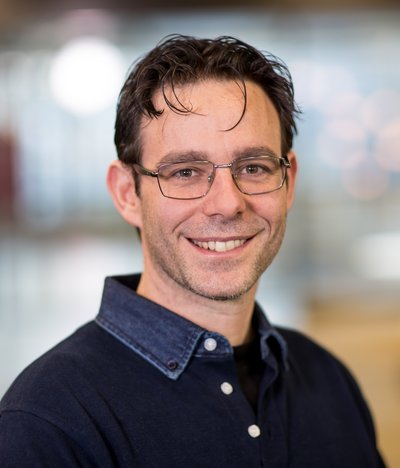
Massimo Mischi is a Full Professor at the Faculty of Electrical Engineering of the Eindhoven University of Technology (TU/e) and chairs the Signal Processing Systems (SPS) Division , the largest division at TU/e with over 250 researchers. He founded the Biomedical Diagnostics (BM/d) Lab in 2012, which now includes 180 researchers and clinical/industrial advisors, focusing on biomedical signal processing for diagnostics and monitoring.
Malin Malmsjö is a Professor and Consultant at Lund University's Ophthalmology Department , affiliated with the Faculty of Engineering (LTH) . She leads the Ophthalmology Imaging Research Group and contributes to Photon Science and Technology and Light and Materials profile areas. Key Research Focus: Development of laser speckle contrast imaging , diffuse reflectance spectroscopy , and photoacoustic imaging for periorbital tumor margin analysis and reconstructive surgery optimization. Clinical Applications: Non-invasive diagnostics for giant cell arteritis , diabetic retinopathy , and breast cancer through interdisciplinary collaborations. Infrastructure: Manager of Vevo-LAZR-X , a laser-based imaging system for tissue analysis. Her work intersects ophthalmology , biophotonics , and medical imaging , addressing challenges in tumor excision, flap survival, and ocular reconstruction. She actively supervises PhD students and contributes to technology implementation in clinical settings.
Guillermo A. Ameer serves as the Daniel Hale Williams Professor of Biomedical Engineering at Northwestern University's McCormick School of Engineering and Professor of Surgery in the Feinberg School of Medicine. He directs the Center for Advanced Regenerative Engineering (CARE) and maintains affiliations with the Simpson-Querrey Institute, Chemistry of Life Processes Institute, and the IBiS Graduate Program. His leadership extends to founding the Regenerative Engineering Laboratory, which pioneered citrate-based antioxidant biomaterials known as polydiolcitrates. Americas' leading innovator in regenerative engineering, Ameer's research spans vascular, orthopaedic, and bladder tissue engineering. His lab developed Nanonets™ thermoresponsive oligomers and photoresponsive liquid polymers for applications including wound healing, islet transplantation, and 3D-printed vascular scaffolds. Notable breakthroughs include bioresorbable stents, bladder regeneration scaffolds, and diabetic wound healing technologies that have received FDA clearance and commercial implementation through companies like Acuitive Technologies and VesselTek BioMedical. His publication record demonstrates consistent innovation in biomaterials science, with research trends showing progression from fundamental polymer chemistry to sophisticated clinical applications. Recent work focuses on electroactive bladder scaffolds, 3D-printed vascular devices, and wearable health monitoring systems, reflecting his commitment to translating laboratory discoveries into tangible medical solutions. The 2025 launch of the Regenerative Engineering Institute underscores his growing institutional impact. Percy L. Julian Award (2024) BMES Athanasiou Medal of Excellence in Translational Bioengineering (2023) Election to National Academy of Medicine (2021) National Academy of Inventors Fellow (2019) AAAS Fellow (2018) AIChE Fellow (2017) Ameer has mentored over 30 PhD and Master's students who now lead research at institutions including Penn State, USC, and the FDA. His lab secures substantial NIH funding, including an American Recovery and Reinvestment Act Challenge Grant for liquid cast arterial stents. Current projects include the development of citrate-based biomaterials for bladder regeneration, diabetic wound healing, and bioresorbable vascular scaffolds, with multiple technologies transitioning to clinical applications through partnerships with medical device companies. The Regenerative Engineering Laboratory maintains a collaborative interdisciplinary environment with approximately 20 researchers spanning engineering and natural sciences disciplines. Recent initiatives include the development of wearable skin gas sensors (2025) and CITREPORE™ bone void filler (2024), demonstrating the lab's capacity to address diverse clinical challenges through biomaterials innovation.
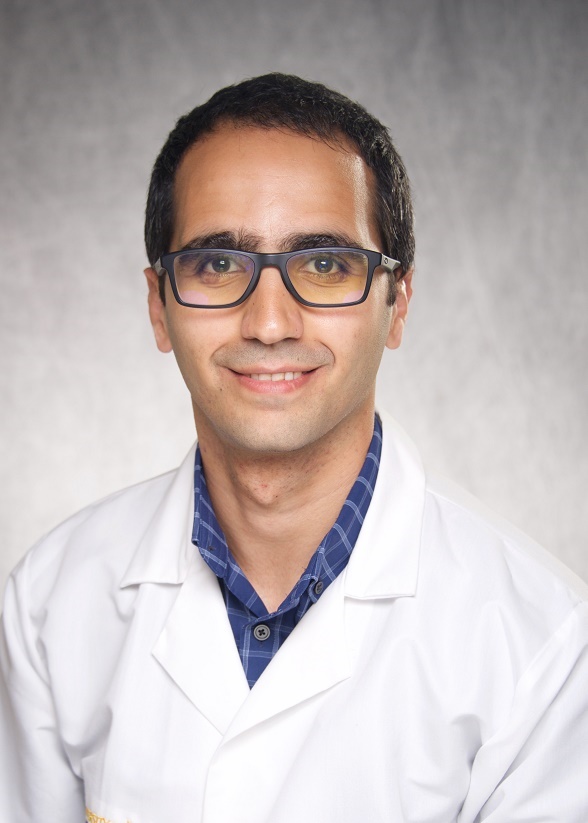
Hasan Samra is an Assistant Professor at Augusta University’s Medical College of Georgia, specializing in the Department of Pathology with a focus on Clinical Pathology. His academic and clinical work bridges diagnostic pathology with infectious diseases, emphasizing rare and complex infections in immunocompromised populations. Education: MD from Syrian Private University (2014) Certifications: Georgia Professional Licensing (BRD, 2021) Dr. Samra’s research explores emerging infectious diseases, fungal and bacterial pathogenesis, and molecular diagnostics. He investigates rare infections like mucormycosis, listerial peritonitis, and Naegleria fowleri, often in high-risk patients such as those with diabetes, hematologic malignancies, or post-transplant conditions. His work also addresses public health challenges, including undiagnosed AIDS in pediatric monkeypox cases and post-disaster infections. Publications highlight trends in invasive fungal sinusitis, prosthetic joint infections, and rapid diagnostic methods like the Idylla system. His scholarship emphasizes precision medicine, antimicrobial stewardship, and improving diagnostic protocols for challenging cases. He teaches Clinical Pathology (PATH 5009) and contributes to institutional policies on surgical pathology examination standards.
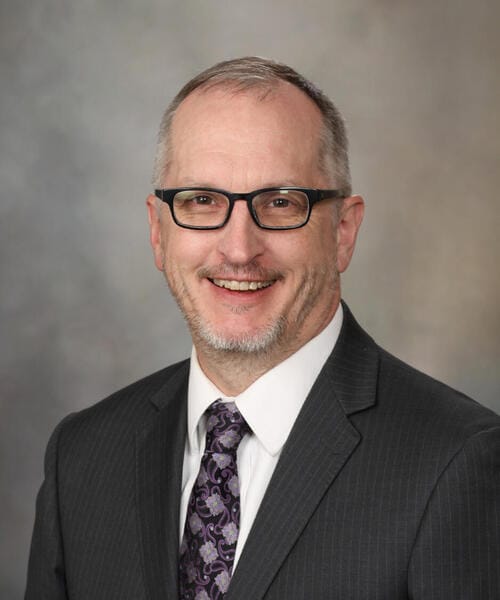
Allan B. Dietz is a Professor of Laboratory Medicine and Pathology at Mayo Clinic College of Medicine and Science. He serves as Co-Director of the Human Cellular Therapy Lab at Mayo Clinic's Center for Regenerative Biotherapeutics, with dual appointments in the Department of Immunology and Division of Transfusion Medicine. 1986: BA in Biology and Chemistry from University of Northern Iowa 1992: PhD in Genetics from Texas A&M University 1993: Postdoctoral Fellowship at USDA Agricultural Research Service His research spans cellular immunotherapy, stem cell biology, and regenerative medicine , with a focus on dendritic cell vaccines for cancers (CML, melanoma, glioblastoma), monocyte immunosuppression mechanisms, and mesenchymal stromal cell applications in GVHD and tissue repair (ALS, Crohn’s, renal stenosis, diabetes). Recent work includes microfluidic bioreactor development for cell therapy manufacturing and immune profiling for cancer patients. Key publications from 2024-2025 include: Microfluidic bioreactors for dendritic cell production Pembrolizumab-ibrutinib melanoma trials Mesenchymal stem cells in spinal cord injury Multiorgan transplant immune management guidelines Awarded: 2017 Mayo Clinic Team Science Award 1997 Voyles Fellowship in Stem Cell Biology 1991 Carrington Award for Cell Biology Active in regulatory committees including FDA-compliant cell therapy oversight and ISCT North American meetings. Integrates laboratory findings with clinical workflows through Mayo Clinic's CCaTS and Center for Individualized Medicine programs.
Paul Gratzer is an Associate Professor in the Department of Process Engineering and Applied Science at Dalhousie University, affiliated with the School of Biomedical Engineering. His research focuses on developing decellularization technologies for soft-tissue regeneration, including skin, blood vessels, and cartilage. He leads a collaborative team translating research into clinical applications through DeCell Technologies Inc., a company he co-founded to commercialize wound-healing matrices for diabetic patients and surgical reconstructions. Key projects include decellularized porcine auricular cartilage for ear reconstruction (collaborating with Dr. Paul Hong) and advanced tissue products addressing chronic wounds. His work emphasizes biocompatible scaffolds, cell-matrix interactions, and technology transfer. Notable publications span reviews on tympanic membrane regeneration to foundational studies on decellularization techniques in ligament engineering. Gratzer’s innovations aim to bridge biomedical engineering and clinical practice, with media coverage highlighting breakthroughs in diabetic wound solutions and bioengineered skin substitutes. His research integrates biomaterials science, tissue engineering, and clinical partnerships to advance regenerative medicine.
Daniel Livingstone is a researcher at The Glasgow School of Art (GSA) specializing in the application of games and 3D technologies to enhance learning and public engagement. His work spans medical visualization, heritage interpretation, and broader educational technology domains. Current PGR supervisee: Shaojie Ni (AR & Gamification in Museums) Email: D.Livingstone@gsa.ac.uk Research Themes : Serious games, virtual reality, 3D anatomical modeling, disease education, digital heritage preservation, and AI-driven simulations. Highlights include AR tools for rheumatology engagement, VR applications in diabetes management, and digital reconstructions of historical surgical instruments. Article Trends : Focus on merging immersive technologies with healthcare education, heritage storytelling, and interdisciplinary applications of game engines. Recurring keywords: Augmented Reality , 3D Visualization , Medical Education , Public Health , Virtual Environments .
Ocean Setia is a faculty member at Yale School of Medicine (Yale University), affiliated with the Dardik Laboratory for Vascular Biology and Therapeutics. He holds a medical degree (MBBS) from Sardar Patel Medical College (2016). His research focuses on vascular surgery innovations, diabetic kidney disease mechanisms, and surgical interventions for vascular pathologies. His work spans clinical studies on wound therapy, imaging techniques for vascular diagnostics, and mechanistic studies on endothelial cell biology and fibrosis. Key contributions include advancements in surgical techniques like mesenteric artery transposition and insights into sex hormone impacts on arteriovenous fistula maturation. He has published extensively in journals such as Science Advances , Journal of Vascular Surgery , and Annals of Vascular Surgery . Research interests emphasize translational applications of vascular biology, including machine learning algorithms for occlusion detection and regenerative therapies using stem cells. His articles highlight interdisciplinary approaches, combining surgical innovation with molecular mechanisms in diabetic complications. No scientific awards are explicitly mentioned, though his active publication record underscores scholarly engagement. Academically, he collaborates with clinicians and researchers like Britt Tonnessen, Jonathan Cardella, and Alan Dardik. His lab work involves preclinical models and human trials, focusing on improving outcomes for vascular diseases. No formal grants or student advisement roles are detailed in the provided texts.
Paul J. Kim is a Professor in the Departments of Plastic Surgery and Orthopaedic Surgery at UT Southwestern Medical Center . He serves as the Medical Director of the UTSW Wound Program , specializing in wound care and limb salvage surgery . A Fellow of the American College of Foot and Ankle Surgeons (FACFAS) , Dr. Kim has received intramural and extramural research grants focused on wound care , diabetic limb salvage , and tendon pathology . He has chaired numerous national and international committees on diabetic limb research and evidence-based medicine. Research Interests : Dr. Kim's work centers on diabetic foot ulcers , negative-pressure wound therapy (NPWT) , osteomyelitis diagnosis , and Charcot foot reconstruction . His studies explore innovative surgical techniques like hyperspectral imaging for perfusion assessment and neotendon constructs , alongside multidisciplinary wound care strategies to improve limb preservation and reduce recurrence rates. Publication Trends : His recent articles emphasize NPWT with and without instillation , diabetic limb salvage outcomes , and diagnostic tools for osteomyelitis . Key subtopics include Charcot reconstruction , plantar ulcer recurrence , free tissue transfer , and improved perfusion assessment using advanced imaging. Scientific Awards : Fellow of the American College of Foot and Ankle Surgeons (FACFAS) Leadership & Collaborations : Dr. Kim has led multidisciplinary teams in establishing hospital-based wound care centers and contributed to international consensus guidelines on NPWT. He has mentored PhD candidates and surgical residents and secured funding for diabetic foot ulcer research and Charcot foot studies . Labs & Teams : As Medical Director of the UTSW Wound Program , he collaborates with plastic surgeons, orthopaedic specialists , and endocrinologists to advance limb preservation and diabetic foot care through multidisciplinary approaches and clinical innovation .
Denny Yu is an Associate Professor at the Edwardson School of Industrial Engineering, Purdue University. His work bridges human factors, neuroergonomics, and healthcare safety through advanced sensor systems and AI. Primary Affiliation : Edwardson School of Industrial Engineering, Purdue University Research Themes : Surgical ergonomics, autonomous vehicle human factors, cognitive workload assessment, multimodal physiological sensing Dr. Yu's research focuses on neuroergonomics and human-robot interaction , particularly in surgical and transportation contexts. His team develops sensor-based systems for workload monitoring, including: EEG-eye tracking fusion for situation awareness Wearable exoskeletons for surgical posture support Computer vision tools for lifting task risk analysis Smart infusion pump usability frameworks AI-driven surgical coaching systems Recent publications emphasize deep learning applications in soft tissue deformation estimation and real-time adaptive systems for robotic surgery augmentation. His work spans both occupational health (veterinary surgeons, airport workers) and medical device innovation domains.
Deeksha Katoch is a Clinical Fellow in Pediatric Hematology-Oncology at Yale School of Medicine, specializing in benign hematology and bleeding disorders with a focus on improving patient care in resource-limited settings. She is actively engaged in research and clinical practice within Yale's Department of Pediatric Hematology & Oncology. Her educational background includes: MHS in Clinical Informatics and Data Science from Yale School of Medicine (2026) Chief Residency at SUNY Downstate Health Science University (2023) Residency at SUNY Downstate Health Science University (2022) MBBS from Government Medical College, Jammu Board Certified in General Pediatrics by the American Board of Pediatrics (2022) Dr. Katoch's research spans pediatric hematology-oncology, retinal disorders, and bleeding disorders, with particular interest in sickle cell disease, hematopoietic cell transplantation, and diabetic retinopathy. Her work combines clinical practice with innovative research approaches, including the application of GIS to assess healthcare access impacts on bleeding disorder outcomes. Her publications demonstrate expertise in both clinical research and the intersection of ophthalmology with hematology. Her significant scientific recognitions include: Dataset Research Engagement and ATHN Mentorship (DREAM) award from Hemostasis & Thrombosis Research Society/American Thrombosis and Hemostasis Network Member of American Society of Pediatric Hematology-Oncology Travel Grant Award from American Society of Transplantation and Cellular Therapies Abstract Achievement Award from American Society of Hematology Patient Care Trust Fund (PCTF) Award from Committee of Interns and Residents/NYC Health & Hospitals Dr. Katoch is actively involved in professional organizations including the American Academy of Pediatrics, American Society of Hematology, American Society of Pediatrics Hematology-Oncology, and American Society of Transplantation and Cellular Therapies. Her clinical fellowship combines her previous military medical experience as a Medical Officer in the Indian Air Force with advanced pediatric hematology-oncology training. She maintains active research collaborations with Yale colleagues including Dr. Lakshmanan Krishnamurti, Dr. Nitya Bakshi, and Jingchen Liang.
Dr. Gökçenur Karakelleoğlu serves as a Lecturer in the Department of Obstetrics and Gynecology at Istanbul Okan University Faculty of Medicine, specializing in women's sexual health and advanced surgical techniques including laparoscopic and robotic procedures in gynecologic oncology. Her clinical practice integrates evidence-based approaches to maternal-fetal medicine and complex gynecological conditions. Her academic foundation includes: Medical Degree: Istanbul University Faculty of Medicine (2000-2006) Specialization: Bilim University Department of Obstetrics and Gynecology Research focuses on prenatal diagnostic innovation, fetal abnormality management, and gynecological pathologies including endometriosis and scar-related complications. Her work emphasizes improving maternal outcomes through advanced imaging techniques and surgical interventions, with particular attention to gestational diabetes prediction and fetal growth restriction indicators. Analysis of her 40+ publications reveals consistent contributions to obstetric screening methodology, especially in predicting small-for-gestational-age infants through biochemical markers (PAPP-A, hCG, TSH) and ultrasound parameters. Recent work demonstrates expertise in rare condition management including cesarean scar pregnancies and vaginal sarcomas. Professional development includes active membership in the Turkish Gynecology and Obstetrics Association and specialized training in: Laparoscopic suture techniques (2015) Hysteroscopy (2015) Fetal heart screening (2009) Neonatal resuscitation (2010)
Jason A. Kayce, D.P.M., FACFAS serves as an Assistant Professor at the Arizona College of Podiatric Medicine, Midwestern University, Glendale campus, specializing in clinical podiatric education and practice. His educational credentials include: Doctor of Podiatric Medicine (D.P.M.) Dr. Kayce's research concentrates on lower extremity biomechanics and surgical interventions, with core interests: Podiatric Medicine Foot and Ankle Surgery Orthopedics Diabetic Foot Complications Reconstructive Surgery His clinical work emphasizes evidence-based approaches to complex foot pathologies. Professional affiliations include the American College of Foot and Ankle Surgeons (FACFAS designation), reflecting advanced surgical expertise in the field.
Dr. Farida Cheriet is a Full Professor in the Department of Computer Engineering and Software Engineering at Polytechnique Montréal . She serves as Director of the 4D Imaging and Vision Laboratory (LIV4D) and holds membership in the Institute of Biomedical Engineering and the Institute for Data Valorization (IVADO) . Her research spans medical imaging , biomedical technology , artificial vision , and 3D movement estimation . Ph.D. (Montreal), DEA (France), Ing. (Algeria) Her work focuses on interpretable AI models for retinal pathology diagnosis, 3D anatomical reconstruction from medical imaging, and automated segmentation of vascular and spinal structures. She leads innovations in deep learning applications for diabetic retinopathy screening, coronary artery analysis , and spine surgery planning . Recent publications highlight her leadership in computer vision for biomedical applications, with 15 featured articles covering ICU readmission prediction, retinal vessel analysis, dental crown design, and spinal ultrasound processing. She received CFI funding (2021) for cutting-edge facilities and collaborates on pan-Canadian ophthalmic image databases (2018). Dr. Cheriet has supervised 28 Ph.D. students and 46 Master's students in biomedical computing, including projects on scoliosis analysis, retinal imaging, and cardiac MRI. Her teaching includes digital communications and computer graphics courses.
Ravinder R. Regatte, PhD is a Professor at NYU Grossman School of Medicine , affiliated with both the Department of Radiology and the Department of Orthopedic Surgery . His academic work focuses on advanced MRI techniques for musculoskeletal and metabolic imaging. Key Research Interests: Musculoskeletal MRI Quantitative Imaging Biomarkers Deep Learning for Image Reconstruction MR Fingerprinting Metabolic Profiling in Diabetes Email: Ravinder.Regatte@nyulangone.org