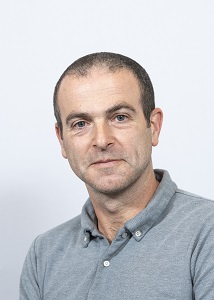
Jack Liddall is a researcher at the Department of Politics and International Studies (POLIS) at the University of Cambridge, affiliated with St John’s College. His work focuses on parliamentary scrutiny within the UK Union, analyzing intergovernmental relations across the UK Parliament, Scottish Parliament, and Senedd Cymru from 2010 to 2024. His research spans Political Science , Comparative Politics , and Public Administration , with a specific emphasis on Legislative Studies , Intergovernmental Relations , and UK Politics . The study explores institutional dynamics in devolved governance frameworks.
Dr Thomas Loughran is a Lecturer in Politics at Lancaster University’s Department of Politics, Philosophy and Religion. His research focuses on electoral politics in Europe and the UK, with primary interests in political values, youth politics (including the 'votes-at-16' debate), and UK devolution. Secondary interests include EU integration, trust in devolved institutions, and citizenship education. He supervises PhD projects on electoral politics, youth politics, voting age reform, and UK devolution. Notable projects include the Authoring Our Own Stories – Youth Voice at the Core of Recovery (2022–2027), emphasizing youth engagement in policy discourse. His work frequently employs quantitative methodologies and survey research. Key research themes include the intersection of public opinion and power-sharing in Northern Ireland, the implications of voting age reforms, and the role of European values in education. He collaborates internationally, including with the Jean Monnet Network Project on citizenship education. Publications span journals like Irish Political Studies and British Journal of Politics and International Relations , addressing topics such as border poll dynamics, youth political identities, and EU integration challenges. His research bridges theoretical frameworks with practical policy analysis, particularly in democratic governance and institutional reform.
Professor Meryl Kenny is a Professor of Gender and Politics at the University of Edinburgh's School of Social and Political Science, within the Politics and International Relations department. Her research bridges gender politics, party politics, territorial politics, and institutional approaches, with a focus on gendered dynamics in political institutions and representation. She has held leadership roles including Deputy Director of Learning and Teaching, QA Director, and Co-Director of the Centre on Constitutional Change. Her current projects include the ERC-funded QUALREP study and a BA/Leverhulme project on gender, ministers, and institutions in Scotland. She is a co-editor of the book series Studies in Feminist Institutionalism and serves on academic advisory groups for the Scottish Parliament and Centenary Action. Awards include the Chancellor's Award for Teaching and being named a Founding Fellow of the UK Political Studies Association. Education and Career: PhD (details not specified). Joined University of Edinburgh in 2015 after roles at University of Leicester and University of New South Wales. Research Interests: Gendered dynamics of political institutions and representation. Political parties and parliaments, with emphasis on women's political representation. Comparative studies on gender equality in political systems. Publications and Impact: Over 39 research outputs, including books like Gender Sensitising Parliaments: A Practical Guide and chapters on feminist institutionalism. Her work addresses gender equality challenges in political recruitment, executive governance, and multilevel governance frameworks. Awards and Recognition: Chancellor's Award for Teaching (2024). Founding Fellow, UK Political Studies Association (2025). Fellow of the Academy of Social Sciences (2024). Grants and Leadership: Principal Investigator for the BA/Leverhulme-funded project on gender and ministers in Scotland. Co-Director of the Feminism and Institutionalism International Network. Contributed to policy committees including the Scottish Parliament's Gender Sensitive Advisory Group. Labs/Teams: Active in the Centre on Constitutional Change and the Regional and Federal Studies editorial board. Supervises PhD students in gender politics and institutional studies.
Dr Nicholas Kilford is a Post-doctoral Research Associate at Durham Law School and a recent PhD graduate of the University of Cambridge, where he also served as Supervisor in Constitutional Law at Christ’s and Newnham Colleges. His research spans constitutional law, devolution, federalism and constitutional theory, with particular emphasis on parliamentary sovereignty and the legal aftermath of Brexit. Education: PhD, University of Cambridge (2019-2023) MJur (No corrections), University of Cambridge (2018-2019) LLB (First Class Honours), Durham University (2015-2018) Research interests: Kilford’s work centres on the contours of parliamentary sovereignty within the UK’s multi-layered constitution, the conditioning limitation on devolved legislatures, and the continuing effect of EU law principles after Brexit. He interrogates how courts negotiate disapplication of statutes and how devolved bodies relate to Westminster’s claimed unqualified law-making power. Publications trend: His recent articles analyse Supreme Court devolution jurisprudence, critique the post-Brexit supremacy of retained EU law, and explore the constitutional coherence of limiting devolved competence in Scotland and Northern Ireland. The scholarship is doctrinal, comparative and normative, frequently citing case law from the UK Supreme Court, Court of Appeal and landmark constitutional decisions. Teaching & service: He has acted as Tutor and Supervisor in Constitutional Law for several Cambridge colleges, conducted undergraduate admissions interviews, and served as a research assistant to Professors Roger Masterman and Robert Schütze. Contact & affiliation: He can be reached through Durham Law School (n.r.kilford@durham.ac.uk) and maintains a Cambridge email (nrk27@cam.ac.uk), reflecting ongoing ties to both institutions.
Gareth Mulvey is a Senior Lecturer in Sociological & Cultural Studies at the University of Glasgow, within the School of Social and Political Sciences. With over 20 years of research experience in universities and the voluntary sector, he has established himself as a leading scholar in migration policy, refugee integration, and state behavior. Dr. Mulvey's research focuses on how diverse migrant communities settle and experience their lives, with particular attention to how the state often acts as a barrier to settlement. He examines the nature of the state, its policy implementation, and the differences between central and devolved government in the UK. His recent work explores elite integration in Britain, municipalism, and the relationship between neoliberalism and migration policy. His extensive publication record shows a clear trajectory from early work on call center labor practices to his current focus on migration and refugee issues. Over the past decade, his research has increasingly centered on the Syrian refugee crisis, UK/Scotland policy divergence, and solidarity movements. His 2025 publication on elite integration represents his most recent theoretical contribution to understanding social segregation. Dr. Mulvey actively supervises PhD students working on critical migration issues including the politics of mediating migration policies in Trump's US and Brexit UK, citizenship rights in the Indo-Bangladesh border region, and the impact of neoliberal spatial governance on third sector support for people seeking safety. He teaches undergraduate courses on migration & society, contemporary migration, and migration, multiculturalism and belonging, as well as a postgraduate course on Public Social Science for Social Justice.
Professor Ludivine Petetin is a Professor of Law at Cardiff University's School of Law and Politics and serves as Research Theme Lead for 'Negotiating a Turbulent World' at the Centre for Inclusive Trade Policy (CITP). Her expertise lies at the intersection of international trade law, agricultural policy, and the governance challenges posed by Brexit and devolution. Professor Petetin's research focuses on the legal and policy dimensions of agricultural trade, food standards, and environmental protections within the context of international trade agreements. She has become a leading expert on how post-Brexit trade deals with Australia, New Zealand, the US, and India create institutionalized patterns of 'boilerplating' that disproportionately impact devolved agricultural sectors in Wales and Scotland. Her work highlights the tension between maintaining high regulatory standards and increasing market access, with particular attention to the uneven regional vulnerabilities across the UK. Her recent publications reveal a consistent pattern of analyzing how trade agreements affect agricultural exceptionalism in the UK, with growing emphasis on the need for devolved administrations to have formal representation in trade policy-making. The research shows increasing sophistication in examining both the textual elements of agreements and their practical implementation challenges. Member of the Leadership Team at the Centre for Inclusive Trade Policy (CITP) Research Theme Lead for 'Negotiating a Turbulent World' Regular contributor to parliamentary committee evidence sessions Active researcher on post-Brexit trade policy impacts Professor Petetin maintains active engagement with government bodies, having provided evidence to the House of Lords International Agreements Committee, House of Commons Environment, Food and Rural Affairs Committee, and the Senedd's Economy, Trade, and Rural Affairs Committee. Her research demonstrates how trade policy intersects with devolution, food security, and environmental protection, providing valuable insights for policymakers navigating the complex post-Brexit landscape. She leads a research theme focused on understanding how nations can navigate increasingly turbulent global trade environments while protecting domestic interests and maintaining high regulatory standards.
Viviane Gravey is a Senior Lecturer in European Politics at Queen's University Belfast and a member of the Leadership Team at the Centre for Inclusive Trade Policy (CITP). She is also the founding co-chair of Brexit and Environment, an ESRC-funded academic network investigating the impacts of Brexit on UK and EU environmental policy and governance. Dr. Gravey's research focuses on: Governance and policy change in the European Union Impact of Brexit on UK public policies Devolution dimensions of Brexit implementation Trade policy and its implications for devolved administrations Environmental policy in the context of Brexit Her recent publications demonstrate a consistent focus on the intersection of Brexit, devolution, and policy-making across the UK. Through citizens' juries research, she has explored public attitudes toward trade policy trade-offs, finding that while economic growth is valued overall, people prioritize workers' rights, human rights, data privacy, and food standards over increased trade when presented with specific trade-offs. Her work emphasizes the need for inclusive trade policy processes that meaningfully incorporate devolved administrations and diverse stakeholders. Dr. Gravey has established herself as a key expert witness, providing evidence to all UK parliaments on issues ranging from the UK Internal Market to environmental policies and the Ireland/Northern Ireland Protocol. She has testified before the House of Lords International Agreements Committee and the House of Commons Public Bill Committee. Her collaborative work includes partnerships with: Environmental non-governmental organizations in NI, UK, and EU Colleagues at the Centre for Inclusive Trade Policy Researchers across the UK through the Brexit and Environment network Parliamentary committees on trade and Brexit-related matters
Gioele Figus is a Lecturer in Economics at the University of Strathclyde and researcher at the Centre for Inclusive Trade Policy (CITP). He joined Strathclyde in January 2019, following research roles at the university's Fraser of Allander Institute and Centre for Energy Policy. His affiliations bridge academic economics and policy research, focusing on regional economic integration challenges. Figus's research examines: Economic modeling techniques, particularly Computable General Equilibrium (CGE) frameworks Energy/climate economics, including efficiency impacts and water policy Regional trade systems, especially Brexit consequences and Scottish independence scenarios Cross-border economic asymmetry within devolved UK governance structures His 10 recent publications (2022-2025) demonstrate consistent focus on trade policy impacts, with 80% analyzing Brexit or independence economics. Articles employ simulation modeling to quantify trade-offs between EU integration and UK market access, with emerging emphasis on sectoral impacts (energy, agriculture, manufacturing) and regional resilience strategies. As an active CITP researcher, Figus contributes to policy debates on inclusive trade frameworks. No information is available regarding student supervision, research grants, or laboratory leadership.
Billy Melo Araujo is a Senior Lecturer at Queen's University Belfast's School of Law and Deputy Theme Lead of 'People, Firms, Places' at the Centre for Inclusive Trade Policy (CITP). His academic work bridges legal scholarship with practical policy engagement, focusing on the complex intersection of international trade law, EU external relations, and constitutional arrangements within the UK. His research interests primarily center on international trade law with specific expertise in EU external trade relations, trade in services, trade and sustainable development, and the democratic legitimacy of trade agreements. A significant portion of his work examines the legal and practical implications of the Northern Ireland Protocol and Windsor Framework, particularly how these arrangements interact with UK trade agreements and affect Northern Ireland's position within both the UK internal market and EU regulatory frameworks. Analysis of his recent publications reveals a consistent focus on the challenges of implementing trade policy within the UK's devolved structures. His work demonstrates how trade agreements increasingly overlap with devolved competences (approximately 91% according to his research), creating tensions between Westminster's trade policy and devolved administrations' regulatory autonomy. He has produced influential analyses on topics including Article 16 of the Northern Ireland Protocol, steel trade arrangements affecting Northern Ireland, and the role of devolved nations in UK trade policymaking. Dr. Melo Araujo maintains strong connections with government bodies, having provided expert testimony to multiple parliamentary committees including the House of Commons International Trade Committee, the Scottish Parliament's Finance and Constitution Committee, and House of Lords committees. He has also consulted for the Northern Ireland Department for the Economy and provided training to governments across the devolved administrations on international trade law. His advisory approach emphasizes the importance of incorporating devolved perspectives into trade policymaking to create more coherent and resilient trade arrangements that properly reflect the territorial diversity of the UK. His work suggests that treating devolved administrations as genuine partners in trade policy development would strengthen rather than undermine the UK's overall trade position.
Lisa Claire Whitten is a Research Fellow at Queen's University Belfast and a researcher at the Centre for Inclusive Trade Policy (CITP). Her work focuses on the intersection between UK trade policy and devolved governance across Scotland, Wales, and Northern Ireland, with particular expertise on Northern Ireland's unique position following Brexit and the implementation of the Windsor Framework. Whitten's research interests center on trade policy inclusivity from a devolved perspective, examining how contemporary trade agreements intersect with devolved competences in areas such as agriculture, public health, and environmental protection. Her work demonstrates that 91% of UK trade agreements since Brexit intersect with devolved matters to some degree, though the nature and extent of these intersections vary significantly. She investigates the legislative inclusivity of trade agreements and advocates for better integration of devolved administrations in UK trade policy processes to enhance democratic accountability. Her recent publications reveal a consistent focus on the relationship between UK trade policy and devolution, with particular attention to the implications of the UK Internal Market Act, regulatory divergence, and intergovernmental relations. Whitten's research shows that while only limited legal adjustments have been necessary across devolved nations to implement trade agreements, the regulatory impact on devolution remains significant through mechanisms that circumvent devolved actors. Whitten has contributed evidence to the House of Lords International Agreements Committee and conducted policy-relevant research for multiple governmental bodies including the Scottish Parliament, the NI Department for the Economy, and the Northern Ireland Human Rights Commission. Her work bridges academic research and practical policy development in the complex post-Brexit landscape. With prior experience working for an MP in Westminster and in the Office of the Northern Ireland Executive in Brussels, Whitten brings valuable practical insights to her academic research. Her publications consistently address the challenges of developing coherent UK trade policy that respects devolved competences while maintaining the integrity of the UK internal market. As a researcher at the Centre for Inclusive Trade Policy, Whitten collaborates with colleagues across UK institutions to produce evidence-based analysis of trade policy from a 'four nations' perspective, challenging the prevailing Westminster-centric framing of UK trade policy debates.
Dr. Alexander Fitzpatrick is a Lecturer in Public Policy and Comparative Politics at Cardiff University's School of Law and Politics, joining the institution in 2024 after completing his PhD at University College London. His research bridges academic scholarship and policy impact through affiliations with the Centre for Inclusive Trade Policy (CITP) and engagement with UK government departments, devolved administrations, and international bodies. Dr. Fitzpatrick's research focuses on lobbying, regulation, and comparative public policy , with particular interest in how transparency mechanisms shape policy actor strategies. His work examines the intersection of state-society relations and regulatory frameworks, employing mixed methods to understand both quantitative patterns and qualitative nuances of political processes. He has developed one of Europe's largest cross-national datasets on lobbying, demonstrating methodological innovation in the field. His recent publications analyze post-Brexit trade policy challenges , highlighting regional vulnerabilities in UK agricultural sectors and institutional incoherence in trade governance. These works demonstrate consistent thematic focus on policy coherence, devolution dynamics, and the strategic use of transparency mechanisms across different political contexts. Recognized as a Bentham Scholar during his PhD studies at UCL Expert listed by the United Nations Committee of Experts on Public Administration (CEPA) Regular presenter to UK government departments and devolved administrations Contributor to parliamentary committees through written evidence submissions Dr. Fitzpatrick maintains active grant funding through the ESRC-funded Centre for Inclusive Trade Policy, supporting research on devolution and trade policy. His work regularly informs policy discussions through Briefing Papers and direct engagement with civil servants across multiple UK governments. He supervises postgraduate research in comparative politics and public policy, with particular interest in transparency mechanisms and trade governance.
Professor Amelia Hadfield is a prominent scholar specializing in International Relations with deep expertise in British Foreign Policy and European Union dynamics. Her research critically examines the United Kingdom's evolving global position post-Brexit, with particular focus on UK-France diplomatic relations, border policy implementation, and expatriate voting rights. Affiliated with a policy research institute focused on UK-EU affairs, she contributes through high-impact blogs and working papers that bridge academic analysis and contemporary political discourse. Her research interests span: International Relations British Foreign Policy European Union Studies Comparative Politics Constitutional Governance She investigates critical challenges including diplomatic strategy formulation, border management complexities, electoral system adaptations, and regional governance tensions within the UK's devolved structure. Professor Hadfield's recent publications (2023) demonstrate concentrated analysis of UK-France relations as a strategic cornerstone for post-Brexit Britain, complemented by foundational work on Brexit border implementation and expatriate enfranchisement. Her interdisciplinary approach integrates political science, constitutional law, and diplomatic studies to address practical policy challenges emerging from Britain's EU withdrawal. No scientific awards are explicitly documented in the available sources, though her consistent publication record in policy-critical areas indicates significant professional recognition. As a Professor, she likely maintains active research supervision and grant-funded projects, though specific details aren't provided. Her collaborative work (e.g., with Richard Whitman) suggests established academic networks and potential joint funding initiatives focused on UK-EU relations. The policy-oriented nature of her publication platform implies strong institutional support for real-world impact research. Professor Hadfield operates within a dynamic policy research environment that prioritizes timely analysis of evolving UK-EU relations. Her work directly engages with governmental security strategies and diplomatic initiatives, positioning her research at the intersection of academic scholarship and immediate policy application.
Dr. Coree Brown Swan serves as Lecturer in Politics within the Faculty of Arts and Humanities at the University of Stirling, where they also direct the Scottish Political Archive. Their academic career spans multiple UK institutions with specialized focus on constitutional politics and territorial governance. Research centers on independence movements , post-Brexit governance , and devolution dynamics , particularly examining Scotland's political trajectory within the UK framework. Current ESRC-funded work analyzes institutional adaptation at devolution's 25-year milestone, tracking policy divergence and intergovernmental relations across devolved territories. As an educator, Dr. Swan teaches Scottish and UK politics with emphasis on party systems and constitutional frameworks. They maintain strong pedagogical interest in qualitative research methods, developing innovative approaches to teaching fieldwork and discourse analysis. Media engagement includes regular commentary on constitutional crises and independence debates across national and international outlets. Previous appointments include Lecturer in Comparative Politics at Queen's University Belfast and Deputy Director role at Edinburgh's Centre on Constitutional Change. Their PhD from the University of Edinburgh established foundational work on constitutional change, with career trajectory demonstrating consistent specialization in territorial politics and substate nationalism.
Edwige CAMP is a Professor at the Polytechnic University of Hauts-de-France (UPHF), within the Faculty of Humanities and Social Sciences, Department of English Studies. She has served as a University Professor since 2010, having previously been a Maître de conférences (equivalent to Associate Professor) from 2000-2010 at the same institution (formerly known as University of Valenciennes and Hainaut-Cambresis). She is an elected member of the CRISS laboratory council and participates in research axes 3 and 4. Her educational background includes a Habilitation à Diriger des Recherches (HDR) in English from Strasbourg II in 2008, a PhD in English Studies from Paris III in 1997, a Master's degree in Law from Aix-Marseille III in 1993, and a DEA in Contemporary British Civilization from Paris III in 1992. She also holds a diploma from the Institute of Political Studies of Aix-en-Provence. Professor CAMP specializes in Scottish political life, institutions, and public policies, with particular expertise in devolution processes, Scottish independence movements, constitutional politics within the UK framework, and the impact of Brexit on Scotland. Her research examines the evolution of Scottish political institutions since devolution, the Scottish National Party's strategies, and the complex interplay between Scottish identity and British unionism. She has extensively analyzed referendums, electoral behavior in Scotland, and the development of distinct Scottish policies in areas such as justice, education, and social welfare. Her recent publications demonstrate a clear trajectory focusing increasingly on post-referendum Scottish politics, the evolving relationship between Scotland and the UK following Brexit, and the changing nature of Scottish nationalism. While her earlier work concentrated on the establishment and functioning of devolved institutions, her more recent scholarship addresses contemporary challenges including fiscal autonomy, the impact of Brexit on devolution, and the SNP's evolving political strategies in the post-2014 referendum landscape. Professor CAMP is an active member of several academic societies including the CRECIB (Centre for Studies and Research in British Civilization), the SFEEC (French Society for Scottish Studies), and the SAES (Society of English Studies in Higher Education). She regularly contributes expert commentary to major media outlets including France Culture, France Inter, Radio Canada, France Info, RFI, and France 24, where she provides analysis on Scottish politics, Brexit, and UK constitutional issues. Her teaching responsibilities include British civilization and UK history for undergraduate programs in English Studies, International Business, and Law/AES-Language programs. She also teaches in the Master MEEF programs, covers the British market and European institutions in the International Business Negotiation Master's program, and leads seminars in various research Master's programs, particularly the HVCI Master's.