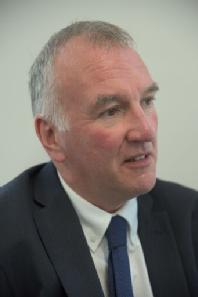
Professor Robert Johns is a political scientist at the University of Southampton with 20 years of experience in elections, public opinion, and political psychology. Specializing in British and Scottish politics, he focuses on measuring political beliefs, attitudes, and values through survey methodology and experiments. Member of Centre for Democratic Futures Co-founder of Scottish Election Study Expert in tax morale and political legitimacy His research spans three main areas: Scottish politics (including SNP support and independence), British public opinion (ideology, issue salience), and foreign policy attitudes . His recent articles examine referendum dynamics, party membership surges, and mental health impacts on political behavior. Johns collaborates extensively with scholars like Ailsa Henderson and James Mitchell. He has taught modules on partisan politics, public opinion, and quantitative methods, and currently supervises PhD student Sienna Mai Everett.
Dr Neil Pye is a Lecturer in the Department of Politics at the University of Liverpool , joining in September 2019. He teaches foundational courses including British Politics I , British Politics II , and British Political Ideologies , while also supervising the POLI401: Dissertation module. His academic journey began with a doctorate at the University of Huddersfield (2005–2011), focusing on the Home Office's role in suppressing Chartism. This work pioneered digital archival analysis of 19th-century British state mechanisms and center-local dynamics. Key research areas: Local governance, devolution, Chartist history, African politics (CSR in Great Lakes region, e-BRT sustainability), and UK policy analysis. Neil combines academia with active local politics. As a former West Lancashire borough councillor and planning committee member, he co-led the Findon and Firbeck Housing Revival Project , transforming decaying estates through resident-led initiatives. His recent academic work examines metro mayors, Levelling Up, and the Conservative government's handling of the pandemic. Collaborating with Dr Kevin Hickson and Dr Ben Williams, Neil contributed to publications on Labour's economic strategies and historical governance models. His current research focuses on a monograph about British politics and contemporary political history.
Ben Wellings is an Associate Professor in Politics and International Relations at Monash University's Faculty of Arts. His academic work focuses on the complex intersections of nationalism, European politics, and the geopolitical shifts following Brexit. With extensive media experience, he is frequently sought for commentary by major news outlets including ABC Radio and TV, SBS, Sky TV News, and the BBC. Wellings' research expertise encompasses British politics, Brexit, European Union politics, populism in the European Union, and nationalism in the United Kingdom and the European Union. His scholarly work explores the links between English nationalism and Euroscepticism that underpinned Brexit, as well as broader patterns of nationalism in the European Union and the politics of war commemoration. His recent publications examine the Anglosphere concept, post-Brexit UK-Australia relations, and narrative construction in political leadership during crises. His scholarly output reveals a consistent focus on the evolving relationship between national identity and political structures in Britain and its connections to the wider Anglosphere. Wellings has produced significant analyses of Boris Johnson's pandemic narrative construction, the origins of the Anglosphere idea in Australian nationhood, and comparative studies of electoral politics between Britain and Australia. His work demonstrates how historical narratives shape contemporary political discourse and international relations. Wellings has significant practical experience beyond academia, having worked in the House of Commons, for a public affairs company in Edinburgh advising on Scottish devolution, as an assistant curator at the National Museum of Australia, and even as a merchant seaman on the English Channel. This diverse background informs his interdisciplinary approach to political analysis.
Takaharu Kohara is a Professor at Waseda University's School of Political Science and Economics, where he has served since 2010. His academic career spans multiple prestigious institutions including Seikei University, where he was Professor from 1998-2010, and visiting positions at the University of Edinburgh, University of Sheffield, and the Ministry of Home Affairs' Local Autonomy College. His extensive expertise in public administration and local government has made him a prominent voice in Japanese political science. Professor Kohara's educational background includes: M.A. in Political Science from Waseda University (1990) Bachelor's degree in Political Science from Waseda University's School of Political Science and Economics (1982) His research focuses on public administration and local government systems, with particular expertise in municipal consolidation, devolution, and decentralization policies. Professor Kohara has critically examined Japan's "Great Heisei Consolidation" of municipalities, analyzing its effects on local communities and democratic processes. His work often compares Japanese local governance with international models, particularly those in the United Kingdom and Scotland, where he conducted research during his visiting scholar period at the University of Edinburgh. His recent publications reveal a growing interest in comparative governance, with numerous "News from Scotland" articles analyzing Brexit, Scottish independence movements, and electoral systems. His scholarship combines theoretical analysis with practical policy recommendations, addressing contemporary challenges in local governance ranging from pandemic response to fiscal management. A consistent theme throughout his work is the tension between central government control and local autonomy in Japan's political system. Professor Kohara has received recognition for his scholarly contributions, including: The 12th TIMR Fujita Award (Articles Division) in 1986 As an active academic and public intellectual, Professor Kohara advises numerous research projects on local governance and has served as a commentator on political issues in over 150 media appearances since 2002. His work bridges academic research and practical policy implementation, with involvement in multiple government-related research initiatives including projects funded by the Japan Society for the Promotion of Science. He has contributed to policy discussions on metropolitan governance, local autonomy ordinances, and intermunicipal cooperation. Professor Kohara maintains strong international connections, particularly with UK institutions, reflecting his comparative approach to studying local governance. His overseas research in Scotland during 2019-2020 focused on decentralization and independence movements, further enriching his comparative perspective on Japanese local government systems.
Bruce Katz is a CASE Visiting Professor in Practice at the London School of Economics (LSE) and Founding Director of the Nowak Metro Finance Lab at Drexel University. He has advised global, national, and local leaders on urban policy and economic development, with a focus on metropolitan governance and innovation. Drexel University - Nowak Metro Finance Lab LSE - CASE Visiting Professor Brookings Institution - Former Vice President and Centennial Scholar His research spans urban economics, smart growth, housing policy, and metropolitan governance. He emphasizes place-based strategies for reindustrialization and inclusive economic development. Katz's notable publications include: The New Localism (2018) The Metropolitan Revolution (2013) Smart Growth: The Future of the American Metropolis? (2002) Scientific recognition includes: Heinz Award in Public Policy (2006) Katz has held senior roles in U.S. federal government, including Chief of Staff at HUD under Secretary Henry Cisneros and advising the Obama administration during its 2008 transition. He is a graduate of Brown University and Yale Law School.
Belinda Tyrrell is a Public Policy Researcher at the University of Liverpool's Heseltine Institute, specializing in relational public service approaches and trust-based community engagement. Her work targets systemic challenges including worklessness, poor health, and digital/social exclusions through co-production methodologies. Current roles include ESRC Creating Opportunities through Innovation Fellow (COLIF) and Co-Investigator on a British Academy project examining community-led climate action media. Her institutional network spans CITY REDI (University of Birmingham), Edge Hill University, Liverpool City Region Combined Authority, and numerous community organizations including Liverpool Citizens (Citizens UK). Tyrrell's research centers on reducing inequalities through place-based policy development that prioritizes community voices. Key focus areas include community organizing for democratic renewal, digital inclusion ('social broadband'), climate action via local media, and health-promoting employment programs. She employs participatory methods like mini-publics and documentary filmmaking to bridge academic research with grassroots advocacy, emphasizing how trust-building transforms service delivery for marginalized populations. Recent publications (2023-2025) reveal a strategic shift toward climate communication through local television and social infrastructure development. Her work consistently connects digital inclusion with health equity and democratic participation, demonstrating how community-led media projects can drive policy change. Outputs span academic journals, policy reports, and accessible blogs targeting both scholarly and public audiences. Scientific recognition includes: ESRC Creating Opportunities through Innovation Fellowship (COLIF) Tyrrell secures competitive research funding through ESRC and British Academy grants, enabling sustained community-academic partnerships. Her collaborative model involves universities, housing associations, schools, NHS bodies, and faith groups in collective action initiatives. The COLIF fellowship specifically builds evidence-based advocacy capacity within Liverpool Citizens, creating pathways for community-driven policy influence. As a steering group member for North Birkenhead's Cradle to Career Programme and the LCRCA Digital Inclusion Task Force, she contributes to long-term systemic change initiatives. Her work with Liverpool Citizens strengthens cross-sector alliances where universities partner with community organizations to address entrenched inequalities through relationship-centered approaches rather than service delivery alone.
Michael Orton serves as Senior Research Fellow and Assistant Professor at the University of Warwick's Institute for Employment Research (IER), where he has been based since 2002. His professional trajectory uniquely combines over 15 years of frontline experience in poverty-related roles—including Citizens Advice Bureau management, local government anti-poverty policy work, and ombudsman investigations in both UK and Australia—with rigorous academic scholarship. Orton's institutional affiliation remains firmly with Warwick's IER, a research center operating across traditional school boundaries within the Faculty of Social Sciences. Orton's research program innovates through dual pathways: first, developing participatory, consensus-driven social security reform via initiatives like the Commission on Social Security project that produced the influential blueprint 'The Plan'; second, advancing strategic communications frameworks to reshape public narratives about welfare systems. His work spans social security policy, poverty dynamics, active labour market interventions, and Sen's Capabilities Approach, consistently bridging theoretical rigor with actionable policy design. This interdisciplinary focus connects social policy, political economy, and communications scholarship. Analysis of Orton's 15 most recent publications reveals intensifying focus on pandemic-era welfare challenges, with 2020-2023 works emphasizing crisis-responsive policy design, participatory methodology adaptation, and narrative interventions to counter welfare stigma. His research consistently employs co-creation frameworks involving 'experts by experience', moving beyond traditional academic analysis to generate implementable policy architectures. The recurring integration of capabilities theory provides an ethical foundation assessing policies by their impact on human freedom rather than purely economic metrics. Orton maintains robust research funding streams, currently leading the Joseph Rowntree Foundation's 2024 project on pro-social security communications infrastructure. His grant portfolio demonstrates exceptional consistency, spanning EU Framework programmes, UK Research Councils, major foundations (Joseph Rowntree, Trust for London), and government departments. While specific student supervision details aren't publicized, his project leadership—particularly the multi-year Commission on Social Security involving early-career researchers—suggests active mentorship within collaborative research environments. His policy impact extends beyond academia through parliamentary testimony, media engagement, and direct adoption of research outputs by third-sector advocacy groups.
Sarah Ayres is Professor of Public Policy and Governance at the University of Bristol's School for Policy Studies, where she also serves as a Research Committee ex officio member. She holds a B.Sc. and Ph.D. from Aston University. Her research sits at the intersection of political science and regional studies, focusing on how diverse actors collaboratively solve place-based governance challenges. Her scholarship centers on two interconnected strands: territorial governance (devolution, decentralization, and inter-governmental relations) and collaborative systems (partnership working, network management, and multi-actor problem-solving). Primary research domains include: Public policy design and implementation Multi-level governance dynamics Place-based policy innovation Transdisciplinary approaches to societal challenges Health policy integration Professor Ayres maintains an active research profile analyzing UK and international governance models, with emphasis on the role of local actors in shaping policy outcomes.
Sâmi Hazoug is a Lecturer in private law at the University of Franche-Comté, affiliated with the Law Management Department. He co-directs the master's degree in business law and is a member of the CRJFC research group. His research focuses on Civil Procedure , Law of Obligations , International Commercial Law , and Ethical Finance . He has extensively analyzed procedural law, arbitration, and Islamic finance from a legal perspective. Recent publications highlight trends in civil procedure reforms, cross-border enforcement, and the intersection of religion with international trade law. His works span book chapters, legal commentaries, and specialized journal articles, often addressing procedural nuances and ethical financial frameworks.
Thomas Ahrens is a Professor in the Department of Accounting at United Arab Emirates University in Al Ain. With 62 publications and over 5,400 citations, his work bridges management accounting theory with practical applications in both private and public sector organizations. His research has established him as a leading scholar in management control systems and practice theory approaches to accounting. Dr. Ahrens' research interests center on the roles of management control systems (MCS) in managerial practices. After initial work on the links between MCS, culture, and accountability, he has focused on how MCS are embedded in everyday organizational interactions, heavily influenced by Schatzki's practice theory. This work has produced significant concepts including enabling MCS, situated functionality of MCS, and management control anchor practices. His second major research stream applies MCS theory to public sector contexts, particularly examining budgeting, accountability, and the hybridization of financial and service expertise in local government. He has also made important contributions to research methodology for qualitative field research in organizations. Analysis of his recent publications (2020-2025) reveals several key trends: a deepening focus on public sector accounting challenges during crises (particularly the COVID-19 pandemic), increasing attention to social equity budgeting and fairness practices, growing interest in sustainability accounting and waste management, and sophisticated applications of Foucault's governmentality theory to understand accounting's role in governance. His work increasingly examines how accounting practices can simultaneously serve multiple institutional logics and value systems in complex organizational environments. Dr. Ahrens frequently collaborates with Laurence Ferry and other researchers in public sector accounting, demonstrating a strong commitment to collaborative scholarship. His work in the Jan Pfister's Lab at UAE University shows particular interest in how qualitative research methods can better capture the richness of organizational contexts. His contributions to special issues and workshops indicate active engagement in developing the methodological foundations of accounting research.
Naveed Hakeem serves as a Lecturer in Economics at Glasgow Caledonian University, where he completed his PhD in 2023. His academic appointment focuses on policy-relevant economic research within Scotland's devolved governance context, with particular emphasis on welfare systems and poverty reduction strategies. Dr. Hakeem's research expertise spans welfare economics , childcare policy impacts , and basic income feasibility in devolved systems. His methodological approach combines rapid evidence reviews with regional economic modeling , generating policy insights for Scottish institutions. Key contributions include analyses of childcare expansion effects on parental employment and household budgets in low-income families across Glasgow. Recent scholarly output (2022-2025) demonstrates consistent focus on Scotland-specific economic policy challenges, with peer-reviewed publications examining income guarantee systems and local economic development. This work frequently intersects with Scottish Government priorities through commissioned research for the Scottish Poverty and Inequality Research Unit. As a supervisor, Dr. Hakeem actively accepts PhD students interested in welfare policy analysis, maintaining structured guidance through regular meetings and opportunities for policy engagement. His collaborative network includes researchers across Scottish universities and practitioners within poverty reduction initiatives.
Professor Ludivine Petetin is a Professor of Law at Cardiff University's School of Law and Politics and serves as Research Theme Lead for 'Negotiating a Turbulent World' at the Centre for Inclusive Trade Policy (CITP). Her expertise lies at the intersection of international trade law, agricultural policy, and the governance challenges posed by Brexit and devolution. Professor Petetin's research focuses on the legal and policy dimensions of agricultural trade, food standards, and environmental protections within the context of international trade agreements. She has become a leading expert on how post-Brexit trade deals with Australia, New Zealand, the US, and India create institutionalized patterns of 'boilerplating' that disproportionately impact devolved agricultural sectors in Wales and Scotland. Her work highlights the tension between maintaining high regulatory standards and increasing market access, with particular attention to the uneven regional vulnerabilities across the UK. Her recent publications reveal a consistent pattern of analyzing how trade agreements affect agricultural exceptionalism in the UK, with growing emphasis on the need for devolved administrations to have formal representation in trade policy-making. The research shows increasing sophistication in examining both the textual elements of agreements and their practical implementation challenges. Member of the Leadership Team at the Centre for Inclusive Trade Policy (CITP) Research Theme Lead for 'Negotiating a Turbulent World' Regular contributor to parliamentary committee evidence sessions Active researcher on post-Brexit trade policy impacts Professor Petetin maintains active engagement with government bodies, having provided evidence to the House of Lords International Agreements Committee, House of Commons Environment, Food and Rural Affairs Committee, and the Senedd's Economy, Trade, and Rural Affairs Committee. Her research demonstrates how trade policy intersects with devolution, food security, and environmental protection, providing valuable insights for policymakers navigating the complex post-Brexit landscape. She leads a research theme focused on understanding how nations can navigate increasingly turbulent global trade environments while protecting domestic interests and maintaining high regulatory standards.
Viviane Gravey is a Senior Lecturer in European Politics at Queen's University Belfast and a member of the Leadership Team at the Centre for Inclusive Trade Policy (CITP). She is also the founding co-chair of Brexit and Environment, an ESRC-funded academic network investigating the impacts of Brexit on UK and EU environmental policy and governance. Dr. Gravey's research focuses on: Governance and policy change in the European Union Impact of Brexit on UK public policies Devolution dimensions of Brexit implementation Trade policy and its implications for devolved administrations Environmental policy in the context of Brexit Her recent publications demonstrate a consistent focus on the intersection of Brexit, devolution, and policy-making across the UK. Through citizens' juries research, she has explored public attitudes toward trade policy trade-offs, finding that while economic growth is valued overall, people prioritize workers' rights, human rights, data privacy, and food standards over increased trade when presented with specific trade-offs. Her work emphasizes the need for inclusive trade policy processes that meaningfully incorporate devolved administrations and diverse stakeholders. Dr. Gravey has established herself as a key expert witness, providing evidence to all UK parliaments on issues ranging from the UK Internal Market to environmental policies and the Ireland/Northern Ireland Protocol. She has testified before the House of Lords International Agreements Committee and the House of Commons Public Bill Committee. Her collaborative work includes partnerships with: Environmental non-governmental organizations in NI, UK, and EU Colleagues at the Centre for Inclusive Trade Policy Researchers across the UK through the Brexit and Environment network Parliamentary committees on trade and Brexit-related matters
Gioele Figus is a Lecturer in Economics at the University of Strathclyde and researcher at the Centre for Inclusive Trade Policy (CITP). He joined Strathclyde in January 2019, following research roles at the university's Fraser of Allander Institute and Centre for Energy Policy. His affiliations bridge academic economics and policy research, focusing on regional economic integration challenges. Figus's research examines: Economic modeling techniques, particularly Computable General Equilibrium (CGE) frameworks Energy/climate economics, including efficiency impacts and water policy Regional trade systems, especially Brexit consequences and Scottish independence scenarios Cross-border economic asymmetry within devolved UK governance structures His 10 recent publications (2022-2025) demonstrate consistent focus on trade policy impacts, with 80% analyzing Brexit or independence economics. Articles employ simulation modeling to quantify trade-offs between EU integration and UK market access, with emerging emphasis on sectoral impacts (energy, agriculture, manufacturing) and regional resilience strategies. As an active CITP researcher, Figus contributes to policy debates on inclusive trade frameworks. No information is available regarding student supervision, research grants, or laboratory leadership.
Billy Melo Araujo is a Senior Lecturer at Queen's University Belfast's School of Law and Deputy Theme Lead of 'People, Firms, Places' at the Centre for Inclusive Trade Policy (CITP). His academic work bridges legal scholarship with practical policy engagement, focusing on the complex intersection of international trade law, EU external relations, and constitutional arrangements within the UK. His research interests primarily center on international trade law with specific expertise in EU external trade relations, trade in services, trade and sustainable development, and the democratic legitimacy of trade agreements. A significant portion of his work examines the legal and practical implications of the Northern Ireland Protocol and Windsor Framework, particularly how these arrangements interact with UK trade agreements and affect Northern Ireland's position within both the UK internal market and EU regulatory frameworks. Analysis of his recent publications reveals a consistent focus on the challenges of implementing trade policy within the UK's devolved structures. His work demonstrates how trade agreements increasingly overlap with devolved competences (approximately 91% according to his research), creating tensions between Westminster's trade policy and devolved administrations' regulatory autonomy. He has produced influential analyses on topics including Article 16 of the Northern Ireland Protocol, steel trade arrangements affecting Northern Ireland, and the role of devolved nations in UK trade policymaking. Dr. Melo Araujo maintains strong connections with government bodies, having provided expert testimony to multiple parliamentary committees including the House of Commons International Trade Committee, the Scottish Parliament's Finance and Constitution Committee, and House of Lords committees. He has also consulted for the Northern Ireland Department for the Economy and provided training to governments across the devolved administrations on international trade law. His advisory approach emphasizes the importance of incorporating devolved perspectives into trade policymaking to create more coherent and resilient trade arrangements that properly reflect the territorial diversity of the UK. His work suggests that treating devolved administrations as genuine partners in trade policy development would strengthen rather than undermine the UK's overall trade position.