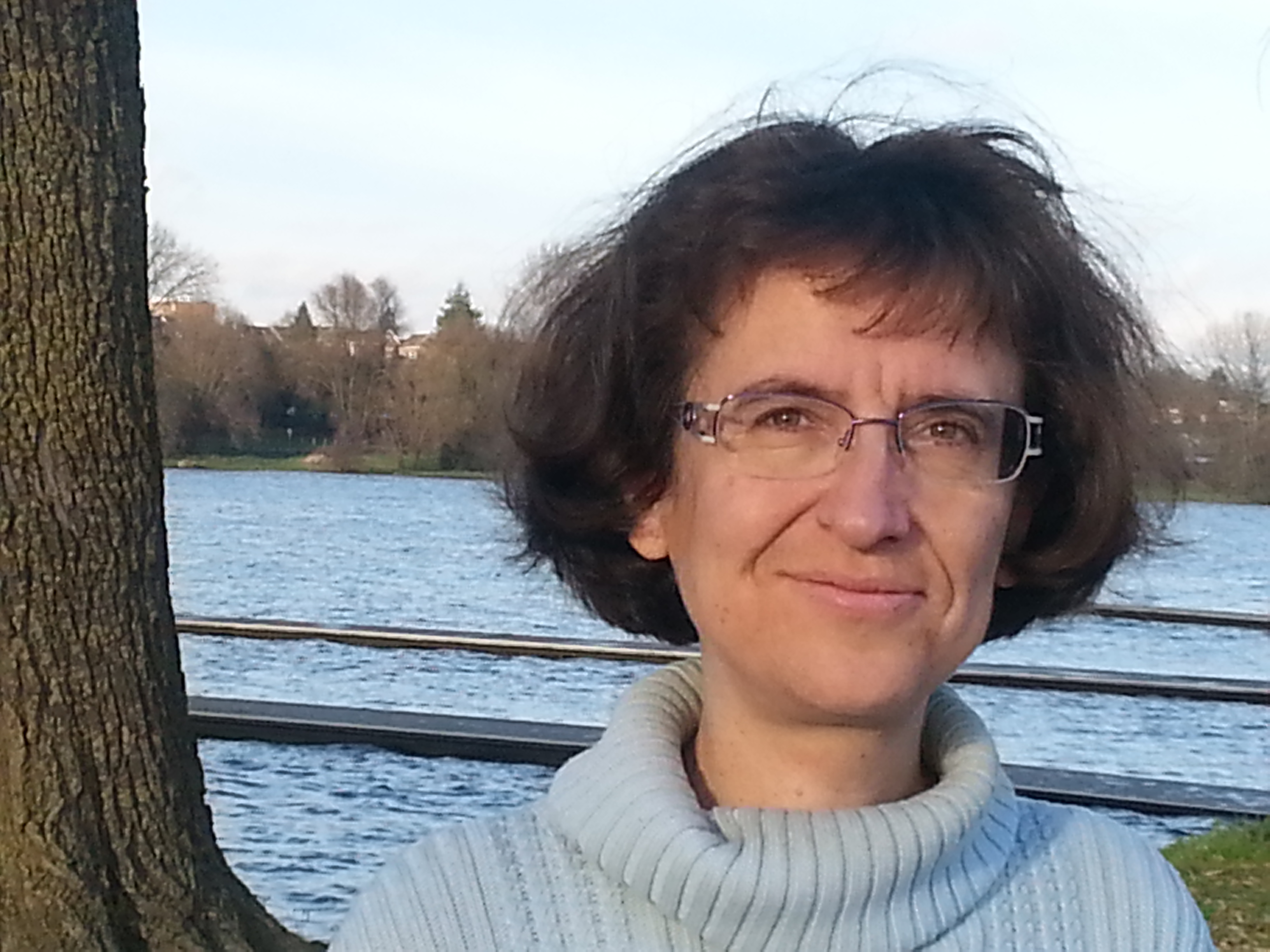
Diana Wallace is Professor of English Literature at the University of South Wales' Faculty of Business and Creative Industries, where she has taught since 1998. She holds several leadership positions including Co-director of the Centre for Gender Studies in Wales and Leader of the English Research Unit. Her research specializes in: Women's writing and feminist literary traditions Historical fiction and Gothic narratives Modernist literature and its evolution Welsh writing in English and national identity She has published significant works including monographs on Christopher Meredith, Female Gothic Histories, and The Woman's Historical Novel. Professor Wallace's recent publications explore: Meta-historical approaches to Virginia Woolf Welsh literary heritage and feminist reinterpretations Contemporary developments in historical fiction Her scholarly recognition includes being elected a Fellow of the Learned Society of Wales . She teaches undergraduate modules on women's writing, modernism, Gothic literature, and historical fiction. She leads the English Research Unit ( http://english.research.southwales.ac.uk ) and collaborates through the Centre for Gender Studies in Wales.
Dr. Carole Lyons is a Lecturer at Robert Gordon University's School of Law & Social Sciences, specializing in EU Law, European Human Rights, Holocaust legacies in European legal systems, Transitional Justice, and EU Migration issues. Previously holding the prestigious Jean Monnet Chair in EU Law, she brings extensive expertise in European legal frameworks and their historical contexts. Her research interests focus on the intersection of historical events with contemporary legal frameworks, particularly examining how historical memory shapes current responses to migration crises and transitional justice processes. Dr. Lyons investigates the legacy of events like the Holocaust and Katyn massacre within European human rights systems, exploring tensions between historical memory and legal responses to contemporary challenges including Brexit, EU migration policies, and the Ukraine war's human rights implications. Dr. Lyons' publication record shows a consistent trajectory from early work on EU human rights case law (2002-2003) toward increasingly focused examinations of historical justice frameworks. Her recent work (2023-2025) demonstrates sophisticated analysis connecting historical atrocities with current legal challenges, particularly regarding migration 'pushbacks,' reparations for transatlantic slavery, and the human rights dimensions of the Ukraine conflict. This evolution reflects deepening engagement with how legal systems process historical trauma while addressing contemporary justice needs. RGU STAR Award for Online Lecturer of the Year 2023/24 External Examiner appointment at University of Glasgow (2024) Invited participant at Scottish Parliament Constitution Committee event on post-EU devolution (2024) Dr. Lyons actively supervises PhD research in her specialty areas and frequently contributes to academic discourse through webinars and conference presentations. Her work with Paul Arnell on Brexit implications demonstrates her collaborative approach to examining complex legal transitions. As a non-practising Solicitor with formal legal training, she brings practical legal insight to her academic work while maintaining scholarly rigor in historical and theoretical analysis.
Iben Nathan is an Associate Professor in the Department of Food and Resource Economics, Section for Global Development, at the University of Copenhagen's Faculty of Science. His research focuses on natural resource governance in the Global South, particularly Kenya, examining climate change adaptation, land tenure systems, and forest governance initiatives like FLEGT and REDD+. Education: PhD in Political Science, Aarhus University, 1998 Cand.scient.pol. (MSc in Political Science), Aarhus University Nathan's research centers on: Climate adaptation strategies among East African pastoral communities Land rights frameworks including Kenya's Community Land Act (2016) Forest governance mechanisms like REDD+ and FLEGT Participatory resource management in developing contexts His 2023-2025 publications reveal a concentrated focus on land tenure-climate adaptation linkages in Kenya's drylands, particularly Samburu County. Key themes include legal frameworks for communal land, NGO roles in climate information services, and pastoralist resilience strategies, predominantly using qualitative case studies with Kenyan collaborators. No major scientific awards were listed in the provided information. Nathan has supervised 9 PhD students and approximately 50 MSc theses on Global South development topics including FPIC implementation, community forestry, palm oil livelihoods, and climate negotiations. He led the RARE project (2018-2022) on Land Rights and Resilience in Kenya and coordinates graduate courses in Global Environmental Governance and Qualitative Methods in Agricultural Development. He operates within the Section for Global Development at the University of Copenhagen, maintaining active research partnerships with the University of Nairobi and Kenyan institutions through fieldwork in pastoral communities across East Africa.
Sophie Stowers serves as a Research Associate at UK in a Changing Europe, an influential research initiative based at King's College London. Her work bridges academic analysis and public discourse, focusing on the evolving dynamics of British politics within the post-Brexit context through evidence-based research and timely commentary. Her research portfolio centers on three interconnected domains: UK-EU relations examining diplomatic and economic ties after Brexit; British political parties analyzing strategic positioning and voter alignment; and public opinion dynamics tracking shifts in voter sentiment and electoral behavior. This tripartite focus enables comprehensive analysis of how political institutions adapt to changing public attitudes in contemporary Britain. As a core contributor to UK in a Changing Europe, Stowers operates within a collaborative research environment that produces high-impact publications for policymakers and media. The initiative's cross-disciplinary approach combines political science, sociology, and policy analysis to address complex questions about Britain's political trajectory, with Stowers' work particularly emphasizing electoral systems, party competition, and the practical implications of Brexit for governance.
Professor Amelia Hadfield is a prominent scholar specializing in International Relations with deep expertise in British Foreign Policy and European Union dynamics. Her research critically examines the United Kingdom's evolving global position post-Brexit, with particular focus on UK-France diplomatic relations, border policy implementation, and expatriate voting rights. Affiliated with a policy research institute focused on UK-EU affairs, she contributes through high-impact blogs and working papers that bridge academic analysis and contemporary political discourse. Her research interests span: International Relations British Foreign Policy European Union Studies Comparative Politics Constitutional Governance She investigates critical challenges including diplomatic strategy formulation, border management complexities, electoral system adaptations, and regional governance tensions within the UK's devolved structure. Professor Hadfield's recent publications (2023) demonstrate concentrated analysis of UK-France relations as a strategic cornerstone for post-Brexit Britain, complemented by foundational work on Brexit border implementation and expatriate enfranchisement. Her interdisciplinary approach integrates political science, constitutional law, and diplomatic studies to address practical policy challenges emerging from Britain's EU withdrawal. No scientific awards are explicitly documented in the available sources, though her consistent publication record in policy-critical areas indicates significant professional recognition. As a Professor, she likely maintains active research supervision and grant-funded projects, though specific details aren't provided. Her collaborative work (e.g., with Richard Whitman) suggests established academic networks and potential joint funding initiatives focused on UK-EU relations. The policy-oriented nature of her publication platform implies strong institutional support for real-world impact research. Professor Hadfield operates within a dynamic policy research environment that prioritizes timely analysis of evolving UK-EU relations. Her work directly engages with governmental security strategies and diplomatic initiatives, positioning her research at the intersection of academic scholarship and immediate policy application.
Dr. Coree Brown Swan serves as Lecturer in Politics within the Faculty of Arts and Humanities at the University of Stirling, where they also direct the Scottish Political Archive. Their academic career spans multiple UK institutions with specialized focus on constitutional politics and territorial governance. Research centers on independence movements , post-Brexit governance , and devolution dynamics , particularly examining Scotland's political trajectory within the UK framework. Current ESRC-funded work analyzes institutional adaptation at devolution's 25-year milestone, tracking policy divergence and intergovernmental relations across devolved territories. As an educator, Dr. Swan teaches Scottish and UK politics with emphasis on party systems and constitutional frameworks. They maintain strong pedagogical interest in qualitative research methods, developing innovative approaches to teaching fieldwork and discourse analysis. Media engagement includes regular commentary on constitutional crises and independence debates across national and international outlets. Previous appointments include Lecturer in Comparative Politics at Queen's University Belfast and Deputy Director role at Edinburgh's Centre on Constitutional Change. Their PhD from the University of Edinburgh established foundational work on constitutional change, with career trajectory demonstrating consistent specialization in territorial politics and substate nationalism.
Mark Connolly is a Reader in Education at Cardiff University's School of Social Sciences, where he serves as Director of Undergraduate Studies. He completed both his Masters and PhD at Cardiff University, with doctoral research focusing on culture, creativity and education in urban cultural regeneration. Previously, he lectured at Cardiff Metropolitan University for five years before returning to his current institution. His research program spans creativity in education, cultural policy, outdoor and Forest School learning, teacher education pathways, professional leadership, children's rights, and play. Much of his work examines the impact of Welsh devolution on educational structures, particularly analyzing how policy reforms reshape professional identities and leadership roles in schools. Recent publications reveal a strong focus on headteacher recruitment challenges, the impact of political reform on educational leadership, and creativity frameworks within policy contexts. His work consistently engages with Welsh educational settings while contributing to broader theoretical discussions about professionalism and identity in education. Senior Fellow of the Higher Education Academy Editor of the British Educational Research Journal Welsh representative on the council of the British Education Research Association Connolly supervises numerous doctoral students researching educational policy, professional practice, outdoor learning, home-school relationships, and creativity. He leads significant research initiatives including the WISERD Education Multi-Cohort Study (WMCS), a longitudinal study of young people in Wales established in 2013, and the LINK-Wales project examining research capacity within Welsh local authorities. His current research projects include completing a monograph on Creativity and Artificial Intelligence (scheduled for 2026 publication) while directing ongoing analysis of educational policy implementation in Wales through the WMCS study.
Dr Anwen Elias is Reader in Politics at Aberystwyth University's Department of International Politics, where she has been a faculty member since February 2005. She serves as Co-Director of both the Centre for Welsh Politics and Society and the Wales Institute for Social and Economic Research and Data (WISERD). Her academic career spans nearly two decades at Aberystwyth, during which she has established herself as a leading expert in territorial and constitutional politics. Dr Elias holds a BA Hons from Cambridge University, an MA from the College of Europe in Bruges, and a PhD from the European University Institute in Florence. Her educational background reflects her deep engagement with European politics and institutions. Dr Elias's research focuses on territorial and constitutional politics, nationalism and secession, with particular attention to Western Europe. She examines the attitudes of nationalist and regionalist parties towards European integration and how these parties adapt to constitutional change. Her current projects investigate territorial politics during economic and political crises, the role of regionalist parties in achieving justice, and citizen perspectives on secession debates. Her work combines comparative analysis with in-depth case studies of regions like Catalonia, Scotland, and Wales. Her publications reveal consistent themes in comparative regionalism, secessionist movements, and political party strategies. She has developed innovative approaches to studying territorial demands through the FraTerr dataset and has extensively analyzed how nationalist parties frame their arguments for independence. Her research bridges theoretical political science with practical implications for governance and democratic innovation. Co-Director of the Centre for Welsh Politics and Society Co-Director of WISERD Chair of Innovating Democracy Advisory Group Commissioner on the Independent Commission on the Constitutional Future of Wales Dr Elias plays a significant role in major research initiatives including the Welsh Election Study 2026, the Horizon2020-funded project on regionalist parties and justice, and the ESRC-funded study on citizen perspectives on secession. She has secured funding from prestigious sources including UACES, the Aberystwyth University Research Fund, and the Learned Society for Wales.
Jesse Heley is a Reader (equivalent to Associate Professor) in the Department of Geography & Earth Sciences at Aberystwyth University and Co-Director of the Wales Institute of Social & Economic Research, Data & Methods (WISERD). He holds a BA in Human Geography with International Politics, an MA in Space, Place & Politics, and a PhD in Geography from Aberystwyth University, where he studied rural class structures and aspirations. His research explores political and economic geography, spatial planning, and rural restructuring, with emphasis on: Relational conceptions of space in rural studies Impacts of globalization on rural localities Rural gentrification and class identity dynamics Ethnographic methods in 'insider' research Governance of rural-urban synergies Heley's recent publications analyze Brexit's rural societal impacts, civil society elites, globalization in everyday products (e.g., wool, Fanta), and aging populations' roles in rural communities. His work consistently employs mixed-method approaches to dissect spatial inequalities and governance challenges. As Co-Investigator on major grants (e.g., ERC-funded GLOBAL-RURAL, EU Horizon 2020 ROBUST), he examines rural development in globalization. He currently co-leads WISERD's theme on Polarisation, Austerity and Civic Deficit and collaborates with the Centre for Welsh Politics & Society.
Jean Jenkins serves as Professor of Employment Relations and Co-Director of WISERD (Wales Institute of Social and Economic Research and Data) at Cardiff Business School, Cardiff University. Her work focuses on labor rights within global garment supply chains, with active research partnerships including the Clean Clothes Campaign and Cividep-India. Her research interests center on labor exploitation in global supply chains , particularly examining worker representation, access to remedy mechanisms, and gender dynamics in the garment sector. Recent projects investigate debt relations in Indian factories , urgent appeals for worker rights , and trade union renewal strategies . Jenkins employs longitudinal, workplace-centered methodologies with strong emphasis on grassroots perspectives. Notable projects include the ESRC GCRF-funded Operationalising Labour Rights study in Bangalore garment factories and the Building Worker Voice analysis of Clean Clothes Campaign mechanisms. Her work directly informs international labor advocacy through collaborations with NGOs like Labour Behind the Label. Jenkins actively disseminates findings through high-impact channels including the Hay Festival (2019, 2024), ITV Wales coverage on labor history, and academic publications. She recently contributed to the 2024 book Experimenting for Union Renewal and leads the Wales TUC's Future of Devolution and Work Commission.
Dr. Maggie Scott serves as Associate Dean Academic (Quality Assurance and Enhancement) at the University of Salford's School of Arts, Media and Creative Technologies. She leads teaching and learning activities across the School, supporting Programme Leaders and Subject Group Heads in developing new degree programmes and enhancing the academic portfolio. From November 2024 to July 2025, she served as Interim Pro Vice-Chancellor Student Education, where she co-authored and led the Discovery Phase of the University of Salford's Education Delivery Plan (2025-30). Dr. Scott joined the University of Salford in 2008 as a Lecturer in English Language and Literature, having completed her PhD at the University of Glasgow (1997-2004) with research on Scottish place-names. Her educational credentials include: PhD (Linguistics) from University of Glasgow (1997-2004) MA English Language & Literature from University of Glasgow (1993-1997) MBA from University of Salford (2020-2022) Postgraduate Certificate in Higher Education from University of Salford (2009-2010) Her research expertise centers on onomastics (name studies) and lexicography (dictionary-making), with particular focus on Scots language and place-name studies. She maintains active editorial roles as Section Editor for the Journal of Learning Development in Higher Education and author of the annual 'Onomastics' section for the Year's Work in English Studies. Her scholarly work examines minority languages, language rights, and language as a tool for identity reclamation. Analysis of Dr. Scott's recent publications reveals consistent scholarly engagement across onomastics, lexicography, and language studies, with recent expansion into academic governance informed by her MBA. Her work bridges theoretical linguistic analysis with practical applications, including dictionary resources and educational development frameworks. Dr. Scott's scholarly recognition includes: Editorial Board membership for Onoma (Journal of International Council of Onomastic Sciences) Editorial Board membership for Names (Journal of American Name Society) Panel Assessor role for the Office for Students Reviewer for Advance HE's Race Equality Charter She actively supervises PhD students in language and literature studies, particularly in historical and modern lexicography of English and Scots, name studies, dialectal English, and modern Scots literature. Her administrative leadership in academic quality assurance complements her scholarly expertise, creating a holistic approach to educational development that spans curriculum design, quality enhancement, and institutional strategy. Dr. Scott collaborates with Independent Scholar Joshua Pendragon on 'Beard's Trove,' examining Charles Relly Beard's unpublished manuscript dictionary of 'Arms, Armour and Costume,' continuing her long-standing interest in lexicographical traditions and historical language resources.
Edwige CAMP is a Professor at the Polytechnic University of Hauts-de-France (UPHF), within the Faculty of Humanities and Social Sciences, Department of English Studies. She has served as a University Professor since 2010, having previously been a Maître de conférences (equivalent to Associate Professor) from 2000-2010 at the same institution (formerly known as University of Valenciennes and Hainaut-Cambresis). She is an elected member of the CRISS laboratory council and participates in research axes 3 and 4. Her educational background includes a Habilitation à Diriger des Recherches (HDR) in English from Strasbourg II in 2008, a PhD in English Studies from Paris III in 1997, a Master's degree in Law from Aix-Marseille III in 1993, and a DEA in Contemporary British Civilization from Paris III in 1992. She also holds a diploma from the Institute of Political Studies of Aix-en-Provence. Professor CAMP specializes in Scottish political life, institutions, and public policies, with particular expertise in devolution processes, Scottish independence movements, constitutional politics within the UK framework, and the impact of Brexit on Scotland. Her research examines the evolution of Scottish political institutions since devolution, the Scottish National Party's strategies, and the complex interplay between Scottish identity and British unionism. She has extensively analyzed referendums, electoral behavior in Scotland, and the development of distinct Scottish policies in areas such as justice, education, and social welfare. Her recent publications demonstrate a clear trajectory focusing increasingly on post-referendum Scottish politics, the evolving relationship between Scotland and the UK following Brexit, and the changing nature of Scottish nationalism. While her earlier work concentrated on the establishment and functioning of devolved institutions, her more recent scholarship addresses contemporary challenges including fiscal autonomy, the impact of Brexit on devolution, and the SNP's evolving political strategies in the post-2014 referendum landscape. Professor CAMP is an active member of several academic societies including the CRECIB (Centre for Studies and Research in British Civilization), the SFEEC (French Society for Scottish Studies), and the SAES (Society of English Studies in Higher Education). She regularly contributes expert commentary to major media outlets including France Culture, France Inter, Radio Canada, France Info, RFI, and France 24, where she provides analysis on Scottish politics, Brexit, and UK constitutional issues. Her teaching responsibilities include British civilization and UK history for undergraduate programs in English Studies, International Business, and Law/AES-Language programs. She also teaches in the Master MEEF programs, covers the British market and European institutions in the International Business Negotiation Master's program, and leads seminars in various research Master's programs, particularly the HVCI Master's.
Dr. Bartłomiej Toszek serves as Professor at the Institute of Political and Security Sciences, University of Szczecin, following his tenure as Assistant Professor (2006-2019) and subsequent promotion to Professor at the University of Silesia. He currently coordinates the Regional Centre for the Evaluation of EU Policy Implementation under the EU Committee of the Regions Network since 2019 and maintains active memberships in the Polish Political Science Society (Szczecin branch) and the Business Chapter at the West Pomeranian University of Technology's Faculty of Economics. His research program centers on British political systems, European regional emancipation, and integration dynamics, with specialized focus on Welsh devolution, UK-EU relations, and regional policy frameworks across the European Union, Great Britain, and Poland. Methodologically diverse, his work examines political emancipation of European regions and integration processes involving dependent territories globally, combining historical analysis with contemporary policy evaluation. Analysis of his 2009-2019 publications reveals a cohesive scholarly trajectory emphasizing British political evolution within European contexts. His works demonstrate consistent engagement with devolutionary reforms, UK integration history, and regional historical studies, particularly highlighting Wales' political development and Western Pomerania's socio-political landscape. Professor Toszek leads the Regional Centre for the Evaluation of EU Policy Implementation, facilitating collaboration between regional authorities and EU institutions to assess policy effectiveness. This role bridges his academic expertise in regional policy with practical governance applications, enhancing evidence-based regional development strategies across European networks.
Professor Roland Sturm holds the Chair of Political Science at the Institute of Political Science at Friedrich-Alexander-Universität Erlangen-Nürnberg (FAU) in Germany, where he maintains an active research and publication profile. His office is located at Kochstr. 4, 91054 Erlangen, and he can be contacted at roland.sturm@fau.de. Sturm's research focuses primarily on comparative federalism, with particular expertise in German federalism and the British Westminster system. His scholarly interests span political economy, European integration processes, regional autonomy movements, constitutional politics, and decentralized governance structures. He has extensively analyzed the political systems of Germany and the United Kingdom, with special attention to Brexit dynamics, Scottish and Bavarian regional identities, and the Northern Ireland peace process. His publication record demonstrates consistent scholarly productivity across decades, with recent works examining contemporary challenges to federal systems, the relationship between decentralization and authoritarian regimes, and the evolving nature of European political integration. Sturm serves as Editor of "Zeitschrift für Politik" and "Gesellschaft-Wirtschaft-Politik," and sits on the editorial boards of "The British Journal of Politics and International Relations" and "Journal for the Study of British Cultures." His body of work reveals a methodological approach combining comparative political analysis with deep case studies of specific political systems, particularly focusing on institutional arrangements, power-sharing mechanisms, and the practical implementation of constitutional frameworks. Sturm's scholarship often addresses the tension between theoretical models of governance and their practical application in complex political environments. While specific details about his teaching responsibilities and graduate supervision are not provided in the available materials, his extensive publication record and editorial roles suggest significant influence in German political science, particularly in the subfields of federalism studies and comparative political systems.