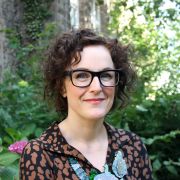
Professor Gabrielle Lynch is a leading scholar in Comparative Politics and African Studies at the University of Warwick. She holds the academic rank of Professor and serves as PAIS Impact Director, Comparative Politics cluster lead, and Warwick UCU Equalities Officer. Her research focuses on ethnic identities, elections, transitional justice, and social media's role in African politics. Lynch earned her BA, MPhil, and DPhil from the University of Oxford. She has conducted extensive fieldwork in Kenya, Ghana, and Uganda, supported by grants from the ESRC, Warwick Policy Support Fund, and others. Her awards include the ESRC Award for Outstanding International Impact (2019) and the Market Research Society’s President’s Medal. Lynch is editor of African Affairs and a member of the African Studies Association of the UK and British Institute in Eastern Africa. Lynch’s work bridges academia and public engagement, including columns in The Saturday Nation and The East African . She founded the African Judiciaries Research Network and co-authored influential books like Performances of Injustices and The Moral Economy of Elections in Africa . Her research emphasizes democratization challenges, electoral integrity, and the intersection of technology and politics in Africa.
Dr Andrew Hoolachan is a Lecturer in Urban and Regional Planning at the University of Glasgow's School of Social and Political Sciences. He holds a PhD from the University of Cambridge, an MSc from UCL, and an MA from the University of St Andrews. His research focuses on urban governance, sustainability, and political ecology, particularly exploring localism, devolution, and scalar politics in UK cities. He has conducted fieldwork in East London examining the Localism Act's impact on sustainable urban development and the Olympic Legacy. His methodological expertise includes visual and digital methods, policy analysis, and urban political ecology frameworks. Theoretical interests span scale constructions, cultural geographies, and phenomenology. He is affiliated with the Socio-Environmental Action and Place & Built Environment research groups. Recent outputs include studies on urban flood resilience, housing retrofitting, and walking-based pedagogy. His work bridges academic research with policy practice, contributing to reports for institutions like the Royal Town Planning Institute and the UK Collaborative Centre for Housing Evidence. He teaches modules on spatial planning strategies and urban economics, emphasizing experiential learning approaches.
Professor Aileen Mcharg is a leading academic in Public Law and Human Rights, holding a professorship at Durham Law School since 2019. Previously, she held chairs at Strathclyde, Glasgow, and Bristol Universities. Her research focuses on UK and Scottish constitutional law, devolution, and administrative law. She co-edits Public Law and serves on committees like the UK Constitutional Monitoring Group and the Scottish Government’s Expert Panel on Environmental Charges. Her research interests emphasize the UK’s territorial constitution, devolution dynamics, and Brexit’s legal implications. Notable contributions include analyses of the Miller Case, the Sewel Convention, and the UK Internal Market Act 2020. She frequently engages in interdisciplinary work, exploring energy law and policy post-Brexit. Recent publications include Constitutional change and territorial consent: The Miller Case and the Sewel Convention (2024) and The Silence of Constitutions (2024). She also contributes to blogs and journals on topics like the 2024 UK General Election’s constitutional implications and Scottish independence pathways. Her esteem indicators include roles as Research Excellence Framework panel member (2020), co-chair of the British-Irish Chapter of the International Society of Public Law (2018), and editorial board positions for Public Law and Journal of Energy and Natural Resources Law . Professor Mcharg advises PhD students and collaborates on grants exploring devolution, Brexit, and constitutional resilience. She is affiliated with Durham’s legal research networks and contributes to interdisciplinary projects on energy policy and constitutional futures.
Dr. Jeffrey Morgan is a Researcher at Cardiff University's School of Social Sciences, specializing in multidisciplinary research at the intersection of computer science, social science, and geography. His work emphasizes human-computer interaction, visualization, and big data analytics. He holds a Research Software Engineer role, combining technical expertise with academic inquiry. Key research interests include AI-driven patent analysis, IoT applications in rural citizen science, and geospatial Twitter demographics. He has contributed to studies on Hadoop infrastructure optimization and social media conflict detection, often collaborating with institutions like Xiamen University and the University of Bremen. His publications span topics like energy-efficient big data processing, digital geography of Welsh identity, and scalable social media analysis frameworks. Notable projects include COSMOS (a cloud-based social media analysis platform) and studies on post-devolution cultural narratives in Wales. Award-winning work includes computational Twitter analysis for detecting online community tensions and geotagging behavior patterns. His research often bridges technical innovation with societal impact, addressing challenges in rural technology deployment and digital sociology.
Mark Elliott is Professor of Public Law at the Faculty of Law, University of Cambridge, and a Fellow of St Catharine's College, Cambridge. He served as Deputy Chair of the Faculty (2018-2019) and Chair (2019-2024), and is Legal Adviser to the House of Lords Constitution Committee. He co-founded the biennial Public Law Conference series and maintains the influential blog Public Law for Everyone . His research focuses on UK constitutional dynamics, including the impact of Brexit, judicial review mechanisms, human rights frameworks, and devolution. Elliott explores intersections between legal doctrine, political practice, and constitutional change, with emphasis on parliamentary sovereignty, executive accountability, and common law rights. His publications demonstrate consistent engagement with constitutional crises, Supreme Court jurisprudence, and the evolution of administrative law. Recent works analyze post-Brexit governance challenges, judicial scrutiny of executive power, and the resilience of constitutional principles amid political pressures. Awards and Honors: Pilkington Prize for Excellence in Teaching University of Cambridge Yorke Prize for doctoral thesis As a trusted policy adviser, Elliott has shaped legislative scrutiny processes at the House of Lords. He engages public audiences through accessible legal commentary and academic outreach, though no specific grants, labs, or supervised students are detailed in available materials.
Dr Angus Armstrong is a Professorial Research Fellow at the UCL Institute for Global Prosperity, University College London, directing the ESRC-funded Rebuilding Macroeconomics network that has produced 80+ papers and 100+ public events. His work reinterprets macroeconomics as a knowledge-creation system under fundamental uncertainty. Research focuses on decision-making under uncertainty, collective intelligence, agent-based modelling, and macroeconomic policy within ecological economics, comparative systems, and experimental frameworks. He emphasizes institutions and social interactions as foundations of prosperity in complex adaptive systems. Analysis of 2015-2019 publications reveals concentrated expertise in Brexit fiscal impacts, devolution economics, monetary policy at zero bounds, and Scottish independence. Works integrate macroeconomic modeling with political economy, addressing UK/European policy challenges through institutional and uncertainty-focused lenses. Armstrong serves as Chief Economic Advisor to Lloyds Banking Group (2017) and leads the Rebuilding Macroeconomics network. His 'New Economics of Prosperity' teaching reimagines prosperity as emergent from socio-economic interactions rather than an end state, reflecting his view of economies as open systems defined by fundamental uncertainty.
Catherine Durose is an Honorary Professor of Public Policy at the University of Birmingham's Department of Public Administration and Policy, part of the College of Social Sciences. Her research focuses on urban governance, co-production, decentralization, and institutional design, with a particular emphasis on how government interacts with citizens and communities to drive policy change. She has secured over £3 million in research funding and serves as Chair of the Editorial Board for Local Government Studies. Educations: PhD, University of Manchester (2007) MA (Research) in Governance and Public Policy, University of Manchester (2004) BA (Hons) in Politics, University of Sheffield (2001) Her research interests span interdisciplinary areas including co-production theory, governance of the commons (housing, energy, data), feminist institutionalism, and participatory policymaking. She has held visiting fellowships at institutions such as the Great Cities Institute (UIC, Chicago) and Tilburg University, and consults for UK government bodies like the Equality and Human Rights Commission. Publications and Awards: Recipient of the Joni Lovenduski Prize (2020) Author of Designing Public Policy for Co-production (2016) Published in Political Studies , Urban Studies , and Nature Teaching and Mentorship: Catherine teaches on INLOGOV's MSc Public Management and Executive Apprenticeship programs. She mentors doctoral students in areas like social accountability in Colombia, blame avoidance in UK governance, and decentralization in Cameroon. Current research projects include studies on urban governance assemblages (with Tilburg and Edinburgh Universities) and feminist institutionalism in hate crime policy (collaboration with University of Birmingham's Vivien Lowndes). She actively contributes to civic initiatives like Citizens UK and co-founded Win: Win, a network for women in higher education, earning her recognition as a 'Woman of Action' in 2017.
Raffael N. Fasel is a SNSF Ambizione Senior Researcher at the University of Zurich , with affiliations as an Affiliated Lecturer at the University of Cambridge and Visiting Scholar at NYU Law School . His work bridges animal rights law , constitutional theory , and comparative jurisprudence . Education: Dr. iur. from University of Cambridge, LL.M. from Yale, MA from University College London. Current research focuses on nonhuman legal personhood , direct democracy , and constitutional constraints in global contexts. His publications analyze intersections between legal philosophy and practical governance , including forthcoming work on Animal Rights Law and peer-reviewed articles on topics like Sieyès' constitutional theory and Swiss primate rights cases . He has collaborated with artists on public legal education projects, such as an installation on the monkey selfie case (Naruto v. Slater) in Aarhus Courthouse (2020). Scientific awards: SNSF Ambizione Fellowship Key thematic areas: animal rights law , constitutional self-determination , judicial reasoning , and democratic legitimacy .
Stephen Colman is an Associate Professor of Law and Course Leader for the LLM Law at the University of Suffolk within the School of Business, Arts, Social Sciences and Technology. A non-practising solicitor with over 12 years as a Senior Crown Prosecutor at the Crown Prosecution Service, he also serves as a link tutor for Rushmore Business School in Mauritius and represents the university on the Suffolk and North Essex Law Society Executive Committee. His research centers on prosecutorial discretion, victims' rights to challenge prosecution decisions, and intersections with administrative law and victimology. He is currently authoring 'Challenging Prosecutorial Decision-Making' for Bristol University Press, examining systemic issues in criminal justice decision-making processes and victims' legal pathways. His publications reveal consistent focus on criminal procedure reforms, victims' rights mechanisms, and evidentiary standards across UK jurisdictions. Key recurring themes include the Single Justice Procedure's implications, comparative analysis of victims' review schemes, and vulnerabilities within prosecution systems affecting both defendants and victims. Professional recognitions include: Fellowship of Advance HE Colman leads undergraduate modules in Criminal Law, Criminal Procedure, Criminal Evidence and Administrative Law, plus postgraduate modules in Contemporary Criminal Law and Criminal Evidence & Psychology. He has developed legal placements with local firms, delivered external training on criminal evidence, and was nominated for the University of Suffolk Staff Award 2022 for Outstanding Contribution to Learning.
James Mitchell is a Professor of Public Policy at the University of Edinburgh’s School of Social and Political Science . He holds a MA (Political Studies) from the University of Aberdeen and a D.Phil. (Oxford). His research focuses on British politics, devolution, public policy, territorial politics, and Scottish nationalism. He has supervised over 30 years of PhDs and Masters in public policy, devolution, and constitutional politics. Key research themes include fiscal accountability in Scotland, party membership surges post-referendum, and multi-level governance. Research Projects: ESRC-funded study on SNP and Scottish Greens’ post-referendum membership growth Investigation of fiscal devolution’s accountability gaps Analysis of Scotland’s constitutional questions and local governance Research Interests: Mitchell explores territorial politics, public service reform, and political behavior in sub-state governments. He has contributed to debates on Scottish independence, EU referendum impacts, and intergovernmental relations. Recent work includes studies on the SNP leadership contest (2023) and Holyrood’s fiscal structures. Grants & Awards: He has secured grants from the Economic and Social Research Council (ESRC) for projects on party membership and constitutional dynamics. No specific scientific awards are listed, but his work is widely cited in political science and public policy. Labs & Teams: He is part of the Territorial Politics Research Group and has collaborated on regional economic forecasting and governance studies. His work often bridges academia and policy, influencing debates on devolution and public finance.
Professor Felicity Matthews is Head of School for the Department of Politics & International Relations and the Department of Sociological Studies at the University of Sheffield. She specializes in the exercise of power in policy processes and relationships between government, parliament and citizens, with expertise in British politics, constitutional rules, and institutional norms. Her research examines: Executive politics and public administration Parliamentary scrutiny mechanisms Constitutional change and democratic practices E-petitions systems and citizen engagement Professor Matthews has held leadership roles including Director of the ESRC-funded White Rose Doctoral Training Partnership (2022-2024) and co-editorship of Policy & Politics (2015-2020). She has received prestigious fellowships including ESRC Post Doctoral Fellowship and Leverhulme Fellowship. Her parliamentary work includes an ESRC-funded Academic Fellowship with the House of Commons Petitions Committee examining democratic engagement through e-petitions systems. Her research has influenced parliamentary practice through advisory roles to the Public Administration and Constitutional Affairs Committee and Committee on Standards in Public Life. She has over 130 media appearances analyzing political events for outlets including BBC, ITV, and Washington Post.
Michelle D'Arcy is an Associate Professor in the Department of Political Science at Trinity College Dublin. Her research focuses on state capacity, property rights, taxation, and development in Africa and early modern Europe. She leads projects such as 'Credible Enforcement before Credible Commitment' and 'Devolution and Local Democracy in Kenya,' funded by the Swedish Research Council and the Swedish International Centre for Local Democracy. Her work explores institutional sequencing, democratic governance, and the impact of historical state structures on modern policies. Education: Details not explicitly provided in the text. Research Interests: Dr. D'Arcy investigates how historical institutional frameworks shape contemporary political and economic outcomes. Key themes include state-building, taxation systems, devolution processes, and gender dynamics in state formation. Her work bridges comparative politics, development studies, and historical analysis. Publications: Her recent work emphasizes cadastres' role in economic growth, gender in early modern state formation, and taxation in sub-Saharan Africa. These studies highlight interdisciplinary approaches, combining historical data with contemporary case studies. Awards: Trinity Creative and Visual Arts Fund Award (2020) Equality Fund Award (2018) Political Science Association of Ireland Prize for Excellence in Teaching and Learning (2016) Grants: Swedish Research Council (2014-2018), Swedish International Centre for Local Democracy (2013-2015) Dr. D'Arcy collaborates on initiatives to improve local democracy and accountability in sub-Saharan Africa, particularly in Kenya. Her research underscores the interconnectedness of historical governance structures and modern socio-economic challenges.
Kristin Braa is a Professor at the Department of Informatics, University of Oslo, and serves as Director of the HISP Center. Her career includes an 8-year tenure as Research Director at Telenor, where she established a Research and Innovation Center in Malaysia. Academic Roles: Vice Head of Department of Informatics, head of Information Systems (IS) research group Research Focus: Mobile extensions of open-source DHIS2 software for low-resource settings, action research methods, sustainable health information systems Research Themes: She investigates innovative approaches to support rural healthcare workers and underserved populations, emphasizing long-term engagement in national health systems. Her projects include MobiHealth (2010–2014) and NORAD-funded initiatives (2010–2014) for health information systems in developing countries. Scientific Awards: 2023 AIS Impact Award (with Jørn Braa) 2020 Roux Prize (with Jørn Braa) 2013 University of Oslo Innovation Prize 2013 Researcher of the Year (Faculty of Mathematics and Natural Sciences, UiO) 2011 ICT and Energy Researcher of the Year 2011 Rosing Prize Finalist for rural Bangladesh health initiative Collaborations: Active in the IS research group and Climate Health Network. She advocates for sustainable, community-empowering information systems through participatory design and sociotechnical approaches.
Dr Marc Collinson is a Teaching Associate in the School of History, Law and Social Sciences at Bangor University, where he serves as Program Lead for BA Politics. An active political historian specializing in post-war Britain, his research examines electoral phenomena, political parties, and policymaking processes with particular attention to the interplay between local communities and national political forces. Dr Collinson completed his PhD on 'Commonwealth Immigration, Policymaking, and the Labour party, c. 1960-1980' at Bangor University (2013-2019) followed by a PGCertHE (2014-2018). He was appointed to his current position in 2020 after several years as a part-time Tutor in the School. His scholarly interests focus on three interconnected themes: locality and representative politics, power dynamics in institutional policymaking, and national policy responses at the local level. Much of his recent work examines electoral contests like Smethwick (1964), nuclear power development in North Wales, and local government reform following the 1972 Act. His research demonstrates how national political narratives are shaped and reshaped through local experiences and interpretations. Dr Collinson's publications span political history journals, local history transactions, and biographical dictionaries, with notable recent contributions to Journal of Liberal History, Southern History, and British Journal of Educational Studies. His work frequently bridges academic research with public engagement through media contributions and community lectures. Fellow of the Higher Education Academy (2018-present) Associate Fellow of the Royal Historical Society (2022-present) Duncan Tanner Bursary recipient (2015, 2016) History Workshop Research Support Grant (2016) IHR Friends Bursary (2016) Midland History Travel Bursary (2019) As an educator, Dr Collinson teaches modules including 'Britain: Blitz to Brexit,' 'Twentieth Century Dictatorships,' and 'Europe, 1945-1992.' His pedagogical research focuses on enhancing employability through history education, with publications in Innovative Practice in Higher Education (2021) and Journal of Teaching and Learning for Graduate Employability (2024). He has supervised undergraduate research projects through the university's internship program and serves on editorial boards including Transactions of the Historic Society of Lancashire and Cheshire. Dr Collinson actively collaborates with researchers at Manchester Metropolitan University, University of Manchester, and local heritage organizations in North Wales. His current projects include completing a monograph on Smethwick under contract with Routledge, researching nuclear policy impacts in North Wales with Dr Mari Wiliam, and examining Manchester politics following the 1972 Local Government Act with Dr Bertie Dockerill and Prof. Peter Shapely.
Yolande Bouka is an Assistant Professor in the Department of Political Studies at Queen’s University in Kingston, Canada, where her research and teaching bridge International Relations, gender studies, and African security. Holding a Ph.D. in International Relations from American University and an M.A. from Seton Hall University, she previously served as a Visiting Assistant Professor at the Elliott School of International Affairs, George Washington University, and as a Post-Doctoral Fellow at the University of Denver. Education Ph.D., International Relations – American University M.A. – Seton Hall University Research Interests Dr Bouka’s scholarship interrogates the intersections of gender, political violence, and security in Africa. Her current multi-sited historical and political analysis examines female combatants in Southern Africa, while her forthcoming book manuscript In the Shadow of Prison explores power, identity, and transitional justice in post-genocide Rwanda. She is particularly interested in decolonial approaches to fieldwork ethics, non-state armed groups, and the gendered dimensions of conflict and peacebuilding. Across her publications—ranging from high-impact journals to policy briefs—three thematic strands are evident: (1) gendered political participation and violence in Kenya’s devolved system, (2) continental and international mediation efforts in the African Great Lakes region, and (3) critical reflections on race, positionality, and methodology in the study of African politics. Awards & Fellowships Fulbright Scholar Program Fellowship American Association of University Women Fellowship Grants, Advisory Roles & Field Experience Bouka’s research has been supported by competitive international grants and underpinned by extensive fieldwork. She currently sits on the Research Advisory Council of the RESOLVE Network, a global consortium dedicated to empirically grounded research on violent extremism. Between 2014 and 2016 she led the Conflict Prevention and Risk Analysis Division of the Institute for Security Studies in Nairobi, managing multi-country projects on peace and security in the Great Lakes Region. She has provided technical expertise and research support to USAID, the UK Department for International Development, the United Nations, the African Union, the Center for Strategic and International Studies, and the United States Institute of Peace. Labs & Research Teams While no formal laboratory is listed, Dr Bouka collaborates with a transnational network of scholars and policy institutes through the RESOLVE Network and maintains active partnerships with research centres across Africa, Europe, and North America.



/prod01/channel_2/media/uniofsuffolk/website/content-assets/images/staff-profile-photos/ssh/Stephen-Coleman-1.jpg)