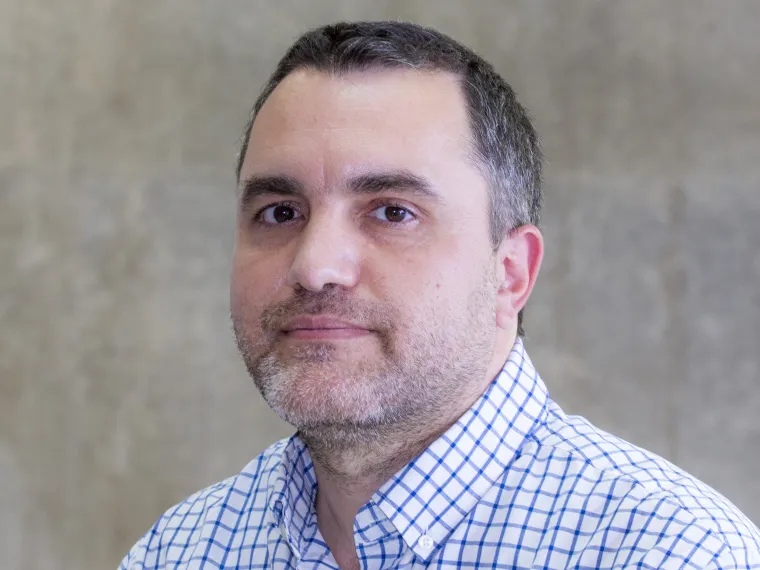
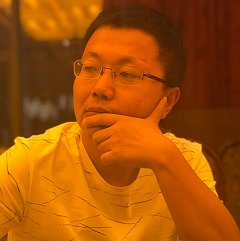
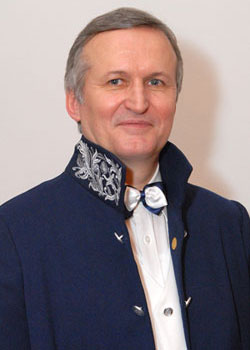
Arnaud Bertsch is a Lecturer at the École Polytechnique Fédérale de Lausanne (EPFL) within the School of Engineering (STI) and the Department of Microengineering (IEM). He is affiliated with the Microsystems Laboratory 1 (LMIS1) and has been actively involved in teaching advanced microfabrication techniques and MEMS sensor/actuator practicals. His research spans microfluidics, nanofluidics, biomedical devices, and 3D microfabrication, with a focus on neural probes, drug delivery systems, and cell manipulation technologies. Microfluidic hydrodynamic and dielectrophoretic systems Nanovolcano microelectrode arrays for electrophysiology Thermal control of ionic transport in nanochannels 3D lipid microrobots for drug delivery MEMS-based intraocular pressure sensors Arnaud Bertsch has supervised PhD students including Torres Vila Pol, Zhang Tao, and past advisees like Clémentine Lipp, Nicolas Maïno, and Joan Teixidor. His work bridges fundamental research in nanofluidics with applied biomedical solutions, contributing to fields such as neuroscience, cancer therapy, and implantable medical devices. The articles listed demonstrate expertise in microsystem design, electrochemical sensing, and biofabrication technologies.
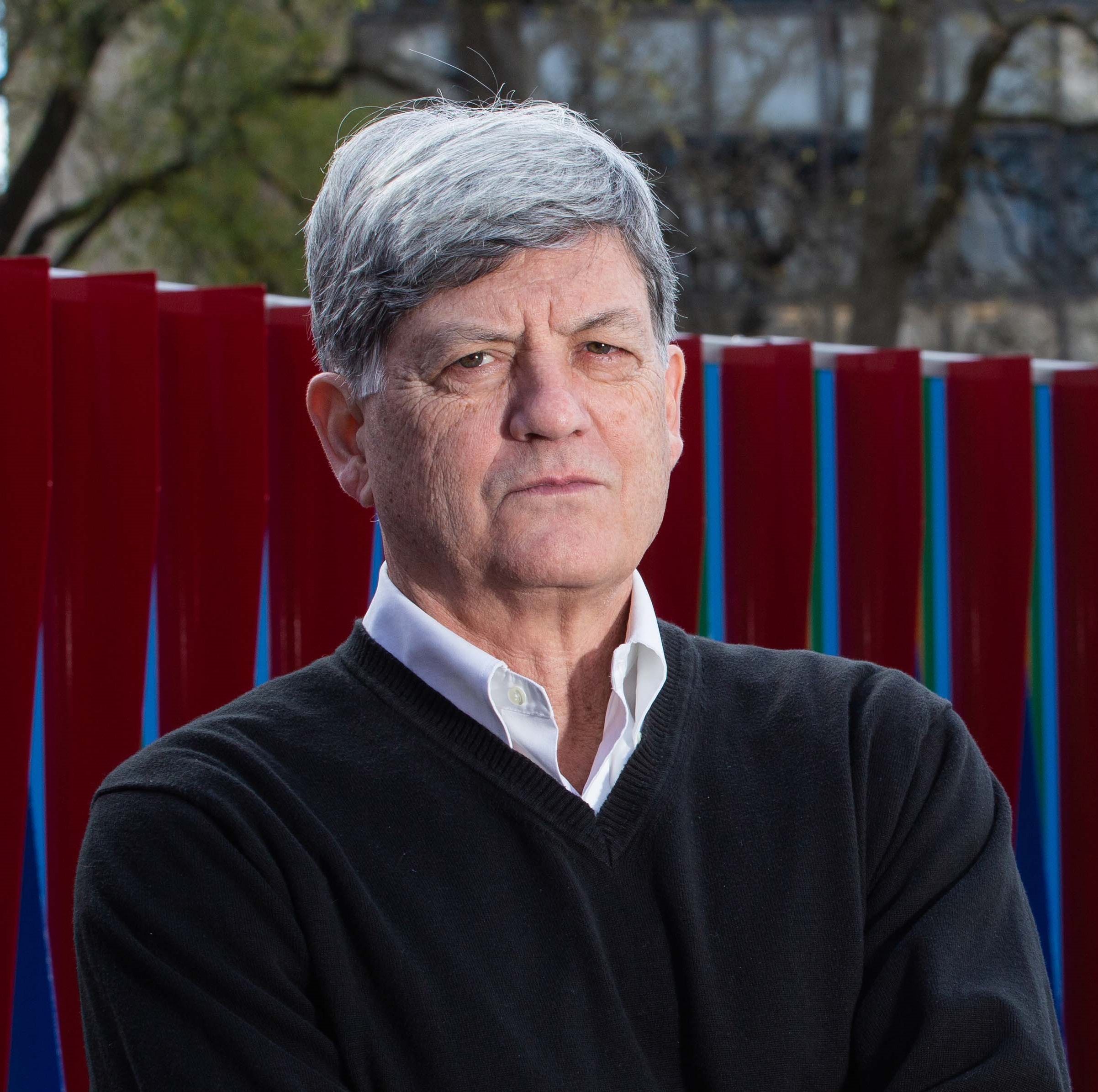
Professor Matthias Kliegel is affiliated with the LIVES Centre at the University of Geneva, where he conducts research on aging and cognitive processes. His work spans multiple interdisciplinary collaborations across Switzerland and internationally, focusing on memory, cognitive aging, and health outcomes in older populations. As a prominent researcher in gerontology, he contributes significantly to understanding age-related cognitive changes and their implications for healthy aging. Professor Kliegel's research interests center on cognitive aging, with particular emphasis on prospective memory, cognitive complaints, and the interplay between physical activity, health literacy, and cognitive function in older adults. His work examines how individual differences affect cognitive trajectories across the lifespan and investigates factors that contribute to successful cognitive aging. Recent research has expanded into technology applications, including AI and consumer-grade devices for cognitive health monitoring and early detection of cognitive decline. Analysis of Professor Kliegel's recent publications reveals a strong focus on longitudinal approaches to studying cognitive aging, with an increasing integration of technology in aging research. His work spans traditional psychological methodologies while incorporating contemporary approaches like AI analysis of aging research priorities and digital screening tools for preclinical Alzheimer's disease. The research consistently addresses practical applications for improving cognitive health outcomes in aging populations, with several studies focusing on modifiable factors like physical activity that could inform public health interventions. Professor Kliegel maintains active collaborations with numerous researchers across Swiss institutions including the LIVES Centre network, with co-authors spanning psychology, public health, and geriatric medicine. His work appears in high-impact journals across gerontology, psychology, and public health disciplines, demonstrating the interdisciplinary nature of his research program. The consistent funding evident from his publication record suggests successful grant acquisition supporting his longitudinal research initiatives. As a faculty member at the University of Geneva's LIVES Centre, Professor Kliegel contributes to a major interdisciplinary research platform focused on vulnerability throughout the life course. His work aligns with the Centre's mission to investigate social, economic, and health-related vulnerabilities across different life stages, with particular emphasis on aging populations in Switzerland and beyond.
Mehmetcan Akbulut is an Associate Research Professor at the Wyant College of Optical Sciences , The University of Arizona. His office is located in GCRB 447. Research Focus: Photonics subsystems and systems development with applications in Directed Energy, Remote Sensing, Quantum Optical Networks, Optical Computing, Ultrafast & RF Photonics, and Biophotonics. Key Research Areas: High-energy fiber lasers, coherent beam combining, LIDAR systems, quantum communications, optical computing architectures, and photonic biosensors. Recent publications highlight advancements in injection-locked fiber lasers, SBS suppression techniques, optical Ising machines, and frequency comb applications. His work intersects academic and applied research through collaborations like the Center for Quantum Networks and CIAN projects. The Photonics & Systems Laboratory explores technologies for Directed Energy, wind shear sensing, distributed fiber sensing, and AI-driven biomedical imaging systems.
Prof. Saket Asthana is a Professor in the Department of Physics at the Indian Institute of Technology Hyderabad (IIT Hyderabad), where he leads the Advanced Functional Materials Laboratory (AFML). His academic qualifications include a Ph.D. from IIT Bombay, an M.Tech. from IIT BHU, and an M.Sc. from Banaras Hindu University. He has held postdoctoral positions at Osaka University (Japan), ICMCB-CNRS (France), and Kyungpook National University (South Korea). His research focuses on functional materials with emphasis on: Ferroelectrics and piezoelectric systems for energy storage Multiferroics and magnetoelectric composites Photocatalytic materials for energy conversion Lead-free relaxor ceramics and nanostructured oxides Cation engineering for property optimization Analysis of his 50+ publications reveals dominant themes in lead-free piezoelectric ceramics, rare-earth substituted bismuth ferrites, magnetocaloric effects, and photoelectrochemical materials. His work consistently bridges fundamental property characterization with applications in energy storage, sensors, and catalysis. Honors include being elected as a Fellow of the Royal Society of Chemistry . He has supervised 10+ PhD students and 15+ Master's students, with current advisees working on piezoelectric ceramics, multiferroic composites, and energy storage materials. His laboratory conducts research funded by DST-SERB, CSIR, DRDO, and international collaborations, including active projects on relaxor ferroelectrics (2020-2023) and organic solar cells (2019-2022). The Advanced Functional Materials Laboratory specializes in materials synthesis (hydrothermal/solid-state), structural characterization (XRD/SEM), and property measurements (ferroelectric/magnetic hysteresis, impedance spectroscopy, piezoelectric coefficient analysis).
Guillaume Chiavassa is a Professor in Applied Mathematics at Ecole Centrale de Marseille, affiliated with the Laboratoire M2P2 (Mechanics, Modeling and Physical Processes Laboratory). He leads research in the Thermodynamics, Waves, Digital, Interfaces and Combustion team, focusing on advanced computational methods for complex physical phenomena. His research spans wave propagation in porous media, numerical modeling of plasma flows in Tokamak configurations, multilevel schemes for conservation laws, penalization methods for compressible flows, and wavelets in numerical analysis. Chiavassa's work demonstrates exceptional mathematical rigor applied to challenging physical systems, particularly in nonlinear wave dynamics and computational fluid mechanics. His methodologies bridge theoretical mathematics with practical engineering applications. Analysis of his recent publications reveals a strong focus on wave propagation phenomena across diverse media, with significant contributions to numerical methods for nonlinear systems. His work consistently addresses the mathematical challenges of modeling complex physical behaviors including material softening, fractional attenuation in porous media, and plasma dynamics in fusion devices. The interdisciplinary nature of his research connects applied mathematics with mechanical engineering, geophysics, and nuclear fusion technology. Chiavassa leads the PROSPERO Software project and participates in the ANR Espoir research initiative and the Consortium SEISCOPE. His teaching activities include courses on hyperbolic equations, finite elements, and heat transfer, with practical computational components developed for student instruction. He maintains an active research program through Laboratory M2P2, where his team develops advanced numerical methods for simulating complex physical phenomena with applications ranging from environmental engineering to nuclear fusion research.
Stuart Long is an associate dean of undergraduate research and faculty member at the Honors College of the University of Houston, where he serves as the academic adviser for all honors students majoring in Electrical and Computer Engineering. He teaches courses on electromagnetic waves and conducts research in antenna design and applied electromagnetics. Education: Received his doctorate from Harvard University. Stuart Long's research focuses on biomedical applications of electromagnetics, particularly MRI safety testing for implantable medical devices. His work addresses RF-induced heating, electromagnetic compatibility, and safety protocols for devices such as orthopaedic implants and active implantable systems. Recent publications emphasize computational modeling, machine learning, and historical advancements in antenna design. His scholarly contributions include the 2024 Distinguished Achievement Award, the 2018 Chen-To Tai Distinguished Educator Award, and the 2014 John Kraus Antenna Award. These honors reflect his leadership in electromagnetic safety research and engineering education. Stuart Long has actively contributed to improving pedagogy in engineering education, particularly through collaborative learning and retention workshops for diverse student populations. His academic advising role supports the integration of rigorous technical training and interdisciplinary research opportunities for honors students.
Georgina Meakin is an Associate Professor in Forensic Science at the University of Technology Sydney's Centre for Forensic Science within the School of Mathematical and Physical Sciences. She joined UTS in October 2019 after six years at University College London's Centre for Forensic Sciences. With expertise in forensic DNA analysis, particularly in DNA transfer, persistence, prevalence, and recovery (TPPR), Dr. Meakin is recognized for her contributions to forensic science research and casework. Her academic credentials include: MSc in Forensic and Analytical Science, University of Huddersfield (2007-2008) PhD in Molecular Microbiology and Biochemistry, University of East Anglia (2003-2007) BSc in Molecular Biology and Genetics, University of East Anglia (1999-2003) Dr. Meakin's research focuses on the transfer, persistence, prevalence, and recovery (TPPR) of DNA and other trace evidence in forensic contexts. She is particularly interested in indirect DNA transfer and its implications for forensic interpretation. Her work spans crime scene evidence collection, DNA recovery methods, packaging considerations, and the evaluation of trace DNA in casework. Dr. Meakin has co-authored major review articles on DNA transfer in forensic science and contributes to the development of best practices in forensic DNA analysis. Dr. Meakin's recent publications demonstrate a consistent focus on practical forensic challenges related to DNA evidence. Her work examines DNA recovery methods across various substrates, environmental effects on DNA persistence, and packaging considerations to minimize DNA transfer. She has developed innovative approaches to DNA collection, including an applicator prototype for tapelifts. Her research increasingly addresses operational forensic science questions with direct implications for crime scene investigation protocols and evidentiary interpretation. Dr. Meakin actively supervises students in Biological Criminalistics and Crime Scene Investigation courses at UTS. She has secured research funding including a grant for "Development and validation of an applicator for use with adhesive tape for DNA recovery" from the Defence Science and Technology Group (2022-2024). She provides forensic DNA consulting services for legal cases through various solicitors. As part of the Centre for Forensic Science at UTS, Dr. Meakin collaborates with forensic practitioners and researchers globally. She has participated in high-profile cases, notably serving as a forensic scientist on the team that re-examined evidence for the BBC2 documentary 'The Chillenden Murders'. Her editorial roles with Science and Justice and previous work with Annals of Human Genetics demonstrate her commitment to advancing forensic science scholarship.
Dr. Jennifer Volk is an Assistant Professor at the College of Engineering, University of Wisconsin-Madison, specializing in Electrical & Computer Engineering. Her research focuses on leveraging novel technologies like superconductor electronics and photonics to create efficient systems for datacenters, neuromorphic computing, quantum computing, and space/sensing applications. She employs a holistic approach spanning circuit design, materials science, and computer microarchitecture. PhD (2024), University of California, Santa Barbara BS (2016), University of California, Santa Cruz Her research interests include superconducting logic , bio-based architectures , and novel computing mediums , emphasizing co-optimization of logic and circuit blocks. Her work develops design abstractions to simplify adoption of unconventional technologies. Dr. Volk's publications demonstrate expertise in superconducting circuit design, radiation-hardened CMOS for particle physics, and photonic materials. She has received numerous awards including the 2025 John D. Wiley Assistant Professorship and IEEE fellowships in applied superconductivity. 2025 John D. Wiley Assistant Professorship 2024 UC Santa Barbara President's Dissertation Year Fellowship 2023 IEEE CSC Graduate Study Fellowship in Applied Superconductivity 2022 IEEE Micro Top Picks Honorable Mention 2021 IEEE Micro Top Picks She teaches E C E 340 - Electronic Circuits I (Spring 2025). Her work bridges materials science, circuit design, and system architecture to enable next-generation computing platforms.
Jiefeng Sun serves as Assistant Professor in the Department of Aerospace and Mechanical Engineering within Arizona State University's School for Engineering of Matter, Transport and Energy. His research program centers on designing artificial-muscle-driven robots that replicate biological adaptivity through advanced modeling and control systems. His academic credentials include: Ph.D. in Robotics and Control from Colorado State University (2022) M.S. in Mechanical Engineering from Dalian University of Technology (2017) B.S. in Mechanical Engineering from Lanzhou University of Technology (2014) Dr. Sun's research integrates soft robotics, artificial muscles, and adaptive control to create morphologically intelligent systems. His work spans aerial robotics, wearable exoskeletons, and biomimetic locomotion, with emphasis on shape-changing mechanisms and energy-efficient actuation that enables robots to operate in unstructured environments. Analysis of his recent publications reveals dominant themes in twisted-and-coiled actuators, tensegrity structures, and physics-informed control methods. Key trends include variable-stiffness systems for wearable devices, data-efficient simulation techniques using Koopman operators, and bistable mechanisms for aerial grasping applications. His research excellence has been recognized through: Finalist for Best Student Paper Award at IEEE/RSJ IROS 2018 Reviewer of the Year 2021 for Smart Materials and Structures Journal 2022 DARPA Riser designation Dr. Sun actively recruits graduate students for robotics research and has secured significant funding including DARPA support. He teaches core courses including System Dynamics and Control I (MAE 318) while supervising thesis research and applied projects through MAE 599 and MAE 792. He directs the Sun Robotics Lab (https://sunroboticslab.github.io), which collaborates across biomechanics, materials science, and control theory to develop next-generation adaptive robotic systems with applications in healthcare, exploration, and human augmentation.
Giovanna Turvani is an Associate Professor at the Department of Electronics and Telecommunications (DET) at Politecnico di Torino, with affiliations in both the College of Electronic, Telecommunications and Physics Engineering and the College of Computer, Film, and Mechatronics Engineering. Scientific Branch: IINF-01/A - Electronics ERC Sectors: PE7_4, PE7_11, PE6_1, PE6_14, PE7_3 SDG Goals: Quality Education, Gender Equality, Affordable Energy, Industry Innovation Her research focuses on advanced electronics and quantum technologies, including: Logic-in-memory computing Quantum computing architectures Microwave imaging for medical and agricultural applications CAD tools for emerging nanotechnologies Embedded systems for bee health monitoring IoT solutions for bio-waste valorization Publications show strong expertise in quantum computing, nanocomputing, and microwave imaging, with recent trends emphasizing quantum optimization frameworks, in-memory architectures, and IoT-based agricultural technologies. She supervises PhD students in areas like quantum machine learning algorithms, predictive on-board systems, and quantum hardware design. Collaborations span multiple disciplines, including medical device development and agricultural electronics. Patents include innovations in microwave imaging, racetrack memory logic functions, and in-memory computing devices.
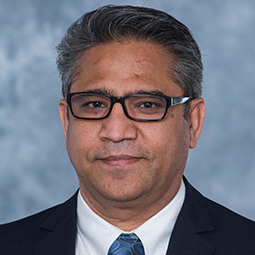
Dr. Iftikhar Ahmad serves as an Assistant Professor in the Department of Electrical Engineering at the University of South Carolina's Molinaroli College of Engineering and Computing. He joined the faculty in 2018 after eight years in industry as a Senior Scientist developing ultra-wide bandgap materials for UV-LEDs, and prior post-doctoral and research professor roles at USC. His expertise lies in the growth and characterization of wide bandgap semiconductors for advanced electronic and optoelectronic applications. Dr. Ahmad earned his M.Sc. from Govt. College Lahore (ranking first in the state) and completed his M.S. and Ph.D. at Texas Tech University in 2003 and 2005, focusing on wide bandgap semiconductors. He furthered his training with post-doctoral work at Virginia Commonwealth University in MBE and MOCVD growth techniques. His educational background established the foundation for his current research in semiconductor materials engineering. His research centers on ultra-wide bandgap semiconductors, especially gallium oxide and boron nitride, for applications in deep UV LEDs and high-power electronics. He explores novel MOCVD growth methods for these materials and their integration with traditional III-nitrides (AlGaN) to advance device performance in optoelectronics and power electronics. Current projects focus on defect engineering, phase stabilization, and device fabrication for next-generation semiconductor technologies. Analysis of his recent publications reveals a strong emphasis on β-Ga2O3 and h-BN for next-generation devices. Key themes include MOCVD growth optimization, defect characterization, and device integration for radiation detectors, high-temperature transistors, and UV emitters. His work bridges materials science and electrical engineering to address critical challenges in wide bandgap semiconductor technology, with increasing focus on computational modeling and industrial applications. No scientific awards or fellowships were mentioned in the provided materials. Regarding advising, while specific students are not listed, Dr. Ahmad teaches core courses including Introduction to Microelectronics (ELCT 363) and Advanced Semiconductor Materials (ELCT 874), indicating active engagement in graduate and undergraduate education. Grant details are not specified, but his laboratory operations suggest external funding support for semiconductor research. Dr. Ahmad leads the Ultrawide Bandgap Semiconductor Laboratory, equipped with an MOCVD growth system, Oceanoptics spectrometer, and comprehensive characterization tools for electrical, optical, and atomic force microscopy. The lab supports research in materials growth, device fabrication, and testing, fostering innovation in semiconductor technology through collaborations with industry and government research programs.
Xin Peng is a Professor and Deputy Dean at the School of Computer Science, Fudan University, China. He leads the CodeWisdom research team focusing on intelligent software engineering techniques for development, maintenance, and operation of software systems. His educational background includes a PhD in Computer Science (2001-2006) and Bachelor's degree in Computer Science (1997-2001), both from Fudan University. He progressed through the academic ranks from Assistant Professor (2006-2010) to Associate Professor (2010-2015) and finally to Professor (2015-present). Professor Peng's research interests span Software Analytics, Intelligent Software Development, Microservice systems, and AIOps. His work leverages AI technologies including deep learning and knowledge graphs to develop intelligent software engineering techniques. A significant portion of his recent work focuses on applying Large Language Models to various software engineering tasks, including vulnerability detection, API usage analysis, and test automation. His publication record shows a clear trend toward increasingly sophisticated applications of AI in software engineering, with recent work heavily featuring LLMs for tasks ranging from vulnerability patch porting to resource leak detection. The research spans multiple domains including microservice systems, automotive software, and Web of Things security. Best Paper Award of ICSM 2011 ACM SIGSOFT Distinguished Paper Award of ASE 2018 and 2021 IEEE TCSE Distinguished Paper Award of ICSME 2018, 2019, and 2020 IEEE Transactions on Software Engineering Best Paper award for 2018 Professor Peng serves in numerous leadership roles including Deputy Director of CCF Technical Committee on Software Engineering, Co-Editor-in-Chief of Journal of Software: Evolution and Process, and Associate Editor for ACM Transactions on Software Engineering and Methodology. He has been actively involved in program committees for major software engineering conferences including ICSE, ASE, ESEC/FSE, and ICSME. He leads the CodeWisdom research team at Fudan University, which has developed several benchmark systems including TrainTicket for microservice research. The team's work bridges academic research with industrial applications, particularly in microservice systems analysis and intelligent software development tools.
Prof Anindita Ghosh is a Professor of Modern Indian History at the University of Manchester's Department of History. She holds a doctoral degree from the University of Cambridge and has been affiliated with Manchester since 1999, serving as a Simon Fellow and lecturer before her current role. Her research focuses on power dynamics, culture, and resistance in colonial South Asia, particularly Bengal. She has authored influential monographs such as Power in Print (2006) and Claiming the City (2016), exploring print culture, urban history, and gender studies. Ghosh has supervised nine PhD students and secured major grants, including a British Academy award. She chairs the British Association for South Asian Studies (BASAS) and contributes to public discourse through media appearances and academic events. Educated in India and Cambridge, her work bridges colonial and postcolonial studies, examining topics like women’s resistance, Calcutta’s material cultures, and revolutionary movements. She actively engages with interdisciplinary projects, such as the Global Urban History Project, and organizes public lectures on Bengali cultural heritage. Her research outputs span monographs, edited volumes, and peer-reviewed articles on colonial urbanism, print culture, and gender. While her articles encompass diverse themes—from bioremediation to nuclear chemistry—they reflect her broader engagement with interdisciplinary methodologies. Ghosh’s academic leadership includes mentoring early-career scholars and fostering collaborations across disciplines. Her advocacy for marginalized urban communities and historical preservation underscores her commitment to bridging academic research with public impact.
Ruochen Lu is an Assistant Professor in the Department of Electrical and Computer Engineering at The University of Texas at Austin, specializing in chip-scale acoustic and electromagnetic microsystems for RF applications. His work focuses on reconfigurable/tunable RF functions through novel MEMS platforms and ultrasonic transducers for multi-physics hybrid systems in signal processing, sensing, and computing. His educational background includes a B.E. with honors in microelectronics from Tsinghua University (2014) and M.S./Ph.D. degrees in electrical engineering from the University of Illinois at Urbana-Champaign (2017/2019). Lu's research spans critical domains in modern electrical engineering: Microwave Acoustics Micro-Electro-Mechanical Systems (MEMS) Microwave Devices and Circuits Reconfigurable RF and Microwave Systems Ultrasound Transducers His technical approach emphasizes higher operating frequencies and efficient electromagnetic-acoustic domain transduction within integrated microsystems.
Ion Tiginyanu is a prominent materials scientist and academic leader. Currently serving as President of the Academy of Sciences of Moldova since 2019, he previously held roles including Vice-President (2012-2019), and has been Director of the National Center for Materials Study and Testing at Technical University of Moldova since 2001. His academic career includes visiting professorships at the University of Michigan (USA) and Technical University Darmstadt (Germany). He holds a Doctor Honoris Causa from Gheorghe Asachi Technical University and is a Fellow of SPIE. Education: Graduated Moscow Institute of Physics and Engineering (1978), PhD in Semiconductor Physics from Lebedev Institute (1982), Habilitation from Institute of Applied Physics (1991), and became Full Professor in 1993. Research focuses on nanotechnologies, metamaterials, and nanoarchitectures with applications in photonics, electronics, and biomedical engineering. His work produced over 400 publications (H-index 42) and 52 patents. Key achievements include developing novel semiconductor compounds and aero-materials for electromagnetic applications. Grants & Awards: Over 20 major recognitions including National Prize in Science (2004), WIPO 'Outstanding Inventor' (2011), and Honorary Doctorates from Romania/Japan. Labs: Leads the National Center for Materials Study and Testing, and collaborates internationally with institutions like TU Darmstadt and University of Michigan.