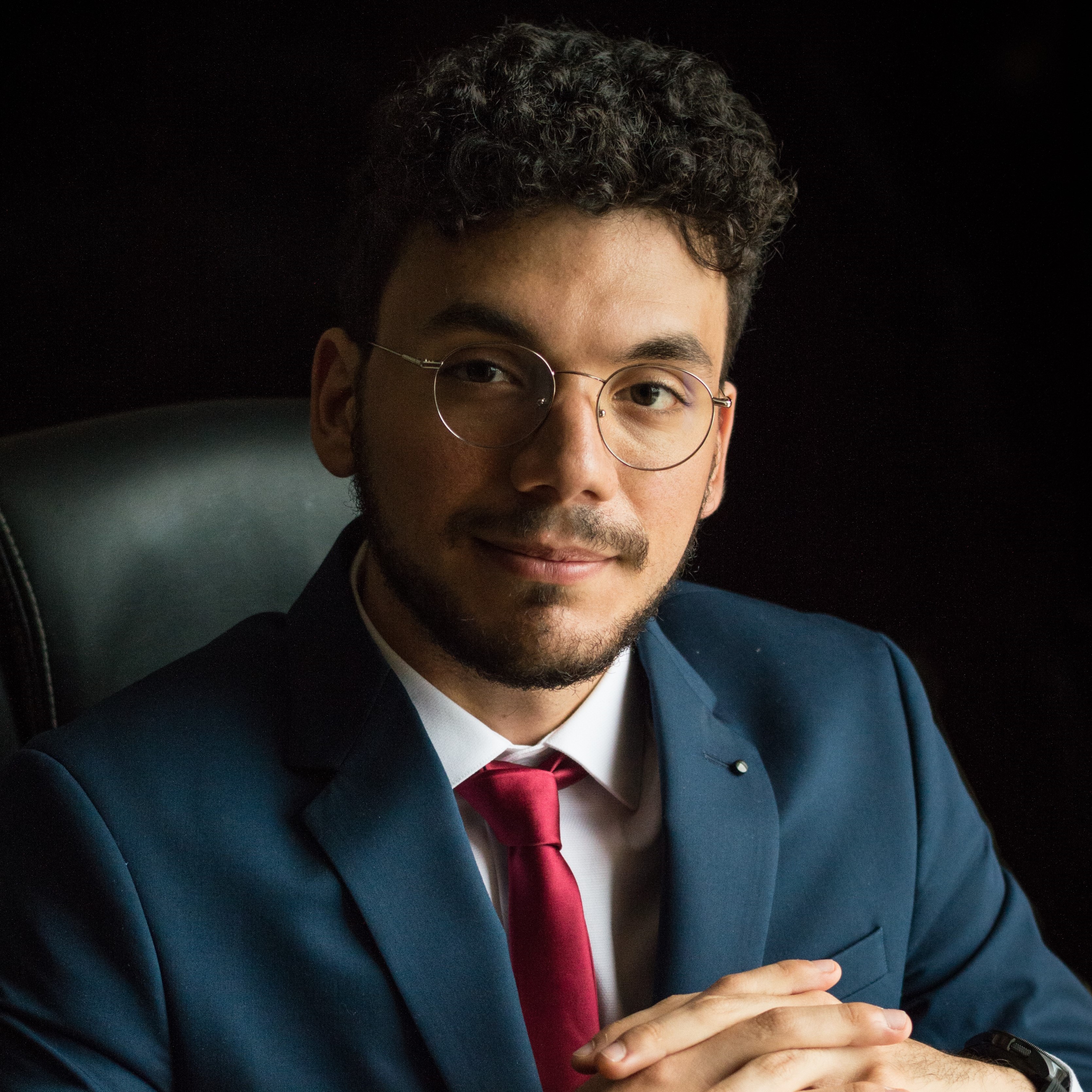
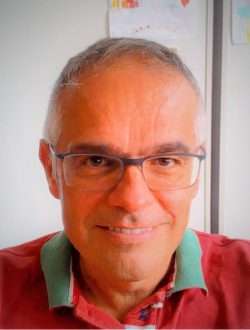
Dario De Marinis is an Assistant Professor at the Department of Mechanics, Mathematics & Management, Politecnico di Bari, Italy. His research focuses on fluid dynamics with applications in biomedical engineering, aerospace, and computational physics. Research Interests Fluid-structure interaction modeling Microfluidics and particle transport Biomedical applications (blood flow, valve mechanics) Aerospace engineering (hypersonic flows, turbulence) Numerical methods (Lattice Boltzmann, immersed boundary) Publications Trend Dario's recent work (2015–2025) spans computational fluid dynamics, with emphasis on multiphase flows, viscoelastic material behavior, and biomedical microfluidic devices. He has contributed to aerospace applications and turbulent thermal flows.
Alessandra Pesce is an Associate Professor at the Department of Physics (DIFI) of the University of Genoa, Italy. Her research focuses on structural biology of globins, protein aggregation, and cold-adapted enzymes, with applications in life sciences, environmental monitoring, and cultural heritage preservation. She teaches Applied Physics and Biophysics at both undergraduate and graduate levels in Physics and Biological Sciences. Her work spans from atomic-level characterization of protein crystals using Atomic Force Microscopy to large-scale ecological projects like the LIFE+ WHALESAFE initiative for sperm whale conservation through acoustic monitoring. Email: alessandra.pesce@unige.it Phone: +39 010 33 56243 Research Interests: Structural characterization of hexa-coordinated globins in marine organisms Thermodynamic and kinetic analysis of truncated hemoglobins in pathogenic bacteria Quaternary structure adaptations in Antarctic enzymes Development of acoustic monitoring systems for marine mammal conservation Protein aggregation mechanisms in amyloid-related diseases Publication Trends: Over 15 years, her research demonstrates expertise in combining X-ray crystallography with biophysical techniques to study globin family proteins across diverse species (from nematodes to whales). Key themes include heme reactivity modulation, ligand diffusion pathways, and structure-function relationships in extremophile proteins, with recent emphasis on marine conservation technology.
Maurizio Zamboni is a Full Professor at the Department of Electronics and Telecommunications (DET) at the Polytechnic University of Turin, where he also serves as Student Ombudsman. His academic career spans over three decades with continuous teaching and research contributions in electronics and computing fields. Professor Zamboni's research interests focus on cutting-edge areas including CMOS integrated circuits, computer architecture, quantum computing, semiconductor devices, and VLSI design. His work particularly emphasizes emerging nanotechnologies for digital microelectronic architectures and the design of high-performance or low-consumption processing systems. He has developed expertise in circuit architectures for probabilistic computing, logic-in-memory computing, magnetic devices, and quantum architectures. His recent publications (2021-2025) reveal a strong trend toward quantum computing applications, in-memory processing architectures, and novel approaches to overcoming the memory wall problem. These works span both theoretical algorithm development and practical hardware implementations, with significant focus on quantum annealing, FPGA-based quantum emulation, and memory-mapped processing architectures. Professor Zamboni has been actively supervising PhD students working on quantum computing algorithms, hardware AI accelerators for automotive applications, and quantum-related optimization approaches. He leads research within the VLSILAB Group at DET, focusing on the intersection of nanoelectronics, quantum computing, and advanced computer architectures. His work bridges theoretical computer science with practical electronic design, creating novel solutions for next-generation computing challenges.
Alberto Oliveri is an Associate Professor at the University of Genoa in the Department of Naval, Electrical, Electronic and Telecommunications Engineering. He teaches courses including Circuits and Systems, Nonlinear Circuits and Systems, Power Management, and Elements of Electrical Technology for undergraduate and graduate programs in Electronic Engineering, Information Engineering, Industrial Technologies, and Chemical Engineering. His research focuses on advanced topics in power electronics and control systems, with particular emphasis on: Modeling and optimization of magnetic components (inductors) for switch-mode power supplies FPGA implementation of nonlinear model predictive control algorithms Synthetic inertia solutions for renewable energy grid integration Embedded control systems for power converters Advanced modeling of ferrite-core and amorphous-core inductors His recent publications (2022-2025) demonstrate a consistent focus on improving power conversion efficiency through advanced control strategies and hardware implementation. Research themes include predictive control optimization, magnetic component characterization under saturation conditions, renewable energy grid support functions, and embedded algorithm development for real-time power system monitoring.
Francesco Greco is a Research Fellow and Ph.D. student at the University of Bari Aldo Moro's Computer Science Department, actively contributing to the Interaction, Visualization, Usability & UX (IVU) Laboratory under Prof. Maria Francesca Costabile. He completed a visiting research position at King's College London's Cybersecurity (CYS) group from October 2023 to March 2024 under Prof. Luca Viganò's supervision. His academic qualifications include: Master's degree in Computer Science (2022, University of Bari, full marks with honors) Bachelor's degree in Computer Science and Digital Communication (2020, University of Bari - Taranto, full marks with honors) Greco's research centers on Human-Computer Interaction and Usable Security , with specialized expertise in End-User Development , Internet of Things security , Computer Vision , and eXplainable AI for cybersecurity . His work develops human-centered security tools that translate technical findings into actionable user protections, particularly through phishing detection systems that generate intuitive explanations. Analysis of his 15 recent publications (2023-2025) reveals a cohesive research trajectory focused on XAI-driven security interventions . Key themes include timing optimization for phishing warnings, human factors in cybersecurity incidents, and LLM-based educational tools. His work consistently bridges theoretical HCI principles with practical security applications, as demonstrated by tools like APOLLO for phishing email analysis. Greco actively collaborates within the IVU Lab ecosystem and maintains international partnerships, including his recent work at King's College London. His research output demonstrates significant contributions to usable security frameworks and cybersecurity education methodologies.
Federico Smeacetto is a Full Professor of Materials Science and Technology at the Polytechnic University of Turin, Italy, where he is affiliated with the Department of Applied Science and Technology (DISAT) within the School of Engineering. He serves as the principal investigator for multiple EU-funded research projects focused on hydrogen technologies, solid oxide cells, and sustainable energy solutions. Professor Smeacetto's research focuses on advanced materials for energy applications, particularly glass and ceramics as joining and coating materials. His work spans several critical areas for the energy transition: Glass and glass-ceramics for solid oxide fuel cells and electrolysis cells Joining technologies for high-temperature energy devices Materials for hydrogen production and storage Recycling of end-of-life energy conversion devices 3D printing of advanced ceramic materials His recent publications demonstrate a strong focus on developing sustainable solutions for the energy transition, with particular emphasis on proton ceramic electrolysis cells, solid oxide fuel cells, and recycling technologies. The research combines materials development, manufacturing innovation (particularly 3D printing), and comprehensive performance assessment to address critical challenges in clean energy technologies. Professor Smeacetto has received notable recognition including the Abilitazione Scientifica Nazionale as Full Professor of Materials Science and Technology and The Acers Global Ambassador award. Abilitazione Scientifica Nazionale - Professore di Seconda Fascia - Settore 09/D1 (2013) National Scientific Habilitation – Full Professor of Materials Science and Technology (2019) The Acers Global Ambassador (2020) He actively supervises PhD students and leads multiple research projects, including EU-funded initiatives like H2START, H2SHIFT, ECOLEFINS, Pressuriz3D, 24_7 ZEN, HyP3D, and SOLSTICE. Professor Smeacetto also chairs advanced courses on glass and ceramics for PhD students and teaches undergraduate and graduate courses on materials for energy applications. As a member of the GLANCE research group at Politecnico di Torino, Professor Smeacetto contributes to the development of custom glasses, glass-ceramics, and composites for various applications including energy conversion and storage, joining technologies, and sustainable materials solutions.
Francesco Prudenzano is a Full Professor at the Department of Electrical and Information Engineering (DEI), Polytechnic University of Bari, Italy. He leads research in photonics, microwave engineering, and electromagnetic compatibility, with a focus on mid-infrared optical fiber devices, laser design, and microwave antennas. His work spans theoretical modeling, fabrication, and application development in advanced photonic systems. University: Polytechnic University of Bari Department: Electrical and Information Engineering Research Group: MOE Group (Microwave and Optical Engineering) Research Interests: Prudenzano's research explores the design and optimization of optical fiber devices, microwave sensors, and electromagnetic systems. Key areas include mid-infrared laser development, additive manufacturing of antennas, and photonic sensors for composite materials. His work bridges material science, photonics, and electromagnetics to solve practical engineering challenges. Recent Publications (2024-2025): His articles highlight advancements in fluoride and chalcogenide fiber optics, Q-switched lasers, and 5G antenna technologies. Topics span mid-IR amplification, supercontinuum generation, and microwave applicators for medical use, reflecting his interdisciplinary approach. Laboratories: Research is conducted at the Electromagnetic Fields and Telecommunications laboratories in Bari and the "Polo Magna Grecia" facility in Taranto, focusing on device prototyping and electromagnetic modeling.
Marco Farina is a Full Professor in Electromagnetics at the Department of Information Engineering, College of Engineering, Polytechnic University of Marche, Italy. His research spans electromagnetic modeling, scanning microwave microscopy, and nanotechnology, with applications in 2D materials, biosensors, and advanced measurement systems. He is a Senior Member of IEEE and actively contributes to Technical Committees on RF Nanotechnology. Laurea and Ph.D. in Electronic Engineering from University of Ancona Research interests focus on quantitative scanning microwave microscopy, electromagnetic analysis of active/passive components, and nanoscale characterization techniques. His work bridges theoretical modeling with practical implementation, including the development of the EM3DS software suite and novel inverted SMM systems. Recent publications highlight interdisciplinary applications in biomedical analysis and semiconductor physics. Scientific recognition includes the 3M-Nano Best Conference Paper Award and grants from US Army Research Laboratory and US Air Force Office of Scientific Research. He holds an ESA-funded patent for VNA calibration and has co-authored a book on planar structure analysis. Collaborative projects emphasize RF device optimization and biological imaging.
Massimo Poncino is a Full Professor at the Department of Control and Computer Science (DAUIN) within the Faculty of Engineering at Politecnico di Torino. He serves as Scientific Advisor for the STMicroelectronics partnership and coordinates basic engineering subjects. A Senior Member of IEEE since 2012 and Fellow since 2012, he has served on editorial boards for IEEE Transactions on Computer-Aided Design, IEEE Design & Test of Computers, and ACM Transactions on Design Automation. Education: Laurea in Electronic Engineering (1989) and PhD in Computer and Systems Engineering (1993) from Politecnico di Torino Academic Career: Visiting Scientist University of Colorado (1993-1994), Researcher at Politecnico di Torino (1995-2001), Associate Professor at University of Verona (2001-2004), Full Professor at Politecnico di Torino (2006-present) His research focuses on energy-efficient digital systems , including design automation of SoCs, hardware-aware AI, battery management, cyber-physical systems, and embedded systems. Recent publications highlight advancements in digital twins for batteries , low-power neural network deployment , and IoT privacy . Scientific Awards: Recognition of Service Award - ACM (2013) Certificate of Appreciation - IEEE Circuits and Systems Society (2006, 2008, 2009) IEEE Fellow (2012-) Research Involvement: EU H2020, VI/VII Framework Programs evaluator Scientific Director for projects: Approxim@ction, EMBAI, DISLO-MAN, DAMASCO Member of EDA research group Teaching: Course director for Energy Management for IoT (2019-2025) Lecturer for Computer Science courses (2003-2025)
Leonardo Orazi is a Full Professor at the University of Modena and Reggio Emilia's Department of Engineering Sciences and Methods. He specializes in advanced manufacturing technologies, particularly laser processing, polymer engineering, and biomedical surface functionalization. His teaching roles include courses on Smart Manufacturing, Injection Molding, and Additive Manufacturing in Digital Automation and Mechatronic Engineering programs. Research focuses on laser-induced periodic surface structures (LIPSS), material characterization, and micro/nanostructuring for biomedical and industrial applications. Develops innovative manufacturing processes for antibacterial surfaces, microfluidic devices, and enhanced material properties. Research Interests: Laser texturing, polymer processing, surface engineering, additive manufacturing, and simulation-driven design. Labs/Teams: Active in laser-matter interaction research and collaborative projects on biomaterial functionalization. His work bridges computational modeling (e.g., Moldflow simulations) with experimental validation. Publications: Over 40 peer-reviewed articles since 2010, emphasizing laser-based manufacturing advancements, polymer molding optimization, and biomedical material surface treatments. Recent work includes antibiofouling polymer functionalization via ultrafast lasers and fiber orientation modeling in composites.
Marco Vacca is an Associate Professor in the Department of Electronics and Telecommunications (DET) at Politecnico di Torino and a member of the Interdepartmental Center PIC4SeR - PoliTO Interdepartmental Centre for Service Robotics. His work bridges electronics, nanotechnology, and computing architecture with a focus on innovative solutions to the memory wall problem. His research spans Logic-in-memory computing, Machine learning hardware acceleration, and Nanocomputing with specific emphasis on circuit architectures for probabilistic computing, magnetic devices, hybrid technologies integration, and CAD tools for emerging technologies. Dr. Vacca leads research in RISC-V extensions, hardware accelerators for AI, and autonomous robot systems for agricultural applications through the VLSILAB research group. Recent publications reveal a strong trend toward solving fundamental computing challenges through nanoscale innovations, particularly in memory-centric architectures, molecular field-coupled computing, and novel transistor technologies. His work demonstrates how logic-in-memory approaches can overcome traditional von Neumann limitations while improving energy efficiency for AI workloads. Editorial board member of ELECTRONICS (2021-2023) Program committee member for Design, Automation and Test in Europe Conference (DATE) 2020-2021 Dr. Vacca supervises PhD student Alessandro Varaldi working on 'Hardware AI Accelerators for Automotive Applications' and has led significant research projects including 'Device for Storage and Processing Data and Related Method' (2020-2021) and 'Quantum Computing and Quantum Communication: State of the Art and Applications in the Telco Sector' (2020). His grant portfolio shows strong industry and competitive funding support. As a core member of the VLSILAB research group, Dr. Vacca contributes to advancing VLSI theory and design applications with particular focus on implementing Big Data, Machine Learning, and Neural Networks in specialized hardware architectures that push the boundaries of conventional computing.
Luciano Scaltrito is a Full Professor in the Department of Applied Science and Technology (DISAT) at the Polytechnic University of Turin, where he also serves as a member of the Interdepartmental Center PEIC - Power Electronics Innovation Center and Scientific Advisor for the Partnership Agreement with SPEA. His research focuses on micro and nanotechnologies, power electronics, and MEMS devices. His primary research interests include 3D modeling, capacitive sensors, polymeric 3D printing, solid state physics, and surface micromachining. Professor Scaltrito's work spans the study of packaging technologies for power electronics and MEMS devices, mechanical/electrical/thermal/optical interfaces for electronic devices, lithographic processes for silicon and silicon carbide power devices, and production processes for sensors and actuators. His research aligns with several Sustainable Development Goals including Good Health and Well-being, Quality Education, Clean Water and Sanitation, Decent Work and Economic Growth, Industry Innovation and Infrastructure, and Partnerships for the Goals. His recent publications demonstrate a strong focus on 3D printing applications for electronics and MEMS, power electronics packaging, environmental monitoring sensors, and advanced materials for energy applications. The research spans multiple disciplines including materials science, electronics engineering, environmental engineering, and nanotechnology. President of Italian Association of Science and Technology (2017-2020) Vice President of Italian Association of Science and Technology (2016) Steering Committee member of Italian Association of Science and Technology (2015, 2021) Program committee member for MNE2021 conference Professor Scaltrito actively supervises numerous PhD students across multiple programs including Electrical, Electronic and Communications Engineering, and Sustainable Materials, Processes and Systems for Energy Transition. He leads multiple research projects including SMIP (2024-2027), SIRCEC (2023-2025), and ECOSMARTROAD 2.0 (2021-2023), with funding from regional, national, and EU sources as well as commercial contracts with industry partners. He directs the CHILAB Laboratory in Chivasso, which focuses on materials and microsystems research, and maintains strong industry partnerships through numerous commercial research agreements with companies including SPEA S.p.A. and Dana-TM4 Italia S.r.l.
Giuseppe Giorgi is a fixed-term researcher at the Department of Mechanical and Aerospace Engineering (DIMEAS), Politecnico di Torino. He serves as Scientific Coordinator for multiple EU-funded projects including MERMAIDS, BLUE-X, and AIMS, and leads commercial research contracts for offshore wind microclimate studies. Research focuses on hybrid offshore platforms integrating Floating Offshore Wind Turbines (FOWTs) with Wave Energy Converters (WECs) Expertise in nonlinear hydrodynamics , fluid-structure interaction , and experimental validation through lab tests and sea trials Research Interests : Marine Renewable Energy Systems Nonlinear Dynamic Modeling Mechanical and Techno-Economic Optimization Hybrid Wind-Wave Energy Platforms Parametric Resonance Energy Harvesters Scientific Achievements : 2022: IFAC CAMS Best Paper Award 2022: Institution of Civil Engineers - Baker Medal 2022: AIMETA Junior Mechanics of Machines Award 2023: IFToMM Bronze Best Student Paper Award Academic Leadership includes supervising 6 PhD students and teaching Numerical Modeling of Marine Energy Converters (PhD level). His 15 most recent publications focus on wave energy converter optimization, floating wind turbine dynamics, and hybrid offshore energy systems with applications in the Mediterranean Sea and North Sea.
Mauro Bonfanti is a Fixed-term Assistant Professor at the Department of Mechanical and Aerospace Engineering (DIMEAS) at Politecnico di Torino, Italy. His academic work focuses on wave energy conversion systems, mechatronics, and applied mechanics within the field of industrial and information engineering. Dr. Bonfanti's primary research interests include wave energy conversion systems, system identification, optimal control, mechatronics, and renewable energy systems. His work centers on developing advanced control strategies for wave energy converters, with particular emphasis on improving energy extraction efficiency through innovative mechanical designs and control algorithms. He has made significant contributions to the understanding of wave-structure interactions, hydrodynamic modeling of floating bodies, and optimization of wave energy converter systems under various sea conditions. His research bridges theoretical modeling with practical implementation, often involving high-fidelity numerical simulations validated through experimental testing. His publication record demonstrates a strong focus on advancing wave energy conversion technology, with particular emphasis on control systems, hydrodynamic modeling, and optimization techniques. The research shows progression from fundamental modeling approaches to increasingly sophisticated control strategies and system integration. Recent work has expanded to include hybrid renewable energy systems that combine wave and wind energy technologies. Dr. Bonfanti serves as a Scientific Responsible for several research projects including OCEANGLIDE, AQUALEV, and WISE, which focus on innovative wave energy conversion technologies. He holds multiple patents related to wave energy conversion systems, including the WISE (Water-air Injectable Swath Elevator) and AQUALEV magnetic support systems. He actively supervises PhD students including Alessandro Brusasco, Matteo Mastorakis, Francesco Balestrieri, and Domenico Edoardo Sfasciamuro, guiding research in sustainable materials, mechanical engineering, and wave energy conversion systems. His teaching responsibilities include courses on System Identification and Optimal Control of Wave Energy Conversion Systems, as well as Mechatronics across multiple academic years. Dr. Bonfanti is a member of the Mechatronics and Servosystems research group at DIMEAS, where he collaborates on projects related to marine renewable energy systems and advanced control technologies.
Giulio Fontana is affiliated with the Department of Electronics, Information and Bioengineering (DEIB) at Politecnico di Milano. His research spans robotics, artificial intelligence, and their applications in agriculture and healthcare. He contributes to benchmarking frameworks like ACRE and RoCKIn, focusing on standardized evaluation of robotic systems and AI applications. Primary Affiliation: Politecnico di Milano (DEIB) Research Focus: Robotics, AI, Agricultural Engineering, Bioengineering Fontana has pioneered benchmarking competitions such as ACRE (Agri-Food Competition for Robot Evaluation) and RoCKIn, emphasizing quantitative metrics for robotic performance. His work includes AI-driven pesticide reduction in agriculture, SLAM (Simultaneous Localization and Mapping) in autonomous robotics, and assistive devices for hospital logistics. Recent publications highlight AI-sprint for runtime management of AI applications and multimodal interfaces for robotic wheelchairs. Scientific Contributions : Coordinated design of benchmarking competitions (ACRE, RoCKIn) Developed SLAM benchmarking datasets (Rawseeds project) Innovated AI applications for sustainable agriculture Engineered assistive mobility solutions for healthcare