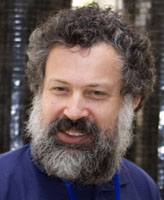
Olalla Cutrin Monastery is a permanent academic faculty member at the Department of Clinical Psychology and Psychobiology within the Faculty of Psychology at the University of Santiago de Compostela. She actively contributes to research through her affiliation with the UNDERISK Risk Behavior and Developmental Disorders Research Unit at the Institute of Psychology (IPsiUS). PhD in Psychology (University of Santiago de Compostela, 2019) Research focus: Parenting practices, adolescent problematic behavior, peer influence Key collaborations: Dr. José Antonio Gómez Fraguela, Dr. Jorge Sobral Fernandez Her work primarily explores the mediation of deviant peer relationships in adolescent behavioral development, aligning with her doctoral research.
Carlos Alberto Martins da Silva Poiares is an Associate Professor at Lusófona University, affiliated with the Faculty of Social Sciences, Education and Administration and the Faculty of Law. He has served as Vice-Rector since 2013 and is a leading figure in forensic psychology and social exclusion research. Law Degree, University of Lisbon (1978) PhD in Psychology, University of Porto (1996) His research focuses on forensic psychology, psychometrics, psychopathy, delinquent behavior, and adolescence. He has published extensively in peer-reviewed journals and has contributed significantly to the validation of psychological instruments in Portuguese populations. His work often intersects law and psychology, particularly in juvenile justice and criminal behavior assessment. The recent articles reflect a strong trend in forensic and clinical psychology, with emphasis on psychometric validation, aggression assessment, and psychopathic traits in youth. His research demonstrates methodological rigor using tools like correlation and regression analyses, and addresses critical social issues such as gender-based violence and social exclusion. Grand Officer of the Order of Prince Henry (2006) Poiares has supervised 68 students and leads the Panóptico – Center for Forensic Psychology Studies, which he founded in 1997. He is the founder and board chair of PSIJUS – Association for Juspsychological Intervention, and has represented Portugal in the International Association of Psychology and Law (AIPJ), serving as Vice-President since 2016. He is currently involved in active research projects including 'Risk(s) of Violence and Loneliness in the Elderly Population' and 'HIGHRES: Helping Intangible Heritage Resilience through Storytelling'. He leads and participates in multidisciplinary research teams focusing on social vulnerability, aging, and heritage resilience, demonstrating a broad impact across psychology, law, and social policy.
Jessica R. Deitzer is an Assistant Professor in the School of Criminology and Criminal Justice at the University of Nebraska Omaha. Her research centers on criminal decision-making, with a focus on how self, social, and environmental contexts shape deviant behavior, particularly among adolescents. Institution: University of Nebraska Omaha School: School of Criminology and Criminal Justice Email: jdeitzer@unomaha.edu Her primary research interests include peer influence, adolescent delinquency, substance use, situational crime theory, and environmental criminology. She examines how immediate social contexts, such as unstructured peer interactions, affect risk-taking and criminal decisions. Recent publications indicate a strong focus on the temporal dynamics of peer effects, including how peer interactions influence short-term mindsets and subsequent behavior. Her work often employs space-time budget data and advanced statistical modeling to understand situational crime patterns. Jessica Deitzer actively collaborates with leading scholars in criminology, including Evelien Hoeben and Jean Marie McGloin, contributing to cutting-edge research on peer dynamics and adolescent behavior.
Elanie Rodermond is an Associate Professor in the Department of Criminology at the Faculty of Law, Vrije Universiteit Amsterdam, and a researcher at the Netherlands Institute for the Study of Crime and Law Enforcement (NSCR). She is actively involved in research, teaching, and policy advisory roles related to terrorism, extremism, political violence, and reintegration. Her research focuses on radicalization processes, particularly how online environments influence recruitment into extremist groups, and the life-course trajectories of extremist offenders. She leads a Veni-funded project on women’s pathways into and out of extremism and uses innovative mixed-methods approaches combining large-scale register data with qualitative interviews. Her work stands out for its use of comparison groups and policy relevance. Rodermond’s recent publications explore topics such as extremist beliefs in child protection, comparative analysis of terrorist suspects, and methodological challenges in extremism research. She frequently publishes in high-impact journals and contributes to edited volumes. KNAW Early Career Award (2024) Veni Grant from NWO (2022) Gezina van der Molen Prize (2019) Shortlisted for Science Talent Prize (2019) She supervises PhD students and postdoctoral researchers and has led multiple funded projects, including those supported by the Dutch Research Council, Ministry of Justice, and international bodies. Rodermond coordinates the Master’s programme in Criminology (2021–2024) and teaches courses on extremism, terrorism, and life-course criminology, including the innovative Inside-Out Prison Exchange Program. She chairs the European Society of Criminology’s Working Group on Radicalisation, Extremism, and Terrorism and serves as associate editor of Behavioral Sciences of Terrorism and Political Aggression and editor of the Dutch journal Sancties .
Dr. Wiesław Nynca serves as a Lecturer in the Department of Social Pathology and Resocialization within the Institute of Pedagogy at the Faculty of Social Sciences, University of Gdańsk, where he contributes to academic instruction and research in social sciences. His research focuses on critical societal challenges, with primary interests including: Social Pathology: Analysis of societal dysfunctions, deviant behaviors, and systemic vulnerabilities Resocialization: Development of reintegration methodologies for marginalized or institutionalized populations Social Work: Practical interventions in community support systems and crisis management Criminology: Examination of criminal behavior patterns and justice system efficacy Sociology: Investigation of social structures, inequality, and cultural dynamics Rehabilitation: Design of therapeutic and vocational recovery programs Dr. Nynca's work addresses urgent societal issues through empirical research and pedagogical application, though specific publication trends cannot be detailed from the provided information. No scientific awards or student advising records are documented in the current institutional profile.
Geneviève POULINGUE is an Associate Professor at SKEMA Business School, currently serving as the Belo Horizonte Campus Dean since 2016. She holds a Doctorat en Sciences de Gestion (2009) from IAE Caen and has over 20 years of professional experience in antic business management before transitioning to academia. Her research focuses on project management, communities of practice, organizational knowledge systems, and intercultural management. Key roles include Director of Programme Grand Ecole (2014-2018) and Deputy Director of Programme Grand Ecole - Paris campus (2013-2014). Her work explores innovative frameworks for project governance, knowledge sharing in organizations, and the role of communities in fostering intrapreneurship and sustainable innovation. Recent research trends emphasize AI-driven educational strategies (2023), interorganizational networks for project sustainability (2015-2016), and cross-cultural strategic alliances (2011). Earlier work analyzed the Club de Montréal's impact on project management theory (2007-2012), demonstrating how practitioner-researcher communities drive disciplinary evolution. No scientific awards are listed in available texts. Her administrative leadership has shaped SKEMA's global campuses, particularly in Brazil. She has advised numerous institutional projects but no formal student advisees are documented.
Megan Smith is an Assistant Teaching Professor in the Sociology Department at the University of North Carolina at Charlotte, affiliated with the Gerontology Program and the College of Humanities & Earth and Social Sciences (CHESS). She holds an Honors College Faculty appointment until June 2028 and serves on the Charlotte Phi Beta Kappa chapter committee. Her roles include Theme Guide for the General Education program and induction into Phi Kappa Phi as a Distinguished Faculty Member. Dr. Smith earned her Ph.D. from Emory University, an MA in Sociology from UNC Charlotte (2011), and a BA in Sociology with Anthropology concentration from NC State University (2001). Her research focuses on mental health, loneliness, deviance, and health disparities, with a commitment to translating academic insights into public discourse through conferences and media. She teaches undergraduate and graduate courses on mental health and deviance, maintaining Quality Matters certifications for Sociology courses supporting the School of Professional Studies. Her publications include a co-authored book (2021) and an upcoming textbook (2025).
Chris Coutts is a Professor of Urban and Regional Planning at Florida State University (FSU) and a Research Affiliate with the Center for Demography and Population Health. His work bridges ecological planning, public health, and sustainable development, focusing on how land use and nature conservation support critical ecosystem services for human well-being. Education: PhD in Urban, Technological, & Environmental Planning, University of Michigan (2006) MPH in Health Behavior and Education, New Mexico State University (2003) BCH in Community Health Education with Honors Distinction, New Mexico State University (1997) Dr. Coutts’s research examines ecologically-sensitive land use practices, particularly their impacts on community health and behavior. His work spans topics like greenspace redevelopment, bicycle infrastructure, and nature conservation in Malawi and the US. He has contributed to journals such as American Journal of Public Health and Urban Planning and Development . His recent projects include analyzing greenspace effects on sleep health, displacement risk in Atlanta, and bike infrastructure benefits across US cities. His research was inspired by his Peace Corps service in Malawi (1998–2000), and he returned there as a Fulbright Scholar in 2019. Scientific Awards: US Fulbright Scholar (2019) Multiple Graduate Teaching Award nominations (FSU, 2009–2020) First Year Assistant Professor grant best poster award (FSU, 2008) Dr. Coutts is also involved in international collaborations, including partnerships with universities in Botswana and Malawi, and research on land use implications for natural burial practices in the US.
Ronald Gorton is an Associate Professor in the Department of Criminology at the School of Sociology, Anthropology, and Criminology, University of Northern Iowa. His academic career at UNI is documented in the faculty roster from the 1998-1999 to 2014-2015 academic years. While no explicit research interests, publications, or awards are detailed in the provided records, his long-term association with the Criminology department suggests sustained contributions to the field. Affiliation: University of Northern Iowa Department: Criminology Rank: Associate Professor Active Years (UNI Roster): 1998-1999 to 2014-2015
James Kitts serves as Professor of Sociology at the University of Massachusetts Amherst, specializing in computational approaches to social networks, organizational dynamics, and collective behavior. His interdisciplinary work bridges sociology with data science and public health applications. Education Ph.D. in Sociology, Cornell University (2001) M.A. in Sociology, Cornell University (1998) M.S. in Natural Resources & Environment, University of Michigan (1995) B.A. in Environmental Studies, Oberlin College (1992) Research Focus : Kitts' scholarship centers on computational social science methodologies applied to social networks, examining how structural positions shape behavioral diffusion, organizational exchange, and norm formation. His work spans adolescent friendship dynamics, healthcare system coordination, and the emergence of antisocial norms through computational modeling and network analysis. Recent publications demonstrate increasing integration of digital trace data with traditional sociological frameworks. Publication Trends : His 2017-2021 work reveals a concentrated focus on computational network analysis in healthcare systems (patient transfers) and adolescent social structures, while earlier research (2003-2011) established foundational contributions to network methodology, collective action theory, and automated social analysis through audio sensing. The Oxford Handbook chapter (2020) synthesizes computational advances across the discipline. Scientific Recognition : No specific awards are documented in the source material, though his American Journal of Sociology publication (2017) represents a high-impact contribution to organizational network studies. Professional Activities : As a core faculty member, Kitts contributes to UMass Amherst's Data Analytics and Computational Social Science program, mentoring through departmental structures. The source material indicates no explicit grant details or student advisement listings, though his collaborative publications suggest active research team leadership.
Johannes Keller is a Professor and Chair of Social Psychology at Ulm University, where he has been a faculty member since 2009. He leads the Social Psychology Lab and is actively involved in research, teaching, and academic service. His work bridges cognitive and motivational processes in social behavior, with a strong focus on self-regulation, essentialism, empathy, and meaningful work. Research Interests: Self-regulatory processes in social cognition and interaction Psychological essentialism and motivated social cognition Flow experiences and intrinsic motivation Empathy, compassion, and the compassion-hostility paradox Bullshit job perceptions and meaningful work Stereotype threat and performance Behavior in social dilemmas and hand hygiene compliance Psychosis proneness and its social implications His recent publications reveal a consistent focus on the interplay between motivational systems (especially regulatory focus) and social behavior, often integrating physiological measures (e.g., cortisol, heart rate variability) with experimental designs. Themes of moral judgment, prosociality, and the dark side of work have emerged prominently in his latest work. Scientific Service and Recognition: Editorial Board Member, European Journal of Social Psychology (2007–2009; since 2012) Associate Editor, British Journal of Social Psychology (2017–2018) Associate Editor, European Review of Social Psychology (since 2023) Guest Editor, special issue on Self-Regulation and Strategic Motivational Orientations in Economic Contexts (Journal of Economic Psychology) Ad hoc reviewer for major funding agencies including DFG, NSF, ANR, SNSF, and others Reviewer for over 60 journals including JPSP , Psychological Science , and Personality and Social Psychology Bulletin Keller has advised numerous graduate students, many of whom are now co-authors on high-impact publications. His lab fosters interdisciplinary research at the intersection of social, cognitive, and organizational psychology. He has organized major academic events such as the EASP Small Group Meeting on empathy and the German Social Psychology Conference (2017). His university service includes leadership roles in examination boards and curriculum development for psychology programs at Ulm University.
Renee Monson is Professor of Sociology at Hobart and William Smith Colleges, where she has been a member of the faculty since 1998. She is affiliated with the Department of Anthropology and Sociology within the School of Humanities and Social Sciences. Her research and teaching focus on gender relations, families and social change, American politics, social policy, welfare state restructuring, and collaborative pedagogy. Ph.D., Sociology, University of Wisconsin-Madison M.A., Public Affairs, University of Minnesota B.A., Sociology, Oberlin College Her research explores the intersection of family structures and political behavior, particularly how patterns in family forms correlate with voting behavior in U.S. presidential elections. She also investigates the sociological impacts of welfare reform, especially on gender roles and child support enforcement. In pedagogy, she has published extensively on collaborative learning, group dynamics in research methods courses, and interdisciplinary teaching, notably through her co-taught course 'The Politics of Reproduction' with a biologist colleague. Her recent publications reflect a strong emphasis on innovative teaching strategies, including norm violation exercises in the post-COVID classroom and the effectiveness of group work in sociology curricula. She has also contributed to broader discussions on linking sociology majors to labor market success and rethinking interdisciplinary education in liberal arts contexts. "Deviant Interactions or Interaction As Deviance?" (2023) "Using Group Work Across the Sociology Curriculum" (2023) "Do They Have to Like It to Learn From It?" (2019) "All in the Family: Red States, Blue States..." (2011) "Ties That Bind: Child Support Enforcement..." (2002) Monson has collaborated with colleagues across disciplines, particularly with economist Jo Beth Mertens on electoral sociology and with biologist Kristy Kenyon on interdisciplinary pedagogy. She has been instrumental in analyzing over a decade of student data on group learning outcomes and continues to advance scholarship on teaching and learning in sociology. She teaches courses such as Introduction to Sociology, Research Methods, Sociology of Sex and Gender, and Social Policy, contributing significantly to both sociological inquiry and educational innovation. She is actively engaged in research and publication, with no indication of retirement or emeritus status, and maintains current contact through the university. Her office is located in Stern Hall, and she is listed with an active email and phone number.
Ragne Kõuts-Klemm is an Associate Professor in Sociology of Journalism at the University of Tartu's Faculty of Social Sciences, Institute of Social Studies, with a 20-year academic career (2002–present). Her research spans media systems, journalism practices, digital society, and communication sciences, focusing on topics like disinformation, media resilience, and societal transformation. Doctor's Degree (2013): Media-connected society analysis Research Master's Degree (2002): Minority representation in Estonian journalism Her recent work examines data journalism skills, Baltic media systems, and slow journalism innovations. Projects include combating disinformation, digital copyright law, and media monitoring of Russian-speaking communities. Scientific awards: 2002 Estonian National Contest for Young Scientists, I Prize. Administrative roles: Estonian Press Council member (2020–2024), UNESCO IPDC expert (2023–), and SA Kultuurileht board member (2023–).
Prof. Israel Nelken is a Full Professor at the Hebrew University of Jerusalem, affiliated with the Edmond and Lily Safra Center for Brain Sciences. His research focuses on auditory neurophysiology, specifically the neural mechanisms underlying sound processing, perception-action loops, and statistical learning in audition. He has contributed significantly to understanding how the brain detects deviant sounds and encodes complex auditory information across multiple temporal and spectral scales. Affiliations: Hebrew University of Jerusalem, Edmond and Lily Safra Center for Brain Sciences Roles: Full Professor, Principal Investigator of the Israel Nelken Lab Research Interests Prof. Nelken’s work explores the transformation of sensory signals into meaningful representations in the auditory system. Key areas include: Neuronal responses to complex sounds and their behavioral relevance Stimulus-specific adaptation (SSA) and prediction error detection Integration of auditory information across cortical and subcortical regions Role of auditory cortex in rhythmic motor synchronization and statistical learning Key Contributions His studies on deviance detection in auditory cortex have advanced our understanding of mismatch negativity (MMN) and predictive coding. Recent work highlights rats’ ability to synchronize movements with auditory rhythms, challenging assumptions about species-specific musicality. He has also developed innovative tools like the Rat Interactive Foraging Facility (RIFF) to study neural-behavioral interactions in real-time. Awards & Honors Rector’s Prize for Excellence in Research and Teaching (2015) Landau Prize for Sciences and Research (2015) Michael Bruno Memorial Award (2008) ERC Advanced Grant (2013) Grants & Collaborations Recipient of prestigious grants including the ERC Advanced Grant for studying auditory processing in natural environments. Active collaborations include work on cortical dynamics in Alzheimer’s models and computational frameworks for attentional blink phenomena. Labs & Teams Leads the Israel Nelken Lab, which integrates electrophysiology, computational modeling, and behavioral experiments to dissect auditory processing. The lab collaborates widely, contributing to projects like the dense cortical microcircuit simulations for understanding surprise responses.
Tim Turner is an Assistant Professor at the CAS School of Social Sciences & Humanities, specializing in criminological research on drug use, harm reduction, and nightlife tourism. His work focuses on atypical intoxication patterns among young adults in party zones and music festivals, particularly in Ibiza, with a strong emphasis on ethnographic methodologies. Education: MA in Criminology, Middlesex University (Award Date: 1 Jun 2004) Turner’s research explores the intersection of drug consumption, tourist behavior, and social systems. His 2022 book Disneyization of Drug Use and subsequent chapters analyze how structured leisure environments influence substance use. He also investigates mental health challenges within justice systems and the role of British seasonal workers in drug markets. His recent work (2020–2023) examines the disneyization framework in bounded play spaces, linking it to deviant leisure, hedonistic excess, and victimization. This aligns with broader trends in his publications, including ethnographic insights into police mental health and drug dealing networks. No scientific awards or prizes are explicitly mentioned in the available data. Turner actively participates in academic conferences, including the John Jay College of Crime and Justice and the British Society of Criminology, and accepts PhD students for supervision.