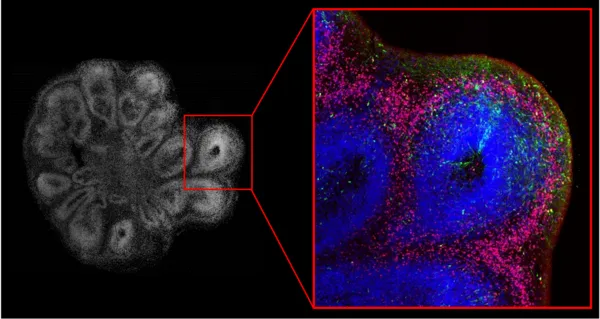
Prof. Dr. Simon Schäfer leads the Schäfer Lab at the Technische Universität München , focusing on engineering advanced organoid systems to study human brain development, disease modeling, and repair mechanisms. His work bridges stem cell biology, gene editing, and bioengineering to develop personalized therapies for brain disorders. Stem Cell & Organoid Technology Neurodevelopmental Mechanisms Neurodegenerative Disease Models Gene Editing & Neuroimmune Interactions Translational Neuroscience Recent research emphasizes brain organoid development, microglia phenotypes, and neurodevelopmental timing anomalies in autism. His team’s work also explores zika virus interactions with glioblastoma stem cells and neuronal plasticity in psychiatric disorders. Scientific awards and funding include support from the Deutsche Forschungsgemeinschaft (DFG), Brain & Behavior Research Foundation (BBRF), and Munich Cluster for Systems Neurology (SyNergy). Collaborations span institutions like the TUM Center for Organoid Systems. Advises 6 students (2 PhD, 1 MSc, 3 associated) Labs include Schäfer Lab, COS@TranslaTUM Contact: simon.schafer@tum.de
Prof. Dr. Markus Meissner is a Professor at the Faculty of Veterinary Medicine, Ludwig Maximilian University of Munich, leading the Chair of Experimental Parasitology. His research focuses on the molecular mechanisms of host cell invasion and modulation by Apicomplexan parasites, particularly Toxoplasma gondii and Plasmodium species. Research Group: Meissner Laboratory Location: Lena-Christ-Str. 48, 82152 Planegg-Martinsried Contact: markus.meissner@lmu.de His work investigates the secretory pathway of parasites, vesicular trafficking systems, and essential genes involved in host cell invasion and intracellular development. Toxoplasma gondii serves as a model organism for studying Apicomplexan biology, including nuclear division and CRMP complex functionality. Recent publications highlight the role of Rab GTPases in protein trafficking, chromatin remodeling in Plasmodium, and actin dynamics in parasite motility. Articles span topics such as egress factors, Golgi pathways, and lineage-specific organelle emergence, reflecting a multidisciplinary approach combining molecular biology, cell biology, and evolutionary analysis. The Meissner Lab includes PhD students (Peipei Qin, Yuan Song, Ella Schadt, Vitoria Catschor dos Santos) and postdocs (Dr. Wei Li, Dr. Miriam Rafajlovic). Research is conducted in Lena-Christ-Str. 48, Planegg-Martinsried, with a focus on experimental systems for studying parasite mechanisms.
Leonie Bentsink is a Professor at the Laboratory of Plant Physiology , part of Wageningen University . Her research focuses on molecular mechanisms underlying seed dormancy, germination, and longevity in plants like Arabidopsis thaliana . She leads projects investigating translational regulation, seed microbiomes, and abiotic stress tolerance, supported by an NWO Vici grant (2018). Dr. Bentsink supervises multiple PhD candidates and has authored over 69 publications. Key contributions include discovering roles for genes like DOG1 and ANAC060 in dormancy regulation, and developing tools like the SeedTransNet translational network. Key Projects: Seed microbiome impacts on drought tolerance Seed germination cell communication mechanisms Spatial transcriptomics for abiotic stress resilience Datasets: 11 publicly available datasets on seed transcriptomes/metabolomes, including seed dormancy cycling and parental effect studies. Citations: Over 70 publications since 2000, with notable work on seed longevity and translational regulation.
Colin J Akerman is Professor of Neuroscience and Group Leader in the Department of Pharmacology at the University of Oxford, concurrently serving as Corange Fellow and Medical Tutor at Corpus Christi College. His research investigates fundamental mechanisms of synaptic circuit formation and plasticity, with direct implications for epilepsy, dementia, and schizophrenia through multidisciplinary approaches integrating electrophysiology, optical imaging, and computational modeling. His primary research interests encompass Synaptic Plasticity, Neural Circuit Formation, and Excitatory-Inhibitory Balance, with specific focus on neuronal progenitor influences on connectivity, chloride dynamics in inhibitory transmission, and learning mechanisms in disease contexts. The lab employs custom-built equipment and molecular tools to probe synaptic function across in vivo , in vitro , and in silico platforms, emphasizing how activity-dependent processes shape neural networks during development and disease. Recent publications (2023-2025) reveal strong thematic convergence on intracellular chloride regulation in sleep-wake cycles, cortical circuit assembly from embryonic progenitors, and innovative optical tools for neural monitoring. This work bridges molecular neuroscience with systems-level understanding of synaptic plasticity, particularly regarding ionic mechanisms in epilepsy and sleep homeostasis. No scientific awards or fellowships are explicitly documented in the source materials. Professor Akerman currently mentors four PhD students (Vourvoukelis, Selfe, Wang, Gemayel) and multiple postdoctoral researchers, having previously trained scientists now leading independent groups in Toronto, Edinburgh, Cape Town, Oxford, and London. His research is funded by the European Research Council, Innovative Medicines Initiative, and Wellcome Trust, supporting investigations into synaptic mechanisms underlying neurological disorders. The Akerman Group, established in 2008, operates as an integrative neuroscience hub within Oxford's Pharmacology Department. The 10-member team combines expertise in patch-clamp electrophysiology, optogenetics, multiphoton imaging, and computational modeling, with current projects spanning neuronal progenitor biology, inhibitory synaptic plasticity, and learning rule implementation in neural networks. The lab emphasizes technical innovation, regularly developing custom instrumentation and molecular tools for neural observation and manipulation.
Mona Singh is a Professor of Computer Science at Princeton University, with affiliations to the Lewis-Sigler Institute for Integrative Genomics and the Department of Molecular Biology. She has been a faculty member since 1999. Ph.D., Massachusetts Institute of Technology, 1995 A.B. and S.M. degrees in Computer Science from Harvard University Her research focuses on computational molecular biology, integrating machine learning and algorithms to analyze biological networks, protein interactions, and mutational impacts. Key areas include DNA/RNA binding prediction, protein structure analysis, and network-based disease gene discovery. Her recent work highlights trends in protein language models, kinase-substrate prediction, and equitable MHC binding algorithms. These span sub-fields like structural bioinformatics, network biology, and functional genomics. Scientific Awards: Presidential Early Career Award for Scientists and Engineers (PECASE) Rheinstein Junior Faculty Award ACM Fellow (2019) ISCB Fellow (2018) She has taught an introductory computational biology course with Professor Coleen Murphy, covering sequence analysis, phylogenetics, and network reconstruction. Her group has developed tools like dPUC , nCOP , and DiffMut . Her lab collaborates with institutions including Carnegie Mellon, Duke University, and the Broad Institute, advancing applications in cancer genomics, metabolic disease, and precision medicine.
Dr. Ting-Feng Lin is an Assistant Professor at the Cell Biology, Neurobiology and Biophysics department within the Faculty of Science at Utrecht University, Netherlands. His research focuses on understanding the mechanisms of learning and memory formation in the cerebellum, particularly how synaptic and intrinsic plasticity mechanisms coordinate to regulate neuronal signaling and behavior. He employs advanced microscopy, optogenetic, and chemogenetic techniques in transparent zebrafish models to study these processes in vivo, with implications for neurodevelopmental disorders like autism spectrum disorder (ASD) and schizophrenia. 2025: Assistant Professor, Utrecht University 2019-2025: Postdoctoral Researcher, University of Chicago 2015-2019: PhD in Neuroscience, Neuroscience Center Zurich (ZNZ) 2010-2014: MS in Physiology, National Taiwan University 2006-2010: BS in Sports Medicine, China Medical University His work investigates how sensory experiences shape cerebellar processing during development, focusing on climbing fiber pathways and their role in sensory prediction errors. His group also studies the interaction between synaptic, intrinsic, and structural plasticity mechanisms in neural circuits, using zebrafish models with genetic modifications (e.g., Grid2 knockout) to model human neurological conditions. Dr. Lin has received scientific recognition including the SfN Trainee Professional Development Award for his work on Purkinje cell plasticity and the JNS Meeting Award for research on parallel fiber ramping activity and LTD. His publications span topics from cerebellar plasticity to voltage-gated K+ channel dynamics, reflecting his interdisciplinary approach to neurobiology.
Silvia Santos is a Group Leader at the Francis Crick Institute, leading the Quantitative Stem Cell Biology Lab since January 2018. Her research focuses on understanding cell decision-making during transitions, specifically cell division and differentiation in early development using human embryonic stem cells. She combines experimental techniques with theoretical approaches, including advanced microscopy, genomics, and computational modeling. Education and Career: PhD in Molecular and Cell Biology from EMBL-Heidelberg (2008), followed by postdoctoral training at Stanford University (2009-2014). She held an MRC Career Development Award at Imperial College London (2014-2017) before joining the Crick. Her work emphasizes interdisciplinary methods to study cellular processes in health and disease. Research Interests: Spatial-temporal control in cell decisions, stem cell differentiation, cell cycle regulation, and modeling embryonic development. She advocates for women in science and mentorship programs for early-career researchers. Key Achievements: Recipient of Marie Curie E-Star, EMBO, and HFSP fellowships. Recognized with the BioModels’ Model of the Year 2023 for contributions to systems biology. Her lab develops models like gastruloids to study embryonic development. Grants and Mentorship: Supported by MRC and other grants. Committed to fostering excellence in training and mentorship, previously chairing mentorship initiatives at Imperial College London. Labs and Teams: Quantitative Stem Cell Biology Lab at the Crick, collaborating with interdisciplinary teams on projects involving proteomics, genomics, and high-throughput screening.
Lin He is the Thomas and Stacey Siebel Distinguished Chair in Stem Cell Research and Professor of Cell Biology and Physiology at the University of California, Berkeley. His laboratory focuses on understanding the biological functions of non-coding RNAs in development and disease, with particular emphasis on microRNAs (miRNAs) in cancer, stem cell biology, and developmental processes. He developed the CRISPR-EZ method for highly efficient mouse genome editing, significantly advancing genetic research. Research interests include miRNAs' roles in tumor progression, metastasis, and pluripotency regulation in stem cells. His work bridges mouse genetics, genomics, and molecular biology to uncover mechanisms governing non-coding RNA functions. Current projects address miRNAs in oncogenesis, stem cell fate determination, and the interplay between non-coding RNAs and retrotransposons in development. Key contributions include identifying miRNA networks in cancer pathways, demonstrating miRNA requirements for ciliogenesis and lung development, and advancing CRISPR-based genome editing techniques. His interdisciplinary approach integrates genetic, genomic, and cellular tools to explore fundamental questions in biology and medicine. Lab website: helabucb.org CRISPR-EZ technology enables 100% genome editing efficiency in mouse zygotes Pioneering studies on miRNA regulation of PTEN, p53, and oncogene pathways
Pierette Appasamy is a Lecturer in the Department of Biology at Chatham University’s College of Arts & Sciences. With a Ph.D. in Anatomy & Developmental Biology from Thomas Jefferson University, she has over three decades of experience in immunology research and education. Her career spans roles at the University of Pittsburgh School of Medicine, NIH-funded research, and current work at Chatham since 2007. B.S., Biology, cum laude, Xavier University (1982) Ph.D., Anatomy & Developmental Biology, Thomas Jefferson University (1988) Post-Doctoral Fellowship, Immunology, University of Pennsylvania (1987-1990) Her research focuses on the evolution and development of gamma delta T cells , IL-7 signaling pathways in amphibians, and psychosocial-immune interactions in college students . She employs Xenopus frogs as a model organism to study non-conventional lymphocyte biology and wound healing immunology. Recent publications highlight her work on cytokine evolution and stress-immune-microbiome dynamics , with collaborations at the University of Pittsburgh’s Center for Medicine and the Microbiome. Her pedagogical innovations include role-playing and analogies to enhance immunology education. NIH R29 Grant (Principal Investigator) NIH R01 Grant (Co-Investigator) MacArthur Foundation Grant (Yale Subcontract) American Cancer Society Grant Chatham University Technology Fellowship Award American Association of Immunologists Travel Grant She mentors students in laboratory research and serves as Chatham’s Pre-Med Advisor. Her lab combines molecular techniques, tadpole thymus microsurgery, and behavioral studies to explore immunological questions with clinical relevance.
Alison Slinskey Legg, Ph.D., is a Teaching Professor and Center Director at the University of Pittsburgh, specializing in expanding access to STEM education through large-scale interventions. She founded the Broadening Equity in STEM Center, a collective impact initiative bridging academic and professional sectors, and serves as Principal Investigator for the $10 million NSF INCLUDES ALLIANCE: STEM PUSH Network. Developed national network of pre-college STEM programs using improvement science Pioneered accreditation model for out-of-school STEM programs Created cross-program research on STEM student enrollment trends Her outreach initiatives include Pitt-Kits curriculum, mobile laboratories serving 10,000+ students annually, and teacher professional development programs. She co-created the PBS pilot Science Mission 101 , winning Pennsylvania Excellence in Broadcasting Award (2010). Recent research focuses on racial equity in STEM spaces, program quality standards, and pandemic-era educational continuity. Her work spans STEM education, equity frameworks, and interdisciplinary curriculum development. Notable awards include: Pennsylvania Excellence in Broadcasting Award for Children’s Programming (2010) Dr. Legg’s lab initiatives include the STEM PUSH Network, Gene Team summer research program, and a tri-state mobile laboratory network. She advocates for evidence-based practices in pre-college STEM education through scholarly publications and practitioner collaborations.
Ping He is a Professor in the Department of Molecular, Cellular, and Developmental Biology (MCDB) at the University of Michigan in Ann Arbor. His research focuses on plant immunity mechanisms, particularly using Arabidopsis as a model system to study pathogen defense activation, signaling pathways, and the interplay between immunity and environmental stress responses. He also leads the Molecular, Plant-Microbe Interaction Laboratory, applying interdisciplinary approaches (genetics, biochemistry, cellular biology) to enhance crop resilience through foundational plant science discoveries. His work bridges plant biology and computational biology, with recent contributions to AI-driven medical imaging applications such as bladder cancer treatment response assessment, lung cancer early detection, and breast tomosynthesis denoising. These efforts emphasize integrating machine learning into clinical workflows and establishing best practices for AI in healthcare. Research Highlights: Plant immunity signaling and environmental stress crosstalk Radiomics and deep learning for cancer diagnosis/prognosis AI model validation and multi-institutional clinical trials Medical imaging artifact correction (e.g., motion blur, noise) Publications emphasize AI applications in oncology imaging, radiologist decision support systems, and multimodal data fusion. He has contributed to AAPM task group guidelines for AI in computer-aided diagnosis and advocates for rigorous quality assurance frameworks in medical AI deployment.
Caetano Reis e Sousa is a Professor of Immunology at Imperial College London and Senior Group Leader/Assistant Research Director at the Francis Crick Institute. He leads the Immunobiology Laboratory, focusing on dendritic cell biology, immune responses to pathogens, and cancer immunotherapy. His research explores how dendritic cells detect pathogens and dying cells, triggering adaptive immunity. Key roles include investigating cross-presentation mechanisms, C-type lectin receptors (e.g., DNGR-1), and vaccine development strategies. Education: BSc (Hons) Biology from Imperial College London (1989), DPhil in Immunology from University of Oxford (1992). Postdoctoral training at NIH under Ron Germain. Career milestones include founding the Immunobiology Lab at CRUK London Research Institute (1998–2015) before joining the Crick. Awards & Recognition: Highly Cited Researcher (Thomson Reuters), BD Biosciences Prize (2002), Liliane Bettencourt Award (2008), Louis-Jeantet Prize (2017), Fellowships at Royal Society (2019), Academy of Medical Sciences (2006), and EMBO (2006). Named Officer of the Order of Sant'Iago da Espada (Portugal, 2009). Research Themes: Dendritic cell activation pathways, cross-presentation of tumor antigens, microbiome-cancer immunity links, and immune evasion mechanisms. Collaborations involve institutions like UCL, King's College London, and global health networks. Labs/Teams: Head of Immunobiology Lab at Crick, with expertise in immunology, cell biology, and virology. Facilities include Flow Cytometry, Genomics, and Light Microscopy cores. Active in pandemic response (e.g., SARS-CoV-2 testing initiatives).
Professor Maryse Bailly is a Professor of Cell Biology at the UCL Institute of Ophthalmology, University College London, where she has been employed since December 2000, progressing from Lecturer to Reader/Associate Professor and finally to Professor in October 2020. Her research focuses on understanding fibroblast behavior in the context of ocular diseases, scarring, and fibrosis, with particular emphasis on cytoskeletal dynamics and mechanotransduction pathways. Education: Doctor of Philosophy, Universite Claude Bernard (Lyon 1), 1992 Diplome Universitaire de Technologie, Universite Claude Bernard (Lyon 1), 1983 Professor Bailly's research program investigates how fibroblasts sense and respond to mechanical and chemical stimuli in their environment, with applications to multiple ocular pathologies including trachoma, thyroid eye disease, glaucoma scarring, and myopia. Her laboratory has developed innovative in vitro and ex vivo models that allow the study of tissue contraction mechanisms within pseudo-physiological 3D environments, leading to the identification of novel therapeutic targets such as the Rac1 small GTPase and the MRTF/SRF pathway. She has established significant collaborations with clinicians at Moorfields Eye Hospital, particularly with Dr. Annegret Dahlmann-Noor on pediatric eye growth and myopia research. Analysis of Professor Bailly's publication record reveals a consistent focus on fibroblast mechanobiology with increasing emphasis on pediatric ocular development in recent years. Her work bridges fundamental cell biology with translational applications, particularly in understanding the biomechanical properties of fibroblasts in myopia development and post-surgical scarring. The research demonstrates strong interdisciplinary connections between ophthalmology, cell biology, and tissue engineering. Teaching: CELL0016 - Actin cytoskeleton and Intermediate Filaments CELL0017 - Fibrosis and mechanotransduction CELL0009 - Models organisms and techniques MECH0031 MSc Biomaterials & Tissue Engineering - Modeling tissue contraction and fibrosis
Montserrat Anguera, Ph.D. is an Associate Professor in the Department of Biomedical Sciences at the University of Pennsylvania's School of Veterinary Medicine. Her research focuses on epigenetic mechanisms of gene regulation underlying sex differences in development and disease, with particular emphasis on X-chromosome inactivation (XCI) and its implications for female-biased autoimmune disorders. Dr. Anguera investigates how gene expression from the X-chromosome is regulated to ensure dosage compensation between males and females, and how these mechanisms become altered in diseases exhibiting sex-bias. Her laboratory has established novel epigenetic pathways involving the X-chromosome that impact human development, immune responses, and lymphocyte function. She employs advanced techniques including RNA/DNA fluorescence in situ hybridization, immunofluorescence, and allele-specific RNA sequencing to achieve single-cell resolution of epigenetic characteristics of the inactive X chromosome. Her research reveals a consistent focus on the intersection of X-chromosome biology and immunology, particularly regarding sex-biased autoimmune diseases like systemic lupus erythematosus. Key findings include the discovery that lymphocytes maintain X-chromosome inactivation differently than other somatic cells, with the inactive X exhibiting euchromatic features in female lymphocytes that may underlie female bias in autoimmune disorders. She coined the term 'dynamic XCI maintenance' to describe how T and B cells relocalize Xist RNA and heterochromatic marks to the inactive X chromosome following antigen-mediated stimulation. Dr. Anguera's laboratory includes postdocs Katherine Forsyth and Nikhil Jiwrajka, research specialist Zowie Searcy, graduate students Isabel Sierra and Natalie Toothacre, postdoctoral researcher Nuriban Valero-Pacheco, and PhD student Emma Welter. Together, they investigate epigenetic regulation of X-linked genes in development and disease contexts. She is an active member of multiple prestigious research institutes at Penn, including the Epigenetics Institute, Institute for Immunology, Center for Research on Reproduction & Women's Health, and Institute for Regenerative Medicine. Her work bridges epigenetics, immunology, and developmental biology, providing novel insights into mechanisms underlying female-biased autoimmune disorders.
Christian P Petersen, PhD is a Professor in the Department of Cell and Developmental Biology at the Weinberg College of Arts and Sciences , Northwestern University Feinberg School of Medicine. His research focuses on molecular mechanisms underlying regeneration in planarians and other organisms. PhD: MIT (2006) Research Interests: Planarian regeneration and tissue patterning Wnt signaling pathway regulation Stem cell biology in regenerative contexts Neurogenesis and injury response Molecular mechanisms of tissue repair Affiliations: Center for Reproductive Science Robert H. Lurie Comprehensive Cancer Center