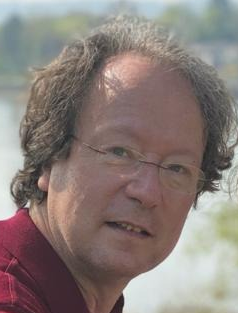
Prof. Dr. Axel Mecklinger is a leading cognitive neuroscientist at Saarland University , specializing in the neurocognition of memory and language through spatiotemporal brain imaging (EEG/MEG/fMRI). His career spans over three decades, with significant contributions to understanding visual working memory , associative recognition , and memory development . Key research areas: Memory binding, ERP subsequent memory effects, novelty detection, and cognitive aging Major grants: DFG Research Groups, Collaborative Research Centers, and international collaborations with the Chinese Academy of Sciences Scientific leadership: Organized conferences, edited journals, and served as speaker for research training groups His recent work explores unitization in memory formation , cross-cultural differences in memory processing , and theta neurofeedback interventions . Awards include the Early Career Award of the German Psychophysiology Society (1992) and the European Federation of Psychophysiology Societies' Federation Prize (1994). Current projects investigate the neural mechanisms of semantic surprisal and memory plasticity in aging populations.
Gerlind Große is a Research Professor for Early Childhood Studies at the University of Applied Sciences Potsdam and leads the interdisciplinary PINA Research Laboratory. She is deeply involved in applied and basic research focused on early childhood education, social-emotional development, and pedagogical architecture. As Head of the Master's programme in Early Childhood Studies, she contributes to academic leadership via roles in the Faculty Council and Senate. Her research bridges developmental psychology and educational practice, with projects like BIKA (Participation in Daycare Everyday Life), NAWII (natural science interest in early education), and INSO (inclusive social space development). She emphasizes emotion regulation, language-emotion interplay, and pedagogical interaction quality, yielding publications on emotion vocabulary, analog/digital play, and teacher-child dynamics. Recent publications highlight trends in educational psychology, cognitive development, and social-emotional learning. Collaborative work with teams at the University of Potsdam, Freie Universität Berlin, and international institutions underscores her interdisciplinary approach. Projects often intersect with public policy, such as the Babyhelfer App for parental mental health support and the BeoKiz initiative for daycare documentation. As head of PINA, she integrates research across domains like inclusive schools, peer interaction, and developmental assessment. Funding from the Federal Ministry for Family Affairs and partnerships with institutions like ASH Berlin and the University of Graz reflect her commitment to practice transfer and systemic educational reform.
Dr. Behrooz Mahmoodi-Bakhtiari is an Associate Professor and Head of the Department of Performing Arts at the University of Tehran, Iran. Born in 1974 in Tehran, he earned his PhD in Linguistics from Allameh Tabatabaee University in 2003. His work bridges linguistics and performing arts, with a focus on Persian language pedagogy and cultural studies. His research encompasses Iranian linguistics, dialectology, teaching Persian as a foreign language, Iranian dramatic literature, and discourse analysis of drama. He employs linguistic and semiotic approaches to analyze drama and film, contributing to interdisciplinary academic dialogues. Mahmoodi-Bakhtiari has published extensively in these areas and contributed to major reference works, including the Encyclopedia Iranica , Encyclopedia of Language and Linguistics , Encyclopedia of Islam (Third Edition) , and The Great Islamic Encyclopedia . His publications span linguistics, medical education, neuroscience, and literature, reflecting a broad interdisciplinary scope. He welcomes international academic collaborations and can be contacted via email for scholarly exchanges.
Dr. Gesa Schaadt is a postdoctoral research scientist at the Clinic of Cognitive Neurology , University of Leipzig, affiliated with the Medical Faculty . Holding a PhD in Psychology from Humboldt-Universität zu Berlin, her work focuses on the neurocognitive mechanisms underlying speech processing and language development in children, particularly those with writing difficulties and dyslexia. She has held research positions at both Humboldt-Universität and the Max Planck Institute for Human Cognitive and Brain Sciences. Education AS-Level (Psychology, Biology, Mathematics, Spanish), King Edward VI Sixth Form College (2003) University Entrance Certificate (Advanced Courses: English, Biology), Rübekamp School (2005) Diploma in Psychology (Cognitive Psychology), Humboldt-Universität zu Berlin (2011) Doctor of Psychology (Dr. rer. nat.), Humboldt-Universität zu Berlin (2016) Research Interests encompass visual-auditory speech integration, developmental language disorders, and the hormonal impacts on language acquisition during 'mini-puberty'. Her work bridges cognitive psychology and clinical neurology, utilizing neuroimaging and behavioral methods. Scientific Awards include fellowship support during her PhD studies at the Max Planck Institute for Human Cognitive and Brain Sciences (2011-2013). Current Work investigates neurocognitive pathways in language development and disorders, combining insights from cognitive psychology and neurology.
Prof. Dr. Marcus Hasselhorn is Acting Director at DIPF | Leibniz Institute for Educational Research and Information and serves as a professor in the Department of Educational Psychology at Goethe University Frankfurt's Department 05 Psychology & Sports Science . His career spans over 25 years of leadership roles in educational research, including geschäftsführender Direktor (2012-2019) at DIPF and speaker of the Hessian LOEWE Center IDeA (2008-2019). Professor of Psychology (2007-present) at DIPF Former Director roles (2012-2019) and ongoing Scientific Board membership Leadership in Leibniz Research Network Bildungspotenziale (2013-2025) Research focuses on the ontogenesis of learning prerequisites , learning disorders , and educational diagnostics , particularly examining individual development and adaptive education for at-risk children. His recent work includes computerized learning assessment systems ( LONDI , iLearn ), language acquisition interventions ( BiSS-Transfer ), and inclusive education frameworks ( INCLASS ). Scientific engagement includes: President of German Psychological Society (2006-2008) Editorial leadership in Zeitschrift für Erziehungswissenschaft (2017-2024) Scientific Board member at IDeA Center (2008-present) Advisory roles in Mercator Institute (2013-present) and Kassel University Council (2010-present) Active in developing diagnostic tools like the Frostig Developmental Test of Visual Perception-3 and leading the BRISE initiative for early childhood education. Current projects address neurobehavioral development ( ReAL ), mental health in schools ( Mentale Gesundheit ), and language acquisition ( TRIO ).
Prof. Dr. Bernhard Schröder holds the full professorship (W3) of German Studies/Linguistics at the University of Duisburg-Essen , where he leads research at the Institute of German Studies (Faculty of Humanities). His academic career includes a Magister in Linguistics from University of Bonn (1991), PhD in Philosophical Linguistics (1997), and Habilitation in Language and Communication Sciences (2003). Education: Magisterabschluss (1991), University of Bonn Dr. phil. (1997), University of Bonn Habilitation (2003), University of Bonn His research bridges computational linguistics with cognitive science, focusing on prosodic analysis in mathematical proof texts, autism spectrum disorder communication studies, and corpus-based linguistic resource development. He directs the Naproche Project for computational proof checking and the AEET institute for early modern text digitization. Key projects include: Mathematical proof text modeling with frame semantics Prosody perception in autism through speech synthesis Corpus portal korpora.org development German-Namibia institute partnership Media-intensive linguistics training modules (MiLCA) He collaborates across institutions like University Hospital Freiburg, TU Dresden, and University of Bonn, with leadership roles in the European Society for Philosophy and Psychology and German Society for Computational Linguistics . His work involves speech synthesis uncertainty modeling, Kant text digitization, and Frege's arithmetic analysis.
MA Silke Lipinski is a Research Associate at the Institute of Psychology , Humboldt University of Berlin, specializing in Clinical Psychology of Social Interaction within the Faculty of Life Sciences . She coordinates the Center for Patient and Public Involvement (PPI) at the German Center for Mental Health (DZPG) and serves as a PPI consultant at the Berlin-Potsdam site. Her work bridges academia and community advocacy, focusing on participatory research models. Institution: Humboldt University of Berlin Department: Department of Psychology Role: Research Associate & PPI Coordinator Contact: silke.lipinski@hu-berlin.de Research Focus: Her work centers on Autism Spectrum Disorders , emphasizing participatory research methods , patient and public involvement (PPI) , and improving mental health care accessibility for autistic adults. She advocates for co-creating healthcare solutions with affected communities. Publications (2019-2024): Silke Lipinski’s research spans autism-focused psychotherapy, PPI integration in mental health systems, and self-help resource design. Her work appears in journals like Der Nervenarzt , Autism in Adulthood , and Journal of Autism and Developmental Disorders , with recent emphasis on interdisciplinary guideline development and national mental health infrastructure. Labs & Teams: She collaborates with the Dziobek-Lab and contributes to the German Center for Mental Health (DZPG), driving stakeholder engagement and translational research initiatives.
Astrid Haase is a Research Fellow in the Department of Educational Psychology at Georg-August-University Göttingen, where she has been employed since 2020. Her research focuses on the psychological foundations of literacy development, with particular emphasis on morphological awareness and its connections to reading and writing skills in both monolingual and multilingual contexts. She actively contributes to the German Psychological Society and the Society for Scientific Studies of Reading. Dr. Haase's educational background includes: M.Sc. in Psychology from Friedrich Schiller University Jena (2014) B.Sc. in Psychology from Friedrich Schiller University Jena (2011) Diploma in Psychology from University of Kent in Canterbury, UK (2010) Her research examines how morphological awareness—the ability to recognize and manipulate word parts—contributes to literacy development across different language contexts. She investigates these processes in both monolingual German speakers and bilingual/multilingual learners, with particular focus on Arabic-German bilingual children. Her work explores the cognitive foundations of literacy acquisition and develops interventions to improve written language skills across diverse learner populations through projects like Morph.B. and ViaS (Reading aloud in all languages), which examines how reading aloud in multiple languages can support literacy development in multilingual settings. Analysis of Dr. Haase's recent publications reveals a strong focus on the intersection of morphological awareness, bilingualism, and literacy development. Her work consistently examines how linguistic knowledge transfers across languages and affects reading and writing skills, with an increasing emphasis on practical applications through interventions like the ViaS project. Her research spans cognitive, developmental, and educational psychology perspectives, creating a comprehensive understanding of literacy acquisition processes across different age groups and language backgrounds. At Georg-August-University Göttingen, Dr. Haase teaches courses including Scientific In-Depth Study: Learning Psychology, Diagnostic Basics and Performance Assessment, and Educational Psychology I. Her teaching integrates her research expertise with practical educational applications, particularly in the areas of learning disorders and educational diagnostics. She is also involved with ZEWIL (Central Scientific Institution for Teacher Education), contributing to teacher training programs.
Professor Angela D. Friederici is a leading cognitive neuroscientist and Director of the Max Planck Institute for Human Cognitive and Brain Sciences in Leipzig, Germany. She holds honorary professorships at the University of Leipzig, University of Potsdam, and Charité University Medicine Berlin. Her work focuses on the neural basis of language processing, syntax, and developmental cognitive neuroscience. Friederici has published over 500 peer-reviewed papers and received numerous accolades, including the APS William James Fellow Award (2023) and the Huttenlocher Award (2021). Education: PhD in Linguistics (1976, University of Bonn), Habilitation in Psychology (1986, Justus Liebig University Giessen). Affiliations: Founding Director of the Max Planck Institute for Human Cognitive and Brain Sciences since 1994. Served as Vice-President of the Max Planck Society (2014–2020). Research Interests: Evolution of language networks, syntax processing, neuroanatomical correlates of language, and developmental trajectories of cognitive abilities. Awards: Includes Leibniz Prize (1997), Wilhelm Wundt Medal (2018), and Gauss Medal (2011). Her recent work explores the neural underpinnings of syntax in humans and primates, with studies on chimpanzee communication and cross-linguistic brain plasticity. Friederici has pioneered methods in neuroimaging and electrophysiology to dissect language networks.
Prof. Dr. Tobias Dörfler is W3 Professor for Educational-Psychological Diagnostics at Heidelberg University of Education, serving as Scientific Director of the university's Test Library. He holds key administrative roles including Vice Dean of the Faculty of Education and Social Sciences, member of the Board of Directors of Heidelberg School of Education, and head of the DiaKom research group. Education: Dipl.-Psych. in Psychology and Human Medicine (minor) - University of Leipzig (1996-1997) Diploma in Biochemistry - University of Leipzig (1996-1997) Dr. phil. - RWTH Aachen University (2004) Research Focus: Professor Dörfler's research centers on educational-psychological diagnostics, with particular emphasis on self-regulated learning, assessment methods, and teacher education. His work integrates cognitive psychology principles with educational practice, focusing on developing diagnostic tools for educational settings and understanding learning processes in both typical and atypical development. Current Projects: He leads the DiaKom research group investigating diagnostic competencies in educational contexts. His research spans multiple domains including mathematical learning difficulties, reading and writing development, and the assessment of teacher professional knowledge through innovative methods like vignette-based assessments and eye-tracking studies. Scientific Contributions: Professor Dörfler has authored numerous publications in high-impact journals including Learning & Instruction , Journal of Educational Psychology , Frontiers in Psychology , and Journal for Mathematics Didactics . His recent work explores the intersection of stress, cognition, and educational assessment, as well as the development of diagnostic tools for language and learning disorders. Advising and Supervision: He currently supervises four doctoral students: Christina Ingelfinger, Nursin Karadeniz, Gina-Maria Trunte, and Irene Zemp. His mentorship extends to numerous former doctoral students and postdocs who have gone on to academic positions at institutions including University of Education Ludwigsburg, University of Tübingen, and University of Education Freiburg. Leadership Roles: Beyond his professorship, Professor Dörfler serves as Scientific Director of the Testothek (university test library), coordinates multiple educational modules, and sits on various university committees including doctoral committees and examination boards. He is actively involved in state-level educational initiatives in Baden-Württemberg.
Anne Jurkutat is a Senior Lecturer and Academic Councillor at the Chair of Pedagogy and Intervention for Language and Communication Impairments, Faculty of Human Sciences, Julius-Maximilians-Universität Würzburg. She manages the speech therapy outpatient clinic, leads voice disorder prevention programs for teachers, and serves as an Equal Opportunities Officer at the Institute for Special Education. PhD in Special Education (2011, University of Würzburg) MA in Special Education – Speech Therapy (2006, University of Würzburg) MSc in Human Communication Sciences (2002, University of Newcastle upon Tyne) Her research focuses on voice disorders in adults, phonological disorders in children, Glut1 deficiency syndrome speech impairments, and orofacial cleft-related language development. She investigates speech motor disorders in neurological conditions, diagnostic tools for childhood speech sound disorders, and interdisciplinary applications of music therapy. Recent publications highlight her work on Glut1-DS speech patterns, standardized diagnostic assessments, and early music-language interaction effects. She has collaborated on studies involving ketogenic diet impacts on cognitive profiles and interdisciplinary approaches to voice hygiene for teachers. 2009: Preis für gute Lehre (Prize for Good Teaching) at Bavarian State Universities Jurkutat supervises admission theses, contributes to state exams in special education, and integrates speech physiology into music pedagogy. She leads the STRONG VOICE MAKES SCHOOL project and applies mindfulness techniques in voice training for educators.
Manfred Herrmann is a Full Professor (C4) and Chair of the Department of Neuropsychology and Behavioral Neurobiology at the University of Bremen, affiliated with the Center for Cognitive Sciences (ZKW). He holds a dual background in medicine (M.D. 1992) and psychology (Ph.D. 1988), with habilitation in 1994. His academic career includes roles as Associate Professor at Magdeburg University and Visiting Professor at Berlin Free University. He leads the high-profile 'Minds.Media.Machines' initiative at Bremen. Education : - Diplom Psychology (1985, Freiburg University) - Ph.D. Psychology (1988, Freiburg University) - M.D. (1992, Freiburg University) - Ph.D. Philosophy (1993, Freiburg University) - Habilitation (1994). Research Interests : Focuses on neuropsychological mechanisms of decision-making, stress impact on cognition, neuroimaging (fMRI/ERP), and neurobiological underpinnings of addiction/obesity. Active in clinical neuropsychology, particularly stroke recovery and neuroprotection strategies. Articles Trends : Recent work examines brain activation patterns in food choice (dorsolateral prefrontal cortex), stress effects on decision-making, and neurobiological correlates of robotic agent design. His studies often bridge clinical and computational neuroscience. Awards : - Honorary Membership, Society for Neuropsychology (2023) - Honorary Research Associate, University of Sydney (1998). Labs & Teams : Directs the Department’s research group, collaborating with international institutions like the DFG Cluster of Excellence 'Languages of Emotion'. Engages in interdisciplinary projects merging cognitive science with robotics (e.g., 'Minds.Media.Machines').
Sascha Hein is a Professor at Freie Universität Berlin, where he leads the research area on Emotional and Social Development in Childhood and Adolescence within the Department of Education and Psychology, specializing in Special Education. He previously served as Assistant Professor at the University of Houston and held postdoctoral positions at Yale University School of Medicine’s Child Study Center. His academic work spans developmental psychology, criminology, and education, with strong international collaborations. Ph.D. in Educational Sciences, Goethe-Universität Frankfurt am Main (2012) M.A. in Educational Science, Goethe-Universität Frankfurt am Main (2008) 1st State Examination in Special Education, Goethe-Universität Frankfurt am Main (2009) His research focuses on juvenile delinquency, emotional development, violence prevention, and the psychosocial development of refugee children. He investigates mental health disparities in justice-involved youth, parenting in marginalized communities, and social-emotional interventions. His work often employs longitudinal and experimental designs, particularly randomized controlled trials (RCTs), and spans diverse cultural contexts including the U.S., Lebanon, Colombia, Zambia, and Saudi Arabia. The 15 most recent publications reflect a strong trend in applied developmental science, particularly in justice-involved youth, early childhood in emergencies, and cross-cultural studies on parenting and cognitive development. Keywords include social-emotional learning, mental health, risk assessment, and intervention effectiveness. Subfields span forensic psychology, educational equity, autism, and psychobiology, highlighting his interdisciplinary approach. Scientific awards include: 2020 Norbert and Charlotte Rieger Award for Scientific Achievement (American Academy of Child and Adolescent Psychiatry) for research on parenting programs in Lebanon. He advises doctoral and early-career researchers and has secured funding for international projects, particularly in low- and middle-income countries. He has led systematic reviews and evaluations for organizations like ChildFund International. He is actively involved in editorial work, having co-edited a special issue on alternatives to RCTs in developmental research. He collaborates with global research teams, including at Yale, focusing on early childhood development, refugee wellbeing, and mental health interventions. He is affiliated with research teams working on: Early Childhood Development in Emergencies (ECDEiE) Social-Emotional Interventions for At-Risk Youth Cross-Cultural Parenting and Child Development Justice-Involved Youth and Mental Health
Hanna Ehlert is a researcher at Leibniz University Hannover, affiliated with both the Institute for Special Education (Faculty of Philosophy) and the Institute for Information Processing (TNT/Phonomatics spin-off). Her work bridges artificial intelligence with speech therapy, focusing on automated diagnostics and dynamic assessment for child language development. PhD in Special Education (2020, Leibniz University Hannover) M.Sc. & B.Sc. in Speech and Language Therapy/Logopedics (HAWK Hildesheim) State-certified speech therapist (Hannover Medical School) Her research integrates: Artificial Intelligence in speech therapy Dynamic Assessment for multilingual children Language development disorders Voice disorder prevention Technology for inclusive education Key research projects include: TALC (Tool for Analyzing Language and Communication) Phonomatics spin-off AI-LIT (AI-supported Literacy Development)
Prof. Dr. Gudrun Schwarzer is a leading researcher in developmental psychology at the Justus Liebig University Giessen , heading the Department of Developmental Psychology . Her work bridges perceptual, motor, and cognitive development in infancy and childhood through rigorous experimental paradigms. Key research themes include infant mental rotation, emotional granularity across lifespan, and cross-cultural developmental differences She leads projects A7 (visuospatial-motor development) and C3 (emotion categorization across populations) Current team includes Dr. Bianca Jovanovic, Dr. Daniela Bahn, PhD students Nikol Tsenkova and Tharanirakshita Asokan Her research investigates how early motor experiences shape visual processing, with groundbreaking work on: Object permanence in infants Emotion-face-word priming effects Developmental language disorder cognition Idiopathic clubfoot developmental impacts Publications span Child Development Perspectives , Frontiers in Psychology , and Journal of Experimental Child Psychology . Awards : Heinz Heckhausen Young Scientist Prize (DGPs). Collaborative networks extend to Max Planck Society, University of California, and cross-cultural studies in Cameroon.