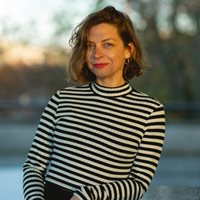
Nora Waitkus is a Professor of Sociology at Heidelberg University's Max-Weber Institute of Sociology and an Assistant Professorial Research Fellow at the London School of Economics' International Inequalities Institute. Her research focuses on socio-economic stratification, wealth inequality, class dynamics, housing inequalities, and economic elites. She holds a PhD in Sociology from the University of Bremen, an M.A. in Political Science from Freie Universität Berlin, and a B.A. in Political Science from the University of Hamburg. Key research areas include: wealth concentration mechanisms, institutional drivers of inequality, cross-national comparative analysis, and media portrayals of economic elites. She employs methods like longitudinal household surveys, media data analysis, and survey experiments. Her recent work emphasizes how redistribution policies moderate income-wealth linkages, the role of inheritance in wealth legitimacy, and gender disparities in wealth accumulation across occupational classes. Awards: RC28 Significant Scholarship Award, Aleida Hagenaars Memorial Award, NWO Talent Grant (VENI) Grants: VENI project on Varieties of Wealth , Wealth Conflicts within Families (TiU Grant) She leads the Chair of Comparative Social Stratification at Heidelberg University and maintains active collaborations with institutions like Tilburg University and the University of Michigan.
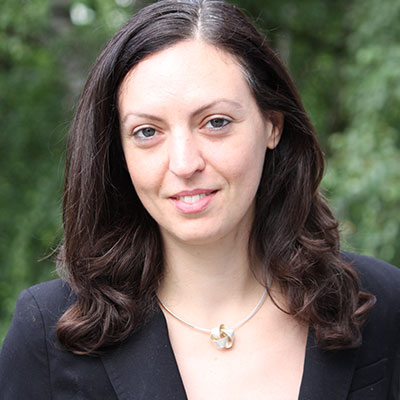
Giovanna Gioli is a Senior Lecturer in Human Geography at Bath Spa University's School of Sciences. She is a co-investigator in the Leverhulme Trust-funded project Digital Climate Futures , exploring decolonial and justice perspectives in climate change adaptation. Her research focuses on political ecology, climate migration, gender equity, and socio-ecological resilience in mountain regions of the Global South, particularly South Asia. PhD in Political Philosophy (University of Parma) MA in Political Philosophy (University of Pisa) MSc in European Studies and Migration (London School of Economics) Her research interests intersect political ecology, climate change adaptation, and the socio-cultural dimensions of migration. She examines how gender, conflict, and environmental hazards shape livelihoods and vulnerability in regions like Pakistan, Nepal, and the Hindu Kush Himalaya. Her work challenges dominant narratives, advocating for justice-oriented approaches to digitalized climate adaptation and decolonizing environmental research frameworks. Gioli has contributed to major projects such as HI-AWARE, analyzing vulnerability in glacier-dependent river basins, and authored commissioned reports for UN Women on migrant workers' socio-economic impacts in Nepal. She also co-edited Water Security across the Gender Divide and Thinking as Anarchists , advancing interdisciplinary debates in environmental humanities and critical theory. Teaching: Directed BSc Global Development and Sustainability at Bath Spa University (2020–2025), module leader for Cities and Environment , and teaches interdisciplinary research methods in environmental humanities. Grants: Leverhulme Trust (Digital Climate Futures, 2023–2026), HI-AWARE (2014–2018), and others addressing environmental migration and vulnerability. She is affiliated with the Research Centre for Environmental Humanities and the Climate, Hazards and Environmental Change Research Cluster at Bath Spa University. Her work bridges philosophical inquiry (e.g., Deleuze, Sartre) with applied research on environmental displacement, emphasizing the need for equitable, community-centered solutions.
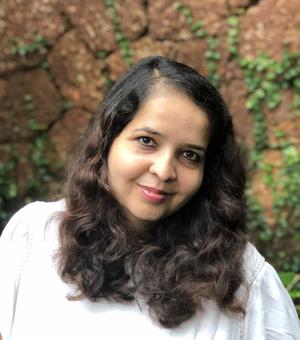
Nayanika Mathur is a Professor of Anthropology and South Asian Studies at the University of Oxford, affiliated with Wolfson College. Educated at the Universities of Delhi and Cambridge, she specializes in the anthropology of politics, development, environment, law, and human-animal relations. Her work combines ethnographic fieldwork in India with critical theoretical interventions. Education: B.A. and M.A. from University of Delhi; MPhil and Ph.D. from University of Cambridge Her research explores bureaucratic practices in South Asia, the Anthropocene, and climate crisis implications. She co-directs the TORCH research network on Climate Crisis Thinking in Humanities and Social Sciences. Her publications analyze developmental states, human-animal conflicts, and knowledge production under ecological collapse. Key themes from her 15 most recent articles include critiques of bureaucratic transparency, climate crisis impacts on human-animal relations, and conspiracy theories in governance. Awards include the Sharon Stephens Prize for her first monograph. Current projects examine technology-government intersections and climate crisis impacts on anthropological knowledge. Scientific Awards: Sharon Stephens Prize (American Ethnological Society) for Paper Tiger She has contributed extensively to public discourse through media outlets like The Times of India and The Conversation, addressing topics such as human-animal conflict, bureaucratic corruption, and climate crisis governance.
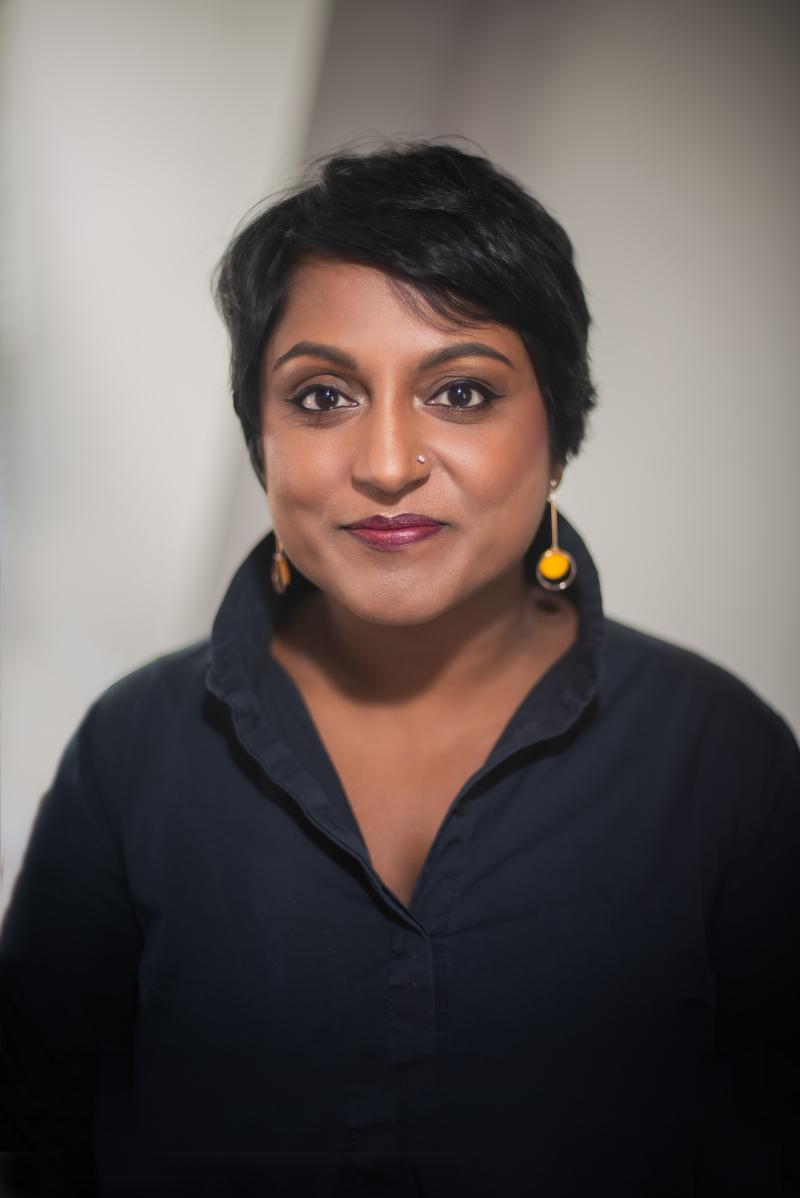
Dr. Meera Sabaratnam is an Associate Professor of International Relations at the University of Oxford and a Tutorial Fellow in Politics at New College. She previously held positions at SOAS University of London, the University of Cambridge, and the London School of Economics (LSE), where she earned her MSc and PhD. Her work focuses on the colonial and postcolonial dimensions of world politics, challenging Eurocentric frameworks in International Relations (IR) theory and practice. Education MA in Philosophy, Politics, and Economics (PPE), Balliol College, University of Oxford MSc and PhD in International Relations, London School of Economics (LSE) Her research examines how imperial histories shape contemporary international order, with a particular focus on structural violence , epistemic justice , and anti-colonial resistance . She is currently writing a book titled Complex Indebtedness , analyzing material and moral debts in the liberal international order. Scientific Awards and Grants : Senior Fellowship of the Higher Education Academy Leverhulme Trust Research Fellowship RF-2021-235 Co-investigator for Czech Science Foundation grant (2025-2027) on postcolonial order Previous funding from the Economic and Social Research Council (ESRC) Dr. Sabaratnam co-founded the Colonial/Postcolonial/Decolonial Working Group at the British International Studies Association (BISA) and serves on editorial boards of International Studies Quarterly , Security Dialogue , and Cambridge Review of International Affairs . Her methodological innovations include contrapuntal analysis and histories from below , particularly in studying the Great War's impact on southeast Africa.
Professor Qing Cao is Professor, Director of Studies, and Director of the Centre for Comparative Modernities at Durham University's School of Modern Languages and Cultures. His research examines Chinese media, communication, and modern intellectual history through three interconnected strands: the role of media in China's modernization, the impact of media language on social perceptions, and mutual China-West representations shaping identity politics. His research interests encompass China's modern intellectual history, Chinese politics, mass media dynamics, Western reporting on China, Chinese linguistics, and translation studies. Current projects include a book on Chinese state media's construction of alternative modernity and editorial work for the Routledge Research Encyclopaedia on Chinese Studies. Previously funded by AHRC and British Academy, his work explores the discursive transformation of Chinese society. Professor Cao's publications demonstrate sustained focus on discursive constructions of modernity and identity across historical periods, with recent work examining late Qing intellectual transformations through linguistic analysis. His supervision includes PhD students researching Western media representations of China, diplomatic language, and gender discourses in Chinese newspapers.
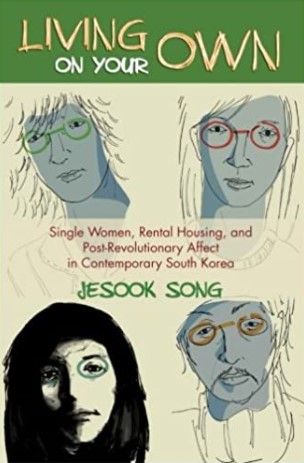
Jesook Song is a Professor at the Department of Anthropology, University of Toronto. She serves as Department Chair and Graduate Chair (Tri-Campus), focusing on sociocultural anthropology, contemporary urban transformation, and welfare issues including homelessness, youth unemployment, and single women's housing in East Asia, particularly South Korea. PhD in Cultural Anthropology (2003), University of Illinois, Urbana-Champaign B.A. in Education Science, Yonsei University Her research examines neoliberal capitalism's impact on welfare systems, labor practices, and gendered experiences in urban South Korea. Key themes include: Financial techniques in everyday life Post-development welfare states Gendered care work in public policy Homelessness and urban marginality Single women's spatial autonomy Recent publications analyze pandemic-era welfare policies, financial subjectivity, and urban marginality. Her books include Living on Your Own (2014) and On the Margins of Urban South Korea (2019). American Anthropological Association Sylvia H. Forman Prize (2002) Academy of Korean Studies Distinguished Paper Award (2010) She has advised graduate students Sophia Jaworski, Celeste Pang, and Kristina Alda, while securing multiple grants from SSHRC, Korea Foundation, and Academy of Korean Studies for research on financial techniques in everyday life and welfare systems.
Suzy Kim is an Associate Professor of Korean History in the Department of Asian Languages and Cultures at Rutgers University–New Brunswick, within the School of Arts and Sciences. Her research focuses on modern Korean history, particularly North Korea, with interdisciplinary engagement in gender studies, social and cultural history, oral history, and social theory. She is the author of two major books and serves as senior editor of positions: asia critique and on the editorial boards of Journal of Korean Studies and Yŏsŏng kwa yŏksa (Women and History). She is also an active public scholar and human rights advocate. Ph.D., University of Chicago M.A., University of Chicago B.A., University of California, Los Angeles Her research interests span modern Korean history, the global Cold War, transnational feminisms, gender and sexuality, comparative revolutions, visual cultures, and environmental humanities. She critically examines North Korean society through the lenses of everyday life, mass mobilization, and gendered subject formation. Her work bridges academic rigor with public advocacy, emphasizing social justice and peace in Korea. The 15 most recent publications reflect a sustained scholarly engagement with North Korea’s social and cultural history, particularly focusing on gender, revolution, memory, and transnational connections. Her articles appear in leading journals such as Gender & History , Comparative Studies in Society and History , and positions: asia critique . Thematically, her work explores the intersections of state ideology, personal agency, and global Cold War dynamics, often challenging dominant narratives about North Korea through nuanced historical analysis. Fulbright, 2020-2021 National Endowment for the Humanities, 2016 James B. Palais Book Prize, 2015 Kim has advised and mentored students in Korean studies, gender studies, and history, though specific names are not listed. She has received significant research funding, including from the Fulbright Program and NEH. She previously served as a visiting professor at Boston College and has worked with human rights organizations such as Amnesty International USA, Truth Foundation, and Women Cross DMZ. Her public scholarship emphasizes dialogue, peacebuilding, and ethical representation of North Korea. She is actively involved in academic communities, serving on professional boards including the American Historical Association, Association for Asian Studies, and National Women’s Studies Association. Her editorial leadership in positions: asia critique and other journals underscores her role in shaping critical discourse in Asian studies. She teaches courses such as Global East Asia, Gender and Social Change in Korea, and North Korea in the Socialist and Post-Socialist Worlds.
Gigi Luk is Professor and Program Director for M.Ed. Concentrations in Educational Psychology and Human Development within the Department of Educational and Counselling Psychology at McGill University's Faculty of Education. Her research program investigates the cognitive consequences of bilingualism across the lifespan, bridging scientific understanding with practical educational applications to cultivate inclusive environments for linguistically diverse learners. Her educational background includes: Ph.D. in Psychology (Developmental and Cognitive Processes) from York University M.A. in Psychology (Developmental and Cognitive Processes) from York University Specialized Honors B.A. in Psychology from York University Dr. Luk's research centers on bilingualism's cognitive and neural mechanisms, with three interconnected thrusts: (1) characterizing bilingualism beyond English proficiency in communities, (2) examining cognitive skills supporting language/literacy outcomes, and (3) establishing neural correlates of learning in diverse language learners. Her work integrates cognitive neuroscience with educational practice to address real-world challenges in multilingual classrooms, emphasizing culturally responsive pedagogy that respects linguistic diversity. This dual focus on basic science and practical implementation defines her contributions to understanding how bilingual experiences shape cognitive development and educational equity. Analysis of her 15 most recent publications (2022-2024) reveals consistent interdisciplinary investigation of bilingualism through cognitive, neural, and sociocultural lenses. Her work spans educational psychology, cognitive neuroscience, and sociolinguistics, with growing emphasis on neural correlates of language processing, methodological rigor in bilingual assessment, and equity implications of bilingual research. Key trends include examination of multilingual children's cognitive development, critical reframing of the "bilingual advantage" discourse, and innovative approaches like music-based literacy interventions. Scientific recognition includes: National Academy of Education/Spencer Postdoctoral Fellowship (2013-2014) Dr. Luk actively supervises graduate students (accepting new students for 2025-2026) and secures competitive research funding, currently supported by the Natural Sciences and Engineering Research Council of Canada (NSERC) and Fonds de recherche Société et culture (FRQSC). Her grant portfolio demonstrates sustained commitment to advancing understanding of bilingual cognition and its educational applications through rigorous empirical work. She directs the Bilingualism.Experience.Education Lab, which functions as an interdisciplinary hub for investigating how language experiences shape cognitive development and educational outcomes. The lab employs diverse methodologies including neuroimaging, behavioral experiments, and classroom-based research to address questions about bilingualism's cognitive effects and practical implications for educators.
Richard A. Shweder is the Harold H. Swift Distinguished Service Professor of Human Development at the University of Chicago, where he has been since 1972. He is a leading figure in cultural psychology and anthropological research, focusing on moral reasoning, cultural migration, and multiculturalism. His work critiques Western liberal assumptions, emphasizing robust cultural pluralism and the complexities of cross-cultural ethical conflicts. Shweder's research spans decades in Bhubaneswar, India, examining family practices, gender roles, and moral foundations. Education: Ph.D. in Social Anthropology from Harvard University (1972). Notable visiting roles include fellowships at the Center for Advanced Study in the Behavioral Sciences, Stanford University, and the Institute for Advanced Study in Berlin. Research interests include cultural psychology, moral pluralism, and the challenges of multiculturalism in liberal democracies. His books, such as Thinking Through Cultures and Why Do Men Barbecue? , explore how cultural contexts shape thought and emotion. He critiques global human rights campaigns, particularly regarding female genital surgeries, advocating for nuanced cultural understanding. Scientific awards include the Guggenheim Fellowship (1985), Carnegie Scholar (2002), and the Lifetime Achievement Award from the Society for Psychological Anthropology (2016). He has served as President of the Society for Psychological Anthropology and co-chaired projects on law and culture. Recent work focuses on the moral challenges of cultural migration and the limits of tolerance in Western societies. His 2020 lecture on moral absolutes and 2023 publications on gender equality in religious practices highlight ongoing debates in cultural anthropology. Shweder actively engages in public discourse through podcasts, interviews, and critiques of academic politics, such as opposing academic boycotts of Israeli institutions. His academic roles include teaching courses like Moral Psychology and Comparative Ethics and When Cultures Collide . He advises students on cultural migration and ethical pluralism, with notable contributions to encyclopedic references like The Child: An Encyclopedic Companion .
Sylvain Wagnon is a Professor of Educational Sciences at the Faculty of Education, University of Montpellier, where he serves as head of the Cedrhe (Center for the History of Education UM) and is a member of the Lirdef research unit. Holding both agrégation and a doctorate in history, his academic work bridges historical scholarship with contemporary educational challenges. His research focuses on the history of alternative and libertarian education pedagogies, the evolution of school practices and tools, and the current challenges facing non-traditional educational approaches. Wagnon examines how historical educational practices inform contemporary debates, particularly regarding material culture in schools, children's rights in public spaces, and the relationship between urban environments and educational experiences. Wagnon's recent publications reveal a consistent thematic thread exploring how physical objects and spaces shape educational experiences. His work on school bags as cultural artifacts, anarchist educational figures like Spirus Gay, and the 'no kids' movement demonstrates his commitment to understanding education through historical and material lenses. His research consistently connects historical educational practices to contemporary policy debates, particularly regarding children's autonomy and rights in public spaces. His scholarly contributions address critical questions about how educational spaces can be reimagined to better serve children's developmental needs while respecting their rights as citizens. Through examining historical precedents, Wagnon provides valuable perspective on current debates about outdoor education, school gardens, urban design for children, and alternative pedagogical approaches. Wagnon actively contributes to public discourse through publications in platforms like The Conversation, where he translates academic research into accessible commentary on pressing educational issues. His work bridges academic scholarship with practical implications for educators, policymakers, and parents seeking to create more child-friendly educational environments.
Svend Brinkmann is a Professor of General Psychology and Qualitative Methods at Aalborg University's Faculty of Humanities and Social Sciences , where he has worked since 2009. His research and teaching focus on fundamental problems in psychology , philosophy of psychology , qualitative research methodology , and cultural analysis . Department of Communication and Psychology Center for Cultural Psychology Situated Psychology research group Academic Qualifications PhD in Psychology (2006) MSc in Psychology (2002) BA in Philosophy (1999) Research Themes include psychiatric diagnoses' societal implications , qualitative interviewing , and happiness studies , with methodological expertise in discourse analysis and cultural psychology . Scientific Awards : Søren Gyldendal-prisen (2020) Årets humanist (2018) Karin Michaëlis Pris (2017) Hadsten Højskoles Elevpris (2016) Gyldendals formidlingspris (2015) PhD Supervision includes 15 students since 2007, with active supervision in 2025 for Jonas Norgaard Mortensen and Sebastian Tobias-Renstrøm . His work spans trauma care , stress research , and diagnostic cultures .
Yasser Arafat Payne is a Professor of Sociology & Criminal Justice at the University of Delaware's College of Arts & Sciences, with a joint appointment as an associate professor in the Department of Africana Studies. His academic work focuses on street ethnographic research examining policing and reentry, economic well-being and educational inequality, and gun violence with street-identified Black Americans through the innovative Street Participatory Action Research (Street PAR) framework. Payne earned his Ph.D. and M.Phil. from the City University of New York Graduate Center, an M.A. from Seton Hall University, and a B.A. from Wagner College. His educational background has informed his distinctive approach to studying marginalized communities through the lens of those who live within them. Payne's research program challenges dominant arguments in the literature by asserting that all of the streets of Black and Brown America are resilient. His work focuses on racial identity, street identity, school violence, physical violence, Gangster Rap music and culture, and the methodology of street participatory action research. He has developed Street PAR as a framework that includes three essential features: research orientation, intervention for Street PAR members, and a vehicle for action and activism in local communities. His recent publications reveal a consistent focus on violence exposure, police-community relations, reentry challenges, and resilience among street-identified Black populations. Payne's work spans multiple disciplines including criminology, sociology, public health, and urban studies, with particular attention to the intersection of structural inequality and individual experience. Payne actively engages with media on issues of policing and structural violence, as evidenced by his July 2024 commentary on stop-and-frisk policies for NBC News and his August 2023 presentation to the Wilmington Reparations Task Force. He co-authored the book 'Murder Town, USA: Homicide, Structural Violence and Activism in Wilmington' (Rutgers University Press, 2023), which has become a key resource for understanding gun violence in urban communities. As an educator, Payne teaches specialized courses on street ethnography, Gangster Rap Music and Culture, Racial Stratification, and core courses on Race, Class & Gender and Race, Gender & Poverty. His teaching philosophy centers on bringing the lived experiences of street-identified populations into academic discourse through innovative pedagogical approaches. Payne leads a research lab focused on Street PAR methodology, training community members to document experiences of street-identified Black populations through surveys, interviews, and dual interviews. His approach emphasizes community ownership of research and the transformative potential of participatory methodologies in addressing structural violence.
Dr. Olga Smoliak is an Associate Professor in the Department of Family Relations & Applied Nutrition at the University of Guelph, part of the College of Social & Applied Human Sciences. She holds dual roles as a clinical/counselling psychologist and family therapist, with expertise in discursive and poststructuralist approaches to psychotherapy. Her research critiques the apolitical framing of therapy, emphasizing its role in reinforcing societal norms around gender, kinship, and inequality. She advocates for therapy’s potential as a tool for social change, particularly in addressing structural inequities. Research interests include critical discursive psychology, feminist therapy, and the intersection of neoliberalism with mental health practices. Dr. Smoliak’s work spans qualitative methodologies, focusing on how language and power shape therapeutic interactions. She is actively involved in training future clinicians through graduate supervision in the FRHD and SOPR programs, emphasizing social justice-oriented practices. Her recent publications (2022–2025) reflect a focus on gender dynamics in therapy, emotion regulation, and the sociopolitical dimensions of mental health. Key themes include the critique of neoliberal influences on selfhood, stigma around self-injury, and redefining collaborative practices in couples’ therapy. While no specific awards are listed, her work aligns with interdisciplinary efforts to democratize mental health discourse. Dr. Smoliak’s advising emphasizes graduate training in discursive research methods, with a commitment to ethical, client-centered approaches. Her office is located in Macdonald Stewart Hall, Room 228, and she can be reached at osmoliak@uoguelph.ca for academic inquiries.
Juanita Elias is a Professor of International Political Economy at the University of Warwick's School of Politics and International Studies (PAIS). She previously held academic roles at Griffith University, Adelaide, Manchester, and Cardiff Universities. Her leadership roles include interim Head of Department (2018–19) and Deputy Head/Director of Equality, Diversity & Inclusion (2022–24). She is an editor of the Review of International Political Economy and co-founder of the I-PEEL teaching platform. She serves as Vice Chair of the British International Studies Association (BISA). Elias' research focuses on gendered political economy, global household dynamics, Southeast Asian development, and migrant labor. Key projects include analyzing multinational corporations' gender impacts, domestic work regulation, and corporate codes of conduct. Her work has been supported by grants from Innovate UK, British Council, ESRC, and ARC. Major publications include Gender Politics and the Pursuit of Competitiveness in Malaysia (2020) and the I-PEEL: International Political Economy of Everyday Life textbook (2022, OUP). Her 2024 Innovate UK-funded project with Reall aims to create gender-accountable affordable housing tools. Recent outputs include analyses of environmental crisis impacts on everyday lives and gendered vulnerabilities in austerity Britain. She co-leads the 'Global Groupwork' teaching initiative with Monash University, fostering cross-institutional student collaboration. Awards: 2022 ISA Online Media Award, Newton Prize shortlist (2019) Grants: Innovate UK, ESRC, ARC, British Council Labs/Teams: Warwick's PAIS Research Group, Monash-Warwick Alliance Education Fund
Professor Patricia Lewis is a prominent academic in Management at the University of Kent's Kent Business School, where she holds the title of Professor of Management and serves as Director of Graduate Studies Research. Her career includes leadership roles such as Director of Learning & Teaching (2012-2015), Director of Student Experience (2012-2013), and Programme Director for BBA and related degrees (2007-2011). She previously led as Joint-Editor-in-Chief of Gender, Work & Organization (2018-2020) and contributed to editorial boards of journals like Organization and Gender in Management . Lewis is a leading scholar in postfeminist theory, gender studies, and entrepreneurship, with over 40 peer-reviewed articles and multiple book co-editions, including Postfeminism and Organization (2018). Her research focuses on gendered identities, leadership, emotion work, and organizational dynamics, often centering postfeminist critiques and their implications for modern institutions. Education: While specific academic credentials aren't detailed, her extensive editorial and research roles indicate advanced qualifications in management and gender studies. Her research interests span postfeminist theory, gendered inclusion, entrepreneurial identity, and management education. Key contributions include exploring hybrid mumpreneur identities, postfeminist leadership, and the reconfiguration of gender norms in organizations. Lewis has secured significant grants (e.g., Leverhulme £53k, ESRC £26k) and received prestigious awards, including multiple Best Paper Awards from the British Academy of Management and recognition for her seminal 2006 paper on female entrepreneurs. Professional Contributions: Lewis co-edits special journal issues, organizes conferences, and actively participates in academic networks like EGOS and BAM. Her teaching spans management, diversity, and qualitative methodologies at undergraduate and doctoral levels. Awards: Classic in Gender Studies (Google Scholar, 2006 paper) Multiple Best Developmental Paper Awards (2006, 2013, 2019, 2020) Best Reviewer Award (British Academy of Management 2020) Her advisory work includes roles like Institute of Directors (Kent) Education Ambassador (2020-2021) and contributions to policy consultations like the Women’s Business Council. Lewis supervises doctoral research on gendered phenomena in diverse contexts (e.g., Pakistan’s 'doctor bride' phenomenon, Thai bureaucracy, UK leadership motivation). Her interdisciplinary approach integrates spatial studies, emotion work, and intersectionality to address contemporary organizational challenges.