
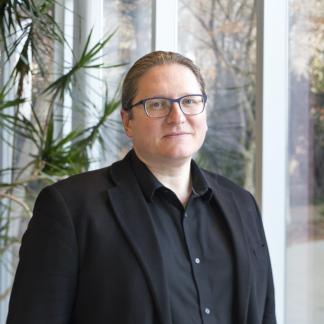
Joseph Kable is the Jean-Marie Kneeley President's Distinguished Professor of Psychology at the University of Pennsylvania's Department of Psychology within the School of Arts and Sciences. His research integrates experimental economics, cognitive neuroscience, and personality psychology to investigate the neural and psychological mechanisms underlying decision-making. He explores how subjective value is represented in the brain, deviations from rational choice theory, and individual differences in decision processes. His lab employs fMRI and interdisciplinary methods to study topics like risk tolerance, impulsivity, and neural plasticity. Education: BS in Chemistry from Emory University (undergraduate), PhD in Neuroscience from the University of Pennsylvania (doctoral). Research focuses on behavioral and cognitive neuroscience mechanisms of choice, including studies on temporal predictions, value signals, and brain structure-function relationships. His recent work examines how neural markers correlate with decision-making variability across individuals. He currently advises graduate students in Psychology and has post-doctoral researchers in his lab. Associated with MindCORE, Penn's hub for integrative mind research. Lab activities include undergraduate research programs and active studies exploring decision neuroscience and neuroeconomics.
جستجوی استاد راهنمای دانشگاهی
برای مسیر پژوهشیتان، استاد راهنما، استاد دانشگاه و پژوهشگر مناسب را پیدا کنید و با آنها ارتباط بگیرید.
نمایش ۱-۱۵ از ۱٬۱۶۵ استاد راهنما
اطلاعات پروفایلها از صفحات عمومی دانشگاهها گرفته شده و ممکن است بهروز نباشد.
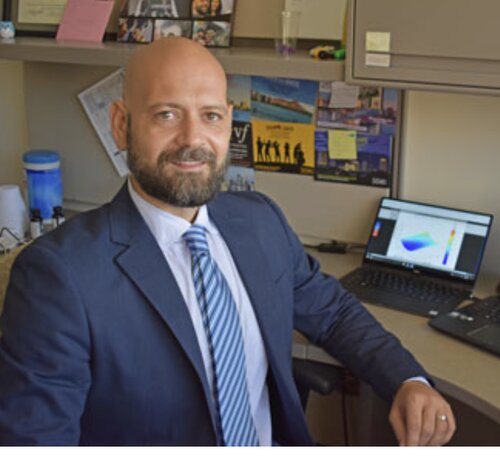
Pasquale Bottalico serves as Associate Professor in the Department of Speech and Hearing Science at the University of Illinois, with dual appointments as Associate Professor at the Center for Latin American and Caribbean Studies and Affiliate Faculty in the School of Music. His unique interdisciplinary profile bridges engineering, music performance, and speech science, reflecting his dual academic training and professional artistry. His educational foundation includes: Bachelor's in Telecommunications Engineering from Univeristà Mediterranea di Reggio Calabria, Italy Concurrent Opera Singing degree from F. Cilea Music Academy, Reggio Calabria Master's in Telecommunications Engineering from Politecnico di Torino, Italy Ph.D. in Metrology specializing in acoustics measurement uncertainty and classroom acoustics Dr. Bottalico's research centers on vocal load quantification and professional voice techniques , with significant contributions to understanding vocal fatigue in teachers and singers. His work spans Speech Intelligibility in educational environments, Room Acoustics for performance and learning spaces, and Musical Acoustics of historical vocal styles. A distinctive thread throughout his research examines how acoustic conditions modulate voice production and perception, increasingly incorporating virtual reality and bone conduction technologies for innovative assessment and intervention approaches. His Colombian vocal health study demonstrates cross-cultural applications of his work. Analysis of his 2023-2025 publications reveals three dominant research trajectories: (1) The impact of noise and dysphonia on children's speech processing in educational settings, using multimodal assessment including EEG; (2) Virtual reality applications for voice production research and therapeutic intervention; (3) Cross-cultural validation of vocal fatigue metrics and development of biofeedback systems. His work consistently bridges engineering precision with clinical applicability, particularly for professional voice users in challenging acoustic environments. No scientific awards were documented in the available information. While specific advising relationships aren't detailed, his research collaborations span international institutions including Colombian and Italian universities, suggesting graduate mentorship in interdisciplinary projects. No grant information was provided, though his systematic reviews and cross-cultural studies imply externally funded research activities. Though no dedicated laboratory is specified, his virtual reality voice studies and acoustic parameter assessments suggest affiliations with audio engineering facilities and voice clinics, likely through the Speech and Hearing Science department's research infrastructure.
John Malesمشاهده پروفایل
دانشگاهی
Dr. John Males is a Clinical Senior Lecturer at the University of Sydney and Director of Ophthalmology Training at Sydney Eye Hospital. His clinical and research expertise focuses on corneal surgery, cataract surgery, and laser vision correction. He pioneered Descemet's Stripping Automated Endothelial Keratoplasty (DSAEK) in Australia and is conducting clinical trials on Collagen Cross-Linking for keratoconus. His research spans corneal transplantation techniques, refractive error management, and ocular surface regeneration. Dr. Males holds roles as a consultant at major hospitals and serves as an examiner for the Royal Australian & New Zealand College of Ophthalmologists. Research interests include corneal biomechanics, surgical innovation for keratoconus, and outcomes analysis of cross-linking therapies. He leads studies on corneal densitometry, dry eye correlations, and long-term efficacy of surgical interventions. His work bridges clinical practice with translational research in regenerative medicine and ocular surface engineering. Publications span over 20 years, emphasizing corneal transplantation advancements, keratoconus management, and surgical complication resolution. His contributions to global consensus guidelines for endothelial keratoplasty highlight leadership in standardizing surgical practices.
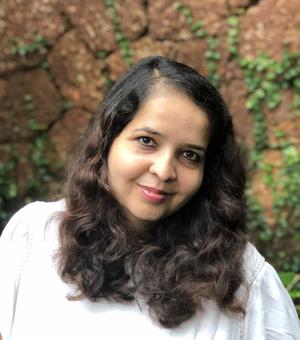
Nayanika Mathur is a Professor of Anthropology and South Asian Studies at the University of Oxford, affiliated with Wolfson College. Educated at the Universities of Delhi and Cambridge, she specializes in the anthropology of politics, development, environment, law, and human-animal relations. Her work combines ethnographic fieldwork in India with critical theoretical interventions. Education: B.A. and M.A. from University of Delhi; MPhil and Ph.D. from University of Cambridge Her research explores bureaucratic practices in South Asia, the Anthropocene, and climate crisis implications. She co-directs the TORCH research network on Climate Crisis Thinking in Humanities and Social Sciences. Her publications analyze developmental states, human-animal conflicts, and knowledge production under ecological collapse. Key themes from her 15 most recent articles include critiques of bureaucratic transparency, climate crisis impacts on human-animal relations, and conspiracy theories in governance. Awards include the Sharon Stephens Prize for her first monograph. Current projects examine technology-government intersections and climate crisis impacts on anthropological knowledge. Scientific Awards: Sharon Stephens Prize (American Ethnological Society) for Paper Tiger She has contributed extensively to public discourse through media outlets like The Times of India and The Conversation, addressing topics such as human-animal conflict, bureaucratic corruption, and climate crisis governance.

- Survival analysis
- Clinical trials
- Cancer research
- +۴ مورد دیگر
Pingfu Fu, PhD, is a Professor in the Department of Population and Quantitative Health Sciences at Case Western Reserve University's School of Medicine. He is also a member of the Developmental Therapeutics Program at the Case Comprehensive Cancer Center. His expertise spans biostatistics, mathematics, and computer science, with a focus on cancer research and HIV/AIDS. Dr. Fu advises researchers on study design and statistical methodology for clinical and pre-clinical studies. He teaches courses in survival data analysis and clinical trials, and was recognized as 'Professor of the Year' in 2010 by the Department of Epidemiology and Biostatistics. Education: PhD in Biostatistics (Case Western Reserve University, 2001), MS in Statistics (Case Western Reserve University, 1996), MS in Mathematics (Xiangtan University, 1988), and BS in Mathematics (Jiangxi Normal University, 1984). His research interests include survival analysis, tree-based methods, clinical trials, and statistical applications in medical research. He has co-authored numerous peer-reviewed articles, focusing on cancer disparities, radiomics, and computational pathology. Professional memberships include the American Statistical Association, American Mathematical Society, and American Cancer Society. Dr. Fu holds editorial roles at Reviews on Recent Clinical Trials , Journal of Clinical Oncology , and Journal of the National Cancer Center . His work has addressed mathematical challenges in stochastic processes and resolved statistical issues in study design and tree-based models. Notable contributions include developing risk prediction models for cancer outcomes and advancing interdisciplinary collaborations across oncology, biostatistics, and computer science. His lab focuses on integrating computational methods with clinical data to improve patient outcomes.
Laurie Fordمشاهده پروفایل
دانشیار
- Family-School-Community Partnerships and Relationships
- Early Childhood Mental Health
- Assessment with Young Children
- +۷ مورد دیگر
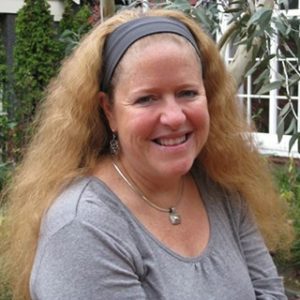
Laurie Ford is an Associate Professor at the University of British Columbia , affiliated with the Faculty of Education and the Department of Educational and Counselling Psychology, and Special Education . She serves as the SACP Admissions Coordinator , Director of Training , and Director of Early Childhood Education . Her work bridges Child and Adolescent Development with Family-School-Community Partnerships , emphasizing culturally responsive practices. Dr. Ford’s research focuses on Early Childhood Assessment , Multi-disciplinary Teams , and Supporting Vulnerable Populations , including immigrants, refugees, and children with chronic health conditions like IBD. She leads the Children, Families, and Communities Lab , where students explore topics such as Cognitive Assessment , Family Engagement , and Community-level Child Development . Her recent publications analyze psychometric tools in diverse populations, assessment feedback communication, and community factors influencing child development. She has presented nationally and internationally on topics like Indigenous Family Engagement and School Belonging for Refugee Students . Dr. Ford has supervised over 75 graduate theses and collaborates with global institutions, including the University of Melbourne on the KIDS in Communities Study (KICS) . Current projects examine school belonging for immigrant/refugee families , supporting children with inflammatory bowel disease , and cross-national assessment norms . She advocates for collaborative approaches to address Early Childhood Mental Health and Multi-cultural Considerations in educational environments.
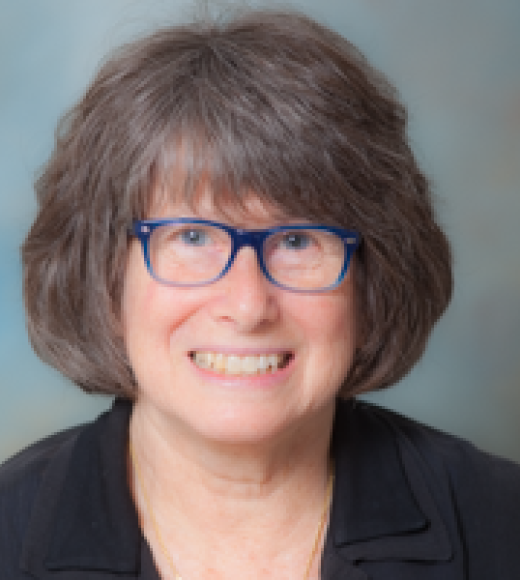
Professor Gail S. Goodman, a Distinguished Professor of Psychology at the University of California, Davis, is a pioneering scholar in developmental psychology and psychology-law intersections. She directs the Center for Public Policy Research and has established foundational research in children's eyewitness memory and child victims' experiences in legal contexts. Ph.D., M.A., B.A. in Psychology from the University of California, Los Angeles Her research focuses on memory development and children's roles as witnesses, examining trauma-memory relationships, attachment influences, emotional regulation, and forensic interview techniques. Her work has informed legal policies and been cited in U.S. Supreme Court decisions. Key trends in her recent publications include trauma's impact on memory accuracy, false memory balancing, and courtroom dynamics for child witnesses. Her studies span developmental psychology, forensic science, and trauma recovery. 2017 APSAC Handbook chapter on child interview techniques 2017 American Psychologist review on trauma memory and counseling 2016 chapters on memory development and trauma psychopathology Professor Goodman has received numerous accolades, including APA's Urie Bronfenbrenner Award, APS's James McKeen Cattell Award, and an Honorary Doctorate from the University of Oslo. She has also earned teaching and mentoring awards at UC Davis. As Director of UC Davis's Center for Public Policy Research, she consults with global agencies on child maltreatment policies and leads interdisciplinary teams studying memory, trauma, and legal systems. Her work bridges academic research with practical applications in law and child welfare.
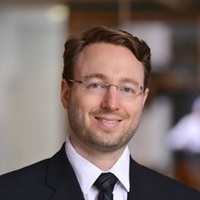
Philippe Campeauمشاهده پروفایل
دانشیار بالینی
- Medical Genetics
- Bone Dysplasias
- Skeletal Dysplasias
- +۱۲ مورد دیگر
Dr. Philippe Campeau is an Associate Clinical Professor in the Department of Pediatrics at the Faculty of Medicine, Université de Montréal. He is affiliated with CHU Sainte-Justine, a major pediatric hospital in Montreal, Quebec, where he works in the Medical Genetics Service. His clinical and research work focuses on genetic disorders affecting children, particularly in the areas of skeletal development and neurogenetics. Dr. Campeau obtained his Doctorate in Medicine from Laval University in Quebec (1998-2003) followed by specialty training in medical genetics at McGill University (2003-2008). He completed postdoctoral training at Baylor College of Medicine (2008-2013), which further developed his expertise in genetic research methodologies. His primary research interests include bone dysplasias , skeletal dysplasias , epilepsy , and epigenetic diseases . Dr. Campeau's laboratory identifies disease-causing genes, deciphers disease pathophysiology, and works to improve the management of children affected by these conditions. His work encompasses exome analysis , functional studies with cell lines and mouse models , and investigations into urea cycle abnormalities . He has made significant contributions to understanding genetic causes of conditions such as Genitopatellar syndrome (KAT6B), osteopetrosis, dysosteosclerosis (SLC29A3), osteogenesis imperfecta, early-onset osteoporosis (WNT1), Yunis-Varón syndrome (FIG4), and DOORS syndrome (TBC1D24). Dr. Campeau's publication record demonstrates a strong trajectory in medical genetics research, with numerous high-impact publications spanning from fundamental genetic discovery to translational research. His work spans skeletal disorders, neurodevelopmental conditions, and epigenetic mechanisms. Recent publications indicate an expanding focus on chromatin modifiers, DNA methylation patterns, and spliceosome function in neurodevelopmental conditions, reflecting the evolution of his research interests toward more complex molecular mechanisms. Dr. Campeau has received several research grants in recent years (6 starting in 2014) from organizations including the Fonds de la recherche en santé du Québec, Canadian Institutes of Health Research, and Fondation Grand Défi Pierre Lavoie. While specific students are not mentioned in the available information, as a clinical professor, he mentors medical students, residents, and research trainees in the Department of Pediatrics. His research is conducted as part of the 'Musculoskeletal Diseases and Rehabilitation' axis at CHU Sainte-Justine Research Center, where he collaborates with international research teams to identify disease-causing genes and develop better management strategies for children with genetic disorders.

Philip Booneمشاهده پروفایل
دانشگاهی
- Medical Genetics
- Genomics
- Pediatric Genetics
- +۴ مورد دیگر
Philip Boone, MD, PhD, is an Attending Physician in the Division of Genetics and Genomics at Boston Children's Hospital and an Instructor of Pediatrics at Harvard Medical School. He specializes in medical genetics with particular expertise in rare disorders, medical mysteries, deletion and duplication syndromes, and Cornelia de Lange syndrome. Dr. Boone sees patients at Boston Children's Brookline location (2 Brookline Place, 7th Floor) and provides comprehensive genetic care including diagnostics, counseling, and individualized management. Stanford University (Undergraduate, 2006) Baylor College of Medicine (Graduate & Medical School, 2013-2014) Boston Combined Residency Program (Internship & Residency, 2016-2020) Harvard Medical School Genetics Training Program (Fellowship, 2020) Dr. Boone's research focuses on neurodevelopmental disorders, chromatin regulation, and genetic diagnostics. His work spans from fundamental genetic mechanisms to clinical applications, with particular emphasis on cohesinopathies including Cornelia de Lange syndrome. He has contributed significantly to understanding genetic variants associated with growth disorders, developmental features, and structural chromosomal abnormalities. His research combines advanced genomic technologies with clinical insights to improve diagnosis and management of rare genetic conditions. Analysis of Dr. Boone's publication record reveals a strong focus on medical genetics with emphasis on neurodevelopmental disorders, chromatin regulation, and genetic diagnostics. His work spans basic research on gene function and regulation to clinical applications in rare disease diagnosis. A notable trend is his investigation of cohesin complex disorders, particularly SMC3 variants and their relationship to Cornelia de Lange syndrome. His publications demonstrate expertise in both traditional genetic analysis and cutting-edge genomic technologies including long-read sequencing and telomere-to-telomere assembly. Dr. Boone actively contributes to medical education through publications on genetic diagnostics and distance learning resources for medical genetics. He has co-authored educational materials that help advance the field's knowledge base and training capabilities. As an attending physician in the Division of Genetics and Genomics at Boston Children's Hospital and a research fellow in the Center for Genomic Medicine at Massachusetts General Hospital, Dr. Boone works within one of the largest pediatric genetics practices in the country. The division includes over 30 board-certified clinical geneticists, genetic counselors, dieticians, and nursing staff who provide comprehensive care for patients with both common and extremely rare genetic conditions.
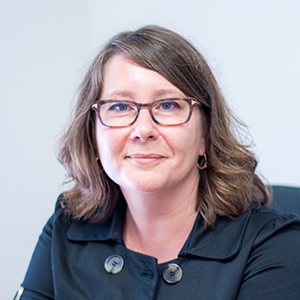
Inna Fishmanمشاهده پروفایل
دانشیار
Inna Fishman, Ph.D., is a Research Associate Professor at San Diego State University's Department of Psychology within the College of Sciences. Her research investigates brain network organization in autism spectrum disorder (ASD) using multimodal MRI techniques, focusing on developmental trajectories from toddlerhood to adulthood. She directs studies on sensory processing, socioeconomic influences, and neural connectivity patterns in ASD. Research Focus: Dr. Fishman's work bridges social neuroscience and clinical neuropsychology, examining: Early biomarkers of ASD via functional/diffusion MRI Impact of bilingualism and socioeconomic factors on neurodevelopment Sleep disorders and sensory sensitivities in autistic children Aging-related neural changes in adults with ASD Publication Trends: Her recent articles (2021-2025) emphasize: 1) Advanced neuroimaging of ASD across lifespan stages, 2) Machine learning applications for diagnostics, 3) Socioeconomic and environmental modulators of brain development, and 4) Sleep/auditory processing comorbidities. Student Advising & Grants: She mentors doctoral candidates (Lindsay Olson, Jiwandeep Kohli, Bosi Chen) and leads NIH-funded projects including a clinical psychology fellowship for autism evaluation across ages. Laboratory Affiliation: Dr. Fishman co-directs the Brain Development Imaging Laboratories (BDIL), which investigates ASD manifestations through behavioral and neuroimaging approaches.

- Bioacoustics
- Cognitive Psychology
- Marine Ecology
- +۵ مورد دیگر
Eduardo Mercado III is a Professor in the Department of Psychology at the University at Buffalo, College of Arts and Sciences. His research focuses on bioacoustics, cognitive psychology, and marine ecology, particularly the vocal behavior of humpback whales and its implications for understanding human impact on marine ecosystems. He is also known for his work in perceptual learning, autism spectrum disorder, and comparative cognition. Scientific Awards Guggenheim Fellowship Harvard Radcliffe Institute Fellowship Research Trends His recent publications emphasize bioacoustic analysis of humpback whale songs, including their spectral entropy, cyclical variations, and adaptive adjustments to anthropogenic noise. Additional work explores perceptual learning mechanisms in autism, neural network modeling for acoustic classification, and cognitive processes in canines and rodents. Projects Mercado’s “Singers as Sentinels” project combines acoustic analysis of humpback whale songs with public awareness initiatives about ocean noise pollution. The project will produce a book, Why Whales Sing and Dolphins Don’t , and a web-based interface for public engagement.

Irina A. Anselmمشاهده پروفایل
استادیار
- Genetics
- Neurology
- Metabolic Disorders
- +۵ مورد دیگر
Irina A. Anselm, MD is Assistant Professor of Neurology at Harvard Medical School and Director of the Mitochondrial Program at Boston Children's Hospital. She co-directs the Neurometabolic Program and serves as clinical expert for the hospital's Precision Medicine Service. Her work spans pediatric neurology , neurogenetics , and mitochondrial medicine . Medical School: St. Petersburg Pediatric Medical Academy (1984) Residency: University of Massachusetts Medical Center (1995) Fellowship: New England Medical Center (1998) Dr. Anselm specializes in mitochondrial disorders and neurometabolic syndromes affecting children. Her research focuses on genetic diagnosis , experimental therapies , and clinical management of these complex conditions. She leads clinical trials evaluating novel treatments like dichloroacetate (DCA) for lactic acidemia and collaborates with biotech companies on gene therapy approaches. Key publication areas include mitochondrial disease pathophysiology , neurodevelopmental genetic mutations , and experimental treatment outcomes . She has authored consensus guidelines for mitochondrial disease management and serves as reviewer for multiple journals including Journal of Pediatric Neurology and Current Pediatric Reviews .
Kathleen O'Connor Duffany, PhD, MEd, is an Associate Professor of Public Health in the Department of Social and Behavioral Sciences at the Yale School of Public Health . She serves as Director of Research and Evaluation at the Community Alliance for Research and Engagement (CARE) and Co-Director of the Yale-Griffin Prevention Research Center . Her work focuses on dismantling structural barriers to health equity through community-engaged research and policy advocacy. PhD in Chronic Disease Epidemiology/Social and Behavioral Sciences (2015), Yale School of Public Health MEd in Elementary and Special Education (1995), Boston College BA in Psychology and English (1991), College of the Holy Cross Dr. Duffany leads community-based participatory evaluations across diverse public health domains including food insecurity, breastfeeding support, maternal-child health, and vaccine equity. She directs the Community Impact Lab , which connects students with local organizations for equitable practice partnerships, and provides technical assistance for health departments statewide. Her research emphasizes translating findings into policy solutions through coalition-building and structural interventions. Recent publications demonstrate expertise in produce prescription programs , nutrition interventions in food pantries , and equity-focused workforce development . She has published extensively on health disparities in Frontiers in Public Health , Maternal and Child Nutrition , and International Journal of Environmental Research and Public Health , with methodological strengths in qualitative evidence synthesis and community-clinical linkages . Current projects examine person-centered food assistance models and structural determinants of mental wellbeing . At Yale, she teaches Community Health Program Evaluation to MPH and PhD students and leads annual Evidence-Based Public Health trainings for Connecticut health professionals. Her leadership roles include mentoring Vaccine Equity Fellows and directing formative evaluations of statewide health initiatives.
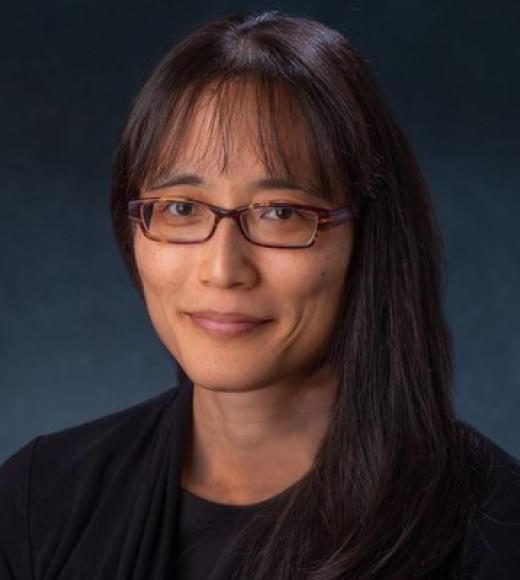
Yuko Munakata is a Professor in the Department of Psychology at the University of California, Davis, and Director of the Cognition in Context Lab. She holds affiliations with the Center for Mind and Brain. Her education includes a PhD in Psychology from Carnegie Mellon University and dual BS/BA degrees in Symbolic Systems and Psychology from Stanford University. Her research integrates behavioral experiments, computational modeling, neuroimaging (ERP/fMRI), and cross-cultural studies to investigate how thinking varies across developmental stages and environmental/social contexts. Core interests include executive functions, developmental trajectories, cognitive control mechanisms, and interventions to enhance adaptive thinking. Her work highlights the role of cultural habits, social influences, and proactive control in shaping decision-making and self-regulation. Recent work explores the impact of environmental predictability on cognitive control development, the link between procrastination in adults/children, and the efficacy of executive function training programs. She advocates for contextual frameworks in understanding individual differences and educational inequality. Awards: American Psychological Association Boyd McCandless Early Career Award Outstanding Mentor Award (UC Boulder) Fellowships in Association for Psychological Science and APA Grants: NIH funding since 1998, supporting studies on child development and executive functions. Labs: Cognition in Context Lab (UC Davis), Center for Mind and Brain collaborations.
Anssi Laurila is a Professor in the Department of Ecology and Genetics, specializing in Animal Ecology at Uppsala University, Sweden. His research integrates evolutionary biology and ecology to explore the mechanisms underlying phenotypic and genetic variation in natural populations, particularly amphibians. His primary research interests include phenotypic plasticity , local adaptation , maternal effects , life-history evolution , and genomic responses to environmental gradients such as latitude, temperature, acidity, and predation. He investigates how populations adapt to heterogeneous environments through both plastic and genetic mechanisms, often using comparative studies across latitudinal clines and contrasting habitats. His work frequently focuses on amphibians like Rana temporaria , Rana arvalis , and Bufo bufo , as well as other ectotherms including freshwater snails and fish. The trends in his recent publications (2020–2025) show a strong emphasis on genomic and transcriptomic analyses of adaptation, host-pathogen interactions (especially with Batrachochytrium dendrobatidis ), immunogenetics (MHC diversity), conservation genetics of edge populations, and acclimation physiology . His studies often combine field observations with controlled experiments and molecular techniques, contributing to understanding evolutionary responses to climate change and anthropogenic stressors. No scientific awards are explicitly mentioned in the provided text. Dr. Laurila actively collaborates with researchers across Europe and supervises or co-supervises numerous studies, as evidenced by his consistent presence as a senior or corresponding author. While specific grant details are not listed, his extensive publication record in high-impact journals suggests sustained funding for research in evolutionary ecology and conservation. His work has implications for biodiversity conservation, particularly in the context of climate change and emerging infectious diseases. He is involved in research on amphibian microbiomes, thermal adaptation in geothermal systems, and the genetic basis of adaptive traits. His team explores how environmental stressors shape phenotypic and genetic variation, with a focus on understanding the limits and costs of plasticity and adaptation.
نمایش نتایج تا ۷۵۰ مورد اول. برای یافتن نتایج دقیقتر، جستجوی خود را با فیلترها محدود کنید.