Mark Y. Liberman is the Christopher H. Browne Distinguished Professor of Linguistics and Trustee Professor at the University of Pennsylvania. He holds a joint appointment in the Department of Linguistics and the Department of Computer and Information Science. His roles include Director of the Linguistic Data Consortium (LDC), Faculty Director of Ware College House, and former Director of the Institute for Research in Cognitive Science. Education: A.B. in Linguistics and Applied Mathematics from Harvard University (1965–1969), M.S. (1972) and Ph.D. (1975) in Linguistics from MIT. Research focuses on corpus-based phonetics, clinical linguistics applications, tonal phonology, formal models for linguistic annotation, and computational linguistics. He explores speech production, prosody, and interdisciplinary topics like language evolution and neurobiology of speech. Recent articles highlight advancements in speech biomarkers for neurodegenerative diseases, autism analysis, and computational linguistics. Awards include Fellowships from the AAAS and Linguistic Society of America. He advises graduate students and leads large-scale language resource initiatives like LDC, contributing to open-access linguistic datasets. Labs/Teams: Linguistic Data Consortium (LDC), Institute for Research in Cognitive Science (IRCS), and collaborations in computational linguistics and neuroscience.
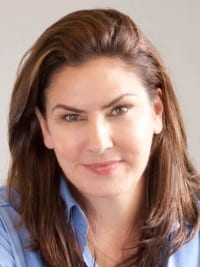
Professor Rebecca Lawson is a Professor of Neuroscience and Computational Psychiatry at the University of Cambridge, affiliated with the Department of Psychology and Bye-Fellow at Peterhouse College. Her research focuses on understanding how humans learn to make predictions under uncertainty, with applications to mental health conditions such as anxiety and depression. She leads the Prediction and Learning (PaL) Lab, which combines computational modeling, neuroimaging (e.g., 7T MRI), and behavioral experiments to study cognitive processes in typical and atypical populations. Key research interests include computational psychiatry, autism spectrum disorders, neuroimaging techniques, and the neurochemical basis of learning mechanisms. She has received significant funding, including a £4.3m Wellcome Mental Health Award and the Sir Henry Dale Fellowship. Notable contributions include advancing theories of neural gain and sensory expectations in autism, as well as studies on uncertainty processing in anxiety and depression. Professor Lawson holds academic awards such as the BNPA Lishmann Prize and the BAP Psychopharmacology Award. She actively contributes to public engagement, including initiatives like Knit-a-Neuron and involvement with PrideinSTEM. Her lab collaborates internationally, with projects like the CamRAA study investigating autism-anxiety overlaps and the Chemical and Brain Basis of Uncertainty (CBBU) study exploring pharmacological interventions. Education: PhD in Cognitive Neuroscience (University of Cambridge), BA (Hons) Psychology & Philosophy (University of Glasgow). Grants: £4.3m Wellcome Award, Parke-Davis Fellowship, Lister Institute Prize. Labs/Teams: Principal Investigator of the PaL Lab; collaborations with MRC Cognition and Brain Sciences Unit, Yale University, and Brown University.
Dr. Tobias Hauser is a Professor of Computational Psychiatry at the University of Tübingen, Germany, and a Group Leader at the Max Planck UCL Centre for Computational Psychiatry and Ageing Research. His research spans clinical neuroscience, developmental psychiatry, and computational modeling, focusing on the neurocognitive mechanisms underlying psychiatric disorders like OCD and ADHD. MSc in Psychology (2010), University of Zurich PhD in Psychology (2014), University of Zurich Hauser's work employs a translational approach, integrating clinical, pharmacological, and basic neuroscience to characterize neural network deficiencies in mental health. His developmental perspective investigates how psychiatric symptoms emerge through deviations from canonical brain development trajectories. Recent publications highlight his focus on dopaminergic midbrain activity, frontostriatal myelination, and computational mechanisms of decision-making. These studies utilize techniques like fMRI, EEG, and computational modeling to explore compulsivity, impulsivity, and developmental neurocognitive processes. Sir Henry Dale Fellowship (Wellcome Trust & Royal Society) Research Fellowship (Jacobs Foundation) Kramer-Pollnow Award for ADHD research Hauser leads the Developmental Computational Psychiatry Group and co-founded the Brain Explorer app, a citizen science project investigating brain development and mental health. He actively seeks PostDocs and PhD students for collaborative research in computational psychiatry and cognitive neuroscience.
Andrea Reiter is a Professor at the Universitätsklinikum Würzburg, holding the W1-Professur für Lernprozesse in der Entwicklungspsychiatrie, Psychotherapie und Prävention. Her research focuses on decision-making processes in clinical populations, lifespan changes, and the impact of stress/social influences. She employs computational modeling combined with fMRI and EEG. Education: Dr. rer. nat. (summa cum laude, 2016) from University of Leipzig, Master of Advanced Studies in Cognitive Behavioral Therapy (University of Bern), and Diploma in Psychology from Julius-Maximilians-Universität Würzburg (2012). She also studied Literature and Educational Sciences alongside Psychology. Professional Experience includes a research position at TU Dresden (since 2015), guest research at Max Planck Institute for Human Cognitive and Brain Sciences (since 2015), and PhD work at IMPRS NeuroCom (2012-2015). She has clinical experience as a Psychologist at Kreiskrankenhaus Tauberbischofsheim. Research Awards: Austrian Academy Grant (2016), Poster Award (2014), DZ Banken Career Prize (2013), and IMPRS PhD stipend (2012-2015). Her publications (2013-2016) emphasize neuroimaging studies on decision-making deficits in disorders like binge eating and alcohol dependence, with methodological strengths in computational modeling and EEG/fMRI integration.
Daan Christiaens is a tenure track lecturer at KU Leuven's Faculty of Medicine and Faculty of Engineering Sciences. He is affiliated with the Department of Electrical Engineering (ESAT) and Department of Imaging & Pathology, serving as a member of the Medical Imaging Division and the KU Leuven Brain Institute (LBI). His academic responsibilities include membership in the Faculty Councils of Engineering Sciences and Medicine. His research focuses on: Inverse problems in medical imaging reconstruction Neuroimaging techniques for brain analysis Advanced quantitative MRI methodologies Diffusion-weighted imaging for microstructural assessment Dr. Christiaens' recent publications (2023-2025) demonstrate a consistent focus on diffusion MRI innovations, including novel reconstruction algorithms, neonatal brain development mapping, and clinical applications for neurodegenerative disorders. Key technical themes include motion correction, multi-shell modeling, and AI-enhanced image processing, while clinical applications span Alzheimer's disease, cerebral palsy, and autism research. He leads significant research projects including: MRI reconstruction with dynamic field monitoring (2024-2028) Compressed sensing for microstructure imaging (2022-2026) Neonatal diffusion MRI network connectivity analysis (2024-2028) As a core developer of the MRtrix3 software framework for medical image processing, he contributes to essential tools in neuroimaging research.
Nathaniel D. Daw serves as the Huo Professor in Computational and Theoretical Neuroscience and Professor of Neuroscience and Psychology at Princeton University, based at the Princeton Neuroscience Institute. His research integrates computational modeling with experimental neuroscience to investigate fundamental mechanisms of learning and decision-making. Daw's research focuses on computational and theoretical neuroscience, specializing in reinforcement learning, memory systems, and decision-making processes. He examines how neural circuits represent value, update beliefs through experience, and balance model-based versus model-free control strategies. His work frequently bridges theoretical frameworks with behavioral and neural data to explain phenomena ranging from habitual behavior to flexible cognitive control. Analysis of his 2025 publications reveals dominant themes in neural replay mechanisms, individual differences in learning trajectories, and clinical applications to eating disorders. His work increasingly incorporates large language models for psychological assessment while maintaining core focus on interpretable cognitive architectures and hierarchical planning. Daw maintains active research operations through the Princeton Neuroscience Institute, an interdisciplinary hub fostering collaboration between computational modelers, neuroscientists, and psychologists to advance understanding of neural mechanisms underlying cognition.
Anna Levina is an Assistant Professor for Computational Neuroscience at the University of Tübingen , affiliated with the Department of Computer Science under the Faculty of Science. Her research focuses on the self-organization of neuronal activity, critical dynamics in neural networks, and the excitation/inhibition balance in cortical circuits. Current positions: Assistant Professor (since 2018), Group Leader (2017-2018), Equality Officer (Computer Science) Previous roles: IST Fellow (2015-2017), Associated Researcher (2011-2015), Postdoc/PI (2011-2015), Postdoc (2008-2011) Her research integrates mathematical modeling , statistical physics , and computational neuroscience to study criticality phenomena, neural avalanches, and adaptive network dynamics. Key interests include: Self-organized criticality in neural systems Excitation/Inhibition balance mechanisms Network topology and dynamics Timescale analysis in neural processing Stochastic modeling of neural activity Recent publications reveal trends in understanding critical dynamics across biological and artificial networks, with applications to memory systems, sensorimotor integration, and disease modeling. She has received recognition as an IST Fellow .
Dr. Vasileios Stavropoulos is the Associate Dean, Higher Degree Research at RMIT University's Department of Health and Biomedical Sciences. His research focuses on behavioral addictions, digital phenotyping, and the psychological impacts of digital media, particularly in gaming and social media contexts. He supervises numerous research projects addressing topics like cyber-phenotyping via text mining, disordered gaming, and the interplay between digital media and mental health. Key research interests include the psychological mechanisms underlying problematic gaming and social media use, network analysis of addiction symptomologies, and the role of user-avatar bonds in behavioral disorders. His work integrates machine learning and behavioral science to predict and analyze addictive behaviors. Dr. Stavropoulos has published extensively on gaming disorder, social media addiction, and the mental health implications of digital media use. His collaborations span clinical psychology, public health, and computational methods, reflecting his interdisciplinary approach to addressing modern behavioral challenges. He is actively engaged in higher degree research governance at RMIT, overseeing doctoral programs and fostering innovation in research methodologies. His contributions include developing scales for measuring addiction behaviors and advancing longitudinal studies on mental health correlations with digital engagement.
Duncan Astle is the Gnodde Goldman Sachs Professor of Neuroinformatics at the Department of Psychiatry, University of Cambridge. He serves as a Programme Leader at the Medical Research Council's Cognition and Brain Sciences Unit (MRC CBU) and is a Fellow of Robinson College. Astle heads the 4D Lab (Development, Dynamics, Disorders, Data Science), which provides a research home for approximately 15 Early Career Researchers working at the intersection of developmental cognitive neuroscience and advanced data science methodologies. Astle's research focuses on understanding childhood development through innovative analytical approaches. His work employs transdiagnostic methods to study children with attention, learning, and memory difficulties, moving beyond traditional diagnostic categories. He investigates how neural systems develop in childhood, how they relate to developmental disorders, and how they respond to intervention. His research integrates network science, machine learning, and generative modeling to capture the complexity of neurodevelopmental diversity, examining how cognitive skills, literacy, numeracy, and mental health interrelate over developmental time. His publication record reveals a strong focus on brain connectivity and organization across development. Recent work explores structural and functional neurodevelopmental trajectories, brain wiring economics, and the impact of environmental factors on neural development. Astle's research frequently employs advanced data science techniques to identify sub-populations of children with different cognitive or brain profiles, regardless of diagnosis, and to map non-linear relationships between brain organization and cognitive difficulties. His work has increasingly focused on transdiagnostic approaches to understanding developmental disorders and the application of computational models to developmental neuroscience. Astle actively supervises PhD students and has built a substantial research group that contributes to major projects including the Centre for Attention Learning and Memory (CALM) and Resilience in Education and Development (RED). His work has been supported by prestigious funding bodies including the Royal Society, the British Academy, the Medical Research Council, and the Economic and Social Research Council, as well as multiple charitable foundations. The 4D Lab, under Astle's leadership, utilizes state-of-the-art facilities at the University of Cambridge, including on-site magnetic resonance imaging and magnetoencephalography scanners. The lab contributes to building specialist cohorts such as CALM (800 children with cognitive difficulties plus 200 comparison children) and RED, which study children's development, resilience, and educational outcomes. Astle's team explores how growing up in adverse environments affects children's brains, behavior, and mental health, with the aim of identifying early markers of risk and resilience.
Prof. Dr. Mike Martin is a leading researcher at the University of Zurich's Center for Gerontology . His work spans cognitive aging, social development in old age, and life-span developmental psychology, with a focus on ecological validity in aging research. Professor, University of Zurich Director, Zurich Longitudinal Study on Cognitive Ageing Co-editor, Journals of Gerontology series Key research areas include: Healthy aging and quality of life Cognitive-emotional interactions in aging Dyadic adaptation in dementia caregiving Mobile sensing of aging-related behaviors Participatory research methodologies Language use as a biomarker of aging His recent publications analyze: GPS mobility and cognitive function Machine learning in reminiscence detection Prospective memory trajectories Emotion regulation in couples Digital interventions for cognitive health Neuroimaging correlates of aging
Marcelo Mattar is an Assistant Professor of Psychology and Neural Science at New York University, leading the Mattar Lab. His research focuses on the neural computations underlying memory, decision-making, and reinforcement learning. He holds a Ph.D. in Psychology from the University of Pennsylvania and has held academic positions at NYU, UC San Diego, and postdoctoral roles at Princeton University and the University of Cambridge. His work bridges computational neuroscience and artificial intelligence, aiming to model how the brain uses internal models for planning and decision-making. Education: Ph.D. in Psychology (Computational and Cognitive Neuroscience), University of Pennsylvania, 2016 M.A. in Statistics, University of Pennsylvania, 2016 B.A. in Electronics Engineering, Instituto Tecnologico de Aeronautica, Brazil, 2010 Research Interests: The lab develops mathematical models of learning and decision-making, leveraging reinforcement learning, Bayesian statistics, and neural networks. Experiments involve human behavioral studies and neuroimaging, with collaborations in animal electrophysiology and computational psychiatry. Key Contributions: His work explores how episodic memory and hippocampal replay support flexible decision-making. Recent studies highlight parallels between human cognition and AI systems, such as language models' metacognitive abilities and brain-inspired algorithms. Awards: Newton International Fellowship, Royal Society (2018–2019) Lab Team: The lab includes postdocs, PhD students, and undergraduates from diverse fields like cognitive science, neuroscience, and computer science. Current members are listed on the lab's website. Lab Location: Meyer Hall, 6 Washington Place, New York, NY 10003.
Chandan J Vaidya is a Professor in the Department of Psychology at Georgetown University, directing the Developmental Cognitive Neuroscience Laboratory (DCNL). His research focuses on cognitive neuroscience mechanisms underlying adaptive behaviors, particularly implicit learning, executive control, and their dysfunction in ADHD, ASD, and other developmental disorders. Using multidisciplinary methods including fMRI, behavioral testing, and genetic analysis, he investigates how dopamine systems, brain connectivity, and environmental factors influence cognitive processes. Primary appointment: Professor, College of Arts and Sciences - Department of Psychology Education: Ph.D. from Syracuse University Research interests include neurodevelopmental disorders, neuroimaging of cognitive control, and translational neuroscience. Recent work examines striatal connectivity changes in ADHD due to stimulant use, executive dysfunction subtypes in autism, and brain correlates of reward processing in obesity. Key findings highlight hyperconnectivity in ASD, dopamine genotype influences on executive function, and age-related changes in default mode networks. Ongoing studies explore transdiagnostic models of psychopathology and precision medicine approaches in neurodevelopmental disorders. Lab activities focus on translational research bridging basic neuroscience with clinical applications. Collaborations involve pediatric neurology, psychiatry, and computational modeling.
Elizabeth Phelps is the Pershing Square Professor of Human Neuroscience in the Department of Psychology at Harvard University's Faculty of Arts and Sciences. She directs the Phelps Lab, which investigates how emotions influence learning, memory, and decision-making using multidisciplinary approaches including behavioral studies, neuroimaging (fMRI), physiological measurements, and computational modeling. The lab collaborates widely across psychology, neuroscience, economics, and clinical disciplines. Her research examines: Human neuroscience of affect and cognition interactions Emotional modulation of learning and memory systems Neural mechanisms of decision-making under uncertainty Impact of emotion on social cognition and behavior Translational applications for psychological disorders Contact information: Email: phelps@fas.harvard.edu Lab email: phelpslab@fas.harvard.edu Address: Northwest Lab Building, 52 Oxford Street, Cambridge, MA 02138 The lab welcomes study participants and research assistant applicants, emphasizing diversity and inclusion in research.
Sara Hägg is a Senior Lecturer at the Karolinska Institutet , affiliated with the Department of Medical Epidemiology and Biostatistics . She is also a Docent in molecular epidemiology. PhD in Computational Biology (Linköping University, 2009) MSc in Molecular Biology (Stockholm University, 2003) BSc in Computer Science (Stockholm University, 2003) Her research focuses on human biological aging , including measurement of aging markers (telomere length, epigenetic clocks, frailty index), causal pathway analysis, and identification of geroprotectors for age-related diseases. She utilizes longitudinal twin studies (SATSA, GENDER, HARMONY), UK Biobank, and Swedish cohorts with methods like Mendelian randomization and genome-wide analyses . Recent articles demonstrate trends in epidemiological aging research , with emphasis on cardiovascular aging , neurological disease interactions , metabolic profiling , and epigenetic clocks . Her work often involves multivariable modeling and cross-cohort validation . Leadership roles include Director of LifeGene Core Facility (2024-) and Founding Board Member of the Nordic Aging Society (2023-). She serves on expert groups for the Swedish Twin Registry and Strategic Research Area in Epidemiology and Biostatistics .
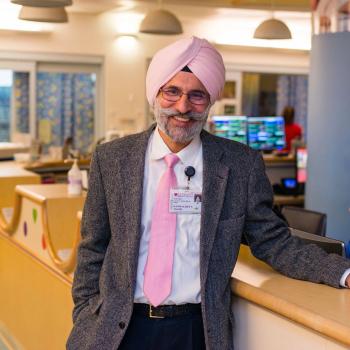
Dr. Kanwaljeet S. Anand is a dual-appointed Professor of Pediatrics (Pediatric Critical Care) and Anesthesiology, Perioperative & Pain Medicine at Stanford University School of Medicine. As director of the Pain/Stress Neurobiology Lab and Jackson Vaughan Critical Care Research Fund, he serves as Editor-in-Chief of Pediatric Research and maintains active membership in Bio-X, MCHRI, and Wu Tsai Neurosciences Institute. Rhodes Scholar with D.Phil from University of Oxford Harvard postdoctoral fellowship and Boston Children's Hospital residency Founded Harmony Health Clinic - Arkansas' largest charitable medical-dental facility A translational researcher with 30+ years of impact, Dr. Anand established the first scientific framework for infant pain perception and developed novel pain assessment methodologies. Current research focuses on: Hair biomarker analysis for stress and social affiliation (cortisol/oxytocin) Machine learning systems for objective pain detection in non-verbal infants Biopsychosocial interventions for stress reduction in disadvantaged youth Neurotoxicity mechanisms of sedatives in developing brains Global NICU opioid usage patterns through the NeoOpioid Consortium His work has yielded over 260 publications and significant advances in: Pediatric pain management protocols Neonatal stress biomarker development Critical care neurobiology insights Community health initiatives AI-driven clinical decision support systems Scientific Recognition 9th Annual 'In Praise of Medicine' Public Address, Erasmus University (2014) Nightingale Excellence Award (2016) Honorary Doctorate from University of Örebro (2019) NIH SBIB-H82 Study Section Chair (2018) Multiple IASP and American Pain Society awards Swedish Academy of Medicine's Nils Rosén von Rosenstein Award (2009) St. Jude Endowed Chairholder (2010) As mentor to Med Scholar Anjali Gupta and advisor to numerous professional bodies, Dr. Anand maintains active clinical leadership in Pediatric Intensive Care while advancing computational approaches to pain detection through collaborations with Stanford's AI researchers.