Dr. Gregor Schuhknecht is a Researcher and incoming Max-Planck Research Group Leader at the Max Planck Institute for Brain Research in Frankfurt, Germany. Starting December 2025, he will lead the Brain Algorithms and Circuits Group, focusing on computational neuroscience and neuronal circuitry in larval zebrafish. His work bridges experimental and computational approaches to understand brain algorithms enabling flexible behaviors. Education PhD in Neuroscience (2014–2019), Institute for Neuroinformatics, University of Zurich and ETH Zurich MSc in Biology (Neuroscience) (2012–2019), ETH Zurich BSc in Biosciences (2009–2012), Heidelberg University His research investigates how synaptic circuitry implements computational algorithms for sensorimotor processing, evidence accumulation, and behavior. Experimental approaches include functional imaging, optogenetics, connectomics, and computational modeling. The group will explore neuronal circuits across scales, from synapse to behavior, with a focus on biophysical properties and dynamic environmental adaptation. Recent publications highlight correlative light/electron microscopy, developmental activity-free circuit formation, and neocortical synapse analysis. Scientific Awards Meselson Prize (2024) Aspirational Neuroscience Award (2023) Best Publication Award (2021) Swiss National Science Foundation Fellowships (2021, 2019, 2018) Gregor Schuhknecht's lab will welcome graduate and postdoctoral researchers starting December 2025, focusing on experimental and computational systems neuroscience. He previously collaborated with Harvard University's Department of Molecular and Cellular Biology and the Department of Moritz Helmstaedter for connectomic analyses.
Marc V Fuccillo is an Associate Professor of Neuroscience at the Perelman School of Medicine, University of Pennsylvania, where he leads a research laboratory focused on understanding the neural circuit mechanisms underlying behavioral control. His work bridges molecular, synaptic, and behavioral approaches to investigate how striatal circuits regulate mouse behavior from simple motor patterns to complex goal-directed actions. Fuccillo holds dual appointments in the Neuroscience and Cell and Molecular Biology Graduate Groups at Penn and maintains an active laboratory investigating the synaptic and circuit basis of neuropsychiatric disorders. Education: B.A. in Molecular and Cellular Biology and Music Performance (Violin) from Brown University (1998) Ph.D. in Developmental Genetics from New York University School of Medicine (2007) M.D. from New York University School of Medicine (2008) Fuccillo's research centers on the synaptic and circuit mechanisms of behavioral control, with particular emphasis on striatal circuits. His laboratory employs a range of technologies including mouse genetics, in vitro electrophysiology, in vivo imaging, and quantitative behavioral analysis to explore how neural circuits of the striatum regulate behavior and how disruptions in these circuits contribute to neuropsychiatric disorders. His work has particularly focused on autism-associated abnormalities in behavioral control, examining how synaptic adhesion molecules like neuroligins and neurexins shape circuit function and behavior, with significant findings regarding D1 dopamine receptor positive medium spiny neurons in the nucleus accumbens. Analysis of Fuccillo's recent publications reveals a strong focus on striatal circuit function across multiple dimensions. His work spans molecular neuroscience (examining synaptic adhesion molecules), cellular physiology (studying specific neuron types in striatal circuits), systems neuroscience (mapping circuit connectivity), and behavioral neuroscience (quantifying motor learning and decision-making). A unifying theme is how disruptions in specific molecular pathways lead to circuit-level abnormalities that manifest as behavioral phenotypes relevant to neuropsychiatric disorders, with particular attention to autism, OCD, and schizophrenia models. Scientific Recognition: Publications in high-impact journals including Nature Neuroscience, Current Biology, Cell Reports, and Neuron Research supported by multiple NIH grants including NIMH F32, NIMH K01, and HHMI Gilliam Fellowship awards for lab members Fuccillo actively mentors a diverse group of trainees including postdoctoral fellows, graduate students, and undergraduates. His laboratory has produced numerous successful alumni who have gone on to faculty positions, medical residencies, and graduate programs at prestigious institutions. His mentoring approach emphasizes technical skill development across multiple neuroscience disciplines while fostering independent scientific thinking. Current research in his lab is supported by NIH funding focused on understanding the molecular architecture of striatal circuits and their role in behavioral control, with three major research directions exploring molecular logic of striatal circuits, circuit mechanisms of behavioral control, and striatal dysfunction in neuropsychiatric disease models. The Fuccillo Laboratory operates within the Department of Neuroscience at the University of Pennsylvania, with access to state-of-the-art facilities for molecular, electrophysiological, imaging, and behavioral neuroscience research. The lab maintains active collaborations with other neuroscience research groups at Penn and beyond, creating a rich intellectual environment for studying the neural basis of behavior. Current research directions include investigating whether there is a molecular logic to striatal circuit composition, how striatal circuits shape behavioral control, and what mouse models of autism, schizophrenia, and OCD can reveal about striatal circuit dysfunction in disease pathophysiology.
Johannes Larsch is a tenure-track Assistant Professor at the Center for Integrative Genomics within the Faculty of Biology and Medicine at Université de Lausanne (UNIL). His research focuses on understanding the neuronal mechanisms underlying social interactions, using larval zebrafish as a model organism. He employs advanced techniques like virtual reality and optical imaging to study how social signals are processed in the brain. Education: Bachelor of Biology, University of Konstanz, Germany PhD in Neurobiology, Rockefeller University, USA (lab of Cori Bargmann) Postdoc at Max Planck Institute of Neurobiology, Germany (with Herwig Baier) Research interests center on neuronal circuits driving group behavior, social recognition, and the interplay between genetics and environment in shaping behavior. His lab investigates how individual brains coordinate collective social behaviors through studies of neuronal activity and circuit dynamics. Current lab openings include fully funded PhD and PostDoc positions focused on social neuroscience and neurogenomics. Contact: johannes.larsch@unil.ch .
Kevin M. Franks is an Associate Professor of Neurobiology at Duke University, where he investigates how the olfactory system forms neural representations of sensory environments. His work focuses on functional neural circuits in the olfactory bulb and piriform cortex, using techniques like in vivo recordings, optogenetics, and behavioral assays. His research explores Neural circuit dynamics and plasticity Odor coding mechanisms Role of recurrent circuitry Integration of sensory modalities Recent publications highlight his contributions to understanding cortical odor representations, developmental neural connectivity, and cross-modal interactions. Awards include the 2024 Don Tucker Finalist recognition. He teaches advanced neuroscience courses at Duke, including Neurobiology research and concepts in neuronal systems.
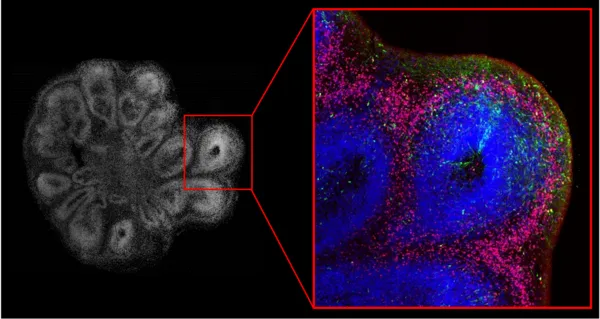
Prof. Dr. Simon Schäfer leads the Schäfer Lab at the Technische Universität München , focusing on engineering advanced organoid systems to study human brain development, disease modeling, and repair mechanisms. His work bridges stem cell biology, gene editing, and bioengineering to develop personalized therapies for brain disorders. Stem Cell & Organoid Technology Neurodevelopmental Mechanisms Neurodegenerative Disease Models Gene Editing & Neuroimmune Interactions Translational Neuroscience Recent research emphasizes brain organoid development, microglia phenotypes, and neurodevelopmental timing anomalies in autism. His team’s work also explores zika virus interactions with glioblastoma stem cells and neuronal plasticity in psychiatric disorders. Scientific awards and funding include support from the Deutsche Forschungsgemeinschaft (DFG), Brain & Behavior Research Foundation (BBRF), and Munich Cluster for Systems Neurology (SyNergy). Collaborations span institutions like the TUM Center for Organoid Systems. Advises 6 students (2 PhD, 1 MSc, 3 associated) Labs include Schäfer Lab, COS@TranslaTUM Contact: simon.schafer@tum.de
Anna Levina is an Assistant Professor for Computational Neuroscience at the University of Tübingen , affiliated with the Department of Computer Science under the Faculty of Science. Her research focuses on the self-organization of neuronal activity, critical dynamics in neural networks, and the excitation/inhibition balance in cortical circuits. Current positions: Assistant Professor (since 2018), Group Leader (2017-2018), Equality Officer (Computer Science) Previous roles: IST Fellow (2015-2017), Associated Researcher (2011-2015), Postdoc/PI (2011-2015), Postdoc (2008-2011) Her research integrates mathematical modeling , statistical physics , and computational neuroscience to study criticality phenomena, neural avalanches, and adaptive network dynamics. Key interests include: Self-organized criticality in neural systems Excitation/Inhibition balance mechanisms Network topology and dynamics Timescale analysis in neural processing Stochastic modeling of neural activity Recent publications reveal trends in understanding critical dynamics across biological and artificial networks, with applications to memory systems, sensorimotor integration, and disease modeling. She has received recognition as an IST Fellow .
Evelyn Lake is an Associate Professor in the Department of Radiology and Biomedical Imaging at Yale University, with affiliations to the Wu Tsai Institute and Yale Biomedical Imaging Institute. Her research focuses on functional neuroimaging, particularly using rodent models to study brain connectivity, neurovascular coupling, and disorders like Alzheimer’s disease and autism spectrum disorder. PhD in Medical Biophysics, University of Toronto (2016) Postdoctoral Associate, Yale University (2019) BSc (Honors) in Biophysics, University of Guelph (2010) Her work spans multimodal imaging techniques (e.g., simultaneous Ca2+ and fMRI), examining how genetic mutations (e.g., PTEN, KATNAL2) affect cerebrospinal fluid dynamics and neuronal connectivity. She investigates longitudinal changes in Alzheimer’s models and methodological aspects of animal neuroimaging, such as sample size optimization and awake imaging protocols. Recent publications highlight her contributions to understanding autism-related white matter abnormalities, transdiagnostic connectome predictive modeling, and the impact of neurovascular uncoupling in awake mice. Collaborations include Todd Constable, Francesca Mandino, Xilin Shen, and Xenophon Papademetris.
Dr. Rodolfo J. Flores serves as an Assistant Professor in the Department of Psychology within the College of Liberal Arts at the University of Texas at El Paso (UTEP). His primary research investigates neuromodulator function in the prefrontal cortex, with emphasis on acetylcholine and dynorphin systems during motivational conflict, stress responses, and addiction pathways. He employs advanced optogenetic and biosensor technologies to dissect neural circuitry underlying psychiatric conditions. Dr. Flores earned his Ph.D. in Social Cognitive and Neuroscience from UTEP in 2019, followed by postdoctoral training at the National Institute of Mental Health (NIMH). His work bridges molecular neuroscience with behavioral outcomes, focusing on how stress and substance exposure alter prefrontal cortical function. His research portfolio demonstrates consistent high-impact publication in top neuroscience journals including Nature Neuroscience , Neuron , and Psychoneuroendocrinology . Current work examines opioid neuropeptide dynamics, nicotine-alcohol interactions, and sex-specific hormonal influences on addiction behaviors. Methodologically, he specializes in genetically encoded biosensors and circuit-level manipulations to study threat processing and reward pathways. Dr. Flores teaches graduate and undergraduate courses including PSYC 4341 (Motivation & Emotion), thesis/dissertation supervision (PSYC 5395/6395), and research applications courses. His lab actively trains students through undergraduate research (RSRC 4033) and independent study opportunities (PSYC 4352).
Chen Ran, PhD, is an Assistant Professor in the Department of Neuroscience at Scripps Research in San Diego. His laboratory focuses on understanding how the brain processes internal sensory signals from visceral organs, such as hunger, satiety, nausea, and visceral pain. Using advanced techniques like in vivo two-photon calcium imaging, optogenetics, and circuit tracing, his team maps the functional architecture of brainstem circuits responsible for interoceptive processing. Key contributions include the discovery of a 'visceral homunculus' in the brainstem and the development of novel calcium indicators for high-resolution neuronal activity tracking. Education : PhD in Biology, Stanford University (2017) Bachelor of Science in Biology, Peking University (2011) Research Interests : Dr. Ran’s work integrates experimental and analytical approaches to decode how visceral stimuli are transduced into conscious sensations. Current projects investigate the coding logic of mechanical, chemical, and thermal signals from internal organs, with implications for developing therapies for obesity, diabetes, visceral pain, and eating disorders. The lab employs cutting-edge tools to visualize and manipulate neural circuits in awake behaving mice, linking circuit-level activity to physiological states. Awards & Honors : NARSAD Young Investigator Award (2022) NIH K01 Career Development Award (2023) Simons Collaboration on the Global Brain Award (2022) Harvard Brain Science Initiative Award (2021) Grants & Funding : Supported by NIH, Simons Foundation, and private philanthropy, his research bridges basic science and translational medicine. Current grants focus on brainstem circuit mapping and developing therapeutic targets for interoceptive disorders. Labs & Affiliations : Dr. Ran leads an interdisciplinary team at Scripps Research’s Neuroscience Department, collaborating with engineers, geneticists, and clinicians to advance interoceptive neuroscience.
Dr. Tiffany Ho is an Assistant Professor in the Department of Psychology at the University of California, Los Angeles (UCLA). She is also affiliated with the Cognition, Affect, and Neurodevelopment in Youth (CANDY) lab, where she leads research on adolescent neurodevelopment, depression, and the neurobiological impacts of early adversity. Her work integrates neuroimaging, psychophysiology, and immunology to understand how stress and adversity shape brain circuits underlying emotion and behavior during adolescence. Education: Ph.D. in Psychology, University of California, San Diego B.A. in Cognitive Science, University of California, Berkeley Postdoctoral Fellowship in Clinical Neuroscience, University of California, San Francisco Postdoctoral Training in Affective Science, Stanford University Research Interests: Dr. Ho’s research focuses on understanding how brain circuits underlying thoughts, emotions, and behaviors change during adolescent development. She investigates how experiences of adversity and perceptions of stress shape neurodevelopment, and how these changes impact the etiology, course, and treatment of depression. Her lab uses a multimodal approach, including behavioral, cognitive, endocrine, immune, and neuroimaging techniques, and leverages big data and global initiatives to identify robust brain imaging markers associated with depression and related conditions. Grants and Funding: Her research has been generously funded by the Klingenstein Third Generation Foundation and the National Institute of Mental Health . Publications and Impact: Dr. Ho has published extensively in high-impact journals, with over 100 peer-reviewed articles. Her recent work includes studies on the effects of COVID-19 on adolescent mental health, the role of inflammation in depression, and the use of machine learning to classify major depressive disorder using neuroimaging data. She is also a key contributor to the ENIGMA consortium, a global initiative aimed at understanding brain alterations in psychiatric disorders.
Susanne M. Jaeggi is a Professor of Psychology at Northeastern University, with additional affiliations in the Bouve College of Health Sciences and the College of Arts, Media, and Design. Her research focuses on cognitive training, executive functions, and individual differences in cognition across the lifespan. She holds PhDs in Cognitive Psychology and Neuroscience from the University of Bern (Switzerland), and completed postdoctoral work in Cognitive Neuroscience at the University of Michigan. Her work has been funded by NIH, NSF, IES, ONR, and the Advanced Education Research and Development Fund (AERDF). She leads the Working Memory & Plasticity Lab , which develops interventions to improve working memory and executive functions, and co-leads the Brain Game Center for Mental Fitness and Well-Being , creating evidence-based brain fitness tools. Jaeggi’s research emphasizes understanding mechanisms of cognitive improvement through training, including neuroplasticity and individual variability. Key areas include cognitive aging interventions, gamification, sensory-cognitive interactions, and the impact of socioeconomic factors on academic achievement. Her work integrates behavioral experiments, neuroimaging, and digital health technologies to address real-world challenges in education and healthcare. Recent studies explore music/art-based interventions, brain stimulation (e.g., tDCS), and scalable cognitive assessments. Collaborations span disciplines, with publications addressing topics like neural correlates of training, motivational features in interventions, and cross-modal perception. Her labs emphasize translating findings into public-facing tools, such as freely accessible brain fitness apps. Current projects include optimizing interventions for ADHD populations and leveraging digital platforms for global mental fitness.
Quentin S. Fischer, Ph.D., is a Research Assistant Professor at the Fralin Biomedical Research Institute at Virginia Tech Carilion (VTC), where he conducts neuroscience research within the Friedlander Lab. His work focuses on synaptic plasticity mechanisms, particularly long-term potentiation (LTP) and depression (LTD), in the context of mild traumatic brain injury (mTBI) and neural rehabilitation through stimulation. Education: Ph.D. in Psychology (Neuroscience program), University of California, Riverside Master of Arts in Psychology (Neuroscience program), University of California, Riverside Bachelor of Arts in Psychology (Behavioral Neuroscience program), University of Colorado, Boulder Dr. Fischer's research explores how patterns of synaptic stimulation influence calcium signaling and plasticity in both normal and injured brains, aiming to optimize noninvasive neurostimulation therapies such as magnetic or optical stimulation. His prior work extensively examined visual cortex plasticity, ocular dominance, and molecular signaling pathways involving PKA and calcineurin. The publication trends reflect a deep engagement with synaptic and cortical plasticity, particularly in visual systems, spanning molecular, cellular, and systems-level neuroscience. His early work focused on developmental and experience-dependent plasticity in visual cortex, while recent research aims to translate these findings into therapeutic strategies for brain injury. Professional Experience: Instructor, Baylor College of Medicine (Neuroscience; Psychiatry & Behavioral Sciences) Postdoctoral Associate, Yale University Medical School, Dept. Ophthalmology & Visual Science Postdoctoral Research Associate, Ohio University, Neurobiology Program Graduate Student, University of California, Riverside Professional Research Associate II, University of Colorado Research Assistant, University of Colorado Dr. Fischer is actively involved in pre-clinical research and is part of the Friedlander Lab team, contributing to the development of evidence-based neural stimulation protocols for neurorehabilitation. No formal scientific awards or student mentorship details are listed in the provided text.
Dana Small, PhD is a Senior Scientist at the RI-MUHC and Professor in the Department of Neurology and Neurosurgery at McGill University . Her research is centered in the Metabolic Disorders and Complications Program within the Centre for Translational Biology . Her research focuses on understanding how body and mind work together to optimize behavior, particularly through neuroimaging, metabolic, and behavioral studies of ingestive behavior. She investigates how modern food environments affect brain evolution and eating behavior. The 15 most recent publications show a consistent focus on food reward mechanisms (2025), nutrient-brain interactions (2024), addiction-genetics relationships (2023), and neural processing of taste and reward (2020-2023). These works appear in high-impact journals like Cell Metabolism and Science .
Kristen Pleil is an Associate Professor at Weill Cornell Medicine in the Graduate School of Medical Sciences, affiliated with the Department of Pharmacology and Neuroscience. She serves as Co-director of the NIGMS-sponsored Training in Pharmacological Sciences (TIPS) predoctoral T32 program. Academic Appointments: Assistant Professor (2016), Associate Professor (2021) Education: BA in Psychology (Emory University, 2005), PhD in Neuroscience (Duke University, 2010), Postdoc at University of North Carolina School of Medicine Research Focus: The Pleil lab investigates how sex and stress hormones regulate alcohol/substance use, stress responsivity, and affective behavior through neuropeptidergic brain circuits and hormone-neuropeptide signaling. Key projects include estrogen's role in alcohol drinking and anxiety, opioid receptor signaling in reward/aversion learning, and sex-dependent thalamic control of stress responses. The lab uses in vivo and ex vivo mouse models to study synaptic/epigenetic plasticity across developmental stages. Publications Trends: Her work spans molecular pharmacology, neurophysiology, and addiction research with a focus on sex differences in neuropsychiatric diseases. Articles cover topics like estrogen signaling in binge drinking, opioid-context memory, thalamic circuits in stress response, and optogenetic tools for receptor imaging. Scientific Awards: President’s Young Investigator Award, ISBRA (2013) Elizabeth Young New Investigator Award, OSSD (2015) K99/R00 Pathway to Independence Award, NIAAA (2015) Kellen Foundation Junior Faculty Fellowship (2016) NARSAD Young Investigator Award (2017) Early Career Investigator Award, NIDA-NIAAA (2017) Training and Collaborations: As Co-director of the TIPS T32 program, she mentors graduate students in pharmacological sciences. Her collaborations include researchers at UNC, Duke, and Weill Cornell, with grants from NIAAA, NIMH, and NIGMS.
Dr. Annemieke Apergis-Schoute is a Lecturer in Psychology (Teaching and Research) at Queen Mary University of London, affiliated with the School of Biological and Behavioural Sciences and the Centre for Brain and Behaviour. Her research focuses on obsessive-compulsive disorder (OCD), cognitive flexibility, prefrontal mechanisms, and student mental health. She holds a PhD from New York University, where her early work explored threat learning in rats and humans using fMRI. Subsequent roles at the University of Cambridge and UCL expanded her expertise into clinical OCD studies, including deep brain stimulation trials. Her research investigates how prefrontal control deficits and inflexible learning contribute to OCD and related disorders, with a focus on adolescents and young adults. Collaborations include pioneering DBS studies targeting basal ganglia regions to reduce compulsive behaviors. She also explores connections between brain function, interoception, and mental health in daily decision-making contexts. Key publications analyze reversal learning deficits in OCD under serotonergic modulation, neuroimaging markers of cognitive rigidity, and developmental trajectories of compulsivity. Her work bridges basic neuroscience with translational clinical interventions, emphasizing early intervention strategies and cognitive-behavioral approaches.