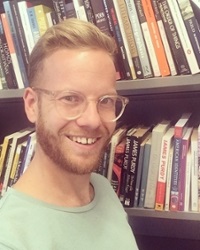
Elisabeth Lang is a Research Associate at the Center for Flight and Migration, Catholic University of Eichstätt-Ingolstadt. Her work focuses on educational approaches in migration societies, particularly Holocaust education, civic education, and diversity-oriented pedagogy. She actively contributes to research projects and educational program development. Current Projects : Doctoral research on 'Holocaust Education in the Migration Society', EZRA project on remembering racism and antisemitism Completed Projects : 'Negotiating Histories', 'Education under (Im)Mobility Conditions', 'Motivation to Learn in Cultural Diversity' Her research spans education in migration societies , adult education , holocaust remembrance , and civic action . Recent publications analyze historical-political education, intercultural learning, and qualitative research methods in migration contexts. She coordinates educational formats and serves as an advisory member in postgraduate education commissions. Articles demonstrate expertise in transformative learning , memory construction , and critical pedagogy across migration contexts. Her work bridges theoretical frameworks with practical implementations in diverse educational settings.
Sara Ghebremusse serves as an Assistant Professor at the Peter A. Allard School of Law, University of British Columbia, where she is actively engaged in graduate student supervision through the UBC Graduate and Postdoctoral Studies program. Her faculty status confirms eligibility for research mentorship and academic leadership within the institution. Her research centers on the complex interplay between legal frameworks, resource governance, and sustainable development in African contexts. Key interests include mining regulation, petroleum fiscal policies, developmental state theory, and the socio-economic impacts of global crises like the COVID-19 pandemic. She maintains a strong geographic focus on Sub-Saharan Africa, with extensive case studies on Botswana, Nigeria, Ghana, and Cameroon, examining how legal institutions mediate resource wealth and democratic governance. Analysis of her 2014-2022 publications reveals consistent scholarly emphasis on Africa's resource governance challenges, particularly how legal transparency mechanisms align (or fail) with Sustainable Development Goals. Her work bridges law, political economy, and development studies, frequently addressing the 'resource curse' paradox and institutional responses to extractive industry management across diverse African economies. No scientific awards were documented in the available materials. As an active UBC faculty supervisor, she mentors graduate students in law and development-related research, though specific grant funding details remain undisclosed. Her scholarly output suggests engagement with international development research networks focused on African resource governance. No information regarding dedicated research laboratories or specialized teams under her leadership was identified in the source materials.
Jonathan Fisher is a Professor of Global Security at the International Development Department, University of Birmingham, and Deputy Director of Research and Knowledge Transfer for the College of Social Sciences. His research explores authoritarianism and (in)security across global, regional, and domestic contexts, with extensive fieldwork in eastern Africa focusing on guerrilla heritage, digital authoritarianism, and aid policy. Co-editor of African Affairs (top-ranked journal in African Studies) Previously edited Civil Wars (2017-2022) Academic Director of the Governance and Social Development Resource Centre (GSDRC) 2017-2021 Current ESRC project on UK-Africa "values" negotiation His work spans conflict dynamics, state-building, and the political economy of aid, with fieldwork in Eritrea, Ethiopia, Rwanda, Uganda, South Africa, and South Sudan. Funded by AHRC, British Academy, ESRC, and WhatsApp, Fisher also advises PhD students on topics including authoritarianism, pastoral conflicts, and aid policy impacts.
Thomas E. Garrett serves as a Lecturer at Cornell University's Brooks School of Public Policy in the Cornell in Washington program, joining the institution in Fall 2024 after previously holding the Lund Practitioner-in-Residence position at the Mario Einaudi Center for International Studies. His educational background includes: Master of Arts in Diplomacy-International Relations from Norwich University Bachelor of Arts in Political Science from University of Oklahoma Garrett's research and professional focus centers on International Relations, Democracy Promotion, and Human Rights, with deep expertise in Native American Affairs and Tribal Governance stemming from his enrollment in the Chickasaw Nation of Oklahoma. His 23-year career at the International Republican Institute (IRI) involved advancing democratic governance across 80+ countries through election support and civil society development, followed by leadership as Secretary General of the Community of Democracies (CoD) from 2017-2024 where he built consensus among diverse global stakeholders. His contributions were recognized with Romania's National Order of Merit, Grand Officer for human rights work. Professional experience spans Vice Presidency at IRI, Middle East Regional Directorship, Chief of Party roles in Ukraine/Mongolia/Indonesia, legislative work for Senator Frank Murkowski on Native issues, and Director of Congressional & Legislative Affairs at the U.S. Department of the Interior's Bureau of Indian Affairs.
Hagar Kotef is a Professor of Political Theory in the Department of Politics and International Studies at SOAS University of London. Her work critically examines the intersections of violence, belonging, and territorial attachments in settler colonial contexts, with particular focus on Israel/Palestine. She currently leads an ESRC-funded project on torture and bureaucracy in Israel/Palestine through collaboration with the Public Committee against Torture in Israel. Professor Kotef's research explores how political belonging and territorial attachments are constructed in settler colonies, challenging conventional understandings by demonstrating how people develop attachment to space not despite violence but through violence. Her work spans early modern political thought, history of political thought, empire and colonialism, Palestine/Israel studies, postcolonial theory, and poststructuralism (particularly Foucault and Derrida). Her scholarly contributions have been recognized with several prestigious awards: C.B Macpherson Book Award Yale Ferguson Award Spitz Prize in Democratic Theory Honorable Mention, MESA Fatema Mernissi Book Award Honorable Mention, Sussex International Theory Prize Honorable Mention, IPS-ISA Book Award Professor Kotef actively supervises PhD students working on diverse projects related to political theory and postcolonial studies. Her current supervisees include Taylor Kenzie Borowetz, Mesrob Kassemdjian, Anna E. Kensicki, and Barbara Schenkel. The ESRC-funded research project on torture bureaucracy represents significant grant support for her ongoing investigation into state violence mechanisms. Her current project, 'Civic Infrastructures of Torture,' examines the array of state apparatuses and institutions implicated in sanctioning torture in Israel, analyzing torture as a political technology whose effects extend far beyond the torture chamber itself into broader social and political relations.
Rochana Bajpai is Professor of Politics at SOAS University of London's Department of Politics and International Studies. She serves as Admissions Tutor for the MSc Politics of Asia program and is a founding member of the SOAS Centre for Comparative Political Thought. Her current research includes serving as Principal Investigator for the AHRC-funded project 'Pluralist Agreement and Constitutional Transformation' (PACT). Education: BA in Political Science, M.S. University of Baroda MA in Political Studies, Jawaharlal Nehru University MPhil and DPhil in Politics, University of Oxford Her research focuses on liberalism, minority rights, and constitution-making in post-colonial contexts, particularly examining how political representation functions in plural societies. She specializes in comparative analysis of political ideologies and democratic institutions in South Asia, with emphasis on India's constitutional development and contemporary political discourse. Publications predominantly explore themes of pluralism, democratic theory, and minority representation, with recent works examining democratic backsliding and electoral politics in South Asia. Her scholarship consistently bridges political theory with empirical analysis of institutional design. Awards and Fellowships: Balliol College Fellowship St. Anne’s College Fellowship Wolfson College Fellowship OSUN Senior Research Fellowship at Chatham House She currently supervises PhD students researching gender mainstreaming in Taiwan, religious ethnocracy in India, and intra-party politics. As Principal Investigator of the PACT project, she leads a digital initiative documenting India's constitutional history. She co-convenes the London Comparative Political Thought Research Group and maintains active research collaborations examining executive power in South Asia and comparative constitutional design.
Stephanie Knight is an Adjunct Professor of Business Administration at Duke University's Fuqua School of Business. She combines academic excellence with entrepreneurial leadership as Founder and CEO of Kurated.ai and Managing Director of Vitalise Ventures . Duke University - Fuqua School of Business Founder & CEO, Kurated.ai Managing Director, Vitalise Ventures Her research and practice focus on strategic consulting models , AI-driven business communication , and innovative apprenticeship frameworks . Knight challenges traditional consulting approaches by integrating collaborative training with client execution teams. Notable achievements include pioneering an apprenticeship-based consulting model and founding Kurated.ai - an educational technology company addressing AI's storytelling limitations. She was recognized as a 2023 Best & Brightest MBA by Poets & Quants. Key themes in her work include: Democratization of AI tools Strategic communication frameworks Leadership development Entrepreneurship through acquisition Corporate training innovation Execution-focused consulting
Paulo Trigo Pereira is a Full Professor at the Institute of Economics and Management (ISEG) of the University of Lisbon. He serves as President of the Scientific and Strategic Council of the Institute of Public Policy and was a Member of the Assembly of the Republic in the 13th Legislature as an independent candidate on the Socialist Party ticket. Academic Affiliation: Professor at ISEG-UL Leadership Roles: Institute of Public Policy, Assembly of the Republic Research Interests focus on Public Finance , Institutional Economics , and Local Government Reform . His work examines fiscal policy, budgetary control, democratic institutions, and sustainable development strategies in Portugal. Teaching includes courses on: Public Economics and Finance Economia e Finanças Públicas Sustainable Development Research Seminars Scientific Awards: No specific awards mentioned. Supervisions: Advised numerous Master's students on topics including municipal governance, public finance reform, health economics, and policy analysis.
Jørgen Møller is a Professor at the Department of Political Science, Aarhus University, specializing in international relations, state formation, democracy and democratization, history and politics, and qualitative methodology. His research examines long-term historical processes in Europe, including the development of the international system and the interplay between religious institutions and state-building. Education: PhD in Political Science (2007, European University Institute), MSc (2003, Aarhus University), BSc (2001, Aarhus University). Research Projects: Conflict and Democratization (2015–2020), DEDERE: Democratic Deepening and Regression (2013–2016), and The Catholic Origins of the Rise of Europe (2019). Publications: Focus on state formation, historical political economy, and methodological rigor, with peer-reviewed articles in journals like American Journal of Political Science and Journal of Historical Political Economy .
Dr. Ali Çarkoğlu is Professor of Political Science at Koc University in Istanbul, Turkey, specializing in comparative politics, electoral systems, and political communication. Holding a PhD from SUNY Binghamton (1994), he has previously taught at Boğaziçi and Sabancı Universities. Doctoral Degree: State University of New York-Binghamton (1994) Master's Degree: Rutgers University (1989) Bachelor's Degree: Boğaziçi University (1986) His research focuses on political polarization in multiparty systems, misinformation dynamics in authoritarian regimes, and the emotional mobilization effects of populist rhetoric. Recent studies examine partisan bias in pandemic-era conspiracy theories and electoral alliance challenges in Turkey's 2023 presidential election. Notable scientific achievements include the 2013 Wapor Best Article Award. He has developed innovative network-based approaches for measuring party polarization and conducted experimental analyses of voting advice applications' impact in constrained media environments.
Katy E. Pearce is an Associate Professor in the Department of Communication at the University of Washington's College of Arts & Sciences. She specializes in the social and political implications of technology in non-democratic contexts, particularly focusing on former Soviet Union states. Her research explores digital divides, social media affordances for resistance, and online impression management in authoritarian regimes. Ph.D. in Communication, University of California, Santa Barbara (2011) M.A. in International Studies, University of London School for Oriental and African Studies (2006) B.A. in Armenian, Arabic, Persian, Turkish & Islamic Studies; American Culture, University of Michigan (2001) Her work examines how digital technologies shape: Information control in semi-authoritarian states Gender and cultural norms in online spaces Misinformation dynamics across platforms ICT's role in opposition movements Face negotiation in digital honor cultures Recent publications demonstrate increasing focus on: Digital health communities in Azerbaijan Misinformation correction strategies Cross-platform affordance analysis State-sponsored online harassment ICT4D in post-Soviet contexts Contact: Office CMU 340-E, kepearce@uw.edu.
Mitchell Dean is a Professor and Head of Department at Copenhagen Business School, specializing in political theology, governmentality, and neoliberalism through interdisciplinary lenses. His work intersects philosophy, political science, and cultural studies, often analyzing power structures and sovereignty. Current Affiliation: Copenhagen Business School Department: Business Humanities and Law Role: Head of Department Recent research explores: Political Theology (post-Carl Schmitt analysis) Governmentality in modern governance Foucault's neoliberalism engagement Indigenous rights and custodial policy Democratic processes and sovereignty Interdisciplinary SDG contributions Articles and lectures demonstrate his focus on: Power dynamics (2014-2025) Political theology's evolution (2023) Critical analyses of authoritarianism (2025) Psychoactive experimentation in intellectual history (2021, 2023)
Henner Busch is an Associate Professor at LUCSUS (Lund University Centre for Sustainability Studies), part of Lund University's Faculty of Social Sciences. His academic journey includes a background in Governmental Studies from Erfurt, Germany, an MSc in Environmental Studies and Sustainability Science (LUMES) from Lund University (2010), and a PhD in Sustainability Science from Lund University (2016). Before his current position, he worked at the Department of Human Geography at Lund University from February 2018 to November 2020, and as a researcher at LUCSUS from 2016 to 2017. His previous professional experience includes work at the Leibniz Institute for Agricultural Engineering in Potsdam-Bornim, Germany. Busch's research primarily focuses on the intersection between energy systems, climate policies, and society, with particular emphasis on questions of justice within energy transitions. His work examines who benefits from energy projects and who bears the burden, whose interests are served by different energy developments, and who has power to shape debates on future energy systems. He approaches these questions through multiple ongoing projects including JUSTIT (Just Swedish Transport Industry Transitions), Workers as Agents of a Green and Just Transition, Burying problems? Imaginaries of Carbon Capture and Storage in Scandinavia, and Of People, PV, Power Lines: Energy Islands in the Nordics. His research spans theoretical frameworks including energy justice, community energy development, urban climate governance, and the social dimensions of carbon capture and storage. Analysis of Busch's recent publications reveals a strong focus on energy justice frameworks across multiple contexts - from coal phase-outs to community energy initiatives and carbon capture technologies. His work consistently examines the distributional, procedural, and recognition dimensions of justice within energy transitions, with particular attention to Scandinavian and European contexts. The publications demonstrate interdisciplinary approaches combining political science, environmental sociology, and sustainability science to address complex questions of power, representation, and equity in energy systems. Researcher at LUCSUS (Lund University Centre for Sustainability Studies) Associate Professor at Lund University Member of LUCID research school (Lund University Centre of Excellence for Integration of Social and Natural Dimensions of Sustainability) Busch actively engages in teaching at undergraduate, master's, and PhD levels, with supervisory experience spanning approximately 40 master's theses on topics ranging from community energy to urban development and climate change depictions in video games. His educational approach integrates methodology-oriented content such as systems thinking and energy justice with empirical examinations of energy systems and globalization. His work contributes to multiple United Nations Sustainable Development Goals, particularly those related to sustainable cities and communities, affordable and clean energy, and climate action.
Anu Puusa is a Professor in Management at the Business School, University of Eastern Finland , with a focus on cooperatives, organizational identity, change, and work-community skills. Her research bridges theory and practice, emphasizing democratic governance, the dual nature of cooperatives, and qualitative methodologies. She serves on boards such as Cooperatives Europe and Pellervo Coop Center , reflecting her commitment to cooperative principles. Research Interests : Co-operatives, Organizational Identity, Change Management, Work-Community Skills, Trust Dynamics, Knowledge Sharing, Innovation Processes Education : Doctor of Philosophy (KTT), with expertise in interpretative paradigm research Recent Publications highlight trends in cooperative governance, resilience in business contexts, and the interplay of trust and member commitment. Her work spans journal articles, book chapters, and conference proceedings in Journal of Co-operative Organization and Management , Nordic Journal of Business , and Deusto, Estudios Cooperativos . Scientific Awards : Recognized as an awarded teacher Collaborations include partnerships with scholars like Juha Kinnunen, Sami Karhu, and Pasi Tuominen, as well as contributions to projects like the WoCuE Final Report and Elgar Encyclopedia of Innovation Management .
Looi van Kessel serves as Assistant Professor in Literary Studies and Gender Studies at Leiden University, affiliated with the Leiden University Centre for the Arts in Society (LUCAS) and the Department of Film and Literary Studies. He coordinates the minor program 'Gender and Sexuality in Society and Culture' and chairs both the Curriculum Committee and the Leiden University LGBT+ Network, where he advocates for equal treatment of LGBTQIA+ staff and students. Van Kessel completed his PhD in 2019 with a dissertation examining melodrama and sexual identity in the works of American author James Purdy. His academic trajectory demonstrates a commitment to exploring literature's role in shaping and challenging societal understandings of gender and sexuality across different historical periods. His research spans three interconnected domains: LGBTQIA+ literary analysis focusing on authors James Purdy and Louis Couperus; AIDS epidemic literature examining how writing from this period functions as pedagogy for future generations; and contemporary drag culture analysis, particularly in response to rising anti-drag sentiment across Europe. His work consistently explores how literature creates space for alternative sexual identities and challenges rigid categorizations of gender and sexuality. As an educator committed to inclusive practices, Van Kessel researches democratizing pedagogies that recognize diverse student backgrounds and learning needs. He co-leads a project assessing the Film and Literary Studies curriculum at Leiden University to develop more inclusive teaching approaches that address not just course materials but also workload, teaching methods, and assessment formats. Van Kessel holds significant editorial positions as co-chief editor for Tijdschrift voor Genderstudies (Dutch Journal for Gender Studies) and editorial board member for Arabesken, the journal of the Louis Couperus Society. His public engagement includes regular contributions to media discussions on LGBTQIA+ issues, addressing topics from substance abuse in queer communities to the political challenges facing drag performers. His recent work demonstrates how academic research can directly inform contemporary social debates and policy discussions regarding LGBTQIA+ rights and representation.