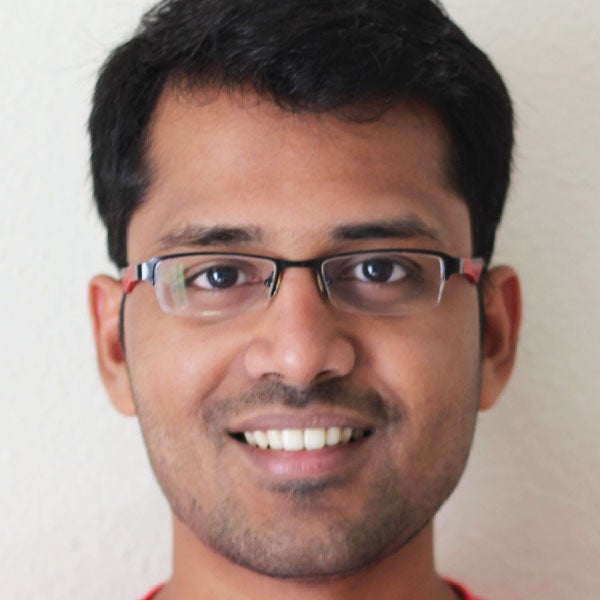
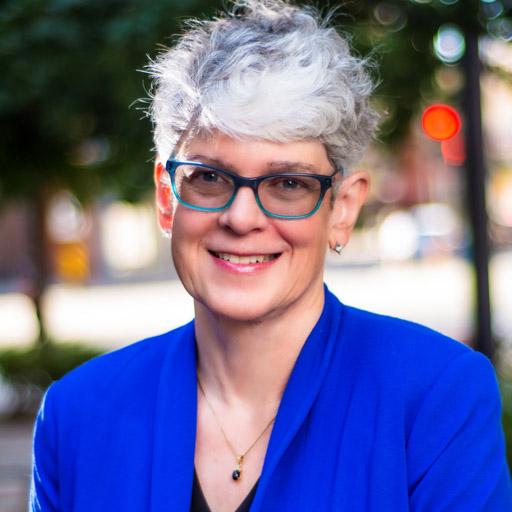
Vivek Boominathan is an Assistant Research Professor in the Department of Electrical and Computer Engineering at Rice University. He is affiliated with the GLEE lab (Geometry, Light, & Imaging lab). His research focuses on computational imaging, combining computer vision, machine learning, applied optics, and nanofabrication to develop innovative imaging systems for applications such as robotics, medical sensing, and virtual/augmented reality. He has contributed to projects like PhlatCam (a lensless camera) and NeuWS (neural wavefront shaping). His work bridges optics, algorithms, and materials science to overcome traditional limitations in imaging systems. Boominathan's research interests include lensless imaging, optical meta-devices, turbulence mitigation, and bio-inspired imaging systems. He has developed systems like Foveated thermal imaging prototypes and real-time lensless microscopes. His lab emphasizes interdisciplinary approaches, integrating hardware design with machine learning. Key projects include: NeuWS: Neural wavefront shaping for imaging through scattering media CoIR: Compressive implicit radar for sensing applications FlatCam and PhlatCam: Ultra-thin lensless imaging devices Bioluminescence imaging in marine species His work has been published in top venues like Science Advances, Optica, and IEEE TPAMI. He collaborates with institutions like NASA JPL and industry partners on applied imaging solutions. Current research trends emphasize sensor-algorithm co-design and high-speed imaging systems for AR/VR applications. Boominathan holds a PhD in Electrical Engineering and has extensive postdoctoral experience in computational imaging. He advises projects in the GLEE lab and mentors students in hardware-software co-design for imaging systems. His lab focuses on translating theoretical innovations into practical devices with commercial potential.
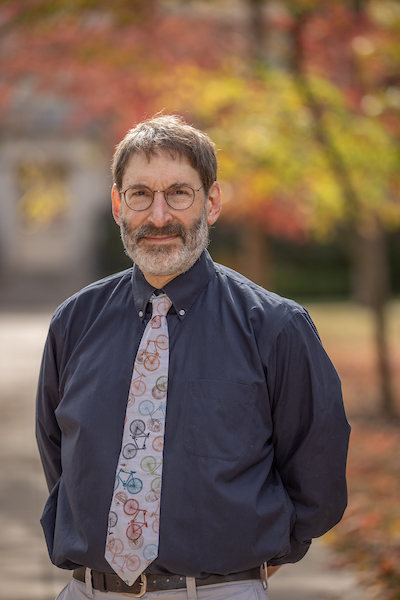
Jonathan T. Butcher is a Professor in the Meinig School of Biomedical Engineering at Cornell University. His research focuses on cardiovascular developmental mechanobiology, postnatal valve disease, and heart valve tissue engineering. He holds positions in multiple graduate fields including Biomedical and Biological Sciences and Mechanical Engineering. Dr. Butcher earned his B.S./M.S. in Mechanical and Aerospace Engineering from the University of Virginia (2000), Ph.D. in Mechanical Engineering from Georgia Institute of Technology (2004), and completed a postdoctoral fellowship in Developmental Biology/Pediatric Cardiology at the Medical University of South Carolina (2007). His research integrates experimental, computational, and engineering approaches to study heart valve formation and disease. Key areas include embryonic heart biomechanics, pathological valve remodeling, and 3D-printed tissue constructs. He leads the Butcher Lab, which collaborates on NSF-funded projects like a $3 million initiative on bio-inspired architectural design. Notable awards include being an ASME Fellow (2021), AIMBE Fellow (2019), and recipient of the NSF CAREER Award (2010). He co-mentored doctoral student Alexander Cruz to a 2023 HHMI Gilliam Fellowship. Dr. Butcher’s work bridges biomechanics, genetics, and regenerative medicine. Current efforts aim to translate developmental principles into clinical solutions for valve diseases and engineer living tissues using advanced bioprinting techniques.
Kwan-Wu Chin is a Professor in the School of Electrical, Computer and Telecommunications Engineering at the University of Wollongong, where he also serves as Head of Postgraduate Studies (HPS) and co-directs the Wireless Technologies Lab (WTL). His research focuses on resource allocation problems in Internet of Things (IoT) systems, maritime networks, edge computing platforms, and integrated sensing-communication systems. Chin leads an active research group currently supervising five PhD students working on UAV networks, edge computing, maritime systems, and metaverse resource allocation. He has graduated over 20 PhD students who now hold positions in academia and industry. Chin serves as editor for Elsevier Computer Communications and IEEE Internet of Things Journal. His work develops optimization techniques using graph theory, stochastic processes, and machine learning for next-generation wireless systems.
Jonathan Levy is an Associate Professor in the Department of Geology and Environmental Earth Science at Miami University, where he also serves as Director of the Institute for the Environment and Sustainability. His research focuses on groundwater contaminant transport, water quality management, and environmental geochemistry, with field studies conducted in Ohio, Kenya, Zambia, and Malawi. Research interests include: Groundwater/surface-water interactions Riverbed hydraulic conductivity Pharmaceutical removal using clay minerals Water resource sustainability in developing regions His recent publications demonstrate a consistent focus on environmental remediation techniques, particularly through investigations of clay mineral sorption properties for contaminant removal and geophysical analysis of seismic activity. Current graduate student research includes projects on toxic metal contamination in Zambian mining towns, groundwater vulnerability in southern Kenya, and riverbed filtration efficiency. Dr. Levy has received funding from National Geographic, Fulbright, and municipal water authorities for source-water protection and groundwater research initiatives.
Mary Stuart is a Lecturer in Zero Carbon at the University of Derby, affiliated with the College of Science and Engineering. Her research focuses on advancing low-cost hyperspectral imaging technologies for environmental applications, particularly in glaciology, peatland ecology, and extreme environment monitoring. She specializes in leveraging smartphone-based platforms and affordable instrumentation to democratize environmental data collection. Key research areas include developing field-deployable systems for ice sheet analysis, peat health assessment, and environmental monitoring in remote locations. Her work emphasizes practical solutions for climate change research through innovative sensor design and calibration techniques. Mary has contributed to over 8 peer-reviewed articles, with notable outputs in journals like Science of The Total Environment and Remote Sensing . Her research outputs have garnered 91 total views and 39 downloads, highlighting the growing interest in accessible environmental sensing technologies. Her current projects explore spectral calibration methods for mobile sensors and the application of low-cost systems in extreme environments. Mary’s work bridges the gap between cutting-edge technology and real-world environmental challenges, prioritizing cost-effective solutions for global sustainability efforts.
Yolanda Vidal Segui is an Associate Professor in the Department of Mathematics at the Universitat Politècnica de Catalunya (UPC), affiliated with the Escola d'Enginyeria de Barcelona Est (EEBE). Her research focuses on wind energy systems, predictive maintenance, and structural health monitoring of wind turbines. She leads projects in the CoDAlab and WinTurCoM research groups, specializing in data-driven models, condition monitoring, and failure prognosis. Her work integrates machine learning, mathematical modeling, and sensor technology to enhance turbine reliability and energy efficiency. Dr. Vidal holds a PhD in Applied Mathematics and has authored over 350 publications. Her contributions include advancements in SCADA data analysis, vibration-based diagnostics, and AI-driven condition monitoring systems. She has received several accolades, including the WindEurope Technology Workshop recognition and the IFIT Distinction in Mechanism and Machine Science. Her research bridges academia and industry, addressing challenges in offshore wind turbine integrity and maintenance strategies. Active in professional service, she serves on conference committees and editorial boards (e.g., Mechanical Systems and Signal Processing, Wind Energy). Her work emphasizes sustainable energy solutions and has been applied in real-world scenarios like the Alpha Ventus wind farm. She also contributes to educational initiatives, developing innovative teaching materials for engineering students.
Vassilios Tzerpos is an Associate Professor at the Lassonde School of Engineering, York University, where he has been since 2001. He holds a Ph.D. in Computer Science from the University of Toronto (2001). His research focuses on audio processing for musical applications, deep learning, digital signal processing, machine listening, and software engineering education. He directs the APTLY lab exploring music-technology intersections and leads the LaSSoftE lab developing socially-oriented software solutions. Education: Ph.D. in Computer Science, University of Toronto, 2001 Research Highlights: Dr. Tzerpos' work spans music information retrieval (e.g., automatic music classification), synthetic speech detection using neural networks, and software engineering pedagogy. His recent projects include Music-STAR for audio re-instrumentation and OER-based learning path creation systems. He has pioneered methods in design pattern detection and software clustering evaluation. Grants & Labs: Leads two research groups: APTLY (music-tech) and LaSSoftE (social impact software). Active in developing adaptive cybersecurity solutions against DoS attacks and refining software architecture recovery techniques. Key Themes in Publications: Recent work emphasizes machine learning applications in music technology and cybersecurity, with foundational contributions to software clustering methodologies and design pattern detection algorithms. His work bridges theoretical computer science with practical applications in education and creative industries.
Raja Alomari is an Associate Teaching Professor at Northeastern University's Multidisciplinary Graduate Engineering Programs. He holds a PhD in Computer Science and Engineering from the State University of New York at Buffalo (2010), an MSc and BSc from the University of Jordan (2004 and 2002, respectively). His expertise spans machine learning, data engineering, MLOps, and cloud security, with over 30 publications in academic journals and conferences. Education: PhD, Computer Science, SUNY Buffalo, 2010 MSc, Computer Science, University of Jordan, 2004 BSc, Computer Science, University of Jordan, 2002 Research & Industry: Dr. Alomari has 22+ years of academic teaching experience across institutions like the University of Jordan, Wayne State University, and SUNY Buffalo. He also served as a Staff II Machine Learning Engineer at VMware Inc., focusing on cloud-based data pipelines and AWS-driven security solutions. He is a cofounder of Pextra Inc. Advocacy & Community: A strong advocate for diversity and inclusion, he has led mentoring programs and inclusive hiring initiatives. He volunteers extensively in community organizations, emphasizing talent development in technology.
Tian Qiu is an Independent Cyber Valley Group Leader and Faculty Member at the International Max Planck Research School for Intelligent Systems (IMPRS-IS) within the University of Stuttgart. His primary affiliation is with the Institute of Physical Chemistry. He focuses on interdisciplinary research spanning augmented reality (AR) organ phantoms, big data sensing combined with AI for medical applications, and micro-/nano-device development for minimally-invasive medicine. Research interests include advancing AR technologies for surgical training and diagnostics, leveraging AI-driven big data analysis for personalized medical solutions, and innovating nano-scale devices to enhance precision in medical interventions. His work bridges physical chemistry, biomedical engineering, and computational science. While specific grants, awards, or student advisees are not detailed here, his group likely contributes to collaborative projects at Cyber Valley and IMPRS-IS. Contact details are available at Pfaffenwaldring 55, Stuttgart.
Allen L. Robinson is a Professor and Dean of the Walter Scott, Jr. College of Engineering at Colorado State University (CSU). Previously, he held leadership roles at Carnegie Mellon University, including Head of the Department of Mechanical Engineering (2013-2021) and Director of the EPA-funded Center for Air, Climate, and Energy Solutions (CACES, 2016-2022). He also served as Director of CMU-Africa (2021-2023) and President of the American Association for Aerosol Research (2016-2017). Education: Ph.D. in Mechanical Engineering, University of California, Berkeley (1996) B.S. in Civil and Environmental Engineering, Stanford University (1990) Research Interests: Focuses on emissions from energy systems, air quality, climate change, and public health. Explores policy analysis and decision-making, with teaching experience in thermodynamics, atmospheric chemistry, and air quality engineering. Awards: 2020 David Sinclair Award, American Association of Aerosol Research 2020 University Professor, Carnegie Mellon 2020 Distinguished Professor of Engineering Award, Carnegie Mellon 2015 ASCENT Award, American Geophysical Union Advising & Grants: Led major initiatives like CACES and contributed to global programs like CMU-Africa. His work bridges academia and policy, addressing environmental equity and urban pollution. Labs & Teams: Spearheads the Atmospheric Science and Chemistry mEasurement NeTwork (ASCENT), advancing ground-based air quality monitoring.
Huazhen Fang is an Associate Professor in the Department of Mechanical Engineering at the University of Kansas School of Engineering, where he joined in 2014. He leads the Information & Smart Systems Laboratory (ISSL) and holds a courtesy appointment in the Department of Electrical Engineering & Computer Science. His research focuses on enabling intelligence for complex systems through information-driven approaches. Dr. Fang received his Ph.D. in Mechanical Engineering from the University of California, San Diego in 2014, following an M.Sc. from the University of Saskatchewan and a B.Sc. in Computer Science & Technology from Northwestern Polytechnic University in China. He was a Visiting Faculty Fellow at Mitsubishi Electric Research Laboratories in 2022. His research interests span Systems and Control, Advanced Battery Management, Energy Storage Systems, and Robotics, with particular focus on system modeling, estimation, control design, machine learning and numerical optimization. Dr. Fang's work has significant applications in energy management, cooperative robotics, and environmental observing systems. His research has been supported by the National Science Foundation, Department of Energy, Army Research Laboratory, and Mitsubishi Electric Research Laboratories. His extensive publication record shows a clear trend toward increasingly sophisticated integration of physics-based modeling with machine learning approaches, particularly in battery management systems and autonomous vehicle control. Recent work demonstrates a growing emphasis on Bayesian inference methods, distributed control architectures, and safety-critical applications of intelligent control systems. Faculty Early Career Award from National Science Foundation (2019) University Scholarly Achievement Award (2024) Miller Professional Development Award (2022) Miller Faculty Scholar Award (2018, 2019, 2023) Wesley G. Cramer Outstanding Mechanical Engineering Faculty Award (2016) Big XII Faculty Fellowship (2015) IEEE Transactions on Transportation Electrification Prize Paper Award (2024) Dr. Fang has successfully mentored numerous graduate students through the Information & Smart Systems Laboratory, with many receiving awards for their research. His research has attracted significant funding from prestigious organizations including the National Science Foundation, Department of Energy, Army Research Laboratory, and Mitsubishi Electric Research Laboratories. He currently serves as an Associate Editor for multiple prestigious journals including Information Sciences, IEEE Transactions on Industrial Electronics, and IEEE Control Systems Letters. The Information & Smart Systems Laboratory (ISSL) under Dr. Fang's leadership has established itself as a center for cutting-edge research in information-driven smart systems. The lab focuses on pushing the frontiers of information extraction, analysis and exploitation for dynamic systems to deal with system complexity and enable system intelligence. The lab actively collaborates with industry partners and local communities, emphasizing research that serves societal needs.
Catherine Mulligan is a Distinguished Research Professor in the Department of Building, Civil, and Environmental Engineering at Concordia University, where she also serves as Director of the Concordia Institute for Water, Energy and Sustainable Systems. She was previously the Concordia Research Chair in Geoenvironmental Sustainability (Tier I) until 2021, having held this prestigious research chair since 2002 (initially as Tier II). Dr. Mulligan earned her B.Eng. and M.Eng. degrees in chemical engineering from McGill University, followed by a Ph.D. specializing in geoenvironmental engineering, also from McGill University. After 16 years working at McGill University and in industry (including positions at the Biotechnology Research Institute of the National Research Council and SNC Research Corp.), she joined Concordia University in 1999 as an Assistant Professor, was promoted to Associate Professor in 2002, and to full Professor in 2008. Her research spans multiple critical areas of environmental engineering with a focus on contamination remediation. She specializes in surfactant-enhanced washing and flushing of contaminated soils and sediments, treatment of metal-contaminated media, bioremediation techniques, and various wastewater treatment methods. Her work includes biosurfactant applications, in-situ sediment remediation, anaerobic treatment processes, membrane technologies for water treatment, and energy generation through pressure-reduced osmosis. She has developed sustainability indicators and focuses on practical applications of environmental engineering solutions. Analysis of her recent publications (2023-2025) reveals a continued leadership in environmental engineering with particular emphasis on nanotechnology applications for oil spill cleanup in sensitive coastal regions, advanced membrane technologies for water treatment and energy generation, microbially induced calcite precipitation for mining waste remediation, sustainable resource recovery approaches from waste batteries, and innovative techniques for eutrophic lake restoration. Her research demonstrates a consistent focus on practical, sustainable solutions to environmental contamination problems across diverse settings. Dr. Mulligan's scientific contributions have been recognized with numerous prestigious awards including Fellowship in the Royal Society of Canada, Canadian Academy of Engineering, Engineering Institute of Canada, and the Canadian Society for Civil Engineering. She has received the RSC Miroslaw Romanowski Medal, the Geoenvironmental Award, the A.G. Stermac Award of the CGS, and the John B. Sterling Medal of the EIC. Her Concordia-specific honors include the Provost Circle of Distinction, Concordia Sustainability Champion, and the Petro Canada Young Innovator Award (awarded twice). With over 40 years of research experience across government, industrial, and academic environments, Dr. Mulligan has supervised to completion more than 75 graduate students in Civil Engineering (MASc and PhD programs). Her research has attracted significant funding, including a $1,643,700 NSERC CREATE grant for the Institute in Water, Energy and Sustainability, which represents the first Concordia project to receive funding through this program. She has authored more than 140 refereed papers, holds three patents, and has made substantial editorial contributions as Section Editor for the Journal of Environmental Engineering, Chief Editor for Waste (MDPI), and serves on multiple other editorial boards. As Director of the Concordia Institute for Water, Energy and Sustainable Systems, Dr. Mulligan leads an interdisciplinary team focused on training students in sustainable development practices and advancing research into innovative solutions for water, energy, and resource conservation challenges. The institute represents a significant hub for environmental research and education at Concordia University.
Dr. Adnan Rajib is an Assistant Professor of Civil Engineering at The University of Texas at Arlington, leading the H2I Lab (Hydrology & Hydroinformatics Innovation Lab). His research focuses on large-scale hydrology, water quality modeling, and integrating artificial intelligence with remote sensing data to address climate change impacts on water resources. He actively advises doctoral, master's, and undergraduate students in projects related to flood resilience, wildfire hydrology, and nature-based solutions. Dr. Rajib has secured significant grants from NASA, NSF, and USDA, totaling over $4 million, including a major NASA initiative to predict wildfire effects on freshwater supplies and a DOE-funded Coastal Bend Climate Resilience Center. His work spans collaborations with international organizations like the United Nations University and The Nature Conservancy. Key contributions include global studies on floodplain alterations, wetland-mediated nitrate reductions, and the development of cyberinfrastructure tools for open science. He serves on the editorial board of environmental journals and professional committees, including the American Society of Civil Engineers' Wetland Hydrology Technical Committee. His teaching emphasizes advanced topics in civil engineering and research mentorship, with courses like 'Topics in Civil Engineering' and dissertation advisement. Dr. Rajib's lab integrates cutting-edge hydroinformatics to advance climate resilience strategies for vulnerable communities.
Dr. Alexander Paulus serves as a Researcher at the Chair of High-Frequency Engineering within the Department of Electrical Engineering at the Technical University of Munich (TUM), School of Computation, Information and Technology. Working under Prof. Dr.-Ing. Thomas Eibert, he contributes to advanced electromagnetic research and measurement systems development at TUM's Arcisstr. 21 campus in Munich. Research Expertise His core specialization lies in near-field antenna measurement and transformation techniques, with significant contributions to phase retrieval algorithms, inverse source methods, and UAV-based electromagnetic field measurements. He addresses critical challenges including probe correction with unknown antennas, sparse sampling for directive antennas, and electromagnetic modeling of environmental effects like rain attenuation. His work bridges theoretical electromagnetics with practical antenna characterization solutions. Publication Trends From 2014-2025, Paulus has published 25+ papers focusing on near-field to far-field transformations, particularly in phaseless and multi-probe scenarios. Recent work (2023-2025) demonstrates innovation in spectral filtering, sparse reconstruction, and UAV-based systems for defect localization and wet antenna modeling. His research increasingly integrates computational techniques to solve complex inverse problems in antenna measurements. Scientific Recognition No formal awards documented in available information Academic Contributions Student Mentoring: No advisees listed in provided materials Research Funding: Grant details not specified in source text Research Environment Paulus operates within TUM's Chair of High-Frequency Engineering facilities, which include advanced near-field measurement ranges, UAV-based electromagnetic characterization systems, and laboratories for metamaterials research and electromagnetic compatibility testing. His work supports applications in 5G/6G communications, aviation navigation systems, and precision antenna diagnostics.
Dr. Debora M. Lee Chen is an Associate Professor of Clinical Optometry at the University of California, Berkeley’s School of Optometry & Vision Science. She serves as Co-Chief of the Binocular Vision Clinic and Chief Mentor for the Residency in Vision Therapy and Rehabilitation. Her roles also include Berkeley Optometry Disability Officer and active participation in institutional committees like the Clinical Curriculum and Instruction Committee and the Berkeley Optometry Curriculum Committee. Her research focuses on binocular vision disorders, pediatric vision, amblyopia, strabismus, traumatic brain injury, cerebral visual impairment, and innovative treatments using mobile applications. She teaches courses such as Optometry 240 (diagnosis/treatment of binocular vision anomalies), Optometry 241L (advanced strabismus management), and clinical specialty clinics (430B, 441A-C). Key research areas include pediatric vision challenges, neurodevelopmental conditions, and vision-related learning disabilities. She emphasizes community health, including barriers to eye care access and school-based screening initiatives. Her work bridges clinical practice with cutting-edge technologies like AI-driven optometry solutions. Dr. Chen’s contributions extend to neuro-optometric rehabilitation, particularly for patients with acquired brain injuries and developmental differences. She advocates for inclusive healthcare practices through her roles on the Disabled Student’s Program advisory committee and DEIB initiatives.