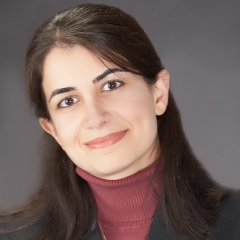
Lorin Schöni is a PhD candidate at ETH Zürich, actively contributing to the Security, Privacy and Society research group since October 2022. Concurrently, he serves as a Lecturer at the Department of Humanities, Social and Political Sciences, where he teaches the course Focus on the Human: Human-Centered Security and Privacy Lab (Autumn Semester 2025, Unit 851-0391-00L). His research focuses on human-centered approaches to cybersecurity , particularly through three key domains: Human-Computer Interaction - Investigating design decisions that influence user behavior in digital security contexts Extended Reality Applications - Developing immersive training systems for phishing prevention Usability Engineering - Creating intuitive security interfaces with explainable AI components Recent publications highlight his work at the intersection of autonomous motivation theory and personalized cybersecurity training , with notable presentations at top venues including CHI 2025 and SOUPS 2024. His research aims to transform security from a restrictive framework into a collaborative partnership between users and digital systems, as emphasized in his award-winning work on human-centered cybersecurity.
Michael Nebeling is an Associate Professor at the University of Michigan's School of Information (UMSI), leading the Information Interaction Lab. His research focuses on Augmented, Virtual, and Mixed Reality (XR) interfaces, emphasizing usability, accessibility, and privacy. He co-directs the HCI seminar series in the Michigan Interactive and Social Computing (MISC) group and teaches AR/VR courses (SI 559/659). Nebeling has held roles such as UIST 2026 General Co-Chair and CHI 2026 Subcommittee Co-Chair. He pioneered the Extended Reality for Everybody Coursera specialization and the XR MOOC series . His work includes projects like XRDirector , MRAT , and 360proto , addressing challenges in XR design and tool development. Awards include the Disney Research Faculty Award, Mozilla Research Award, and Epic MegaGrant. He advises the student-led Alternate Reality Initiative (ARI) and collaborates with industry partners like Meta, Epic, and Disney. Education: PhD in Computer Science from ETH Zurich (2015), Postdoc at Carnegie Mellon University's Human-Computer Interaction Institute (2016). Research Themes: XR toolkits, privacy/security in AR/VR, inclusive design, educational applications, and ethical considerations in mixed reality. Over 90 publications in venues like CHI, UIST, and ACM Transactions on CHI. Awards: Disney Research Faculty Award (2018), Mozilla Research Award (2018), Epic MegaGrant (2019), Meta Reality Labs Gift (2020). Recognized with Best Paper Awards at CHI and UIST.
Ian Miers serves as an Assistant Professor in the Department of Computer Science at the University of Maryland, holding a joint appointment with the University of Maryland Institute for Advanced Computer Studies (UMIACS) and serving as a core faculty member of the Maryland Cybersecurity Center (MC2). His academic home resides within the Department of Computer Science, though the overarching college/school structure is not explicitly stated in available materials. His research program centers on applied cryptography with a context-driven methodology: starting from real-world security challenges to develop deployable cryptographic protocols. Key focus areas include blockchain privacy (notably Zerocoin/Zerocash), zero-knowledge proofs, anonymous credentials, and secure messaging systems. Miers emphasizes practical implementations that address subtle security requirements in production environments, bridging theoretical cryptography with tangible system security. Analysis of his 15 most recent publications reveals dominant trends in zero-knowledge proof scalability (zkSNARKs), privacy-preserving infrastructure for blockchains, and cryptographic solutions for content moderation in encrypted messaging. His work consistently targets deployable systems, with increasing focus on balancing privacy guarantees with accountability requirements in real-world applications. Miers actively recruits PhD students for hands-on research in his small lab, emphasizing direct collaboration on applied security and blockchain problems. As a founding scientist of Aleo, Bolt Labs, and Zcash, he translates academic research into commercial products, with his work receiving coverage from major media outlets including The Washington Post, The New York Times, and Wired.
Professor Yasamin Mostofi is a faculty member in the Department of Electrical and Computer Engineering at the University of California, Santa Barbara. She is also affiliated with the Department of Computer Science and the Center for Control, Dynamical Systems and Computation. Her work bridges wireless systems, robotics, and machine learning. PhD, Stanford University MS, Stanford University MS, Sharif University of Technology Research Interests : Her lab focuses on wireless systems and autonomous agents , developing novel mathematical models for RF sensing and communication-aware robotics. Current directions include WiFi/millimeter wave/6G-based imaging and analytics, networked robotics for cellular systems, human-robot collaboration, and machine learning integration. Recent Publications : Her work spans through-wall crowd analytics , robot-assisted connectivity , and vision-aided wireless sensing , with applications in smart health, security, and retail optimization. Key trends include cross-modal integration (WiFi and vision), synthetic data generation, and real-world clinical validation. Scientific Recognition : Presidential Early Career Award for Scientists and Engineers (PECASE) Antonio Ruberti Prize, IEEE Control Systems Society NSF CAREER Award IEEE Region 6 Outstanding Engineer Award IEEE Fellow (2020) Advising and Leadership : She mentors PhD students in systems research, with graduates joining leading companies like Qualcomm and Google. She co-founded NPJ Wireless Technology (Nature Portfolio) and serves on editorial boards including IEEE Transactions on Control of Network Systems .
Hadi Esmaeilzadeh is an Associate Professor at the University of California, San Diego in the Department of Computer Science and Engineering . He previously served as an Assistant Professor at Georgia Tech (2013-2017) and holds the Halicioğlu Chair in Computer Architecture . As founder/director of the Alternative Computing Technologies (ACT) Laboratory and associate director of UCSD's Center for Machine Integrated Computing and Security (MICS) , his research drives cross-stack solutions for next-generation computer systems. Early tenure recipient at UCSD Coined the term "dark silicon" in computer architecture Developed Tabla/DnnWeaver open-source frameworks Research Interests span: Approximate Computing Neural Acceleration FPGA/ASIC Hardware Design Machine Learning Systems Dark Silicon Challenges Security/Privacy in Accelerated Systems Scientific Recognition : 4 CACM Research Highlights 4 IEEE Micro Top Picks Distinguished Paper Award (HPCA 2016) Inducted to ISCA Hall of Fame (2018) Teaching : Developed courses on accelerator design (CSE 240D) and alternative computing (CS 8803 ACT) Advocates for hands-on FPGA-based learning in Processor Design with FPGAs courses
Benjamin Mako Hill is an Associate Professor in the University of Washington Department of Communication and an Adjunct Associate Professor in Human-Centered Design & Engineering , the Paul G. Allen School of Computer Science & Engineering , and the Information School at UW. He is a Faculty Associate at the Berkman Klein Center for Internet and Society at Harvard University and a Fellow at the Center for Information Technology Policy at Princeton University during the 2023–2024 academic year. Educational Background : PhD in an interdepartmental program at Massachusetts Institute of Technology (MIT) , involving the MIT Sloan School of Management and the MIT Media Lab , advised by Eric von Hippel, Yochai Benkler, Tom Malone, and Mitch Resnick. MS in Media Arts and Sciences from MIT. B.A. in Technological and Legal History from Hampshire College . Research Interests span peer production, online communities, collective action, cooperation, learning, and computer-mediated communication. His work explores how communication and information technologies shape social outcomes in collaborative environments like Wikipedia and Linux, focusing on governance, moderation, anonymity, and educational platforms such as Scratch. Article Trends : His publications analyze peer production dynamics, privacy in open collaboration, and computational thinking in youth. Topics include underproduction in open source software, algorithmic fairness, taboo knowledge production, and legitimate peripheral participation in online communities. Methodologies combine big data, quasi-experimental, and comparative analyses. Scientific Awards : Dordick Award for Best Dissertation (2013). CHI '22 Best Paper Honorable Mention (2022). CSCW '18 Best Paper Honorable Mention (2018). CHI '17 Best Paper Honorable Mention (2017). CSCW '13 Best Paper Award (2013). CHI '11 Best Paper Honorable Mention (2011). Advising and Grants : He co-founded the Community Data Science Collective and collaborates with researchers like Aaron Shaw. Grants include multiple National Science Foundation awards for studies on digital knowledge commons, anonymous participation, and collaborative success, as well as a Sloan Foundation grant for modeling underproduction in peer production. Labs and Teams : He leads the Community Data Science Collective , an interdisciplinary research group studying online communities, and contributes to open-source projects like Debian and Ubuntu . He actively edits Wikimedia projects and participates in the Cascadia Wikimedians User Group .
Dr. Feng Cheng is a Senior Researcher and head of the IT Security Engineering (Sec-Eng) Team at the Hasso Plattner Institute (HPI), Germany, and serves as the Representative of the Chair "Internet Technologies and Systems" at the Digital Engineering Faculty, University of Potsdam. He holds a PhD from the University of Potsdam, an MEng from Beijing University of Technology, and a BEng from Beijing University of Aeronautics and Astronautics. His research is centered on data-driven security engineering, security analytics, network security, cloud security, firewall, IDS/IPS, attack modeling, and penetration testing. Dr. Cheng's research interests span a broad range of cybersecurity domains, with a strong emphasis on security analytics , data-driven threat detection , cloud and network security , and authentication . His work integrates advanced data engineering and machine learning techniques to enhance security operations, including intrusion detection, threat intelligence, and security information and event management (SIEM). Key application areas include IoT security, mobile security, and web security. The recent publications of Dr. Cheng and his team reflect a significant trend towards leveraging big data analytics , machine learning , and graph-based methods for cybersecurity. Their work focuses on developing frameworks for blockchain-based public key infrastructures, advanced SIEM analytics, malware detection using NLP, and chaos engineering for cloud security. This demonstrates a strong commitment to creating practical, scalable, and intelligent solutions for modern security challenges in complex, distributed environments. Dr. Cheng is actively involved in the academic community as a member of ACM and IEEE, a program committee member for numerous international conferences, and an organizer of workshops on cloud computing and cybersecurity. He has also served on editorial boards for international journals. He supervises a large group of PhD, master's, and bachelor's students, guiding research on topics such as security analytics, cyber threat intelligence, digital credentials, and behavioral authentication. He leads the Sec-Eng team, which conducts research on a diverse portfolio including the Security Analytics Lab, HPI-VDB (vulnerability database), Lock-Keeper (physical separation technology), and the Security Lab Generator for scenario-driven security training.
Sebastian U. Stich is a tenured faculty member at the CISPA Helmholtz Center for Information Security , where he has been since December 2021. He is also a member of the European Lab for Learning and Intelligent Systems (ELLIS) since June 2020. His research focuses on optimization methods for machine learning, collaborative learning algorithms, privacy and security in distributed systems, and theoretical foundations of deep learning. Stich received his PhD in Theoretical Computer Science from ETH Zurich (2014), following a Master's in Mathematics at the same institution (2010-2014). Prior to CISPA, he worked as a research scientist at EPFL (2016-2021) and held positions at ETH Zurich and ICTEAM/CORE. He has been awarded the ERC Consolidator Grant 2024 , Google Research Scholar Award (2023), and Meta Privacy-Enhancing Technologies Research Award (2022). His team includes Dr. Anton Rodomanov (since 2023), Dr. Rotem Mulayoff (since 2024), Xiaowen Jiang (2023), Yuan Gao (2023), and notable alumni like Anastasia Koloskova (defended 2023). Stich actively organizes workshops (e.g., NeurIPS OPT 2024) and serves on editorial boards ( Journal of Optimization Theory and Applications , Transactions on Machine Learning Research ). He teaches advanced courses in optimization at Saarland University and has held visiting positions at MIT. Key scientific contributions include: Developing ProgFed for progressive federated learning (2021) Creating ProxSkip to accelerate communication in federated settings (2022) Formalizing SCAFFOLD with control variates for FL (2020) Introducing RelaySum mechanism for decentralized learning (2021) Proposing Lookahead-Minmax for GAN training (2021) His work addresses fundamental challenges in: Decentralized optimization theory Communication-efficient algorithms Privacy-preserving model training Handling heterogeneous data distributions Stochastic gradient dynamics Second-order optimization methods
Matthew B. Blaschko is a Professor in the Department of Electrical Engineering at KU Leuven, Belgium. He serves as director of the KU Leuven ELLIS unit and is a fellow in the ELLIS Health program. He is a Core PI in the Flanders AI Research Program, working as a workpackage lead for Decision Support Systems and Medical Imaging. Blaschko is also a member of the KU Leuven Institute for Artificial Intelligence and one of the leaders of the working group on Machine Learning and Data Science. Professor Blaschko received his B.S. from Columbia University, M.S. from the University of Massachusetts Amherst, and Dr. rer. nat. from Technische Universität Berlin (awarded for work at Max Planck Institutes Tübingen). He was a Newton International Fellow at the University of Oxford and received his Habilitation (HDR) from École Normale Supérieure de Cachan. Prior to joining KU Leuven, he was a Permanent Research Scientist in the INRIA Saclay Research Center and a Faculty Member at Ecole Centrale Paris. His research focuses on machine learning techniques applied to visual data, with particular emphasis on calibration in deep learning, medical image analysis, and federated learning. Blaschko's work bridges theoretical foundations with practical applications, as evidenced by technology developed in his research being incorporated into MONA, software for ophthalmic image analysis. His research group has made significant contributions to the fields of model calibration, uncertainty estimation, and medical imaging analysis, with recent publications showing strong trends toward improving reliability of AI systems in medical contexts and advancing theoretical understanding of calibration metrics. Professor Blaschko has been recognized with several awards including the Université Paris-Saclay STIC Doctoral School Best Scientific Contribution Award, Best Paper Award at CVPR 2008, Main Award at DAGM 2008, and Best Student Paper Award at ECCV 2008. Professor Blaschko has supervised numerous PhD and Master's students, with current and former students including Deniz Soysal, Claire Marchal, Dongli Xu, Sebastian Gruber, Jiameng Li, Marco Mezzina, and many others working on diverse topics from Alzheimer's disease analysis to surgical phase recognition. His research has been supported by various funding sources including the Flanders AI Research Program. He has co-organized several influential workshops including the "Another Brick in the AI Wall: Building Practical Solutions from Theoretical Foundations" at CVPR 2025, Commands 4 Autonomous Vehicles workshop at ECCV 2020, and the Learning from Limited Labeled Data workshop series at NIPS 2017 and ICLR 2019. His laboratory focuses on machine learning for medical image analysis, with applications in ophthalmology, neurology, and surgical robotics. The group maintains active collaborations with medical institutions and participates in international challenges such as the KNee OsteoArthritis Prediction (KNOAP2020) challenge.
Dr. Xinwen Fu is a Professor in the Miner School of Computer & Information Sciences at the University of Massachusetts Lowell, where he also serves as Director of the iSAFER Center. He received his Ph.D. in Computer Engineering from Texas A&M University (2005), M.S. in Electrical Engineering from University of Science and Technology of China (1998), and B.S. in Electrical Engineering from Xi'an Jiaotong University (1995). Research Interests Dr. Fu specializes in Computer Security and Privacy , with particular focus on IoT Security , Mobile Security , Network Security , and Digital Forensics . His research has been published in all four top computer security conferences: IEEE Symposium on Security and Privacy (S&P/Oakland), ACM Conference on Computer and Communications Security (CCS), USENIX Security Symposium, and Network and Distributed System Security Symposium (NDSS), as well as prestigious journals like ACM/IEEE Transactions on Networking and IEEE Transactions on Dependable and Secure Computing. His work has gained significant media attention from CNN, Wired, Huffington Post, Forbes, Yahoo, MIT Technology Review, and PC Magazine, including multiple appearances on CNN Domestic and International. He has also served as TPC member for numerous prestigious conferences including ACM CCS, IEEE INFOCOM, and IEEE ICDCS. Scientific Awards Best paper award at IEEE International Conference on Industrial Internet (ICII) 2019 Best paper award, International Conference on Wireless Algorithms, Systems, and Applications (WASA), 2017 Teaching Excellence Award of Department of Computer Science, UMass Lowell, 2016 Best paper award, International Performance Computing and Communications Conference (IPCCC) 2016 Award of Excellence, GeekPwn 2016 Ethic Smart Life Hack Competition Erich Spengler Student Cyber Paper Award with students, The Colloquium for Information Security Education (CISSE), 2016 Spotlight Paper of the IEEE Transactions on Mobile Computing (TMC), February 2014 Best paper award, International Conference on Wireless Algorithms, Systems, and Applications (WASA), 2013 Best paper award, IEEE International Conference on Communications (ICC): Communications and Information Security Symposium, 2013 Teaching award, Department of Computer Science, University of Massachusetts Lowell, 2011
John F. Canny is the Paul and Stacy Jacobs Distinguished Professor of Engineering at the University of California, Berkeley, in the Department of Electrical Engineering and Computer Science (EECS). He joined the faculty in 1987 and is affiliated with the Berkeley Artificial Intelligence Research Lab (BAIR), Berkeley Center for New Media (BCNM), and other research institutes. His research focuses on artificial intelligence, robotics, human-computer interaction, and computational geometry. Canny is renowned for developing the Canny edge detector and contributions to motion planning, privacy-preserving algorithms, and real-time simulation. Education: B.Sc. in Computer Science and Theoretical Physics (Adelaide University, 1979), B.E. (Hons) in Electrical Engineering (Adelaide University, 1980), M.S. and Ph.D. in Electrical Engineering (MIT, 1983 and 1987). Research Interests: His work spans AI, robotics (including universal planar manipulation), HCI (e.g., MultiView video conferencing), and security (privacy in collaborative filtering). He has pioneered algorithms for edge detection, non-linear FEM simulation, and computational algebra. Awards: ACM Fellow (2020), Okawa Research Grant (2003), AAAI Classic Paper Award (2002), NSF PYI (1989), Packard Fellowship (1988), and ACM Doctoral Dissertation Award (1987). Advising & Grants: Advised over 30 Ph.D. students, many of whom hold prominent roles in academia and industry. His grants include NSF and Packard funding for foundational research in robotics and computational methods. He currently teaches CS188: Introduction to Artificial Intelligence. Labs/Teams: Leads research at the Berkeley Institute of Design (BiD), focusing on RISC robotics, activity-based computing, and privacy-enhanced telepresence systems.
Judy Kay is a Professor at the University of Sydney, Australia , renowned for her contributions to Artificial Intelligence in Education , User Modeling , and Ubiquitous Computing . Her work focuses on creating scrutable open learner models , enhancing collaborative learning analytics , and applying machine learning to education and health. Current research includes AI-driven misinformation detection and human-AI teaming for education. Recent projects involve virtual reality exergames and long-term physical activity tracking . Key publication trends span AI in education , data-driven learning design , and privacy-aware personalized systems . She actively collaborates with researchers in human-computer interaction and health informatics , emphasizing user control and ethical data use .
Yang Weng is an Associate Professor at the School of Electrical, Computer and Energy Engineering, Arizona State University. He leads the U.S.-Israel International Consortium on Energy Cyber Initiative on Cybersecurity R&D and directs a research lab focused on smart grid resilience and machine learning applications. Previously, he was a TomKat Postdoctoral Scholar at Stanford University. Education: Ph.D. in Electrical and Computer Engineering, Carnegie Mellon University M.S. in Machine Learning, Carnegie Mellon University Research: His interdisciplinary work bridges power systems, machine learning, and cybersecurity, emphasizing renewable integration, grid optimization, and cyber-physical resilience. Key themes include physics-informed AI, adversarial robustness in energy infrastructure, and real-time control algorithms for dynamic grids. Publications: Recent articles (2024–2025) demonstrate strong trends in AI-driven grid security, adaptive control under uncertainty, and climate-impact modeling. Dominant domains include neural network applications for stability guarantees, cyber-attack mitigation, and data-efficient renewable integration. Awards: NSF CAREER Award (2021), Amazon Research Award (2023) Best Paper Awards at IEEE SmartGridComm (2012, 2013), PES GM (2014), PMAPS (2016) IEEE Senior Member, Sun Award (ASU), Centennial Award (ASU) Grants & Leadership: Secured DOE, NSF, and AFOSR funding for projects on AI-enhanced grid resilience. Advises PhD/postdoc candidates and chairs the U.S.-Israel Energy Center consortium. Organized international workshops (e.g., ICRDE 2023) and validated research via hardware-in-the-loop experiments. Lab & Team: Directs a research group developing deployable ML solutions for utilities (e.g., OPAL-RT collaborations). Focus areas: cybersecurity toolchains, reinforcement learning for grid control, and anomaly detection architectures.
Professor Khin Than Win is a leading academic in health informatics and digital health at the University of Wollongong (UOW), holding appointments as Professor in the School of Computing and Information Technology, Head of Postgraduate Studies, and Deputy Head (Research). She also serves as Academic Program Director for UOW's Master of Health Informatics and Graduate Certificate in Health Analytics programs. Her research focuses on applying information technology to healthcare, particularly in behavior change support systems, persuasive technology, and ethical AI applications. She has supervised over 20 PhD students and holds leadership roles including Deputy Chair of UOW's Health and Medical Research Ethics Committee, and membership in international committees like the Persuasive Technology Steering Committee. Education: MBBS from Rangoon University, Master's and PhD in IT from Assumption University (Bangkok) and UOW (Australia) Research Interests: Health data analytics, AI in healthcare, privacy/security of health systems Leadership: Program/General Chair roles at ACIS and Persuasive Technology conferences Awards: Best Paper Awards (2023, 2018) Her extensive funding portfolio includes ARC grants and NHMRC projects, totaling over 24 funded initiatives. Current research explores blockchain in medical passports, AI ethics, and culturally tailored health interventions.
Motahhare Eslami is an Assistant Professor at Carnegie Mellon University’s School of Computer Science, Human-Computer Interaction Institute. Her research bridges human-computer interaction, social computing, and AI ethics. Education : PhD in Computer Science from University of Illinois at Urbana-Champaign, advised by Karrie Karahalios Research Focus : Dr. Eslami investigates algorithmic opacity and user behavior in socio-technical systems, developing frameworks to enhance transparency and stakeholder participation in AI governance. Her work addresses: Algorithmic bias mitigation through participatory audits Ethical implications of generative AI and smart assistants Inclusion of marginalized communities in AI design Transparency mechanisms for opaque algorithms Civic technology and public sector AI Recent Article Trends : Her publications analyze algorithmic harms through lenses of: Medical imaging and data generation Labor market equity and low-wage employment Youth perspectives on AI ethics Content creator experiences with demonetization Explainability in black-box AI systems Scientific Recognition : Best Paper at AAAI HCOMP (2025) Google Academic Research Award (2024) Microsoft AI & Society Fellowship (2024) 100 Brilliant Women in AI Ethics (2023) Teaching Innovation Award at CMU (2023) Advising & Collaborations : Mentors PhD students Shixian Xie, Wesley Deng, Seyun Kim, and former post-doc Jaemarie Solyst. Collaborates with NSF AI Institute for Collaborative Assistance (2022–2027), Amazon, Google, and Microsoft on responsible AI initiatives.