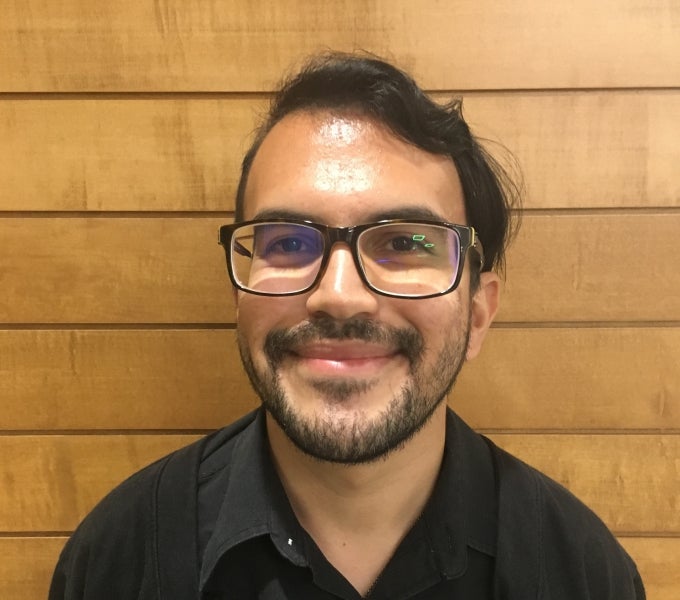
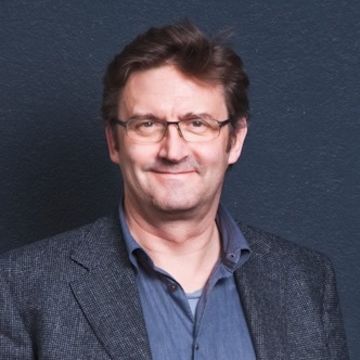
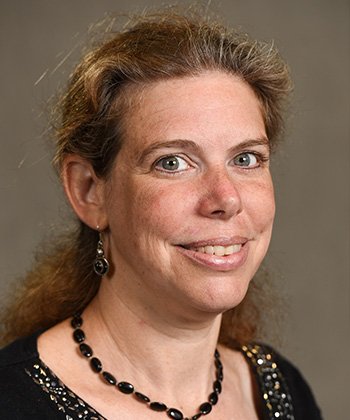
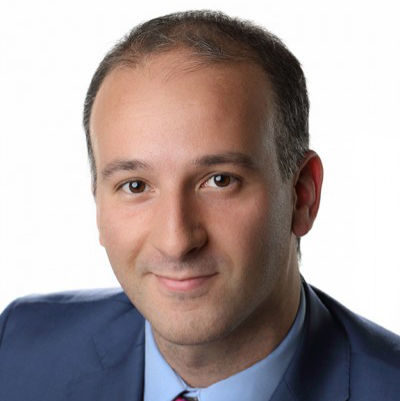
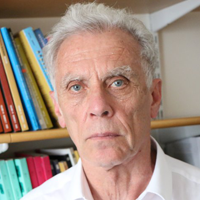
Sebastian Kube is a Professor of Behavioral and Experimental Economics at the University of Bonn, Germany. He holds concurrent positions as Senior Researcher at the Max Planck Institute for the Study of Public Goods, Research Fellow at the Institute for the Future of Labor (IZA), and Vice Director of the BonnEconLab. He also coordinates the European Doctoral Program in Quantitative Economics and serves on multiple editorial/research boards. University of Bonn Max Planck Institute for Research on Collective Goods Institute for the Study of Labor (IZA) BonnEconLab European Doctoral Program in Quantitative Economics His experimental research examines social preferences , cooperation mechanisms , incentive design , and norm enforcement . Key areas include: how remuneration schemes affect workplace cooperation, the effectiveness of social sanctions in social dilemmas, and the psychological foundations of environmental behavior. Recent work explores trust communication strategies for maintaining cooperation, information asymmetry effects in group dynamics, and incentive reversal phenomena where higher rewards paradoxically reduce effort. His 2025 publications particularly focus on sanction removal strategies and environmental behavior. Scientific Awards: Excellence in Teaching Award (2017, 2016, 2015, 2012) IZA Young Labor Economist Award (2011) Etienne-Laspeyres Prize (2011) Heinz Sauermann Prize (2004) As Vice Director of BonnEconLab, he oversees experimental infrastructure for economic research. His methodological approach combines field experiments with laboratory studies , often using behavioral game theory frameworks. He has published extensively in top journals including American Economic Review , Journal of Public Economics , and Management Science .
Elias Chavarria Mora is a Lecturer at the School of Political Science, University of Costa Rica, and a PhD candidate in Political Science at the University of Pittsburgh (expected 2025). He focuses on comparative political behavior and Latin American politics , with regional expertise in Central American electoral systems and party politics . Education: PhD in Political Science (2025, University of Pittsburgh) M.A. in Political Science (2020, University of Pittsburgh) Licentiate in Political Science (2017, University of Costa Rica) B.A. in Political Science (2015, University of Costa Rica) His research investigates social media's role in elections , ideology , and unconventional political participation . He employs data science methods , including text analysis, spatial econometrics, and machine learning. Recent publications analyze political education curricula , data protection laws , and electoral dynamics in Latin America. His work appears in journals like Latin American Politics and Society and Revista Latinoamericana de Opinión Pública . He coordinates the Observatorio de la Política Internacional Sergio Iván Moya Mena at the University of Costa Rica and has collaborated with the University of Salamanca's Parliamentary Elites in Latin America Observatory.
Prof. Dr. Peter Vorderer is a full professor of Media and Communication Studies at the University of Mannheim's Philosophical Faculty, leading the Institute for Media and Communication Studies. He holds a PhD from TU Berlin and has held professorships at institutions such as the University of Toronto, USC's Annenberg School, and the Free University of Amsterdam since 2010. His research focuses on media psychology, exploring media effects, entertainment media narratives, and the pervasive role of digital connectivity in everyday life. Education includes studies at Heidelberg and Mannheim Universities, with additional training at NYU and the University of Michigan. He has served as editor for Zeitschrift für Medienpsychologie and Media Psychology , and as President of the International Communication Association (2014-2015). His work bridges psychological and societal impacts of media, emphasizing entertainment's cognitive and emotional dimensions. Key research themes include media-induced resonance theory, mobile communication's psychological effects, and digital dependency. His 15 most recent articles (2014-2020) reveal a focus on media's role in well-being, social behavior, and cognitive processing. Awards include ICA Fellowship (2016). His lab contributes to understanding media's dual hedonic/eudaimonic functions and their societal implications.
John T. Sidel Summary Professor John T. Sidel is the Sir Patrick Gillam Chair in International and Comparative Politics at the London School of Economics and Political Science (LSE), holding joint appointments in the Government and International Relations Departments. He is also Director of the Saw Swee Hock Southeast Asia Centre. His career spans over three decades of research on Southeast Asia, with a focus on the Philippines, Indonesia, and Vietnam. Education B.A. and M.A. in Political Science from Yale University Ph.D. in Government from Cornell University Research Interests Sidel specializes in Southeast Asian politics, including local power dynamics, comparative historical sociology, Islam in politics, reform advocacy campaigns, and infrastructure politics. Key themes include: Local Politics: Analysis of political bossism, dynasties, and subnational governance in the Philippines and beyond. Comparative History: Long-term patterns of state-building, nationalism, and colonial legacies in Southeast Asia. Islam & Politics: Study of religious violence, political mobilization, and transnational Islam in Indonesia. Reform Advocacy: Advising development initiatives like the Philippines' Coalitions for Change program. Infrastructure Politics: Urban transport reforms and their socio-political implications in Metro Manila. Key Publications Major works include Republicanism, Communism, Islam: Cosmopolitan Origins of Revolution in Southeast Asia (2021), Riots, Pogroms, Jihad (2006), and Capital, Coercion, and Crime (1999). His recent research explores transport policy reforms and the political economy of development in the Philippines. Teaching Sidel teaches courses on Southeast Asian politics, comparative historical sociology, and Islam in world politics at LSE. Notable courses include GV4D3 (Local Power in Globalization) and IR461 (Islam in International Relations). Public Engagement He advises international organizations such as The Asia Foundation and UNHCR, contributing reports on Indonesia's refugee policies and Philippine development initiatives. Active in public lectures and podcasts, he promotes Southeast Asian studies through platforms like the LSE's 'Dialogues on Southeast Asia' series.
Associate Professor Madeline Taylor is an Australian Research Council (ARC) Early Career Industry Fellow at Macquarie Law School and Co-Lead of the Energy, Communities, and Market Regulation Stream at the Transforming Energy Markets Research Centre. She specializes in socio-legal aspects of energy transition, focusing on regulatory frameworks, energy justice, and land-use conflicts between energy developers and communities. Her work bridges property law, commercial law, and comparative law to address challenges in renewable energy integration and resource governance. Affiliations: Honorary Associate at Sydney Environment Institute, Member of Sydney Institute of Agriculture Industry Partners: NSW Department of Primary Industries and Spark Renewables (FAARM Project) Research Interests: Energy law and policy, agricultural-legal synergies, renewable energy siting, and just transition principles. She co-edits the Oil, Gas and Energy Law Journal and contributes to the LexisNexis Energy and Resources Law in Australia . Recent Articles Highlight Key Themes: Offshore wind governance, agrivoltaics regulatory systems, hydrogen licensing, and energy justice frameworks. These works emphasize interdisciplinary approaches to balancing economic, environmental, and social dimensions of energy transitions. Awards: 2023 Lawyers Weekly Women in Law Academic/Researcher of the Year, 2024 AFR Higher Education Awards Finalist, Clean Energy Council Transformational Leadership Scholarship Teaching and Engagement: Embeds climate justice in commercial law education; advises governments and NGOs on energy policy. Active in RE-Alliance Management Committee and IUCN Climate Change Law initiatives.
Dr. Ellen Posman is a Professor and Chair of the Department of Religion at Baldwin Wallace University, Ohio. She also chairs the Faith & Life program and holds a Ph.D. from the University of California, Santa Barbara (UCSB), an M.T.S. from Harvard Divinity School, and a B.A. from Stanford University. Her research focuses on comparative religion, particularly Asian religions and Judaism, with specialties in exile/diaspora studies, Buddhism, and religious violence. She has conducted ethnographic research in India, Nepal, Israel, Palestine, Turkey, Taiwan, Thailand, and Sri Lanka, exploring topics like Theravada Buddhist nuns' ordination rights and the intersection of religion with globalization. Posman’s teaching spans introductory religion courses to specialized topics such as Asian religions, religion and violence, and women in religion. She led a study-abroad initiative to India (2007–2008) examining religion’s role in poverty and development. Her work emphasizes civic engagement pedagogy, including contributions to the Spotlight on Teaching section of Religious Studies News. She co-edited a special journal issue on religious communities in exile and has published widely on Buddhism, interfaith dialogue, and religious pedagogy. Posman’s research has been funded by grants, including an NEH summer seminar on classical Buddhist texts. She is featured in the documentary Bhikkhuni: Buddhism, Sri Lanka, Revolution , highlighting her expertise on Theravada nuns. Her academic service includes roles as a reviewer for the American Academy of Religion and collaborative projects on transnational pedagogy and interfaith engagement.
Matthew Lepori is Senior Lecturer in Political Science at National University of Singapore, specializing in contemporary political theory. His research examines the relationship between supremacy and freedom, with publications critically analyzing neoliberalism, ecological democracy, and Anthropocene discourse. Dr. Lepori teaches advanced seminars on meritocracy and capitalism while developing critical frameworks for understanding power structures in modern societies. His work connects political economy with environmental philosophy, questioning conventional narratives about human-nature relationships and proposing alternative democratic models for ecological governance. Current courses include Introduction to Political Theory, Modern Western Political Theory, and specialized seminars on meritocracy and capitalism.
Christopher Robert Way is an Associate Professor of Government at Cornell University, affiliated with the College of Arts and Sciences. He is a core faculty member of the Institute for European Studies and part of the Reppy Institute for Peace and Conflict Studies, where he contributes to the Peace Studies Minor. His research focuses on comparative political economy, international relations, and nuclear proliferation, with a particular emphasis on the effectiveness of non-proliferation regimes and the political drivers of weapons development. Way's academic interests span international/comparative political economy, the political economy of OECD democracies, and the impact of electoral cycles on policy-making. His work integrates quantitative and qualitative methods to analyze topics such as the relationship between conventional arms transfers and nuclear proliferation, the role of political insecurity in financial market liberalization, and the effects of economic interdependence on military conflict. His recent research on paid sick leave policies and democracy’s role in capitalism reflects his broader engagement with public policy and institutional adaptation. Way has also contributed to debates on nuclear energy as an 'ambiguous technology' and the dynamics of the Nuclear Non-Proliferation Treaty.
Dr. Emilio Ferrara is a Professor of Computer Science & Communication at the University of Southern California, holding appointments in the Viterbi School of Engineering, Annenberg School for Communication and Journalism, and Keck School of Medicine. He serves as Associate Director of Applied Data Science at USC, Research Team Leader at the USC Information Sciences Institute, and Principal Investigator at the USC/ISI Machine Intelligence and Data Science (MINDS) group. His educational background includes a PhD in Machine Learning and BSc & MSc in Computer Science. Ferrara's research focuses on the intersection of artificial intelligence and computational social science, specifically using AI to model and predict human behavior in techno-social systems. His work spans social networks, machine learning, and network science with applications to understanding communication dynamics in digital environments. Ferrara has published over 150 articles in prestigious venues including Proceedings of the National Academy of Sciences, Communications of the ACM, and Physical Review Letters. His research has been widely featured in major news outlets and examines topics ranging from social media manipulation to AI ethics and online behavior. His scientific achievements have been recognized with numerous awards: 2019 Viterbi Scientific Award 2018 DARPA Director's Fellowship 2016 DARPA Young Faculty Award 2016 Complex Systems Society Junior Scientific Award 2015 IBM Watson Big Data Influencer Ferrara's research is supported by major funding agencies including DARPA, IARPA, Air Force, and Office of Naval Research. He leads the HUMANS LAB (Humans & Machines + Networks & Social Systems) which has trained numerous PhD students who have gone on to successful careers in academia and industry. His work on social bots, election integrity, and AI ethics continues to shape understanding of digital social dynamics.
Mizuko (Mimi) Ito is a cultural anthropologist and learning scientist at the University of California, Irvine, serving as Director of the Connected Learning Lab and holder of the John D. and Catherine T. MacArthur Foundation Chair in Digital Media and Learning. She previously held research appointments at Keio University and the University of Southern California. Ito earned dual PhDs in Education and Anthropology from Stanford University and a BA in East Asian Studies from Harvard University. Education: PhD in Education, Stanford University PhD in Anthropology, Stanford University Bachelor's Degree in East Asian Studies, Harvard University Research Interests: Ito's work focuses on leveraging youth interests and digital media to foster equitable, socially connected learning. Her research spans mobile media culture in Japan, youth social media engagement in the US, and global adoption of children's media. She developed the connected learning framework, emphasizing youth-centered, equity-oriented approaches to education in the digital age. Grants & Partnerships: Ito has secured funding from major organizations including the MacArthur Foundation, Bill and Melinda Gates Foundation, National Science Foundation, and Microsoft Research. She co-founded the Connected Learning Alliance to advance research and impact in technology and learning. Awards: Recipient of the Jan Hawkins Award for Early Career Contributions (AERA) Labs & Initiatives: Directs the Connected Learning Lab at UC Irvine, which explores opportunities and risks of digital media in education. The Lab collaborates with global networks to design inclusive learning ecosystems.
Jampel Dell'Angelo is an Associate Professor with ius promovendi in Water Governance and Politics at the Department of Environmental Policy Analysis, Institute for Environmental Studies (IVM), Vrije Universiteit Amsterdam. He holds concurrent roles as a Visiting Scholar at the University of California, Berkeley's Ecohydrology Lab, and an Environmental Governance Affiliate Scholar at SESYNC, Maryland. His research focuses on multilevel dimensions of water governance, climate adaptation in African irrigation systems, and transnational land investments' impacts. He leads the EU-funded NEWAVE project, coordinating 15 Early Stage Researchers across 10 institutions. Educated with a dual PhD in Environmental Science (Autonomous University of Barcelona) and International Cooperation (Sapienza University), he also holds advanced degrees from the LSE, Sapienza, Curtin, and the University of Siena. As Editor-in-Chief of World Development , he promotes interdisciplinary research on socio-environmental systems. His work contributes to UN SDGs related to clean water, sustainable cities, and responsible production. Research interests span water grabbing dynamics, socio-ecological resilience, and policy frameworks for equitable resource management. Recent projects address Mediterranean water scarcity solutions and the socio-political implications of global land rushes. He supervises PhD candidates exploring themes like water democracy, agrifood transitions, and environmental justice. Key contributions include pioneering analysis of 'water commons grabbing' and documenting the Global Water Grab Syndrome. His documentary work complements field research, such as Working Together: Research and Water Governance on Mount Kenya . Current projects emphasize innovative governance models and climate-resilient water management in transboundary contexts.
Professor Jacqueline Manuel is a Professor of English Education and Curriculum Coordinator for Secondary English at the University of Sydney's Faculty of Arts and Social Sciences. She holds a PhD (UNE), DipEd (UNE), and BA (Hons I) from the University of New England. Her research focuses on secondary English education, curriculum history, teacher development, and teenage reading practices. She coordinates the English curriculum methodology for the Master of Teaching (Secondary) program and advises multiple PhD students. Current projects include co-editing volumes on English teacher development and leading international collaborations like the Professional Lives of English Language Arts Teachers Project. She has held significant roles in curriculum committees and boards, including chairing NSW Board of Studies committees and serving on AITSL panels. Key research interests span educational history, teacher professional identity, creativity in arts education, and early career teacher support. Notable publications include Reimagining Shakespeare Education (2023) and Teenagers and Reading (2012). Awards include the 2018 Alan Laughlin Award for Educational Leadership and 2016 Outstanding Service Award. Professor Manuel collaborates with institutions like the International Federation for the Teaching of English (IFTE) and chairs multiple editorial boards. Her work integrates international perspectives, emphasizing English as an emancipatory subject promoting social justice.
Christine Mahoney is a Professor of Public Policy and Politics and Chief Innovation Officer at the Frank Batten School of Leadership and Public Policy at the University of Virginia. She also serves as Director of the Tadler Program in Impact Investing in Appalachia, the UVA Environmental Institute-funded Climate Collaborative on Appalachian Renewable Energy & Resilience, and the EPA-funded Community Change project for economic development in Appalachia. Previously, she was an Assistant Professor at the Maxwell School of Syracuse University and Director of the Center for European Studies and the Maxwell EU Center. Dr. Mahoney earned her Ph.D. in Political Science from Pennsylvania State University in 2006, with fields of study in American politics, Comparative politics, and Research Methods & Statistical Analysis. She also completed her M.A. (2003) and B.A. (2001) in Political Science and International Politics, respectively, at Pennsylvania State University. Professor Mahoney specializes in social justice advocacy, activism, and direct action through social entrepreneurship. Her research focuses on how advocates shape public policy, with particular attention to lobbying strategies in powerful political systems like the United States and the European Union. She has conducted extensive fieldwork in seven conflict zones across Asia, Africa, Eastern Europe, and Latin America, studying the rights of forcibly displaced people and proposing innovative solutions through social entrepreneurship. Her work bridges political science with practical applications in impact investing and refugee integration, creating tangible pathways for social change through entrepreneurial approaches. Professor Mahoney's scholarly output reveals an evolution from comparative studies of advocacy systems to practical applications of social entrepreneurship for forcibly displaced populations. Her early work established foundational knowledge about lobbying in transatlantic political systems, while her more recent research has shifted toward actionable solutions for global displacement crises and sustainable community development. This trajectory demonstrates her commitment to translating academic insights into real-world impact, particularly through the lens of social entrepreneurship and impact investing. Fulbright Fellow Visiting Scholar at Oxford National Science Foundation grant recipient Emerging Scholar award from the American Political Science Association UVA's Public Impact-Focused Research Award Through Social Entrepreneurship at UVA (SE@UVA), which she founded and led for a decade (2011-2021), Professor Mahoney has mentored over 80 student social enterprise teams and supported more than 100 social entrepreneurs with over 38,400 hours of pro-bono consulting. She has secured $37.7 million in funding for programs addressing social and environmental challenges, including the Tadler Program in Appalachia that has made significant strides in advancing rural policy and economic development. Her work demonstrates a consistent commitment to connecting academic research with practical applications that address pressing social problems. Professor Mahoney leads several significant initiatives including the Refugee Investment Network, where she serves as fellow and advisor, and multiple UVA-based programs focused on social entrepreneurship, impact investing, and community development. Her interdisciplinary approach brings together policy experts, social entrepreneurs, impact investors, and community stakeholders to develop innovative solutions to complex social problems, particularly in the areas of refugee integration and rural economic development in Appalachia.
Francisco Panizza is a Professor at the Department of Government, London School of Economics and Political Science (LSE). He holds a PhD in Politics from the University of Essex and has expertise in Democracy, Human Rights, Latin American Politics, Populism, and MERCOSUR. Previously worked at Amnesty International (1991-1995), joined LSE in 1995. On sabbatical 2022/2023. Languages spoken: English, Spanish. Education: Law degree from Universidad de la República (Uruguay), MA and PhD in Politics from University of Essex. Research focuses on political patronage in Latin America, democratic governance, populist discourses, and left-wing politics in Latin America. Key works include 'Handbook of Politicization and Political Patronage' (2025), 'Populism and the Mirror of Democracy' (2005), and studies on Argentina's and Uruguay's public administration reforms. Teaches courses such as GV245: Democracy and Democratisation, GV443: The State and Political Institutions in Latin America, and GV320: Populism. Active in comparative politics research, editing the Routledge Series 'Conceptualizing Comparative Politics.' Research emphasizes political appointments, public sector reform, and the interplay between populism and democracy. No specific scientific awards listed, but holds prominent academic standing in political science.
Arjan F. Kirkels is an Assistant Professor and University Lecturer in the Department of Technology, Innovation & Society within the School of Industrial Engineering and Innovation Sciences at Eindhoven University of Technology (TU/e). His work focuses on sustainability assessments, decision-making in transitions, and interdisciplinary education for sustainable innovation. His research interests include Life Cycle Assessment (LCA), Multi-Criteria Assessment (MCA), sustainability transitions, industrial ecology, and systems engineering. He applies these to emerging technologies such as batteries, hydrogen systems, and heat pumps, with a strong emphasis on integrating stakeholder values and addressing deep uncertainties in sustainability decisions. The recent articles highlight a consistent focus on assessing emerging technologies, particularly in renewable energy and circular economy applications. Trends include prospective LCA, experience curves in solar technology, socio-technical impact assessment, and educational innovations in sustainability. His work bridges technical analysis with social and governance dimensions of sustainability transitions. Best Teacher Award, 1st year Bachelor Sustainable Innovation, for course 0SV20 'Industrial Ecology' (2013) Best Teacher Award, 1st year Bachelor Sustainable Innovation, for course 0SV20 'Industrial Ecology' (2018) Best Teacher Award, 1st year Bachelor Sustainable Innovation, for course 0SV20 'Industrial Ecology' (2020) Educational award nomination, bachelor Sustainable Innovation, course 0SK30 Inter-University Sustainability Challenge (2023) Education Award 2024 - master Innovation Sciences (2025) Arjan F. Kirkels has supervised over 100 thesis students and more than 100 interdisciplinary student groups. He has developed and taught over 20 courses and co-authored 4 textbooks and 7 publications on educational innovation. He is currently supervising four researchers: Huiying Liu, Prapti Maharjan, Rishi Bhatnagar, and Seyed Mousavi. His research is supported by projects such as the EU-funded cVPP (Community-based Virtual Power Plant) and studies on Dutch sustainability transitions. He is actively involved in educational initiatives, including MOOC development and challenge-based learning, and contributes to public discourse through media appearances and workshops on sustainability education and systems thinking.