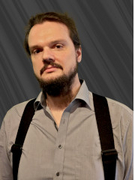
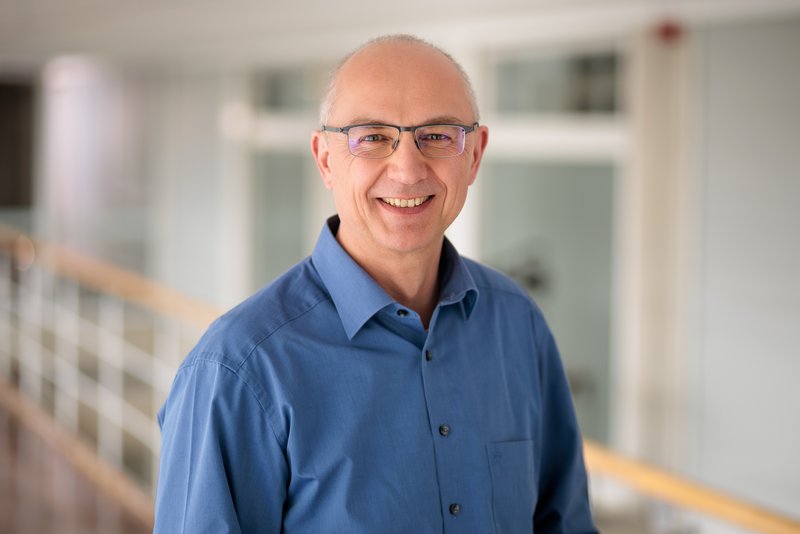
Dr.-Ing. Tobias Fiebig is a Senior Researcher at the Max Planck Institute for Informatics (Internet Architecture department) since April 2022. He previously served as a permanent Assistant Professor at TU Delft's Faculty of Technology, Policy and Management from 2017-2022. His work combines network measurement with human factors to improve security practices, focusing on email protocols, DNS infrastructure, and academic cloud migration. PhD in Computer Science from TU Berlin (2017) MSc in System and Network Engineering from University of Amsterdam (2013) BSc in Cognitive Science from University of Osnabrück (2012) His research spans Internet security (DNS, IPv6, email), academic freedom in cloud contexts, and human-centered security challenges. Recent work analyzes MTA-STS deployment, DNS sampling biases, and university cloud migration privacy implications. He has presented at top conferences including USENIX Security , IEEE Symposium on Security and Privacy , and ACM CCS . Teaching roles include lecturing Data Networks (2023-24) and On the Practice of System and Network Engineering (2024), with prior module management in cyber security analytics and sustainable system operations.
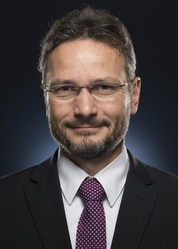
Prof. Dr.-Ing. Eric Sax is a Professor of Electronic Systems Engineering and Management at the Karlsruhe Institute of Technology (KIT), serving as Dean of the Department of Electrical Engineering and Information Technology (ETIT). He leads the Institut für Technik der Informationsverarbeitung (ITIV) and directs the Forschungszentrum Informatik ESS division . As Program Director of the Electronic Systems Engineering & Management (ESEM) master's program at the HECTOR School, he focuses on integrating academic and professional education. His research spans automotive systems engineering , self-learning functions , cybersecurity , and data-driven validation . Key themes include over-the-air updates, scenario-based testing, and the synergy between machine learning and automotive systems. His work addresses challenges in autonomous driving validation, software-defined mobility, and cyber-physical system security. Prof. Sax's contributions include frameworks for automotive software partitioning, cloud-enabled vehicle architectures, and methodologies for quantifying data quality impacts on perception systems. He actively collaborates with industry partners to bridge academic research with industrial application. His recent projects include OptiCAM (cloud/edge function offloading), Drive4C (autonomous driving benchmarking), and UNCOVER (data-driven security monitoring). He holds leadership roles in both KIT and the HECTOR School's technology business programs.
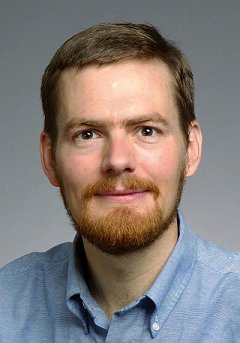
Michael D. Ernst is a Professor in the Computer Science & Engineering department at the University of Washington's College of Engineering. His research aims to make software more reliable, more secure, and easier (and more fun!) to produce. Previously, he was a tenured professor at MIT and a researcher at Microsoft Research. Ernst's primary technical interests are in software engineering, programming languages, type theory, security, program analysis, bug prediction, testing, and verification. His research combines strong theoretical foundations with realistic experimentation, with an eye to changing the way that software developers work. He focuses particularly on programmer productivity and developing practical tools that can be integrated into developers' workflows. Analysis of his recent publications (2018-2025) reveals a continued focus on verification techniques, program analysis, and testing methodologies. His work spans from theoretical foundations of type systems to practical applications of NLP for test generation and LLMs for test oracle creation. A consistent theme is developing lightweight, modular approaches that can be practically applied in real-world development environments. Scientific Awards: ACM Fellow (2014) John Backus Award (2009) NSF CAREER Award (2002) ACM SIGSOFT Impact Paper Award (2013) 8 ACM Distinguished Paper Awards across multiple conferences ECOOP 2011 Best Paper Award Microsoft Academic Search ranked #2 in software engineering research (2013) Ernst has received significant research funding including the NSF CAREER Award, supporting his work on program analysis and verification techniques. His research combines theoretical rigor with practical impact, often resulting in tools that are adopted by the software engineering community. He actively collaborates with researchers across institutions and has served in leadership roles for major conferences in programming languages and software engineering. His research group develops practical tools that address real challenges in software development, with a focus on making verification and analysis techniques more accessible to working developers. Current projects include applying machine learning techniques to software engineering problems while maintaining strong theoretical foundations.
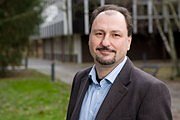
Michael Pradel is a full professor at the University of Stuttgart, specializing in software engineering, programming languages, and machine learning. He will join CISPA as a faculty member from September 2025 while retaining his Stuttgart position. His research focuses on: Neuro-symbolic software analysis Web application analysis Dynamic analysis and test generation Quantum software testing Machine learning for code Recent publications address: LLM-based program repair (RepairAgent, Treefix) WebAssembly analysis (Wasm-R3, LintQ) Python security and analysis (DyLin, DyPyBench) Quantum program analysis (LintQ) Scientific awards: Ernst-Denert Software Engineering Award Emmy Noether grant (1.3M Euro) ERC Starting Grant (1.5M Euro) 3x ACM SIGSOFT Distinguished Paper Award at FSE ACM Distinguished Member Best Paper/Distinguished Paper Awards at ISSTA, ASE, ASPLOS, MSR Key contributions include: DeepBugs for name-based bug detection Getafix for automated bug fixing LintQ for quantum program analysis DyLin for Python dynamic analysis Neuro-symbolic developer tools
Lionel C. Briand is a Professor of Software Engineering with shared appointments at the University of Luxembourg's SnT Centre for Security, Reliability, and Trust and the School of Electrical Engineering and Computer Science at the University of Ottawa. He holds a Canada Research Chair (Tier 1) in Intelligent Software Dependability and Compliance and serves as Director of Lero, Ireland's national software research center. His academic leadership spans over 25 years of collaborative research with industry partners across automotive, aerospace, energy, financial, and legal domains. Professor Briand's research focuses on software verification and validation, trustworthy AI systems, model-driven engineering, and empirical software engineering methodologies. His work bridges theoretical foundations with industrial applications, particularly in cyber-physical systems where machine learning components interact with safety-critical control systems. He has pioneered techniques for testing AI-enabled systems, GDPR compliance automation, and mutation analysis for space systems. His publication portfolio demonstrates consistent innovation in software testing, with recent emphasis on large language models for test generation, automated compliance checking, and safety analysis of deep neural networks. Key trends include black-box testing methodologies, metamorphic testing for security, and search-based approaches for DNN validation. IEEE Fellow and ACM Fellow IEEE Computer Society Harlan Mills Award (2012) ACM SIGSOFT Outstanding Research Award (2022) IEEE Reliability Society Engineer-of-the-Year Award (2013) ERC Advanced Grant recipient (2016) Fellow of the Academy of Science, Royal Society of Canada (2023) ICSE 2011 Most Influential Paper Award As Director of Lero and holder of a Canada Research Chair, Professor Briand leads major research initiatives including an ERC Advanced Grant on cyber-physical system modeling and testing. His industrial collaborations generate substantial grant funding, particularly in automotive safety validation and regulatory compliance automation. He mentors numerous researchers through his dual appointments and serves on program committees for top software engineering conferences. Professor Briand directs research activities at the SnT Centre's SVV department, focusing on software verification and validation. His team develops practical tools like MASS for space system mutation analysis and COREQQA for compliance requirements understanding, with strong industry adoption in automotive and aerospace sectors.
Prof. Dr. Harald Ritz serves as Professor of Practical Computer Science, especially Business Informatics, at the Technical University of Central Hesse (THM) within the Department of Mathematics, Natural Sciences and Computer Science since 2003. He holds leadership roles as Chair of Examination Committees for B.Sc. and M.Sc. Business Information Systems and Spokesperson for the MNI department in the Business Informatics Working Group (AKWI). His educational background includes a Diplom in Business Informatics (Dipl.-Wirtsch.-Inform.) and doctorate (Dr. rer. pol.) from the Technical University of Darmstadt, following professional experience at SAP SI AG and a professorship at Heilbronn University of Applied Sciences. Ritz's research centers on AI-driven digital transformation for data-driven enterprises, with focus on the “Data to Decision” value chain encompassing Framing, Allocation, Analytics, and Preparation phases. His work integrates business intelligence, data warehousing, machine learning, and SAP ecosystems to address challenges in SME digitalization, operational IT management, and educational technology. Current projects emphasize AI applications in higher education, including intelligent tutoring systems and automated feedback mechanisms. Analysis of his 15 most recent publications reveals a consistent trajectory toward applied AI solutions in business contexts, particularly in intelligent chatbots for educational support, financial trading algorithms, and cloud-based data infrastructure. The research demonstrates increasing integration of no-code platforms, real-time analytics, and domain-specific AI applications across logistics, banking, and procurement sectors. No scientific awards were documented in the source materials. Professor Ritz actively supervises academic development through bachelor’s and master’s theses, doctoral research, and collaborative projects. Current initiatives include the “Winfy” AI chatbot (v4.0, 2025), AI-based feedback systems for educational content (Freiraum 2025 grant), the frits intelligent tutoring project with Prof. Kammer, and doctoral research on AI adoption in SMEs. His work bridges theoretical research with practical implementation in SAP environments and cloud platforms. He operates within THM’s MNI department infrastructure, collaborating through the Business Informatics Working Group (AKWI) and contributing to the Digital Classroom communication platform for online education.
Gabriele Bavota is an Associate Professor at the Software Institute of Università della Svizzera Italiana (USI) in Lugano, Switzerland. He leads the SEART (Software Engineering Advanced Research Team) group and serves as Principal Investigator for the DEVINTA ERC starting grant focused on developer intelligence through mining software artifacts. Dr. Bavota's research spans Software Quality, Empirical Software Engineering, and Mining Software Repositories. His work has evolved from foundational studies on code smells and technical debt to cutting-edge research at the intersection of artificial intelligence and software development. He has made significant contributions to understanding API usage patterns, software quality metrics, and developer behavior through empirical studies of large software repositories. His recent publications reveal a strong focus on AI-assisted software development, with extensive research examining code generation, code summarization, and code review automation using large language models. He has also expanded his research to include quality assurance in game development (detecting game stuttering and low engagement events) and voice user interface testing. His work consistently bridges theoretical insights with practical applications for software developers. ACM SIGSOFT Distinguished Paper Award for API compatibility research (MSR 2019) ACM SIGSOFT Distinguished Paper Award for Hugging Face model documentation study (ICPC 2024) ACM SIGSOFT Distinguished Artifact Award for deep learning fault taxonomy (ICSE 2020) As an active member of the software engineering research community, Dr. Bavota serves on program committees for major conferences including ICSE, ASE, FSE, and MSR. He has held leadership roles such as Program Co-Chair for ICSME 2023 and Vision/Reflection Track Co-Chair for ICSE. His SEART research group develops practical tools like the SEART Data Hub that streamline large-scale source code mining and preprocessing for empirical software engineering research.
Tse-Hsun (Peter) Chen is an Associate Professor in the Department of Computer Science and Software Engineering at Concordia University in Montreal, Canada. He serves as Director of the SPEAR lab (Software Performance, Analysis, and Reliability lab), which focuses on improving the quality of large-scale software systems through research in log analysis and AIOps, software performance analysis, software testing, and mining software repositories. His research group maintains extensive collaborations with industry partners including ERA Environmental, Ericsson, Microsoft, and BlackBerry. Dr. Chen received his PhD and MSc in Computer Science from Queen's University and his BSc in Computer Science from the University of British Columbia. Dr. Chen's research addresses critical challenges in modern software engineering, including leveraging Large Language Models to assist developers with development, debugging, and maintenance; helping developers debug production systems by utilizing rich software data; providing optimization suggestions by analyzing user usage data; improving software quality assurances in DevOps environments; and mining software development history for useful developer suggestions. His work spans Software Engineering, Performance Engineering, DevOps & AIOps, Software Testing, and Mining Software Repositories, with a strong emphasis on practical applications that bridge academic research and industrial practice. His recent publications (2024-2025) demonstrate a pronounced shift toward integrating Large Language Models into various aspects of the software engineering lifecycle, particularly in log analysis, fault localization, code generation, and performance testing. This trend reflects the growing importance of AI in software engineering research and practice. Gina Cody Research award (2022) Ranked as one of the most active software engineering researchers worldwide by an independent study published in JSS Dr. Chen has successfully advised numerous PhD and Master's students, many of whom have secured prestigious academic positions. Several of his graduated PhD students now hold tenure-track assistant professor positions at institutions including York University, University of Alberta, DePaul University, and IIT Gandhinagar. His SPEAR lab has developed research tools that have been integrated into industrial practice for ensuring the quality of large-scale enterprise systems. The SPEAR lab, under Dr. Chen's leadership, has established itself as a leading research group in software engineering, with particular expertise in software performance analysis, log analysis, and AI applications for software engineering. The lab maintains strong industry connections and has produced numerous high-impact publications in top-tier software engineering venues including ICSE, FSE, ASE, and TSE.
Prof. Dr. Gerrit Remane is a full-time professor at Wedel University of Applied Sciences since 2018, leading the Bachelor's program in IT Management, Consulting, and Auditing (IMCA) and the Master's program in Business Information Systems / IT Management (WIM). He specializes in IT management, business intelligence, and digital transformation, integrating his industry experience from Roland Berger and academic research on digital business models and innovation. Education: Dr. rer. pol (Digital Business Models in the Mobility Sector), Georg-August-University Göttingen (2014–2017) M.Sc. Business Information Systems, Technical University of Munich (2008–2011) B.Sc. Business Information Systems, Wedel University of Applied Sciences (2005–2008) Research Interests: Digital transformation and business model innovation Agile methodologies in enterprise IT Strategic data acquisition and analytics Sustainable IT practices and Green Technology DevOps, BizDevOps, and hybrid project management His recent publications focus on digital business models, agile transformations, and sustainability in IT. He has supervised numerous student seminars on topics like ITIL maturity assessments, data privacy, generative AI use cases, and metaverse applications. While no specific scientific awards are documented, his work has been presented at conferences including AMCIS, ECIS, and WI. Gerrit Remane collaborates with scholars such as S. Schneider, A. Hanelt, and L.M. Kolbe, and his research underscores the integration of IT with organizational strategy.
Jonas Fritzsch is a Lecturer and Research Associate at the University of Stuttgart's Institute of Software Engineering (ISTE), specifically within the Empirical Software Engineering (ESE) department. He holds a postdoctoral position and focuses on advancing software architecture, microservices, and quality assurance methodologies. His research emphasizes modernizing monolithic applications through architectural refactoring and evaluating cloud-native systems' impacts on software quality. His work spans empirical studies on industry practices—such as challenges in microservices evolvability and résumé-driven development—as well as formal verification techniques for safety-critical systems. Dr. Fritzsch leads the Team Fritzsch , contributing to both academic publications and industrial collaboration. Key areas of exploration include: Migrating monolithic architectures to microservices with a focus on quality-driven methodologies Assessing software quality in cloud-native and DevOps environments Empirical investigations into developer behaviors and tool usability His advisory work includes guiding over 20 students in theses and projects, covering topics like LLM-powered paper discovery, refactoring tools, and microservices adoption in cyber-physical systems. Notable contributions include defining résumé-driven development and developing systematic approaches for microservice migration. His research bridges theoretical advancements with practical industry applications, emphasizing empirical validation and tool support.
Prof. Peter Hertkorn is a full professor of Computer Science at Reutlingen University's Faculty of Computer Science, specializing in programming languages and databases. He holds leadership roles including Chair of the Examination Board for Media and Communication Informatics B.Sc. and BAföG Officer for the same program. His research focuses on model-driven software development, domain-specific languages, DevOps automation, interactive learning technologies, and distributed ledger technologies. He co-leads the Software Engineering and User Experience (swuxLAB) and Distributed Ledger Technologies (DLT-LAB) research groups. Education background includes a Diplom-Informatiker (master's equivalent) and Dr.-Ing. (PhD) from University of Stuttgart. Professional experience includes 5 years at T-Systems International GmbH and prior academic roles at University of Stuttgart. His teaching focuses on Software Engineering and Database Systems courses. Publications span interactive learning environments, collaborative innovation systems, and AR-based knowledge spaces. Active in academic service roles and interdisciplinary research collaborations since 2009.
Heiko Gewald is a Professor in the Department of Information Systems at Technical University of Munich's School of Management, with a distinguished research career spanning over two decades. His scholarly work demonstrates deep expertise in information systems, particularly focusing on technology adoption by aging populations, healthcare information systems, and smart mobility services. Dr. Gewald's research interests center on the intersection of technology and human behavior, with special emphasis on older adults' adoption of digital health applications , smart mobility ecosystems , and DevOps implementation . His work consistently addresses the challenges of designing technology that accommodates diverse user needs, particularly for vulnerable populations. Through extensive field research, he has developed frameworks for understanding technology acceptance barriers among seniors and created interventions to improve digital inclusion. Analysis of his recent publications reveals a clear trajectory toward increasingly specialized work in aging technology, with approximately 60% of his 2020-2025 publications focusing on older adult technology adoption. His research employs diverse methodologies including qualitative case studies, cross-cultural surveys, and experimental designs, often with international collaborations spanning Germany, Australia, and Thailand. Principal investigator for multiple German research projects on digital health for elderly populations Co-organizer of the annual HICSS minitrack on 'Seniors' Use of Digital Resources' since 2018 Active contributor to the Association for Information Systems (AIS) special interest groups Dr. Gewald has mentored numerous doctoral students who have become active researchers in information systems, with several now holding faculty positions. His research has been supported by German research funding agencies and industry partnerships with healthcare technology companies. He maintains strong collaborative relationships with researchers across Europe and Australia, particularly in the healthcare IT domain.
Giles Reger is a Senior Lecturer in the Formal Methods Group of the School of Computer Science at the University of Manchester. He completed his BA in Computer Science at the University of Cambridge in 2009, followed by an MSc in Advanced Computer Science at the University of Manchester in 2010 (awarded Highest Achiever of the Year), and earned his PhD from the University of Manchester in 2014 with a thesis titled "Automata based monitoring and mining of execution traces". His research spans several key areas within computer science: Automated Theorem Proving (first-order) Saturation-based techniques Reasoning with theories and quantifiers Finite Model finding Collaborative and Concurrent proof attempts Runtime Monitoring/Verification Temporal specification languages Specification Mining/Inference Dr. Reger leads multiple EPSRC-funded research projects including SCorCH (Secure Code for Capability Hardware), CAPS (Collaborative Architectures for Proof Search), and QuTie (reasoning with Quantifiers and Theories). His work on the Vampire theorem prover and MarQ monitoring tool demonstrates his bridge between theoretical computer science and practical applications. Recent publications show strong focus on runtime verification, theorem proving, and program analysis with applications to security and performance monitoring. Notable awards: Highest Achiever of the Year Award for MSc studies Dr. Reger collaborates extensively with institutions including the University of Oxford, Arm, Amazon Web Services, and CERN (CMS Experiment). As Manchester lead on the SCorCH project, he develops formal analysis tools for security-aware hardware chips. His work on the VyPR framework enables developers to analyze Python program performance through temporal specification languages and monitoring algorithms.
Devki Nandan Jha is a researcher specializing in Internet of Things (IoT) , Cloud/Edge Computing , and Cybersecurity . His work focuses on runtime monitoring, security frameworks, and deployment optimization in heterogeneous environments. Collaborations include institutions across Europe and Asia, with frequent co-authorship with Rajiv Ranjan, David Wallom, and David Blundell.
Maya Daneva is a Professor at the University of Twente , Netherlands, specializing in Requirements Engineering , Agile Software Development , and Software Security . She has extensive contributions to empirical studies on quality requirements in distributed agile projects, security risk frameworks for cyber-physical systems, and crowdsourced requirements engineering. Key Research Areas: Agile quality requirements, security ontology modeling, DevOps architecture, user feedback analysis for mobile apps Recent Article Trends: Focus on domain modeling pain points, phishing attack ontologies, personality-driven security perceptions, and empirical validation of requirements checklists Leadership: Organizer of EmpiRE workshops, CreaRE workshops, and REFSQ doctoral symposia