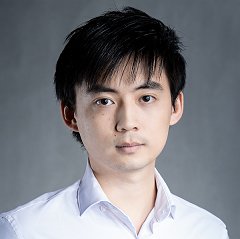
Dr. Wahab Hamou-Lhadj is a Professor and Chair at the Department of Electrical and Computer Engineering , Concordia University, and an Affiliate Researcher at NASA JPL, Caltech . He leads research in Artificial Intelligence for IT Operations (AIOps) , Software Observability , and Model-Driven Engineering , focusing on improving the reliability of digital systems in AI-driven environments.
About Marin Litoiu is a Professor at York University, holding dual affiliations in the Department of Electrical Engineering and Computer Science at the Lassonde School of Engineering and the School of Information Technology in the Faculty of Liberal Arts and Professional Studies. He is a Fellow of the Canadian Academy of Engineering and a recipient of the 2020 IBM Faculty of the Year Award. His research focuses on cloud computing, self-adaptive systems, DevOps, IoT, and machine learning-driven performance engineering. Research & Awards Litoiu leads the Dependable Internet-of-Things Applications (DITA) program, funded by NSERC, and co-founded Bitnobi Inc., acquired by Myant. His notable awards include the CASCON 2019 Most Influential Paper Award and Best Paper Awards at multiple conferences. His work emphasizes practical applications of adaptive systems, cybersecurity, and smart infrastructure integration. Grants & Projects NSERC CREATE Program: $1.65M for the DITA program (2018) York Innovation, TIAP, NSERC, and OCI-funded Bitnobi incubation Leadership in multiple CASCON workshops on cloud computing and AIOps Labs & Teams Litoiu’s lab has produced impactful startups like Bitnobi and pioneered research in self-driving systems, edge computing, and AI-driven operations. His team collaborates with industry partners like IBM and explores cutting-edge topics such as LLMs in performance optimization and fault detection.
Max Planck Institute for Security and PrivacyGermany
Tse-Hsun (Peter) Chen is an Associate Professor in the Department of Computer Science and Software Engineering at Concordia University in Montreal, Canada. He serves as Director of the SPEAR lab (Software Performance, Analysis, and Reliability lab), which focuses on improving the quality of large-scale software systems through research in log analysis and AIOps, software performance analysis, software testing, and mining software repositories. His research group maintains extensive collaborations with industry partners including ERA Environmental, Ericsson, Microsoft, and BlackBerry. Dr. Chen received his PhD and MSc in Computer Science from Queen's University and his BSc in Computer Science from the University of British Columbia. Dr. Chen's research addresses critical challenges in modern software engineering, including leveraging Large Language Models to assist developers with development, debugging, and maintenance; helping developers debug production systems by utilizing rich software data; providing optimization suggestions by analyzing user usage data; improving software quality assurances in DevOps environments; and mining software development history for useful developer suggestions. His work spans Software Engineering, Performance Engineering, DevOps & AIOps, Software Testing, and Mining Software Repositories, with a strong emphasis on practical applications that bridge academic research and industrial practice. His recent publications (2024-2025) demonstrate a pronounced shift toward integrating Large Language Models into various aspects of the software engineering lifecycle, particularly in log analysis, fault localization, code generation, and performance testing. This trend reflects the growing importance of AI in software engineering research and practice. Gina Cody Research award (2022) Ranked as one of the most active software engineering researchers worldwide by an independent study published in JSS Dr. Chen has successfully advised numerous PhD and Master's students, many of whom have secured prestigious academic positions. Several of his graduated PhD students now hold tenure-track assistant professor positions at institutions including York University, University of Alberta, DePaul University, and IIT Gandhinagar. His SPEAR lab has developed research tools that have been integrated into industrial practice for ensuring the quality of large-scale enterprise systems. The SPEAR lab, under Dr. Chen's leadership, has established itself as a leading research group in software engineering, with particular expertise in software performance analysis, log analysis, and AI applications for software engineering. The lab maintains strong industry connections and has produced numerous high-impact publications in top-tier software engineering venues including ICSE, FSE, ASE, and TSE.
Tse-Hsun (Peter) Chen is an Associate Professor in the Department of Computer Science and Software Engineering at Concordia University, Montreal. He leads the Software PErformance, Analysis, and Reliability (SPEAR) lab, focusing on improving software quality through log analysis, AIOps, and mining software repositories. His research collaborates with companies like Microsoft, BlackBerry, and Ericsson. Education: PhD, MSc, and BSc in Computer Science from Queen's University and the University of British Columbia. Awards include the Gina Cody Research Award (2021) and recognition as one of the world's most active software engineering researchers (JSS study). Research interests include software testing, DevOps, and leveraging LLMs for SE tasks. Recent work emphasizes log parsing with LLMs (e.g., LibreLog) and fault localization. Graduates from his lab hold academic positions at institutions like York University and DePaul University. Teaching includes courses on software verification, testing, and process management. Active in program committees for ICSE, FSE, and MSR. Over 50 publications in top venues like TSE, ICSE, and FSE.
Muskaan Singh is a Lecturer in Data Analytics at the Intelligent Systems Research Centre (ISRC) within the School of Computing, Engineering and Intelligent Systems at Ulster University . A member of the Cognitive Analytics Research Lab (CARL) , her work bridges Natural Language Processing (NLP) , Artificial Intelligence , and Practical Applications in domains ranging from machine translation to biomedical diagnostics. Education: PhD in Machine Translation (Thapar Institute of Engineering and Technology, 2016-2020) Master’s in Machine Translation (IIIT Hyderabad, India) Her research spans NLP and AI with applications in code-switched language modeling , depression detection , social media analytics , and medical diagnostics . She has developed multilingual tools for automatic minuting, including DeepCon and ALIGNMEET , and contributed to EU-funded projects like ROXANNE (criminal network analysis) and ELITR (European Live Translator). Key scientific awards include first prizes in international NLP competitions (EVAL4NLP, LT-EDI, SMM4H) and recognition at EMNLP , ACL , and COLING . She received the Inclusion and Diversity Grant (EMNLP 2021) and GHC Scholarship (2019). Current projects include AI-EPOCMON (AI-Enabled Point-of-Care Monitoring) and T3-NCP (crime prevention for safer communities). Dr. Singh has supervised grants from UKRI and Alzheimer’s Research UK , focusing on AI for health and IT operations . Her team at ISRC collaborates globally with institutions in Switzerland , Czech Republic , and India . She also leads research for the Center for Data Science and Artificial Intelligence at IIIT Lucknow, India.
Zhen Ming (Jack) Jiang is an Associate Professor and York Research Chair (Tier II) in Software Engineering for Foundation Model-Powered Systems at the Department of Electrical Engineering & Computer Science, York University, Canada. He earned his Ph.D. (2013) from Queen's University and MMath/BMath degrees from the University of Waterloo. Research Focus: Software Engineering for AI, Performance Engineering, Logging Practices, and Software Visualizations. Education: Ph.D. in Computer Science, Queen's University MMath in Computer Science, University of Waterloo BMath in Computer Science, University of Waterloo His research explores engineering rigor in AI-powered applications, performance optimization in foundation model-driven systems, and efficiency improvements in large-scale software. Recent work analyzes logging practices, code cloning in blockchain, and AIOps models. He has received prestigious awards including the NSERC Discovery Accelerator Supplements (2020) and multiple Best Paper Awards at ICST, ICSE, and MSR. He served on program committees for ICSE, ICSME, and ICPE, and reviewed for top journals like IEEE Transactions on Software Engineering.
Yibo Huang is a Research Fellow at the Department of Computer Science and Engineering (CSE), University of Michigan, working with Prof. Ang Chen. His research focuses on systems, networking, and security, emphasizing hardware-software co-design and ML-driven optimization. He holds a Ph.D. in Computer Science from Fudan University (2021), where he co-advised students under Prof. Jie Wu and Prof. Yang Xu. Notable contributions include the CoNEXT 2022 Best Paper Award and Usenix Security 2023 Distinguished Paper Award for innovations in low-latency interconnects and cloud security. Education: Ph.D. in Computer Science (Fudan University, 2021), B.S. in Software Engineering (Central South University, 2016). Industrial experience includes roles at Bytedance (2020–2022) developing RDMA systems and internships at Intel (2015–2016). Academic service includes roles on program committees for EuroSys, FAST, OSDI, and USENIX Security. Research interests span cloud management (e.g., Cloudless Computing), RDMA-based systems (e.g., Exposing RDMA NIC Resources), and AI-driven experimentation frameworks (e.g., EXP-Bench and Curie). His work bridges theoretical advancements with practical applications in high-performance computing and edge-cloud environments. Key awards include the Distinguished RDMA Programming Instructor (2022), Intel PhD Fellowship (2020), and multiple APAC RDMA Programming Competition prizes. His lab collaborations include projects on disaggregated recommendation systems (FlexEMR) and persistent memory optimization (PFtree). Labs/Teams: Active in the University of Michigan’s CSE division, collaborating with Prof. Ang Chen’s group, and previously part of Fudan University’s Starry Team (focusing on RDMA-enhanced distributed systems).
Max Planck Institute for Security and PrivacyGermany
Heng Li is an Assistant Professor in the Department of Computer Engineering and Software Engineering at Polytechnique Montreal, Canada. He leads the Measurement, Observation, and Optimization of Software and its Evolution (MOOSE) lab, focusing on software engineering research with emphasis on observability, log analysis, and performance engineering. His work bridges academic research with practical industry applications, drawing from his prior experience as a software engineer at Synopsys and BlackBerry. Education: Ph.D. in Computing from Queen's University, Canada M.Sc. from Fudan University, China B.Eng. from Sun Yat-sen University, China Heng Li's research spans multiple critical areas in modern software engineering. His primary focus is on software monitoring and observability , where he develops techniques to make software systems more transparent and understandable during operation. He has made significant contributions to software log mining , creating novel approaches for parsing and analyzing log data to detect anomalies and performance issues. His work in intelligent operations of software systems applies machine learning to automate various aspects of software operations. Additionally, he researches software performance engineering and mining software repositories to understand development practices and improve software quality. An analysis of Dr. Li's recent publications reveals a strong focus on practical applications of software analytics. His work consistently addresses real-world challenges in software observability, particularly log analysis and performance monitoring. A notable trend is his exploration of machine learning applications in software operations (AIOps), with increasing emphasis on efficient algorithms for log processing and anomaly detection. His research shows a progression from foundational techniques in log parsing to more sophisticated approaches for performance regression detection and privacy preservation in software logs. Many of his papers include empirical studies from industry settings, demonstrating his commitment to bridging the gap between academic research and industrial practice. Professional Service: Program Committee member for multiple top software engineering conferences including ASE, ICSE, ESEC/FSE Active participation in workshops and special tracks related to software analytics and AIOps Dr. Li leads the MOOSE (Measurement, Observation, and Optimization of Software and its Evolution) laboratory at Polytechnique Montreal. The lab focuses on developing innovative techniques for monitoring software systems, analyzing their behavior through logs and performance metrics, and optimizing their operation. Current projects in the lab include advanced log parsing algorithms, performance regression detection systems, and privacy-preserving techniques for software logs. The lab maintains strong connections with industry partners to ensure research relevance to real-world challenges.
Salmans is a Research Fellow at the DigiTech Centre within the Digital Futures Institute at the University of Suffolk, affiliated with the Research Directorate. His work bridges academia and industry through consultancies, training, and knowledge dissemination. He holds a PhD in Data Analytics (specializing in NLP) from Ulster University, along with Master's and Bachelor's degrees in Software Engineering and IT. Education: PhD in Data Analytics (NLP specialization), Ulster University (2020) MSc Software Engineering, Alhamd Islamic University (Pakistan) BSc Information Technology, Alhamd Islamic University (Pakistan) Research focuses on NLP, AIops, and applied data analytics with industry collaboration. Key areas include transformer models (BERT/ERNIE/RoBERTa), IT incident prediction, and agritech AI. His work is funded by UKRI, EPSRC, and the Turing AI Fellowship. Recent publications explore cybersecurity in WordPress (2024), AIops frameworks (2023), and neural POS tagging (2023). His research demonstrates a strong focus on practical applications across IT, agriculture, and language processing. Received the FHEA fellowship (2023) for teaching contributions. Secured £350k UKRI grants for agritech projects, including 'Agri-KG' and 'Agri-F2P', advancing AI-driven agricultural decision-making. Previously managed a £1M EPSRC-funded project with AllState for infrastructure incident prediction. Lab/Team Affiliations: Lead researcher in the DigiTech Centre's NLP group and collaborator in Ulster University's Intelligent Systems Research Centre.
Pinjia He is an Assistant Professor and Presidential Young Fellow at the School of Data Science, The Chinese University of Hong Kong, Shenzhen, where he leads research in software engineering, AI systems, and log analysis. He received his Ph.D. in Computer Science and Engineering from The Chinese University of Hong Kong and his B.E. from South China University of Technology. His research focuses on three interconnected areas: AI for Software Engineering : Developing LLM-based tools for automated logging, code repair, and AIOps Software Engineering for AI : Ensuring safety and reliability of AI systems through testing and validation Software Systems : Log analysis, anomaly detection, and performance optimization in distributed systems Recent publications demonstrate strong emphasis on testing methodologies for AI systems (LLMs, vision-language models), automated log analysis techniques, and AI reliability. His work consistently appears in top-tier venues including ICSE, FSE, ASE, and ICLR. He has received significant recognition including: Most Influential Paper Award (ISSRE) IEEE Open Software Services Award IEEE CS TCSE Rising Star Award He leads a substantial research team with 9 PhD and 8 Master's students, focusing on AI/SE integration. The group maintains active industry collaborations and open-source projects with over 5,000 GitHub stars.
Professor Damien Coyle is the Director of the Bath Institute for the Augmented Human at the University of Bath, where he leads cutting-edge research in artificial intelligence, machine learning, and human-computer interaction. His work is centered on brain-computer interfaces (BCI), neurotechnology, and cognitive computing, with applications in healthcare, rehabilitation, and intelligent systems. His research interests include Brain-Computer Interfaces , Spiking Neural Networks , Deep Learning , Emotion Recognition , Virtual and Extended Reality , and Neurofeedback Systems . He applies advanced AI techniques to decode neural signals, enabling real-time interaction between the brain and external devices. His interdisciplinary approach integrates neuroscience, computer science, and engineering. His recent publications from 2023–2024 reveal a strong focus on anomaly detection in industrial systems , EEG-fMRI data fusion for inner speech decoding , multi-level IT incident prediction using AI , and enhancing neurofeedback with immersive VR . These works demonstrate a trend toward multimodal data integration, real-time BCI applications, and AI-driven decision support in both clinical and technological domains. He has supervised numerous students and collaborators, many of whom are co-authors on his publications. His research is frequently published in top-tier IEEE and Springer conferences. He actively contributes to the advancement of neuroadaptive technologies and is involved in high-performance computing for BCI calibration. His leadership in organizing major conferences further underscores his influence in the field.
Merlijn Sebrechts is a postdoctoral researcher and policy officer at Ghent University's Faculty of Engineering and Architecture, Department of Information Technology (EA05). His work focuses on cloud-native technologies, edge computing, and secure system design. Research areas include Kubernetes, WebAssembly, and confidential computing He teaches computer science courses in the Information Engineering Technology program Expertise spans trusted execution environments, software supply chain security, and cloud orchestration His recent publications analyze edge computing security, lightweight virtualization, and intent-based resource management. Key contributions include decentralized orchestration frameworks and benchmarks for cloud performance. Merlijn maintains strong ties to open-source ecosystems through involvement with Kubernetes, Docker, and the Ubuntu community.
Max Planck Institute for Security and PrivacyGermany
Yintong Huo is an Assistant Professor at the School of Computing & Information Systems, Singapore Management University (SMU), where he leads research in intelligent software engineering. He received his PhD from The Chinese University of Hong Kong (CUHK) in 2024 under Prof. Michael R. Lyu and holds a Bachelor's degree from the University of Electronic Science and Technology of China. His research focuses on empowering AI models (particularly LLMs) for software development, testing, and operations, with two flagship projects: LogPAI (open-source AI platform for automated log analysis) and WebPAI (multimodal intelligence for automatic webpage development). His work spans log analysis, code intelligence, UI generation from prototypes, and configuration diagnostics. Huo's publication record shows strong trends in leveraging multimodal LLMs for practical software engineering challenges, with recent work on interactive webpage generation (Interaction2Code), configuration logging (ConfLogger), and log parsing (LILAC). His research bridges theoretical AI advancements with real-world system reliability needs. ICSE Distinguished Reviewer Award (2025) ISSRE Distinguished Reviewer Award (2024) IEEE Open Software Services Award (2022) ACM SIGSOFT CAPS Travel Grants National Scholarship (2019) Huo actively supervises PhD students (including Shi Ying Chang and Dan Huang) and research engineers. His lab has secured funding for multiple projects including WebPAI and LogPAI. He serves on program committees for major conferences (ASE, ICSE, FSE) and reviews for top journals. Current projects include dynamic webpage generation and configuration diagnostics, with ongoing work on small language models for logging systems. Huo leads the LogPAI and WebPAI research groups, developing open-source tools for automated log analysis and multimodal UI code generation. The LogPAI project has garnered over 3,000 GitHub stars and 70,000 downloads. His team collaborates with industry partners on AIOps challenges and is expanding into configuration diagnostics through the ConfLogger project.
Max Planck Institute for Security and PrivacyGermany
Pinjia He is an Assistant Professor and Presidential Young Fellow at The Chinese University of Hong Kong, Shenzhen's School of Data Science. He is also recognized as a national-level young talent in China. His academic journey includes a postdoctoral position at ETH Zurich's Department of Computer Science under Prof. Zhendong Su, a Ph.D. in Computer Science and Engineering from The Chinese University of Hong Kong supervised by Prof. Michael R. Lyu, and a B.E. in Computer Science and Technology from South China University of Technology. Ph.D. in Computer Science and Engineering, The Chinese University of Hong Kong Postdoctoral Scholar, ETH Zurich B.E. in Computer Science and Technology, South China University of Technology Dr. He's research spans software engineering, natural language processing, and systems, with particular focus on (1) AI for SE (e.g., LLM for code, AIOps), (2) SE for AI (e.g., LLM safety), and (3) software testing. He is renowned for his work on robust NLP systems and software log analysis. His research has been published at top venues including ICSE, FSE, ASE, ISSTA, ICLR, and OSDI. His publication trends show a consistent focus on log analysis systems, with recent work shifting toward LLM applications in software engineering and safety evaluation of conversational AI systems. His research demonstrates strong industry impact with tools downloaded over 60,000 times by more than 450 organizations. Most Influential Paper Award (ISSRE) IEEE Open Software Services Award Dr. He actively contributes to the academic community as Social Media Co-Chair for FSE 2025, Associate Editor of TOSEM, and serves on program committees for major conferences including FSE 2025, ICSE 2025, ISSTA 2025, and ASE 2024. His GitHub repositories (logparser, loglizer, loghub) have garnered over 5,000 stars and significant industry recognition including from IBM. While specific grant information isn't detailed in the provided text, his extensive publication record and tool development suggest substantial research funding. His work has been cited over 5,000 times according to Google Scholar, and his open-source tools have been widely adopted in both academia and industry. His current research focuses on advancing the intersection of software engineering and artificial intelligence, particularly in leveraging LLMs for software development tasks while ensuring their safety and reliability.



/prod01/channel_2/media/uniofsuffolk/website/content-assets/images/staff-profile-photos/research/Salman-Ahmed.jpg)