Mario Baldi is a researcher affiliated with the Polytechnic University of Turin, Italy , with significant contributions to computer networking , distributed systems , and software-defined networking . Key research themes: network function virtualization , programmable dataplanes , time-driven scheduling , and traffic analysis . Recent work focuses on RDMA-enabled compute offloading (2023) and DNN inference in network data planes (2023). Longstanding expertise in multicast routing , voice/data packet efficiency , and XML-based protocol parsing (2000–2006). Collaboration network includes Yoram Ofek , Fulvio Risso , and Han Hee Song , with 99+ publications spanning 1994–2023.
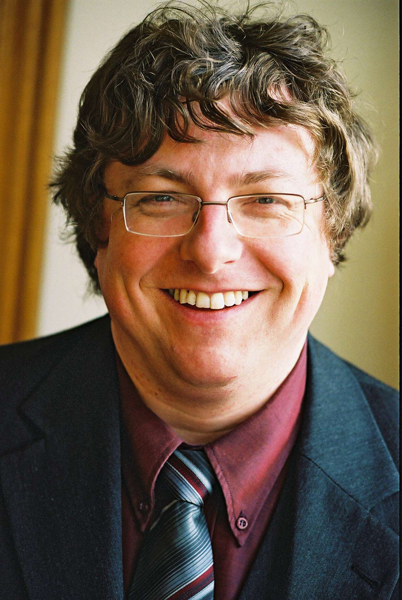
Bart De Moor is a Full Professor at the Department of Electrical Engineering, KU Leuven, Belgium, and a guest professor at the University of Siena. He leads the STADIUS research group and has supervised 85 PhD students. His roles include chairman of Health House (2016–present), member of the Board of VIB (Biotech Institute), and former Vice-Rector for International Policy (2009–2013). Education: Master Degree in Electrical Engineering (1983), KU Leuven PhD in Engineering (1988), KU Leuven Research Interests: His work spans numerical linear algebra, optimization, algebraic geometry, systems and control theory, data-driven AI, machine learning, and applications in process industry and biomedical big data. He has contributed to subspace identification, tensor decomposition, bioinformatics, and quantum computing. Publications Trends: His publications highlight subspace identification methods, tensor decomposition, bioinformatics, and biomedical data analysis. These reflect interdisciplinary advancements in control theory, quantum physics, and mathematical engineering, with applications in industrial and healthcare domains. Scientific Awards and Honors: Leslie Fox Prize (1989) Laureate of the Belgian Royal Academy of Sciences (1992) Bi-annual Siemens Award (1994) Fellow of IEEE (since 2004) Member of the Royal Academy of Belgium for Science and Arts (since 2000) Fellow of IFAC (since 2022) Commander in the Order of King Leopold I (2020) Fellow of SIAM (since 2017) FWO Excellence Award (2010) Advising and Grants: He has led a research group of 20 PhD students and postdocs, co-founded 8 spinoff companies, and secured the ERC Advanced Grant ‘Back to the roots’ (2020–2025). He also co-holds the KU Leuven Chair on healthcare systems (2018–present). Labs and Organizations: Active in the STADIUS research group (KU Leuven), he has served on boards of the Flemish Interuniversity Institute for Biotechnology (VIB), the Alamire Foundation, and the Health Tech Experience Center Health House. His spinoffs include Trendminer, Cartagenia, and Ugentec.
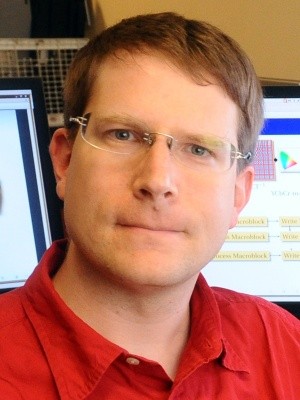
Stephen A. Edwards is an Associate Professor at the Computer Science Department of Columbia University , where he explores automating software for embedded systems and real-time control . His work focuses on compiler techniques for languages like Esterel and domain-specific solutions for device drivers and communication protocols . Education : PhD in Electrical Engineering, University of California, Berkeley (1997) MS in Electrical Engineering, UC Berkeley (1994) BS in Electrical Engineering, California Institute of Technology (1992) Research Interests span hardware synthesis , functional programming , and synchronous languages . He develops domain-specific languages to bridge software and hardware, emphasizing determinism and timing precision in embedded systems. His group's work includes projects like the FHW compiler and the Sparse Synchronous Model . Article Trends show a focus on FPGA-based systems , garbage collection for accelerators, and parallel functional programming . These reflect his broader interests in hardware-software co-design and compiler optimization for real-time applications. Students : John Hui (2021-2024, Apple) Max Levatich (2020-) Richard Townsend (2013-2019, Tufts) Nalini Vasudevan (2007-2011, Google) Marcio Buss (2004-2008) Jia Zeng (2002-2008) Cristian Soviani (2002-2007, Synopsys) Consulting & Expert Services : He provides litigation support and expert witness services in patent cases involving software architecture and computer design , including ITC cases. Labs & Projects : Leads research on sparse synchronous systems and hardware synthesis , with initiatives like the GAPS CLOSURE Project and FHW Compiler for translating Haskell to System Verilog.
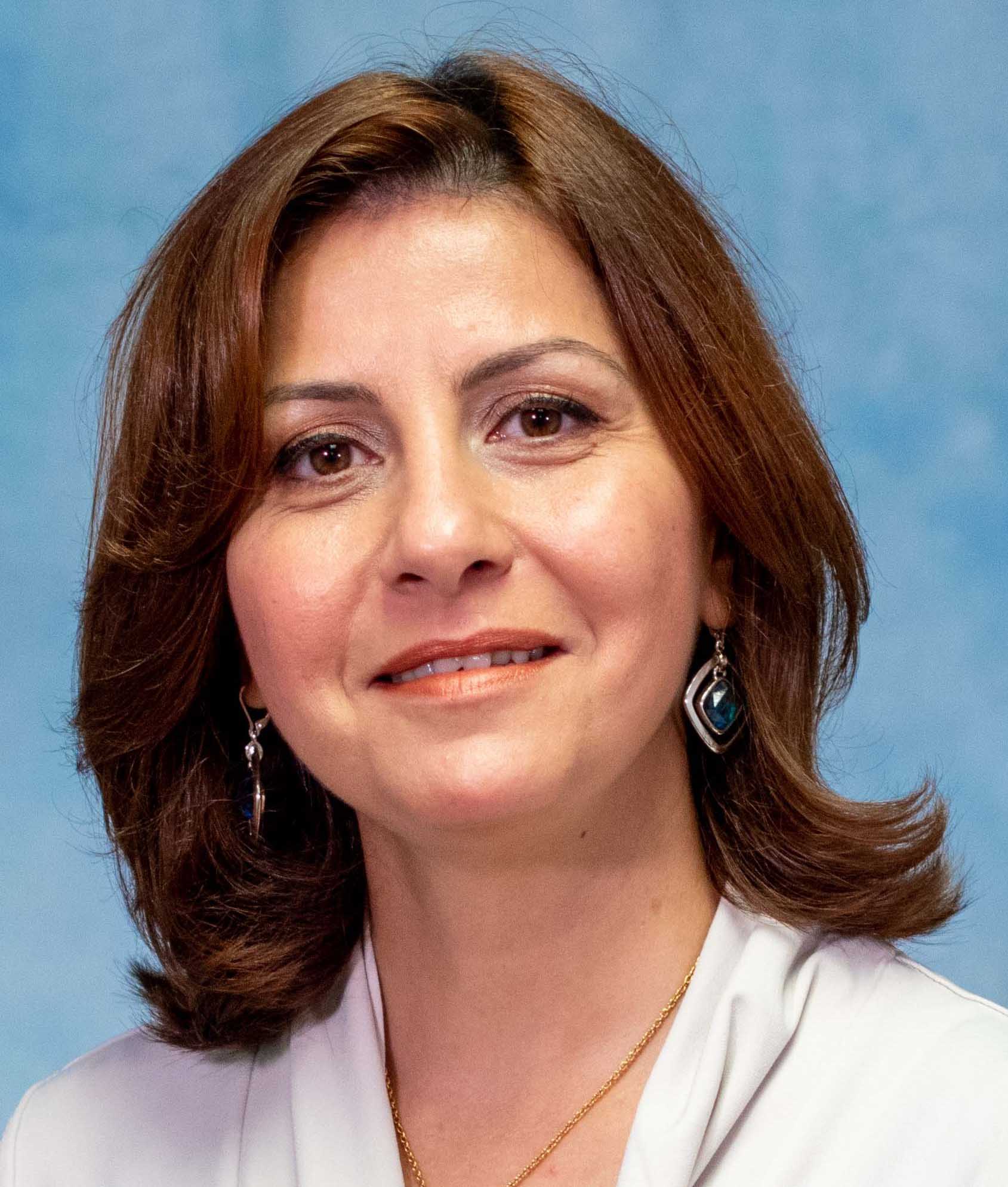
Rasha Karakchi serves as a Lecturer in the Department of Computer Science and Engineering at the University of South Carolina's Molinaroli College of Engineering and Computing, where she teaches diverse courses while maintaining an active research program in hardware acceleration and embedded systems. Her academic foundation includes: Ph.D. in Computer Science and Engineering, University of South Carolina (2020) M.E. in Computer Engineering, University of South Carolina (2016) Dr. Karakchi's research centers on high-performance reconfigurable embedded systems, with particular focus on hardware acceleration for automata processing, spiking neural networks, and genomic sequence alignment. Her work bridges theoretical computer science with practical hardware implementation, emphasizing energy efficiency and real-time performance in security-critical applications. Analysis of her 2023-2025 publications reveals a dominant research trajectory applying machine learning to optimize hardware configurations for domain-specific tasks. Key thematic clusters include ML-enhanced automata processors for pattern matching, lightweight encryption engines for embedded security, and specialized architectures for spiking neural network acceleration—all demonstrating consistent innovation in hardware-software co-design for computationally intensive workloads. Her research excellence has been recognized through: SPARC Award (South Carolina's Program to Advance Research and Creativity)
Frans Kaashoek is the Charles Piper Professor in MIT's Department of Electrical Engineering and Computer Science (EECS) and a member of the Computer Science and Artificial Intelligence Laboratory (CSAIL). He leads the Parallel and Distributed Operating Systems (PDOS) group, focusing on secure systems, formal verification, and distributed computing. His work emphasizes crash-safe systems, concurrent programming, and cryptographic security. Education: PhD in Computer Science from Vrije Universiteit Amsterdam (1992), thesis on group communication in distributed systems under Andy Tanenbaum. Research interests include operating systems, networking, programming languages, and computer architecture. Notable projects: FSCQ (verified crash-safe file system), Perennial (framework for verifying concurrent systems), and Noria (high-performance web backend). Awards: ACM SIGOPS Mark Weiser Award (2001), ACM Prize in Computing (2010), National Academy of Engineering membership (2006), and American Academy of Arts and Sciences membership (2012). Publications: Over 150 papers on systems software, verification, and security. Authored textbooks like Principles of Computer System Design: An Introduction and xv6 commentary.
ZHENG Baihua serves as Professor of Computer Science at Singapore Management University's School of Computing and Information Systems (SCIS), concurrently holding leadership roles as Associate Dean for SCIS Post-Graduate Research Programmes and Director of the Master of Science in Computing programme. Currently on leave but maintaining full-time faculty status, his academic career spans over two decades with foundational training from Hong Kong University of Science and Technology. Professor Zheng's research program integrates artificial intelligence, data science, and urban computing to solve critical challenges in mobility and sustainability. His expertise centers on trajectory data management, social network analysis, and spatio-temporal modeling, with significant contributions to trajectory compression algorithms, influence minimization in social networks, and real-time traffic prediction systems. His work bridges theoretical database innovations with practical applications in smart city infrastructure and public health interventions. Analysis of recent publications (2024-2025) reveals a dominant focus on physics-informed trajectory processing, GPU-accelerated indexing for high-dimensional data, and transformer-based models for urban mobility prediction. Key trends include the fusion of graph neural networks with spatio-temporal dynamics, novel approaches to contact tracing through timeline graphs, and differentiable search techniques for structured data discovery. These works consistently target real-world deployment in transportation systems and epidemic control. No scientific awards are documented in available institutional records. Information regarding student supervision, research grants, laboratory facilities, or collaborative teams remains unspecified in current public profiles.
Anca Muscholl is a Professor at the University of Bordeaux and holds the Hans Fischer Senior Fellowship at the Technical University of Munich (TUM-IAS). She leads the Formal Methods group at the Bordeaux Laboratory for Computer Science Research (LABRI). Her research focuses on foundational aspects of formal verification, automata theory, logics, concurrent systems, and database foundations. She has held academic positions at the University of Paris 7 and has been recognized with prestigious awards, including the Silver Medal from CNRS (2010) and membership in the Institut Universitaire de France (2007–2012). Education: Master’s from Technical University of Munich (TUM), PhD from University of Stuttgart (1994), and habilitation at the same institution. She has contributed to editorial roles for journals like Information Processing Letters and Discrete Mathematics & Theoretical Computer Science , and serves on the council of the European Association for Theoretical Computer Science (EATCS). Her work emphasizes automated controller synthesis for distributed systems and formal methods in concurrency. Notable achievements include advancements in distributed synthesis, temporal logic, and verification of reactive systems. She actively participates in organizing major conferences like ICALP and steering committees for theoretical computer science initiatives. Awards: Silver Medal (CNRS 2010), Junior Member of IUF (2007–2012), Best Paper Awards (PODS 2006, ETAPS 2001). Professional Roles: Editor for TheoretiCS , member of EATCS council, and leader of the Formal Methods group at LABRI. Research Themes: Formal verification, automata theory, concurrency, distributed systems, database logics.
Ghislain Fourny is a Lecturer and senior scientist in the Department of Computer Science at ETH Zurich. His research spans quantum foundations, game theory, and database systems. He develops deterministic models merging game theory into quantum physics, proposing non-Nashian solution concepts to address quantum paradoxes. He co-designed the JSONiq query language and leads the RumbleDB project for large-scale data querying. A recipient of multiple teaching awards including the Golden Owl and ETH Medal, he advises numerous students on topics ranging from quantum theory to database systems. His work bridges theoretical physics, computer science, and mathematics, aiming to reconcile determinism with quantum mechanics through game-theoretic models. Education : Holds a Master's in Quantum Information (2007) and a PhD in Computer Science (2011). His early career included pioneering work on XBRL standards and XQuery implementations. Research Themes : Non-Nashian game theory: Fixpoint equilibria avoiding Grandfather paradoxes, Pareto optimality. Quantum foundations: Deterministic models challenging free-choice assumption, spacetime games integrating special relativity. Database systems: JSONiq language design, RumbleDB for scalable querying of heterogeneous data. Teaching Contributions : Courses include Big Data for Engineers, Information Retrieval, and Information Systems for Engineers. His open-access Big Data textbook is widely used in universities. Recognition : Over 20 awards including the 2023 VIS Teaching Award, ETH Medal (2000), and multiple top ranks in international mathematics competitions since 1993.
Özkan Kale is an Associate Professor at the Department of Civil Engineering, TED University. He holds academic affiliations with the Graduate Programs in Civil Engineering and has served as a Coordinator for academic activities. His professional experience includes roles as a research associate at Bogazici University Kandilli Observatory and Earthquake Research Institute (2015) and Rice University (2016). He teaches courses such as 'Structural Analysis', 'Earthquake Resistant Design', and 'Probability and Statistics for Engineers', reflecting his expertise in Civil Engineering education. Dr. Kale's research focuses on earthquake engineering and engineering seismology, particularly ground motion characterization, probabilistic seismic hazard analysis, and seismic design spectra. He has contributed to national and international projects, including the development of ground motion predictive models and strong-motion databases for Turkey and Europe. His work emphasizes uncertainty quantification in seismic evaluations and the application of advanced statistical methods to improve seismic risk assessment. Recent publications highlight his analysis of ground motions from the 2023 Türkiye earthquakes, evaluation of site effects in Kahramanmaraş, and development of regional ground-motion models. His research trends emphasize data-driven methodologies, regional adaptation of models, and practical applications for infrastructure resilience. Dr. Kale advises on academic projects and has been involved in several research grants focused on seismic hazard and risk mitigation. He actively contributes to the TED University academic community through teaching and coordinating graduate programs.
Yakov Nekrich is an Associate Professor of Computer Science at Michigan Technological University with expertise in algorithms and data structures. His research spans geometric data structures, string algorithms, and compressed data representations, bridging theoretical and applied computer science. His research interests include: Algorithm Design : Focus on efficient solutions for computational geometry and string processing. Data Structures : Optimization for dynamic and multidimensional data, including external memory implementations. Compressed Data Structures : Balancing space efficiency with fast query performance for massive datasets. Recent publications highlight advancements in: 4D dominance range reporting (SODA 2023, SoCG 2020) Colored range searching (SoCG 2020, SODA 2020) Dynamic planar point location (STOC 2021, SIAM J. Comp. 2018) Compressed index construction (SODA 2017) These works emphasize geometric algorithms, database optimization, and algorithmic complexity. Teaching at Michigan Tech since 2019, he has delivered courses in Advanced Algorithms and Introduction to Algorithms . Previously, he taught Algorithms (CS341) at University of Waterloo (2014) and Data Structures and Data Management (CS240) (2015-2016). As an active conference organizer, he has served on program committees for SPIRE (2013-2020), PODS (2015), LATIN (2016), and DCC (2020-2023), among others.
Qian Li is a researcher working at the intersection of database systems and operating systems, with primary affiliation at DBOS Inc. and academic connections to Stanford University's School of Engineering, Department of Computer Science, and Peking University in Beijing, China. The research focuses on developing the Database Operating System (DBOS) concept, which reimagines operating systems with database technology at their core. Research interests center on database systems, operating systems integration, transaction processing, and serverless computing. The work explores how database principles like ACID transactions can improve system reliability, debugging, and application development, particularly in cloud environments. Key projects include DBOS, Epoxy for cross-data store transactions, and Apiary for transactional serverless computing. The publication record shows a strong trend toward integrating database transaction semantics with modern computing paradigms, particularly serverless architectures. Recent work demonstrates how transactional guarantees can simplify application development, improve debugging, and enable new approaches to cloud-native application design. The research bridges theoretical database concepts with practical systems implementation. As a core contributor to the DBOS project, Qian Li has collaborated extensively with leading researchers including Michael Stonebraker, Matei Zaharia, Christos Kozyrakis, and Peter Kraft. The work has been published consistently in top-tier venues including VLDB, USENIX ATC, and CIDR, reflecting significant impact in the systems research community.
Fritz Henglein is a Professor at the Department of Computer Science, University of Copenhagen (DIKU), with affiliations also at Deon Digital. His career spans over three decades, with notable roles including Head of the Algorithms and Programming Languages (TOPPS) research group and Director of the HIPERFIT research center. Research interests include Programming languages and type systems Functional programming and DSLs High-performance computing Contracts and distributed ledger technology Algorithmic logic and formal semantics His work often bridges theoretical rigor with practical applications, particularly in financial information technology and compiler design. Collaborations include leadership in conferences like POPL, ICFP, and PEPM, with a focus on mentoring through academic events and community-building initiatives.
Saikat Dutta is an Assistant Professor in the Department of Computer Science at Cornell University, where he joined in August 2024. His research sits at the intersection of Software Engineering and Machine Learning, with a focus on improving the reliability of machine learning systems and leveraging machine learning techniques to solve challenging software engineering problems. His research interests span several key areas including automated test generation and debugging of ML/DL libraries , using AI/ML for automated software engineering , improving performance and effectiveness of regression tests in ML libraries , and static and dynamic analyses for probabilistic programming . His work bridges theoretical foundations with practical applications in real-world systems. Dutta has developed multiple influential frameworks and tools including BugsInDLLs (a database of reproducible bugs in deep learning libraries), FLEX (for fixing flaky tests in ML projects), and TERA (for optimizing stochastic regression tests). His research has been published in top-tier venues including ICSE, FSE, ISSTA, PLDI, and ICLR. Amazon Research Award 2025 Meta AI LLM Evaluation Research Grant 2025 Mavis Future Faculty Fellowship 2022-23 Facebook PhD Fellowship 2020-22 3M Foundation Fellowship 2019-2020 Dutta actively mentors PhD students including Yingao (Elaine) Yao, Shinhae (Joseph) Kim, and Junkai Huang. He has served on program committees for major conferences including ASE, ISSTA, and ICSE. His teaching includes courses on Software Engineering in the Era of ML/AI.
Miguel Matos is an Assistant Professor at Instituto Superior Técnico (IST) of Universidade de Lisboa and a Researcher at INESC-ID's Distributed Systems Group. His research focuses on Persistent Memory systems, blockchain scalability, distributed systems evaluation, and database performance. He has led major projects such as Angainor (reproducible evaluation tools) and ACT-PM (crash-consistency testing). Research interests include exploring persistent memory's challenges, blockchain Layer-2 limitations, automated bug detection (HawkSet, Mumak), and decentralized network emulation (Kollaps). He has received awards like the Gilles Muller Best Artefact Award at EuroSys 2025 and Best Paper Awards at DAIS 2017 and IPDPS 2012. He coordinates multi-million Euro grants including EU's Qualichain and national FCT projects. Teaching includes courses like 'Highly Dependable Systems' and 'Large-Scale Systems Engineering' at IST. His work bridges academia and industry, collaborating with startups like MIMA Housing and LeanXcale.
Kevin A. Angstadt is an Assistant Professor in the Department of Mathematics, Computer Science, and Statistics at St. Lawrence University. His research bridges computer architecture, programming languages, and software engineering, focusing on programming support for emerging hardware technologies like FPGAs and custom accelerators. He teaches systems-oriented courses such as Computer Organization and Programming Languages. Ph.D., Computer Science and Engineering, University of Michigan (2020) MCS, Computer Science, University of Virginia (2016) B.S., Computer Science, Mathematics, and German Studies, St. Lawrence University (2014) His research explores automata processing for hardware acceleration, deterministic/non-deterministic finite automata for accelerators, and resiliency in autonomous vehicles. He develops tools like MNRL Network Representation Language, AutomataSynth, and RAPID Compiler for pattern-matching applications. Recent publications focus on hardware fault tolerance, autonomous system repair, and automata-based programming. Key conferences include ASPLOS, IEEE MICRO, and ICCPS. Awards include a $1.2M NSF grant (2022), TECHCON 2016 Best in Session, and Mac Krell Fellowship (2014–2017). He co-advises research projects and maintains the CS Grad Job and Interview Guide , a collaborative resource for academic career preparation. His lab works on open-source state machine ecosystems and hardware-software co-design frameworks.