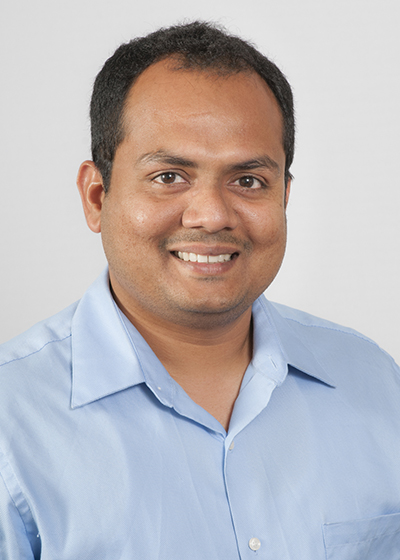
Saravanan Venkatachalam is an Associate Professor in the Department of Industrial and Systems Engineering at Wayne State University. His research focuses on stochastic programming, robust optimization, and discrete event modeling with applications to supply chain management, healthcare, energy systems, and unmanned vehicle operations. Education Ph.D. in Industrial and Systems Engineering, Texas A&M University M.S. in Industrial and Systems Engineering, Texas A&M University B.E. in Production Engineering, PSG College of Technology, India His work addresses decision-making under uncertainty through decomposition algorithms and data-driven approaches. Recent projects include autonomous vehicle path planning with uncertain parameters, community-aware electric vehicle charging networks, and optimization models for radio advertisement placements. Current research trends emphasize stochastic programming for resource allocation in dynamic environments, robust optimization for transportation and energy systems, and multi-vehicle routing under uncertainty. He has supervised multiple graduate students in thesis work related to optimization models and taught core courses such as Operations Research, Deterministic Optimization, and Stochastic Programming at both undergraduate and graduate levels.
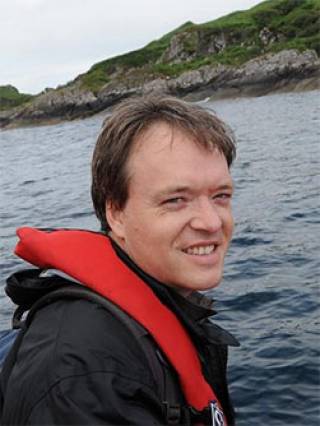
Sam Power is a Lecturer in the School of Mathematics at the University of Bristol . He holds a PhD in Mathematics from the University of Cambridge (awarded January 2021) and an MMath. His research focuses on computational statistics, Monte Carlo methods, and probabilistic modeling. Education PhD, University of Cambridge (30 Aug 2016 – 30 Jan 2021) MMath, University of Cambridge Research Interests Dr Power’s work lies at the intersection of probability theory , statistics , and machine learning . He investigates advanced Monte Carlo techniques including Markov Chain Monte Carlo (MCMC), particle methods, and piecewise-deterministic Markov processes. His recent projects explore convergence guarantees via functional inequalities such as Poincaré and log-Sobolev inequalities, state-space models for online learning, and uncertainty quantification. Publication Trends Across 20+ publications (2019–2025), Power has consistently advanced theoretical understanding and practical performance of sampling algorithms. Key themes include error bounds for particle and gradient-based methods, weak Poincaré inequalities, and applications in machine-learning systems such as online skill rating and Bayesian active learning. Scientific Awards No awards explicitly listed in the provided material. Students & Grants No explicit information on supervised students or funded grants is present. Labs & Teams Dr Power is affiliated with the School of Mathematics at Bristol; no specific laboratory or research group name is provided.
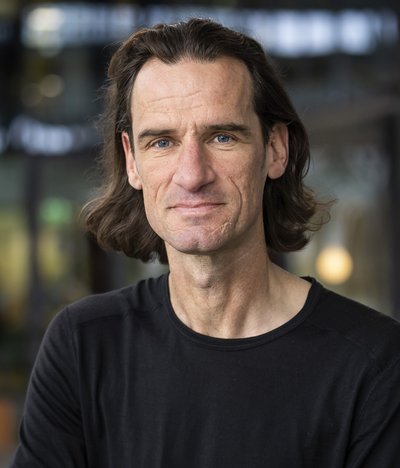
Athanasios G. Kanatas is a Professor at the Department of Digital Systems, University of Piraeus, Greece, and Director of the Telecommunication Systems Laboratory. He holds a Ph.D. in Mobile Satellite Communications from NTUA (1997), and has held roles such as Dean of the School of Information & Communication Technologies (2013–2017) and IEEE Communications Society Chairperson (1999). Education: Diploma in Electrical Engineering (NTUA, 1991), M.Sc. in Satellite Communication Engineering (University of Surrey, 1992), Ph.D. in Mobile Satellite Communications (NTUA, 1997). Research focuses on V2X communications, UAV-assisted networks, antenna design, stochastic geometry, and cybersecurity. He has published over 200 papers and authored 6 books, and leads projects in 5G/6G systems and integrated sensing-communication networks. His work includes pioneering contributions to aerial relay placement, fluid antenna systems, and hybrid beamforming techniques. He serves as Editor of IEEE Transactions on Wireless Communications, Associate Editor of IEEE Transactions on Antennas and Propagation, and is a Senior IEEE Member since 2002. Recent activities include extending the deadline for M.Sc. program applications and promoting internships for students. Labs/Teams: Directs the Telecommunication Systems Laboratory, collaborating on projects like ARGOS RFI monitoring and UAV corridor-assisted IoT networks. His research emphasizes practical implementation through prototyping and experimentation, with applications in aerospace, IoT, and intelligent transport systems.
Dr. Elliot Carr is a Senior Lecturer in the School of Mathematical Sciences at Queensland University of Technology (QUT), Faculty of Science. He holds a PhD in Mathematics from QUT and has been a faculty member since 2015, progressing from Lecturer to his current rank. His research and teaching focus on applied and computational mathematics, with strong interdisciplinary applications. Education: PhD in Mathematics, Queensland University of Technology, 2009–2012 Bachelor of Applied Science (Honours) in Mathematics, QUT, 2008 Bachelor of Mathematics, QUT, 2005–2007 Elliot Carr's research lies at the intersection of applied mathematics and real-world physical systems. His work centers on developing and analyzing mathematical models of advection, diffusion, and reaction processes, particularly in heterogeneous media. He employs both deterministic (PDE-based) and stochastic (random walk) frameworks, contributing to analytical solutions, multiscale modeling, surrogate models, and numerical methods such as finite volume and Newton-Krylov techniques. His research has been applied to diverse fields including groundwater contamination, drug delivery, heat transfer, and tumor spheroid modeling. The latest publications reflect a consistent focus on transport phenomena in complex geometries and heterogeneous environments. Key themes include dual-grid mapping for contaminant transport, analytical modeling of drug release from spherical capsules, thermal diffusivity in shell geometries, and stochastic models of biological systems. His methodological contributions span analytical, numerical, and statistical approaches, demonstrating versatility across applied mathematics. Scientific Awards and Recognitions: JH Michell Medal, ANZIAM (2022) ARC DECRA Fellowship (2015) QUT Outstanding Doctoral Thesis Award (2012) University Medal, QUT (2008) Dean’s Award for top graduate in both Honours and Bachelor programs Keynote and plenary speaker at major conferences including ANZIAM and Forum “Math-for-Industry” Dr. Carr actively supervises PhD and Masters students, with completed and ongoing projects on diffusive transport, tumor modeling, and sports analytics. He has secured competitive research funding, including an ARC Discovery Project on multiscale modeling. His teaching includes computational mathematics, linear algebra, and differential equations, with a focus on MATLAB-based implementation. He is a member of the Australian Mathematical Society (AustMS) and ANZIAM. Research Labs and Teams: While not explicitly tied to a named lab, Carr is part of the broader Applied Modelling and Computation research environment at QUT. He collaborates extensively with researchers such as Ian Turner, Matthew Simpson, and Chris Drovandi, contributing to interdisciplinary teams in mathematical biology, environmental modeling, and statistical computation.
Prof Graham Shields is a Professor of Geology at University College London's Department of Earth Sciences. His research focuses on Earth's evolution through geochemical and isotopic analysis, particularly in the Precambrian and Cambrian periods. He investigates how the planet's surface environment co-evolved with life, with a focus on ocean/atmosphere composition during critical junctures like the Sturtian Snowball Earth event and Ediacaran-Cambrian transitions. His work combines field studies in Australia, Spain, and China with analytical techniques such as Rb-Sr dating, multi-isotope analysis, and sedimentary proxy development. Research themes include ocean oxygenation, redox dynamics, and the interplay between glaciation, volcanism, and biological innovations. Applied projects explore geochemical solutions for environmental issues like soil erosion and sustainable resource extraction. He leads the Precambrian Research Group and contributes to initiatives like the Life and the Planet initiative. Publications span Neoproterozoic climate modeling, Ediacaran ocean chemistry, and the geological time scale subdivision. Courses taught include GEOL0008 (Geochemistry).
Leon Bungert is a Professor of Mathematics of Machine Learning at the University of Würzburg, working in applied analysis and numerics with a particular focus on data science and machine learning. His research investigates PDEs and variational models on graphs, adversarial robustness of machine learning, variational regularization, and nonlinear optimization. Dr. Bungert serves as a guest editor for the European Journal of Applied Mathematics, an associate editor for Advances in Continuous and Discrete Models: Theory and Applications, and is a member of the program committee at SSVM 2025. He is also an ELLIS member and actively organizes conferences and workshops, including "MIA'25" at IHP in Paris (January 13-15, 2025), "Synergies of Machine Learning and Numerics" in Osaka (March 11-13, 2025), and "Mathematical Analysis of Adversarial Machine Learning" in Oaxaca (August 17-22, 2025). Research Interests Dr. Bungert's primary research areas include: PDEs on graphs Adversarial robustness in machine learning Inverse problems Optimization Variational problems in L-infinity Nonlinear eigenvalue problems Image reconstruction with structural priors His work bridges theoretical mathematics with practical applications in machine learning, particularly focusing on the mathematical foundations of deep learning and developing robust algorithms that can withstand adversarial attacks. He has made significant contributions to understanding the connections between partial differential equations and machine learning algorithms. Research Trends Analysis of Dr. Bungert's recent publications reveals a strong focus on the intersection of machine learning and mathematical analysis. A key theme is the application of variational methods and partial differential equations to machine learning problems, particularly in understanding and improving the robustness of neural networks against adversarial examples. His work on Lipschitz learning on graphs has established important theoretical foundations for graph-based semi-supervised learning. Additionally, his research on the infinity Laplacian and p-Laplacian equations provides deep insights into the mathematical structure of machine learning algorithms. The development of Bregman learning frameworks for sparse neural networks represents a significant contribution to efficient deep learning model training. Professional Activities Dr. Bungert is actively involved in the academic community through editorial roles and conference organization. His current professional activities include: Guest editor for the European Journal of Applied Mathematics Associate editor for Advances in Continuous and Discrete Models: Theory and Applications Member of the program committee at SSVM 2025 ELLIS member Co-organizer of multiple international conferences and workshops Technical Contributions Dr. Bungert has developed several open-source software packages that implement his theoretical contributions, including: Code for convergence rates of Lipschitz learning on graphs A Bregman training framework for sparse neural networks CLIP: Cheap Lipschitz Training of Neural Networks Nonlinear Power Method for Proximal Operators and Neural Networks Robust Image Reconstruction with Misaligned Structural Information These implementations are primarily in Python and MATLAB, demonstrating his commitment to making theoretical advances accessible for practical applications.
Dr Albert Stevan van Heerden is a Lecturer in Aerospace Engineering at the James Watt School of Engineering, University of Glasgow. Previously, he was a Research Fellow at Cranfield University's Rolls-Royce University Technology Centre and Centres for Aeronautics and Propulsion and Thermal Power Engineering. He holds a PhD in Aerospace Engineering from Cranfield University, an MS in Aeronautics from California Institute of Technology (Fulbright scholar), and a BEng in Mechanical Engineering from the University of Pretoria. His research focuses on conceptual aircraft design , airframe and propulsion systems development , and technical/economic assessment of sustainable aerospace technologies . He employs deterministic and non-deterministic design methods, with a unique emphasis on evolvable aircraft family design for long-term relevance. His work spans traditional civil transport aircraft, electric aircraft , and hydrogen-powered aircraft systems. Key publications include advancements in set-based design techniques margin allocation strategies hydrogen propulsion systems thermal management frameworks uncertainty allocation methods . Scientific recognition includes Fellow of the Higher Education Academy (FHEA) Member of the Royal Aeronautical Society (MRAeS) . He also serves as Academic Adviser for the Commonwealth Scholarship Commission and Academic Ambassador for the James Watt School of Engineering. His teaching portfolio includes Thermodynamics 2, Aircraft Design 3, and Fluid Mechanics (University of Glasgow Singapore), reflecting his expertise in core aerospace disciplines.
Michel Speetjens is an Associate Professor of Energy Technology at the Department of Mechanical Engineering, Eindhoven University of Technology (TU/e). His research focuses on transport phenomena in laminar and deterministic flows, dynamical behavior of thermal systems, and computational/experimental fluid dynamics. Key research areas include: Lagrangian transport and chaotic advection in 3D laminar flows. Generalized Lagrangian formalism for thermal analysis. Adaptive flow reorientation for fluid heating optimization. Data-driven modeling of scalar transport phenomena. His work emphasizes bridging fundamental fluid dynamics with technological applications, particularly through spectral methods and optical measurement techniques. Recent studies demonstrate advancements in process control via compact data-based models and adaptive flow strategies. At TU/e, he contributes to educational programs in: Sustainable Energy Sources Thermodynamics Experimental Methods in Transport and Soft Matter Physics Dynamics of Energy Systems He is affiliated with the Dynamics and Control Group and Energy Technology research group, with notable collaborations at CSIRO (Australia), RWTH Aachen (Germany), and institutions in the USA and Australia.
Subhash C. Sarin is the Paul T. Norton Endowed Professor at Virginia Tech's Grado Department of Industrial and Systems Engineering within the College of Engineering. His expertise spans operations research, production scheduling, applied mathematical programming, and manufacturing systems design. He holds a Ph.D. from North Carolina State University (1978), an M.S. from Kansas State University (1973), and a BSc from Delhi College of Engineering (1970). Research focuses on scheduling optimization, semiconductor manufacturing, and biomass logistics. Notable contributions include stochastic scheduling models, disassembly optimization, and primary pharmaceutical manufacturing scheduling. He has led over 40 funded projects, including USDA/DOE initiatives for biomass logistics. Recipient of numerous awards, including the IIE David F. Baker Distinguished Research Award (2015) and Virginia Tech's Alumni Award for Excellence in Graduate Advising (2013). He directs the Electronics Manufacturing Research Laboratory and serves as associate director of the Center for High Performance Manufacturing. His teaching excellence is recognized through awards like the Sporn Award (1997) and Holzman Educator Award (2000). Professional service includes editorial roles for journals like Computers and Industrial Engineering. Key projects include optimizing nuclear power plant outages and semiconductor wafer fabrication. His work integrates mathematical modeling with real-world applications in manufacturing, logistics, and sustainability.
Pouria Sarhadi is a Senior Lecturer at the University of Hertfordshire's School of Physics, Engineering & Computer Science. He has held roles as a Research Fellow at Queen's University Belfast (2021-2022) and the University of Surrey (2019-2021), and served as an Adjunct Professor at Babol Noshirvani University of Technology (2016-2018). He is a Chartered Engineer (CEng), Member of the IET, and recognized as UK 'Global Talent' by UKRI. His research focuses on control theory applications, adaptive control, autonomous vehicles, and systems engineering. He has contributed to over 50 peer-reviewed publications and led projects such as HertsLynx CAM On-Demand (UKRI-funded). He is actively involved in editorial roles for Applied Ocean Research and advises on IFAC Technical Committees. Research interests include: Autonomous systems (ground, marine, aerial) Machine learning in control systems Adaptive control and system identification Autonomous vehicle safety and navigation Key awards include CEng, MIET, and UK Global Talent recognition. He has advised on UKRI and Horizon Europe projects and consults for industries. Current projects include hybrid navigation safety simulators and cooperative control of multi-AUV systems.
Owais Gilani is an Associate Professor in the Department of Public Health and Community Medicine at Tufts University School of Medicine. His academic journey includes a PhD in Biostatistics from Yale University and postdoctoral training at the University of Michigan School of Public Health. Prior to joining Tufts, he served as Associate Professor of Statistics at Bucknell University. Dr. Gilani's research program centers on developing spatial and spatiotemporal statistical methods with applications in environmental health. Key areas include: Air pollution modeling and exposure assessment Human mobility pattern analysis Bayesian data fusion techniques Environmental epidemiology Statistical software development for environmental data His work involves interdisciplinary collaborations across public health, clinical medicine, and biological sciences. Analysis of Dr. Gilani's recent publications reveals strong methodological focus on spatiotemporal modeling with applications spanning environmental epidemiology, ecological entomology, and health services research. The majority of his work employs Bayesian approaches and develops novel statistical techniques for analyzing complex environmental and health datasets. Recent outputs demonstrate expanding applications in infectious disease modeling and mobility data analysis. Dr. Gilani maintains an active teaching portfolio including: Principles of Epidemiology & Statistics Biostatistics Data Visualization for Public Health Introduction to Public Health Research Statistical modeling and inference courses He currently leads an NSF-funded project on 'Data Resources and Analytic Tools to Understand Population Scale Human Mobility for Applications in SBE Research' (2025).
Dr. Carsten Lange is a faculty member at the Chair of Hydrogen and Nuclear Energy within the Institute of Process Engineering and Environmental Technology at Technische Universität Dresden . Since 2010, he has led the Reactor Dynamics workgroup and has served as Head of the nuclear training reactor AKR-2 since 2015. His research focuses on nonlinear stability analysis of boiling water reactors (BWR) , model order reduction techniques , neutron noise analysis , and non-invasive reactor monitoring . Dr. Lange earned his PhD in 2009 from Technische Universität Dresden with a dissertation titled Advanced nonlinear stability analysis of boiling water nuclear reactors . He has contributed to projects like GRE@T-PIONEER and international initiatives such as the OECD/NEA Zero Power Reactors Task Force . His work includes experimental reactor physics , nuclear safety , and reactor instrumentation development. His research spans nuclear reactor stability , neutron imaging , and advanced simulation techniques . Key publications analyze PWR power fluctuations , coupled fuel assembly vibrations , and reduced-order models for online monitoring . Dr. Lange actively mentors students in reactor physics and reactor training assignments.
Professor G L Sivakumar Babu is a distinguished academic in the Department of Civil Engineering at the Indian Institute of Science (IISc), Bangalore, where he has served as Professor since 2009, after progressing from Assistant Professor (1996-2003) to Associate Professor (2003-2009). His career spans over three decades with significant contributions to geotechnical engineering research and practice. He also serves as associate faculty with the Center for Infrastructure, Sustainable Transportation and Urban Planning (CiSTUP) and the Centre for Sustainable Technologies. His educational background includes: PhD in Geotechnical Engineering, Indian Institute of Science, Bangalore (1991) ME in Soil Mechanics and Foundation Engineering, Anna University, Madras (1987) B.Tech. in Civil Engineering, Sri Venkateswara University, Tirupati (1983) Prof. Sivakumar Babu's research focuses on risk and reliability applications in geotechnical engineering, geosynthetics and reinforced soil structures, environmental geotechnology, fibers in geotechnical engineering, earthquake geotechnical engineering, and geotechnics for disaster mitigation. His work integrates probabilistic methods to address uncertainties in soil behavior, with applications in buried pipes, foundations, slopes, retaining walls, and reinforced structures. He has significantly contributed to guidelines for soil nailing in highway engineering published by the Indian Roads Congress. His extensive publication record (over 100 journal papers and 100 conference papers) demonstrates a strong trend toward reliability-based design approaches across multiple geotechnical domains. Recent work shows increasing focus on municipal solid waste management, landfill engineering, pavement engineering with geosynthetics, and radioactive waste disposal facilities. His research consistently applies probabilistic and reliability methods to traditional geotechnical problems, bridging theoretical advances with practical engineering solutions. While specific awards aren't detailed in the provided text, his professional recognitions likely include honors related to his contributions in geotechnical engineering and reliability analysis. Prof. Sivakumar Babu has undertaken numerous consultancy projects spanning soil investigation, soil reinforcement and nailing, pavement design, geosynthetics applications, slope stabilization, and machine foundations. His industry engagement demonstrates the practical impact of his research, with projects for organizations including KSIIDC, MSIL, various sugar companies, INDAL, BPCL, IIMK, and government infrastructure projects. His international collaborations include work as a Humboldt Fellow in Germany (1999-2000) and as a Visiting Scholar at Purdue University (1995-1996), which significantly influenced his research direction toward probabilistic modeling in geotechnical engineering.
Dr. Alex White is a Senior Lecturer in Thermofluids at the Department of Engineering, Cambridge University, and a Fellow and Director of Studies at Peterhouse. He earned his undergraduate and PhD degrees from King's College, Cambridge, and conducted postdoctoral research in Cambridge, Lyon, and Toulouse before returning to Cambridge in 2000 as part of the Energy Group. His research focuses on two-phase flow (vapour-droplet flows), thermodynamics of power generation, Computational Fluid Dynamics (CFD), and heat pumps. His work includes theoretical and numerical studies on warm dense matter, electron transport, and energy storage systems like pumped thermal and compressed air storage. Recent publications emphasize warm dense matter physics, inertial confinement fusion, and thermal energy storage innovations. His theoretical analyses and simulations span high-energy-density plasmas, nonlocal electron stopping power, and hybrid energy systems. While no scientific awards are documented, his contributions to thermofluids and extreme condition physics are significant.
Alexandre Santos Francisco is Professor of Fluid Mechanics at Fluminense Federal University (Universidade Federal Fluminense) in Brazil, holding a PhD in Nuclear Engineering. He will soon serve as Visiting Professor at the ERC Advanced Grant project DyCon under Prof. Enrique Zuazua (FAU, University of Deusto, and Universidad Autónoma de Madrid), focusing on computational mathematics and porous media research. His academic credentials include: PhD in Nuclear Engineering (1994–2000), Federal University of Rio de Janeiro Master's Degree in Nuclear Engineering (1990–1993), Federal University of Rio de Janeiro Bachelor's Degree in Mechanical Engineering (1984–1990), Federal University of Rio de Janeiro Internship at Petrobras (1988) Francisco's research centers on porous media, computational mathematics, and computational fluid mechanics, with emphasis on numerical methods for heterogeneous media flows. His work bridges nuclear engineering safety, environmental contaminant transport, and industrial process optimization through advanced simulation techniques. Analysis of his 15 most recent publications reveals dominant trends in multiscale modeling for porous media, parallel computing implementations, and reliability assessment in nuclear systems. Key application areas include waste disposal simulation, steam generator integrity, and multiphase industrial processes, consistently integrating mathematical rigor with engineering challenges. No scientific awards are documented in the provided materials. While student advisement details are absent, his upcoming ERC Advanced Grant project DyCon involvement signifies active grant-funded research. The project will expand his work on mathematical control theory for complex systems under Prof. Zuazua's supervision. He collaborates internationally through the ERC DyCon project, leveraging expertise in numerical methods to address multiscale dynamics in porous media, with future work likely advancing computational techniques for energy and environmental applications.