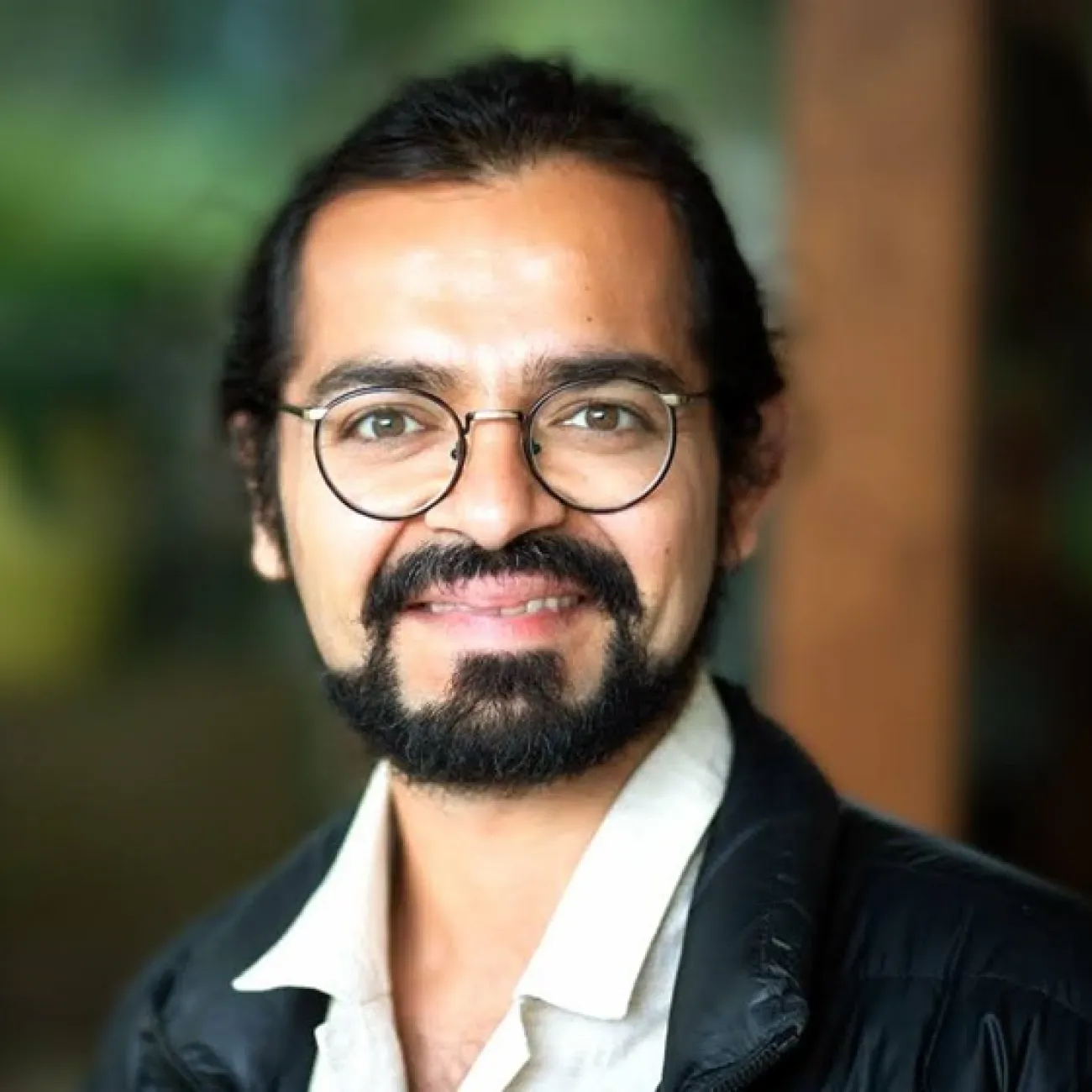
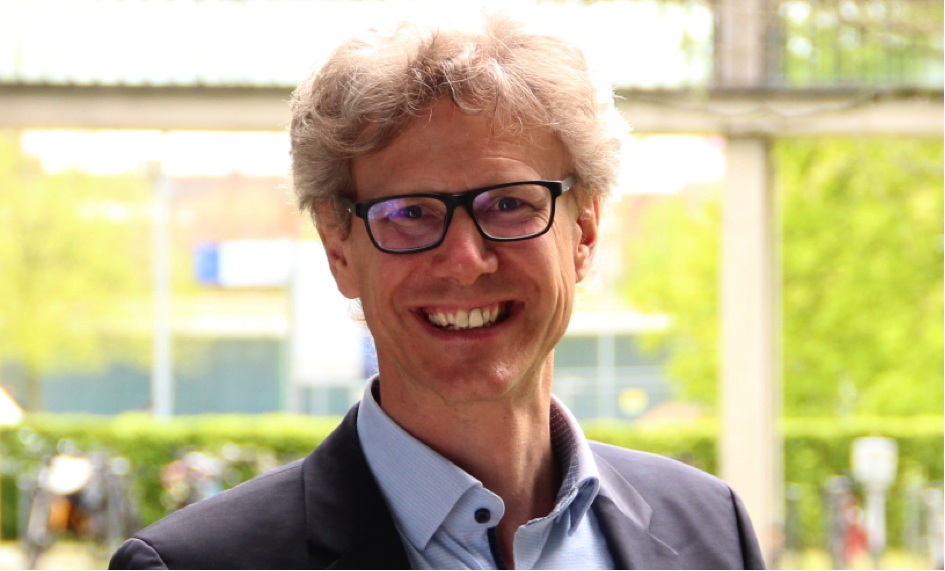
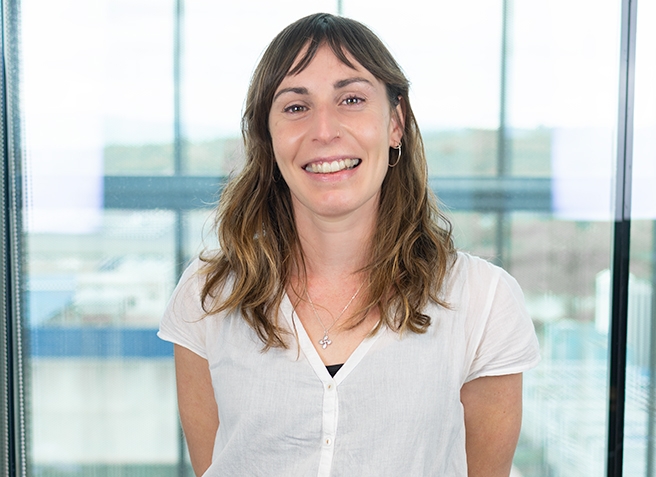
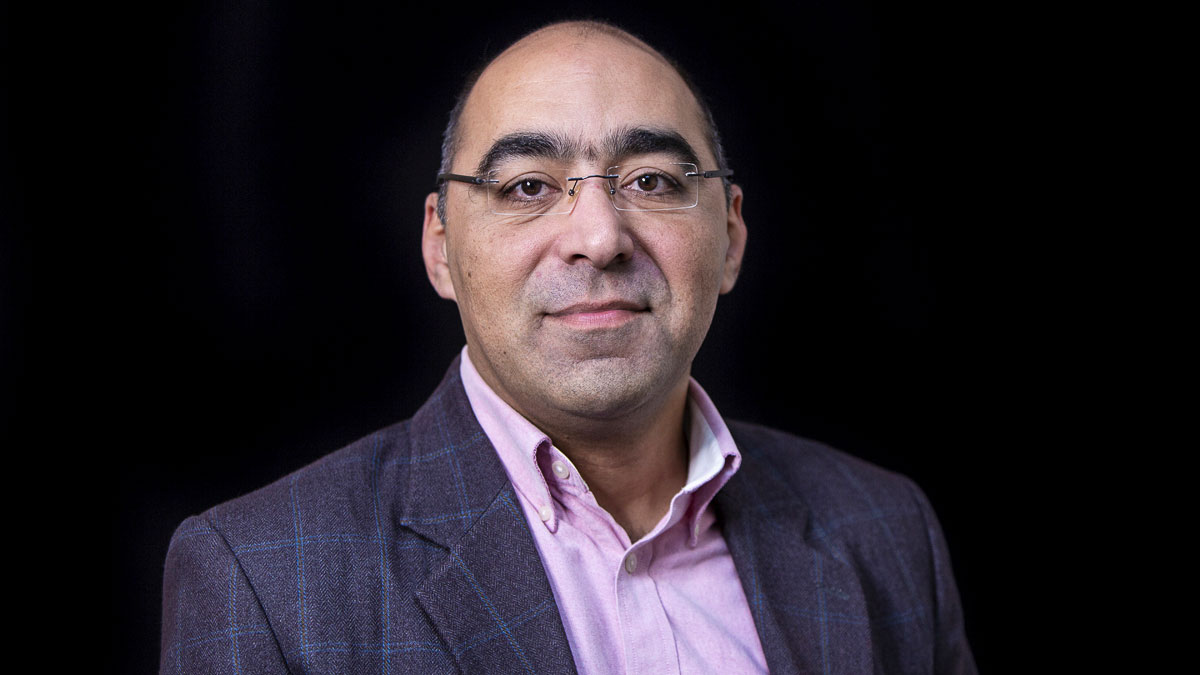
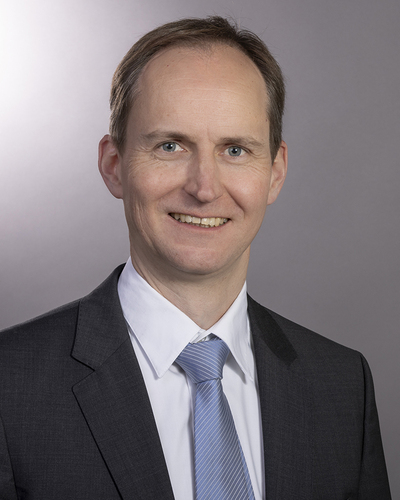
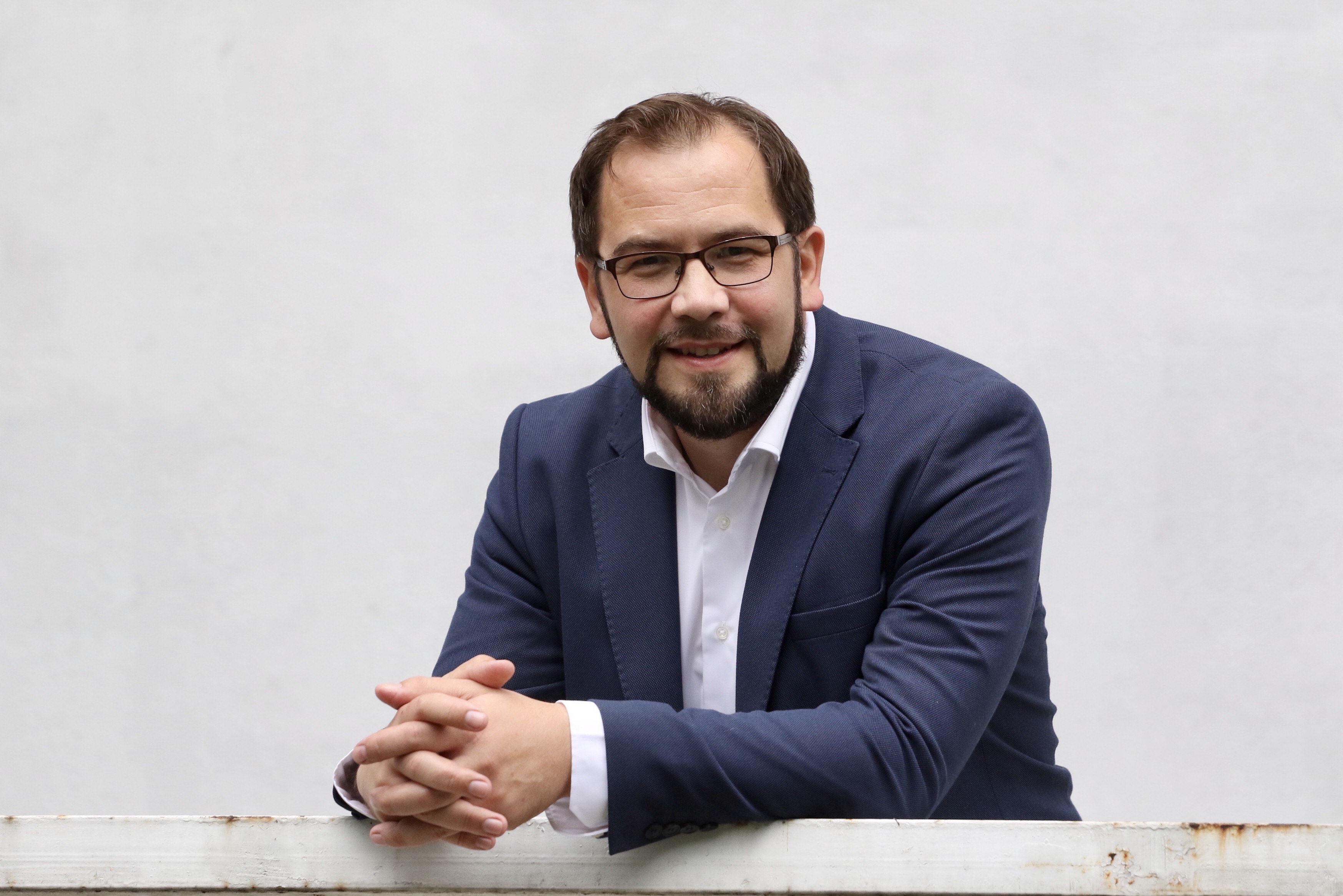
Wuchen Li is an Assistant Professor in Mathematics at the University of South Carolina , specializing in Transport information geometry and its applications across Complex Dynamical systems, PDEs, Statistics, Optimization, Control and Games, Mathematical Data science, Graphs and Neural networks , and Scientific Computations . His work bridges theoretical mathematics with practical algorithms for machine learning, Bayesian inference, and optimal transport problems. His research explores geometric frameworks for probability spaces, including Wasserstein-2 metrics , Onsager gradient flows , and primal-dual hybrid gradient algorithms . Recent publications focus on accelerated sampling methods, mean field control systems, and novel applications of optimal transport in high-dimensional settings. 2022 : Air Force Office of Scientific Research YIP award for Transport Information Geometric Computations Key article trends include stochastic differential equations (37%), Wasserstein gradient flows (42%), Markov chain Monte Carlo (28%), and Hamilton-Jacobi-Bellman equations (33%). Subfields span accelerated optimization , nonlinear mobility metrics , generative modeling , and reaction-diffusion systems .
Dr. Bismark Singh is an Associate Professor in the Operational Research group at the University of Southampton's School of Mathematical Sciences. His research focuses on stochastic optimization, particularly chance-constrained programming, with applications in public health pandemic response and renewable energy systems. He holds a habilitation (Dr. Dr. habil.) from Friedrich-Alexander-Universität Erlangen-Nürnberg (2023), a PhD from The University of Texas at Austin (2016), and a BTech from IIT Delhi (2011). Current research projects include DFG-funded work on pandemic resource allocation and EU-funded initiatives on waste-management policy. He supervises PhD students and holds visiting positions globally. Awards include the 2023 Mathematics Young Investigator Award and IEEE Senior Member status. Teaching responsibilities include MATH6161 Deterministic OR Methods and MATH6006 Statistical Methods for OR Modeling.
Stefano Patri' serves as a Professor in the Department of Methods and Models for Economy, Territory and Finance at Sapienza University of Rome. He teaches foundational mathematics courses for business sciences, advanced mathematics for finance (in English for the FINASS Master's program), and computer science laboratories for the MANIMP Master's degree. His institutional affiliation is consistently maintained through Sapienza University's academic structure. Professor Patri's research centers on deterministic and stochastic optimization theory with applications in economic modeling. He specializes in mathematical programming techniques including Hamilton-Jacobi-Bellman equations and Kuhn-Tucker conditions applied to economic problems. His work spans public debt optimization, game-theoretic approaches to environmental agreements, and innovative applications in insurance mathematics and urban mobility systems. His recent publications demonstrate strong interdisciplinary connections between mathematics and economics, with notable contributions in 2023 on public debt correction mechanisms and pay-as-you-drive insurance models. The research consistently bridges theoretical mathematics with practical economic policy applications, particularly in fiscal management and strategic decision-making frameworks. Teaching activities remain central to his role, with current responsibilities including: Mathematics Foundation Course for Business Sciences Mathematics for Finance (Master's Degree FINASS in English) Laboratory of Computer Science (MANIMP Master's Degree) Mathematics for PhD School Physics Curriculum Student engagement occurs through scheduled office hours by appointment and comprehensive digital resources including video lessons and exercise materials hosted on his institutional web page.
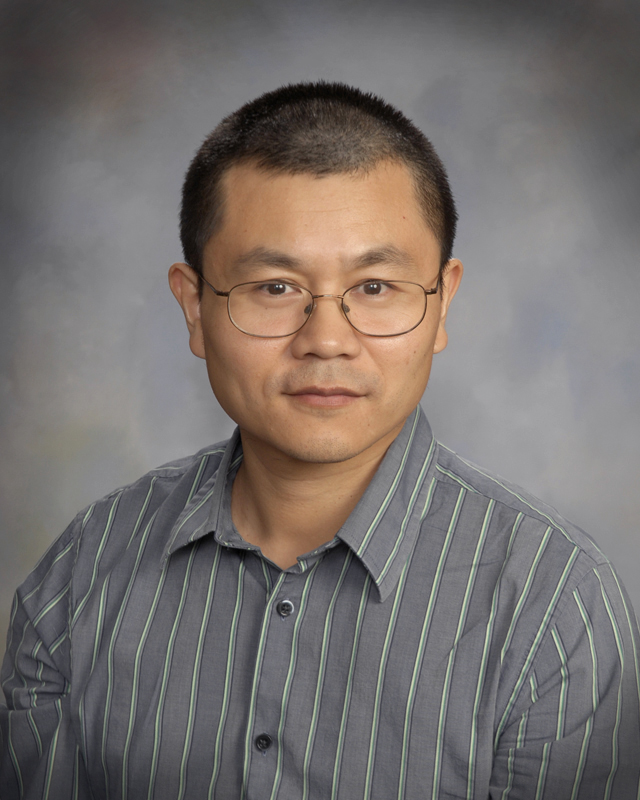
Min Wang is an Associate Professor in the Department of Mathematics at Kennesaw State University's College of Science and Mathematics. With a career spanning academia and industry, they focus on applied mathematics and machine learning, emphasizing differential/difference equations and their applications. Research Interests: Applied Mathematics: Deterministic/Stochastic Dynamic Equations, Fractional Differential Equations, Mathematical Modeling, Optimal Control Machine Learning: Physics-Informed Neural Networks, Data-Driven Modeling Selected Publications highlight interdisciplinary work, including models for social media growth, bike share systems, and financial derivatives, blending classical mathematics with computational techniques. Scientific Awards: KSU CSM Mentor Protégé Award (2020--2021) KSU CSM Mentor Protégé Award (2019--2020) Grants & Fundings include NSF support for spatiotemporal data analysis and multiple KSU grants for undergraduate research projects integrating machine learning with Minecraft applications.
Danny Lathouwers is an Associate Professor at the Delft University of Technology within the Faculty of Applied Sciences and the Department of Radiation Science and Technology . His research focuses on computational techniques for nuclear reactor physics and proton therapy, particularly using adaptive numerical methods to simulate reactor systems and charged particle transport for high-quality dose distribution in patient geometries. Academic Affiliation : Delft University of Technology, Faculty of Applied Sciences, Department of Radiation Science and Technology Contact : Mekelweg 15, 2629JB Delft, The Netherlands | +31 15 278 3148 | d.lathouwers@tudelft.nl His research areas include: Nuclear Reactor Physics : Numerical methods, modal analysis of neutron transport, multi-physics simulations for Generation-IV reactors Proton Therapy : Deterministic dose calculation, uncertainty quantification, robust treatment planning Adaptive Radiation Transport : Spatial/angular refinement techniques, discontinuous Galerkin methods Recent publications highlight his expertise in: Proton therapy range verification systems Deterministic low-rank transport methods Deep learning applications for anatomical variability Multiphysics reactor modeling He actively supervises MSc and BSc student projects in computational reactor physics and proton therapy.
Prof. Moritz Diehl is a Professor at the University of Freiburg, leading the Systems Control and Optimization Laboratory within the Department of Microsystems Engineering (IMTEK) and affiliated with the Department of Mathematics. Born in Hamburg, Germany, he holds a Ph.D. from Heidelberg University (2001) and previously served as a professor at KU Leuven (2006–2013), where he directed the Optimization in Engineering Center (OPTEC). His research focuses on optimization and control, emphasizing numerical methods for engineering applications, particularly embedded systems and renewable energy. Key areas include model predictive control (MPC), nonlinear optimization, and real-time control systems. Education: He studied physics and mathematics at Heidelberg University and the University of Cambridge (1993–1999), culminating in a Ph.D. in Scientific Computing. His academic journey includes roles at KU Leuven and Freiburg, where he has developed influential tools like the AWEbox framework for airborne wind energy systems and the acados optimization library. Research Interests: His work spans numerical optimal control, MPC algorithms, and their applications in robotics, energy systems, and automotive engineering. Recent advancements include collision-free motion planning, real-time NMPC with convex-concave constraints, and stochastic control methods for mobile robots. He also explores optimization for hybrid systems, leveraging finite elements and switch detection for nonsmooth dynamics. Publications: His 2023–2025 work highlights contributions to MPC stability, energy-efficient control systems, and software tools like LCQPow for quadratic programming. His research bridges theory and practice, addressing challenges in industrial processes, renewable energy integration, and autonomous systems. Labs & Teams: He leads the Systems Control and Optimization Lab, fostering interdisciplinary projects in optimal control, robotics, and sustainable energy. His group collaborates on tools like acados, emphasizing real-time feasibility and scalability for complex systems.
Clara Rojas García is a predoctoral researcher affiliated with the University of Mondragon and collaborating with CIC energiGUNE. Her research focuses on physics-based modeling of energy storage systems, particularly through computational techniques and simulations. She works closely with the Battery Post-Mortem Analysis and Ageing group and the Modelling and Computational Simulation group. PhD Candidate (ongoing) at University of Mondragon Degree in Physics (2016) from University of Granada Master's in Sustainable Energy Engineering (2018) from UPV/EHU Her scientific interests include physicochemical characterization, electrochemical analysis, and material study for energy storage systems. She specializes in deterministic and Monte Carlo methods for radiation transport and has contributed to studies on low-energy tunnel effect transistors and spent nuclear fuel characterization.
Dr. Kenneth Israel Eshiet is a Senior Lecturer in Civil Engineering at the University of Wolverhampton within the Faculty of Science and Engineering and the School of Architecture and Built Environment . A Chartered Engineer and Fellow of Advance Higher Education (UK), he combines academic expertise with industry experience in geomechanics, structural analysis, and computational modeling. Education : PhD in Civil Engineering (University of Leeds), MEng in Civil Engineering (University of Leeds), PGDip in Management, MSc in Computational Fluid Dynamics. Research Interests focus on: Numerical/experimental modeling of subsurface systems Deterministic/stochastic risk assessment models Computational fluid dynamics in civil engineering Geotechnical and structural analysis of rock mechanics Scientific Awards : University of Leeds Teaching Award Professional Standard 2 (ULTA-2) University of Leeds Teaching Award Professional Standard 1 (ULTA-1) Industry Experience : Senior Consultant at Sustainable Energy Environmental and Educational Development (USA), Lead Technical Consultant at Thompson Integrated Projects Ltd. His work spans hydraulic fracturing, underground coal gasification, and CO2 storage projects.
Dr. Mehdi Shahrestani is an Associate Professor in Sustainable Technologies at the University of Reading , UK. He serves as Director of Architectural Engineering Programs and chairs the Health, Safety, and Wellbeing Committee . With a background in Mechanical Engineering and Energy Systems Engineering, he completed his PhD in 2013 at Reading University with research on fuzzy decision-making modeling for building environmental systems selection . His career spans academic research and practical consultancy in energy generation, distribution, and building systems design. Specializes in energy systems modeling and decarbonization of building heating/cooling Active in renewable energy technologies and building environmental systems Professional affiliations include Chartered Institution of Building Services Engineers (FCIBSE) , Institution of Mechanical Engineers (FIMechE) , and Higher Education Academy (FHEA) Research interests focus on net-zero carbon solutions, energy performance modeling, and the integration of renewable technologies in buildings. His recent publications analyze virtual power plants, occupancy prediction models, and energy efficiency in educational and residential buildings. Supervised students examine topics like natural gas as transportation fuel, occupancy patterns in higher education, and data-driven energy analytics. Scientific contributions include extensive work in Building-Integrated Photovoltaics , Urban Microclimate Studies , and Thermal Performance Analysis . Collaborative projects span international institutions in the UK, China, and Thailand. Mehdi Shahrestani's work addresses both theoretical and practical challenges in sustainable building technologies, with a focus on climate-responsive design and policy-oriented energy solutions.
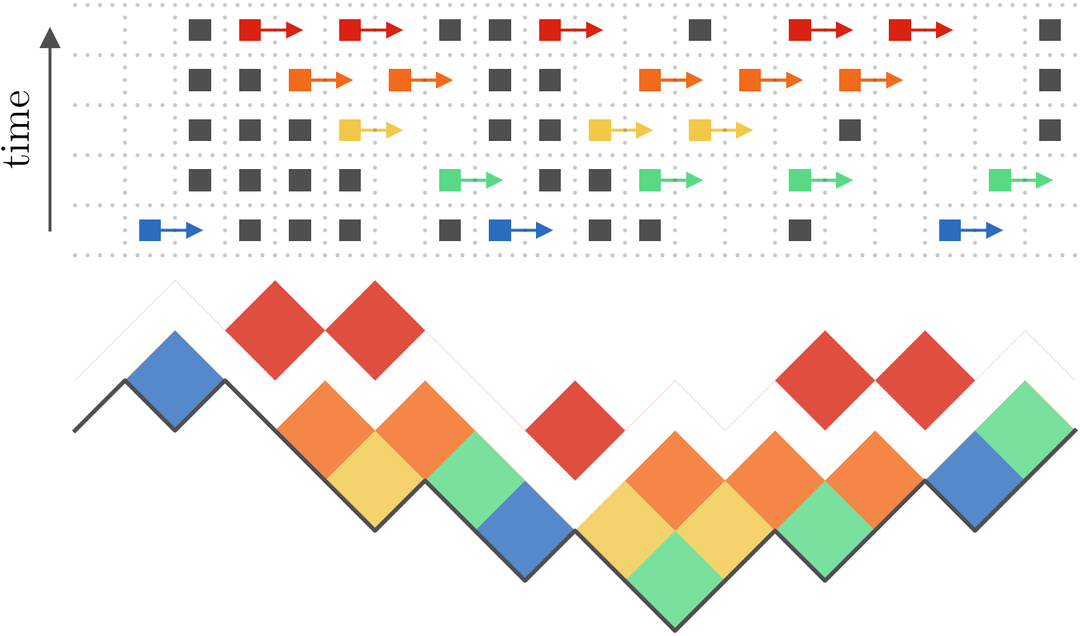
Johannes Schmidt is a postdoctoral researcher at the Institute for Theoretical Physics within Technische Universität Berlin . His work focuses on dynamical universality classes in nonequilibrium systems, particularly using analytical and computational methods to study driven diffusive systems and nonlinear fluctuating hydrodynamics. Research Interests: Universality in nonequilibrium systems, driven diffusive dynamics, mode coupling theory, and superdiffusive transport. Methods: Large-scale Monte Carlo simulations, nonlinear fluctuating hydrodynamics, mode coupling theory, and advanced numerical techniques. His publications span topics from Fibonacci universality classes to quantum dissipation mechanisms, reflecting his expertise in statistical physics and complex systems. Johannes collaborates with researchers like Vladislav Popkov, Andreas Schadschneider, and Gunter M. Schütz.
Achim Koberstein is a Professor of Business Administration with a focus on Business Informatics and Operations Research at the Faculty of Economics and Business Administration (Wiwi) , European University Viadrina Frankfurt (Oder). His academic career spans multiple institutions, including Goethe-University Frankfurt and the University of Hamburg. Education: Doctorate in Business Informatics (Dr. rer. pol.) at the University of Paderborn (2005) Diploma in Computer Science (Minor: Business Administration) at the University of Paderborn (2002) His research centers on decision support systems , stochastic and deterministic optimization models , and applications in supply chain and automotive production planning . Recent work explores drug shortages, drone logistics, and hybrid electric vehicle routing. His publications highlight a focus on stochastic programming , MILP modeling , and real-world logistics challenges across healthcare, automotive, and maritime domains. Current affiliations include leadership roles in the Faculty of Economics and Business Administration's Dean's team. Contact: Email: koberstein@europa-uni.de Office: Main Building (HG) 043, Große Scharrnstraße 59, 15230 Frankfurt (Oder)
Gregory Tucker is a Professor of Geological Sciences at the University of Colorado Boulder, affiliated with the Cooperative Institute for Research in Environmental Sciences (CIRES). He serves as Executive Director of the NSF-supported Community Surface Dynamics Modeling System (CSDMS) and develops open-source tools like the Landlab Toolkit . Ph.D. in Geosciences, Penn State University (1996) Office: BESC - 246D Email: gtucker@colorado.edu His research focuses on geomorphology and landscape evolution , integrating physics of earth-surface processes with computational modeling. He investigates long-term terrain shaping (e.g., glacial-to-Holocene transitions) and contemporary issues like gully erosion and hazardous waste site stability . His group pioneers stochastic and deterministic models of erosion, landsliding, and sediment transport. Recent work includes software development for earth-surface science (e.g., Landlab, CellLab-CTS), Martian landscape evolution , and climate-driven erosion trends . His publications address bedrock incision , hillslope dynamics , and tectonic-hydrologic interactions . Scientific Awards: Ralph Alger Bagnold Medal (2012) - European Geosciences Union Boulder Faculty Assembly Teaching Excellence Award (2013) He received a $2.56M Cyberinfrastructure Grant (2021) to advance Earth surface science. His lab fosters interdisciplinary collaboration with teams studying surface dynamics , hazard assessment , and planetary geomorphology . He advocates for open-source scientific software and FAIR data principles .
Alessandro Gess is a Visiting Professor at the Karlsruhe Institute of Technology (KIT) Faculty of Architecture and co-founder of the Paris-based architecture firm l'AUC. He holds degrees in architecture and urban planning from the Technical University of Munich, École Nationale Supérieure d'Architecture de Versailles, and a postgraduate master's in urban planning and governance from Sciences Po Paris. Key Affiliations: Visiting Professorship of the Wüstenrot Foundation Co-founder, l'AUC (Paris-based architecture and urban planning firm) Research Focus: His work explores architectural transformation, adaptive reuse of built environments, and circular design strategies. Projects challenge conventional hierarchies of scale and discipline through: Strategic long-term urban planning Reimagining public spaces and transport hubs Flexible architectural structures and volumes Metropolitan spatial planning frameworks Hybridization of architectural typologies Reconciling deterministic forms with societal fluidity Scientific Contributions: l'AUC's research engages with urban metamorphosis through case studies in major cities like Paris, Brussels, and Shenzhen, emphasizing: Post-occupancy building potential City-scale transformation approaches Interdisciplinary design methodologies Sustainable urban development Awards: Recognized with the Grand Prix de l'Urbanisme (2021) and Patrick Abercrombie Prize (2023).
Zaher Hani is a Professor of Mathematics at the University of Michigan, holding the Frederick W. and Lois B. Gehring Professorship. He previously served as an assistant professor at Georgia Tech (2014-2018) and as a Courant Instructor/Simons Fellow at NYU's Courant Institute (2011-2014). He earned his Ph.D. (2011) and M.A. (2008) in Mathematics from UCLA under Terence Tao. Research Focus: Nonlinear partial differential equations (PDE), particularly dispersive wave equations, turbulence theory, and connections to harmonic analysis, dynamical systems, probability, and mathematical physics. Editorial Roles: Editor for Archive for Rational Mechanics and Analysis and Ars Inveniendi Analytica . His work explores the behavior of solutions to nonlinear dispersive PDEs in deterministic and probabilistic frameworks, with applications in quantum mechanics, nonlinear optics, plasma physics, and general relativity. Recent publications focus on wave kinetic equations, turbulence derivation, and Sobolev norm growth. He has collaborated extensively with Yu Deng, Pierre Germain, Jalal Shatah, and others. Scientific Awards: Courant Instructor/Simons Fellow at NYU Frederick W. and Lois B. Gehring Professorship He contributes to expository works and curriculum development, including a Ph.D. thesis on nonlinear Schrödinger equations. His teaching and administrative contact details are listed at the University of Michigan's Mathematics Department.
Prof. Dr. Hadis Bajrić is a Full Professor at the Faculty of Mechanical Engineering, University of Sarajevo, where he is affiliated with the Department of Industrial Engineering and Management. He has been serving as a regular professor since June 2024, following his promotion from Associate Professor (2018-2024). He also serves as the Head of the Lean Learning Factory Laboratory at the University of Sarajevo since April 2022. His educational background includes: PhD in Mechanical Engineering from University of Sarajevo (2013), with dissertation on "Development of models and expert system for inventory management with deterministic ordering times and stochastic demand" Master's degree in Industrial Engineering and Management from University of Sarajevo (2008) Bachelor's degree in Mechanical Engineering from University of Sarajevo (2006), with thesis on "Modeling portfolios for issuers of the Sarajevo Stock Exchange from SASX index" Prof. Bajrić's research focuses on industrial engineering and management, with particular expertise in lean management, supply chain management, inventory optimization, and data envelopment analysis. His work bridges theoretical frameworks with practical applications in manufacturing, healthcare, education, and public administration sectors. He has developed numerous models for inventory management, production optimization, and efficiency assessment across various industries. His recent publications demonstrate a strong trend toward applying lean principles in manufacturing systems, energy efficiency in building design (particularly healthcare facilities), and data-driven approaches to organizational efficiency. His research increasingly incorporates machine learning techniques and advanced analytics for prediction and optimization problems. Prof. Bajrić has received significant research funding through multiple EU-funded projects including BOOST, PRODIGI, ErgoLAB, ABCD, and UMANE, where he has served as project leader or key team member. These projects focus on innovation, digitalization of SMEs, human-centered entrepreneurship, and deep tech applications in the Western Balkans region. His scientific contributions include: Over 30 peer-reviewed journal articles and conference papers Three textbooks: "Supply Chain Management: Inventory" (2024), "Numerical Methods for Engineers" (2023), and "Six Sigma - Basic Statistical Tools" (2018) Extensive consulting work with numerous companies implementing lean and six sigma methodologies Prof. Bajrić has supervised more than 25 master's theses on topics ranging from lean manufacturing and supply chain optimization to quality management systems and Industry 4.0 adoption. His students have explored practical applications in diverse industries including furniture manufacturing, automotive supply chains, and healthcare logistics. He has established strong industry connections through his role as co-founder of Frontline d.o.o. Sarajevo (2022-present) and Stamen d.o.o. Sarajevo (2021-2022), as well as through numerous consulting projects with manufacturing companies across Bosnia and Herzegovina. His practical experience includes designing solar power plants and hydroelectric facilities, demonstrating his engineering expertise beyond academia.