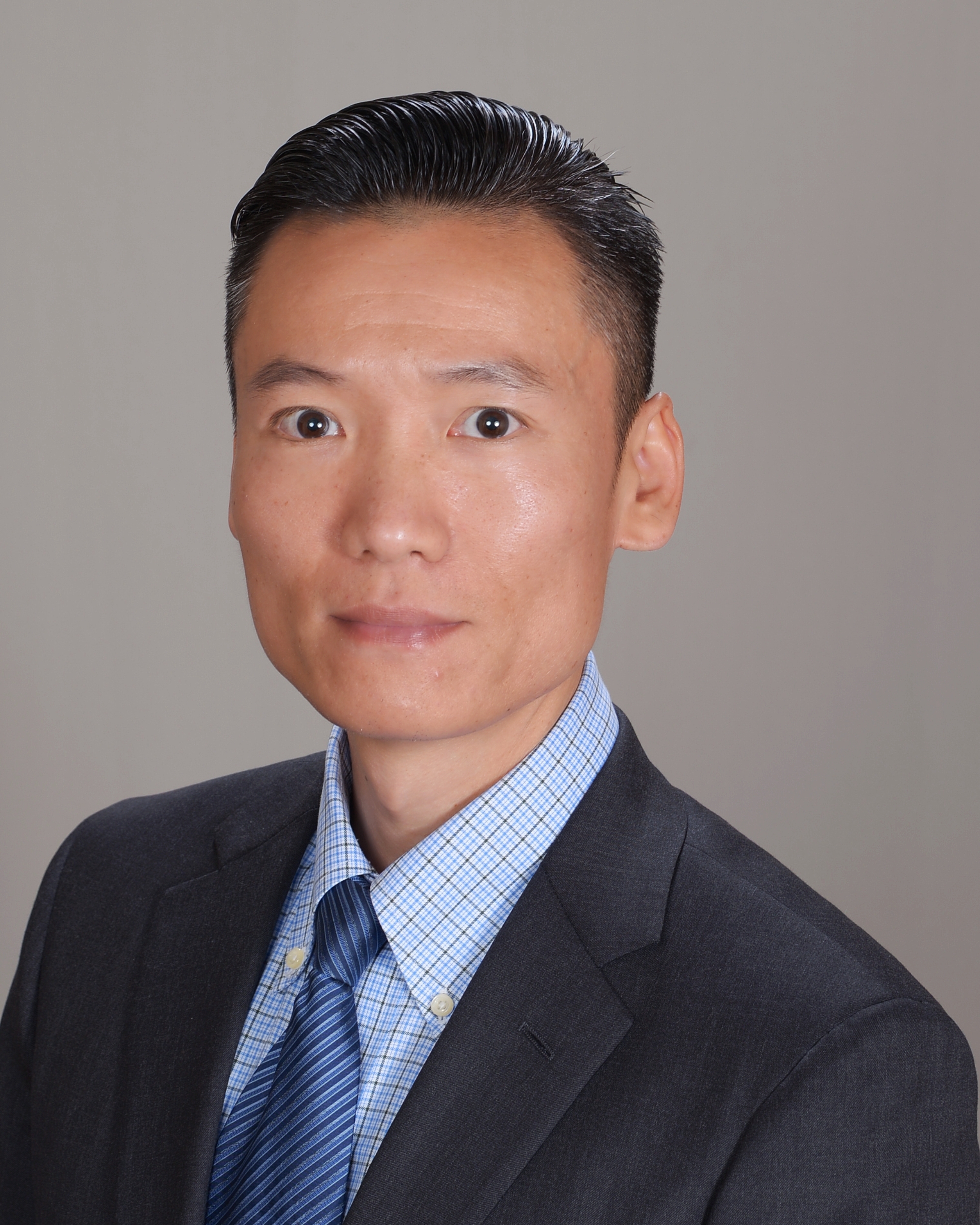
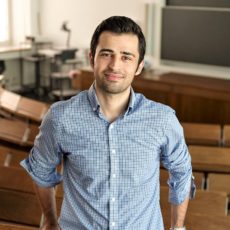
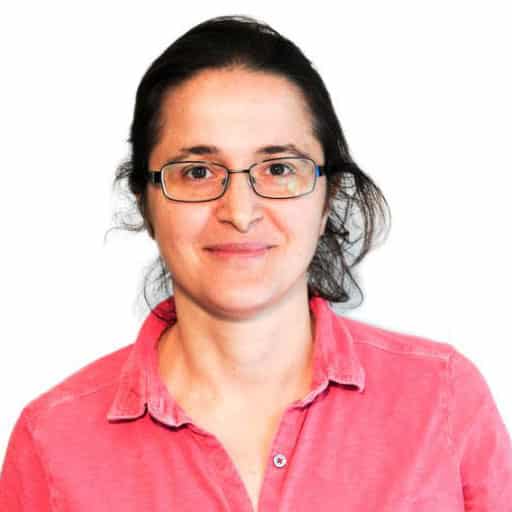
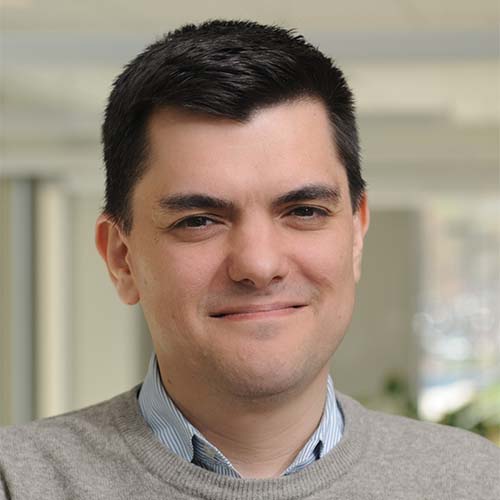
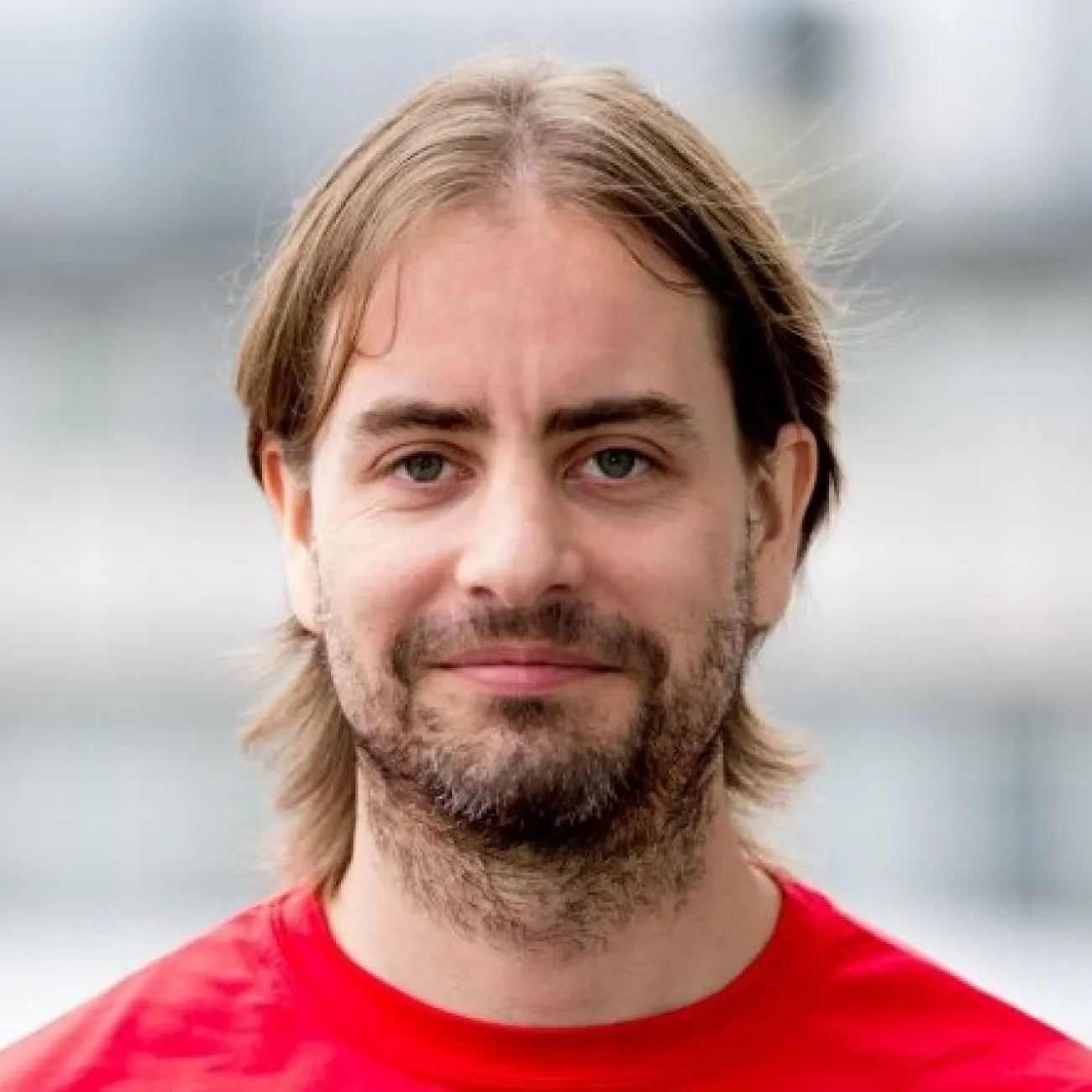
Yang P. Liu is an Assistant Professor at Carnegie Mellon University 's Department of Computer Science . He received his PhD from Stanford University under the supervision of Aaron Sidford and previously studied at MIT . Fields of Interest : Graph Algorithms, Optimization, High-Dimensional Geometry, Additive Combinatorics, Theoretical Computer Science. His research focuses on algorithmic design and analysis for graph problems, optimization, and combinatorics, with applications in machine learning and complexity theory. Recent work includes advancements in parallel repetition games , combinatorial lines , and dynamic graph algorithms . In 2024, his research spanned FOCS , STOC , and RANDOM conferences, addressing problems in k-CSPs , min-cost flow , and hypergraph sparsification . Earlier contributions (2023) included deterministic flow algorithms and spectral hypergraph techniques. Scientific Awards : NDSEG Fellowship (2018-2021), Google PhD Fellowship (2022-2023), FOCS Best Paper (2022), STOC Best Student Paper (2022), FOCS Best Student Paper (2021). He teaches CS 15-759 , a graduate course on convex optimization theory and applications, covering gradient descent, interior point methods, and algorithmic sparsification techniques.
Dr. Liang Cheng is the Department Chair and Professor in the Department of Electrical Engineering and Computer Science at the University of Toledo. He leads a department with ~700 students across CS, CSE, and EE programs. His research focuses on Cyber-Physical Systems (CPS), IoT, AI/ML, and intelligent infrastructure, supported by over $30M in funding from NSF, DOE, DOT, and industry. Notable projects include CPS Breakthrough initiatives and underground sensing systems. He co-edited a multidisciplinary book on Underground Sensing and contributed to smart grid cybersecurity. Dr. Cheng has held leadership roles at Lehigh University, shaping faculty governance and equity policies. His 100+ publications span networking, real-time systems, and sensor networks. He advises on funded projects totaling $30M+ and has pioneered pedagogical approaches in computer science education. Research Interests: Cyber-Physical Systems (CPS): Focuses on autonomous drones, energy systems, and real-time infrastructure Networking: Expertise in TSN, DTN, and wireless protocols Cybersecurity: SCADA systems, PLC attack detection, and blockchain energy modeling Underground Sensing: Geo-sensing via wireless signals and subsurface tomography Grants & Projects: Over 20 sponsored projects including NSF CPS Breakthrough (2018-2023), ABB smart grid projects, and DARPA-funded EDIFY systems. Key contributions include reconfigurable wireless architectures and network calculus tools for real-time systems. Teaching: Courses span senior design, compiler design, parallel computing, and wireless sensor networks. Developed pedagogical patterns for non-CS programming education. Awards: Recognized for leadership in academic governance and interdisciplinary research collaboration.
Mohsen Ghaffari is an Associate Professor at MIT's Department of Electrical Engineering and Computer Science (EECS), holding the Steven and Renee Finn Chair. His research focuses on theoretical computer science, particularly distributed and parallel algorithms, graph theory, and network optimization. Formerly, he was a tenured CS faculty member at ETH Zurich until 2022. PhD in Computer Science from MIT (2016) His research interests include distributed algorithms, parallel computing, graph decomposition, and network congestion management. His recent work addresses coreness decomposition, spanner construction, and Euclidean k-center optimization in massive parallel computation frameworks. Notable scientific awards include the ACM Doctoral Dissertation Award (Honorable Mention), ACM-EATCS Doctoral Dissertation Award, and multiple best paper awards at FOCS, PODC, and SODA. He has advised numerous PhD and Master's students, many of whom have transitioned to academic and industry roles. He has taught courses at MIT and ETH Zurich on distributed algorithms, advanced algorithms, and massively parallel computation. His professional activities include serving on program committees for SODA, FOCS, STOC, and organizing workshops like Highlights of Algorithms (HALG) and Workshop on Local Algorithms (WOLA).
Prof. Bryan Ford leads the Decentralized/Distributed Systems (DEDIS) lab at EPFL. He focuses on secure decentralized systems, including blockchain technology, privacy, and systems security. He earned his Ph.D. from MIT and held faculty positions at Yale University and EPFL. His work spans distributed consensus protocols, peer-to-peer networking, and privacy-preserving systems. Key projects include QuePaxa (timeout-free consensus), UIA (global connectivity for mobile devices), and MedCo (secure healthcare data sharing). He advises numerous PhD students and contributes to open-source projects like Bitcoin collective signing and privacy networks like Riffle. Education: Ph.D., MIT; Postdoctoral work at Yale Research interests include blockchain scalability, consensus algorithms, and cryptographic privacy. His lab develops systems like TRIP for coercion-resistant voting and F3B to mitigate blockchain front-running. His work on NAT traversal and peer-to-peer protocols (e.g., STUN/ICE) remains foundational in network architecture. He emphasizes practical, auditable security solutions such as CertiKOS and atomic cross-chain transactions (Atom). Notable contributions: CoSi (collective signing), OmniLedger (sharded blockchain), and privacy-preserving protocols like PURBs (Protected Unsealable Recursive Boxes). His lab collaborates with Swiss Post to audit e-voting systems and designs democratic cryptocurrencies like PoPCoin.
Thatchaphol Saranurak is an Assistant Professor at the University of Michigan , specifically in the Computer Science and Engineering Division . Prior to this, he earned his PhD in Computer Science from KTH Royal Institute of Technology in 2018 under Danupon Nanongkai , followed by a postdoctoral research assistant professorship at Toyota Technological Institute at Chicago (2018-2020). Research Focus : His work bridges fundamental problems in graph theory, including Dynamic graph algorithms for max-flow and min-cut Expander graph decompositions and their applications Robust algorithms against adaptive adversaries Continuous optimization for combinatorial problems Scientific Contributions : He has made breakthroughs in deterministic graph algorithms, notably improving vertex connectivity bounds, developing near-linear time Gomory-Hu trees, and advancing dynamic matching algorithms. His research has been recognized by Sloan Research Fellowship NSF CAREER Award Presburger Award 2023 Teaching : He teaches courses like Expander and Graph Algorithms and Introduction to Algorithms (Winter 23, Winter 25). His lecture videos and notes are publicly available. Collaborations : He works with leading researchers including Sayan Bhattacharya , Joakim Blikstad , and Jason Li , with affiliations to institutions like TTIC , KTH , and SODA conferences.
Michela Becchi is an Associate Professor in the Department of Electrical and Computer Engineering at North Carolina State University. She specializes in computer architecture, systems software, and applications, with a focus on heterogeneous systems, parallel algorithms, and acceleration techniques for bioinformatics, pattern recognition, and quantum computing. Her work spans multi-core CPUs, GPUs, FPGAs, and distributed clusters, emphasizing the boundary between hardware and software design. Dr. Becchi holds a Ph.D. and Master’s degree in Computer Engineering from Washington University in St. Louis (2009) and a Bachelor’s degree in Computer Engineering from Politecnico di Milano, Italy (2000). Her research has been recognized with prestigious awards, including the NSF CAREER Award (2015) and the University of Missouri System President Award for Early Career Excellence (2016). Her research interests include compiler and runtime techniques for heterogeneous systems, acceleration of bioinformatics algorithms, and high-speed networking applications. She has pioneered frameworks for efficient data transformation, GPU-accelerated compression, and memory-efficient graph algorithms for quantum computing. Her work also explores thread coarsening, mixed-precision auto-tuning, and secure multi-core processor design. Key contributions include the PILOT runtime system for GPU memory management, the GPU-FPtuner auto-tuner for floating-point applications, and innovative approaches to automata processors for genomic analysis. Her publications emphasize reproducible accuracy in scientific simulations and the optimization of irregular applications on many-core platforms.
Hakan Aydin is a Professor and Director of the PhD Program in the Department of Computer Science at George Mason University's Volgenau School of Engineering. He has been teaching at George Mason University since 2001 and has established himself as a leading researcher in real-time embedded systems and energy-aware computing. Education: PhD in Computer Science from the University of Pittsburgh (2001) Hakan Aydin's research primarily focuses on sustainable computing, real-time embedded systems, fault tolerance, Internet-of-Things, and cyber-physical systems. His work bridges theoretical foundations with practical implementations, particularly in energy management for real-time systems. He has developed innovative techniques for reliability-aware power management, dynamic voltage scaling, and energy harvesting in wireless sensor networks. His research has significant implications for extending battery life in mobile devices, improving reliability in safety-critical applications, and enabling sustainable computing practices. Aydin's publications reveal a consistent research trajectory centered around energy efficiency and reliability in real-time systems. His work spans theoretical algorithm development, system-level implementation, and experimental validation. A notable trend is the evolution from single-processor systems to multicore and heterogeneous architectures, reflecting industry trends. His recent work increasingly addresses security aspects of real-time systems and the integration of IoT technologies. Scientific Awards: National Science Foundation CAREER Award (2006) George Mason University Computer Science Department Teaching Award (2006, 2009) Best Paper Award at IEEE Green and Sustainable Computing Conference (IGSC'20) Best Student Paper Award at IEEE International Conference on Embedded Software and Systems (ICESS'15) Best Paper Award at IEEE International Conference on Embedded Computing (EmbeddedCom'14) Best Paper Award at International Workshop on Highly-Reliable Power-Efficient Embedded Designs (HARSH'13) Best Paper Award at ACM International Conference on Modeling, Analysis and Simulation of Wireless and Mobile Systems (MSWIM'11) Hakan Aydin has advised seven PhD students to completion, including Vinay Devadas (2011), Baoxian Zhao (2012), Bo Zhang (2012), Mohammad Atiqul Haque (2016), Maryam Bandari (2016), Arda Gumusalan (2019), and Abhishek Roy (2021). His research has been generously supported by the National Science Foundation through multiple grants, including CSR: Small: Collaborative Research: Towards Reliability-Centric Real-time Computing on Heterogeneous Chip Multiprocessor Systems (2014-2017), CSR: Small: Energy Harvesting for Performance Sensitive Wireless Sensor Networks (2011-2015), and CSR: Small: Collaborative Research: Generalized Reliability-Aware Power Management for Real-Time Embedded Systems (2010-2014). Prof. Aydin has held significant leadership roles in the academic community, serving as the Technical Program Committee Chair of the IEEE RTAS 2011 and General Chair of IEEE RTAS 2012. He is also a member of the Editorial Board of Journal of Real-Time Systems (Springer). His work has established foundational principles in reliability-aware energy management for real-time systems, influencing both academic research and industrial practices in embedded computing.
Danfeng Zhang is a faculty member at Duke University whose research sits at the intersection of programming languages and security. Active across the premier PL conferences since 2015, Zhang has served on more than two-dozen program committees and currently co-chairs the POPL Student Research Competition. Education & Affiliation: Home page: users.cs.duke.edu/~dz132 Affiliation: Duke University, United States Research Interests: Zhang’s work spans programming-language design, static and dynamic analysis, formal verification, and security. A recurring theme is developing language-based techniques that guarantee strong security and privacy properties—ranging from side-channel resistance and constant-time execution to differential-privacy proofs—while preserving performance and usability. His recent projects combine type systems, program logics, and automated reasoning to build practical verification tools for concurrent, speculative, and approximate software. Publication Trends: Across nine representative papers (2015-2024) Zhang has advanced static detection of cache side channels, automated proofs of differential privacy, and relaxed concurrency models. The trajectory shows deepening integration of security concerns into language infrastructure, with tool-building (CtChecker, SpecSafe, LightDP) that bridge formal guarantees and real-world systems. Service & Leadership: 2024 POPL Student Research Competition Co-Chair 2025 POPL Program Committee member Repeated reviewer/PC member: PLDI, SPLASH/OOPSLA, ISSTA, ECOOP, APLAS, PriSC, PASS Zhang regularly mentors student researchers through SRC sessions and workshop panels, fostering diversity and early-career participation in the programming-languages community.
Professor David Thomas holds the position of Professor in Computer Engineering at the University of Southampton's Electronics and Computer Science Department. His research focuses on the intersection of software and hardware, particularly leveraging FPGAs for novel digital architectures and event-driven computing. He has a notable academic trajectory, having previously served as a Lecturer and Senior Lecturer at Imperial College London before joining Southampton in 2021. Dr. Thomas is actively involved in supervising PhD students and contributes to interdisciplinary research projects funded by the EPSRC, such as the SONNETS initiative exploring scalable event-triggered systems. Education: BSc in Computer Science (Imperial College London), PhD in Digital Architectures (Imperial College London). Postdoctoral roles included Research Associate and Research Fellow at Imperial's Department of Computing. Research Interests: Event-driven computing, FPGA-based systems, high-level synthesis, and high-performance computing. His work emphasizes practical implementations of theoretical models, such as custom processors and application-specific accelerators. Current projects include optimizing random number generation for FPGAs and exploring meta-programming techniques for hardware design. Advising and Grants: Supervises multiple PhD students in areas like neuromorphic computing and algorithm optimization. Active in securing funding for distributed system architectures and FPGA-based solutions. Labs/Teams: Member of the Cyber Physical Systems research group. Collaborates with interdisciplinary teams on projects like POETS (Partially Ordered Event-Triggered Systems) for large-scale parallel computing.
Yang P. Liu is an Assistant Professor in the Computer Science Department at Carnegie Mellon University's School of Computer Science. Previously, he was a Postdoctoral Member at the Institute for Advanced Study and earned his PhD from Stanford University under the supervision of Aaron Sidford. He completed his undergraduate studies at MIT, graduating in May 2018. His educational background includes: PhD in Computer Science, Stanford University (Advisor: Aaron Sidford) Bachelor's degree, Massachusetts Institute of Technology (graduated May 2018) Dr. Liu's research spans the intersection of mathematics and computer science, with particular focus on graph algorithms , optimization , high-dimensional geometry , and additive combinatorics . His work often develops novel algorithmic techniques that bridge theoretical insights with practical applications. He has made significant contributions to areas such as convex optimization, linear programming, and combinatorial problems. His teaching includes courses like "A Principled Approach to Optimization" (CS 15-759), which covers rigorous treatments of convex optimization topics including gradient descent, interior point methods, linear regression, linear programming, and sparsification. His extensive publication record in top-tier conferences (FOCS, STOC, SODA) demonstrates a consistent focus on developing almost-linear time algorithms for fundamental graph problems, optimization techniques, and combinatorial theorems. Recent work shows increasing emphasis on combinatorial lines, corners theorem, and k-CSP approximability, while maintaining strong connections to optimization theory and graph algorithms. Dr. Liu has received notable recognition for his work: National Defense Science and Engineering Graduate (NDSEG) Fellowship (2018-2021) Google PhD Fellowship (2022-2023) Best Paper award at FOCS 2022 for "Maximum Flow and Minimum-Cost Flow in Almost Linear Time" Best Student Paper at STOC 2021 for "Discrepancy Minimization via a Self-Balancing Walk" His research has been supported by prestigious fellowships including the NDSEG Fellowship and Google PhD Fellowship. His work on graph algorithms, optimization, and combinatorics involves collaborations with researchers across theoretical computer science and mathematics. His publications often involve co-authors from multiple institutions, suggesting active research collaborations across the field. Dr. Liu maintains an active research program with a focus on developing efficient algorithms for fundamental computational problems. His recent work continues to push the boundaries of what's computationally feasible in graph algorithms, optimization, and combinatorial mathematics, with particular emphasis on achieving almost-linear time complexity for challenging problems.
Dr. Andrea Bastoni is a Postdoctoral Researcher and Research Fellow at the Chair of Cyber-Physical Systems in Production Engineering at Technical University of Munich (TUM), Faculty of Mechanical Engineering. He is also the CTO and co-founder of Minerva Systems , developing operating system solutions for AI-ready embedded applications. His expertise spans real-time operating systems, cyber-physical systems, and predictable system design for heterogeneous platforms. His research focuses on enhancing predictability of memory hierarchies in complex SoCs through techniques like memory bandwidth regulation and cache partitioning. This work has industrial applications in safety-critical domains such as avionics and railways, where he contributes to certifiable hypervisors and operating systems. As former Software Architect of the PikeOS hypervisor at SYSGO GmbH (2012-2020), he specialized in DO-178C, IEC 61508, and EN 50128 standards. His academic background includes a Ph.D. in Computer Engineering from the University of Rome Tor Vergata (2007-2011), where he developed LITMUS^RT as part of UNC's Real-Time Systems Group during a visiting researcher period (2009-2010). His publications reflect ongoing work on Multicore Real-Time Scheduling , Mixed-Criticality Task Isolation, and Arm DynamIQ shared unit analysis. He actively participates in program committees for conferences like RTSS, DSN, and DATE.
Yuning Jiang is a Visiting Professor at the École Polytechnique Fédérale de Lausanne (EPFL), affiliated with the Automatic Control Laboratory (LA3) within the School of Engineering (STI). He teaches the doctoral course Optimal Control for Dynamic Systems and contributes to research in distributed optimization, model predictive control (MPC), and smart grid technologies. His work bridges theoretical advancements in control systems with practical applications in power networks and autonomous systems. Current research emphasizes scalable solutions for AC optimal power flow, real-time MPC for embedded systems, and robust optimization under uncertainty. His research interests span Optimal Control , Power Systems , Smart Grids , and Federated Learning . Notable contributions include distributed algorithms for large-scale power systems and privacy-preserving co-simulation frameworks. Recent publications focus on microservice deployment in satellite-terrestrial networks and real-time pricing mechanisms for vehicle-to-grid (V2G) integration. Yuning holds a position in the EDEE-ENS unit under EPFL’s Academic Affairs division (VPA-AVP-DLE), reflecting his role in academic administration and teaching infrastructure. His lab, the Automatic Control Laboratory, focuses on cutting-edge research in control theory and its interdisciplinary applications.
Onur Mutlu is a Professor of Computer Science at ETH Zurich, affiliated with the Department of Information Technology and Electrical Engineering. He also holds adjunct professorships at Carnegie Mellon University and Bilkent University. His research focuses on computer architecture, systems security, bioinformatics, and energy-efficient computing. He has pioneered work on memory-centric computing paradigms, RowHammer security vulnerabilities, and bio-inspired computing systems. He teaches courses such as Digital Design & Computer Architecture and supervises the SAFARI research group, which explores cutting-edge topics in memory systems, AI accelerators, and genomics. Recent activities include keynote talks at ISCA, HiPEAC, and IEEE conferences, emphasizing emerging hardware-software co-design principles. Key contributions include foundational work on memory reliability, cross-layer system design, and accelerating genomic data analysis. His research has been showcased in over 200 publications and industry collaborations with tech leaders like Intel, Huawei, and Micron.
Magdalena Szymczyk is a Lecturer in the Department of Biocybernetics and Biomedical Engineering at AGH University of Science and Technology, Faculty of Electrical Engineering, Automatics, Computer Science and Biomedical Engineering. Her work bridges embedded systems, biomedical signal processing, and geophysical data analysis. Research focuses on energy-efficient sensor networks, neural networks for GPR data classification, and mathematical transforms in signal analysis Expertise in parallel computing, real-time systems, and biomedical engineering applications Her publications (2015–2025) demonstrate a trajectory from parallel neural networks and S-transform/GPR methodologies to recent work on MicroPython in embedded systems. Key themes include energy optimization in distributed architectures and AI-driven signal processing across biomedical and geophysical domains. She has authored works on deterministic chaos in simulations, GPU image processing, and cybersecurity in microcontroller systems. Her current research emphasizes embedded systems security, medical signal diagnostics, and computational methods for geological analysis. She utilizes tools like OpenCL for GPU acceleration and MATLAB for parallel computing implementations.
Yihan Sun is an Assistant Professor at the University of California, Riverside (UCR) since January 2020. He earned his Ph.D. in Computer Science from Carnegie Mellon University (CMU) , advised by Guy Blelloch , and holds a Bachelor's degree in Computer Science from Tsinghua University . Research Interests: Yihan Sun focuses on the theory and practice of parallel computing , including Parallel algorithms and data structures Write-efficient algorithms for Non-Volatile Memory (NVM) Computational geometry (range trees, Delaunay triangulations) Graph algorithms (SSSP, SCC, cluster-based BFS) Concurrent and persistent data structures Multi-version concurrency control (MVCC) with garbage collection Applications in databases, transactional systems, and computational biology Recent Research Trends: His work on join-based parallel balanced trees has been foundational, supporting four balancing schemes (AVL, red-black, weight-balanced, treaps) and enabling efficient implementations in graph analytics, spatial queries, and dynamic programming. Recent publications focus on output-sensitive algorithms , scalable graph libraries (PASGAL) , and pedagogical approaches to teaching parallel algorithms. Teaching: He teaches CS260 (Parallel Algorithms) at UCR and has served as a guest lecturer for MIT 6.886 (Algorithm Engineering) and CMU 15-859 (Algorithms in the real world) . He also contributed to algorithm education through a tutorial at the ACM Symposium on Principles and Practice of Parallel Programming (PPoPP 2019) . Labs & Collaborations: Yihan is a core contributor to the PAM (Parallel Augmented Maps) library, which has been integrated into systems like Aspen (graph-streaming) and C-trees . He collaborates with teams at CMU-Parlay , PBBS , and Ligra , with his code available on Github for community feedback.