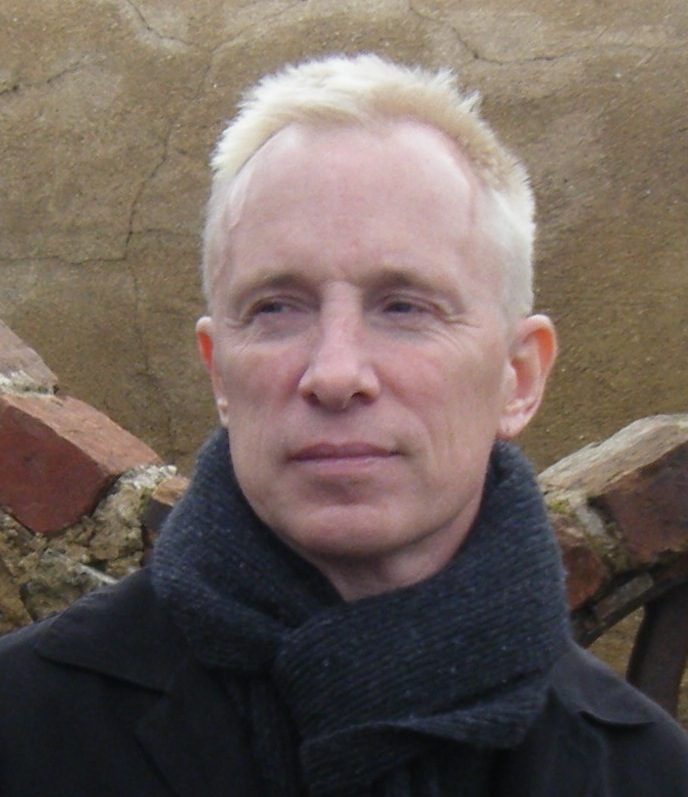
Robert Kohn is a Professor of Mathematics at the Courant Institute of Mathematical Sciences, New York University. His research bridges applied mathematics, materials science, and mathematical physics through rigorous analysis of energy-driven systems. Specializes in partial differential equations, nonlinear elasticity, and phase transformations Active in interdisciplinary collaborations with physics and engineering disciplines Key contributions to pattern formation and structural optimization problems Research focuses on: Energy-driven pattern formation in materials (superconductors, martensites, thin films) Thin film dynamics and surface relaxation mechanisms Phase transitions in crystalline solids and microstructure analysis Optimization problems in continuum mechanics and control theory Key article trends show: Developing mathematical frameworks for metamaterials and photonic doping Connecting PDE analysis to online learning and game theory Establishing energy scaling laws for complex material systems Exploring topological constraints in mechanical and electromagnetic systems His work spans both pure mathematical analysis and applied problems in materials science, with notable contributions to: Micromagnetics and magnetic microstructures Crystal growth inhibition mechanisms Geometrically constrained elastic systems Stochastic Allen-Cahn equations and phase separation
Tuomo Valkonen is a Professor and Principal Investigator at the University of Helsinki , with significant contributions to mathematical optimization and inverse problems. He serves as the Managing Editor of the Journal of Nonsmooth Analysis and Optimization , advancing methodologies for nonsmooth and nonconvex optimization in imaging and PDE-constrained problems. His research spans Nonsmooth Optimization : Developing linearized block coordinate descent methods and forward-backward splitting in non-Hilbertian spaces. Inverse Problems : Applying these techniques to Electrical Impedance Tomography , Diffusion Tensor Imaging , and Magnetic Resonance Imaging . Optimal Transport : Innovating in unbalanced transport for point source localization and dynamic regularization via infimal convolution. Recent publications highlight his work on Online Optimization for real-time imaging. Multigrid Methods for total variation problems. Differential Estimates in bilevel PDE-constrained optimization. He has received the Magna Cum Laude Award at ISMRM 2013 for dynamic imaging work and authored a textbook on nonsmooth analysis (2024). His methods integrate stochastic and deterministic solvers, emphasizing efficiency in high-dimensional medical and geophysical imaging.
Ionuţ Munteanu is an Associate Professor at Al. I. Cuza University, Iasi, and a researcher at the Institute of Mathematics 'O. Mayer', Romanian Academy. He holds a PhD in Mathematics from Al. I. Cuza University (2012), supervised by Academician Viorel Barbu. His research focuses on controllability, stabilization, and existence of solutions for deterministic and stochastic partial differential equations, particularly Navier-Stokes and parabolic-type equations with memory. Education: Bachelor's: Faculty of Mathematics, Al. I. Cuza University (2003–2007) Master's: Mathematical Modelling, same institution (2007–2009) PhD: Stabilization of Navier-Stokes Equations (2012) Research Interests: Boundary feedback stabilization for PDEs Controllability and existence analysis for stochastic/parabolic systems Applications to fluid dynamics and magnetohydrodynamics Achievements: Recipient of the 'Dimitrie Pompeiu' Prize (2023) Winner of the Humboldt Fellowship (2015–2017 and 2022) Author of Boundary Stabilization of Parabolic Equations (Birkhauser, 2019) Grants & Collaborations: Directed grants such as GI-UAIC-2018-03 Participated in PN-III national projects Visited institutions like INSA Rouen and University of Bielefeld
Wuchen Li is an Assistant Professor in Mathematics at the University of South Carolina , specializing in Transport information geometry and its applications across Complex Dynamical systems, PDEs, Statistics, Optimization, Control and Games, Mathematical Data science, Graphs and Neural networks , and Scientific Computations . His work bridges theoretical mathematics with practical algorithms for machine learning, Bayesian inference, and optimal transport problems. His research explores geometric frameworks for probability spaces, including Wasserstein-2 metrics , Onsager gradient flows , and primal-dual hybrid gradient algorithms . Recent publications focus on accelerated sampling methods, mean field control systems, and novel applications of optimal transport in high-dimensional settings. 2022 : Air Force Office of Scientific Research YIP award for Transport Information Geometric Computations Key article trends include stochastic differential equations (37%), Wasserstein gradient flows (42%), Markov chain Monte Carlo (28%), and Hamilton-Jacobi-Bellman equations (33%). Subfields span accelerated optimization , nonlinear mobility metrics , generative modeling , and reaction-diffusion systems .
William M. McEneaney is a Professor in the Department of Mechanical and Aerospace Engineering at the University of California, San Diego, within the Jacobs School of Engineering. He maintains an active research program while teaching advanced courses including MAE289C (Spring 2025), MAE142 (Fall 2024), MAE180 (Fall 2024), and MAE288A (Spring 2024). His office is located in 1809 EBU I, and he has been recognized with prestigious fellowships from both SIAM and IEEE. Professor McEneaney's research spans several interconnected areas at the intersection of control theory, applied mathematics, and physics. His primary interests include nonlinear control theory, numerical methods for Hamilton-Jacobi equations, and Max-Plus/Idempotent Analysis. His work extends to astrodynamics and the n-body problem, where he applies principles of stationary action to solve complex orbital mechanics problems. He has made significant contributions to understanding the relationships between stochastic and deterministic control systems, with applications ranging from risk-sensitive filtering to quantum systems. His recent publications demonstrate a strong focus on staticization techniques, which provide computational reductions for systems with low-dimensional nonlinearities. His work bridges theoretical developments in Hamilton-Jacobi PDEs with practical applications in control systems, wave equations, and quantum mechanics. A notable trend is his exploration of connections between optimal control theory and fundamental physics principles, particularly in developing representations for Schrödinger equations using stationary action principles. Fellow of SIAM (Society for Industrial and Applied Mathematics) Fellow of IEEE (Institute of Electrical and Electronics Engineers) Professor McEneaney has supervised numerous graduate students and collaborated extensively with researchers including P.M. Dower, R. Zhao, and Y. Zheng. His research has been supported by various funding sources that enable his work on computational methods for control problems and fundamental solutions. His book "Max-Plus Methods for Nonlinear Control and Estimation" (Birkhauser, 2006) is a significant contribution to the field. He has also co-edited several influential volumes including "Numerical Methods for Optimal Control Problems" (Springer, 2018) and "Adversarial Reasoning: Computational Approaches to Reading the Opponent's Mind" (CRC Press, 2007). His research group focuses on developing novel computational approaches for solving complex control problems, particularly those involving Hamilton-Jacobi equations. They maintain strong connections with the broader applied mathematics community through participation in workshops like the 2017 Numerical Methods in Optimal Control workshop. The group's work often intersects with physics applications, particularly in quantum systems and orbital mechanics, where they develop efficient numerical methods for solving two-point boundary value problems.