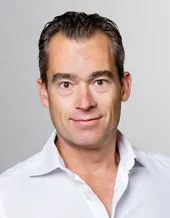
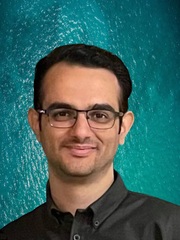
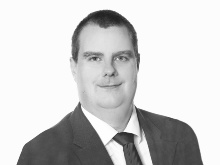
Luxi Zhao is a Research Fellow at Technische Universität München's Embedded Systems and Internet of Things department, specializing in Time-Sensitive Networking (TSN) and real-time network calculus. Working under the supervision of Prof. Sebastian Steinhorst, Zhao contributes to projects like ReMiX and 6G-Life, focusing on security, performance analysis, and configuration optimization of deterministic networks. Research Focus: Worst-case latency analysis in TSN networks Runtime configuration and reconfiguration problems Hybrid scheduling of processing and communication Network calculus modeling for heterogeneous systems Security challenges in industrial IoT and autonomous systems Interoperability of IoT systems in Industry 4.0 Teaching Activities: Secure Autonomous Systems (2025) Software Architecture for Distributed Embedded Systems (2025) IoT Security (2025) IoT Remote Lab practical courses across multiple semesters Advanced Seminar series (2020-2025)
Andrey I. Lyakhov is a Professor and Doctor of Computer Science at the Institute for Information Transmission Problems of the Russian Academy of Sciences. He serves as the Head of Laboratory №18 and has been active since 1959. His research focuses on wireless networks, particularly IEEE 802.11 and 802.16 protocols. Position: Laboratory Chief Affiliation: Institute for Information Transmission Problems, Russian Academy of Sciences Research Interests: Wireless Networks, MAC Protocol Analysis, Network Performance, Distributed Control, Multicast QoS, Channel Assignment His work includes analytical modeling of data transmission, beaconing in mesh networks, and studies on network unfairness and congestion. He has contributed to patents in wireless sensor networks and piconet beacon management. Notable publications span wireless LANs, WiMAX, and sensor network optimization. Lyakhov's research has involved collaborations with international conferences and journals, focusing on throughput estimation, channel contention, and quality of service in wireless systems. Recent publications include studies on bandwidth piggybacking (2010), intra-flow interference in mesh networks (2010), and multicast QoS support in WLANs (2007). Earlier works from 1983-2008 cover foundational topics in queueing theory, cache efficiency, and distributed control systems.
Linar Mikeev is a researcher affiliated with the Department of Computer Science at Saarland University, Germany . His work focuses on stochastic modeling of biochemical reaction networks using Markov processes, with applications in computational biology and systems biology. Key methodologies: Moment-based analysis, importance sampling, numerical approximation Collaborators: Alexander Andreychenko, Verena Wolf, Werner Sandmann Research Interests Mikeev's research spans stochastic processes in biochemical systems, particularly using Markov chains and hybrid models to analyze rare events in reaction networks. He develops numerical techniques for solving the chemical master equation and optimizing parameter estimation in biological systems. Recent Publications (2010-2015) His articles address biochemical reaction networks through Markovian models , with a focus on rare event probabilities, parameter inference, and hybrid numerical solutions. Collaborative work with computational biologists and systems biology researchers dominates his output. Collaborations Verena Wolf (8 co-publications) Werner Sandmann (2 co-publications) Thomas A. Henzinger (1 co-publication)
David Spieler is a Professor of Machine Learning at the University of Applied Sciences Munich since September 2018. Previously, he served as a product owner for big data topics at Audi AG (2015–2018), a system developer at Bosch SoftTec (2014–2015), and completed his PhD in Modeling and Simulation at Saarland University (2009–2014). His research focuses on stochastic systems, biochemical modeling, parameter estimation, and oscillatory behavior analysis in Markovian systems. He has contributed to numerical methods for steady-state analysis, formal verification techniques, and applications in systems biology. Research interests include stochastic hybrid systems, sensitivity analysis of biochemical networks, geometric bounds for CTMC steady-state distributions, and oscillatory dynamics in chemical reaction networks. He has published extensively on topics like model checking, parameter estimation, and algorithmic solutions for stochastic processes. His work bridges theoretical computer science with practical applications in bioinformatics and engineering. Spieler has taught courses on data networks, quantitative model checking, and stochastic simulation techniques. He has reviewed manuscripts for over 20 conferences including CAV, CMSB, HSCC, and QEST, contributing to the advancement of formal methods and computational systems biology.
Prof. Dr. Angela Stevens is a Full Professor in Applied Mathematics at the University of Münster, Germany, leading the Applied Analysis group within the Institute for Analysis and Numerics. She is an Investigator in the Cluster of Excellence Mathematics Münster and holds an honorary position at the University of Leipzig. Her research focuses on applied analysis, nonlinear partial differential equations, mathematical modeling in biology, and interacting particle systems. Notable contributions include work on chemotaxis, cell motility, and regeneration processes in organisms like planarians. Education & Awards : Stevens earned her PhD in Mathematics from the University of Heidelberg (1992) and won the SIAM Student Paper Competition in 1992. She has held visiting positions at institutions such as the University of Minnesota, Hokkaido University, and Stanford University. Research Interests : Her work bridges theoretical analysis with biological applications, emphasizing mathematical models for cell behavior, pattern formation, and epidemiology. Key areas include taxis-driven dynamics, free boundary problems, and multi-scale processes in biological systems. Awards & Recognition : In addition to the SIAM award, her leadership in interdisciplinary research has been recognized through visiting professorships and contributions to collaborative networks like Cells in Motion and CeNoS. Grants & Collaborations : She leads research projects in Mathematics Münster and collaborates internationally on topics like PDEs and stochastic systems. Her work on the mathematical modeling of planarian regeneration highlights her innovative approach to biological problems. Labs & Teams : Stevens oversees the Applied Analysis research group, which actively contributes to the Mathematics Münster cluster and hosts events like the Workshop on Cell Dynamics and Mathematical Modeling (2023).
Sarah Winter is a tenured Associate Professor (Maîtresse de Conférences) at Université Paris Cité and a member of the Automata and Applications team at IRIF (Institut de Recherche en Informatique Fondamentale). Previously, she was a postdoctoral researcher at Université libre de Bruxelles (2019–2023) in the Formal Methods and Verification group, and she completed her PhD in Computer Science at RWTH Aachen University under Christof Löding (2014–2018). Doctoral Degree: Computer Science, RWTH Aachen University, 2018 Master’s Degree: Computer Science, RWTH Aachen University, 2013 Bachelor’s Degree: Computer Science, RWTH Aachen University, 2011 Her research lies at the intersection of theoretical computer science, logic, and automata theory. She focuses on transducer synthesis, formal verification, streaming string transducers, delay games, and hyperproperties. Her work explores the computability and definability of functions and relations over infinite words and trees, often using logical and automata-theoretic frameworks. She investigates how systems can be synthesized from specifications, especially under constraints like delay or partial observability. Her recent publications, appearing in top-tier journals and conferences such as LMCS, TheoretiCS, LICS, and ICALP, show a consistent trend toward formal models of computation involving transducers, games with delay, and logical synthesis. Keywords across her work include reactive synthesis, automata on infinite structures, function uniformization, and model checking for hyperlogics. Her collaborations with researchers like Martin Zimmermann and Emmanuel Filiot reflect a strong network in European formal methods. Best Student Paper Award, MFCS 2018 Sarah Winter has advised students at the Master’s and PhD levels, as evidenced by her own academic lineage and supervision roles in publications, though no explicit list of advisees is provided. She has not mentioned specific grants, but her postdoctoral and faculty positions suggest funding support. She is actively involved in the theoretical computer science community, giving talks at international venues and workshops. She is a core member of the Automata and Applications team at IRIF, contributing to research on automata theory and its applications in verification and programming languages. Her work forms part of a broader effort to develop rigorous foundations for computing systems.
Alistair Moffat is a prominent faculty member at the University of Melbourne's School of Computing and Information Systems, with an extensive publication record spanning over four decades from 1980 to the present. His career demonstrates sustained contributions to information retrieval, data compression, and evaluation metrics within the field of computer science. Moffat's primary research interests encompass: Information Retrieval and Search Engine Technologies Data Compression Algorithms and Indexing Techniques Development and Analysis of Evaluation Metrics Process Mining and Event Log Analysis User Modeling in Information Seeking Behavior Theoretical Foundations of Search Effectiveness His recent work (2023-2025) reveals a continued focus on refining search evaluation methodologies, with particular attention to user-oriented metrics, rank-biased quality measurement, and the relationship between query variations and experimental consistency. Moffat has also expanded into process mining applications, developing entropy-based metrics like Entropia for measuring log representativeness. His publications consistently appear in top-tier venues including SIGIR, ACM Transactions on Information Systems, and Information Processing & Management. Moffat maintains extensive research collaborations, most notably with Justin Zobel (70 joint publications), J. Shane Culpepper (35), and Matthias Petri (32), demonstrating a strong network within the information retrieval research community. His work bridges theoretical computer science with practical applications in search technology, medical information retrieval, and process analysis. As evidenced by his continuous publication output through 2025, Moffat remains an active and influential researcher in his fields of expertise, contributing both to foundational theories and practical implementations in information access systems.
Bruno Schuermans is a Rudolf Diesel Industry Fellow at the Technical University of Munich (TUM), affiliated with the Institute for Advanced Study (TUM-IAS). He holds a Ph.D. in Mechanical Engineering from EPFL and leads combustion dynamics research at Alstom. His work focuses on mitigating thermoacoustic instabilities in gas turbine systems through analytical, numerical, and experimental methods. Education: M.Sc. Mechanical Engineering from Delft University of Technology (1998), Ph.D. in Mechanical Engineering from EPFL (2003). Research Interests: Combustion dynamics, thermoacoustic modeling, stability analysis, and control strategies for gas turbines. He combines CFD, system identification, and data mining to address complex engineering challenges. His current focus is on high-frequency nonlinear combustion dynamics. Awards include multiple Alstom Innovation Awards and ASME Best Paper Awards. He holds over 30 patents in combustion control and diagnostics. Collaborations: Works with TUM-IAS and industry partners like Alstom and GE Power. His research group (Advanced Stability Analysis) develops tools for predicting and mitigating combustion instabilities in gas turbine systems.
Igor Walukiewicz is a Researcher at the Laboratoire Bordelais de Recherche en Informatique (LaBRI) , affiliated with Université de Bordeaux , France. His work focuses on Concurrency Theory , Model Checking , Timed Automata , Higher-Order Model Checking , and Automata Theory . His recent research explores parametric systems , timed automata , and higher-order concurrency . Articles highlight advancements in verification techniques , synthesis of distributed algorithms , and partial-order reduction methods . Key subfields include deadlock avoidance , active learning , and logical frameworks for timed systems . He has secured significant ANR grants such as FREDDA (FoRmal Methods for Distributed Algorithms) and Ticktac (Verification of Real-Time Systems). He contributes to tools like TChecker , a model-checking tool for real-timed systems developed at LaBRI. Walukiewicz participates in editorial and organizational roles, including the Fundamenta Informaticae editorial board and HIGHLIGHTS conference steering committee. He has presented at major venues like LICS , CONCUR , and ICALP .
Arash Bahari Kordabad is a Postdoctoral Researcher at the Max Planck Institute for Software Systems (MPI-SWS) in Kaiserslautern, Germany, since May 2023. His work focuses on theoretical and applied control systems within the EU-funded SymAware project, addressing multi-agent awareness frameworks through collaborations with KTH, Uppsala University, and Siemens Digital Industries Software. His educational background spans three continents: Ph.D. in Engineering Cybernetics, Norwegian University of Science and Technology (NTNU), 2020-2023 (Thesis: "Theoretical properties of learning-based MPC") M.Sc. in Mechanical Engineering, Sharif University of Technology, Tehran (2017-2019; GPA 19.41/20) B.Sc. in Mechanical Engineering, University of Tabriz, Iran (2013-2017; GPA 18.1/20) Research centers on the convergence of Markov Decision Processes, Economic Model Predictive Control, and Reinforcement Learning for energy systems and autonomous vehicles. He pioneers probabilistic guarantees for stochastic systems under temporal logic specifications using Control Barrier Functions and distributionally robust optimization. His MPC-based Reinforcement Learning framework uniquely optimizes closed-loop performance by tuning entire MPC schemes through real-world data, bridging safe control with explainable AI. Recent publications (2022-2024) reveal accelerating focus on safety-critical applications: 75% address Signal Temporal Logic specifications for autonomous systems, 60% integrate distributionally robust methods, and 40% target energy grid applications. Key trends include formal verification of stochastic control, data-driven MPC tuning, and second-order RL algorithms for constrained environments. Scientific recognition includes: First rank in Dynamics and Control at Sharif University (2018) Top 0.25% in Iran's national university entrance exam (2013) Honorary diploma in International Mathematics Tournament of Towns (2013) Current research is supported by the European Innovation Council (SymAware project, 2023–present) and previously by the Research Council of Norway (SARLEM project, 2020–2023). He actively mentors junior researchers and collaborates with industry partners including DNV GL, Kongsberg Maritime, and Netherlands Aerospace Centre. His review work spans ACC, ECC, and CDC conferences alongside journals like Engineering Applications of Artificial Intelligence . He operates within the SymAware consortium's interdisciplinary team, developing frameworks for multi-agent awareness with partners across Europe. Current efforts integrate Wasserstein distributionally robust optimization with chance-constrained Signal Temporal Logic to enable safer autonomous maritime systems, as evidenced by his upcoming guest editorship for the Journal of Marine Science and Engineering .
Thatchaphol Saranurak is an Assistant Professor in the Computer Science and Engineering Division at the University of Michigan, College of Engineering. He holds a Ph.D. in Computer Science from KTH Royal Institute of Technology (2018), advised by Danupon Nanongkai, and was previously a Research Assistant Professor at the Toyota Technological Institute at Chicago (2018–2020). His research lies at the intersection of theoretical computer science and algorithm design, with primary interests in fast graph algorithms , dynamic algorithms , robust algorithms against adaptive adversaries , and combinatorial optimization . His work has significantly advanced the state-of-the-art in areas such as maximum flow (Gomory-Hu trees), vertex and edge connectivity, dynamic matching, expander decompositions, and distributed graph algorithms. His recent publications (2023–2025) reveal a strong trend toward deterministic, near-linear time algorithms for fundamental graph problems, often leveraging expander hierarchies and dynamic sparsification techniques . He has made breakthroughs in dynamic matching, connectivity oracles, and multi-commodity flow, frequently publishing in top venues like FOCS, STOC, and SODA. He has received several prestigious honors, including: Presburger Award 2023 NSF CAREER Award Sloan Research Fellowship His advising and grant activities are supported by major funding such as the NSF CAREER Award and Sloan Fellowship, and he actively mentors and collaborates with a large network of co-authors. He is also involved in organizing academic events, such as the Dagstuhl Seminar on Graph Algorithms. He teaches courses such as Expander and Graph Algorithms and maintains an active research group focused on pushing the boundaries of algorithmic efficiency and robustness.
Philip Diederich is a researcher at the Chair of Communication Networks at Technical University Munich (TUM), where he has been since 2021. He holds an M.Sc. in Electrical and Computer Engineering from TUM (2021) and a B.Sc. from the same institution (2019). His research focuses on real-time networking in diverse environments, including data centers, industrial networks, and wide area networks. Key interests include deterministic networks with hard/soft real-time guarantees, software-defined networking (SDN), and the integration of real-time systems with best-effort networks. Recent work explores topology effects on real-time network performance, resilience in time-sensitive networks, and affordable latency measurement setups. He collaborates on projects like integrating deterministic networking with 5G and developing hybrid models for TSN resource allocation. Philip co-advises student theses on topics like end-to-end scheduling in large-scale deterministic networks and has contributed to open research directions in network security and protocol synthesis.
Olivier Buffet is a Researcher at INRIA, working at the INRIA Center at Université de Lorraine / LORIA since November 2007. He is affiliated with the LORIA laboratory (Lorraine Laboratory of Computer Science and its Applications), which focuses on computer science research. His work spans multiple institutions, having previously held positions at NICTA's Statistical Machine Learning program (2004-2006), RSISE at ANU (2004-2006), and LAAS at CNRS (2006-2007). Dr. Buffet received his engineering degree from Supélec and a DEA (Diplôme d'Etudes Approfondies) from Henri Poincaré University. He completed his PhD in computer science under the supervision of François Charpillet and Alain Dutech at LORIA / INRIA Nancy Grand-Est, defended on September 10, 2003. He later defended his habilitation to supervise research (HDR) on December 18, 2017. Dr. Buffet's research focuses on artificial intelligence, particularly in the areas of automated planning and scheduling, reinforcement learning, and decision-making under uncertainty. His work extensively explores Markov Decision Processes (MDPs), Partially Observable MDPs (POMDPs), and Decentralized POMDPs (Dec-POMDPs), with applications ranging from multi-agent systems to traffic management and adaptive conservation strategies. His research often bridges theoretical foundations with practical applications, developing algorithms that can handle complex decision problems in uncertain environments. His publication record demonstrates a consistent focus on advancing methods for planning and decision-making under uncertainty. Over the past decade, his work has increasingly addressed decentralized and multi-agent settings, developing novel approaches for coordination among multiple decision-makers with partial information. More recently, his research has explored interpretable solutions for adaptive management problems, particularly in environmental contexts, and advanced theoretical understanding of properties like Lipschitz continuity in POMDP value functions. Dr. Buffet has received recognition for his contributions to the field, including: Winner of the probabilistic track in the Fifth International Planning Competition (IPC-06) Best Paper award at AAMAS-14 for "Exploiting separability in multi-agent planning with continuous-state MDPs" Best Paper award at JFSMA-13 for "Synchronisation de véhicules autonomes aux croisements d'un réseau de routes" Best Paper award at CAp'11 for "Une extension des POMDP avec des récompenses dépendant de l'état de croyance" As an educator and mentor, Dr. Buffet has supervised numerous PhD students including Arnaud Glad, Mauricio Araya-Lòpez, Mohamed Tlig, Arsène Fansi, and Manel Tagorti. He has also guided many interns and research projects. His teaching experience includes tutored sessions on discrete and deterministic optimization, decision making under uncertainty, and computer science for industrial engineering at École des Mines de Nancy, as well as courses on Unix shell and C programming at Université Henri Poincaré. Dr. Buffet has been actively involved in the academic community, serving as Co-Conference Chair of the 30th International Conference on Automated Planning and Scheduling (ICAPS 2020) in Nancy. He has organized multiple meetings of the French workgroup JFPDA (formerly PDMIA) and chaired several workshops on planning and scheduling under uncertainty. He previously served on the editorial boards of Revue d'Intelligence Artificielle (RIA) and Journal of Artificial Intelligence Research (JAIR), and has been a reviewer for numerous prestigious journals and conferences in artificial intelligence.
Yang Liu is a computer scientist specializing in theoretical computer science, particularly in the design and analysis of parameterized and exact algorithms. He has been affiliated with institutions such as Texas A&M University and has collaborated extensively with researchers like Jianer Chen and Songjian Lu. His work primarily focuses on NP-hard graph problems, including feedback vertex set, multiway cut, matching, and packing, where he has contributed improved fixed-parameter tractable algorithms and kernelization techniques. His research lies at the intersection of algorithms, complexity theory, and combinatorics. Key areas include: Fixed-parameter tractability (FPT) Kernelization and measure-and-conquer methods Graph partitioning and structural graph theory Randomized and deterministic exact algorithms Algebraic methods in polynomial testing His publications in top journals such as Journal of the ACM , Algorithmica , and Theoretical Computer Science demonstrate a consistent contribution to foundational algorithmic research. The article trends show a strong focus on solving hard combinatorial problems through novel algorithmic frameworks, often improving time complexity or kernel bounds. Notable scientific contributions include: A landmark 2008 JACM paper proving that the Directed Feedback Vertex Set problem is fixed-parameter tractable. Improvements in kernel sizes for feedback vertex and packing problems. Applications of color-coding and iterative expansion in 3D-matching. While no explicit information about advisees or grants is available, his long-term collaboration network suggests a role in mentoring and team-based research. He has not been associated with any lab or research center in the provided data.
Armin Lechler , holding the title of Dr.-Ing. , is a Senior Researcher at the Institute for Control Engineering of Machine Tools and Manufacturing Units (ISW) at the University of Stuttgart. He is also a key member of the Cluster of Excellence IntCDC (Integrative Computational Design and Construction for Architecture). His work focuses on control engineering, automation technology, and robotics, with a particular emphasis on data-driven manufacturing systems and cyber-physical platforms.