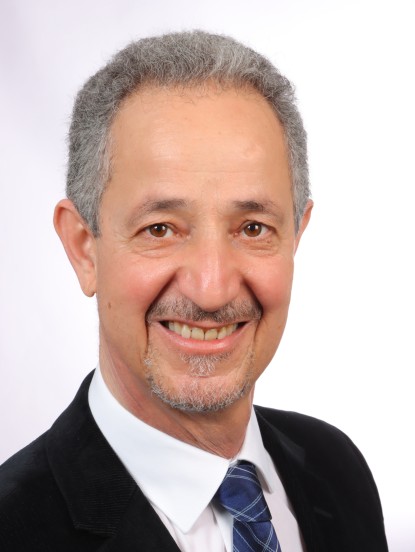
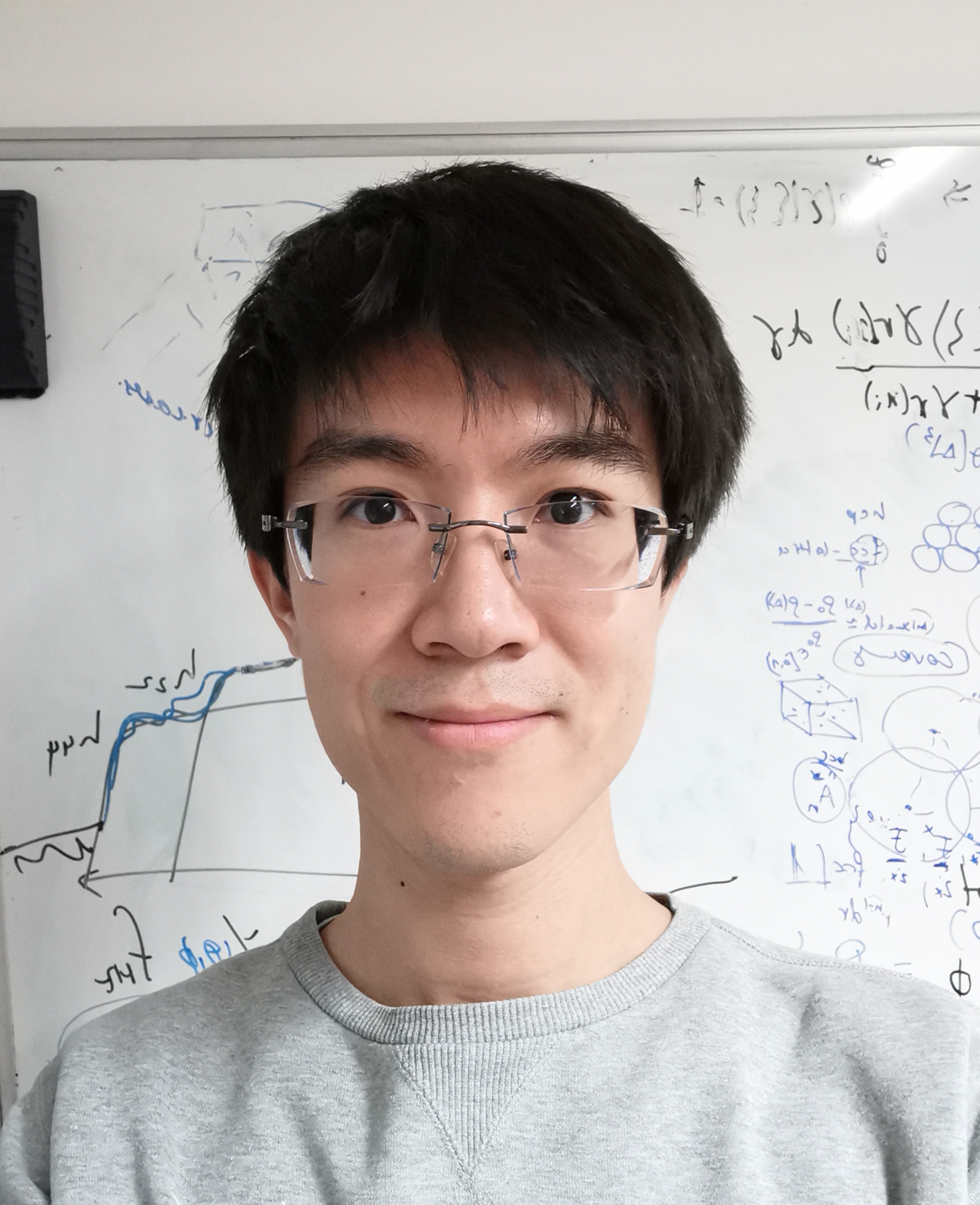
Prof. Dr. Elisa Resconi is a Professor of Experimental Physics with Cosmic Particles at the Technische Universität München (TUM) within the TUM School of Natural Sciences. Her research bridges particle physics and astrophysics, focusing on cosmic neutrinos as messengers to study high-energy astrophysical accelerators, dark matter, and non-standard neutrino properties. Academic Affiliation: TUM School of Natural Sciences, Department of Physics Research Interests : Investigating cosmic neutrino sources (e.g., IceCube-170922A blazar TXS0506+056) Probing neutrino mass hierarchy and dark matter through astrophysical observations Developing experimental techniques for high-energy neutrino detection (e.g., PMT characterization) Multi-messenger astronomy combining neutrino, photon, and cosmic ray data Scientific Awards : Heinz Maier-Leibnitz Medal (2017) Max Planck Fellow (2017) Heisenberg Professorship (2012) Emmy Noether Junior Research Group Leader (2005) Marie Curie Individual Fellowship (2002) Teaching Roles : Lecturer in Applied Multi-Messenger Astronomy Instructor for Python programming boot camps Advisor for FOPRA experiments and journal clubs on neutrino and dark matter research Organizer of colloquia on neutrino and dark matter topics
Sir Tejinder Singh Virdee FRS is a Kenyan-born British experimental particle physicist and Professor of Physics at Imperial College London. He is renowned as one of the founding fathers of the Compact Muon Solenoid (CMS) experiment at CERN's Large Hadron Collider, having originated its concept in 1990 and serving as its project leader (Spokesperson) from 2007-2010. Education: B.Sc. in Physics, Queen Mary College, University of London (1974) Ph.D. in Physics, Imperial College London (1979) Research Interests: Sir Tejinder's research spans experimental high energy physics, with particular focus on particle detector development, calorimetry techniques, and the search for new physics at the TeV scale. His work has been instrumental in the discovery of the Higgs boson through the CMS experiment at the LHC. His research contributions include pioneering work on lead tungstate scintillating crystals for the CMS electromagnetic calorimeter, innovative light collection techniques for hadron calorimetry, and leadership in the design and construction of one of the most complex scientific instruments ever built. Scientific Awards: Royal Medal (2024) - Royal Society Panofsky Prize (2017) - American Physical Society Glazebrook Medal and Prize (2015) - Institute of Physics Special Breakthrough Prize in Fundamental Physics (2013) European Physical Society High Energy Physics Prize (2013) Chadwick Medal and Prize (2009) - Institute of Physics Knight Bachelor (2014) - Queen's Birthday Honours Leadership and Outreach: Beyond his scientific achievements, Sir Tejinder has served on numerous international scientific advisory committees and is actively involved in promoting science education, particularly in Africa and India. He has delivered numerous keynote lectures and public talks worldwide, including the Schrödinger Lecture and Peter Lindsay Lectures at Imperial College. He currently leads efforts to upgrade the CMS detector for the High-Luminosity LHC era, focusing on novel silicon-based calorimeter technologies to achieve unprecedented precision in particle measurements.
Matteo Tamburini is a Group Leader at the Max Planck Institute for Nuclear Physics (MPIK) in Heidelberg, leading the Extreme Field Quantum Plasma Dynamics and Relativistic Laboratory Astrophysics group. He also serves as a Lecturer at the International Max Planck Research School in Quantum Dynamics (IMPRS-QD). His academic journey includes a PhD in Physics from the University of Pisa, Italy, and postdoctoral research at MPIK. Research Interests: Tamburini specializes in quantum plasma dynamics, strong-field quantum electrodynamics (QED), and high-intensity laser-plasma interactions. He focuses on topics such as radiation reaction effects, relativistic astrophysical simulations, and the generation of ultra-high energy particles and gamma-ray bursts. His work bridges theoretical modeling with experimental validation at facilities like FACET-II (SLAC), Gemini (UK), and DESY. Experimental Contributions: Key projects include devising experiments to probe quantum radiation reaction (E-332, E-320, E-305), developing the SFQEDtoolkit for QED simulations, and advancing polarized laser-wakefield acceleration. His research often involves close collaboration with international teams and leverages cutting-edge facilities like the Gemini laser and FACET-II. Awards & Service: Tamburini is recognized as an IOP trusted reviewer for peer review excellence. He organizes the Seminar Theoretical Quantum Dynamics and contributes to reviewing for journals like Physical Review Letters and Nature Physics. He has secured significant funding, including a 4-year scholarship for student Michael Quin. Lab/Teams: Leads the Extreme Field Group at MPIK, focusing on advancing understanding of quantum plasma phenomena and relativistic astrophysical processes through theoretical and computational approaches.
Prof. Dr. Matthias Schott is a faculty member at the University of Bonn, affiliated with the Physikalisches Institut under the Faculty of Mathematics and Natural Sciences. His research focuses on particle physics, quantum chromodynamics (QCD), and precision measurements at the Large Hadron Collider (LHC). He leads a group investigating axion-like particles, high-frequency gravitational waves, and non-perturbative effects in proton-proton and heavy-ion collisions. Research interests include probing the Standard Model’s theoretical gaps through precision measurements of W boson mass, strong coupling constants, and electroweak interactions. His group also develops detectors for collider neutrino physics and gravitational wave searches. Selected publications highlight contributions to ATLAS Collaboration experiments and light-by-light scattering evidence. Labs/Teams: Active in the Transdisciplinary Research Area (TRA) - Matter at the University of Bonn, collaborating on cutting-edge particle physics and detector technology.
Susanne Mertens is a Professor and Director at the Technical University of Munich and the Max Planck Institute for Physics (MPIK), where she leads research in experimental astroparticle physics. Her work focuses on neutrino properties, dark matter, and the development of advanced detector technologies for large-scale experiments. She holds a part-time directorship at MPIK, transitioning to full-time in March 2025, and leads key international projects including KATRIN, TRISTAN, and ComPol. Her research interests lie at the intersection of particle physics and cosmology, addressing fundamental questions such as the neutrino mass, matter-antimatter asymmetry, and the nature of dark matter. She is actively involved in data analysis and instrumentation for next-generation experiments, contributing to both ground-based and space-based observatories. Her work bridges theoretical inquiry with cutting-edge experimental design. The trends in her research, though specific publications are not listed, emphasize precision measurement, low-background detection, and novel spectroscopic techniques. She plays leading roles in major collaborations, often as spokesperson or principal investigator, indicating strong leadership in the global astroparticle physics community. Scientific Awards: No awards mentioned in the provided text. Prof. Mertens advises research teams and leads major grant-funded projects such as TRISTAN and ComPol. As Principal Investigator (PI) of these initiatives, she oversees significant funding and international collaboration. Her leadership roles in KATRIN and satellite-based X-ray missions demonstrate sustained success in securing and managing large-scale research grants. She is affiliated with the Professorship for Dark Matter at TUM and works within the MPIK’s experimental astroparticle physics division. Her research group likely involves a multidisciplinary team of physicists, engineers, and data scientists focused on detector development and data analysis for fundamental physics experiments.
Johann Isaak is a leading experimental nuclear physicist serving as Head of Research Data Management and Principal Investigator (PI) of the IRTG 2891 program at the Institute for Nuclear Physics (IKP) , TU Darmstadt , Germany. His research focuses on advancing our understanding of nuclear structure through precision photonuclear experiments, particularly in the areas of the Pygmy Dipole Resonance, nuclear resonance fluorescence, and gamma-ray spectroscopy. He actively teaches specialized courses such as "Photonuclear Reactions" and contributes to interdisciplinary nuclear physics education. Research Interests: Experimental Nuclear Physics: Design and implementation of advanced detection systems like DAGOBERT for electron-gamma coincidence spectroscopy. Photonuclear Reactions: Investigating nuclear responses to real photons via quasimonoenergetic and polarized beams, focusing on dipole excitations in medium-mass nuclei. Pygmy Dipole Resonance (PDR): Pioneering studies on low-lying dipole strength, its systematic behavior across isotopic chains (e.g., Sn, Ce, Te), and implications for nuclear astrophysics. Nuclear Structure: Precision measurements of transition strengths, level densities, and gamma-ray strength functions to test theoretical models and the Brink-Axel hypothesis. Advanced Detectors and Techniques: Development of high-efficiency spectroscopy setups like y³ at HIγS and AGATA for high-resolution gamma-ray detection. Publication Trends: Isaak's recent publications (2020-2025) demonstrate a strong focus on collective nuclear excitations , evidenced by studies on giant dipole resonances, two-phonon states in Sr-88, and quadrupole excitations in tin isotopes. His collaborative work spans international facilities, including HIγS, GRAF, and Legnaro National Laboratories, highlighting his role in large-scale experimental campaigns. Scientific Contributions: Methodological Advances: Introduced model-independent approaches for determining dipole responses via (γ, γ′γ″) reactions, enhancing precision in photon strength function measurements. Experimental Leadership: Coordinated multi-institutional projects like the AGATA collaboration and NUMEN project, driving advancements in gamma-ray spectroscopy. Educational Outreach: Mentors young researchers through IRTG 2891 and contributes to foundational texts, such as chapters in the Handbook of Nuclear Physics . Collaborations and Infrastructure: Isaak leverages world-class facilities, including the S-DALINAC accelerator at TU Darmstadt and international gamma-ray sources, to probe nuclear phenomena. His leadership in research data management ensures FAIR principles are integrated into nuclear physics workflows, enhancing reproducibility and data sharing.
Abdelhak M. Zoubir is a Professor of Signal Processing and Head of the Signal Processing Group at Technische Universität Darmstadt, Germany. He has held leadership roles including Head of the Department of Electrical Engineering and Information Technology (2012–2014 and 2020–2022), and President of the European Association for Signal Processing (EURASIP, 2017–2018). His research focuses on statistical signal processing with applications in radar imaging, biomedical engineering, and automotive systems. Zoubir has authored over 500 publications and is a Fellow of IEEE and EURASIP. He currently leads projects on radar communication integration, robust signal processing algorithms, and radiation-hardened sensor development. Education: Dipl.-Ing. (BSc/MSc) from Fachhochschule Niederrhein and Ruhr-Universität Bochum, followed by a Dr.-Ing. (PhD) in Electrical Engineering from Ruhr-Universität Bochum (1992). Research Interests: Bootstrap techniques, robust detection/estimation, cooperative sensor networks, radar for landmine detection, and automotive safety systems. He has pioneered methods in robust statistical signal processing, including low-rank matrix completion and sparsity-aware algorithms. Recognition: Recipient of the IEEE Meritorious Service Award (2018), IEEE Signal Processing Magazine Best Paper Award (2017), and the M. Barry Carlton Award (2014). He has been a keynote speaker at major conferences such as ICASSP and EUSIPCO, and served as Editor-in-Chief of the IEEE Signal Processing Magazine (2012–2014). Current Projects: Focus on automotive radar signal processing, radiation-hardened sensors (MALTA), and distributed learning robustness. His work bridges theoretical advancements with practical applications in defense, healthcare, and automotive industries.
Prof. Nils Pohl is a Professor for High Frequency Integrated Circuits at Ruhr-Universität Bochum and Deputy Head of the Integrated Circuits and Sensor Systems Department at Fraunhofer Institute FHR. His research focuses on microwave and terahertz integrated circuits, radar systems, and high-frequency sensor technologies. He holds a Dr.-Ing. in electrical engineering from Ruhr-Universität Bochum (2010) and has led multiple collaborative projects in radar technology and sensor development. Prof. Pohl is actively involved in IEEE technical committees and serves as a reviewer for top conferences like IEEE MTT-S and ISSCC. His awards include the IEEE MTT-S Outstanding Young Engineer Award (2018) and the IHP Fellowship (2017). Education : PhD in Electrical Engineering (2010), Ruhr-Universität Bochum Doctoral thesis on 80 GHz radar system design Research Interests : High-frequency integrated circuits for radar (FMCW, MIMO), terahertz sensors, antenna design, and material characterization Applications in automotive radar, industrial sensing, and non-destructive testing Grants & Projects : Leadership in Fraunhofer-Government collaborations for radar sensor development EU-funded projects on terahertz imaging and 6G communication systems Labs/Teams : Integrated Systems Team at Ruhr-Universität Bochum Fraunhofer FHR’s Chip Design Team
Yifan Wang is a Postdoc/Research Fellow at the Department of Astrophysical and Cosmological Relativity , Max Planck Institute for Gravitational Physics (Albert Einstein Institute) in Potsdam, Germany. He obtained his B.S. (2015) from the University of Science and Technology of China and his Ph.D. (2019) from the Chinese University of Hong Kong. From 2019-2023, he worked at the Observational Relativity and Cosmology department in AEI Hannover. Research Focus : Data analysis of gravitational waves from compact binary coalescence, multi-messenger astronomy, testing general relativity, and black hole ringdown phenomena. Publications : His recent work (2025-2019) spans gravitational wave detection, compact binary systems (black holes/neutron stars), waveform modeling, multi-messenger correlations (gamma-ray bursts, FRBs), and tests of general relativity using open catalogs. Key subfields include eccentric binary black holes, quasi-normal modes, parity symmetry, and subsolar mass binaries. He collaborates with Alexander H. Nitz, Collin D. Capano, and others, contributing to LIGO/Virgo collaborations and catalogs like 4-OGC. Tools & Collaborations : Actively develops Python-based gravitational wave analysis tools (e.g., pycbc, pycbc-plugin-seobnr) and contributes to open-source projects. His GitHub activity reflects commits, pull requests, and code reviews in gravitational wave software repositories.
Johannes Haller is a Professor of Experimental Particle Physics at the University of Hamburg , affiliated with the Institute of Experimental Physics under the Faculty of Mathematics, Informatics and Natural Sciences. He actively contributes to the CMS experiment at the LHC , focusing on physics beyond the Standard Model, boosted objects, and Higgs boson studies. Since 2023, he chairs the Particle Physics Division of the German Physical Society (DPG) and serves on multiple national and international committees. PhD in Particle Physics (Universität Heidelberg, 2003) Diploma in Physics (Universität Heidelberg, 2000) His research spans collider experiments from LEP (OPAL) to HERA (H1) , ATLAS , and now CMS . His group develops AI-based algorithms for CMS trigger systems and participates in global electroweak fits through the Gfitter collaboration. Recent work explores flavor anomalies , heavy Higgs bosons , and medium effects in heavy-ion collisions . Selected scientific responsibilities include: Spokesperson for BMBF-FSP-104 “Elementarteilchenphysik mit dem CMS–Experiment” (2021–2024) Managing Director of Institute of Experimental Physics (2016–2019) Co-organizer of major conferences like EPS-HEP2023 His research group includes Master’s students Syed Sajal Hasan, Balduin Letzer, Parth Patil, Christian Sammoray, and Emre Toka.
Zhao Zhigang is an Associate Professor at the School of New Materials and New Energy, Shenzhen University of Technology, where he has been employed since May 2017. Previously, he served as a Lecturer at the School of Optoelectronic Engineering, Shenzhen University (2013-2017) and completed postdoctoral research at Shenzhen University (2010-2012) after earning his PhD from Huazhong University of Science and Technology. His academic journey began with undergraduate and master's studies at PLA Ordnance Engineering College (now Army Engineering University). His educational background includes: PhD in Optical Engineering, Huazhong University of Science and Technology (2005-2010) Master's in Optical Engineering, PLA Ordnance Engineering College (2002-2005) Bachelor's in Military Optoelectronic Engineering, PLA Ordnance Engineering College (1995-1999) Zhao's research focuses on hyperspectral imaging systems and machine learning applications for material classification. His work emphasizes embedded image data acquisition and processing using ARM and FPGA platforms, with significant contributions to micro-hyperspectral imaging technology. His research spans three primary areas: hyperspectral image processing on ARM/FPGA systems, machine learning applications in spectral analysis, and embedded AI implementations on FPGA/Zynq platforms. This interdisciplinary work bridges optical engineering, computer vision, and hardware design. Analysis of his recent publications reveals a strong emphasis on hyperspectral data compression techniques , machine learning applications for spectral analysis , and embedded system implementations . His work demonstrates a consistent focus on practical applications of hyperspectral imaging in fields ranging from food quality assessment to battery health monitoring, with increasing incorporation of deep learning techniques in recent years. His scientific recognition includes: Multiple teaching awards at Shenzhen University of Technology (2019-2024) Shenzhen City high-level professional talent designation (2016) Numerous national competition awards as student supervisor (2016-2023) Outstanding Paper Award at Shenzhen Optical Society (2010) Zhao has secured substantial research funding as Principal Investigator, including horizontal projects (2023-2024), Shenzhen Postdoctoral Research Funding (2019-2020), and Shenzhen Basic Research Projects. He has successfully guided students in academic competitions, resulting in five national first prizes. His research group maintains strong industry connections through multiple school-enterprise cooperation projects focused on practical applications of hyperspectral imaging technology. His laboratory work centers on FPGA-based embedded systems for hyperspectral imaging, with recent projects developing micro-hyperspectral spectrometers for UAV platforms, real-time video processing systems, and specialized hardware for spectral data acquisition and compression. These efforts demonstrate a clear trajectory from fundamental optical engineering toward practical applications of machine learning in spectral analysis.
Prof. Markus Roth is a leading plasma physicist at the Technische Universität Darmstadt , heading the Laser and Plasma Physics Group within the Department of Physics . His research focuses on experimental investigations of laser-plasma interactions, particularly in developing novel radiation sources and advancing inertial fusion technologies. Research Interests : Energy loss mechanisms in laser-generated plasmas Laser ion acceleration (TNSA, BOA, and relativistic transparency) Laser-driven neutron sources for radiography Warm dense matter generation and diagnostics Target development for high-energy experiments Integration of laser-accelerated ions into accelerators Scientific Awards : APS Fellow (2013) Defense Physics Award of Excellence (2014) Rosen Scholar Award (2012, 2016) Collaborations : Active in international projects including FAIR, ELI-NP, and LIGHT collaboration. His group develops detectors for laser-driven neutron sources and contributes to fusion research.
Benedikt Schmitz is a PostDoc researcher at the Technical University of Darmstadt, working at the Institute of Nuclear Physics (IKP) and the Theory of Electromagnetic Fields (TEMF). His research spans multiple domains of physics including superconductivity, laser-plasma interactions, and AI-supported modeling of complex physical phenomena. PhD in Physics from Technical University of Darmstadt (2023) Master's research at Helmholtz-Zentrum Berlin (2016-2018) Dr. Schmitz's research focuses on superconductivity, particularly magnetic field interactions with superconductors, and laser-plasma physics for particle acceleration. His work on radiochromic film dosimetry led to pyRES, an open-source evaluation tool. He pioneered AI applications in physics research, developing surrogate models using deep learning for neutron yield prediction and liquid target experiments. His research bridges traditional physics with modern computational approaches, demonstrating how machine learning can transition from research subject to research tool. His publication record shows a clear evolution from superconductivity research toward laser-plasma physics and AI modeling. Early works focused on SRF cavity diagnostics, while recent publications center on laser-driven neutron sources and deep learning applications. This progression reflects his doctoral work and growing expertise in computational physics. His articles demonstrate interdisciplinary approaches combining plasma physics, nuclear engineering, and machine learning to solve complex problems in particle acceleration and detection. First prize at Medtech:Hack with BIOSCAN at CERN (April 2018) Dr. Schmitz has led multiple research projects including SRF Magnetometry during his Master's work, Neutron Prediction and TNSA Liquid Leaf for his PhD, and ongoing development of pyRES. His BIOSCAN detector project resulted in a patent and demonstrates his ability to translate physics concepts into medical applications. He has developed software tools like LabTab for electronic lab journals and maintains active GitHub repositories for his research code. His projects consistently combine experimental work with computational modeling and increasingly incorporate machine learning approaches. His research is conducted within collaborative teams including the TEMF group at TU Darmstadt under Prof. Boine-Frankenheim for his doctoral work, and previously with Prof. Jens Knobloch's group at Helmholtz-Zentrum Berlin. His work spans multiple laboratories and computational environments, utilizing particle-in-cell simulations, Monte Carlo methods, and deep learning frameworks to advance understanding in his fields of interest.
Carsten Klempt is an apl. Prof. (extraordinary professor) at the Institute of Quantum Optics within the Faculty of Mathematics and Physics at Leibniz University Hannover. He serves as Group Leader of the Quantum Atom Optics research group, focusing on ultracold quantum gases and quantum entanglement. His research has significant implications for quantum metrology, atom interferometry, and quantum information processing. Education: 2002: Diploma in Physics from the Johannes Gutenberg University 2001-2002: Diploma thesis at the Institute of Nuclear Physics, University of Mainz "Construction and testing of a BaF2 detector" 1998-1999: Studied at the University of Washington (Seattle) 1996-2002: Physics studies at the Johannes Gutenberg University Mainz 2003-2007: Doctorate at the Institute of Quantum Optics "Interaction in Bose-Fermi quantum gases" 2012: Habilitation in the Faculty of Mathematics and Physics at Leibniz University Hannover: "Nonclassical states in ultracold quantum gases" Professor Klempt's research primarily focuses on quantum optics and atom optics , with particular emphasis on ultracold quantum gases , Bose-Einstein condensates , and quantum entanglement . His work explores the fundamental properties of quantum systems at extremely low temperatures, investigating phenomena such as quantum phase transitions, spin dynamics, and nonclassical states in atomic ensembles. A significant portion of his research addresses practical applications in quantum metrology and precision measurement, developing techniques for atom interferometry and quantum-enhanced sensing. His recent publications demonstrate a strong focus on quantum state tomography , quantum entanglement , and quantum metrology , with particular attention to number-resolved detection of quantum states and the development of advanced techniques for quantum-enhanced measurements. Klempt's work bridges fundamental quantum physics with practical applications in precision measurement technology. Scientific Awards: Lower Saxony Science Prize 2013 (Young Scientist Category) Professor Klempt leads the Quantum Atom Optics group at Leibniz University Hannover, where he supervises numerous PhD students and postdoctoral researchers. His research has been supported by significant funding, including his role as Head of a Junior Research Group in the Cluster of Excellence "Centre for Quantum Engineering and Space-Time Research" (QUEST) from 2008-2013. His work contributes to major collaborative projects such as ELGAR (European Laboratory for Gravitation and Atom-interferometric Research) and SAGE (Space Atomic Gravity Explorer). The Quantum Atom Optics laboratory under Professor Klempt's leadership focuses on experimental investigations of ultracold atomic systems, particularly spinor Bose-Einstein condensates. The group develops advanced techniques for quantum state preparation, manipulation, and measurement, with applications ranging from fundamental tests of quantum mechanics to practical quantum sensors for precision measurements.
Dr. Ahmad Echresh is a Postdoctoral Researcher at the Helmholtz-Zentrum Dresden-Rossendorf (HZDR), affiliated with the Institute of Ion Beam Physics and Materials Research and the Nanofabrication & Analysis Department . His research focuses on advanced nanomaterials and their applications in optoelectronics, sensors, and semiconductor devices. Key areas include silicon and germanium nanowire-based sensors, photodetectors, and fabrication techniques like ion implantation and flash lamp annealing. His work spans material characterization, doping optimization, and device engineering. Notable contributions include high-performance photodetectors for telecom wavelengths and broadband UV sensors. He has published extensively in nanoelectronics and optoelectronics, with a focus on bridging nanomaterials and practical device applications. Dr. Echresh’s research also involves developing novel heterostructures (e.g., MoSe2/FePS3) and exploring piezoelectric properties of doped nanomaterials. His interdisciplinary approach integrates material synthesis, device fabrication, and advanced characterization methods, positioning him at the forefront of nanotechnology research.