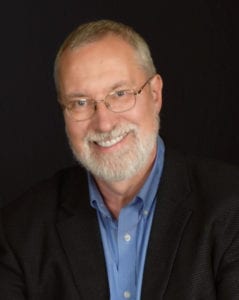
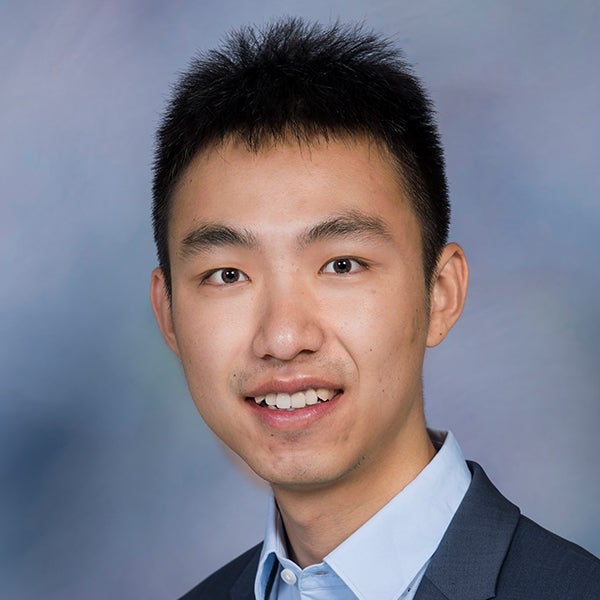
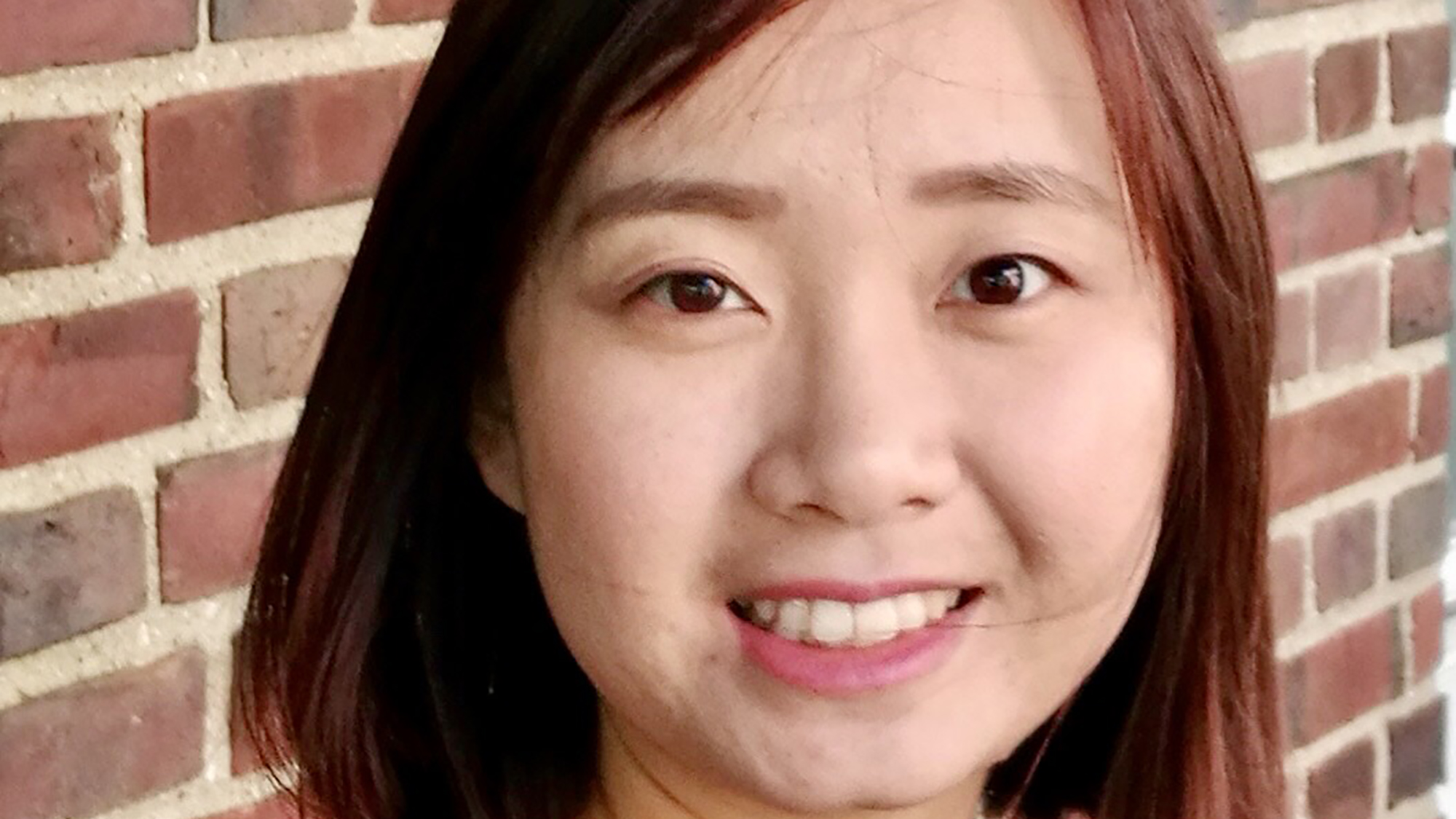
Glenn Boreman is a Professor and Chair of the Department of Physics and Optical Science at the University of North Carolina at Charlotte (UNC Charlotte). He also serves as Director of the Center for Optoelectronics & Optical Communications. His academic journey includes a BS in Optics from the University of Rochester and a PhD in Optics from the University of Arizona. Previously, he spent over 27 years at the University of Central Florida, supervising 25 PhD students to completion. His research focuses on infrared antennas, metamaterials, frequency-selective surfaces, and nano-scale optical phenomena. Notable contributions include pioneering work on antenna-coupled infrared sensors and the design of advanced optical systems. He has authored/co-authored over 190 journal articles and four textbooks, including Infrared Detectors and Systems and Modulation Transfer Function in Optical & Electro-Optical Systems . Prof. Boreman holds prestigious fellowships from SPIE, IEEE, the Optical Society of America, and the Military Sensing Symposium. His awards include the 'Best Paper' honor at the 2001 AIAA/BMDO meeting. His lab, the Infrared Systems Lab, actively explores nanofabrication, high-resolution lithography, and advanced sensor technologies. Current doctoral students include Matthew Potter and Frances Bodrucki, both researching infrared devices and metamaterials. He directs interdisciplinary projects involving collaborators from materials science, electrical engineering, and astrophysics.
Dr Miguel Anaya is a Research Fellow and Senior Research Associate in the Department of Chemical Engineering and Biotechnology at the University of Cambridge, leading the Optoelectronic Materials and Device Spectroscopy Group. His work involves interdisciplinary collaborations with the Cavendish Laboratory, Royce Institute at the Maxwell Centre, School of Clinical Medicine, and Diamond Light Source synchrotron facility. His research centers on halide perovskites and novel materials for solar cells/light-emitting devices, clinical detector development, nanoscale semiconductor characterization, photonic structures, and multifunctional porous materials. This spans energy applications, medical diagnostics, and nanoscale photonics, integrating materials science, semiconductor physics, and biomedical engineering. Scientific Awards: Royal Academy of Engineering Research Fellowship Dr Anaya supervises PhD students and secures research funding for interdisciplinary projects, with strong industry-academia partnerships supporting device translation. His team maintains dedicated laboratory facilities for materials synthesis, device fabrication, and advanced spectroscopy. The Optoelectronic Materials and Device Spectroscopy Group operates cutting-edge nanofabrication and characterization labs, enabling real-time analysis of emerging semiconductors for next-generation energy and medical technologies.
Dr. Jorge Barreto is an Associate Professor in Quantum Technologies at the University of Bristol, affiliated with both the School of Physics and the School of Electrical, Electronic and Mechanical Engineering. As Director of the Centre for Doctoral Training in Quantum Engineering, he leads research at the intersection of applied physics and semiconductor technologies. Senior Lecturer, Quantum Engineering Technology Labs (QET Labs) EPSRC Quantum Engineering Centre for Doctoral Training member Bristol Quantum Information Institute participant His research focuses on integrating photonic circuits with single photon detectors, modulators, and sources to develop optical quantum information processors. Key areas include cryogenic photonic calibration , quantum-referenced tomography , and silicon photonics applications. Recent projects explore photonic integrated circuits operating at low temperatures and scalable quantum communication systems. Notable contributions include 2023 work on spontaneous emission tomography and 2022 research on zero-power calibration . He has authored publications in Nature Materials , ACS Photonics , and Quantum Science and Technology , with over 140 citations. Dr. Barreto collaborates internationally and has participated in workshops like the NSF Workshop (2015). He supervises 8 research works and leads datasets on photon pair sources and quantum tomography. Current projects address cryogenic light-matter interaction and hybrid quantum platforms like silicon-BTO integration.
Calvin R. Howell is a Professor of Physics at Duke University within the Trinity College of Arts & Sciences. Since 2001, he has held faculty positions at Duke, and in 2025 became the Director of the Triangle Universities Nuclear Laboratory (TUNL), a position he previously held from 2006 to 2016. His academic career at Duke includes progression from Instructor (1984-1985) to Assistant Professor (1985-1992), Associate Professor with Tenure (1992-2001), and ultimately Professor of Physics (2001-present). Professor Howell's research is centered on experimental nuclear physics with emphasis on the quantum chromodynamics (QCD) description of low-energy nuclear phenomena. His work focuses on structure properties of nucleons and nuclei and reaction dynamics in few-nucleon systems. The macroscopic properties of nucleon structure and the residual strong nuclear force between neutrons and protons in nuclei emerge from QCD at distances where the color interactions between quarks and gluons are strong. His research spans multiple areas including neutron scattering, photonuclear reactions, fission product yields, and precision nuclear physics measurements. Analysis of Professor Howell's recent publications (2021-2025) reveals a strong focus on fission product yield measurements across various actinide isotopes (235U, 238U, and 239Pu) using both neutron-induced and photon-induced fission techniques. His work combines experimental precision with applications in nuclear energy, nuclear security, and fundamental nuclear physics. Additional research threads include neutron-neutron interactions through deuteron breakup experiments, development of novel instrumentation like the HIFROST Dilution Refrigerator, and applications of nuclear physics techniques to plant biology through projects like PhytoPET. Professor Howell has received significant recognition including: Dean's Diversity Award (2016) Samuel DuBois Cook Award for Service (2008) Fellow of the American Physical Society (2006) He has secured substantial research funding with current grants including NEUTRON SCATTERING EXPERIMENTS FOR ACTINIDES USING MONOENERGETIC NEUTRON BEAMS (2025-2028), Alfred P. Sloan Foundation Graduate School Award (2017-2027), and multiple Department of Energy projects. His leadership extends to directing the REU Site: Undergraduate Research in Nuclear Particle Physics at TUNL and Duke (2022-2027). Professor Howell has also made significant service contributions, chairing the Tom Bonner Prize Committee for the APS Division of Nuclear Physics and serving on the Board of Trustees of the Southeastern Universities Research Association (2016-2019). As Director of TUNL, Professor Howell leads a major nuclear physics research facility that facilitates collaboration between North Carolina's Research Triangle Universities. His laboratory work includes the High Intensity Gamma-ray Source (HIGS) facility, where many of his photonuclear experiments are conducted. He has also been instrumental in developing interdisciplinary applications of nuclear physics, particularly in plant biology research through projects like PhytoPET, a modular positron emission tomography system designed specifically for plant imaging.
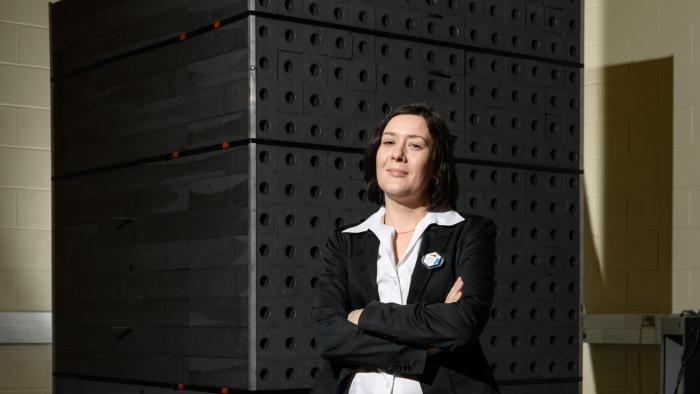
Anna Erickson serves as Woodruff Professor and Associate Chair for Research at Georgia Institute of Technology's George W. Woodruff School of Mechanical Engineering, where she bridges reactor engineering and nuclear nonproliferation through integrated theoretical and experimental approaches. Director of the $25M DOE NNSA-funded Consortium for Enabling Technologies and Innovation (12 universities, 12 national labs), she has authored over 100 publications including the seminal text Active Interrogation in Nuclear Security (Springer, 2018) and advises federal agencies on nuclear security policy. Education: Ph.D. in Nuclear Science and Engineering, Massachusetts Institute of Technology (2011) M.S. in Nuclear Science and Engineering, Massachusetts Institute of Technology (2008) B.S., Oregon State University (2006) Research Focus: Dr. Erickson pioneers nonproliferation-by-design methodologies through two integrated thrusts: advanced reactor analysis for proliferation-resistant nuclear energy systems and radiation detection for border security applications. Her work uniquely combines machine learning with nuclear engineering to develop safeguards for next-generation reactors, with significant contributions to antineutrino detection systems and medical physics applications like proton radiography. Current projects emphasize small modular reactor safety and spectral imaging techniques. Publication Trends: Analysis of her 15 most recent publications (2018-2020) reveals dominant themes in antineutrino-based reactor monitoring (60% of works), advanced radiation detection systems (30%), and small modular reactor design (10%). Key innovations include lithium-loaded scintillators for neutron detection, spectral X-ray correction algorithms, and high-temperature reactor concepts with inherent proliferation resistance, demonstrating consistent DOE funding focus on nuclear security infrastructure. Awards: Woodruff Professorship (2019) Lockheed Dean's Excellence in Teaching Award (2016) US Frontiers of Engineering Symposium (National Academy of Engineering, 2015) American Nuclear Society Graduate Scholarships (2006, 2009) Stewardship Science Graduate Fellowship (DOE, 2008-2011) Leadership & Funding: As director of the $25M Consortium for Enabling Technologies and Innovation, she manages cross-institutional R&D in machine learning, advanced manufacturing, and nuclear detection. Her Laboratory for Advanced Nuclear Nonproliferation and Safety (LANNS) coordinates with Aerospace Engineering, Chemistry, and International Affairs departments on nonproliferation projects, while her ELATES leadership program participation (2022) enhances STEM management capabilities. Recent media engagements with CBS News (nuclear fusion breakthrough) and CNN (radiation safety) demonstrate policy impact. Research Infrastructure: The multidisciplinary LANNS lab develops experimental detection systems alongside reactor modeling tools, supporting the Consortium's mission to create deployable nuclear security technologies. Collaborations with 12 national laboratories enable access to unique facilities for radiation source characterization and reactor simulation, with current efforts focused on AI-enhanced safeguards for commercial reactor fleets.
Alan Morrison is a Senior Lecturer in the Department of Electrical and Electronic Engineering at University College Cork (UCC), part of the College of Science, Engineering and Food Science (SEFS). He holds roles including Vice-Dean for Undergraduate Affairs (since 2021) and former Dean of Engineering (2012–2018). His academic career began at UCC in 1998, progressing from Lecturer to Senior Lecturer in 2006. A Chartered Physicist (1998) and Senior Member of IEEE (since 2002), Morrison is also a Science Foundation Ireland Principal Investigator. Education : - B.E. (First Class Honors) in Electrical Engineering, UCC (1992) - Ph.D. in Electrical Engineering, National University of Ireland (1997) Research Interests : Morrison's work focuses on three core areas: 1. Multi-spectral LED lighting for horticulture (collaboration with School of BEES, UCC) 2. Optical detection, including Geiger-mode avalanche photodiodes (SPADs) for low-light imaging and photon counting 3. Photovoltaic systems and energy storage, with contributions to multi-junction solar cell development and concentrated photovoltaic (CPV) systems. His dormant research included nanopore DNA analysis technologies. Grants & Awards : - Science Foundation Ireland (SFI) grants: PhoCUS (897k), MODCON-PV (310k) - EU funding: Nano-ChApp (203k) - Over 150 peer-reviewed publications and multiple patents. Teaching : Courses include EE1007 (Intro to Electrical Engineering), NE4008 (Photovoltaic Systems), and others focused on photonics, renewable energy, and embedded systems. Lab & Collaborations : Affiliated with the Tyndall National Institute's Photonics Centre. Active in interdisciplinary projects involving nanotechnology, energy systems, and agricultural technology.
David Seckel is a Professor of Physics & Astronomy at the University of Delaware, affiliated with the College of Arts & Sciences. His research focuses on cosmic rays, neutrino astrophysics, and the development of large-scale observatories like the IceCube Neutrino Observatory and the ANITA detector. He has contributed to studies of ultra-high-energy cosmic rays, neutrino detection techniques, and cosmological implications of particle interactions. Key research areas include analyzing atmospheric and astrophysical neutrino fluxes, probing cosmic ray composition via air shower measurements, and investigating neutrino emission from active galactic nuclei. His work leverages advanced detector technologies and machine learning methods for data analysis. Collaborations include the IceCube Collaboration, RNO-G radio array, and the PUEO payload for airborne neutrino detection.
Olli Setälä is a Doctoral Researcher at Aalto University's Department of Electronics and Nanoengineering. His work focuses on semiconductor physics and optoelectronic device engineering, particularly in silicon-based technologies for photodetection and particle sensing applications. He is affiliated with the Hele Savin research group and collaborates on advanced fabrication techniques including atomic layer deposition and femtosecond laser processing. Aalto University - Department of Electronics and Nanoengineering Hele Savin Group His research interests include: Semiconductor contact engineering Black silicon optoelectronics Dead-layer-free particle detectors Nanostructured antireflection surfaces Advanced CMOS sensor technologies Olli contributes to publications in journals like Applied Surface Science, Optics Letters, and ACS Photonics, with recent work focusing on charged dielectric layers for contact formation and responsivity optimization in photodiodes. He has presented at international conferences including the Image Sensor Workshop.
Leonardo Ricci is an Associate Professor at the Department of Physics, University of Trento , with a 28-year teaching career spanning 56 courses (31 in English) and extensive roles in the Interdepartmental Center for Mind/Brain Sciences - CIMEC (30% affiliation). His research bridges nonlinear dynamics , information theory , and neuroscience , focusing on chaos detection in time series and entropy analysis. Academic Career : From 1994 post-doc at Max-Planck-Institut to 2022 promotion to Associate Professor Teaching : Courses in Experimental Physics, Advanced Electronics, and Statistical Methods across Physics and Computer Science programs Ricci leads the NSE Lab (Nonlinear Systems and Electronics) , developing hardware/software systems for experimental research. His 2022 Entropy cover story on permutation entropy highlights his impact in information theory. Scientific Contributions : 20 patents (visibility measurement devices), collaborations with international researchers on complex systems Editorial Roles : Associate Editor for Chaos, Solitons & Fractals and Frontiers in Network Physiology
Juno Chan is a Research Fellow at the Niels Bohr Institute , University of Copenhagen , specializing in Theoretical High Energy, Astroparticle and Gravitational Physics . Holding a permanent position since 2025, Chan contributes to advanced research in gravitational wave astronomy and neutron star dynamics. Role: PhD Fellow (converted to Research Fellow) Location: Blegdamsvej 17, Copenhagen Ø Contact: chun.lung.chan@nbi.ku.dk , +45 35 32 87 21 Chan's research focuses on gravitational wave detection , neutron star magnetohydrodynamics , and gravitational lensing in astrophysical contexts. Key contributions include: Developing gravitational wave detection algorithms in lensed systems Modeling magnetized rotating neutron stars with relativistic MHD simulations Curating the LensCAT catalog for known gravitational lenses Multi-messenger lensing studies through LIGO-Virgo-KAGRA collaborations Publications and Research Trends Chan's 15 most recent publications (2023-2025) demonstrate expertise in gravitational wave astronomy , neutron star physics , and computational astrophysics . The work involves: Waveform analysis for lensed events MHD simulations of compact objects Multi-messenger lensing frameworks Signal processing for detector networks Cosmological implications of lensing Collaborations span international institutions in gravitational wave networks, with frequent contributions to Physical Review D and Monthly Notices of the Royal Astronomical Society . No formal awards or student mentorship details are publicly available.
Prof. Dr. Andre Schöning is a Full Professor (W3) at the Physics Institute of Heidelberg University since 2009, specializing in experimental particle physics. He serves as Co-Spokesperson of the Mu3e Collaboration and leads research in detector development and high-energy physics experiments. Research Interests: Search for the decay μ→eee with the Mu3e Experiment at PSI Development of High-Voltage Monolithic Active Pixel Sensors (HV-MAPS) Track trigger systems for ATLAS and future colliders Physics analysis with ATLAS and historical H1 experiment data Wireless data transmission technologies for particle detectors His recent publications demonstrate strong focus on detector technology development, particularly for muon experiments and high-rate tracking systems, alongside significant contributions to Standard Model physics measurements at the LHC. The research spans both hardware development and sophisticated data analysis techniques. Scientific Recognition: CERN Fellowship (1997-1999) University of Hamburg dissertation award (1997) Association of the Friends and Sponsors of DESY dissertation award (1997) Prof. Schöning has secured substantial research funding from DFG and BMBF from 2009-2025, including leadership of the DFG Research Unit on Lepton Flavor Violation with Mu3e. He maintains active collaborations including WADAPT, Mu3e, ATLAS, and the long-standing H1 collaboration. His research group operates within the High-Energy Physics division of Heidelberg's Physics Institute, working on cutting-edge detector systems for current and future particle physics experiments, with particular emphasis on precision measurements requiring novel detector technologies.
Hanyu Zhu is an Assistant Professor of Materials Science and NanoEngineering at Rice University, holding the William Marsh Rice Chair. He leads the Emerging Quantum and Ultrafast Activity Laboratory (EQUAL), focusing on engineering quantum materials at the atomic level using light. His research explores the interplay of lattice structures, electrons, and electromagnetic waves to create materials with quantum behaviors for advanced technologies. Dr. Zhu earned his B.S. in Physics and Mathematics from Tsinghua University and his Ph.D. in Applied Science and Technology from UC Berkeley. His postdoctoral work at Berkeley involved developing novel optical spectroscopy techniques for phonon studies. He joined Rice in 2018 to establish the EQUAL lab. His research interests span quantum materials, ultrafast spectroscopy, and photonics, with applications in robust information technology and quantum detectors. Recent work emphasizes 2D materials, chiral phonons, and topological photonic cavities. His scientific achievements include pioneering studies on chiral phonons and developing wafer-scale aligned carbon nanotube systems. Awards include the endowed William Marsh Rice Chair. Advising and grants: Dr. Zhu’s lab focuses on experimental and theoretical studies of quantum materials, with ongoing projects in ultrafast dynamics and nonlinear optics. His work aligns with future advancements in quantum-enabled sensors and extreme environment electronics.
Yang Yang is a Lecturer in the Global Languages department at Massachusetts Institute of Technology (MIT). She holds a B.A. in Teaching Chinese as a Second Language from Xi’an International Studies University and an M.A. in Teaching English to Speakers of Other Languages from Adelphi University. Currently, she is pursuing a second M.A. in Teaching Chinese as a Second Language at Middlebury College. Her pedagogical interests focus on second language acquisition, Chinese language pedagogy, and cultural communication. Prior to MIT, she developed a Chinese culture and language program at Quincy Asian Resources, Inc., and served as an online tutor for the Center for Talented Youth at Johns Hopkins University. Her professional experience includes teaching at Middlebury Language Schools and creating curriculum for diverse learner demographics. Yang’s expertise emphasizes culturally responsive teaching methodologies and bridging linguistic and cultural gaps in language education. She contributes to the MIT Global Languages initiative by fostering intercultural competency and language proficiency among students. Educational Background: B.A., Teaching Chinese as a Second Language, Xi’an International Studies University (China) M.A., Teaching English to Speakers of Other Languages, Adelphi University (New York) Pursuing M.A., Teaching Chinese as a Second Language, Middlebury College Her research interests explore effective instructional strategies for heritage learners and integrating technology into language acquisition. While no specific awards are listed, her academic trajectory reflects a commitment to advancing language pedagogy through continuous professional development.
Guifang Li is a Professor of Optics and Electrical & Computer Engineering at the University of Central Florida (UCF), affiliated with CREOL, The College of Optics and Photonics. He holds the position of Editor-in-Chief of Advances in Optics and Photonics . His academic journey includes a Ph.D. from the University of Wisconsin-Madison and leadership roles such as Director of the NSF IGERT program in Optical Communications and Networking at UCF. Dr. Li's research focuses on optical communication and networking , RF photonics , and all-optical signal processing . His innovations include pioneering work on photonic computing architectures and high-capacity optical communication systems. He co-founded Optium, UCF's first venture startup, which became a public company (OPTM) in 2006 and later part of II-VI. His scientific contributions are recognized through prestigious awards, including the NSF CAREER Award, Office of Naval Research Young Investigator Award, and fellowships from IEEE, OSA, SPIE, and the National Academy of Inventors. He has advised over 20 Ph.D. students and leads a multidisciplinary research group involving postdoctoral scholars and graduate students. Recent research trends in his publications emphasize photonic computing (e.g., photonic matrix processors, floating-point arithmetic) and advanced optical systems (e.g., quantum cascade lasers, MPLC-based demultiplexers). His work bridges fundamental optics with practical applications in telecommunications and sensing. Labs/Teams: His research team specializes in optical communication systems, photonic integrated circuits, and computational optics.
Professor Dominic O'Brien is a Professor of Engineering Science at the University of Oxford and Senior Research Fellow at Balliol College. He serves as Director of the UK National Hub in Quantum Computing and Simulation. His research focuses on optoelectronics, optical wireless communications, and quantum key distribution. He leads the optical communications group and has authored over 200 publications in these areas. His work emphasizes high-speed free-space optical systems, UV-based secure communication, and beam-steering technologies. Education: MA and PhD from the University of Cambridge, followed by a DPhil from the University of Oxford. His research interests include quantum networks, photonics, and energy-efficient optical systems. Notable projects include handheld low-cost quantum key distribution systems and terabit-per-second fiber-wireless links. He collaborates on initiatives like the WORTECS project for virtual reality applications using optical wireless. Publications span topics from UV solar-blind OWC to liquid crystal beam steering. His work bridges academic and industrial applications, addressing challenges in both classical and quantum communication systems. He contributes to standards for visible light communications and next-generation wireless infrastructure.