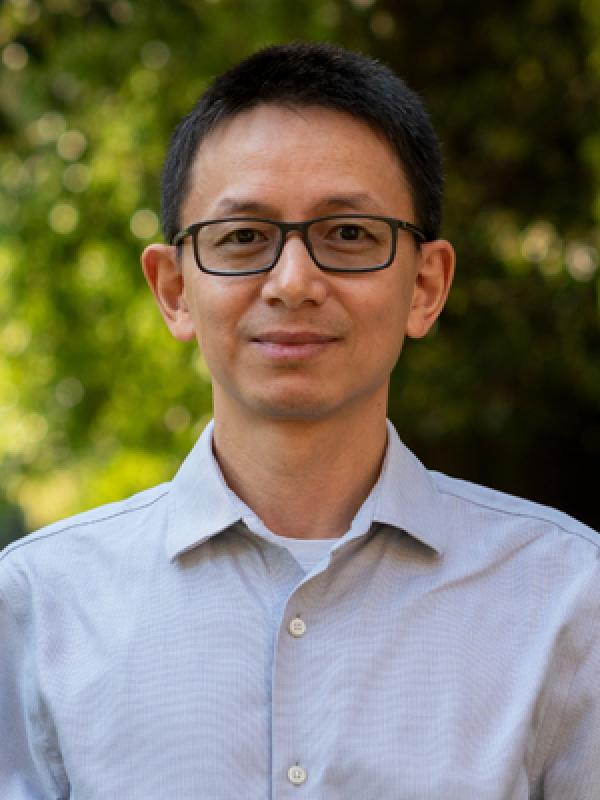
Professor Desheng Liu is affiliated with the Department of Geography at The Ohio State University , within the College of Arts and Sciences . His research focuses on developing spatial and statistical methodologies for environmental monitoring and ecological processes. He holds a Ph.D. in Environmental Science from UC Berkeley (2006) and additional degrees in Statistics, Environmental Science, and GIS. Education: Ph.D., 2006: Environmental Science, University of California, Berkeley M.A., 2004: Statistics, University of California, Berkeley M.S., 2003: Environmental Science, University of California, Berkeley B.E., 2001: GIS, Wuhan University, China Research interests include Remote Sensing , Spatial Statistics , GIScience , and Land Cover Change . His work emphasizes statistical modeling of spatial-temporal dynamics in environmental systems. Recent publications (2008–2012) explore topics like land-cover trajectory reconstruction, thermal infrared downscaling, and object-based classification techniques. No scientific awards are explicitly listed in the provided text. Advising and grants information is not detailed here, though his CV may contain additional details. He is involved in teaching advanced courses such as Quantitative Geographical Methods and Spatial Statistics.
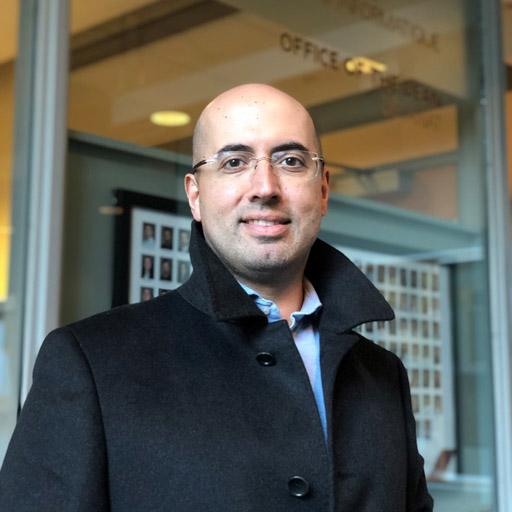
Mahdi S. Hosseini is an Assistant Professor in the Department of Computer Science and Software Engineering at Concordia University and a faculty member of the Applied AI Institute. He holds a PhD from the University of Toronto (2016) and completed a postdoctoral fellowship at UofT, supported by MITACS-Elevate and NSERC fellowships. His research focuses on advancing deep learning and computer vision for computational pathology and healthcare technologies, aiming to develop AI tools for clinical diagnosis. He currently supervises graduate students and has published over 30 papers and two patents. Education: PhD in Electrical and Computer Engineering from the University of Toronto (2016), postdoctoral training at UofT collaborating with Huron Digital Pathology Inc. (Waterloo, Ontario). Research interests include deep learning, computer vision, computational pathology, medical imaging, and AI ethics (P4AI project). His work emphasizes developing explainable AI systems for clinical pathology, biomarker discovery, and efficient learning algorithms. Professional service includes serving as Area Chair for NeurIPS 2023, CVPR 2023-2024, and ECCV 2024. He reviews grants for CIHR, NSERC, and serves on program committees for key conferences (ICCV, CVPR, NeurIPS). Teaching includes courses on applied AI, machine learning, and deep learning for computational pathology at both graduate and undergraduate levels. Awards: MITACS-Elevate Fellowship (postdoc), NSERC Research Funding (2016-2017). His work has led to patents in diagnostic systems and has collaborated with hospitals and pathologists to advance clinical applications. Labs/Teams: Active collaborations with the Applied AI Institute at Concordia, Huron Digital Pathology, and healthcare institutions. Research emphasizes interdisciplinary approaches between computer science and clinical medicine.
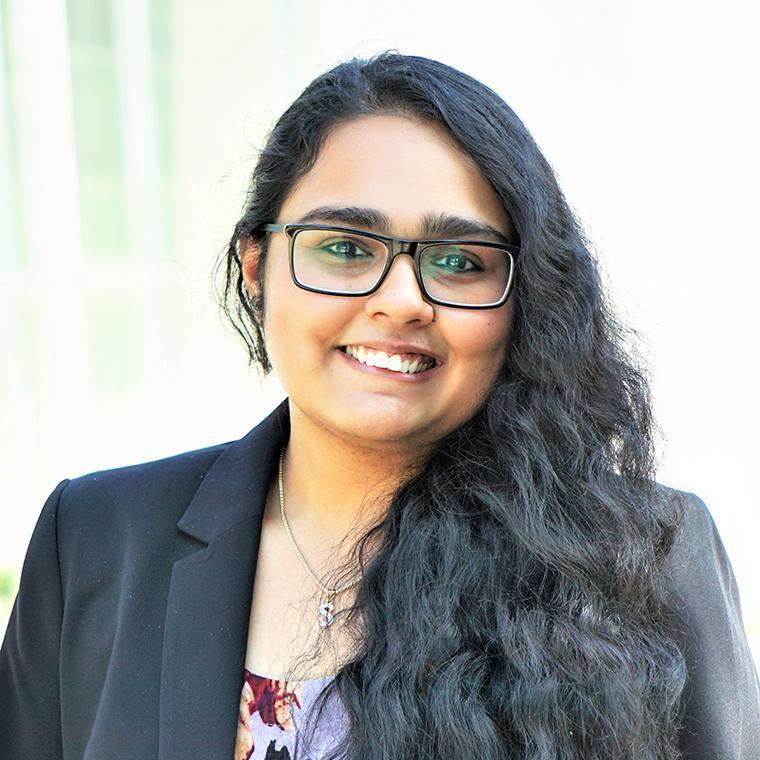
Smita Ghosh is an Assistant Professor in the Department of Mathematics and Computer Science at Santa Clara University, part of the College of Arts and Sciences. Her research focuses on social network analysis, algorithms for information diffusion, and applications in cybersecurity, disaster management, and machine learning. She holds a B.Tech. from the West Bengal University of Technology, India, and an M.S. and Ph.D. from the University of Texas, Dallas. Her work addresses challenges in rumor containment, clickbait detection, and optimizing network models for social media content analysis. Recent publications include studies on hypergraph-based solutions for rumor blocking and stochastic models for emergency response in social networks. She also explores cross-modal topic modeling for enhancing content detection algorithms. Notable contributions include developing data-driven strategies for identifying hate speech spreaders and improving wildfire severity predictions using environmental features. Her research bridges theoretical computer science with real-world applications in public health, education, and disaster management. Her academic contributions include organizing conference proceedings like the 18th International Conference on Algorithmic Aspects in Information and Management (AAIM 2024). She actively contributes to educational initiatives such as the Classroute project, creating multilingual educational content for Punjabi and Urdu speakers.
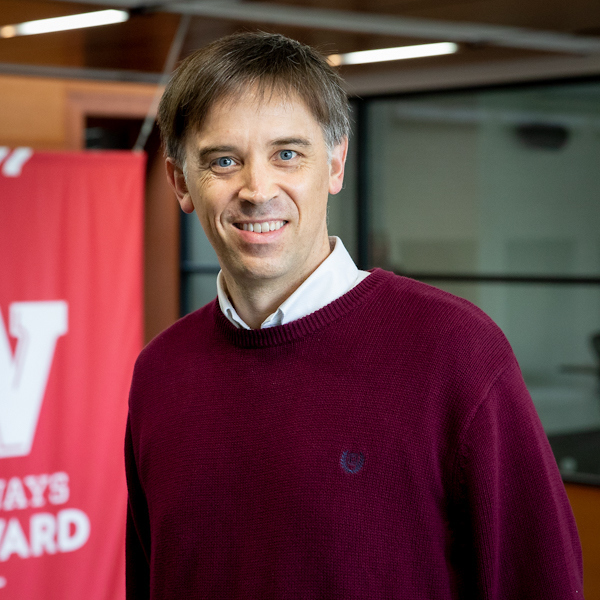
Daniel Bolt is the Nancy C. Hoefs Bascom Professor of Educational Psychology at the University of Wisconsin-Madison’s School of Education. His research focuses on psychometric methodologies in educational, social, and health sciences, including latent variable models, computational methods, and assessment of individual differences. He also collaborates on biostatistics projects at the Waisman Center. Education: PhD in Educational Psychology, University of Illinois at Urbana-Champaign (1999) MS in Statistics, University of Illinois at Urbana-Champaign (1995) BA in Psychology/Mathematics, Calvin College (1992) Research Interests: Bolt’s work bridges psychometrics and educational data science, addressing topics like response style modeling, computer-based testing, and measurement validation. His recent projects explore the intersection of IRT models with modern assessment challenges, including rating scale confusion and item complexity effects. Awards: Kellett Mid-Career Award (2019) Vilas Associates Award (2015, 2017) Chancellor’s Distinguished Teaching Award (2009) Outstanding Reviewer Awards (Journal of Educational and Behavioral Statistics, 2011/2020) Teaching & Leadership: Bolt teaches advanced courses in test theory and hierarchical linear modeling. He served as President of the Psychometric Society (2019–2021) and is a Teaching Academy Fellow at UW-Madison.
Mathias Lécuyer is an Assistant Professor in the Computer Science Department at the University of British Columbia (UBC) , part of the Faculty of Science . His research focuses on trustworthy AI systems, with emphasis on privacy (differential privacy), adversarial robustness, and causal machine learning. He leads the Systopia Lab and collaborates with groups such as UBC S&P, TrustML, and CAIDA. Education: PhD in Computer Science from Columbia University (2019), MSc from Columbia University (2013) and École Polytechnique (2011). Research Interests: Ensuring rigorous guarantees for AI systems via differential privacy, robustness against adversarial attacks, and causal inference. His work spans theoretical foundations and practical implementations in areas like privacy-preserving systems, federated learning, and transparent machine learning. Awards: SOSP Distinguished Artifact Honorable Mention (2024), Google Research Award (2022), Bourse Carnot Fellowship (2011), and UBC’s top teaching evaluations (2021). Advising & Service: Supervised over 20 students (PhD, MSc, undergrad) across privacy and machine learning topics. Serves on PCs for top conferences (OSDI, S&P, NeurIPS) and organizes workshops like TrustML @ UBC. Actively mentors high school students in ML research through outreach programs. Labs/Teams: Leads the Systopia Lab at UBC, focusing on AI safety and privacy. Collaborates with MSR, Google, and industry partners on practical system implementations.
Dan Kowal is an Associate Professor in the Department of Statistics and Data Science at Cornell University, joining in 2024. His research focuses on Bayesian models for large/dependent data, mixed data modeling, and interpretable uncertainty quantification. Key areas include public health, environmental justice, epidemiology, and economics. He holds a PhD from Cornell University (2017) and previously served as an Assistant Professor at Rice University. Awards include the Blackwell-Rosenbluth Award (2021), Army Research Office Young Investigator Award (2020), and Lindley Prize Honorable Mention (2024). Notable grants include NSF funding for adaptive dependent data models (2022–2025) and Army Research Office support for Bayesian prediction methods (2020–2022). His work addresses racial inequities in statistical modeling and has been published in top journals like JASA and Bayesian Analysis. He advises multiple PhD students and develops R packages (e.g., SeBR, countSTAR) for Bayesian regression and data synthesis. Teaching roles include Bayesian Statistics at both undergraduate and graduate levels.
Somil Bansal is an Assistant Professor in the Department of Aeronautics and Astronautics at Stanford University, part of the School of Engineering. Previously, he served as an Assistant Professor in the Electrical and Computer Engineering (ECE) department at the University of Southern California. He holds a B.Tech. from IIT Kanpur, an MS, and a Ph.D. from UC Berkeley’s EECS department. Research Focus: Development of mathematical tools and algorithms for safety-critical autonomous systems, emphasizing learning-enabled systems’ safety. Key Collaborations: Waymo, Skydio, Google, Boeing, NASA AMES/JPL. Awards: NSF CAREER Award, Eli Jury Award, RSS Pioneer Award, and Outstanding Graduate Instructor Award. His research integrates control theory and machine learning to ensure safety in autonomous systems, focusing on safe learning frameworks, anomaly detection, and real-time safety guarantees. He leads the Safe and Intelligent Autonomy (SIA) Lab, which explores applications in robotics, autonomous driving, and aerospace systems. Teaching: Courses include Introduction to Control Design Techniques and Principles of Safety-Critical Autonomy. He advises doctoral students and supervises research projects in his lab.
Wojciech Jarosz is an Associate Professor of Computer Science at Dartmouth College, affiliated with the College of Engineering and Computer Science. His research focuses on computer graphics, particularly light transport simulation, rendering algorithms, and digital fabrication. He co-founded the Visual Computing Lab and previously led the rendering group at Disney Research Zürich. Jarosz holds a Ph.D. and M.S. from UC San Diego and a B.S. from the University of Illinois Urbana-Champaign. His educational background includes studies in computer science and engineering, with a strong emphasis on graphics and rendering. Research interests span light transport simulation, Monte Carlo methods, appearance capture, and fabrication. Notable achievements include the Eurographics Young Researcher Award (2013) and the NSF CAREER Award (2019). Jarosz's work integrates theoretical rigor with practical applications, such as real-time rendering techniques and volumetric light transport. His lab develops tools for artistic authoring, including intuitive metaphors for volumetric lighting in animated films. Recent projects explore wave-optics BSDF models, optical heterodyne rendering, and unifying radiative transfer models. Key awards include the SIGGRAPH 2024 Best Paper Award and Neukom Institute prizes. His teaching includes courses on rendering algorithms, computer graphics, and computational photography. Jarosz collaborates with industry (e.g., Disney, NVIDIA) and advocates for diversity in computer graphics research.
Maizie Zhou is an Assistant Professor in Biomedical Engineering and Computer Science at Vanderbilt University’s School of Engineering. She holds dual PhDs in Computer Science (Stanford University) and Neuroscience (Wake Forest School of Medicine), with additional degrees from Wake Forest University and Huazhong University of Science and Technology. Her research focuses on computational genomics, bioinformatics, and machine learning applied to problems in cancer genomics, single-cell and spatial transcriptomics, and computational neuroscience. She leads the Zhou Lab, which develops algorithms for structural variant detection, neural circuit analysis, and integrative omics approaches. Recent work includes tools like VolcanoSV and stDyer, and she has received grants from NIH, Vanderbilt Brain Institute, and industry partnerships. Key achievements include VUSE Best Paper Awards, Global Engagement Travel Grants, and mentoring students in prestigious programs like the Provost’s Pathbreaking Discovery Award. Her lab also explores the neural underpinnings of cognitive maturation in primates, combining computational and experimental neuroscience. Education: PhDs in Computer Science (Stanford) and Neuroscience (Wake Forest), MS (Computer Science, Wake Forest), BS (Biotechnology, Huazhong). Research interests span computational genomics (e.g., structural variant detection, haplotype phasing), spatial transcriptomics (clustering, integration), and computational neuroscience (neural circuit dynamics, prefrontal cortex plasticity). Her lab’s tools address challenges in precision medicine, cancer genomics, and understanding adolescent brain development. Recent projects include NIH-funded work on spatial transcriptomics and collaborations with Dr. Meltzer’s lab on cancer genomics. Publications highlight advancements in bioinformatics tools and neural mechanisms, with trends toward multi-omics integration and algorithmic innovation in genomics. Awards include the Global Engagement Travel Grant and CCSB Accelerator Fund. Students under her mentorship have excelled in qualifying exams and travel grants, reflecting her impactful training program.
Aji Mathew is a Professor at the Department of Materials and Environmental Chemistry, Stockholm University. He holds a PhD in polymer chemistry from Mahatma Gandhi University (2001) and conducted postdoctoral research at CERMAV (Grenoble, France) and NTNU (Trondheim, Norway). His academic career includes roles as an assistant professor (2007–2011) and associate professor (2011–2015) at Luleå University of Technology before becoming an associate professor (2015) and subsequently a professor (2017) at Stockholm University. His research focuses on bio-based nanocomposites and sustainable materials, particularly nanocellulose and its applications in environmental remediation, advanced materials, and circular economy solutions. His group, the Aji Mathew Group , specializes in designing bio-based materials for diverse applications, including water treatment, 3D printing, and biomedical uses. Key projects involve upcycling textile waste, developing eco-friendly composites, and creating functional hydrogels. His work bridges fundamental polymer chemistry with practical sustainability challenges. Publications highlight innovations like nanocellulose-based foams, zeolitic frameworks for water purification, and bio-based coatings. While no awards are explicitly mentioned, his extensive peer-reviewed contributions reflect significant scholarly impact. His research emphasizes scalability and real-world applicability, addressing global environmental and material science challenges.
Xiaolei Fang is Associate Professor in the Edward P. Fitts Department of Industrial and Systems Engineering at North Carolina State University. His research develops advanced statistical learning, deep learning, and optimization methods for industrial applications involving high-dimensional data, with particular focus on condition monitoring, failure prognostics, and system performance optimization. He holds a PhD in Industrial Engineering and MS in Statistics from Georgia Tech. Professor Fang's research integrates machine learning with industrial engineering to solve complex problems in predictive maintenance, quality control, and energy systems. His methodological innovations include federated learning approaches for privacy-preserving prognostics, distributionally robust machine learning models, and tensor-based statistical methods for manufacturing quality diagnostics. He has received multiple prestigious awards including the ISE Outstanding Research Award (2024), Sigma Xi Best PhD Thesis Award (2019), and SAS Data Mining Best Paper Award (2016). His research has been funded by NSF, Cisco Systems, and the US Department of Energy. Professor Fang teaches courses in Quality Design & Control, Statistical Models for Systems Analytics, High-Dimensional Data Analytics, and Optimization Models. He has supervised 9 PhD students to completion and currently advises 7 graduate students working on projects spanning federated learning for prognostics, tensor-based quality control, and machine learning applications in manufacturing and energy systems.
Sherry Tongshuang Wu is an Assistant Professor at Carnegie Mellon University's School of Computer Science, with primary appointments in the Human-Computer Interaction Institute (HCII) and secondary affiliation with the Language Technology Institute (LTI) . Trained at the University of Washington under Jeffrey Heer and Dan Weld, she bridges HCI and NLP to study human interactions with AI systems across diverse user groups. Her educational background includes a Ph.D. (2016-22) and M.S. (2016-18) in Computer Science and Engineering from the University of Washington, and a B.Eng. (2012-16) from Hong Kong University of Science and Technology. Industry experience includes research internships at Google Brain, Microsoft Research, and Apple. Wu's research focuses on three interconnected pillars: Real-world AI Evaluation (developing frameworks like SPHERE for systematic assessment), Task-specific AI Test & Distill (optimizing general-purpose models for specific use cases), and Human-AI Task Delegation (designing optimal collaboration between humans and AI). Her work emphasizes practical deployment, user-specific net gains, and error recovery mechanisms. Analysis of her 15 most recent publications reveals a strong trend toward evaluation frameworks (35%), human-AI collaboration systems (30%), and specialized model distillation (25%), with growing emphasis on educational applications (10%). Key methodological themes include checklist-based evaluation, perspective-aware retrieval, and structural analysis of AI outputs. Google Academic Research Award (2024) Amazon Research Awards (2024) AIED 2024 Best Paper Award ACL 2020 Best Paper Award Rising Stars in EECS Workshop (2020) Wu actively mentors 19 students across PhD, Master's, and undergraduate levels, with notable projects including synthetic data generation, LLM literacy tools, and retrieval system optimization. She leads significant grant-funded work through Amazon Research Awards and Google Academic Research Awards, focusing on deployable model generation and human-AI collaboration frameworks. Her lab develops practical tools like Promp2Model and SPHERE that bridge theoretical research with industry applications.
Olof Mikael Lindgren is a Professor of Physics at the Norwegian University of Science and Technology (NTNU) , Department of Physics, Faculty of Natural Sciences. Since 2003, he has led research at the Applied Optics group and Biophysics group , focusing on advanced optical spectroscopy and imaging for biomedical applications. His research spans laser-based spectroscopy, time-resolved optical techniques, and nonlinear optics. He applies these methods to study biomolecular systems, particularly in the context of amyloid diseases like Parkinson’s and Alzheimer’s, and to develop photo-dynamic therapy approaches. He also investigates hybrid organic-inorganic nanomaterials and triplet state dynamics. Recent publications highlight his work on oligothiophenes for amyloid fibril detection, BODIPY-based photosensitizers for cancer therapy, and multimodal fluorescence microscopy of protein aggregates. These studies collectively advance optical diagnostics and therapeutic strategies in life sciences. He teaches the course TFY4195 - Optics and is actively involved in outreach and academic service. His contact email is mikael.lindgren@ntnu.no , and his office is located at Realfagbygget, D4-190, Gløshaugen .
Artur Czumaj is a Professor in the Department of Computer Science at the University of Warwick and serves as the Director of the Centre for Discrete Mathematics and its Applications (DIMAP). He is a member of the Division of Theory and Foundations (FoCS) and holds affiliations with the Alan Turing Institute, the Warwick Data Science Institute (WDSI), and the Warwick Centre for Doctoral Training in Mathematics of Real-world Systems (MathSys). Previously, he served as Head of Department and President of the European Association for Theoretical Computer Science (EATCS) from 2020 to 2024. His research lies at the core of theoretical computer science, focusing on the design and analysis of algorithms, particularly randomized, sublinear, parallel, and distributed algorithms. His work spans graph theory, combinatorics, computational geometry, algorithmic game theory, and property testing. He has led major research initiatives funded by EPSRC, IBM, the Royal Society, and Weizmann-UK grants. The trends in his recent publications highlight a strong emphasis on sublinear algorithms, dynamic graph algorithms, and property testing, with recurring themes in randomized methods, graph processing, and efficient data structures. His work bridges foundational theory with applications in data summarization, network analysis, and computational geometry. EPSRC grants: EP/D063191/1, EP/G064679/1, EP/G069034/1, EP/J021814/1, EP/N011163/1, EP/V01305X/1, EPSRC studentship IBM Faculty Award Royal Society International Exchanges Scheme Weizmann-UK Making Connections Grants on combinatorial and algorithmic primitives and the interplay between algorithms and randomness Peter Davies received the 2020 Warwick Faculty of Science Thesis Prize under his supervision Artur Czumaj has supervised numerous PhD students, including Anna Adamaszek, Michal Adamaszek, Sam Coy, Peter Davies, Michail Fasoulakis, Jan Hladky, Wang Xin, and Hairong Zhao. His research has been supported by sustained grant funding, reflecting his leadership in theoretical computer science. He has organized major workshops at Dagstuhl, Oberwolfach, Simons Institute, and the University of Warwick, and has served on the steering committees of HALG and as PC Chair for SODA 2018 and ICALP 2020. He is actively involved in organizing key research events, including the Simons Institute Special Semester on Sublinear Algorithms (2024), the Workshop on Sublinear Graph Simplification (2024), and the Computational Complexity Conference (CCC 2023) at Warwick. He also co-organizes the Warwick-Weizmann workshops and the IGAFIT Algorithmic Postdocs Workshop, fostering international collaboration in algorithms research.
Andrzej Majkowski is an Associate Professor at the Institute of the Theory of Electrical Engineering, Measurement and Information Systems, Faculty of Electrical Engineering, Warsaw University of Technology. His career spans over two decades of research in biomedical engineering, focusing on brain-computer interfaces, signal processing, and emotion recognition. Active in both teaching and research, he contributes to advancing methodologies in electrophysiological signal analysis. Warsaw University of Technology Institute of the Theory of Electrical Engineering, Measurement and Information Systems Faculty of Electrical Engineering Specializing in biomedical engineering , Majkowski's research bridges control systems and information technologies with neuroscience applications. His work explores brain-computer interfaces , EEG/EMG signal processing , and emotion recognition using multimodal physiological data. Recent studies focus on deep learning architectures for artifact removal and classification tasks. Recent publications highlight trends in CNN-LSTM hybrid models for signal denoising, convolutional networks for seizure detection, and machine learning applications in visual evoked potential analysis. His work spans both clinical applications (epilepsy monitoring) and human-computer interaction (emotion recognition, sign language detection). With over 98 documented publications and significant bibliometric indicators (h-index 13 in Scopus), Majkowski has supervised 95 promoted theses. His research includes one funded project and collaborations in biomedical instrumentation, though specific award details remain unspecified in available records.