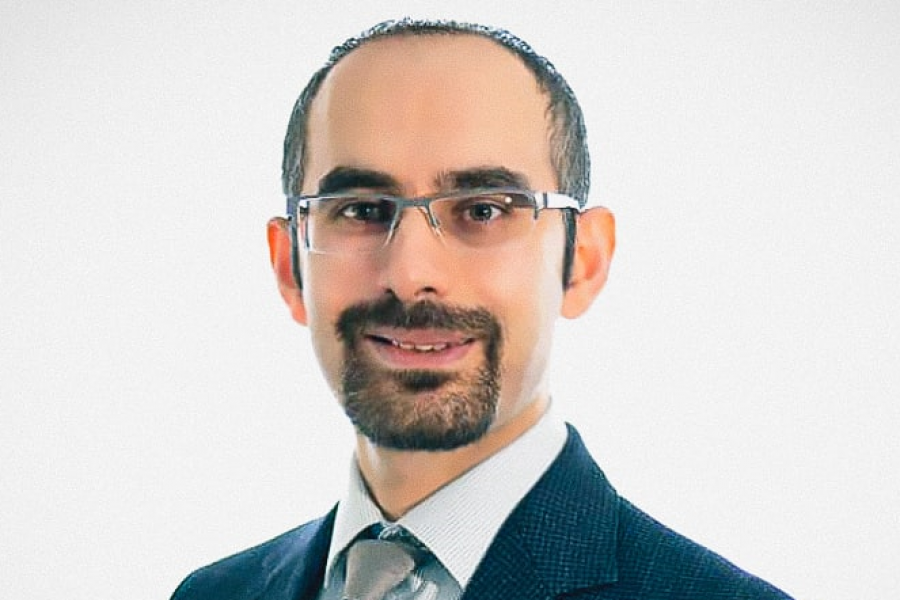
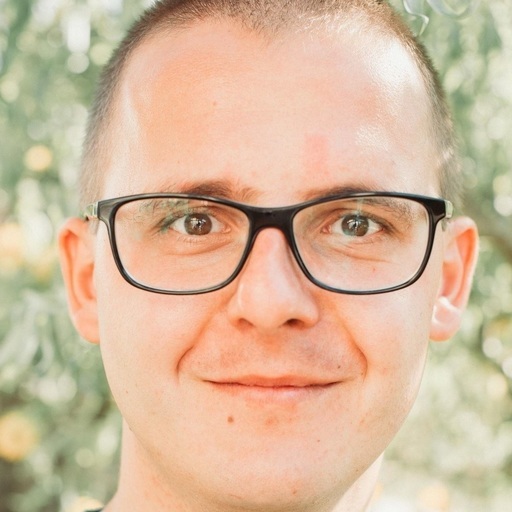
Dr. Kari Koskinen is Professor in Automation Technology and Mechanical Engineering at Tampere University, specializing in robotics, autonomous systems, and industrial digitalization. He holds a Doctor of Science in Automation Engineering and Licentiate of Science in Mechanical Engineering. Research domains include: Robotics and autonomous underwater vehicle systems Control architecture design and optimization Physics-based simulation modeling and digital twin implementation Predictive maintenance through machine learning Industrial process optimization using empirical and computational models His publications focus on industrial applications of simulation technologies, predictive maintenance algorithms, and optimization of manufacturing processes. Recent work demonstrates strong integration of physical modeling with machine learning approaches for industrial diagnostics.
Maryam Shafiei Alavijeh is a Professor at the University of Windsor, specializing in Non-Destructive Evaluation (NDE) and advanced materials research. She collaborates closely with Prof. Roman Maev and students like Vlad Tusinean on projects integrating ultrasonic testing, machine learning, and artificial intelligence for industrial applications. Their work focuses on improving pipeline safety, composite material analysis, and defect detection in critical infrastructure. Her research interests span non-destructive evaluation techniques, ultrasonic testing methodologies, and the application of AI in material science. Key projects include developing automated flaw detection systems for polyethylene gas pipes, optimizing chord transducer performance, and leveraging deep learning models for NDE 4.0 frameworks. In 2022, Prof. Shafiei Alavijeh and her team received recognition from the Canadian Institute for Non-Destructive Evaluation for their innovative contributions to NDE methodologies. Her work bridges academic research with industry needs, emphasizing practical solutions for structural integrity assessment and material characterization.
Paweł Wachel is a researcher at the Department of Control Systems and Mechatronics within the Faculty of Information and Communication Technology at Wrocław University of Science and Technology. He is actively engaged in research and academic activities, with recent publications spanning from 2022 to 2024. Research Interests: His primary research areas include control theory, system identification, signal processing, and nonlinear systems. He specializes in the modelling and identification of complex systems such as Wiener, Hammerstein, and infinite memory nonlinear systems, employing advanced techniques like kernel-based methods, aggregative modelling, and exponential excitations. The recent publications indicate a strong focus on both theoretical and applied aspects of control systems, with increasing integration of learning-based and data-driven approaches. Topics such as safe learning, decentralized diffusion, and dual averaging algorithms reflect modern trends in adaptive and robust control. The interdisciplinary reach extends into neural networks and materials science, particularly in using fractal analysis for material hardness estimation. Scientific Awards: No awards or fellowships are mentioned in the provided text. Advising and Grants: While no specific students or grant funding are listed, Paweł Wachel collaborates extensively with researchers such as Krzysztof R Kowalczyk, Cristian R Rojas, Koen Tiels, and others, suggesting active participation in research teams and potential supervision roles. His consistent publication output indicates sustained research activity, likely supported by institutional or project-based funding. Labs and Teams: As a member of the Department of Control Systems and Mechatronics, he is likely involved in research laboratories focused on control systems, system identification, and mechatronic applications, though specific lab names or team structures are not detailed in the provided content.
Dr. Sierra Young is an Assistant Professor in the Department of Civil and Environmental Engineering and the Utah Water Research Laboratory at Utah State University, where she leads the DAISy (Digital Agro-environment and Intelligent Systems) Lab. Her research integrates robotics, computer vision, and environmental sensing to advance monitoring in agriculture and hydrology. PhD, Civil and Environmental Engineering, University of Illinois at Urbana-Champaign, 2018 MS, Civil and Environmental Engineering, University of Illinois at Urbana-Champaign, 2015 BS, Civil and Environmental Engineering, Cornell University, 2014 Dr. Young's research focuses on field robotics, automation, and optical sensing systems for environmental and agricultural applications. She specializes in unmanned aerial systems (UAS), developing robotic payloads for tasks such as aerial pollination, soil moisture measurement, and water quality sampling. Her work also emphasizes hyperspectral imaging and machine learning for non-destructive evaluation of crops like industrial hemp and loblolly pine, enabling high-throughput phenotyping and disease detection. Her recent publications demonstrate a strong trend in intelligent robotics for agriculture, computer vision for environmental monitoring, and sensor fusion for hydrological applications. Key themes include autonomous decision-making in UAS, hyperspectral analysis for plant health, and real-time data processing for operational field deployment. NSF CAREER Award, 2024 Outstanding Reviewer, Journal of Sustainable Water in the Built Environment, 2024 Educational Aids Blue Ribbon Award, ASABE, 2024 ASABE Outstanding Reviewer, 2023 Dr. Young mentors graduate students in civil, environmental, and electrical engineering, guiding research in robotics, sensing, and data science. She has secured funding from agencies including the U.S. Geological Survey and the National Robotics Initiative to support projects on camera-based hydrologic monitoring and autonomous water sampling. Her teaching includes courses in computer programming and computer vision for engineers. The DAISy Lab fosters interdisciplinary collaboration, particularly with NC State University, focusing on scalable robotic solutions for agricultural and environmental challenges. The DAISy Lab is actively developing mobile sensor systems for applications in precision agriculture, hydrology, and aquaculture. Current projects include autonomous water quality monitoring using aerial and surface vehicles, hyperspectral imaging for crop breeding, and low-cost camera networks for operational hydrology.
Dimitrios Loverdos is a Lecturer in Digital Construction at the School of Civil Engineering, University of Greenwich, within the Faculty of Engineering and Science. He holds a PhD and MEng from the University of Leeds, Department of Civil and Structural Engineering, and specializes in integrating digital technologies with structural engineering applications. Education: PhD in Civil and Structural Engineering, University of Leeds MEng in Civil and Structural Engineering, University of Leeds His research lies at the intersection of structural engineering and digital innovation, focusing on physical large-scale testing , numerical analysis using FEM and DEM , and the application of computer vision and machine learning for structural assessment. He leverages Python and MATLAB for algorithmic development in automated model generation, defect detection, and damage evaluation of built structures. The recent publications reflect a strong trend toward intelligent, data-driven structural analysis, combining photogrammetry with deep learning for digital twin creation, vision-based inspection systems, and advanced numerical modeling of composite systems under extreme conditions like fire. These works highlight interdisciplinary work across civil engineering, AI, and computational mechanics. Scientific Awards: No awards listed in the provided text. Regarding academic advising and research grants, no specific information is available in the current text. There is no mention of PhD students supervised or funding received. In terms of laboratory involvement, Dimitrios has extensive hands-on experience in laboratory environments, contributing to construction, experimental testing, and demolition activities. He has also provided technical assistance and management in lab operations, demonstrating strong practical and managerial capabilities in experimental structural engineering.
Dr. Ulrike Dackermann is a Lecturer in the School of Civil and Environmental Engineering at UNSW and a member of the Centre for Infrastructure, Engineering and Safety (CIES). She joined UNSW in 2017 after serving as a lecturer at the University of Technology Sydney (UTS) from 2014. Her expertise spans Structural Health Monitoring (SHM), Non-Destructive Testing & Evaluation (NDT&E), Hybrid Timber Structures, and AI-driven data analytics. Dr. Dackermann holds a PhD in Civil Engineering (UTS, 2010) and an MSc from TU Munich (2003). Her research focuses on advancing smart SHM systems using AI, signal processing, and data fusion. Notable projects include developing damage assessment methods for the Sydney Harbour Bridge and crowd monitoring for pedestrian bridges. She also collaborates with AusGrid on AI-based tools for timber pole inspection. Her work on hybrid timber structures explores their dynamic behavior and long-term performance under pedestrian vibrations. Research Interests: SHM, NDT&E, timber structures, AI, modal analysis, guided wave analysis. Affiliations: Deputy Editor of the Australian Journal of Civil Engineering, member of ANSHM, CRESTIMB, and multiple international engineering consortia. Grants: ARC Linkage Project (2023–2026), Australia-Germany Joint Research (2018–2019), and multiple UTS grants. Teaching: Courses include Structural Dynamics, Sustainable Timber Engineering, and Bridge Engineering. Dr. Dackermann’s research addresses both technical and societal challenges, such as her volunteer work with Engineers Without Borders to design energy-efficient stoves in Nepal and Tanzania. Her interdisciplinary approach integrates hands-on engineering solutions with global impact.
Dr Fernando Alvarez Borges is a Senior Research Fellow at the University of Southampton, specializing in X-ray and neutron computed tomography applications for geomaterials, particulates, and porous media research. His work integrates Deep Learning methods with geomechanics, particularly focusing on offshore renewable energy infrastructure. With over eight years of experience in non-destructive analysis, he contributes to academic and enterprise projects across material sciences, palaeontology, and conservation. Research Interests: 3D imaging technologies, geotechnical engineering, renewable energy systems, and AI-driven image analysis Methodologies: Synchrotron X-ray tomography, neutron imaging, computational modeling Recent publications highlight his work on hydrogen storage in geological formations, methane hydrate dynamics, and advanced composite manufacturing. He actively collaborates with interdisciplinary teams across geosciences, mechanical engineering, and biomedical applications. External Engagement: Invited speaker at the 6th Annual Workshop on Advances in X-ray Imaging (2023)
Jonathan Malen is a Professor in the Department of Mechanical Engineering at Carnegie Mellon University’s College of Engineering. His research spans nanoscale thermal transport, energy materials, and additive manufacturing, with significant contributions to thermal management in electronics and thermoelectric energy conversion. Malen earned a Ph.D. in Mechanical Engineering from UC Berkeley (2009), an M.S. in Nuclear Engineering from MIT (2003), and a B.S. in Mechanical Engineering from the University of Michigan (2000). He joined CMU in 2009 and has since led groundbreaking experimental work in thermal science. His research interests include thermal transport in advanced materials such as ultrawide bandgap semiconductors (GaN, Ga₂O₃), organic-inorganic hybrids (superatomic crystals, perovskites), and high-thermal-conductivity polymers. The Malen Laboratory uses ultrafast laser spectroscopy, microfabrication, and thermal imaging to study heat transfer in electronics, additive manufacturing, and cryopreservation. Key applications include thermoelectric waste heat recovery, thermal management in microprocessors, and process monitoring in metal 3D printing. Malen’s recent publications reveal a strong focus on thermal conductivity in polymers and composites, melt pool dynamics in additive manufacturing, and phonon transport in nanostructured materials. His work increasingly integrates machine learning for process modeling and defect prediction in metal printing. There is a clear interdisciplinary trend combining materials science, mechanical engineering, and data-driven modeling. Benjamin Richard Teare Teaching Award (2019) David P. Casasent Outstanding Research Award (2016) ASME Bergles-Rohsenhow Young Investigator Award in Heat Transfer Army Research Office Young Investigator Award (2014) National Science Foundation CAREER Award (2012) Air Force Office of Scientific Research Young Investigator Award (2010) Malen has advised numerous PhD students, many of whom now work in industry (e.g., Intel, Northrop Grumman, Apple) or academia. His research is supported by the NSF, DoD, ARO, AFOSR, and NIH. He collaborates with Alan McGaughey (CMU), Dmitri Talapin (University of Chicago), and X. Roy (Columbia), among others. He is also involved with CMU’s Data Storage Systems Center, NextManufacturing Center, and Wilton E. Scott Institute for Energy Innovation. The Malen Laboratory operates at the intersection of experimental thermal science and advanced manufacturing, focusing on both fundamental understanding and technological applications. The team includes postdocs and PhD students working on topics such as in-situ thermal imaging, deep learning for defect prediction, and thermoelectric cooling. The lab is known for developing innovative measurement techniques like two-color thermal imaging and frequency-domain thermoreflectance.
Francis Ogoke is an incoming Assistant Professor in the Department of Mechanical Engineering at Carnegie Mellon University, set to begin in Fall 2025. He is currently a postdoctoral associate at the Massachusetts Institute of Technology. His academic journey includes a Ph.D. in Mechanical Engineering from Carnegie Mellon University (2024) and a B.S.E. in Chemical and Biological Engineering from Princeton University (2019). His research lies at the intersection of artificial intelligence and engineering systems, with a focus on developing foundational AI methods for complex engineering problems. Key areas include: Physics-informed deep learning Uncertainty quantification and probabilistic modeling Representation learning for generalization Applications in additive manufacturing, digital twins, and cyber-physical systems The recent articles reflect a strong trend in leveraging deep learning—especially vision transformers, generative models, and reinforcement learning—for accelerating simulations, enhancing in-situ monitoring, and improving control in additive manufacturing. His work consistently bridges AI innovation with real-world engineering challenges, particularly in metal 3D printing and multiphysics modeling. Notable scientific awards include: Presidential Fellowship in the College of Engineering, Carnegie Mellon University G.E.M. Fellowship Francis Ogoke advises emerging researchers and is expected to lead a research group focused on AI-driven engineering systems. His lab will likely focus on developing intelligent frameworks for digital twins and autonomous manufacturing. He has not yet advised any students as per current records. He is actively involved in pioneering research that integrates AI into core engineering workflows, supported by advanced computational and experimental infrastructure. He is affiliated with the College of Engineering at Carnegie Mellon University and conducts research relevant to advanced manufacturing, sensing technologies, and intelligent systems.
Aser Abbas is an Assistant Professor in the Department of Civil and Environmental Engineering at the University of Rhode Island . His expertise lies in geotechnical and structural engineering, with a focus on earthquake engineering, soil-pile interaction, and machine learning applications. Ph.D., Civil and Environmental Engineering, Utah State University (2024) M.E., Systems and Material Engineering, Alabama A&M University (2020) M.Sc., Structural Engineering, Mansoura University (2017) B.S., Civil Engineering, Mansoura University (2012) Dr. Abbas’s research spans geophysical subsurface imaging, soil dynamics, and data-driven modeling. He has pioneered the use of neural networks for seismic wavefield analysis and developed novel methodologies for characterizing soil behavior under extreme loads. His recent publications highlight trends in geotechnical earthquake engineering , deep foundation mechanics , and machine learning for soil modeling . Key topics include Rayleigh wave attenuation, DAS sensor data, and fracture process zone analysis. Contact: aser.abbas@uri.edu
Professor Hamid Vali Pour Goudarzi is a distinguished academic in the School of Civil and Environmental Engineering at the University of New South Wales (UNSW), where he serves as a Professor specializing in structural engineering. His research focuses on innovative hybrid structural systems combining steel, concrete, and timber, with particular emphasis on developing efficient computational models for structural analysis under extreme loading conditions. Dr. Valipour earned his PhD from UNSW in 2009, following an MEngSc from Tehran University (1998) and a B.E. in Civil Engineering from the University of Tehran Polytechnic (1997). His academic journey reflects a deep commitment to structural mechanics and engineering innovation. His research interests span the behavior of innovative hybrid structures that exploit the advantages of timber, steel, and concrete, with particular focus on developing 1D frame finite element models capable of capturing material and geometrical nonlinearities under extreme loading scenarios such as blasts and earthquakes. He is also deeply engaged in constitutive modeling of concrete and timber, and has research goals centered on developing structural systems with lower energy and carbon footprints, as well as structures that are easier to fabricate, assemble, and dismantle. Analysis of his recent publications reveals a strong focus on timber-based composite structures, with significant work on steel-timber-concrete hybrid systems. His research demonstrates expertise in both experimental testing and advanced computational modeling, with particular emphasis on connection behavior, long-term performance, and failure mechanisms of innovative structural systems. A notable trend in his work is the increasing focus on sustainability and deconstruction potential in structural design. Malcolm Chaikin prize including university medal (2009) for research excellence in PhD studies within the Faculty of Engineering at UNSW Research Excellence Award (2011) from the Concrete Institute of Australia Professor Valipour currently supervises 10 PhD students with 17 having already graduated under his guidance. His research is supported by multiple ARC grants including DP220101038 'Torsion in innovative timber composite floors', DP220100841 'Connections for hybrid steel-timber-concrete structures', and DP160104092 'Composite Steel-Timber Structural System'. His professional service includes editorial roles with the Journal of Structural Engineering (ASCE) and Structures (IStrucE). He leads an active research laboratory focused on structural testing and computational modeling of hybrid structural systems, with particular emphasis on connections between different materials and the long-term behavior of composite structures under varying environmental conditions.
Nicola Delmonte is an Associate Professor in the Department of Engineering and Architecture at the University of Parma, Italy. His academic and research career has been centered on power electronics, renewable energy systems, smart grids, and the reliability of electronic components, with applications in energy conversion and IoT technologies. PhD in Electronic Engineering, University of Parma (2003–2005) Master Degree in Electronic Engineering, University of Parma (1995–2002) His research interests focus on the design, modeling, and reliability of power electronic systems for renewable energy integration. He has led and contributed to numerous research projects including the EU-funded H2020 Sharc25, MARINET’s MORE project on ocean energy, and regional initiatives like FIL 2014 on DC Nano-Smart-Grids. His work bridges theoretical modeling with practical innovation, including the development of energy-harvesting piers and wireless monitoring systems for agriculture. The recent publications reflect a strong trend in energy systems modeling, thermal management of power electronics, and advanced instrumentation. Key themes include FEM-based thermal design, adaptive control for battery charging, laboratory-scale geophysical imaging, and integrated building energy models. These works span disciplines such as power electronics, renewable energy, and applied physics. Best Poster Award at GE 2012 for thermal modeling of converters 2nd place in the 2011 International Competition on Renewable Energy for Smaller Islands with the 'e-piers' concept Delmonte has supervised research teams and served as principal investigator on multiple grants, including projects funded by the European Commission, Regione Emilia Romagna, and national research programs (PRIN, COFIN). He teaches a range of courses in electronics and energy conversion across undergraduate and graduate programs in Computer, Electronic, and Communications Engineering, as well as Mechanical Engineering. He is a member of IEEE and the Order of Engineers of Parma, and has acted as a reviewer for journals such as Microelectronics Reliability and Transactions on Device and Materials Reliability. He is involved in experimental and applied research labs focusing on power electronics, smart grids, and renewable energy systems. His team has developed platforms for high-frequency characterization of semiconductor modules and testing of ocean energy harvesting devices. Current efforts include the development of 3D-printed cooling solutions and intelligent control systems for modular power converters.
Dr. Abdelfateh Kerrouche is an Associate Professor at the School of Computing Engineering and the Built Environment, Edinburgh Napier University. His work spans interdisciplinary domains including Sensors , Internet of Things , Environmental Microbiology , and Structural Health Monitoring . University: Edinburgh Napier University School: School of Computing Engineering and the Built Environment Email: A.Kerrouche@napier.ac.uk His research focuses on: Integration of optical and flexible sensors for railway and civil infrastructure Development of AI and IoT systems for pathogen detection in water Application of renewable energy technologies in sustainable building design Use of blockchain in cyber-physical systems Recent publications highlight advancements in: Underwater robotics for water quality monitoring Deep learning applications in environmental and railway engineering Photon management for solar energy efficiency As a supervisor, he mentors postgraduate researchers in: Smart pathogen detection systems Microplastics monitoring with biological approaches Key funded projects include: iMARS (2024-2028) : Intelligent multi-agent robotics for first responders (European Commission, £184,194) Pathogen Detection System (2019-2025) : Deep learning in bathing water safety (Data Lab, £38,822)
Mohammad Nadimi is an Assistant Professor in the Department of Biosystems Engineering at the Price Faculty of Engineering, University of Manitoba. He holds a PhD in Electrical Engineering from the same institution and has a multidisciplinary research profile spanning photonics, food quality, and data analytics. His work focuses on integrating advanced optical techniques with machine learning to improve agri-food production and storage systems. Education: PhD in Electrical Engineering, University of Manitoba, 2018 M.Sc. in Electrical Engineering, Iran University of Science and Technology, 2011 Dr. Nadimi's research centers on real-time quality monitoring of agri-food products using electromagnetic imaging, spectroscopy, and smart sensing technologies. He applies machine learning and AI to optimize data analysis in large-scale agricultural datasets. His work also includes microstructural analysis of food materials and laser-based biostimulation to enhance crop viability. These efforts aim to reduce post-harvest losses and improve food safety and sustainability. The selected publications reflect a strong trend in applying photonics and artificial intelligence to food quality assurance. Key areas include hyperspectral imaging, NIR spectroscopy, terahertz sensing, and deep learning models for contamination detection, spoilage prediction, and structural analysis of grains and legumes. His work bridges engineering innovation with practical agricultural challenges. Scientific Service: Senior Editor, Measurement: Food (Elsevier) Dr. Nadimi has published over 40 peer-reviewed journal articles and 20 conference papers. He is actively involved in graduate education and is currently seeking new students for research projects. His industry experience as a Senior Data Analyst at Wawanesa Insurance further strengthens his expertise in big data analytics and risk modeling. He leads a research program that combines experimental photonics with computational intelligence to develop next-generation food monitoring systems. Laboratory and Research Team: Dr. Nadimi's research group focuses on developing integrated photonics and data analytics solutions for agri-food systems. The team works on sensor development, machine learning model training, and real-time monitoring platforms for grain and oilseed storage environments.
Tomasz Kozłowski is a researcher at Wrocław University of Science and Technology, actively involved in the Team of Advanced Data Analysis Methods (Zespół Zaawansowanych Metod Analizy Danych - ZZMAD). His work bridges engineering and data science, with a strong emphasis on industrial applications, particularly in mining and mechanical systems diagnostics. Research Interests: Non-invasive diagnostics of machinery using NDT techniques Modeling of conveyor belt systems in surface and underground mines using DEM Signal processing for industrial monitoring Development of optimization algorithms for multi-criteria and multi-level engineering problems His research projects focus on evolutionary optimization methods, multi-objective classifier training, and application-aware network optimization, reflecting a deep integration of computational intelligence with real-world engineering challenges. Scientific Awards: Rector's Award for Scientific Achievements (2017) Rector's Award for Scientific Achievements (2018) Recognition in the Mining Success of the Year competition, category Innovation (2018) Tomasz Kozłowski is engaged in advanced research projects involving black-box optimization, gene-inspired search techniques, and multi-layered network optimization. He contributes to the academic community through research platforms such as ORCID, ResearchGate, and the DONA scientific output system of PWr. Laboratory and Research Teams: Team of Advanced Data Analysis Methods (ZZMAD) Machine Learning Team Computer Networks Team Teaching Team Metaheuristics Team