Ludovic Räss is a computational geoscientist at the University of Lausanne and lecturer at ETH Zurich's Glaciology Lab. His research intersects high-performance computing (HPC), geophysics, and applied mathematics, with specialization in GPU-accelerated scientific computing and supercomputing applications. He leads the GPU4GEO initiative developing multi-physics solvers and pioneers differentiable modeling techniques for geophysical simulations using Julia. Research focuses include: Portable HPC software development Ice dynamics and porous media deformation GPU-optimized computational methods Scalable simulation architectures Differentiable programming for geophysics He designed and teaches Solving partial differential equations in parallel on GPUs at ETH Zurich, providing hands-on training in GPU programming and Julia-based scientific computing. Contributes significantly to Julia's open-source ecosystem through JuliaGPU and JuliaParallel projects.
Eleonora Vacca is a PhD student and Research Fellow in the Department of Automatic Control and Computer Science (DAUIN) at the Polytechnic University of Turin. She holds a B.S. in Electronic Engineering from the University of Palermo (2018) and an M.S. in Electronic Engineering-Embedded Systems from Politecnico di Torino (2021). Her research focuses on digital hardware design, reliability engineering, reconfigurable devices, and AI applications in aerospace and safety-critical systems. She is a member of the Aerospace and Safety Computing Lab and the CAD - Electronic CAD & Reliability Group (DAUIN). Her work addresses challenges such as radiation effects mitigation in space missions, fault-tolerant AI accelerators, and real-time anomaly detection in satellite telemetry. She has contributed to projects like the RAMSES CubeSat-1 Development (2025-2026), funded by commercial contracts. In 2024, she won the Best Student Paper Award at the NEWCAS Conference for her research on radiation effects in space missions. Vacca collaborates on teaching, including assisting in the course 'Electronic Calculators' for Computer Engineering students. Her recent publications explore AI resilience in RISC-V ecosystems, radiation environment analysis for space missions, and gesture recognition systems for smart cities. She actively contributes to conferences such as the ACM International Conference on Computing Frontiers and the IEEE International Smart Cities Conference.
Riccardo Raheli is a Full Professor at the University of Parma , Department of Engineering and Architecture, with a career spanning over three decades in Information and Communication Technologies (ICT). He has served as Chair of the Councils for Telecommunications and Communication Engineering programs, and as representative of the University of Parma in CNIT and its Members' Assembly. Education: Laurea in Electronic Engineering (University of Pisa, 1983), M.Sc. in Electrical and Computer Engineering (University of Massachusetts, 1986), Postgraduate Diploma (Scuola Superiore Sant'Anna, 1987) Key Roles: President of Degree Councils (2002-2018), CNIT Committee Member (2000-2005), Editorial Board member for IEEE Transactions, Springer and MDPI journals His research bridges telecommunications , digital signal processing , and healthcare applications , producing extensive international publications and industrial patents. He has co-authored monographs including Detection Algorithms for Wireless Communications (Wiley, 2004) and LDPC Coded Modulations (Springer, 2009). Recent article trends show interdisciplinary work in automotive stress monitoring (IoT/Matlab-based systems), video processing for healthcare (neonatal seizures, respiratory monitoring), and acoustic field control (microphone virtualization, personal sound zones). His work spans machine learning applications in automotive systems, stochastic acoustic modeling , and power-line communications . Scientific Leadership : Co-Chair for IEEE conferences (ICC 2010, GLOBECOM 2011, ISPLC 2020) Editorial roles in 7+ international journals Grants & Collaborations : Led industrial patents in communications systems Coordinated CNIT Technical Reports series (2025) He teaches Wireless Communications and Digital Signals Laboratory , emphasizing Matlab/Simulink proficiency. His laboratory sessions focus on practical implementation of signal processing algorithms, requiring full software installation on personal devices.
Stefano Grivet-Talocia is a Full Professor at the Department of Electronics and Telecommunications at the Polytechnic University of Turin, where he also serves as Director of the Doctoral School and President of the Doctoral School Council. He is a member of the Interdepartmental Center SmartData@PoliTO - Big Data and Data Science Laboratory, the University Committee for Research, Technology Transfer and Services to the Territory, and the Commission for the Promotion of Library, Archive and Museum Heritage. His academic career spans over two decades at Politecnico di Torino, where he has established himself as a leading researcher in electromagnetic modeling and signal integrity. Grivet-Talocia earned his Laurea degree (summa cum laude) in Electronic Engineering in 1994 and his Ph.D. in Electronic and Communication Engineering in 1998, both from the Polytechnic University of Turin. Between 1994 and 1996, he conducted research at NASA/Goddard Space Flight Center in Greenbelt, Maryland. His educational background laid the foundation for his expertise in electromagnetic modeling, wavelet analysis, and signal processing. His research focuses on behavioral modeling, electromagnetic compatibility, macromodeling, model order reduction, numerical modeling, passivity, power integrity, signal integrity, transmission lines, and wavelets . Grivet-Talocia is particularly renowned for his work on passive macromodeling of interconnect structures, development of the TOPLine technique for transmission line simulation, and pioneering contributions to passivity enforcement algorithms. He has co-authored the first book entirely dedicated to Macromodeling (2016) and developed innovative approaches to waveform relaxation and wavelet-based signal processing. His recent publications (2024-2025) demonstrate continued leadership in model order reduction, with significant contributions to data-driven modeling of linear and nonlinear systems, power integrity analysis, and electromagnetic compatibility. His work spans both theoretical advances in numerical methods and practical applications in circuit design, with strong industry relevance particularly for semiconductor and electronic design automation companies. IEEE Fellow (2018-present) Three Intel SRS Grants (2022-2024) Three IBM SUR Grant Awards (2007-2009) Best Associate Editor Award - IEEE Transactions on Components, Packaging and Manufacturing Technology (2020) Multiple Best Conference Paper Awards (2006-2020) URSI Young Scientist Awards (1999) Ranked among the "top 2% worldwide researchers" (Stanford) since 2019 Grivet-Talocia actively supervises doctoral students including Michele Cusano, Sara Paknezhad Panahi, Antonio Carlucci, and Kun Zhao. He has secured numerous research grants from competitive national calls (PRIN) and commercial contracts with industry partners including Intel, IBM, Nokia, Hitachi, Infineon, and Cadence. His technology transfer activities include co-founding the spin-off IdemWorks (2007-2016), which was acquired by CST in 2016. He also developed the autoCircuits web service for automated circuit problem generation, widely used in electrical engineering education. He leads the EMC Group (Electromagnetic Compatibility) at DET and has been instrumental in establishing the Compact Dynamical Modeling research area. His work has practical applications in high-speed electronics design, with algorithms embedded in commercial tools like IBM PowerSPICE. Grivet-Talocia maintains strong industry connections through his research projects and serves as Associate Editor for IEEE Transactions on Components, Packaging and Manufacturing Technology.
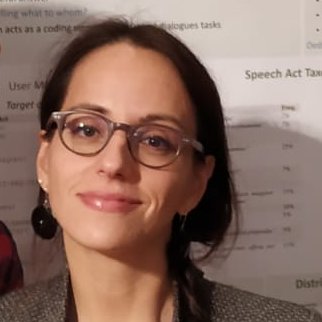
Nicole Novielli, Ph.D., is Associate Professor at the University of Bari “A. Moro” , Italy, where she conducts research on affective computing applied to software engineering and human-computer interaction. She leads the Collaborative Development Group and coordinates national projects investigating emotions in software teams, AI quality and IoT ecosystems. Education: Ph.D. in Computer Science, University of Bari, 2010 – thesis on “Lexical Semantics of Dialogue Acts” M.Sc. in Computer Science (Knowledge & Software Engineering), University of Bari, 2006 – summa cum laude B.Sc. in Computer Science, University of Bari, 2004 – summa cum laude Visiting researcher at USC-ICT, University of Aberdeen, FBK-irst (Trento) Research interests revolve around recognizing and exploiting affective and cognitive states in computer-mediated cooperative work. She studies sentiment and emotion mining in developers’ textual communication, multimodal emotion recognition via low-cost biometric sensors, and natural-language dialogue simulation for intelligent interfaces. Her work couples software engineering with natural language processing , social media analytics and human-computer interaction . Recent articles (2021-2025) reveal a clear trend: integrating deep learning and large language models into software engineering tasks—automated issue labelling, sentiment classification, technical-debt detection—while validating these techniques through rigorous empirical studies and biometric experiments . A parallel stream explores developer experience , measuring how emotions and cognitive load influence productivity, code quality and collaboration. Scientific awards include the 2020 Apex Award for Publication Excellence , multiple Distinguished Reviewer Awards at flagship venues (ESEC/FSE, ICSME, MSR), the Best Paper Award SANER 2019 and the Best Student Paper Award ACII 2009 . She currently teaches “Sentiment Analysis” in the Data-Science MSc and “Computer Networks” in the ITPS programme. She has advised numerous B.Sc., M.Sc. and PhD projects and is PI or Co-PI of four ongoing grants: EmoQuest (SIR), EMPATHY (PRIN), FAIR-Spoke 6 (PnRR), and QualAI (PRIN 2022). Dr. Novielli serves on the editorial boards of Empirical Software Engineering and Journal of Systems and Software , has guest-edited special issues on affect awareness in SE, and has chaired tracks at ICSE, SANER, MSR, ICSME and SSBSE. She co-leads the Collaborative Development Group and actively releases datasets and open-source tools for the community.
Emanuele Naboni is an Associate Professor in the Department of Engineering and Architecture at the University of Parma, Italy. He teaches in the Second Cycle Degree program in Architecture and City Sustainability, offering courses such as Architectural Technologies for the Built Environment , Environmental and Outdoor Comfort Assessment , and Innovative Technologies for Sustainable Design from academic year 2019/2020 through 2025/2026. His research focuses on sustainable and climate-responsive architecture, with particular emphasis on urban microclimates, passive design strategies, and building performance optimization in Mediterranean environments. Key areas include facade engineering, thermal comfort, and computational simulation of localized climate impacts. The recent publications (2024–2025) highlight a strong trend in climate change adaptation through architectural and urban interventions. Topics span from simulating hyperlocal temperature variations to optimizing courtyard microclimates using evaporative cooling and adaptive shading, as well as retrofitting modernist urban forms for improved climate resilience. These works reflect interdisciplinary engagement with urban climatology, building physics, and environmental design. Scientific Awards: No awards mentioned in the provided text. Prof. Naboni is actively engaged in teaching and research. There is no mention of formal advising roles, grants, or leadership in labs or research teams within the available information. His scholarly output demonstrates consistent collaboration with researchers such as Marcello Turrini, Barbara Gherri, Carlos Alberto Rivera Gómez, and Carmen Galán-Marín. He contributes to advancing sustainable design practices through empirical and simulation-based studies, particularly focused on urban and architectural responses to climate change in Southern Europe.
Marco Barla is a Full Professor of Geotechnical Engineering at the Department of Structural, Building and Geotechnical Engineering (DISEG) at the Polytechnic of Turin, where he also leads a research group focused on energy geostructures, tunneling, slope stability, and numerical modeling. He serves as Editor-in-Chief of the ASCE International Journal of Geomechanics and holds leadership roles in international organizations such as the International Society for Energy Geostructures (President, 2025–2029) and ELGIP (Past President). He is actively involved in multiple EU and national research projects, including GEOREFIT, REGENERATE, and FOLIAGE. Research Interests: Thermoactive geostructures for shallow geothermal energy Tunnel design and construction under challenging conditions Real-time detection of debris flows and snow avalanches using fiber optics Numerical modeling of geotechnical systems Energy retrofitting of existing underground infrastructure His recent publications (2024–2025) demonstrate a strong focus on sustainable urban development through geothermal energy integration, particularly in tunnels and buildings. Key themes include energy geostructures, thermal storage, landslide monitoring, and climate resilience, reflecting his commitment to SDGs 7, 9, 11, and 13. He frequently publishes in top venues such as Tunnelling and Underground Space Technology , Geothermics , and Landslides . Scientific Awards: Telford Premium, Institution of Civil Engineers (2016) IACMAG Excellent Contributions Award (2011) Best Paper, 11th ISRM Congress (2007) Iacmag Award (2005) Top 5 Project Nominee, European Geothermal Innovation Award (2018) Advising and Grants: He supervises multiple PhD students in civil and environmental engineering and has led over 70 research projects, securing more than 2 M€ in funding from national and international sources. His projects span fundamental research (e.g., PRIN, H2020) and applied consulting (e.g., tunnel safety, landslide risk, structural monitoring). He is the scientific responsible for numerous contracts with public and private entities, including Autostrade per l’Italia and regional governments. Labs and Teams: He leads the Rock Mechanics and Rock Engineering research group at Politecnico di Torino ( www.rockmech.polito.it ), which conducts laboratory testing, field monitoring, and numerical simulations. The team is active in international collaborations and coordinates the COST Action FOLIAGE, dedicated to scaling up energy geostructure deployment.
Fernando Corinto is a Research Fellow at the Department of Electronics and Telecommunications (DET) , Polytechnic University of Turin , and a member of the SmartData@PoliTO Big Data and Data Science Laboratory. He holds a European Doctorate in Electronics and Communications Engineering (2005) and was a Marie Curie Fellow (2004) at University College Dublin, focusing on cardiac fibrillation modeling and chaotic systems. Education : Laurea (2001) and Ph.D. (2005) in Electronics and Communications Engineering from Politecnico di Torino His research spans nonlinear dynamical systems , memristor devices , and complex network modeling , with over 50 publications. Key projects include RECOMMEND (2024–2027) and COSMO (2020–2024), where he served as Scientific Director . His recent work involves memristor-based neuromorphic systems and nonlinear circuit applications in biomedical and industrial contexts. He supervises PhD students Rosanna Cavazzana and Davide Rossetti and teaches Nonlinear Systems for Engineering (Mathematical Engineering) and Memristor-based Neuromorphic Systems (Electrical Engineering). His scientific contributions include the Flux-Charge Analysis Method and Bifurcations without Parameters in memristor circuits. He holds a national/international patent for skin ulcer classification algorithms and has led commercial research projects in biomedical and packaging systems.
Marco Pirola is a Full Professor at the Department of Electronics and Telecommunications (DET) of the Polytechnic University of Turin, Italy. He is a member of the Interdepartmental Center 'CleanWaterCenter@PoliTo' and actively contributes to research in high-frequency electronics and microwave engineering. His work focuses on power amplifiers, device characterization, and advanced microwave circuit design. Research Interests: Microwave power devices, GaN technology, 5G/mm-Wave applications, space communications, and smart pipeline monitoring systems. Awards: IEEE Fellow (since 2019), IEEE Senior Member. Recent Publications address topics like Ka-band MMIC amplifiers for SAR systems, broadband Doherty amplifiers using GaN, and harmonic analysis of current-mode power stages. His projects include STARGATE (European GaAs power architectures) and Millimetre-Wave GaN Radar for UAV detection. Teaching: He leads courses on 'Radio Frequency Integrated Circuits' and 'Advanced Devices for High Frequency Applications' at the Polytechnic University of Turin. Supervised PhD students include Wenjun Zhang and Abbas Nasri, who worked on III-V HEMT circuits and GaN power amplifiers.
Enrico Bodo is a Full Professor of Physical Chemistry at the Department of Chemistry, Sapienza University of Rome. He holds a PhD in Chemical Sciences from Sapienza University (2002) and has held visiting positions at Harvard Smithsonian Center for Astrophysics and University of Paris Sud. His expertise spans material modeling, ab-initio molecular dynamics, ionic liquids, and computational spectroscopy. Education: BSc Chemistry, Sapienza University of Rome (1998) PhD in Chemical Sciences, Sapienza University of Rome (2002) Research Interests: Electrochemical systems and Li-ion batteries Protic ionic liquids and biocompatible solvents Computational studies of molecular dynamics and spectroscopy Grants & Leadership: Secured ~100 million EU computing hours for simulations Elected member of the Board of the Theoretical and Computational Chemistry Division of the Italian Chemical Society Advising: Supervised 10 PhD students, 4 postdocs, and 30 Master's students since 2014. Research groups focus on computational modeling of energy materials and electrolyte design. Labs/Teams: Leads research groups investigating molecular dynamics simulations and computational spectroscopy within the Department of Chemistry's advanced materials division.
Maurizio MUZZUPAPPA is a Full Professor at the Department of Mechanical, Energy and Management Engineering (University of Calabria) since 2018. His roles include Rector's Delegate for Technology Transfer, Academic Delegate for Education at DIMEG, and Head of the Physical Prototyping Laboratory at the MaTeRiA Center (UNICAL-CNISM collaboration). He supervises the Unical Racing Team in Formula SAE competitions and co-founded three university spin-offs: 3DResearch, Tech4Sea, and Q-BOT. As Scientific Director of projects like TECH4YOU (climate change adaptation technologies) and GROWN IN THE BLUE (Mediterranean reef conservation), he integrates research in industrial design, augmented reality, and underwater cultural heritage. He has authored over 200 publications (h-index 27) and holds 10 patents. His teaching includes Tools and Methods for Industrial Design and Formula SAE LAB . His research focuses on: Industrial design methodologies with parametric and sustainable approaches 3D prototyping and additive manufacturing User-Centered Design for product ergonomics Virtual/Augmented Reality applications in engineering and cultural heritage Underwater robotics and artifact restoration Recent publications highlight trends in AR for industrial maintenance, generative design tools, and mechatronic solutions for underwater heritage. He has supervised over 300 theses and 10 Ph.D. students while leading technology transfer initiatives.
Giacomo Chiesa is a Full Professor at the Department of Architecture and Design (DAD) at Politecnico di Torino. He is a member of the Interdepartmental Center Ec-L - Energy Center Lab. His research focuses on Architectural Technology , Bioclimatic Design , Building Performance , and Urban Climate . Research Interests : Building Simulation, Passive Cooling, Smart Buildings, Digital Twin, Climate Change Adaptation Recent publications analyze urban weather datasets for energy simulations, shading control thresholds , and ventilation strategies in educational buildings. His work covers energy renovation roadmaps , thermal comfort , and climate-resilient building systems . Teaching : PhD courses in Human-Centric Methodologies and MSc courses in ICT in Building Design Research Leadership : Scientific Director for projects like Urban Generation and Prelude , EU-funded initiatives
Giacomo Fiumara is an Associate Professor at the University of Messina, Department of Mathematical and Computer Sciences, Physical Sciences and Earth Sciences. He holds academic rank since October 2021. Previously, he served as a Permanent Researcher (2008–2021) and secondary school teacher (1997–2008). He earned a Doctorate in Physics (1993) and a Degree in Physics (1989), both from the University of Messina. He is an associate member of the Accademia Peloritana dei Pericolanti and qualified as an associate professor in INF/01 and ING-INF/05 sectors. His research focuses on social network analysis, network science, data science, criminal networks, knowledge representation, bioinformatics, and computational modeling. He has supervised over 170 theses and advised PhD students in Mathematics and Computational Sciences. Key collaborations include work with Prof. Pasquale De Meo on criminal networks and complex systems, and international projects with institutions in the US, UK, China, and Australia. Teaching includes courses on Algorithms, Data Structures, Bioinformatics, and Machine Learning across Computer Science, Engineering, and Medical programs since 2000. He also contributed to international programs at Lviv Polytechnic, Birzeit University, Cluj-Napoca, and Murcia. His editorial roles include Associate Editor of IEEE Access and Academic Editor of Complexity. He holds a patent for predictive analysis of criminal organizations' social structures and has received FFABR research funding. Key awards include FFABR funding (2017) and recognition in the FFABR Unime 2020 II edition. He organized conferences like Crimenet 2014 and participated in high-profile events such as the 2022 Complex Networks conference in Palermo, presenting on quantum walks for criminal network analysis.
Giovanna Turvani is an Associate Professor at the Department of Electronics and Telecommunications (DET) at Politecnico di Torino, with affiliations in both the College of Electronic, Telecommunications and Physics Engineering and the College of Computer, Film, and Mechatronics Engineering. Scientific Branch: IINF-01/A - Electronics ERC Sectors: PE7_4, PE7_11, PE6_1, PE6_14, PE7_3 SDG Goals: Quality Education, Gender Equality, Affordable Energy, Industry Innovation Her research focuses on advanced electronics and quantum technologies, including: Logic-in-memory computing Quantum computing architectures Microwave imaging for medical and agricultural applications CAD tools for emerging nanotechnologies Embedded systems for bee health monitoring IoT solutions for bio-waste valorization Publications show strong expertise in quantum computing, nanocomputing, and microwave imaging, with recent trends emphasizing quantum optimization frameworks, in-memory architectures, and IoT-based agricultural technologies. She supervises PhD students in areas like quantum machine learning algorithms, predictive on-board systems, and quantum hardware design. Collaborations span multiple disciplines, including medical device development and agricultural electronics. Patents include innovations in microwave imaging, racetrack memory logic functions, and in-memory computing devices.
Marco Toffolon is a Full Professor at the University of Trento's Department of Civil, Environmental and Mechanical Engineering, where he leads the Physical Limnology Laboratory. He serves as Deputy Director for International Relations and previously directed the Environmental Engineering programs. His research spans ecohydraulics, sediment transport, lake hydrodynamics, and environmental modeling. He investigates physical limnology, tidal morphodynamics, and stratified flows using analytical and numerical approaches. His work integrates field measurements with machine learning for water quality prediction and climate impact assessment. His publications focus on lake dynamics, river morphodynamics, and sustainable water management, with recent emphasis on climate-driven changes in alpine systems. Research demonstrates strong interdisciplinary linkages between hydraulics, ecology, and climate science. Awards: 2016 Coastal Engineering Journal Award 2013 Enrico Marchi Lecture invitation He leads international collaborations with institutions like EPFL and Sun Yat-sen University, and organizes conferences including the Physical Processes in Natural Waters workshop series.