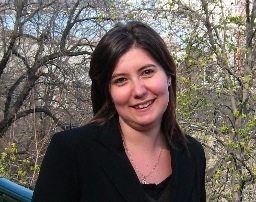
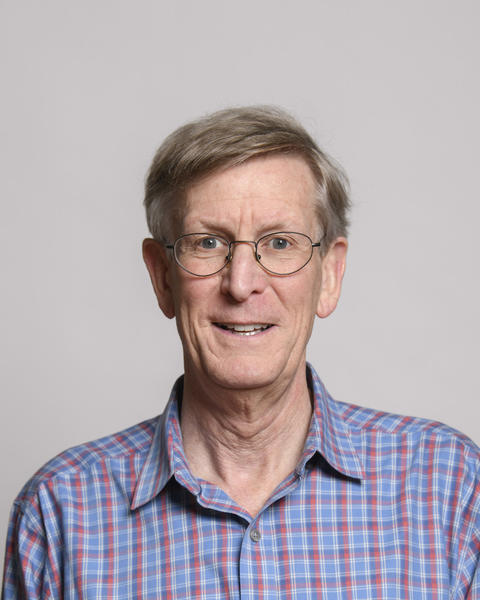
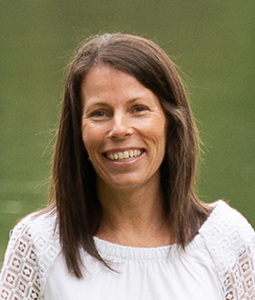
Xiaobo Li is a Professor in the Department of Bio-Medical Engineering at New Jersey Institute of Technology. Holding a Ph.D. in Computer Aided Geometric Design from the University of Birmingham and a B.S. in Automation from Nanjing University of Aeronautics, their research bridges computational methods with neuroimaging and psychiatric disorder analysis. Ph.D., University of Birmingham (Computer Aided Geometric Design, 2004) B.S., Nanjing University of Aeronautics (Automation, 1999) Dr. Li’s work focuses on applying machine learning and graph theory to understand brain network abnormalities in conditions like ADHD , schizophrenia , and traumatic brain injury . Their studies analyze structural-functional connectivity , reward processing , and gut-brain axis interactions using fMRI , fNIRS , and diffusion tensor imaging . Recent publications highlight their development of tools like the GAT-FD MATLAB toolbox for brain network analysis and their exploration of multimodal MRI in schizophrenia diagnosis. They also investigate the neurobiological effects of photobiomodulation and vision therapy interventions.
Lauri Rautkari is an Associate Professor in the Department of Bioproducts and Biosystems at Aalto University, Finland. His research focuses on water interactions in biomaterials, particularly wood, with an emphasis on developing advanced analytical methods for water vapor sorption, creating novel low-sorption materials, and investigating hygroscopicity and fungal decay resistance in modified wood systems. Research Highlights: Gas-phase ozone treatment for improved wettability, thermal and chemical wood modification, hyperspectral imaging for moisture prediction, bioinspired coatings for fungal protection, and interlaboratory studies on sorption data quality. Recent Publications: Key contributions to understanding lignin's role in moisture interactions, acetylation reversibility, and the impact of fungal degradation on heat-treated wood. The trend in his publications reflects a strong focus on hygroscopicity, chemical modification techniques (acetylation, melamine-formaldehyde impregnation), advanced imaging methods (hyperspectral, neutron scattering), and the development of sustainable wood-based materials for construction and acoustic applications. Collaborative interlaboratory efforts dominate his work, ensuring standardized methodologies for moisture analysis.
R. Jayakrishnan , a Professor in the Department of Civil and Environmental Engineering at the Samueli School of Engineering , University of California, Irvine, is a leading researcher in transportation systems engineering. Ph.D., University of Texas, Austin, Civil Engineering, 1992 M.S., University of Texas, Austin, Civil Engineering, 1987 B.S., Indian Institute of Technology, Madras, India, 1985 His research focuses on dynamic traffic assignment , urban traffic simulation , and real-time information systems to improve congested traffic corridors. He is developing advanced dynamic simulation-assignment models for urban traffic networks. Recent publications highlight his contributions to: Crowdsourced delivery optimization using decomposition heuristics Eco-driving algorithms with V2I communication Multi-furniture placement applications via augmented reality Subscription mobility services cost-benefit analysis Agent-based lane-changing coordination systems These works demonstrate his interdisciplinary approach combining transportation engineering, optimization algorithms, and emerging technologies like AR and connected vehicles.
Dr. Silvia Bonomi serves as an Associate Professor in the Department of Computer, Control and Management Engineering at Sapienza University of Rome, where she has held academic positions since 2006. Her career progression includes Research Fellow (2010-2011), Tenure Track Assistant Professor (2016-2019), and current Associate Professor appointment since 2019. She maintains her office in Room B114 and is actively engaged in research and teaching within the university's engineering faculty. Her educational background includes: PhD in Computer Engineering, Sapienza University of Rome and Institut de Formation Supérieure en Informatique et Communication (IFSIC/IRISA), Rennes, France (completed under advisors Prof. Roberto Baldoni and Prof. Michel Raynal) Dr. Bonomi's research critically examines dynamic distributed systems where entities autonomously join and leave networks, with applications spanning VANETs, airborne networks, social networks, and distributed cloud services. She pioneers work in Byzantine fault tolerance for mobile environments, blockchain security with emphasis on smart contract vulnerability analysis, and resilient cybersecurity frameworks integrating human factors. Her investigations into publish-subscribe systems focus on quality-of-service enhancements, while her peer-to-peer systems research addresses fundamental connectivity challenges in large-scale decentralized environments. This interdisciplinary approach bridges theoretical distributed computing with practical cybersecurity applications. Analysis of her 15 most recent publications (2021-2024) reveals dominant trends in blockchain security (particularly smart contract vulnerability taxonomies and analysis tool efficacy) and fault-tolerant distributed systems (reliable communication under Byzantine faults in dynamic networks). Her work increasingly integrates human factors into cybersecurity models and develops visual analytics for business-centric risk assessment. Publications span top venues including IEEE CSR, OPODIS, SAFECOMP, and journals like Computers & Security, demonstrating consistent contributions to both theoretical foundations and practical cybersecurity implementations.
Laurence Anthony is a Professor at Waseda University's School of Creative Science and Engineering, specifically affiliated with the Center for English Language Education in Science and Engineering (CELESE). He has held this position since 2009, having previously served as an Associate Professor at the same institution from 2004-2009. His academic journey began with a BSc from The University of Manchester (1991), followed by an MA (1997) and PhD (2002) from The University of Birmingham. Anthony's research centers on corpus linguistics, educational technology, and natural language processing applications in foreign language teaching. He is renowned for developing AntConc, a widely used freeware corpus analysis toolkit, along with numerous other educational software tools including AntWordProfiler, FireAnt, and ProtAnt. His work bridges linguistic theory with practical classroom applications, particularly in data-driven learning approaches for English as a Foreign Language contexts. His publication record is extensive with over 50 papers, 12,115 Google Scholar citations, and an h-index of 45. His recent work increasingly explores the intersection of corpus linguistics and artificial intelligence, examining how language models can enhance language teaching and analysis. Anthony's research has evolved from foundational corpus tool development to sophisticated applications in vocabulary profiling, writing analysis, and AI-assisted language learning. Among his notable recognitions are the Waseda University 6th e-Teaching Award (2018), the National Prize of the Japan Association of English Corpus Studies (2012), and the L'Oreal Art and Science of Color Gold Prize (2005). He serves on multiple editorial boards including for Studies in Corpus Linguistics, Journal of Asia TEFL, and Corpus Linguistics Research Journal. Anthony actively contributes to the academic community through numerous presentations at international conferences, recent ones including talks on AI integration with corpus methods at Corpus Linguistics 2025 and the LSP-Num Conference. His professional activities demonstrate ongoing engagement with both theoretical developments and practical applications in language education technology.
George V. Lauder is the Henry Bryant Bigelow Professor of Ichthyology at Harvard University, affiliated with the Museum of Comparative Zoology (MCZ) and designated as a Harvard College Professor. He is currently on leave for Spring 2025 and not accepting graduate students for the 2025-2026 academic year. His research focuses on biorobotics, the biomechanics of vertebrate movement (particularly fishes), and evolutionary morphology. Key areas include robotic models of fish locomotion, quantitative flow visualization of shark and ray-finned fish dynamics, and the fluid mechanics of aquatic movement. Education: Not explicitly listed in the provided text. His work bridges biology and engineering, emphasizing interdisciplinary approaches such as robotics to explore ecological and evolutionary questions. Recent studies highlight biomimetic shark skin analysis, tuneable stiffness in robotic fish, and the functional morphology of dermal denticles. Collaborations span fluid dynamics, material science, and theoretical biology. Publications emphasize robotics as a comparative tool, biomimetic design, and the integration of experimental and computational methods. While no awards are explicitly listed, his roles as MCZ Curator and Harvard College Professor reflect institutional recognition. Advising is paused temporarily, but his lab (Lauder Lab) continues research on fish locomotion, robotics, and biological fluid mechanics. The lab is located at 26 Oxford Street, Cambridge, MA, under MCZ facilities.
Professor Helen Mitchell is a multidisciplinary scholar in music performance and perception at the University of Sydney's Sydney Conservatorium of Music. Her research explores the intersection of music practice with scientific discovery, focusing on vocal pedagogy, listener perception, and multisensory performance analysis. She holds a BA (Hons) from Oxford and a PhD from the Sydney Conservatorium. Previously, she served as Dean of Students at the University of Sydney's Women’s College (2004–2005). Research Interests: Mitchell’s work investigates listeners’ sound quality perception, vocal identity recognition, and the cognitive effects of verbal descriptions on musical memory. Notable projects include longitudinal studies on music training outcomes and current investigations into audio-visual integration in performer identification. Her ARC-funded research emphasizes practical applications in pedagogy and performance valuation. Grants & Collaborations: Key grants include the 2022 ARC Discovery Project on bel canto sound rediscovery (with Neal Peres Da Costa) and a 2014 OLT grant for perceptually-aware music leadership training. She collaborates with institutions like Sydney Living Museums via projects such as The Dowling Songbook Project, blending historical performance practice with educational innovation. Teaching & Supervision: Mitchell convenes postgraduate research methods courses and supervises Honours, Masters, DMA, and PhD students in music performance studies. She coordinates Honours research at the Conservatorium and integrates empirical approaches into ethics and methodology training. Affiliations: Member of the Charles Perkins Centre, contributing to interdisciplinary health and performance research.
Garrett Sullivan is Edwin Erle Sparks Professor of English at Pennsylvania State University's College of Liberal Arts and Sciences. He specializes in Renaissance literature with particular focus on Shakespeare, Marlowe, and early modern drama. His interdisciplinary research examines embodiment, cognition, and cartography in literary works. Education includes Ph.D. from Brown University (1995) and B.A. from Davidson College (1983). Primary research explores connections between literary production and historical concepts of space, geography, and the body. Publications include monographs on landscape representation, memory in Renaissance drama, sleep in romance literature, and Shakespeare in wartime cinema. Recent work analyzes cinematic adaptations of Shakespeare during World War II. Co-edits the Oxford University Press series Early Modern Literary Geographies and has curated exhibitions at Folger Shakespeare Library. Research supported by NEH and Folger Library fellowships.
Dr. Jinan Allan is an Assistant Professor at Clemson University's College of Behavioral, Social and Health Sciences, Department of Psychology. She holds a PhD in Cognitive Psychology from the University of Oklahoma (2021), an MS from the same university (2018), and a BS in Mathematics-Statistics from Michigan Technological University (2015). She completed a postdoctoral fellowship at the Max Planck Institute for Human Development. Her research focuses on cognitive abilities, statistical numeracy, and their impact on decision-making in contexts like medical scenarios, cybersecurity, and extreme weather risks. She is affiliated with the Media Forensics Hub and teaches courses on judgment and decision-making. Education: PhD Cognitive Psychology, University of Oklahoma, 2021 MS Cognitive Psychology, University of Oklahoma, 2018 BS Mathematics-Statistics, Michigan Technological University, 2015 Research emphasizes behavioral science and psychometric methods to develop decision-making metrics. Key themes include risk communication for tornado/hurricane warnings, climate change judgments, and cybersecurity decision-making. Her work bridges cognitive psychology with real-world applications in disaster preparedness and public health. Recent publications analyze extreme weather response patterns, numeracy's role in science comprehension, and probabilistic risk communication strategies. She is currently reviewing graduate student applications for 2025-2026. Affiliations include the Media Forensics Hub at Clemson University, indicating interdisciplinary collaboration in digital security and information integrity.
Kimberly Becker is Professor in the Department of Psychology at the McCausland College of Arts and Sciences, University of South Carolina. She holds a BA from College of William & Mary, PhD from University of Arizona, Clinical Respecialization Certificate from University of Hawaii, completed clinical internship at Kennedy Krieger Institute, and postdoctoral fellowship at Johns Hopkins University. Dr. Becker directs the Becker Lab focused on extending mental health service reach and effectiveness. Her research encompasses: Treatment engagement strategies for youth/families Clinical decision support tools development Workforce training through supervision/coaching Expanding mental health workforce capacity School-based intervention implementation Dr. Becker's publications demonstrate consistent focus on mental health services research. Recent work (2023-2025) examines clinical decision-making, implementation science, school-based services during COVID-19, and cross-cultural interventions. Her articles frequently address treatment engagement barriers, workforce development, and scalable service models in diverse settings. Her research has been supported by: William T. Grant Foundation Klingenstein Foundation National Institute on Drug Abuse She trains doctoral students in evidence-based psychosocial treatments and clinical decision-making. Dr. Becker mentors students in developing research programs to improve mental health services for underserved populations. She leads the Becker Lab whose mission emphasizes equity, authentic partnerships, applied science, and paradigm-shifting approaches to children's mental health services.
Tae Eun Kim is an Associate Professor in Maritime Safety Management at UiT The Arctic University of Norway, working within the Department of Technology and Security. Her research, teaching, and industrial collaboration focus on maritime safety and human factors, with particular expertise in maritime safety management, accident analysis, Maritime Autonomous Surface Ships (MASS), and human factors in maritime operations. Dr. Kim's research spans four interconnected domains: maritime safety management and leadership, maritime accident and casualty analysis, Maritime Autonomous Surface Ships (MASS), and human factors in maritime operations. She has developed assessment instruments like the Safety Leadership Self-Efficacy Scale (SLSES) and conducted STAMP-based causal analyses of maritime accidents. Her work on MASS addresses safety challenges in mixed navigational environments and examines leadership competencies for autonomous shipping operations. Her human factors research explores how technological advancements impact navigators' performance, crew dynamics, and safety outcomes, including gender parity issues in the maritime industry. Dr. Kim's publication record reveals a strong focus on the intersection of maritime safety, technology, and human performance. Her recent work increasingly addresses autonomous shipping technologies, with numerous publications on AI decision transparency, learning analytics in maritime simulator training, and multi-modal data analysis for nautical skill development. She has conducted systematic reviews on simulator training approaches and scenario design, contributing significantly to methodology development in maritime education and training. Her research demonstrates a clear trajectory toward integrating emerging technologies with traditional maritime safety practices as the industry transitions toward greater automation. Dr. Kim is actively involved in several significant research projects, including the i-MASTER EU Horizon Europe Research and Innovation Project, the REFRAME project, and the SPRICE project (Multidisciplinary approach for spray icing modelling). She is a member of both the Advanced Maritime Ship Operations research group and the Maritime Safety Science (MARSCI) Research Group, demonstrating her commitment to collaborative research in maritime safety science. Dr. Kim teaches several specialized courses at UiT, including SVF-3206 Safety Management and Accident Investigation, TEK-3014 Navigation Technology, MFA-2100 Maritime Digitalization, MFA-8010 Maritime HTO (Human-Technology-Organisation) and Innovation, and MFA-2018 Maritime Administration and Leadership. Her teaching portfolio reflects the interdisciplinary nature of her expertise, bridging engineering, safety science, and organizational behavior in maritime contexts.
Stefan Gelfgren is Associate Professor of Sociology of Religion and Senior Lecturer in Didactics of Religion at Umeå University's Department of Historical, Philosophical and Religious Studies. He holds a PhD in History of Ideas (Umeå University), MPhil in History of Christianity (Birmingham University), and BA in Construction Engineering. His research examines: Social/technical/religious transformations throughout history Digital media's impact on Christian institutions Digital humanities methodologies Surveillance in everyday life Religious geography and mapping Recent publications (2020-2025) focus on digital religion, surveillance ethics, Swedish revivalism, and geospatial humanities. Key trends include institutional adaptation to digitalization and historical continuities in religious media. Awards include the 2022 Erik Allardt Fellowship at Helsinki Collegium for Advanced Studies. He leads multiple research initiatives: Wallenberg-funded DINO project on digital privacy/social benefit (Co-investigator) Nordic Places of Worship Map (Project Leader) iAccept: Soft Surveillance (Principal Investigator 2017-2021) As former Director of Humlab (2015-2020), he developed digital humanities infrastructure. He chairs the Swedish Association for Sociology of Religion and serves on Umeå University's Faculty Board.
Dr. John Lynch is a Professor at the University of Cincinnati in the Department of Communication, with a focus on bioethics , health communication , and the rhetoric of science and medicine . He has collaborated for over 15 years with Cincinnati Children's Hospital Medical Center on ethical issues in genomic research , particularly regarding the return of results to families and adolescents. His academic roles include being a Clinical Research Ethicist and Graduate Director in Communication. Education : Ph.D., University of Georgia (2005), Speech Communication M.A., University of Pittsburgh (2000), Rhetoric and Communication B.A., University of Dayton (1998), Communication and Philosophy Dr. Lynch’s research explores the intersection of rhetoric, ethics, and science , with a focus on genetic research , public memory , and science policy . His recent publications analyze genomic exceptionalism , space exploration rhetoric , and precision medicine ethics . His work often involves collaborations with interdisciplinary teams, including ethicists and medical professionals. Key scientific awards include the ARSTM Book Award (2020) and the NCA Health Communication Division Distinguished Book Award (2016). He has secured multiple grants from institutions like the National Human Genome Research Institute and Cincinnati Children's Hospital Medical Center. Dr. Lynch also serves on editorial boards and review panels for journals like American Journal of Bioethics and Rhetoric & Public Affairs .
Dr. Ying Huang is a Professor of Communication at the University of West Florida (UWF), affiliated with the College of Arts, Social Sciences and Humanities. She holds a bachelor’s degree in Law from Fudan University, Shanghai, China, and a master’s and doctorate in Media Management and Mass Communication & Media Arts from Southern Illinois University Carbondale. Her research focuses on visual framing, advertising messages, and their societal impacts, with a particular interest in cross-cultural analyses and the role of humor/hyperbole in advertising. She teaches courses in advertising, research methods, and visual communication and advises UWF’s student chapter of the American Advertising Federation (ClubAd). Dr. Huang’s research explores how visual elements shape audience perception, including studies on visual metaphors, hyperbole in advertising, and gender portrayals in Chinese media. Her work often compares media narratives across cultures, such as analyzing the 2008 Olympic torch relay coverage in U.S. and Chinese press. She has also contributed to curriculum development, including a new graduate course on visual communication. Her articles span peer-reviewed journals like Sex Roles , International Communication Gazette , and Mass Communication and Society . Her research highlights trends in visual rhetoric, advertising ethics, and the intersection of media with cultural and political contexts. While no awards are listed, her work reflects a commitment to advancing understanding of visual communication’s societal role. In advising and mentorship, Dr. Huang leads ClubAd, fostering student engagement in advertising practices. Her academic contributions bridge theory and practice, emphasizing global perspectives in media studies.
Lei Liu, PhD, is a Professor of Biostatistics, Medicine, and Statistics and Data Science at Washington University in St. Louis. He holds positions in the Roy and Diana Vagelos Division of Biology & Biomedical Sciences (DBBS), the Institute for Informatics, Data Science and Biostatistics (I2DB), and the Center for Biostatistics and Data Science (CBDS). His research focuses on biostatistical and data science methods, including survival analysis, longitudinal data modeling, and machine learning applications in healthcare. He collaborates with clinicians across disciplines like cardiology, ophthalmology, and addiction medicine. Dr. Liu’s work emphasizes high-dimensional omics data analysis, medical cost modeling, and joint multi-outcome models. He is an Associate Editor of Biometrics and a former member of the NIH Biostatistical Methods and Research Design Study Section. He mentors underrepresented minority researchers through the NHLBI PRIDE program.