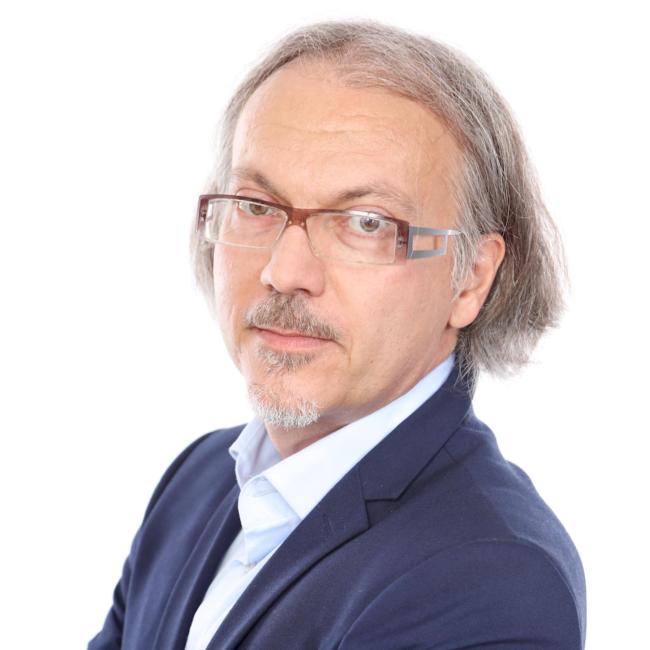
Rainer Böhme is a Professor at the University of Münster, Germany. His research focuses on cyber security, cryptography, steganography, digital forensics, and blockchain technology. He has made significant contributions to understanding cyber risk quantification, central bank digital currencies (CBDCs), and the socio-technical challenges in cryptocurrency systems. Key areas of research include steganalysis (analysis of hidden data in digital media), forensic techniques for neural network inference pipelines, and the economic implications of cyber insurance. He actively contributes to conferences like the Financial Cryptography Workshops (FC) and the Workshop on Information Hiding and Multimedia Security (IH). Böhme's work bridges theory and practice, addressing real-world issues such as privacy in CBDCs, adversarial attacks on AI systems, and the role of law enforcement in cryptocurrency markets. His recent studies explore the security implications of image orientation in JPEG files and the detection of privileged parties in blockchain transactions. He has collaborated with institutions like the University of Vienna and ETH Zurich, and his research has been published in top-tier venues such as IEEE Transactions on Information Forensics and Security and the ACM Conference on Computer and Communications Security (CCS).
Olivier ALLIX is a Professor at the Laboratoire de Mécanique et Technologie (LMT) at École Normale Supérieure de Cachan (ENS-Cachan). His research focuses on computational mechanics, including multiscale modeling of composite materials, structural failure analysis, and non-intrusive coupling strategies. He has held leadership roles such as Head of LMT-Cachan and Vice-president of the International Association for Computational Mechanics (IACM). Expertise: Computational structural mechanics, material failure, inverse problems, and multiscale approaches. Editorial Roles: Associate editor of multiple journals including Computational Mechanics and Computer Methods in Applied Mechanics and Engineering . Awards: IACM Fellow, Euromech Fellow, and recipient of the Gay-Lussac Humboldt Prize (2019). His work integrates experimental mechanics with computational methods, emphasizing big data applications and model validation. He has organized major conferences like the World Congress on Computational Mechanics and co-led international research initiatives such as the IRTG ‘Virtual Material and Structures’ with Hannover University. Teaching includes advanced courses on structural dynamics, composite materials, and computational mechanics at the Master’s level. His research group collaborates with industries like Safran, IFPEN, and DGA on projects involving fatigue analysis, mooring systems, and composite testing.
Julien Masson is a University Professor in Education and Training Sciences at the ISPEF faculty of Lumière Lyon2 University. His research focuses on motivation dynamics, school well-being, and health promotion strategies in educational settings. He completed his PhD in 2011 at Paris 10 University, examining motivation factors in primary school academic success. Current roles include leading the M2 MEEF program and research in the ECP laboratory. Key contributions span over 50 publications, emphasizing health promotion interventions, social skills measurement, and multi-level school health programs. His work bridges psychological theories with practical educational applications, addressing issues like test anxiety and health literacy among students. Education: PhD in Education Sciences (Paris 10, 2011) Research Themes: Motivation theory, school well-being, health promotion frameworks Recent Projects: Alliance for Health project (school-community health interventions) Publications highlight innovative approaches to co-creation in health promotion and cross-cultural validation of assessment tools. He collaborates internationally on topics like endocrine disruptors and youth health behavior trends.
Felix Naumann is a Professor at the Hasso Plattner Institute in Potsdam, Germany, specializing in data management and database systems. His research focuses on data quality, data profiling, entity resolution, functional dependencies, and database optimization. He has authored over 300 publications in top-tier conferences and journals, including VLDB, SIGMOD, and ICDE. His work bridges theoretical foundations with practical systems, such as TASHEEH for data cleaning and PRISMA for privacy-preserving schema matching. He serves as an editor for the ACM Journal of Data and Information Quality and has led initiatives on hybrid conference formats and inclusive computing. Key contributions include: Data Quality: Pioneered studies on data quality's impact on machine learning and developed tools like AutoTSAD for anomaly detection. Data Dependency Discovery: Advanced functional and inclusion dependency mining algorithms, including Hitting Set Enumeration methods. Schema Matching & Integration: Created systems like BrewER and Frost for entity resolution and schema alignment. Educational Impact: Led massive open courses in data engineering with over 10,000 participants. His work emphasizes practical applications in cultural heritage data (ReCLAIM), Wikipedia table analysis, and cross-platform data systems (RHEEMix). He collaborates extensively with industry and academia, addressing challenges in dynamic datasets and data governance.
James Reed Farre is a Researcher and Head of the Geometry Research Group at the Max Planck Institute for Mathematics in the Sciences. He holds a PhD in Mathematics from the University of Utah (2019), completed an NSF Postdoctoral Fellowship at Yale University (2019-2021), and served as a Juniorprofessor (W1/Assistant Professor) at Heidelberg University (2022-2023). His academic journey includes postdoctoral positions in Heidelberg’s research group under Beatrice Pozzetti and a Gibbs Assistant Professorship at Yale. Farre’s research focuses on hyperbolic geometry, Teichmüller theory, dynamical systems, and geometric group theory. Key areas include earthquake flows, character varieties, convex projective structures, and bounded cohomology. His work bridges low-dimensional topology with ergodic theory and geometric analysis. Publications (2016–2024) explore topics like affine laminations, hyperconvex representations, and minimal surfaces in hyperbolic 3-manifolds. Recent work addresses Mirzakhani’s twist torus conjecture and Hamiltonian flows for surface group representations. Farre frequently collaborates with leading mathematicians such as Yair Minsky, Beatrice Pozzetti, and Anna Wienhard. He has contributed to algorithmic CAD research and STEM education initiatives, including a chapter in *Directions for Mathematics Research Experience for Undergraduates* (2015). His current role involves leading a research group focused on geometry and dynamics at the Max Planck Institute.
Trudy Morrison is a Professor in the Department of Microbiology at UMass Chan Medical School and a key figure in the T.H. Chan School of Medicine. Her research focuses on paramyxovirus and pneumovirus mechanisms, particularly membrane fusion and assembly processes for vaccine development. She has contributed extensively to understanding Newcastle disease virus and respiratory syncytial virus (RSV) glycoprotein interactions, leading to innovative virus-like particle (VLP) vaccine candidates. Education: BA in Biology, Wellesley College PhD in Microbiology/Molecular Biology, Tufts University School of Medicine Postdoctoral training at Massachusetts Institute of Technology Morrison's work spans molecular virology, vaccine design, and immunological profiling. She has pioneered studies on the role of RSV F protein conformation in VLPs for neutralizing antibody induction and explored maternal immunization models. Recent projects include SARS-CoV-2 VLP vaccines and cross-species immune responses. Her laboratory is renowned for characterizing paramyxovirus assembly requirements and lipid raft dependencies. Awards include 2011 AAAS Fellowship, 2014 American Academy of Microbiology Fellowship, and multiple institutional teaching honors. Scientific Awards: 2011 AAAS Fellow 2014 American Academy of Microbiology Fellow 2020-2021 Lamar Soutter Award 2003 Sara Stone Excellence in Education 2006 Faculty Achievement Award
Urs Hengartner is an Associate Professor at the Department of Computer Science, University of Waterloo. His research focuses on information privacy, computer and network security with emphasis on smartphones, IoT, and machine learning-based authentication systems. He holds a Ph.D. (2005) and M.Sc. (2003) from Carnegie Mellon University, and a Diploma from ETH Zürich (1997). His work spans Adaptive security attacks on ML systems Implicit user authentication frameworks Privacy-preserving technologies for location and genomic data Secure authentication systems resilient to voice/spoofing attacks Recent publication trends show a strong focus on adversarial attack detection (e.g., watermarking evasion, diffusion model attacks) and context-aware authentication systems . His frameworks like MRAAC and SHRIMPS address multi-stage authentication challenges in mobile ecosystems. Key contributions include frameworks for evaluating multi-user authentication systems (SHRIMPS), risk-aware access control (MRAAC), and novel defense strategies against collaborative robot traffic fingerprinting. His work bridges security mechanisms with user-centric design principles.
Joshua Abbott is a Professor and Director of Environmental and Resource Economics at Arizona State University's School of Sustainability. His research focuses on equitable and sustainable governance of natural resources amid environmental change, employing economic modeling and interdisciplinary collaboration. Key areas include sustainable fisheries policy, blue economies, water resource management in arid regions, and valuation of natural capital. Abbott has contributed to NOAA Fisheries and US Fishery Management Council initiatives, emphasizing ecosystem and community resilience. Education : Ph.D. in Agricultural and Resource Economics (Environmental & Resource Economics & Econometrics), University of California, Davis M.A. in Economics, University of Washington, Seattle B.B.A. in Economics, Baylor University Research Interests : Sustainable fisheries governance, water resource valuation, ecological-economic couplings, policy innovation for natural resource management, and green accounting frameworks. Professional Roles : Editor in Chief, Marine Resource Economics Former Co-Editor, Journal of the Association of Environmental and Resource Economists Founding member of the Economics for Sustainability lab group Teaching : Courses include Natural Resource Economics, Statistical Methods, Sustainable Seafood, and the Graduate Certificate in Environmental and Sustainability Economics. His work bridges economic theory and practical policy, addressing challenges such as climate adaptation, biodiversity outcomes, and urban water scarcity. Abbott collaborates with institutions like the Center for Biodiversity Outcomes and the Global Futures Scientists and Scholars network.
Vernon M. Chinchilli is a Distinguished Professor of Public Health Sciences and Professor of Statistics at The Pennsylvania State University. He holds appointments in the Department of Public Health Sciences (Division of Biostatistics and Bioinformatics) and the Department of Statistics. His primary affiliation is with the College of Medicine. Dr. Chinchilli received his PhD in Statistics from the University of North Carolina at Chapel Hill (1979) and a BS in Mathematics from Penn State (1974). His research focuses on biostatistical methodology for multi-center clinical trials, multivariate analysis of longitudinal data, and statistical methods for crossover designs. He has led NIH-funded Data Coordinating Centers for studies on lung disease, kidney disease, and acute kidney injury (AKI). Notable roles include Principal Investigator for the Natural History of AKI Consortium and the Biostatistics Research Center for Impaired Awareness of Hypoglycemia. Dr. Chinchilli teaches doctoral courses in multivariate analysis (PHS 523) and statistical methods in public health (PHS 554/555). He has advised 35 PhD and 40 MS students. His honors include Fellow of the American Statistical Association (1997) and extensive contributions to methodological advancements in clinical trial design and analysis. Key areas of investigation include: 1) statistical methods for agreement assessment and equivalence testing in clinical trials, 2) biomarker development for kidney function decline, and 3) application of machine learning in predicting post-hospitalization outcomes. He collaborates internationally on projects like the ENICTO cancer treatment outcomes initiative and the S-AKI sepsis biomarker study. Recent work explores: cognitive change measurement in aging populations, opioid alternative therapies for chronic pain, and vaccine efficacy in immunocompromised patients. His research spans 541 peer-reviewed publications and 15 active NIH grants, with particular emphasis on translating statistical innovations into clinical practice.
Liang Xue is an Assistant Professor in the School of Information Technology at York University. She holds a PhD in Electrical and Computer Engineering from the University of Waterloo (2022) and completed a postdoctoral fellowship at the University of Guelph’s School of Computer Science (2022–2024). Her research focuses on applied cryptography, blockchain security, privacy-preserving AI, and cybersecurity in cloud and IoT systems. She has published in top-tier journals like IEEE Transactions on Dependable and Secure Computing, and conferences such as IEEE International Conference on Communications. Her work addresses challenges in data privacy, secure authentication, and regulatory compliance in decentralized systems. Recent projects include privacy-enhancing technologies for access control, blockchain-based data trading frameworks, and federated learning with privacy guarantees. She actively contributes to standards for cybersecurity in smart cities and next-generation wireless networks.
Martin Ostoja-Starzewski , Ph.D. (McGill), is a Professor of Mechanical Science & Engineering at the University of Illinois at Urbana-Champaign , with affiliate appointments at the Beckman Institute and National Center for Supercomputing Applications . His research spans continuum mechanics , stochastic wave propagation , and fractal media , focusing on scaling laws and the statistical-to-representative volume element transition. 2006–Present: Professor, UIUC 2001–2005: Canada Research Chair, McGill University 2023: Rothschild Distinguished Visiting Fellow, University of Cambridge 2022: Member, European Academy of Sciences and Arts 2024: Academia Europaea Foreign Member His work pioneered continuum mechanics with spontaneous second law violations and tensor random fields for stochastic PDEs. He authored four foundational books, including Tensor-Valued Random Fields for Continuum Physics (2019), and edited 16 special issues. Recent 2025–2023 articles explore odd elasticity , fractal thermodynamics , and stochastic wavefronts , bridging non-equilibrium thermodynamics to granular Couette systems . Scientific accolades include the Worcester Reed Warner Medal (2018) and ASME , AAM , SES fellowships. As part-time faculty at Beckman Institute (2008–Present), he integrates bioimaging with mechanics across electrosurgery and traumatic brain injury modeling.
Professor Craig Wheeler is a distinguished academic in the School of Engineering at the University of Newcastle, specializing in Mechanical Engineering with a focus on bulk solids handling and belt conveyor technology. As Associate Director of the Centre for Bulk Solids and Particulate Technologies and Deputy Chairman for the Australian Society for Bulk Solid Handling, he has established the university as a global leader in fundamental and applied research within this field. Wheeler's research interests primarily center on reducing the energy intensity and environmental impact of ore and mineral transportation globally. His work develops novel theoretical approaches to model and optimize belt conveyor and bulk handling systems, with significant contributions in energy-efficient transportation, dust emission control, and innovative conveying technologies like the Rail Conveyor system. His research bridges fundamental computational techniques with practical industrial applications, addressing real-world challenges in bulk material handling. His extensive publication record demonstrates trends toward increasingly sophisticated modeling techniques, combining continuum mechanics, discrete element methods, and computational fluid dynamics to solve complex problems in bulk material flow and energy consumption. Recent work shows particular emphasis on large-diameter idler rollers for energy savings, rail-running conveyor systems, and advanced dust control methodologies. 2023 Engineers Australia - Australian Society for Bulk Solids Handling 2017 Significant Contributions to Engineers Australia's Warman Design and Build Competition (Weir Minerals) 2017 Australian Council of Engineering Deans National Award for Engineering Education Excellence 2016 Innovative Technology Award (Australian Bulk Handling) 2010 Rising Star Award (Newcastle Innovation, The University of Newcastle) 2009 Pro-Vice Chancellor's Award for Research Excellence 2006 Best Research and Development Project (Australian Bulk Handling Review) 2000 A.W. Roberts Award (Australian Society for Bulk Solids Handling) Professor Wheeler has successfully led numerous Linkage Projects with major companies including Rio Tinto, Veyance Technologies, and Laing O'Rourke, securing significant cash and in-kind contributions for research projects. His industrial consulting experience, built on a 10-year engineering career with BHP, provides valuable insights that bridge fundamental research with practical applications. He actively supervises research students and contributes to professional development courses both within Australia and internationally. As a key member of the Centre for Bulk Solids and Particulate Technologies in association with TUNRA Bulk Solids, Wheeler leads research teams focused on developing eco-friendly conveying solutions. His work has resulted in new licensed technologies, internationally recognized testing methods, design guidelines, and Australian Standards that have transformed industry practices worldwide.
Irina Panovska is an Associate Professor of Economics at the University of Texas at Dallas (UT Dallas), affiliated with the School of Economic, Political, and Policy Sciences. Her research focuses on macroeconomic policy responses, business cycle dynamics, and economic recoveries. She teaches macroeconomics, forecasting, and business cycles at both undergraduate and graduate levels. Education includes a PhD (2013) and MA (2009) in Economics from Washington University in St. Louis, and a BS in Economics and Mathematics from Ohio University (2007). She holds visiting scholar positions at the University of Zagreb (2023–2026) and has collaborated with institutions in Australia and Croatia. Research interests emphasize modeling policy impacts on economies, labor market dynamics, and time series analysis. Recent work addresses business cycle synchronization in the EU, jobless recoveries, and the effects of the pandemic on financial markets. She has presented at conferences including the Society for Economic Measurement and the Southern Economic Association. Professional activities include serving as Treasurer of the Society for Nonlinear Dynamics and Econometrics (2019–2024) and organizing academic sessions. In 2023, she received the School’s Teaching Comet Award for excellence in instruction. Her work bridges theoretical frameworks with policy relevance, addressing issues like fiscal policy effectiveness, inflation dynamics, and maternal labor force participation. Current projects include keynote talks on commercial real estate and mentoring initiatives for junior economists.
Andrea Meilán-Vila is an Assistant Professor in the Department of Statistics at Universidad Carlos III de Madrid since 2021, holding a Juan de la Cierva Fellowship since 2023. She earned her PhD in Statistics from Universidade da Coruña (2021) and previously served as a Postdoctoral Fellow at Universidade de Santiago de Compostela's Department of Statistics, Mathematical Analysis and Optimisation. Her research focuses on nonparametric methods for analyzing complex data types, including directional, spatial, and functional data. Key areas include kernel smoothing techniques, goodness-of-fit testing for regression models, and spatial trend estimation. She serves as an Associate Editor for the Journal of Nonparametric Statistics . Recent work emphasizes applications in climate science (temperature curve modeling), fluid dynamics (wake flow control), and biomedical imaging (hippocampus shape analysis). Her methodologies address challenges like sparse data estimation and spatial correlation in regression frameworks. Key Projects: STENED (Stein-based goodness-of-fit tests for non-Euclidean data) Awards: Juan de la Cierva Fellowship (2023) Publications span journals like Journal of Fluid Mechanics , Statistical Papers , and TEST , with a focus on methodological advancements in statistical modeling and computational validation.
Andreas J. Kassler is a Full Professor of Computer Science at Karlstad University, Sweden, where he has been since 2005. He co-chairs the Distributed Systems and Communication (DISCO) group and focuses on networking, cloud computing, and wireless networks. His research includes software-defined networking, future internet architectures, and network optimization. He has authored/co-authored over 130 peer-reviewed publications, holds 6 patents, and serves on editorial boards of journals like Journal of Internet Engineering . Education : Ph.D. in Computer Science, Universität Ulm (2002) Docent (Habilitation), Karlstad University (2007) M.Sc. in Mathematics/Computer Science, Universität Augsburg (1995) Research Interests : Software Defined Networking (SDN) Programmable Dataplanes Wireless Mesh Networks Time-Sensitive Networking (TSN) Edge Computing Machine Learning for Network Optimization Recent Directions : His work spans TSN scheduling, hybrid P4 solutions for 5G, and explainable AI in energy communities. He explores network resilience, latency optimization, and multi-objective control in microgrids. Service Contributions : Track co-chair for VTC 2015 General chair for Wired/Wireless Internet Communications (WWIC) 2013 Editor-in-Chief of IARIA Journal on Advances in Internet Technology Labs/Teams : Leads DISCO group at Karlstad University. Collaborates with global teams on projects like mmWave backhaul networks and SDN-enabled industrial control systems.