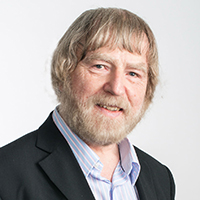
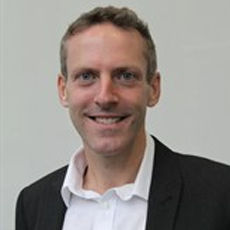
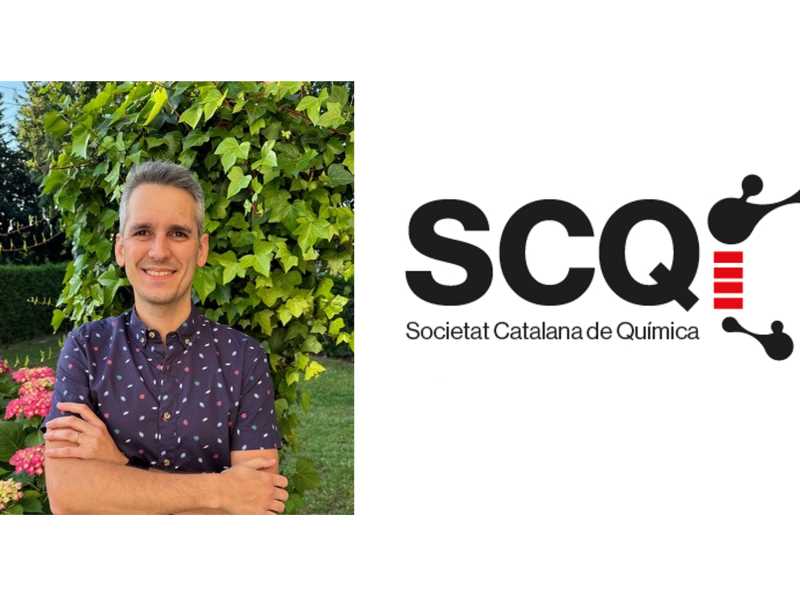
Prof. Dr. Irwin Yousept is a Full Professor of Mathematics at Universität Duisburg-Essen, leading the research group AG Optimal Control of Partial Differential Equations. His work focuses on the mathematical analysis and numerical solutions of electromagnetic problems, particularly in superconductivity and inverse problems. He holds a PhD from TU Berlin (2008) and has held academic positions at TU Darmstadt and TU Berlin. His research includes PDE-constrained optimization, numerical analysis, and applications in high-temperature superconductivity and electromagnetic shielding. Affiliations: Universität Duisburg-Essen, Fakultät für Mathematik Education: Diplom (2005), PhD (2008) in Mathematics from TU Berlin Research interests span Maxwell's equations, numerical methods for PDEs, and optimal control, with applications in superconductivity, electromagnetic shielding, and induction heating. He has authored over 40 publications and received awards including the Richard-von-Mises-Preis GAMM (2014). Current grants include DFG-funded projects on inverse problems and superconductivity.
Garrett Rose is a Professor and Department Head in the Min H. Kao Department of Electrical Engineering and Computer Science at the University of Tennessee, Knoxville (UTK). He holds a B.S. in Computer Engineering from Virginia Tech (2001), and M.S. and Ph.D. in Electrical Engineering from the University of Virginia (2003/2006). Prior to UTK, he served as Assistant Professor at NYU Polytechnic (2006–2011) and Senior Electronics Engineer at the Air Force Research Lab (2011–2014). His research focuses on nanoelectronic circuit design, neuromorphic computing, hardware security, and memristor-based systems. He leads the SENECA Research Group and the TENNLab initiative, exploring applications in neuromorphic architectures, hardware security primitives (e.g., PUF devices), and device modeling. Recent work emphasizes memristor-driven neuromorphic systems, secure FPGA designs, and in-memory computing. Grants include projects on neuromorphic target detection and nanotechnology-based security solutions. Rose actively mentors students and collaborates on co-design methodologies for real-world neuromorphic applications. Education: Ph.D. Electrical Engineering, University of Virginia, 2006 M.S. Electrical Engineering, University of Virginia, 2003 B.S. Computer Engineering, Virginia Tech, 2001 Research Interests: Dr. Rose’s work spans neuromorphic hardware design, including memristor-based neural networks and spiking systems. He investigates hardware security through nanoscale devices like memristors for PUFs and side-channel resistant circuits. His team develops novel memristor models and explores applications in reconfigurable computing and energy-efficient architectures. Recent efforts focus on neuromorphic vision systems, robotic navigation, and neuromorphic processors with co-design frameworks. Grants & Projects: "Ground-roaming autonomous neuromorphic targeter" (2020) "Secure Backup and Restore for IoT using Nanotechnology" (2020) "Physically Unclonable Reconfigurable Computing System (PURCS)" (2020)
Gaofeng Jia is Associate Professor in Civil and Environmental Engineering at Colorado State University's Walter Scott, Jr. College of Engineering. He specializes in natural hazard risk assessment, infrastructure resilience, and uncertainty quantification. Research integrates simulation-based approaches with high-performance computing for assessing complex engineering systems. Core areas include infrastructure deterioration modeling, wave energy converter optimization, tsunami evacuation planning, and surrogate modeling techniques. Recent work emphasizes physics-informed machine learning for engineering applications. Publications demonstrate consistent methodological innovation in uncertainty quantification across domains including seismic engineering, coastal hazards, renewable energy systems, and structural reliability. Articles employ advanced computational statistics, Bayesian methods, and multi-fidelity modeling. Young Researcher Best Paper Award Best Student Paper Award
Jonathan S. Owen is an Associate Professor of Chemistry at Columbia University, leading the Owen Research Group focused on inorganic materials and semiconductor nanocrystals. His work explores crystal formation mechanisms, surface coordination chemistry, and applications in renewable energy technologies, including solid-state lighting. The group collaborates with institutions like Brookhaven National Lab and Lawrence Berkeley National Lab. Key research areas include nanocrystal synthesis, ligand exchange dynamics, and the development of CdSe/CdS heterostructures for energy-efficient lighting. Notable publications span 2001–2025, addressing topics like nanocrystal surface passivation, precursor kinetics, and optoelectronic properties. His work emphasizes foundational understanding of colloidal nanocrystal growth mechanisms and their practical applications.
Associate Professor Justin Chu Jang Hann is affiliated with the Department of Microbiology and Immunology at the National University of Singapore (NUS), within the Yong Loo Lin School of Medicine. He holds additional roles as Assistant Dean (Academic Affairs) in the School of Medicine, Director of the NUS Medicine BSL-3 & ABSL-3 Core Facility, and Joint Senior Principal Investigator at the Institute of Molecular and Cell Biology (IMCB) A*STAR. His research focuses on molecular RNA virology, antiviral strategies, and high-throughput imaging technologies to study host-pathogen interactions. Key projects include genomic screening of viral-host interactions, high-content bio-imaging platforms, and development of anti-viral compounds against pathogens like SARS-CoV-2, dengue, and enteroviruses. Recent work explores broad-spectrum antivirals, vaccine candidates, and diagnostic approaches for viral infections. His contributions span virology, immunology, and translational medicine, with a strong emphasis on combating emerging and re-emerging RNA viruses.
Robert (Rob) J. Franzese, Jr. is a Professor and Associate Chair in the Department of Political Science at the University of Michigan. He also serves as the Edie N. Goldenberg Director of the Michigan in Washington Program and Research Professor at the Center for Political Studies (CPS), Institute for Social Research. His research focuses on comparative and international political economy (C&IPE) of developed democracies, emphasizing the interplay between political and economic institutions, structures, and events on macroeconomic policymaking. Franzese is renowned for his work on spatial-econometric models of interdependence and empirical methodologies in political science. Education: PhD in Government from Harvard University (1996), A.M. in Economics and Government from Harvard (1995 and 1992), and B.A. in Economics and Government from Cornell University (1990, Phi Beta Kappa). He teaches courses on quantitative methods, comparative politics, and political economy. Key affiliations include the ICPSR Summer Program in Quantitative Methods and the Center for Political Studies. His research spans topics such as central bank independence, wage bargaining institutions, and spatial econometrics. He has authored/co-authored numerous books and articles on empirical methodology, policy analysis, and interdependence modeling. His methodological contributions include spatial econometric models, multilevel analysis, and model-based estimation for social science theory (EITM). He has advised on policy issues related to globalization, fiscal policy, and labor markets, with a focus on developed democracies. Fransese has directed the ICPSR Summer Program, which trains researchers in advanced quantitative methods. His work bridges political science and economics, emphasizing interdisciplinary approaches to understanding policymaking dynamics and spatial interdependencies.
Dr. Gabor Karsai is a Distinguished Professor of Computer Science and Professor of Electrical and Computer Engineering at Vanderbilt University's School of Engineering. He also serves as Senior Research Scientist at the Institute for Software-Integrated Systems (ISIS), where he contributes to the Executive Council. With over 30 years in software engineering, his research focuses on embedded systems, model-driven development, resilient software platforms, and AI-driven autonomous systems assurance. He holds a PhD from Vanderbilt and degrees from the Technical University of Budapest. Education: Ph.D. in Electrical and Computer Engineering, Vanderbilt University Dr.Tech. in Computer Engineering, Technical University of Budapest M.S. and B.S. in Electrical Engineering, Technical University of Budapest Affiliations: Co-Associate Chair for Computer Engineering External Member of the Hungarian Academy of Sciences His research interests span model-integrated computing , autonomous systems assurance , and radiation-hardened systems . Recent work emphasizes AI integration into engineered systems and radiation effects mitigation for space applications. He has led major projects on distributed control for smart grids and resilient CPS architectures. Over 200 peer-reviewed publications and four patents reflect his contributions to software engineering and systems integration. Awards & Recognition: External Membership in Hungarian Academy of Sciences Leadership roles in ISIS and Vanderbilt's academic governance Advisees & Grants: While no student list is provided, his projects involve collaborative teams across academia and industry. Major sponsors include NSF, NASA, and DARPA. Current work includes the ALC (Assurance-based Learning-enabled CPS) and MIDAS (Model-based Intent-Driven Adaptive Software) initiatives. Labs & Platforms: Co-developer of the RIAPS distributed CPS platform and the SEAM assurance modeling framework. His labs focus on cyber-physical system design, radiation effects analysis, and autonomous system reliability.
Drew Cingel is an Associate Professor and Graduate Advisor in the Department of Communication at the University of California, Davis. His research focuses on the interplay between human development—particularly child and adolescent development—and media effects, with an emphasis on understanding how developmental stages influence media choices and how media exposure impacts development. He regularly consults with media companies and policymakers to design media that supports healthy child and adolescent development. Education: Ph.D., Media, Technology, and Society, Northwestern University, 2016 M.A., Communication, Wake Forest University, 2012 B.A. (two degrees), Media Effects and Psychology, Pennsylvania State University, 2010 Research Interests: Effects of social media on adolescent mental health Children’s learning from media (e.g., television, tablets) Moral reasoning development through media exposure Parental mediation strategies for media use His work bridges experimental and survey methodologies, often addressing societal concerns about digital media’s role in youth development. Publications & Trends: Recent articles explore personalized social media algorithms’ impact on minors, cross-cultural comparisons of media use during the pandemic, and the validation of moral intuition measurement tools. His research consistently highlights the dual-edged nature of media: while media can foster learning and moral development, it also poses risks like mental health challenges and social comparison effects. Teaching & Advising: Teaches CMN 147 (Children, Adolescents, and the Media) and CMN 141 (Media Effects). As Graduate Advisor, he mentors students in communication studies and supports academic programs. Labs & Teams: Affiliated with UC Davis’ Media Labs, which investigates digital media’s societal impacts. Collaborates with the Human Development Graduate Group to integrate interdisciplinary perspectives.
Riccardo Catena is a Professor in Physics at the Department of Physics, Chalmers University of Technology, Sweden. He leads a research group comprising 1 postdoc, 2 PhD students, and 1-4 master students annually. His academic credentials include a 2014 habilitation (venia legendi) from the University of Göttingen and promotion to docent at Chalmers in 2016. He is an elected member of the IUPAP C4 commission on Astroparticle Physics and a founding member of the European Consortium for Astroparticle Theory (EuCAPT). Research focuses on astroparticle physics, intersecting particle physics, astrophysics, and cosmology, with a current emphasis on dark matter. Key interests include modeling dark matter's microscopic properties, predicting observables, and designing experimental tests. His work is funded by the Swedish Research Council and the Knut and Alice Wallenberg Foundation (co-PI). Publications span dark matter detection strategies, material interactions, and theoretical frameworks. Notable projects include studies on graphene detectors, chiral phonons, and liquid xenon observatories. Grants support initiatives like 'Direct Detection of Light Dark Particles' and 'Computational Modeling of Dark Matter-Electron Interactions.' Catena's advisory role includes mentoring students and overseeing interdisciplinary collaborations. His research group actively explores experimental and theoretical advancements in dark matter physics, contributing to global efforts in astroparticle theory and detector innovation.
Sharmistha Guha is an Assistant Professor in the Department of Statistics at Texas A&M University, part of the College of Arts & Sciences. Her research focuses on Bayesian methods for analyzing complex, high-dimensional data, with applications in neuroscience, network security, and social sciences. She develops techniques for supervised network data analysis, causal inference, and data privacy preservation. Education: Ph.D. in Statistical Science (Duke University, implied by dissertation recognition). Research Interests: Bayesian high-dimensional regression, object-oriented regression, causal inference in randomized trials, probabilistic record linkage, Bayesian nonparametric mixture models, and integration of heterogeneous data types like networks and functional data. Her work addresses challenges in neuroimaging (dMRI/fMRI) and big data analytics. Recent Contributions: Her articles span Bayesian methodologies for network analysis, differential privacy in treatment effect estimation, and applications in environmental health (e.g., PM2.5 exposure studies). Notable trends include leveraging Bayesian hierarchical models for complex data structures and advancing causal inference frameworks. Awards: 2022 Blackwell-Rosenbluth Award (ISBA) 2021 Savage Award Honorable Mention 2024 NSF-DMS Grant 2413721 Grants & Advising: Secured NSF funding for heterogeneous data integration research. Mentored students like Jose Rodriguez-Acosta (NSF GRFP Fellow) and Jacob Pagel (NIH-funded CoSIBS participant). Lab/Team: Leads a research group integrating statistical method development with domain collaborations in neuroscience and network security. Active in organizing workshops and serving on panels to foster academic engagement.
Prof Duncan Robertson is a Professorial Research Fellow at the School of Physics and Astronomy, University of St Andrews, Scotland. He holds a B.Sc. (Hons.) and Ph.D. in Physics from the same institution. His career has focused on millimeter-wave radar technologies with applications in environmental sensing, security systems, and battlefield systems. He leads the Millimetre Wave Group, specializing in radar imaging, radiometry, electron spin resonance instrumentation, and antenna design. Education: B.Sc. (Hons.) in Physics and Electronics, University of St Andrews (1991) Ph.D. in Millimetre Wave Physics, University of St Andrews (1991) Research Interests: Prof Robertson’s work spans millimeter-wave radar systems, including drone detection, glacier monitoring, sea clutter analysis, and holographic metasurfaces. His group develops technologies for security screening, environmental monitoring, and material characterization. Grants & Projects: Environmental Monitoring: Short Range Interferometric Synthetic Aperture Radar (InSAR) MuWMAS: Snowflake Scattering and Microstructure Analysis Drone Detection Radar Commercialization Labs/Teams: Leads the Millimetre Wave Group, collaborating on radar phenomenology and advanced sensor systems. Active in international radar conferences and experimental field trials.
Melissa M. Lee is the Klein Family Presidential Associate Professor of Political Science at the University of Pennsylvania and Director of the World House Student Fellows Program at Perry World House. Her research focuses on the international and domestic politics of statebuilding, sovereignty, and state development, emphasizing how foreign subversion undermines state authority. She holds a Ph.D. from Stanford University and a B.A. from the University of California San Diego. Lee’s work bridges historical and contemporary case studies, including Russian relations with post-Soviet states, Malaysian subversion of the Philippines, and Thai subversion of Vietnam-occupied Cambodia. Her book *Crippling Leviathan* (2020) won major awards, including the APSA Merze Tate Award and Perry World House’s Emerging Scholar Prize. She also contributes policy writing to *Foreign Affairs* and the Irregular Warfare Initiative. Previous roles include Assistant Professor at Princeton University and Lightning Scholar at Perry World House. Her research has been published in top journals like the *American Political Science Review* and *International Organization*. Awards: APSA Merze Tate Award (2016) APSA European Politics and Society Section Best Article Prize (2020) Perry World House Emerging Scholar Global Policy Prize APSA Foreign Policy Section Honorable Mention for Best Book Her work examines dependent territories in international relations, the historical roots of state weakness, and the interplay between conflict and governance. Lee’s scholarship integrates quantitative and qualitative methods to analyze how external actors shape domestic political dynamics.
Peter Bishop is a Professor at the Centre for Software Reliability, City St George's, University of London, where he holds a joint chair in Systems and Software Dependability with Robin Bloomfield. He is also Chief Scientist at Adelard, part of NCC Group, providing consultancy and research in computer safety and dependability. He holds BSc and MSc degrees in Physics and is a Chartered Engineer and Member of the IET. University: City St George's, University of London School: College of Engineering, Design and Physical Sciences Department: Centre for Software Reliability Academic Rank: Professor Email: p.bishop@citystgeorges.ac.uk Research Interests: Peter Bishop's research spans software fault tolerance, design diversity, software reliability prediction, statistical testing, system safety and security, assurance case methodologies, and their application in industrial contexts including autonomous vehicles and nuclear systems. He has led research for the UK nuclear industry on smart device assessment and participated in European projects on critical control system safety. Publication Trends: His recent publications focus on conservative confidence bounds for software reliability, safety assurance under uncertainty, integration of testing and formal proof, and security-informed safety. A recurring theme is the development of rigorous, evidence-based methods to justify software dependability in safety-critical domains, particularly where operational and test profiles differ or failure data is scarce. Scientific Awards and Recognition: While specific awards are not listed, his long-standing contributions are evident through his professorship, leadership at Adelard, and active role in safety-critical research. He is a Chartered Engineer and Member of the IET. Advising and Grants: Although specific students are not named, his leadership in major research projects such as DISPO and DIRC (2000–2006) indicates significant supervisory and mentoring roles. He has secured funding from sources including the Leverhulme Trust (UnCoDe project) and a consortium of nuclear industry stakeholders (EDF Energy, NDA, AWE, etc.) under the CINIF Nuclear Research Programme. Labs and Research Teams: He is a key member of the Centre for Software Reliability at City St George's and leads research activities at Adelard. He collaborates extensively with Robin Bloomfield, Lorenzo Strigini, Bev Littlewood, and others on software dependability and safety assurance research.
Professor Daniel Chicksand is a faculty member in the Department of Management at Birmingham Business School, University of Birmingham , where he holds the rank of Professor of Operations and Supply Management . He also serves as the Director of the Distance Learning MBA programme. Daniel has held academic positions at Warwick Business School and Aston Business School prior to joining Birmingham in 2016 as a Reader, being promoted to full Professor in 2021. Education: PhD in Commerce, University of Birmingham (2009) MBA in Business Strategy & Procurement, University of Birmingham (2003) MSc in Industrial Logistics, University of Central England (1996) BSc in Industrial Information Technology (2:1 hons), University of Central England (1995) Postgraduate Certificate in Academic and Professional Practice, University of Warwick (2011–2013) Daniel’s research is centered on Operations and Supply Chain Management , with a strong theoretical foundation in Resource Dependency Theory (RDT) . His work explores power dynamics , value appropriation , and relationship management in buyer-supplier interactions across sectors such as food, construction, and sustainable supply chains. He has a growing interest in servitization and its impact on value creation. His methodological approach is primarily qualitative, using case-based research. The recent publications reflect a consistent focus on power and negotiation in procurement , resilience and disruption in supply chains (including simulation modeling), and sustainability reporting . His research spans both private and public sectors and often involves international collaboration with institutions in the UK, Europe, and the US. Scientific Engagement and Awards: Visiting Lecturer at Audencia Nantes School of Management (France) Visiting Lecturer at Ecole des Ponts ParisTech and Solvay Business School (France/Belgium) Educator for Duke Corporate Education Collaborator with leading researchers from Aston, Cardiff, Cranfield, Loughborough, Linkoping, and Fox Business School Daniel supervises multiple doctoral students and is involved in pilot research projects funded by the British Academy and the Chartered Institute of Logistics and Supply. He also leads two consultancy firms— DDC Solutions Ltd and Opsworks Ltd —delivering bespoke training and education programmes to corporate clients like UBS, KPMG, and Adams Foods. His prior experience as a business owner in African arts and crafts importation provides practical insights into supply chain and operations management, enriching his teaching and research. Laboratories and Research Teams: Member of the Aston Centre for Seritization Research and Practice (2015–present) Collaborative research network across UK, European, and US universities Lead on projects involving discrete-event simulation and gamification in SCM
Dr. Marc Garcia-Borràs is a Ramón y Cajal researcher at the Institute of Computational Chemistry and Catalysis (IQCC) of the University of Girona . His work bridges computational chemistry and biocatalysis, focusing on enzyme engineering and reaction mechanism analysis. Emerging Scientific Talent 2025 Award (Societat Catalana de Química) Marcial Moreno-Mañas 2023 Award (RSEQ) Early Career Researcher RSEQ-Lilly 2024 Award ACS OpenEye/Cadence Outstanding Junior Faculty Award - Spring 2025 His research explores biocatalytic reactions for organic synthesis, including peroxygenases, carbene transfers, and radical fluorine chemistry. Computational modeling guides engineering of non-haem enzymes, P450s, and flavoenzymes to achieve novel selectivities and abiotic reactions. Recent publications highlight 2025 advancements in computationally designed peroxygenases, chemoselective methyltransferases, and nitrogen-nitrogen bond formation. 2024 studies focus on photoredox-metallenzyme hybrids, sp3-rich polycyclic compounds, and supramolecular strategies for fullerene functionalization. Scientific Recognition: Emerging Scientific Talent 2025 (Societat Catalana de Química) Marcial Moreno-Mañas 2023 (RSEQ) Early Career Researcher RSEQ-Lilly 2024 ACS Outstanding Junior Faculty Award - Spring 2025 European Young Chemistry Awards Finalist (2020) Contact: ges.iqcc@udg.edu