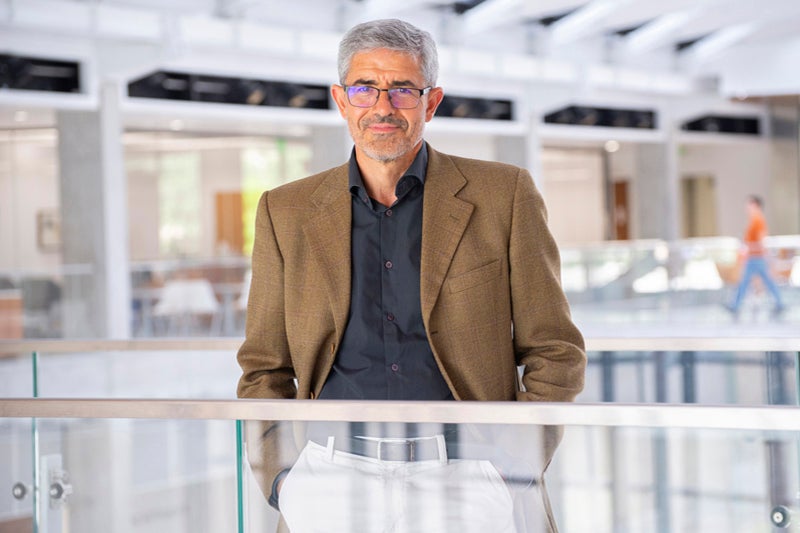
Helmut Leder is a Professor at the University of Vienna, specifically within the Faculty of Psychology's Department of Cognition, Emotion, and Methods in Psychology. He serves as Head of the Vienna Cognitive Science Hub, integrating interdisciplinary approaches to study aesthetic experiences and cognitive processes. His academic profile includes teaching courses in General Psychology, Cognitive Psychology, and Neurosciences, alongside supervising master's and doctoral thesis seminars focused on perception and neuroaesthetics. Key Research Areas : Empirical Aesthetics, Cognitive Psychology, Visual Perception, Cross-Cultural Psychology, Urban Art Impact, Mental Imagery Studies Methodological Focus : Eye-tracking, Machine Learning Analysis, Cross-Cultural Comparisons, Field Experiments, Neuroimaging Recent Contributions : Investigated urban art's role in stress reduction, developed network models of aesthetic experiences, explored non-visual color navigation for the blind, and applied machine learning to art evaluation. His work bridges psychology with cultural studies, examining how aesthetic experiences shape well-being and cognitive processes. Current projects emphasize the neural and behavioral distinctions between real and imagined art encounters, while challenging traditional gender-based perception models.
Colleen Carey is an Associate Professor at the Jeb E. Brooks School of Public Policy, Cornell University. Her research focuses on the industrial organization of healthcare systems, particularly federal regulation of health insurance markets like Medicare and Medicaid. She examines topics such as reinsurance mechanisms, risk adjustment policies, and the impact of physician-industry financial relationships on prescribing behaviors. Carey is a Faculty Research Fellow at the National Bureau of Economic Research and previously held roles including Robert Wood Johnson Scholar in Health Policy Research and Staff Economist at the Council of Economic Advisers. Education: Bachelor’s Degree: Yale University Ph.D. in Economics: Johns Hopkins University Research Interests: Federal health insurance market design (e.g., ACA marketplaces) Adverse selection mitigation strategies in subsidized insurance Pharmaceutical industry practices and physician prescribing Opioid abuse policy evaluation Social Security Disability Insurance health outcomes Recent Work Trends: Her 2020-2025 publications emphasize healthcare policy evaluation, including analyses of Medicare Advantage enrollment dynamics, racial disparities in disability programs, and the effects of prescription drug marketing on clinical decisions. She consistently bridges economic theory with applied policy analysis. Scientific Awards and Roles: Editorial Board Member, American Journal of Health Economics Robert Wood Johnson Health Policy Research Scholar (2018-2020) NBER Faculty Research Fellow (ongoing) Advising and Grants: Though no formal advisees are listed, her research often involves collaborations with institutions like the Council of Economic Advisers and NBER. She contributes to policy discussions through evidence-based insights. Labs and Teams: Collaborates extensively with NBER’s Health Economics Group and maintains affiliations with Princeton’s Center for Health and Wellbeing.
John Zelek is an Associate Professor in the Department of Systems Design Engineering at the University of Waterloo. He co-directs the VIP (Vision & Image Processing) lab and previously served as Associate Graduate Chair (2013-2017). He co-founded two startups: Tactile Sight (haptic navigation for disabled individuals) and Sweep3D (3D modeling technology). His research focuses on autonomous robotics, 3D scene understanding, infrastructure assessment, medical imaging, and sports analytics using AI/deep learning techniques. Education includes a BASc from Waterloo (1985), MASc from Ottawa (1989), and PhD from McGill (1996). He teaches courses like SYDE 283 (Physics), SYDE 572 (Pattern Recognition), and SYDE 675 (Pattern Recognition). Research interests span robotics, computer vision, anomaly detection, and SLAM. His work applies to infrastructure monitoring, sports analytics (hockey/pitcher analysis), medical imaging (OCT/fundus), and assistive technologies. Recent publications emphasize 3D modeling, SLAM enhancements, and sports tracking algorithms. Zelek advises graduate students (SSPS status) and collaborates with companies like Intelligent Health Solutions and EyeCheck through advisory roles. Key innovations include hybrid SLAM systems, puck localization algorithms, and medical robotic swab systems demonstrated on moving phantoms.
Faye Ginsburg is the David B. Kriser Professor of Anthropology at New York University (NYU), affiliated with the College of Arts & Science. Her work focuses on social anthropology, ethnographic film, media studies, indigenous media, and disability. She holds a Ph.D. from CUNY (1986) and a B.A. from Barnard College (1976). Research interests include global media dynamics, disability studies, and indigenous sovereignty. She co-edited pivotal works like *Media Worlds: Anthropology on New Terrain* (2002) and *Disability Worlds* (2024). Recent publications address disability in the digital age, indigenous media sovereignty, and reproductive politics. Awards include the 2025 American Academy of Arts and Sciences membership and the 2025 CUNY President's Distinguished Alumni Award. She directs NYU’s Graduate Certificate Program in Culture and Media and co-founded the NYU Council for the Study of Disability. Her grants include NEH funding for disability research and leadership roles at the Center for Religion and Media. Key initiatives include SKILLS transition program for NYC youth with learning disabilities and collaborations with global media festivals (e.g., Margaret Mead Film Festival). Her interdisciplinary work bridges academia, activism, and media practice.
Dr. Ben Clarke is an Associate Professor and Department Head of Special Education and Clinical Sciences at the University of Oregon’s College of Education. His research focuses on mathematical development, assessment systems, and school-based interventions to support student achievement. He has led over 20 federally funded grants totaling ~$55 million, emphasizing early numeracy interventions and multi-tiered instructional models. Clarke’s work bridges theory and practice, with publications on mathematics instruction, assessment, and RTI frameworks. Education: PhD (2002), MA (2001) in School Psychology/Special Education from University of Oregon; BS (1997) in Psychology from Wabash College (Phi Beta Kappa). Research Interests: Mathematics intervention design and efficacy Early numeracy assessment Multi-tiered systems of support (MTSS) Technology in education Equity in mathematics education Publications highlight his focus on intervention fidelity, tiered models, and outcomes for students with learning difficulties. Awards include the AERA Special Education SIG Research Award and recognition for academic excellence. Grants and Advising: Principal Investigator on ~$55M in federal grants; advises graduate students in School Psychology and Special Education. His lab develops evidence-based tools like the KinderTEK iPad program and contributes to national practice guides (e.g., IES RTI for Mathematics). Labs/Teams: Leads research teams focused on early mathematics intervention and MTSS implementation, collaborating with schools and policymakers to scale effective practices.
Dr. Mbita Mbao is an Assistant Professor in the School of Social Work at Salem State University, where she teaches courses including SWK 700 (Human Behavior), SWK 704/705 (Social Work Practice), and aging-focused courses like SWK 871. Her teaching philosophy emphasizes experiential learning and valuing student experiences. Dr. Mbao's research focuses on behavioral health, aging populations, workforce development, and immigrant issues. She actively works to expand aging-related curriculum and services through her involvement with the Older Adults Behavioral Health Network and Salem for All Ages initiative. Her education includes a BSW from Bowling Green State University, MSW from Rhode Island College, and PhD from Simmons University. As a Licensed Clinical Independent Social Worker, she maintains a clinical practice providing in-home therapy to older adults. Honors include: 2025 North Star Collective Fellow 2019 AGESW Pre-Dissertation Fellow 2021 GSA MCDTAW Early Career Diversity Fellow
Dr. Samita Arora is an Assistant Professor in the Department of Early Childhood Education at George Mason University , part of the College of Education and Human Development (CEHD). Her work focuses on early childhood education for diverse learners, special education, and inclusive curricula. She teaches courses such as Introduction to Early Childhood Special Education , Medical and Developmental Aspects of Disabilities , and Family-Centered Assessment . Dr. Arora's expertise spans language and literacy development in young learners, assessment strategies, and policies in early childhood education. She holds a terminal degree in the field and is affiliated with the Fairfax Campus, specifically Thompson Hall 1200. Key areas of teaching include curriculum design for inclusive settings, early intervention for infants and toddlers with disabilities, and engagement with families of diverse learners. Her courses emphasize evidence-based practices and culturally responsive teaching methods.
Eric Smialek is a Senior Research Fellow at the University of Huddersfield, specializing in extreme metal vocals, popular music studies, and Taylor Swift analysis. He holds a Marie Skłodowska-Curie Actions Postdoctoral Fellowship and is affiliated with the Centre for Research in Music and its Technologies. His research explores vocal expression, cultural meaning in metal, and intersections of music with class, disability, and LGBTQ+ advocacy. Education: PhD in Genre and Expression in Extreme Metal Music (McGill University, 2016) Master's in Rethinking Metal Aesthetics (McGill University, 2009) Bachelor's from University of British Columbia (2006) Research Interests: Smialek’s work bridges music analysis and sociology, focusing on extreme metal’s vocal techniques, global social-class divides in metal scenes, and Taylor Swift’s cultural impact. He co-founded the European Taylor Swift Research Network and organized the 2024 Taylor Swift unconference in Amsterdam. Awards: Marie Skłodowska-Curie Actions Postdoctoral Fellowship Advising & Collaboration: Accepts PhD students and collaborates on projects like Extreme Metal Vocals: Musical Expression, Technique, and Cultural Meaning (2022–2025). His work has been cited in venues like Metal Music Studies and Contemporary Music Review . Labs/Teams: Member of the Centre for Research in Music and its Technologies, contributing to interdisciplinary studies in music acoustics and cultural analysis.
Uwe Flick is a Seniorprofessor in the Department of Education and Psychology at Freie Universität Berlin, specializing in Qualitative Social and Education Research. He has held professorships at Alice Salomon University and Hannover Medical School and is internationally recognized for his contributions to qualitative methodology. Education: Dr. phil. from Freie Universität Berlin (1988), Habilitation in Psychology from Technical University of Berlin (1994). Professional Affiliations: Freie Universität Berlin (2013–present, Seniorprofessor since 2022), Alice Salomon University (2004–2013), Hannover Medical School (1996–1997). His research centers on qualitative methods , social representations of health and illness , chronic illness , migration , and vulnerability . He investigates the lived experiences of marginalized groups, including chronically ill youth, homeless adolescents, and refugees, often employing triangulation and mixed methods to deepen understanding. The 15 most recent publications highlight his sustained focus on advancing qualitative research methodology—editing handbooks, writing foundational texts, and refining concepts of research quality, triangulation, and design. Simultaneously, his empirical work explores health communication, peer relationships, and integration challenges among vulnerable populations, demonstrating a powerful integration of methodological innovation with socially relevant inquiry. Scientific Awards: Lifetime Achievement Award in Qualitative Inquiry, ICQI (2019) Flick actively advises doctoral students through his Promotionskolloquium and has secured substantial research funding for projects on refugee integration, sleep disorders, and chronic illness. His editorial roles in journals like Qualitative Research , Journal of Health Psychology , and Sozialer Sinn , and his leadership in book series such as Qualitative Sozialforschung , underscore his influence in shaping the field. He is a central figure in qualitative research communities, frequently engaging as a visiting scholar and professor across Europe and globally. He leads a research team at Freie Universität Berlin, supervising master’s and doctoral projects on topics like peer relations, health concepts, and migration, fostering the next generation of qualitative researchers.
Ian Ewart is an Associate Professor at the University of Reading's School of the Built Environment, serving as Head of Construction and Engineering Management and Research Group Lead for Organisation, People and Technology. He chairs the Research Ethics Committee since 2016 and supervises undergraduate/postgraduate dissertations. His academic journey spans engineering and anthropology: DPhil Social and Cultural Anthropology, University of Oxford, St Hugh's College (2007-2012) MSc Material Anthropology and Museum Ethnography, University of Oxford, St Hugh's College (2006-2007) BA (Hons) Archaeology and Anthropology, University of Oxford, Harris Manchester College (2003-2006) Diploma in Management Studies, University of the West of England (1990-1994) BEng (Hons) Mechanical Engineering, Staffordshire University (1983-1987) Ewart's research integrates ethnographic methods with digital technology studies, examining human-technology interactions in construction and domestic settings. His work bridges engineering practice and social anthropology, focusing on skill transmission, sustainable design, and multisensory experiences in virtual environments. Publications from 2025-2013 reveal a dominant trajectory in digital twins for socio-ecological sustainability, VR-based occupant behavior prediction, and HBIM for heritage conservation. The corpus demonstrates consistent cross-disciplinary innovation, merging archaeological reconstructions with healthcare applications while maintaining anthropological rigor. Key recognition: ESRC Future Research Leader fellowship (2013) for Designing Healthy Homes project He supervises PhD candidates like Afolabi Dania (Nigerian sustainable construction) and Joanna Hull (Heritage BIM), leveraging ESRC funding for ethnography-VR health studies. His grants emphasize participatory design and real-world impact assessment in built environments. Leaders the Organisation, People and Technology research group, developing multisensory Roman town reconstructions with sound/smell integration to advance archaeological and architectural experience modeling.
Joshua Gess is an Associate Professor in the Mechanical, Industrial, and Manufacturing Engineering department at Oregon State University's College of Engineering. He joined Oregon State in 2015 and serves as a co-principal investigator at the Enhanced Heat Transfer Laboratory, where he leads research in thermal management solutions for high-performance microelectronics. His educational background includes: PhD, Mechanical Engineering, Auburn University, 2015 MS, Mechanical Engineering, Auburn University, 2012 B.E., Mechanical Engineering, Vanderbilt University, 2005 Before academia, he worked as a mechanical engineer at SSOE Group (including consulting for Johns Manville) and Northrop Grumman where he focused on military communication equipment. Professor Gess specializes in advancing thermal management solutions for high-performance microelectronic equipment. His research spans multiple scales, examining single and two-phase heat transfer on the macro-scale with passive and active liquid immersion techniques, as well as on the micro and nano scale for complex embedded thermal management solutions. He combines fundamental heat transfer knowledge with novel experimental methods such as two-phase PIV and high-speed image capture to develop reliable and energy-efficient cooling solutions for demanding electronics systems. His publication record demonstrates a clear trajectory toward increasingly sophisticated thermal management solutions, with recent work focusing on additive manufacturing applications for cooling systems, semiconductor thermal management, and nuclear reactor cooling systems. His research has significant implications for data center energy efficiency, where even small improvements in cooling efficiency could save enormous amounts of energy that could be returned to the grid. Gess is deeply committed to mentoring graduate students, emphasizing the practical applications of engineering principles. He attributes his interest in engineering to childhood influences like the movie RoboCop and the TV series MacGyver, and finds the reality of engineering work just as gratifying as he'd imagined. He particularly values the moments when his graduate students "get it" and watching them grow with each new accomplishment. As a person with a disability himself, Gess is passionate about establishing more robust support systems for people with disabilities at Oregon State. He is working with the School of Public Health to start an adaptive sports program, with the goal of building infrastructure that allows anyone to feel welcome and pursue advanced degrees at the university.
Wendy A. Rogers is a Professor of Applied Health Sciences at the University of Illinois Urbana-Champaign, with primary affiliation in the Department of Health and Kinesiology. She holds secondary appointments in Educational Psychology and is affiliated with the Beckman Institute for Advanced Science & Technology, Illinois Informatics Institute, Center for Social and Behavioral Science, Women and Gender in Global Perspectives, Discovery Partners Institute, and Coordinated Science Lab Robotics Group. Education: B.A. in Psychology, University of Massachusetts – Dartmouth (1985) M.S. in Psychology, Georgia Institute of Technology (1989) Ph.D. in Psychology, Georgia Institute of Technology (1991) Her research focuses on aging and human factors, particularly in design for aging, technology acceptance, human-automation/robot interaction, aging-in-place, cognitive aging, and skill acquisition. She leads the Human Factors and Aging Laboratory, McKechnie Family LIFE Home, and co-directs the CHART (Collaborations in Health, Aging, Research, and Technology) program. Scientific Awards: Fellow, American Psychological Association Fellow, Gerontological Society of America Fellow, Human Factors and Ergonomics Society Paul M. Fitts Education Award APA Division 20 and Retirement Research Foundation Mentor Award HFES Woman Mentor of the Year Her research is funded by the National Institutes of Health (NIH/NIA), Department of Health and Human Services (NIDILRR), and associated with centers like CREATE, TechSAge, and ENHANCE. She is a Certified Human Factors Professional (BCPE Certificate #1539).
Karyn Moffatt is an Associate Professor in the School of Information Studies at McGill University and holds the Canada Research Chair in Inclusive Social Computing. As Graduate Program Director for the PhD program, she leads the Accessible Computing Technologies Research Group (ACT Lab), focusing on designing inclusive computing applications that support social engagement across diverse lifespans and abilities. Her work bridges human-computer interaction, accessibility research, and real-world community impact. Educational background: PhD in Computer Science, University of British Columbia MSc in Computer Science, University of British Columbia BASc in Computer Engineering, University of British Columbia Research Interests: Dr. Moffatt's work centers on inclusive social computing with emphases on aging populations , disability access , and intergenerational communication . She investigates how technology can overcome barriers to social participation through co-design methodologies, particularly for older adults and individuals with cognitive or physical disabilities. Current projects explore AI-enhanced aging support, dementia-friendly social platforms, accessible financial technology, and respite care coordination systems. Her approach integrates participatory design with rigorous usability testing to create solutions that address real-world challenges in healthcare, finance, and community engagement. Publication Trends: Analysis of her 15 most recent publications reveals consistent focus on aging and accessibility (60% of works), with growing emphasis on AI ethics (2025), dementia support systems (30% of 2023-2024 works), and accessible financial technology (2024). Methodologically, 75% employ co-design or participatory approaches, while 40% involve longitudinal field studies. Key venues include CHI (33%), ASSETS (20%), and ACM Transactions on Accessible Computing (27%), demonstrating leadership in top-tier HCI and accessibility forums. Scientific Awards: Multiple Best Paper Awards from ASSETS, CHI, and CSCW conferences Canada Research Chair in Inclusive Social Computing Advising and Grants: Dr. Moffatt currently supervises PhD candidates Chong Hu and Muhe Yang, having graduated four students since 2022 including Maurício Fontana De Vargas (2023) and Carrie Dai (2023). Her active grants include: NSERC Discovery Grant (2024-2029) as PI: Ethical AI for active aging Canada Research Chair renewal (2022-2027) as PI McGill Nursing Collaborative grant (2023-2025) as Co-I: iRespite mHealth app for palliative care Labs and Teams: She directs the ACT Lab, which partners with healthcare providers, public libraries, and community organizations to develop and deploy inclusive technologies. Current initiatives include the QuickPic AAC system for speech therapy, dementia-focused social programs with Montreal libraries, and Quebec-wide respite care coordination tools, all developed through interdisciplinary collaboration with clinicians, caregivers, and end-users.
Dr. José del R. Millán is a Professor and holds the Linda Steen Norris & Lee Norris Endowed Chair in Neuroengineering at The University of Texas at Austin's Chandra Family Department of Electrical and Computer Engineering. He also serves as a Professor in Dell Medical School's Department of Neurology, a courtesy Professor in Biomedical Engineering, and is affiliated with the Mulva Clinic for the Neurosciences, Institute for Neuroscience, Texas Robotics, and the UT CARE Initiative. His work focuses on brain-machine interfaces (BMI), neuroprosthetics, and translating BMI technologies for individuals with motor/cognitive disabilities and able-bodied users. Education: PhD in Computer Science (1992, Technical University of Catalonia). Previous roles include Defitech Foundation Chair in Brain-Machine Interface at EPFL (Switzerland) and visiting scholar positions at Berkeley, Stanford, and the International Computer Science Institute. Research Interests: Neuroengineering, BMI applications in healthcare and assistive robotics, statistical machine learning for neural signals, and neurorehabilitation. Key contributions include EEG-based BMI systems, closed-loop neurostimulation, and wearable neurotechnology. Awards: IEEE Fellow (2017), Norbert Wiener Award (2011), and Fellow of the International Academy of Medical and Biological Engineering (2020). Grants & Labs: Co-director of UT CARE, leader in clinical neuroprosthetics and neurorobotics. Active in developing BMI-driven wheelchairs, VR integration for BCI, and EEG-based speech prosthetics. Research outputs emphasize translational neurotechnology, with projects funded by industry and governmental agencies. Labs/Teams: Clinical Neuroprosthetics & Brain Interaction Lab, Texas Robotics, Wireless Networking and Communications Group (WNCG).
Paul Taele is an Instructional Assistant Professor and Deputy Lab Director in the Sketch Recognition Lab at Texas A&M University's Department of Computer Science & Engineering. He holds a Ph.D. (2019), M.S. (2010), and dual B.S. degrees in Computer Science and Mathematics from the University of Texas at Austin (2006). His research focuses on sketch recognition, haptics, and intelligent interfaces for education and accessibility, with notable work in mid-air gesture recognition, educational sketching tools, and assistive technologies for disabilities. He has contributed to projects like Kanji Workbook , Hashigo , and HaptiMoto , and has published over 50 peer-reviewed articles across venues like CHI, IUI, and AAAI. Taele has received awards including the NSF Student Travel Grant (2014) and Ford Foundation Honorable Mention (2015). He teaches courses in capstone design, programming, and sketch recognition, and mentors students across all academic levels through strict eligibility criteria for research collaborations. Education : Ph.D. Computer Science, Texas A&M University (2019) M.S. Computer Science, Texas A&M University (2010) B.S. Computer Science & Mathematics, University of Texas at Austin (2006) Concentration in Mandarin Chinese, National Chengchi University (2007) Research Interests : Taele's work bridges HCI and AI to create accessible educational interfaces. His projects emphasize: Sketch Recognition : Developing algorithms for mid-air gestures, children's developmental assessments, and language learning Accessibility : Haptic systems for visually impaired learners and algebra education Educational Tech : Intelligent tutoring systems for music, math, and East Asian languages Awards & Grants : EAAI-20 Travel Grant (2020) Ford Foundation Dissertation Honorable Mention (2015) NSF East Asia-Pacific Summer Institutes (2013, 2012) Royce E. Wisenbaker Fellowship (2009) Lab & Teams : Director of the Sketch Recognition Lab (SRL) and collaborator with global institutions like Singapore Management University and National Taiwan University. Active in organizing workshops like SketchRec at IUI conferences.