Dr. Priya Samudrala is a Senior Lecturer and Deputy Director of Education in Monash University's Department of Chemical and Biological Engineering. Her research spans heterogeneous catalysis, green chemistry, and sustainable processes, with expertise in biomass conversion, glycerol valorization, and 3D-printed catalysts for renewable fuel production. Recent publications (2017-2025) demonstrate consistent focus on sustainable catalyst design for biomass conversion, including catalytic reforming, hydrogenolysis, and CO2 valorization. Article trends emphasize catalyst innovation for circular economy applications, particularly in waste glycerol utilization and biomass-derived chemical production. Professional credentials include a PhD in Applied Chemistry from RMIT University and Master of Teaching from Monash University. Research contributions have been recognized through awards including the Martin Bennett Research Excellence Award.
Dr. Xianghai An is a Senior Lecturer and Robinson Fellow at the School of Aerospace, Mechanical, and Mechatronic Engineering at The University of Sydney. He holds the position of Associate Head of School (Research Education). His research focuses on nanostructure design, nanomechanics, and advanced materials processing. Dr. An received his PhD from the Institute of Metal Research, Chinese Academy of Sciences in 2012 and has held prestigious fellowships, including the DECRA and Alexander von Humboldt awards. Education: PhD in Materials Science, Shenyang National Laboratory for Materials Sciences, 2012 Research Interests: Design of light, strong, and damage-tolerant materials Nanomechanics and nanoplasticity Mechanical behavior under extreme conditions Additive manufacturing of metallic materials Awards and Grants: Robinson Fellow and DECRA Fellowships Australian Research Council grants (LIEF, DP, etc.) Recognition for outstanding reviewer contributions Advising: Supervises students in projects related to high-entropy alloys, additive manufacturing, and microstructural engineering. Active in collaborative grants with institutions like Sydney Nano Institute. Labs: Member of The University of Sydney Nano Institute, focusing on advanced materials research.
Donovan Fuqua is an Assistant Professor in the Department of Accounting and Information Systems at New Mexico State University's College of Business. He specializes in supply chain management, operations research, and the application of artificial intelligence in logistics. His research focuses on optimizing supply chain resilience, disaster recovery models, and the use of advanced algorithms in solving complex logistical challenges. He holds a physical office at the Business Complex, 127, and can be reached at dfuqua@nmsu.edu. Address: Business Complex, 127 • Las Cruces, NM 88003 Phone: (575) 646-2812 His research interests span supply chain resilience , optimization algorithms , and neural networks in logistics . He has published extensively on topics such as commodity demand forecasting, state-of-charge prediction in vehicle batteries, and chaos theory applications in military decision-making. Recent work analyzes the Bank of North Dakota's financial strategies and explores resilience models for global disruptions. His articles often bridge theoretical frameworks with real-world applications, such as using deep learning for humanitarian logistics planning. Dr. Fuqua has not been noted for scientific awards in the provided texts. His advising and grant activities are not detailed here, but his research portfolio reflects a strong focus on interdisciplinary solutions for complex logistical systems.
Dr. Keiron Roberts is a Senior Lecturer in Sustainability and the Built Environment at the University of Portsmouth, affiliated with the School of Civil Engineering & Surveying within the Faculty of Technology. He also contributes to the Revolution Plastics Institute and the Centre for Environmental and Renewable Energy Solutions. His research focuses on plastic policy analysis, waste management, energy systems, and circular economy principles. Roberts has led projects funded by Innovate UK (e.g., SHAPE UK and SEA CHANGE) aimed at decarbonizing shipping and supporting SMEs in achieving Net Zero. He co-authored policy reports for UNEP, G20, and Defra, including the UN’s first Compass Report on plastic pollution policies. His work includes coordinating global initiatives like the G20 marine plastic litter think piece and analyzing the environmental impact of PPE during the pandemic. Roberts holds a PhD in Civil Engineering from the University of Southampton and has conducted postdoctoral research on wastewater management and biofuel production from marine algae. Education MSci (Hons) Oceanography, University of Southampton (2007–2011) PhD in Civil Engineering (Anaerobic digestion of marine microalgae), University of Southampton (2011–2015) PGCE in Secondary and Tertiary Physics, University of Southampton (2015–2016) Research Interests Roberts’ work spans plastic policy, waste management systems, energy transition, and circular economy applications. He emphasizes actionable solutions, such as developing tools like SWIMS for UK waste infrastructure modeling and advising on PPE litter impacts post-COVID-19. His interdisciplinary approach integrates environmental science, engineering, and policy to address global sustainability challenges. Grants & Awards Recipient of the 2023 Vice Chancellor's Award for Excellence (University of Portsmouth) Principal Investigator on Innovate UK projects (SHAPE UK, SEA CHANGE, Isle of Wight Energy Autonomous Community) Labs & Collaborations Active in the Revolution Plastics Institute and GreenTech South, collaborating with organizations like Southern Water and UN agencies to advance Net Zero goals and plastic policy frameworks.
Peter Oakley is a Professor of Material Culture at the Royal College of Art's School of Arts & Humanities, where he also serves as Co-Lead of the Material Engagements Research Cluster. His academic work bridges anthropology, creative practice, science and technology studies, and industrial heritage through ethnographic, experiential, and object-based research methodologies. Education PhD in Anthropology, University College London (2013) Peter Oakley specializes in the anthropology of materials and making, with particular expertise in sustainability across the crafts and applied arts. His research focuses on two main interconnected areas: the social, environmental, and ecological consequences of metal extraction, refining, and assaying throughout history, and the development of sustainable practices within contemporary craft communities. He employs ethnographic, experiential, and object-focused methodologies to examine material culture from multiple perspectives. Analysis of Professor Oakley's recent publications reveals a consistent focus on the intersection of material culture, sustainability, and ethical practices. His work spans historical examinations of mining heritage and contemporary investigations into ethical gold certification programs, with a particular emphasis on the social and environmental impacts of material extraction and use. There is a clear trajectory toward increasingly applied research addressing current sustainability challenges in the creative industries. Research Leadership and Funding UK Principal Investigator for "Toxic Heritage: Socio-natural Landscapes of Extraction and Pollution in the Harz and Cornwall" (AHRC-DFG funded, 2025-2028) Principal Investigator for "Embedding Carbon Literacy in the Applied Arts" (RCA Impact Development Scheme, 2023-2025) Principal Investigator for multiple AHRC-funded projects including "Carbon Measurement Tools in the Creative Industries" (2022-2023) Principal Investigator for international projects in Thailand, Kazakhstan, and other regions focusing on sustainable craft practices Professor Oakley actively supervises PhD candidates, currently advising Enitan Bankole-Race and Yu Lun Eve Lin, with previous successful completion of Wuthigrai Siriphon's doctoral work. His supervision focuses on material culture approaches to creative disciplines and traditional manual skills. Beyond direct supervision, he has led numerous research teams and secured funding from the Arts and Humanities Research Council, Global Challenges Research Fund, and Special Priorities Fund to support sustainability initiatives across the creative industries. As Co-Lead of the Material Engagements Research Cluster at the RCA, Professor Oakley collaborates with researchers across disciplines to advance understanding of material practices and sustainable approaches in the creative sector. His work connects academic research with practical applications through partnerships with craft communities in the UK and internationally, particularly in Thailand, Scotland, and Germany.
Dr. Ludo Ausiello is a Senior Lecturer in Electronics at the University of Portsmouth, affiliated with the School of Electrical and Mechanical Engineering and the Faculty of Technology. His roles include membership in the Portsmouth AI and Data Science Centre and the Portsmouth Centre for Advanced Materials and Manufacturing. He holds a Fellowship of the Higher Education Academy and is a member of the Institute of Acoustics. Education: Integrated Master’s in Electronic Engineering (University of Bologna), European PhD in Audio Engineering, and PGCert in Higher Education (2019). Professional training includes Fonoprint Studios (Bologna) and industry experience at Maserati, Magneti Marelli, and Harman. Research interests focus on audio engineering, signal processing, electro-acoustics, and innovative manufacturing. Recent work includes developing affordable measurement ecosystems for musical acoustics, optimizing soundboard designs via least-squares analysis, and applying AI to room acoustics prediction. His studies span topics like wood elasticity, loudspeaker design, and vocal fatigue in educational spaces. Awards: Fellowship of the Higher Education Academy (2019). Teaching and advising: Taught analog and digital oscillator design at the University of Bologna and contributed to curriculum development at Solent University. Active in mentoring students through collaborative industry projects. Labs/Teams: Engaged with interdisciplinary teams at Portsmouth, focusing on advanced materials and AI-driven acoustic solutions.
Dr Ivan Petrunin is a Research Professor in Signal Processing for Autonomous Systems and a DARTeC Fellow at Cranfield University's School of Aerospace, Transport and Manufacturing. His work focuses on advancing sensor technologies, data fusion, and decision-making systems for Cyber-Physical Systems, with applications in aerospace, ground-based autonomous systems, and urban air mobility. Key areas include Position, Navigation and Timing (PNT), vehicle health management, and AI-driven fault detection. He leads research at facilities like the Muti-User Environment for Autonomous Vehicle Innovation (MUEAVI) and collaborates with industry partners like Airbus, Rolls-Royce, and Thales. Education: BSc and MSc in Design of Electronic Equipment from National Technical University of Ukraine (1996–1998), followed by a PhD in Signal Processing for Condition Monitoring from Cranfield University (2013). Prior to Cranfield, he was a Lecturer in Digital Signal Processing at NTU Ukraine (2001–2005). Research Interests: Autonomous Systems & Sensor Fusion Machine Learning in Navigation and Safety GNSS Integrity & Urban Air Mobility Condition Monitoring & Structural Health Multi-Agent Reinforcement Learning Publications: Over 100 journal/conference articles and book chapters, with recent works emphasizing hybrid sensor fusion, resilient navigation architectures, and AI-driven solutions for GNSS-denied environments. Notable contributions include multi-sensor fusion frameworks for UAVs and Bayesian filter innovations. Awards: FRIN Fellowship, SMAIAA Membership, IEEE and ION Fellowships, and FHEA recognition. His work is supported by ESA, Innovate UK, and EPSRC. Advising & Labs: Supervises PhD students in UAV navigation and machine learning. Leads Cranfield's facilities for autonomous systems experimentation and advanced timing node infrastructure.
Luminița-Maria BRENCI is an Associate Professor at the Department of Wood Processing and Design of Wood Products, Faculty of Furniture Design and Wood Engineering, Technical University of Brasov (UNITBV). Her research focuses on innovative materials, lignocellulosic panels, thermal/acoustic insulation, and wood surface quality. She is affiliated with the university's address: St. Universității, No 1, Braşov, Romania, located in Building L, Room LIII6. Contact details include phone number 0372 910037 and email brenlu@unitbv.ro. Her research interests emphasize advanced materials and processes for sustainable wood-based products, including eco-composites and waste utilization. Recent studies include thermal conductivity analysis of wood-ABS composites, surface quality of beech milling, and cultural heritage-inspired furniture design through CNC routing. Publications span 2014–2024, covering topics like particleboard optimization from sunflower seed husks and eco-composites for building insulation. No scientific awards are explicitly listed, but her work aligns with environmental and materials engineering advancements. Advising and grants details are not provided in the text. She contributes to the university’s interdisciplinary research in wood engineering and sustainable design.
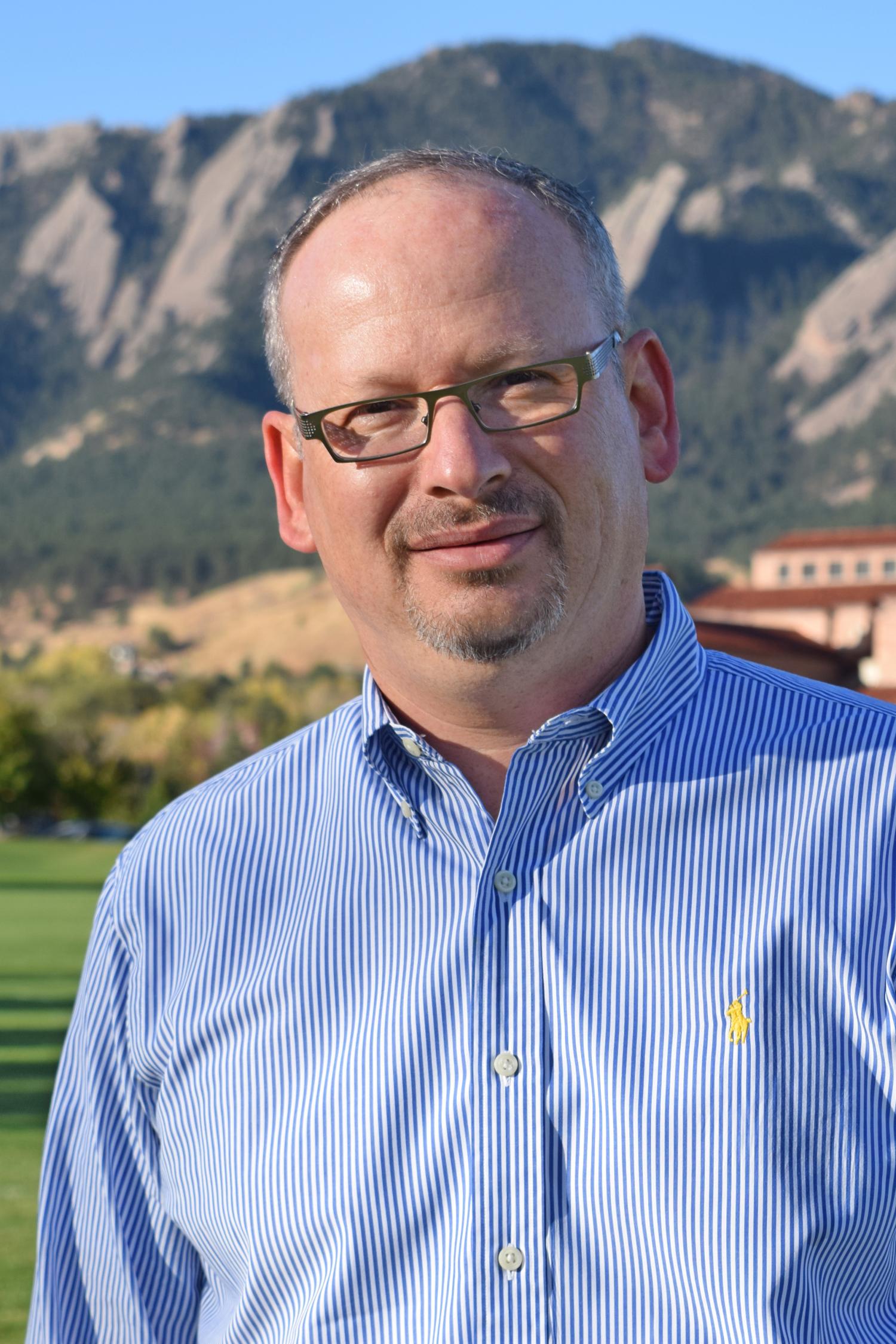
Victor M. Bright is a Professor and Assistant Vice Chancellor for Research Micro/Nanoscale at the University of Colorado. His research focuses on Micro/Nanoelectromechanical Systems (MEMS), electrowetting-based optical devices, and advanced imaging technologies. Key contributions include innovations in electrowetting lenses, microLED arrays for microscopy, and biomedical imaging systems. His work integrates MEMS fabrication, optical engineering, and material science to develop novel optical components and imaging solutions. His laboratory develops miniature, high-resolution imaging systems such as the Opto2P-FCM microscope and advanced tunable lenses for applications in neuroscience and optical coherence tomography. Recent efforts emphasize real-time monitoring of membrane fouling via Raman spectroscopy and high-speed calcium imaging in live tissues. Publications highlight advancements in adaptive optics, structured illumination microscopy, and MEMS-based devices. His research addresses challenges in precision manufacturing, optical system miniaturization, and biomedical diagnostics. The laboratory website and full CV provide further details on ongoing projects and collaborations.
Dr. Daria Kotys-Schwartz is a Teaching Professor in the Department of Mechanical Engineering at the University of Colorado Boulder, affiliated with the College of Engineering and Applied Sciences. She serves as the Mollenkopf Faculty Fellow and directs the Idea Forge, while co-directing the Design Center. Her roles emphasize innovation in engineering education and design pedagogy. Dr. Kotys-Schwartz holds a Ph.D. in Mechanical Engineering, with prior experience as an Advanced Manufacturing Engineer focusing on polymer processing. Her research focuses on engineering education mechanisms , particularly how students learn design, and addresses diversity and inclusiveness in STEM. She investigates transitions from academic capstone projects to industry workplaces, emphasizing leadership development and contextual gaps in competency application. Teaching: She instructs courses including First Year Projects (GEEN 1400) , Manufacturing Processes (MCEN 4026) , and Graduate Design Projects (MCEN 5075) . Her curriculum design emphasizes project-based learning and prototyping. Awards & Recognition: Marinus Smith Teaching Award (2017, 2009) Woodward Outstanding Faculty Award (2016) ASEE ERM Distinguished Service Award (2014) John & Mercedes Peebles Innovation in Education Award (2011) Research & Impact: Her work bridges academia and industry, analyzing how capstone design experiences prepare students for professional roles. Key themes include leadership identity development, prototype-mediated communication, and overcoming contextual barriers in workplace transitions. She collaborates on NSF-funded studies like the Capstone to Work (C2W) Project , investigating new engineers' first three months in industry. Labs & Initiatives: Leads the Idea Forge (a maker space) and co-directs the Design Center , fostering interdisciplinary collaboration and prototyping skills among students.
Dr. Sunday Ekpo is a Senior Lecturer in Electrical & Electronic Engineering at Manchester Metropolitan University (MMU), UK. He holds multiple advanced qualifications, including a PhD in Electrical & Electronic Engineering and certifications such as Chartered Engineer (CEng) and Senior Fellow of the Higher Education Academy (SFHEA). His research focuses on Communication and Space Systems Engineering, with expertise in 5G/6G networks, satellite-cellular convergence, RF engineering, and IoT applications. He leads projects on energy-efficient wireless systems, additive manufacturing for electronics, and smart sensor development. Education: BEng (Hons) in Electrical & Electronic Engineering MSc in Communication Engineering MA in Higher Education PhD in Electrical & Electronic Engineering Research Interests: RF and microwave transceiver design Satellite communication subsystems Energy harvesting for IoT AI-driven signal processing Smart sensor systems Awards: Best Paper Award (2023) Best Overall Powerhours (British Council) Huawei’s Influential Thinkers Award (2019) Grants & Projects: £1.3m+ external grants secured Lead on Sony-funded Spresense-managed drone connectivity projects SmOp Cleantech collaborations on green wireless systems UK Space Agency and 6G policy advisory roles Labs & Teams: Leads the Advanced Electronic Design, Communication and Space Systems Engineering teams, and chairs international conferences like the Adaptive and Sustainable Science, Engineering and Technology (ASSET) series.
Dr. Sourish Banerjee is a Senior Lecturer in Structural Design at the School of Engineering, University of Southern Queensland. He holds a BEng from Jadavpur University, MEng from Bengal Engineering College, and a PhD from the University of Southampton. His research focuses on structural engineering, materials science, and composite materials, with particular emphasis on sustainable infrastructure and advanced material applications. Dr. Banerjee's expertise includes structural rehabilitation, photovoltaic recycling, carbon nanotube dynamics, and composite materials for railway and civil infrastructure. He has supervised multiple doctoral projects, including studies on ultralight lattices, photovoltaic module recycling, and acoustic impacts of launch vehicles. His work bridges theoretical mechanics with practical engineering solutions, addressing challenges in material durability, sensor integration, and environmental sustainability. Key contributions include innovative designs for composite railway sleepers using waste-based panels and advancements in FRP repair systems for corroded pipelines. His research also explores ultrasonic and fiber optic sensing technologies for structural health monitoring. With over 2157 downloads of his outputs and active contributions to global conferences, he maintains a strong academic and applied research profile.
Martin Wynn is an Associate Professor of Information Technology at the University of Gloucestershire's School of Computing and Engineering. With 20 years of industry experience as an IT professional and senior manager at Glaxo Pharmaceuticals and HP Bulmer Drinks, he transitioned to academia with a focus on knowledge transfer partnerships and post-doctoral supervision. His research interests span digital transformation, emerging technologies, sustainability, IT strategy, and risk management. He holds a PhD in Town and Country Planning and a PGCFHE in Education. Education: BA (Hons) Geography (Durham, 1973), MA Geography (Durham, 1977), PhD Town and Country Planning (Nottingham Trent, 1981), PGCFHE Education (Gloucestershire, 2003). Research focuses on leveraging technology for sustainable development, including digitalisation in manufacturing, cybersecurity, and the interplay between technology and urban planning. Over 20 doctoral students have been supervised in areas like digitalisation, analytics, and sustainability. Publications span e-business adoption in developing countries, ERP systems in SMEs, and ICT utilization in Libyan universities. He is a PRINCE2 Practitioner and Certified Management Consultant (CMC).
Li Wei is a distinguished academic affiliated with Tsinghua University, with a focus on interdisciplinary research spanning artificial intelligence, machine learning, and computer vision. His work often intersects with medical informatics, remote sensing, and signal processing, demonstrating a commitment to advancing technological solutions in healthcare, environmental monitoring, and engineering systems. Research interests include deep learning applications in clinical diagnostics, satellite data analysis for climate modeling, and optimization of energy storage systems. He has contributed to innovative solutions in areas such as UAV-enabled edge computing, privacy-preserving blockchain protocols, and thermal-based surveillance systems. His collaborative projects often involve multidisciplinary teams across institutions. Publications reflect a strong emphasis on practical applications, such as mobile health tools for tumor recognition, transformer-based super-resolution techniques for oceanography, and AI-driven risk classification models for respiratory diseases. While no specific awards or grants are listed, his prolific output across top-tier journals indicates sustained research impact. Professional activities include contributions to conferences like RecSys, MICCAI, and AAAI, and editorial roles are implied through his extensive publication record. Collaborations with industry partners (e.g., in energy systems and medical imaging) suggest engagement with real-world problem-solving.
Shuai Ren is a Research Fellow at the Department of Energy and Process Engineering, Norwegian University of Science and Technology (NTNU). His research focuses on high-temperature heat pumps, heat and mass transfer, and computational fluid dynamics, with applications in industrial refrigeration and food processing. He is part of the ENOUGH project, exploring sustainable energy solutions. Key research interests include absorption-compression heat pump systems, CO2-based refrigeration technologies, and optimization of thermal systems for industrial use. His work addresses energy efficiency and sustainable energy integration in sectors like dairy processing and food manufacturing. Recent publications emphasize experimental and numerical studies of heat pump performance, including oil-free systems and ammonia-water mixtures. He has presented at international conferences such as the IIR Gustav Lorentzen Conference and the International Congress of Refrigeration. Shuai Ren advised the 2023 Master's thesis 'Utilization of surplus heat from the organic dairy at Røros.' His research collaborations involve institutions like the International Institute of Refrigeration and projects targeting low-carbon energy solutions.