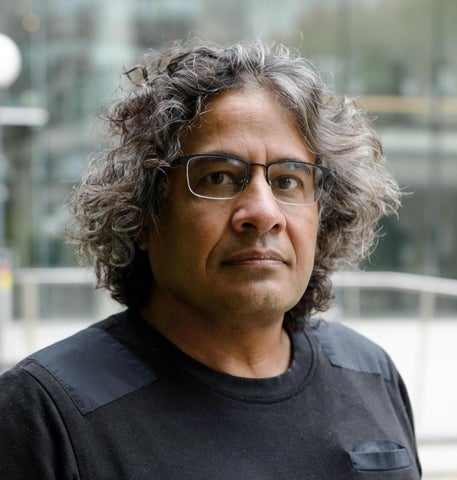
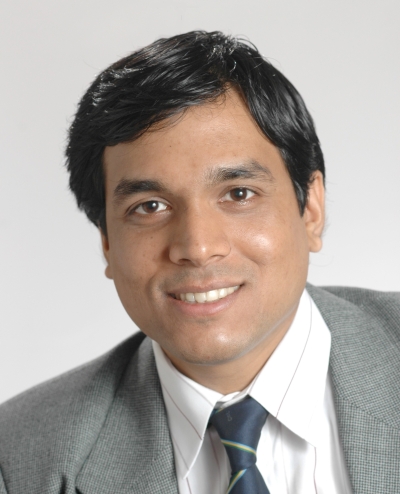
Sachdev Sidhu is a Research Professor and Entrepreneur in Residence at the University of Waterloo. His research focuses on synthetic antibodies, protein engineering, and biotechnological applications. He leads efforts in developing novel therapeutic antibodies, engineered protein systems, and molecular tools for biomedical research. His work spans cancer therapy, viral infection countermeasures, and regenerative medicine. Sidhu is also involved in translational research, bridging academic discoveries with commercial applications through entrepreneurial ventures. Key research interests include synthetic antibody libraries, CAR T-cell engineering, ubiquitin-based therapeutics, and phage display technologies. He has contributed to advancements in targeted therapies for glioblastoma, leukemia, and ocular diseases. His team develops innovative methods for protein design, such as engineered ubiquitin variants and modular antibody architectures. Publications highlight breakthroughs in antibody-based treatments, including synNotch CAR T cells for glioblastoma and neutralizing antibodies against SARS-CoV-2. His work integrates structural biology, molecular biology, and computational approaches to address complex biomedical challenges. Sidhu collaborates with industry partners to advance technologies into clinical and commercial settings.
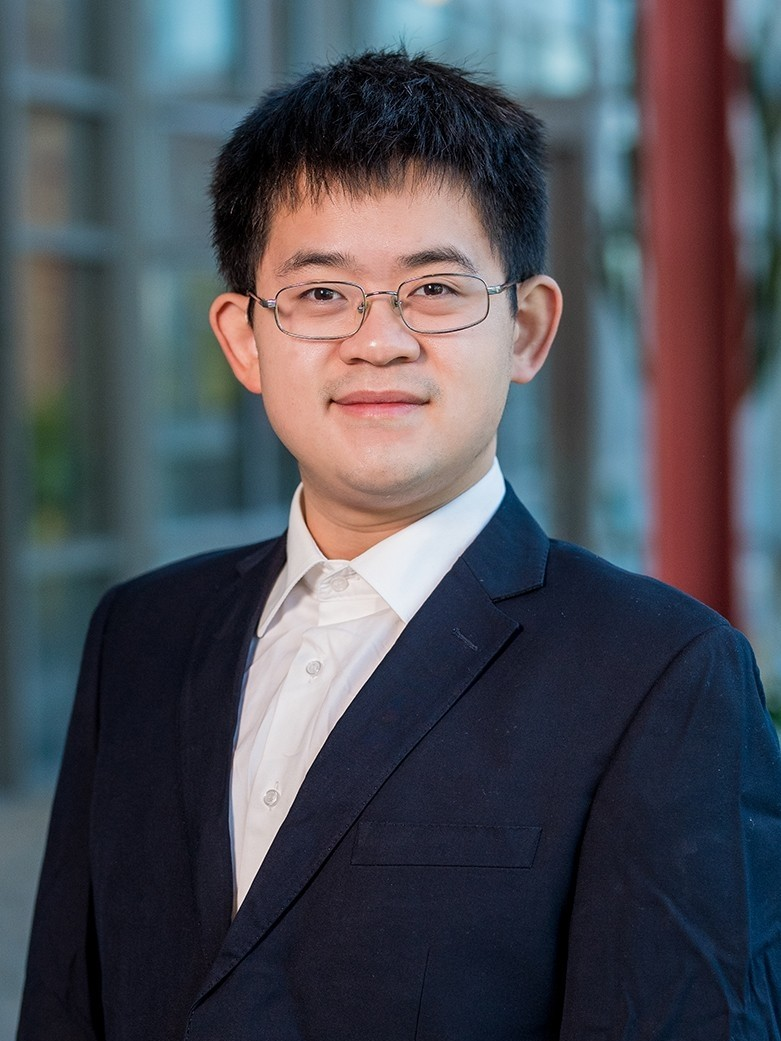
Linyi Li is an Assistant Professor in the School of Computing Science at Simon Fraser University (SFU), leading the Trustworthy Artificial Intelligence (TAI) Lab. His research focuses on certifiably trustworthy deep learning systems, combining machine learning and computer security. He holds a PhD from the University of Illinois Urbana-Champaign (UIUC) and a B.Eng. from Tsinghua University. Affiliations: Simon Fraser University, TAI Lab Education: PhD in Computer Science, UIUC, 2023 B.Eng (Cum Laude), Tsinghua University, 2018 His research interests include deep learning , trustworthy machine learning , large language models , and software engineering . He emphasizes rigorous certification of robustness, fairness, and numerical reliability in AI systems. Recent work includes the InfiBench benchmark for evaluating code LLMs and advancements in neural network verification. Recent Research Trends: His publications span certified robustness, fairness guarantees, and scalable verification techniques for deep learning models. He also explores scientific evaluation of foundation models and adversarial defense mechanisms. Awards: Rising Stars in Data Science AdvML Rising Star Award Wing Kai Cheng Fellowship Finalist: Qualcomm Innovation Fellowship (2022) Winner: VNN-COMP'23 Competition (Team α, β-CROWN) Advising & Grants: As a PI, he oversees the TAI Lab's research. Though no specific grants are listed, his work is funded through competitive awards and university resources. Labs/Teams: Leads the TAI Lab at SFU, focusing on foundational and applied research in trustworthy AI.
About Dr. Pegah Varamini Dr. Pegah Varamini is a Senior Lecturer in Pharmacy and Pharmacology at the Sydney Pharmacy School, University of Sydney, and a Casual Lecturer in Music Education at the Sydney Conservatorium of Music. She leads the Breast Cancer Targeting & Drug Delivery (BCTDD) Group, focusing on innovative drug delivery systems for Triple Negative Breast Cancer (TNBC). Her research integrates nanotechnology, targeted therapy, and translational medicine, supported by prestigious grants including the NBCF Fellowship (2016). Research & Education PharmD (Shiraz University of Medical Sciences) PhD in Pharmaceutical Sciences (University of Queensland) Second PhD in Music Education (University of Sydney Conservatorium of Music) Key Research Interests Her work centers on: Peptide-based targeting strategies using 'Trojan Horse' approaches for TNBC Development of nanomedicine for bone metastasis prevention Clinically relevant preclinical models for personalized breast cancer treatment Collaborations with international institutions (e.g., Harvard Medical School, University of Nantes) Teaching & Supervision Dr. Varamini coordinates Drug Design and Development (PCOL3012/3912) and supervises a multidisciplinary team of HDR students and postdoctoral researchers. Notable current students include PhD candidate Hany Ghaly and MPhil candidates Huimin Shao and Farhana Mollah. Awards & Recognition 2021 Equity Prize 2016 Top 25 Young Researchers of Australia and New Zealand 2018 Fresh Scientist of the Year Recipient of multiple grants totaling over AUD 2M Leadership & Outreach She co-chairs the Nanopharma cluster at Sydney Nano Institute and advises the WHO Global Breast Cancer Initiative. Her work has been featured in media outlets such as SBS Farsi News and NBCF publications.
Dr. Lixin Cheng is a Senior Lecturer in Chemical Engineering at the Department of Engineering and Mathematics, Sheffield Hallam University, where he contributes to teaching core modules such as Transport Phenomena and oversees the chemical engineering program. His research focuses on multiphase flow and heat transfer, including enhanced heat transfer technologies, nanofluids, and carbon capture systems. He has held academic roles globally, including at Aarhus University, EPFL, and Xi'an Jiaotong University, and has extensive industry experience as a design engineer. Dr. Cheng is an Alexander von Humboldt Fellow and serves as editor-in-chief for multiple journals, including the International Journal of Microscale and Nanoscale Thermal & Fluid Transport Phenomena . Education: PhD in Thermal Energy Engineering (Xi'an Jiaotong University, 1998), followed by postdoctoral and research roles at leading institutions. His interdisciplinary research spans oil-gas-water systems, sustainable energy, and thermal energy management. He has authored over 80 papers and 8 books, with a focus on advancing thermal-fluid science and engineering applications. Research interests include gas-liquid two-phase flow dynamics, flow boiling/condensation, microchannel heat transfer, and CO₂-based thermal systems. His work bridges experimental studies, computational modeling, and industrial collaborations, addressing challenges in energy efficiency and environmental sustainability. Key contributions include editorial leadership in thermal-fluid journals, organizing international conferences (e.g., ISTFD), and developing predictive models for flow boiling in microchannels. His recent publications (2021–2025) emphasize green hydrogen systems, supercritical CO₂ applications, and heat transfer enhancement in microscale systems. Awards: Alexander von Humboldt Fellowship (2000–present). Grants and collaborations include partnerships with international universities and industry players, focusing on thermal-fluid innovation. Labs/Teams: Active in Sheffield Hallam's Engineering and Mathematics Department, leading interdisciplinary research in multiphase systems and sustainable energy solutions.
Virgil Percec is the P. Roy Vagelos Professor of Chemistry at the University of Pennsylvania, affiliated with the School of Arts & Sciences and the Department of Chemistry. His research focuses on organic, supramolecular, and macromolecular chemistry, with an emphasis on self-assembly, drug delivery systems, and biomimetic nanosystems. He holds a B.S. and Ph.D. from institutions in Jassy, Romania, and conducted postdoctoral research at the University of Freiburg and the University of Akron. Research Interests: Percec’s work integrates synthetic methods, catalysis, and structural biology to design functional nanosystems. Key areas include hierarchical folding, supramolecular chirality, and synthetic mimics of biological membranes. His lab explores mRNA delivery systems using Janus dendrimers and studies self-organized structures like helical columns and quasicrystals. Recent Articles: His recent publications highlight advancements in mRNA delivery mechanisms, supramolecular architectures, and polymer synthesis innovations. The group’s work often involves interdisciplinary collaborations, bridging chemistry, materials science, and bioengineering. Awards: Percec was elected a Foreign Member of the Academia Europaea (2020) and delivered the inaugural ACS Kavli Lecture (2011). His lab has trained numerous students and postdocs, including Juncheng Lu (Master’s Capstone Award recipient) and Devendra Maurya (SET-LRP research). Labs & Teams: The Percec Research Laboratory at Penn develops cutting-edge biomaterials and supramolecular systems. The group collaborates globally, with projects funded by grants exploring nanotechnology and drug delivery.
Prof. Anya Belz is Full Professor of Computer Science at Dublin City University's School of Computing and Science Lead at ADAPT Research Centre. A leading NLP researcher with PhD-level expertise, she specializes in natural language generation, evaluation methodologies, and multimodal systems. Recipient of multiple best paper awards and NAACL Test of Time Award nomination. Research innovations include foundational work on statistical language generation (deployed in weather forecasting systems), comparative evaluation frameworks, vision-language integration, and reproducibility quantification. Current EPSRC-funded ReproHum project coordinates 20 global labs studying evaluation consistency. Achievements : Developed industry-deployed generation systems for accessibility applications Pioneered cross-modal alignment techniques for image description Authored 100+ publications spanning generation, evaluation, and reproducibility
Christof Paar is a Professor of Embedded Security at Ruhr University Bochum's Faculty of Computer Science. His work focuses on hardware security, cryptography, and embedded systems security. He leads the Embedded Security Group within the CASE Cluster of Excellence (Cyber Security in the Age of Large-Scale Attacks), addressing cutting-edge challenges in hardware Trojans, side-channel attacks, and cryptographic engineering. His research spans FPGA and IoT security, with contributions to physical-layer security, wireless jamming defenses, and tamper-resistant systems. Research Interests: Paar's expertise lies in hardware-software co-design for security, with a focus on embedded systems. His work includes analyzing vulnerabilities in FPGAs, developing countermeasures against side-channel attacks, and exploring physical-layer security mechanisms. He also investigates the human factors in hardware reverse engineering and the implications of adversarial machine learning on security systems. Notable Work: Recent publications highlight breakthroughs in detecting hardware Trojans across CMOS generations, breaking industry-standard IP protection mechanisms (IEEE 1735), and proposing novel defenses like IRShield against adversarial wireless sensing. His group actively contributes to standards for secure embedded systems and IoT devices, emphasizing practical implementations.
Prof. dr. Steven Hoekstra is an Associate Professor of Atomic and Molecular Physics at the University of Groningen's Faculty of Science and Engineering, within the Van Swinderen Institute. His research focuses on precision measurements using cold molecules to explore fundamental physics, including Stark deceleration, laser cooling, and searches for physics beyond the Standard Model. He leads the NL-eEDM program at Nikhef, investigating the electron's electric dipole moment. Hoekstra is also involved in educational innovation, having received the Teacher of the Year award (2020) and a Senior Teacher Qualification (2023). He has supervised over 11 PhD theses and currently mentors 5 students. His work combines experimental techniques with theoretical insights, addressing questions like symmetry violations and quantum dynamics. Key projects include manipulating BaF molecules with electrostatic fields and exploring levitated nanoparticles as sensors. Hoekstra has secured major grants, including NWO VICI (2022) and VIDI (2013), and collaborates internationally on projects like the European Strategy for particle physics. Recent articles highlight advancements in molecular beam control, spin-precession methods for EDM searches, and opportunities in radioactive molecules. He actively participates in the Physics Olympiad Netherlands as chair, contributing to science outreach and education.
Chita R. Das is a Professor at Pennsylvania State University, known for extensive contributions in computer architecture, machine learning, and high-performance computing. Their research focuses on optimizing hardware-software co-design for edge computing, cloud infrastructure, and energy-efficient systems. Key areas include FPGA acceleration, GPU optimization, and serverless computing frameworks. Das collaborates frequently with institutions like AMD and Intel, addressing challenges in parallel computing and distributed systems. Their work bridges theoretical advancements with practical applications in recommendation systems, bioinformatics, and real-time video processing. Research interests span across hardware acceleration techniques, cloud resource management, and sustainable computing. Notable projects include adaptive training frameworks for intermittent power environments and neural-augmented game streaming for mobile platforms. Das's publications often address performance bottlenecks in modern architectures and propose novel solutions for latency and energy efficiency. Recent articles highlight innovations in serverless computing cost optimization, low-bandwidth VR streaming, and FPGA-based bioinformatics tools. Their contributions are characterized by interdisciplinary approaches combining computer architecture with machine learning and embedded systems.
Dr. Foong Shaohui is an Associate Professor and Associate Head at the Engineering Product Development (EPD) pillar of the Singapore University of Technology and Design (SUTD), with prior experience as a Visiting Assistant Professor at MIT's Mechanical Engineering department (2011). He leads the Aerial Innovation Research (AIR) Laboratory @ SUTD and actively collaborates with Singapore's Ministry of Defence (MINDEF) and medical institutions like National University Hospital (NUH) and Changi General Hospital (CGH). PhD, MS, and BS in Mechanical Engineering from Georgia Institute of Technology (2005-2010) Research Interests span multiple domains: Robotics & UAVs : Nature-inspired aerial craft design (Project MONOCO), hybrid flight dynamics, and transformable rotorcraft Medical Device Innovation : Magnetic localization systems for nasogastric tubes and ventriculostomy procedures Engineering Education : Design-Centric pedagogy and pre-university Aerial Craft Workshops Autonomous Systems : Deep tunnel sewer inspection drones (NRF/PUB funded) and soft robotics Scientific Contributions include patented magnetic localization technologies (licensed to Medergo Pte. Ltd.), over 20 peer-reviewed publications, and 5 granted patents. His work bridges aerospace engineering with biomedical applications through innovative mechatronic solutions. Best Application Paper Award at SCIS & ISIS (2014) Research Grants include projects funded by Singapore's National Research Foundation (NRF), Public Utilities Board (PUB), and National University Hospital partnerships. He mentors PhD/Master's students through interdisciplinary research in aerial robotics and medical device development.
Rita Cucchiara is a Full Professor at the Department of Engineering 'Enzo Ferrari' of the University of Modena and Reggio Emilia. She leads the AImageLab research laboratory, part of the Artificial Intelligence Research and Innovation Center (AIRI) in Modena. Her research focuses on Computer Vision, Pattern Recognition, Machine Learning, and Multimedia, with applications in video surveillance, medical imaging, human-centered AI, and generative models. She is actively involved in interdisciplinary projects like ELIAS (European Lighthouse for AI Sustainability) and ELSA (European Lighthouse on Secure AI). Her recent roles include being elected Rector of the University of Modena and Reggio Emilia in 2025. She has organized and participated in major AI events, including workshops at NeurIPS, CVPR, and ECCV, and has contributed to advancements in multimodal models, deepfake detection, and trustworthy AI. Education details are not explicitly provided, but her extensive academic and research experience at the University of Modena underscores her expertise. She collaborates with institutions like NVIDIA, CINECA, and industry partners such as Digital Design and NVIDIA's AI Technology Center. AImageLab's projects include developing systems for medical imaging, ethical AI, and generative adversarial networks (GANs) for design surfaces. She co-organizes initiatives like the ELLIS Summer School on Large-Scale AI and contributes to policy discussions on AI ethics and societal impact. Her work spans from foundational research (e.g., vision transformers, continual learning) to applied projects (e.g., DDGan system for surface printing). Key grants and collaborations include the FAIR project and PNRR-M4C2 initiatives. She advises students and researchers in AI, with 7 PhD positions funded under national programs. Her leadership roles in AIRI and AImageLab highlight her commitment to bridging academia and industry, fostering innovation in AI-driven solutions for sustainability and healthcare.
Paul Prucnal is a Professor of Electrical and Computer Engineering at Princeton University, affiliated with the Princeton Materials Institute (PMI). He leads the Lightwave Communications Research Lab, focusing on ultrafast optical techniques for communication networks and neuromorphic photonics. His research spans optical security, CDMA networks, nonlinear signal processing, and photonic neurons. Education: Ph.D., Columbia University (1979) M.Phil., Columbia University (1978) M.S., Electrical Engineering, Columbia University (1976) A.B., Bowdoin College, summa cum laude (1974) Research Interests: Optical Network Security (eavesdropping/jamming countermeasures) Optical CDMA for broadband networks Silicon photonic neuromorphic computing RF interference cancellation in wireless systems Photonic spiking neurons mimicking biological organisms Awards: National Academy of Inventors Fellow (2017) 10+ teaching awards including Princeton's President's Award (2015) OSA/IEEE Fellowships (1992, 1997) Labs/Teams: Leads the Lightwave Communications Lab, collaborating with government/industry partners. Lab alumni like Prof. Bhavin Shastri have achieved international recognition. Grants/Publications: Over 350 journal papers, 22 U.S. patents. Authored/co-authored Neuromorphic Photonics (2017) and edited Optical Code Division Multiple Access (2019). Current projects include photonic tensor processors and real-time RF signal processing.
Floyd Mueller is a Full Professor of Future Interfaces in the Department of Human Centred Computing at Monash University, where he also directs the award-winning Exertion Games Lab. His work bridges human-computer interaction, interaction design, and game and play design, with a focus on bodily engagement and physical activity through technology. He has held prior academic and research positions at RMIT University, the University of Melbourne, and CSIRO, and has been affiliated with elite institutions such as Stanford University, MIT Media Lab, and Microsoft Research Asia. PhD in Interaction Design – University of Melbourne (2011) MS in Media Arts and Sciences – Massachusetts Institute of Technology (2002) Diplom-Informatiker (Medieninformatik) – Hochschule Furtwangen (2000) BSc in Multimedia – Griffith University (1999) Floyd Mueller’s research centers on human-computer interaction with a strong emphasis on bodily interactions, exertion interfaces, and playful technologies. His work explores how digital systems can support physical activity, human values, and novel forms of expression through games, wearables, augmented reality, and immersive experiences. He employs methodologies such as design ethnography, autoethnography, and Research Through Design to investigate the phenomenology of human-computer integration. His recent publications (2024–2025) reflect a continued focus on the future of bodily interfaces, including lucid dream mediation, extended reality for fear reduction in water, sonic gastronomy, and shared bodily control in augmented human systems. These works are published in top-tier venues like CHI and Human-Computer Interaction journal, highlighting trends toward immersive, sensory-rich, and human-centered computing that challenge traditional boundaries between body and machine. His scientific awards include being an inaugural honouree of the Australian Design Honours, receiving 9 Best Paper Honorable Mentions and 2 Best Papers at CHI and CHI PLAY, and being recognized as a Fulbright Visiting Scholar and Microsoft Research Asia Fellow. His games have been featured by BBC, ABC, Discovery Science Channel, and New Scientist, and won a Media Star Award. Floyd Mueller actively supervises PhD students through the Exertion Games Lab and Supervisor Connect platform. He has secured major research grants, including Australian Research Council Discovery and Linkage Projects. His current projects include Advancing Australia’s hospitality industry through interactive food and Designing digital aquatic play to foster Australians' engagement with water . He also serves as associate editor for IMWUT and IJHCS, co-founded the CHI PLAY conference series, and was general co-chair for CHI PLAY’18 and CHI’20. He leads the Exertion Games Lab, an interdisciplinary research team focused on inventing the future of bodily play. The lab investigates how technology can support active lifestyles through exertion games, wearables, drones, and immersive environments. The lab’s work spans design, prototyping, user studies, and real-world deployment, often in collaboration with chefs, athletes, and underwater explorers.
Dr. Frank Rudzicz is an Associate Professor in the Faculty of Computer Science at Dalhousie University. His research lies at the intersection of artificial intelligence, natural language processing, and healthcare, with a focus on developing machine learning systems that improve clinical decision-making, patient outcomes, and accessibility in medicine. He holds a BSc from Concordia University (2004), an MEng from McGill University (2006), and a PhD from the University of Toronto (2011). His research interests include Natural Language Processing, Machine Learning, Healthcare, Speech Technologies, Explainable AI, and Fairness in ML. Dr. Rudzicz's recent publications span a wide range of topics, including Alzheimer's detection through speech analysis, surgical outcome prediction, mental health monitoring, privacy in AI, and the application of large language models in clinical settings. His work consistently emphasizes ethical AI, patient privacy, and real-world clinical integration. He has received several awards, including a Best Paper award at EMNLP 2020, a Best Student Paper award at ICASSP 2021, and the ISCA Best Student Paper award in 2013. His research has been published in top-tier journals such as Nature Scientific Reports , JAMA Network Open , IEEE Access , and Frontiers in Human Neuroscience , as well as leading conferences including NeurIPS, ACL, ICML, and Interspeech. Dr. Rudzicz supervises a dynamic research group working on AI for health, with active projects in voice-based diagnostics, ambient clinical documentation, explainable AI for surgery, and wearable-based monitoring for chronic diseases. He collaborates widely across disciplines, including with clinicians, neuroscientists, ethicists, and public health experts. He is also involved in major initiatives such as the Genetics Navigator study and Bridge2AI-Voice, aiming to build ethically sourced, diverse biomedical datasets. His lab actively explores the societal implications of AI in healthcare, including fairness, trust, and resistance to malicious fine-tuning.
Sanjit A. Seshia is the Cadence Founders Chair Professor in the Department of Electrical Engineering and Computer Sciences at the University of California, Berkeley . He is affiliated with the Group in Logic and the Methodology of Science and participates in centers like the Industrial Cyber-Physical Systems Center , Berkeley AI Research , and the Simons Institute for the Theory of Computing . Research interests include formal methods for automated verification and synthesis of dependable systems, with applications to cyber-physical systems , AI-based autonomy , and computer security . His work spans SMT solving, model counting, syntax-guided synthesis, and algorithmic improvisation, with tools like UCLID5 , VerifAI , and Scenic for verifying autonomous systems and educational platforms like CPSGrader . Students and collaborators include notable researchers such as Dorsa Sadigh (Stanford), Daniel Fremont (UC Santa Cruz), and Hazem Torfah (Chalmers). He has co-founded startups like Decyphir and 20ⁿ Labs based on his research.