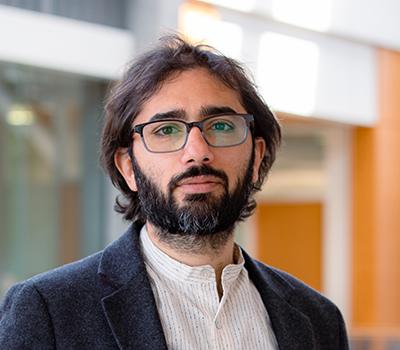
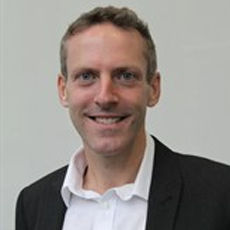
Houssam Abbas is an Assistant Professor in the School of Electrical Engineering and Computer Science at Oregon State University. He holds a Ph.D. in Electrical Engineering from Arizona State University and has professional experience in SoC verification at Intel and postdoctoral research at the University of Pennsylvania. His work focuses on computational ethics for AI agents, design/verification of cyber-physical systems, and autonomous systems like self-driving cars and drones. Education: Ph.D., Electrical Engineering, Arizona State University (2015) M.Sc., Electrical Engineering, Arizona State University (2006) B.Eng., Computer and Communications Engineering, American University of Beirut (2004) Abbas' research integrates deontic logic for ethical obligations in AI, distributed verification techniques for autonomous systems, and fair control algorithms for aerial missions. He co-leads the F1/10 autonomous racing initiative and teaches hands-on courses on self-driving cars. Awards: 2022 NSF CAREER Award 2022 Grainger Foundation Frontiers of Engineering Symposium Participant Grants & Projects: NSF CCRI Grant for F1/10 Racecar platforms (with Penn and Clemson) FAA ASSURE project on UAV cybersecurity Lab/Teams: His work involves the Autonomous Systems Lab , focusing on ethical AI, robotics, and formal verification tools like the F1/10 platform.
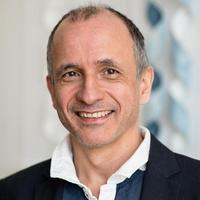
Kevin W. Hamlen is the Louis A. Beecherl, Jr. Distinguished Professor in the Department of Computer Science at the University of Texas at Dallas. He serves as Executive Director of UT Dallas' Cyber Security Research and Education Institute. His research focuses on language-based security , binary software hardening , cyberdeception , and formal program verification . He has received multiple grants from agencies like AFOSR, NSF, DARPA, and industry partners including Lockheed Martin and Intel. PhD and MS from Cornell University BS from Carnegie Mellon University His research explores automated approaches to software security through techniques like binary disassembly , control-flow integrity , and honey-patching . He has pioneered methods for malware defense and cloud/web/mobile security . Recent work examines adaptive cyberdeception and GPU-based security frameworks . His publications span binary code manipulation , malware mitigation , and blockchain security . Key awards include the NSF IUCRC Technology Breakthrough Award and two CSAW Best Paper 2nd Prizes . He advises numerous PhD students, many of whom now work at Google, IBM, and Microsoft. His book Autonomous Cyber Deception (Springer, 2019) with Ehab Al-Shaer and Cliff Wang provides comprehensive coverage of adaptive cyberdeception strategies.
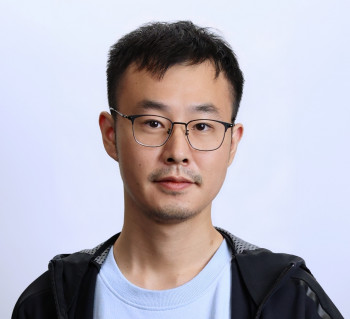
Denghui Zhang is an Assistant Professor in the School of Business at Stevens Institute of Technology. His research focuses on data science, large language models (LLMs), and business analytics, with particular emphasis on applications in financial systems, knowledge graphs, and spatio-temporal prediction. He is a member of the Stevens Institute for Artificial Intelligence and has held academic roles including reviewer positions for prestigious journals like Nature Communications and conferences such as AAAI and SIGKDD. Dr. Zhang holds a PhD in Information Systems from Rutgers University (2023) and an MS in Computer Science from the University of Chinese Academy of Sciences (2018). His educational background bridges computer science and business analytics, enabling his cross-disciplinary research. His research explores cutting-edge topics like federated learning optimization for LLMs, theory-of-mind reasoning mechanisms, and ethical AI governance. Notable contributions include turbulence forecasting models, traffic prediction frameworks, and venture capital investment strategies leveraging reinforcement learning. Dr. Zhang has received prestigious recognitions including the ICIS 2023 Best Student Paper Award and AAAI-23 Student Scholar distinction. His work frequently addresses practical challenges in AI ethics, financial decision-making systems, and scalable machine learning architectures. He actively contributes to academic communities through program committee roles for top conferences and has pioneered novel methodologies in multi-agent financial systems and graph neural network design.
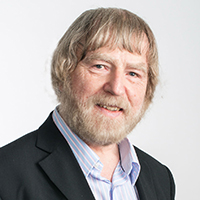
Supartha Podder is an Assistant Professor in the Department of Computer Science at Stony Brook University, located in Stony Brook, NY. He holds a PhD from the Centre for Quantum Technologies at the National University of Singapore and master's degrees from École Normale Supérieure de Cachan (now ENS Paris Saclay) and the Chennai Mathematical Institute. Before joining Stony Brook, he was a postdoctoral researcher at the University of Ottawa under Anne Broadbent and at the University of Texas at Austin under Scott Aaronson. His research focuses on quantum and classical complexity theory, particularly exploring scenarios where quantum computation surpasses classical methods. Key interests include quantum cryptography, quantum algorithms, and the intersection of complexity theory with cryptographic systems. He also investigates foundational topics like analysis of Boolean functions and communication complexity. Podder teaches graduate and undergraduate courses in theoretical computer science, including the Theory of Computation (CSE 540, CSE 350) and advanced topics in Quantum Computing and Applications (CSE 550). He actively mentors a research group with PhD candidates and undergraduates, focusing on quantum computing and related areas. His service roles include program committee memberships for TQC 2024 and QCNC 2025, NSF panel participation, and session chair roles at ITCS 2025. He leads the AALO charity initiative with undergraduates to support underprivileged students in India. His research has led to notable contributions in quantum algorithms, communication complexity, and cryptographic protocols, with recent work appearing in venues like STOC, FOCS, and SICOMP.
Dr Scott A. Hale is an Associate Professor and Senior Research Fellow at the Oxford Internet Institute (OII), University of Oxford, and a Fellow of the Alan Turing Institute. His work bridges computer science and social sciences, focusing on equitable information access, multilingual online dynamics, and misinformation mitigation. He holds degrees in Computer Science, Mathematics, and Spanish from Eckerd College, followed by a DPhil (PhD) in Social Data Science from the OII. Hale’s research has been supported by grants from UK Research and Innovation, the US National Science Foundation, and organizations like the Omidyar Network and the Alan Turing Institute. Key Roles: Programme on AI, Government & Policy; Director of Research at Meedan; Co-Director of the Social Data Science MSc Research Focus: Misinformation, multilingual systems, social media impact, and AI ethics Education: Eckerd College (BS), OII (MSc, DPhil). His DPhil explored social media design’s role in cross-language information sharing. Recent projects include the Digital Good Network and AI alignment studies. Articles highlight trends in multilingual misinformation detection, LLM cultural biases, and hate speech dynamics. Hale’s work bridges technical innovation with social science rigor to address global digital challenges. Awards: Alan Turing Institute Fellowship, recognition in Oxford’s Teaching Excellence Awards. Grants: Over 20 funding sources including DSO National Laboratories and Meta.
Dr. Gabor Karsai is a Distinguished Professor of Computer Science and Professor of Electrical and Computer Engineering at Vanderbilt University's School of Engineering. He also serves as Senior Research Scientist at the Institute for Software-Integrated Systems (ISIS), where he contributes to the Executive Council. With over 30 years in software engineering, his research focuses on embedded systems, model-driven development, resilient software platforms, and AI-driven autonomous systems assurance. He holds a PhD from Vanderbilt and degrees from the Technical University of Budapest. Education: Ph.D. in Electrical and Computer Engineering, Vanderbilt University Dr.Tech. in Computer Engineering, Technical University of Budapest M.S. and B.S. in Electrical Engineering, Technical University of Budapest Affiliations: Co-Associate Chair for Computer Engineering External Member of the Hungarian Academy of Sciences His research interests span model-integrated computing , autonomous systems assurance , and radiation-hardened systems . Recent work emphasizes AI integration into engineered systems and radiation effects mitigation for space applications. He has led major projects on distributed control for smart grids and resilient CPS architectures. Over 200 peer-reviewed publications and four patents reflect his contributions to software engineering and systems integration. Awards & Recognition: External Membership in Hungarian Academy of Sciences Leadership roles in ISIS and Vanderbilt's academic governance Advisees & Grants: While no student list is provided, his projects involve collaborative teams across academia and industry. Major sponsors include NSF, NASA, and DARPA. Current work includes the ALC (Assurance-based Learning-enabled CPS) and MIDAS (Model-based Intent-Driven Adaptive Software) initiatives. Labs & Platforms: Co-developer of the RIAPS distributed CPS platform and the SEAM assurance modeling framework. His labs focus on cyber-physical system design, radiation effects analysis, and autonomous system reliability.
Dr. Constantin Catalin Dragan is a Senior Lecturer in Secure Systems at the University of Surrey, UK. He holds a PhD in Computer Science from Alexandru Ioan Cuza University of Romania (2014), focusing on cryptographic primitives. His research expertise includes applied cryptography, provable security, electronic voting systems, and formal verification. Dr. Dragan has held postdoctoral positions at LORIA, CNRS, INRIA (France) and the University of Surrey. He leads modules such as Privacy Enhancing Technologies (COM3030), Information Security Management (COM3017/COMM037), and supervises final year projects. Currently advising PhD student Navid Abapour, his teaching emphasizes cybersecurity, operating systems, and privacy-preserving technologies. His research focuses on formal verification of security protocols, end-to-end verifiable voting systems, and cryptographic primitives. Notable contributions include work on machine-checked proofs for accountability in systems, privacy-preserving e-voting protocols, and blockchain-based trust services like TAPESTRY and KYChain. Publications span venues like IEEE S&P, EuroS&P, and ESORICS, with a focus on cryptographic protocol design and formal security models. He actively contributes to international workshops on cryptology and cyber security, advancing theoretical foundations and practical implementations of secure systems.
Dilian Gurov is a Professor in Computer Science at KTH Royal Institute of Technology, associated with the Digital Futures Faculty and the Division of Theoretical Computer Science. He also coordinates the Doctoral Programme in Computer Science at the CSC school. Before joining KTH in 2002, he earned a Ph.D. from the University of Victoria, Canada (1998), and worked at the Swedish Institute of Computer Science (1997-2002). His research focuses on software specification and verification, including contracts, program models, logics, and tools, as well as multi-agent strategic planning involving knowledge-based strategies in imperfect information settings. Key contributions include the CAV Distinguished Paper Award 2023 for 'Automatic Program Instrumentation for Automatic Verification' and an EASST award for 'Checking Absence of Illicit Applet Interactions: A Case Study' (2004). He leads projects funded by VR (SEFROS, ContraST) and Vinnova (AVerT2) and collaborates with industries like Scania on formal verification of C programs. His service roles span over 30 conference committees and organization roles, including PC memberships for iFM, TAP, and ISoLA. Teaching responsibilities include courses such as 'Formal Methods,' 'Program Semantics and Analysis,' and 'Knowledge in Games with Imperfect Information.' His work emphasizes practical applications of formal methods, bridging academic research with industry needs through collaborations and tool development (e.g., CVPP, ProMoVer, TriCo).
Dr. Ziquan Liu is a Lecturer (Teaching & Research) at Queen Mary University of London's School of Electronic Engineering and Computer Science, affiliated with the Centre for Multimodal AI. He holds a PhD from City University of Hong Kong (2023) and dual B.Sc./B.Eng. degrees from Beihang University (2017). His research focuses on trustworthy machine learning, adversarial robustness, and uncertainty quantification in foundation models. He has served as a reviewer for top conferences like NeurIPS, ICLR, and CVPR, earning an Outstanding Reviewer Award in 2021. His teaching includes modules on machine learning for visual data analysis and principles of machine learning. He supervises PhD students in AI safety and reliability, with notable work on conformal prediction, adversarial attacks, and multimodal learning. His research outputs span top venues such as ICML, CVPR, and NeurIPS, addressing challenges in algorithmic fairness, model certification, and cross-modal alignment.
Chiara Bodei is an Associate Professor at the Department of Computer Science, University of Pisa. She specializes in cybersecurity, formal methods, and programming languages. Her teaching responsibilities include courses such as 'Programming Fundamentals with Laboratory' and 'Security Methods and Verification' at both undergraduate and graduate levels. She has contributed to research in automotive cybersecurity, IoT security, and formal analysis of software systems. Her work emphasizes secure communication protocols, privacy policies in automotive data, and context-aware security mechanisms. She collaborates with industry and academia on projects related to software-defined vehicles and IoT security. Her research has been published in top-tier conferences and journals, focusing on practical and theoretical advancements in computer security and formal methods. Research Interests: Cybersecurity, Formal Methods, Automotive Systems Security, IoT Security, Programming Languages, Context-Aware Systems. She has co-authored numerous papers on topics such as vehicular communication security, secure automotive protocols, and privacy in IoT systems. Teaching: Bodei has taught courses like 'Fondamenti di Programmazione' (undergraduate), 'Security Methods and Verification' (graduate), and 'Language-Based Technology for Security' (master’s level) across multiple academic years. She emphasizes practical programming skills and theoretical foundations in her courses. Labs/Teams: Her work is supported by the Department of Computer Science labs at the University of Pisa, focusing on applied research in cybersecurity and formal systems.
Peter Bishop is a Professor at the Centre for Software Reliability, City St George's, University of London, where he holds a joint chair in Systems and Software Dependability with Robin Bloomfield. He is also Chief Scientist at Adelard, part of NCC Group, providing consultancy and research in computer safety and dependability. He holds BSc and MSc degrees in Physics and is a Chartered Engineer and Member of the IET. University: City St George's, University of London School: College of Engineering, Design and Physical Sciences Department: Centre for Software Reliability Academic Rank: Professor Email: p.bishop@citystgeorges.ac.uk Research Interests: Peter Bishop's research spans software fault tolerance, design diversity, software reliability prediction, statistical testing, system safety and security, assurance case methodologies, and their application in industrial contexts including autonomous vehicles and nuclear systems. He has led research for the UK nuclear industry on smart device assessment and participated in European projects on critical control system safety. Publication Trends: His recent publications focus on conservative confidence bounds for software reliability, safety assurance under uncertainty, integration of testing and formal proof, and security-informed safety. A recurring theme is the development of rigorous, evidence-based methods to justify software dependability in safety-critical domains, particularly where operational and test profiles differ or failure data is scarce. Scientific Awards and Recognition: While specific awards are not listed, his long-standing contributions are evident through his professorship, leadership at Adelard, and active role in safety-critical research. He is a Chartered Engineer and Member of the IET. Advising and Grants: Although specific students are not named, his leadership in major research projects such as DISPO and DIRC (2000–2006) indicates significant supervisory and mentoring roles. He has secured funding from sources including the Leverhulme Trust (UnCoDe project) and a consortium of nuclear industry stakeholders (EDF Energy, NDA, AWE, etc.) under the CINIF Nuclear Research Programme. Labs and Research Teams: He is a key member of the Centre for Software Reliability at City St George's and leads research activities at Adelard. He collaborates extensively with Robin Bloomfield, Lorenzo Strigini, Bev Littlewood, and others on software dependability and safety assurance research.
Professor Daniel Chicksand is a faculty member in the Department of Management at Birmingham Business School, University of Birmingham , where he holds the rank of Professor of Operations and Supply Management . He also serves as the Director of the Distance Learning MBA programme. Daniel has held academic positions at Warwick Business School and Aston Business School prior to joining Birmingham in 2016 as a Reader, being promoted to full Professor in 2021. Education: PhD in Commerce, University of Birmingham (2009) MBA in Business Strategy & Procurement, University of Birmingham (2003) MSc in Industrial Logistics, University of Central England (1996) BSc in Industrial Information Technology (2:1 hons), University of Central England (1995) Postgraduate Certificate in Academic and Professional Practice, University of Warwick (2011–2013) Daniel’s research is centered on Operations and Supply Chain Management , with a strong theoretical foundation in Resource Dependency Theory (RDT) . His work explores power dynamics , value appropriation , and relationship management in buyer-supplier interactions across sectors such as food, construction, and sustainable supply chains. He has a growing interest in servitization and its impact on value creation. His methodological approach is primarily qualitative, using case-based research. The recent publications reflect a consistent focus on power and negotiation in procurement , resilience and disruption in supply chains (including simulation modeling), and sustainability reporting . His research spans both private and public sectors and often involves international collaboration with institutions in the UK, Europe, and the US. Scientific Engagement and Awards: Visiting Lecturer at Audencia Nantes School of Management (France) Visiting Lecturer at Ecole des Ponts ParisTech and Solvay Business School (France/Belgium) Educator for Duke Corporate Education Collaborator with leading researchers from Aston, Cardiff, Cranfield, Loughborough, Linkoping, and Fox Business School Daniel supervises multiple doctoral students and is involved in pilot research projects funded by the British Academy and the Chartered Institute of Logistics and Supply. He also leads two consultancy firms— DDC Solutions Ltd and Opsworks Ltd —delivering bespoke training and education programmes to corporate clients like UBS, KPMG, and Adams Foods. His prior experience as a business owner in African arts and crafts importation provides practical insights into supply chain and operations management, enriching his teaching and research. Laboratories and Research Teams: Member of the Aston Centre for Seritization Research and Practice (2015–present) Collaborative research network across UK, European, and US universities Lead on projects involving discrete-event simulation and gamification in SCM
Daniel Kühbacher is a Tutor and researcher at the Chair of Environmental Sensing and Modeling at Technische Universität München (TUM). He specializes in developing high-resolution urban emission inventories for CO2, CH4, and co-emitted species, and leads the setup of a 100-sensor CO2 network in Munich to assess sector-specific emission factors. His work bridges environmental monitoring, sensor technology, and urban climate science. Teaching roles include tutoring the Environmental Sensing and Modeling lecture and advanced seminar, as well as the joint practical course Gemeinschaftspraktikum MST . Research focuses on integrating traffic simulation data, mobile measurement units, and flux footprint modeling to quantify urban greenhouse gas emissions. Education: M.Sc. in Environmental Engineering Affiliations: Member of the ICOS Cities project and contributor to the ICOS Science Network Publications emphasize urban GHG monitoring innovations, including sensor network optimization, flux measurement validation, and inventory intercomparison studies. His work supports policy-relevant insights into emission hotspots and mitigation strategies. Currently develops the SCOUT project for street-level carbon observatories and explores human respiration emissions using mobile network data.
Özlem Özgöbek is an Associate Professor at the Department of Computer Technology and Informatics, Norwegian University of Science and Technology (NTNU). Her research spans artificial intelligence, machine learning, and recommender systems with a focus on privacy, fake news detection, and educational technology. NTNU - Department of Computer Technology and Informatics Her work explores multimodal fake news detection, privacy implications in recommender systems, and technology-enhanced classroom interaction. Recent publications analyze digital education trends and classroom tools. Özgöbek collaborates with international researchers and contributes to news recommendation workshops. Her projects address ethical AI, environmental sustainability, and real-time information processing.
Annachiara Ruospo is a Assistant Professor at the Department of Control and Computer Engineering (DAUIN) at Politecnico di Torino. She holds a Fixed-Term Researcher position under Italian Law 240/10, art.24-A, and is actively involved in teaching and research projects. Research Interests : AI Safety, Reliability of AI Systems, Testing of Digital Circuits, Statistical Reliability Investigations. Her recent research focuses on hardware reliability for AI systems , including fault injection methodologies, quantized neural networks, and side-channel vulnerabilities. She collaborates on EU-funded projects like REACT and commercial contracts such as TC4xx NVM Test Strategies . Scientific Awards : None explicitly mentioned. Supervised Students : Antonio Porsia (PhD candidate, Reliability and Security of AI-Based Systems) and Vittorio Turco (PhD candidate, Reliability Evaluation and Hardening of AI Accelerators). She contributes to AI hardware security through patents like A Shannon-Hartley-Based Approach to Measure the Criticality of Synaptic Weights and actively participates in conferences such as the IEEE Latin American Test Symposium and IEEE VLSI Test Symposium .