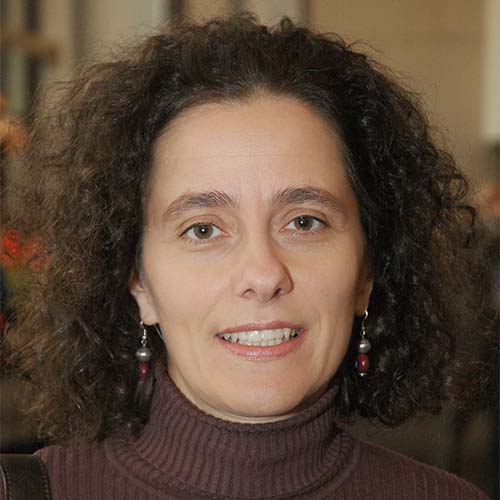
Carlotta Domeniconi is an Associate Professor in the Department of Computer Science at George Mason University. Her research focuses on machine learning , data mining , and clustering techniques with applications in text mining , social network analysis , and financial data mining . Research Interests include Classification and clustering algorithms Subspace and multi-view learning Bayesian and ensemble methods Scientific Awards include the NSF CAREER award (2005-2010) ORAU Ralph E. Powe Junior Faculty Enhancement Award (2004) She has taught courses such as Design and Analysis of Algorithms , Data Mining , and Advanced Pattern Recognition at George Mason University since 2002. Her projects have been funded by the National Science Foundation, US Army, and other organizations.
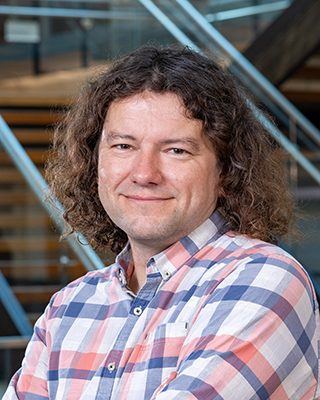
Professor Paul Fearnhead is a leading academic in Statistics at Lancaster University 's School of Mathematical Sciences . His research focuses on Bayesian and Computational Statistics , with applications in Anomaly Detection , Continuous-time Markov Processes , and Changepoint Analysis . Department: Mathematics and Statistics Academic Rank: Professor Email: p.fearnhead@lancaster.ac.uk His work bridges theoretical statistics and computational efficiency, notably through pruning techniques for change detection and novel Monte Carlo methods. Current projects include AI Hub initiatives, probabilistic AI foundations, and real-time anomaly detection in streaming data. Research outputs span Bayesian Analysis , Time Series Modeling , and Scalable Statistical Algorithms , with applications in fields like astronomy and epidemiology. Recent publications emphasize simulation-based composite likelihoods and efficient distributed changepoint detection. Scientific contributions include leadership roles in the STOR-i Centre for Doctoral Training and Data Science Institute (DSI) projects such as CoSInES and Statscale. He supervises PhD students including Dylan Bahia, Yuntang Fan, and Ziyang Yang.
Karl Griswold is a Professor of Engineering at Dartmouth College's Thayer School of Engineering, where he leads the Griswold Research Group focused on protein engineering and biotherapeutics development. His interdisciplinary work spans chemical, biological, and engineering disciplines to address critical challenges in drug-resistant infections and protein therapeutics. Education: BS in Chemistry from Southwest Texas State University (1995) PhD in Chemistry from the University of Texas at Austin (2005) Research Focus: Professor Griswold's laboratory specializes in protein engineering, directed evolution, and biotherapeutics development , creating novel biomolecules with superior functionality compared to natural proteins. The group develops high-throughput screening methods, protein deimmunization strategies, enhanced expression systems, and antibacterial agents targeting drug-resistant infections. Their work has significant translational potential for treating conditions like MRSA and Pseudomonas aeruginosa infections. Scientific Recognition: Wallace H. Coulter Foundation Early Career Translational Research Award in Biomedical Engineering (2008) NIH Biotechnology Training Grant (2000-2003) Royston M. Roberts - Regents Fellowship, University of Texas (1999) DOW Chemical Foundation Scholar, Texas State University (1991-1995) Senior Fellow, National Academy of Inventors Research Leadership: As co-founder and CEO of Stealth Biologics, Professor Griswold translates academic research into commercial applications. His work has secured NIH funding and Dartmouth Innovations Accelerator support, with research featured in Chemical & Engineering News, Vermont Public Radio, and the New Hampshire Union Leader for developing alternatives to traditional antibiotics. Research Environment: The Griswold Research Group maintains extensive collaborations across disciplines including clinical medicine, immunology, structural biology, and chemical engineering. This interdisciplinary approach prepares trainees for careers at the intersection of multiple scientific fields, with research focusing on Biomolecular Antimicrobial Therapies, Deimmunizing Protein Therapeutics, and Gene Library Construction Technologies.
James Tinjum is a Professor in the Department of Civil & Environmental Engineering at the University of Wisconsin-Madison, College of Engineering. His interdisciplinary expertise spans geotechnical, geological, environmental, transportation, and sustainable energy engineering. Education PhD 2006, University of Wisconsin-Madison MS 1995, University of Wisconsin-Madison BS 1993, University of Wisconsin-Madison Research Interests Professor Tinjum’s research integrates energy geotechnics with environmental sustainability. He investigates wind energy site design, district-scale geothermal heating/cooling systems, beneficial reuse of industrial byproducts (e.g., coal-combustion residuals, cement kiln dust), life-cycle environmental analysis, and remediation of contaminated sites. Additional focus areas include thermal conduction in unsaturated soils, landfill liner performance, and PFAS management in Wisconsin. Recent Research Directions His 2020–2024 publications reveal a strong emphasis on geothermal system performance , wind-turbine foundation–soil interaction , and emerging contaminant transport (PFAS, chromium). Fiber-optic distributed temperature sensing (FO-DTS) is a recurring enabling technology, applied to both geothermal borefields and landfill covers. Life-cycle assessment methodologies are consistently employed to quantify environmental benefits of renewable energy and waste-reuse strategies. Scientific Awards 2018 Fellow, American Society of Civil Engineers (ASCE) 2003 ASCE Zone III Practitioner Advisor of the Year 2002 ASCE Wisconsin Section Outstanding Young Engineer Teaching & Mentoring Professor Tinjum teaches core geotechnical courses (Soil Mechanics, Foundation Systems) alongside specialized offerings in wind-energy balance-of-plant design and sustainable systems engineering capstone. He supervises numerous master’s and doctoral students through GLE 790/890 research credits each semester. Labs & Teams He directs field-scale instrumentation campaigns at two wind-turbine sites and multiple campus/district geothermal installations, leveraging fiber-optic sensing networks and thermal response testing to advance energy geotechnics.
Helmut Leder is a Professor at the University of Vienna, specifically within the Faculty of Psychology's Department of Cognition, Emotion, and Methods in Psychology. He serves as Head of the Vienna Cognitive Science Hub, integrating interdisciplinary approaches to study aesthetic experiences and cognitive processes. His academic profile includes teaching courses in General Psychology, Cognitive Psychology, and Neurosciences, alongside supervising master's and doctoral thesis seminars focused on perception and neuroaesthetics. Key Research Areas : Empirical Aesthetics, Cognitive Psychology, Visual Perception, Cross-Cultural Psychology, Urban Art Impact, Mental Imagery Studies Methodological Focus : Eye-tracking, Machine Learning Analysis, Cross-Cultural Comparisons, Field Experiments, Neuroimaging Recent Contributions : Investigated urban art's role in stress reduction, developed network models of aesthetic experiences, explored non-visual color navigation for the blind, and applied machine learning to art evaluation. His work bridges psychology with cultural studies, examining how aesthetic experiences shape well-being and cognitive processes. Current projects emphasize the neural and behavioral distinctions between real and imagined art encounters, while challenging traditional gender-based perception models.
James Fogarty is a Professor at the Paul G. Allen School of Computer Science & Engineering, University of Washington. He serves as a core member of the DUB Group (Design. Use. Build.), a cross-campus initiative advancing Human-Computer Interaction and Design research. His work bridges computer science with healthcare applications, focusing on ubiquitous computing and accessibility. Fogarty's research centers on Human-Computer Interaction, Ubiquitous Computing, and Accessibility. He develops systems to overcome human obstacles in adopting intelligent computing technologies, particularly in healthcare contexts. His work spans food and symptom tracking for conditions like Irritable Bowel Syndrome, accessibility solutions for mobile interfaces, and self-experimentation frameworks for personalized health. Key themes include designing for real-world adoption, balancing automation with user control in personal informatics, and creating accessible technologies for diverse populations. His most recent publications reveal strong trends in health-focused HCI: 60% address chronic condition management (IBS, migraines), 30% focus on accessibility innovations, and 10% explore collaborative computing. Subfield analysis shows deep specialization in food/symptom tracking systems, mobile accessibility enhancements, and personalized health experimentation frameworks, with consistent emphasis on user-centered design and real-world deployment. Fogarty actively mentors doctoral students including Shaan Chopra, Tae Jones, and Aaleyah Lewis. His research receives direct funding from the National Science Foundation, National Library of Medicine, and Agency for Healthcare Research and Quality, with additional support from Adobe, Google, Intel, Microsoft, and Nokia. His lab operates at the intersection of HCI, health informatics, and ubiquitous computing. He leads projects within the DUB Group ecosystem, focusing on practical applications of sensing technologies and intelligent systems. Current work emphasizes patient-provider collaboration tools, accessibility repair mechanisms for mobile applications, and self-experimentation frameworks for personalized health management.
Leena Järvi is a Professor at the Institute for Atmospheric and Earth System Research (INAR) and Helsinki Institute of Sustainability Science (HELSUS) , University of Helsinki. Her work bridges urban climate science , air pollution , and greenhouse gas dynamics through experimental and theoretical approaches. Research Interests : Urban micrometeorology, carbon sequestration in green spaces, climate mitigation strategies, and air quality modeling. Key Projects : CO-CARBON (Strategic Research Council), GHUGS (Research Council of Finland), and PAUL (EU Horizon 2020). Her recent publications focus on urban CO2 fluxes , carbonyl sulfide as a carbon proxy , and climate impacts of urban vegetation . She has supervised 12 PhD students, 7 postdocs, and 17 undergraduates, while serving on editorial boards and organizing international workshops. Scientific Awards : Timothy Oke Award 2021 (IAUC). Teaching : Courses on Urban Climate and Atmospheric Sciences .
Xiaozhe Wang is an Associate Professor in the Department of Electrical and Computer Engineering at McGill University, holding the Canada Research Chair (Tier II) in Resilient and Stable Zero-Emission Electric Power Grids and the Rubin & So Foundation Faculty Scholar. He joined McGill in 2016 after a postdoctoral fellowship at MIT under Prof. Konstantin Turitsyn. He earned his Ph.D. from Cornell University (2015), with a minor in Applied Mathematics, and holds degrees from Zhejiang University (B.S., 2010) and Cornell (M.Eng., 2011). His research focuses on resilient power grids, data-driven methodologies, and cybersecurity in energy systems. Key areas include electric vehicle integration, stability assessment, and control strategies for renewable energy systems. He develops advanced techniques for uncertainty quantification, wide-area monitoring, and adversarial attack detection. Notable achievements include pioneering work on polynomial chaos expansion for probabilistic assessment and sparse identification for nonlinear dynamics. His articles explore topics like microgrid control, false data injection attacks, and decentralized energy trading. Awards: Canada Research Chair (Tier II), Rubin & So Foundation Scholar Grants/Projects: Focus on resilience, cybersecurity, and renewable integration funded via NSERC, Mitacs, and industry partnerships. He advises students through fellowships like Mitacs Elevate and Banting Postdoctoral Fellowships. His lab emphasizes interdisciplinary approaches to modern grid challenges, including lab experiments and field trials.
Péter Juhász is a Stipendiary Lecturer at Brasenose College and a Postdoctoral Research Associate in the Department of Physics at the University of Oxford. He holds an MA from the University of Cambridge and a DPhil from the University of Oxford. His research centers on quantum physics, specifically quantum computing and ultracold atomic systems. Juhász investigates Bose-Einstein condensates of dipolar gases, focusing on stability, loss mechanisms, and novel trapping geometries. He employs deep learning for atom cloud analysis and develops experimental protocols for large condensate production. His work combines theoretical modeling with advanced experimental techniques in ultracold physics. He previously served as Viscogliosi Fellow and Policy Adviser at the Permanent Observer Mission of the Holy See to the United Nations. He is President of the Cambridge–Oxford Alumni Club of Hungary and volunteers with the Order of Malta's soup kitchen initiatives.
Marc Erich Latoschik is a Professor in the Department of Human-Computer Interaction at the University of Würzburg, Germany. He previously held roles at Bayreuth University, Bielefeld University, and FHTW Berlin. His research focuses on virtual and augmented reality, embodiment, human-computer interaction, and applications in health, education, and social systems. Education: Completed his PhD in 2001 at Bielefeld University with a thesis on multimodal interaction in virtual reality. Research Interests: Embodied interaction, virtual embodiment, presence and plausibility in VR/AR, avatar design, social virtual reality, health applications (e.g., VR therapy for body image issues), and XR security/privacy. Active in developing frameworks like Reality Stack I/O and MAIL for VR/AR research. Key Projects: ViTraS study on body image exercises in VR, avatars for mass use via smartphone reconstruction, and motion-based biometrics in XR. Collaborates with medical teams on cybersickness detection and emergency training simulations. Labs/Teams: Leads research groups on immersive technologies and social VR applications. Involved in interdisciplinary projects combining HCI, AI, and healthcare.
Wolfgang Kunz is a Full Professor (C4, W3) and Chair of Electronic Design Automation at the Technische Universität Kaiserslautern since 2001. His academic career spans multiple prestigious institutions, including Goethe-University Frankfurt/Main and the University of Massachusetts, Amherst. He has held leadership roles such as Dean (2005-2007) and Vice-Dean (2007-2009) at TU Kaiserslautern. Habilitation (Dr. rer. nat. habil.), Computer Science, University of Potsdam (1996) Doctoral degree (Dr.-Ing.), Electrical Engineering, University of Hannover (1992) Dipl.-Ing. degree, Karlsruhe Institute of Technology (1989) His research focuses on hardware verification, security, and optimization, particularly in embedded systems and processors. His work on formal verification methods has been commercialized by companies like Synopsys, Mentor Graphics, and Siemens EDA. His 2016-2021 publications address critical security issues such as Spectre/Meltdown and introduce innovative verification frameworks adopted by industry leaders like Infineon and OneSpin Solutions. Scientific awards include the IEEE Fellow (2006), German IT Society Award (2005), and TU Kaiserslautern Distinguished Teaching Award (2016). He has served on editorial boards of major journals and coordinated the Erasmus Mundus European Master Program in Embedded Computing Systems since 2010. Key students: Jörg Bormann, Raik Brinkmann, Tobias Ludwig Collaborations: Siemens EDA, Infineon, AbsInt, Intel SCAP Spin-offs: LUBIS EDA, OneSpin Solutions
Prof. Martin Boeker is a Professor of Medical Informatics at the Technical University of Munich (TUM), affiliated with the TUM School of Medicine and Health. His work focuses on advancing healthcare through AI-driven solutions, interoperability frameworks, and precision medicine initiatives. Key projects include the German Medical Text Corpus (GeMTeX) and the MIRACUM DIFUTURE Alignment Hub. Expertise: Medical Informatics, AI in Healthcare, Federated Learning, Health Data Integration Key Contributions: FHIR-based systems, clinical decision support, patient-centered outcomes research Leadership: Director of the Institute for AI and Informatics in Medicine at TUM Hospital Right of the Isar Research emphasizes bridging clinical practice and data science through projects like modular health crawlers, automated guideline adherence monitoring, and cross-institutional medical NLP solutions. His work spans oncology informatics, rare disease management, and pandemic response data ecosystems. Recent articles highlight innovations in digital twins for precision oncology, federated analysis in oncology, and German-language medical NLP challenges. He collaborates internationally on EHR standardization and healthcare interoperability, contributing to the Medical Informatics Initiative (MII) and pandemic evidence ecosystems. Grants and collaborations involve the German Federal Ministry of Education and Research, European initiatives, and industry partnerships. Educational efforts focus on training future medical informatics professionals through MII competency programs.
Flavio P. Calmon is the Thomas D. Cabot Associate Professor of Electrical Engineering at Harvard University's John A. Paulson School of Engineering and Applied Sciences (SEAS). He holds a Ph.D. in Electrical Engineering and Computer Science from MIT, an M.Sc. from the Universidade Estadual de Campinas (Brazil), and a B.Sc. from the Universidade de Brasília (Brazil). His research focuses on the intersection of information theory, machine learning, and statistics, with applications to privacy, fairness, and trustworthy AI systems. He has received prestigious awards, including the NSF CAREER Award (2018) and the James L. Massey Award (2024). Research interests include developing theoretical foundations for fair and private machine learning, understanding algorithmic bias, and designing systems with provable guarantees. His work spans information-theoretic tools for responsible AI, distributed privacy mechanisms, and understanding the limits of fairness interventions. He has advised numerous students, including Hao Wang, Hsiang Hsu, and Lucas Monteiro Paes, many of whom now hold prominent roles in academia and industry. Calmon's research is supported by grants from NSF, Amazon, Google, and IBM. He has organized workshops on AI in Brazil and leads initiatives to broaden participation in STEM from underrepresented groups. His lab collaborates with institutions globally and emphasizes both foundational theory and practical applications of machine learning.
Maj Schian Nielsen is a Senior Research Librarian at the University Library of the University of Agder. Her work focuses on multilingualism, crosslinguistic awareness, and German language pedagogy. She is affiliated with the research groups 'Media and Communication Studies' and 'Multilingualism in Society and Education (MUSE).' University of Agder Research Groups: Media and Communication Studies, MUSE Her research explores how multilingual awareness can enhance grammar instruction in German third-language (L3) teacher education programs across Denmark and Norway. Recent publications analyze curriculum structures, educational materials, and the integration of generative AI tools like ChatGPT in multilingual education contexts. Scientific output trends reveal a focus on: Cross-linguistic pedagogy L3 German acquisition Grammar teaching methodologies AI applications in language learning Teacher training for multilingual classrooms Systemic Functional Linguistics (SFL) frameworks She has not been publicly recognized with scientific awards listed in the available data.
Vishal Ahuja is an Associate Professor and Corrigan Research Professor at Southern Methodist University's Cox School of Business, with adjunct faculty status at University of Texas Southwestern Medical Center. He focuses on decision analytic tools for healthcare improvement through operations management. PhD, University of Chicago Booth School of Business MBA, University of Chicago Booth School of Business His research interests span healthcare operations, service optimization, and AI applications in clinical decision-making. He collaborates with the Department of Veterans Affairs, Parkland Hospital, and pediatric institutions to address care quality and delivery efficiency. Recent publications emphasize predictive modeling for chronic disease management, adaptive clinical trial design, and regulatory healthcare policy. Awards include the Dlin/Fischer Clinical Research Award (2021), INFORMS Pierskalla Award (2012), and 2025 AI75 recognition for Dallas-Fort Worth AI leadership. D CEO Excellence in Healthcare Award - Outstanding Healthcare Innovator (2023) NSF Game Changer Academies for Advancing Research Innovation (2022) C. Jackson Grayson Faculty Innovation Award (2022-23) At SMU, he teaches graduate courses in operations, supply chain, and service management, integrating corporate sector experience from chemical and consumer goods industries. His work has been cited by the FDA in safety labeling changes workshops.